
By Claudio Storelli and Laura Courdi February 28
By Claudio Storelli and Laura Courdi February 28, 2018
§ What is net-activism? How could digital communication tools be leveraged by net- activists? § What are some of the responses generated by the appearance of net-activism? § encouraging vs inhibiting interventions § Should laws that govern the Internet be shaped to secure fundamental righs? Should new rights be created to promote a liberal Internet experience?
Lets start with a Video
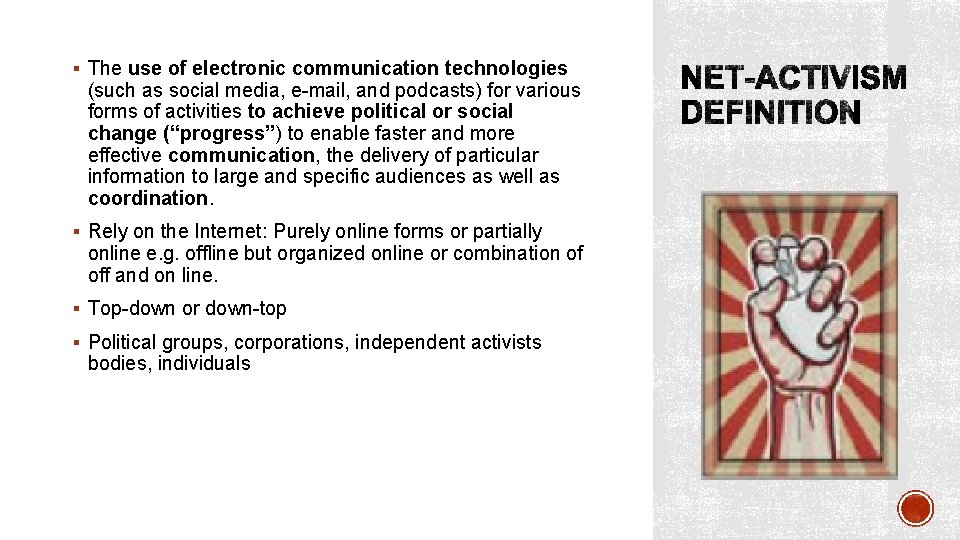
§ The use of electronic communication technologies (such as social media, e-mail, and podcasts) for various forms of activities to achieve political or social change (“progress”) to enable faster and more effective communication, the delivery of particular information to large and specific audiences as well as coordination. § Rely on the Internet: Purely online forms or partially online e. g. offline but organized online or combination of off and on line. § Top-down or down-top § Political groups, corporations, independent activists bodies, individuals
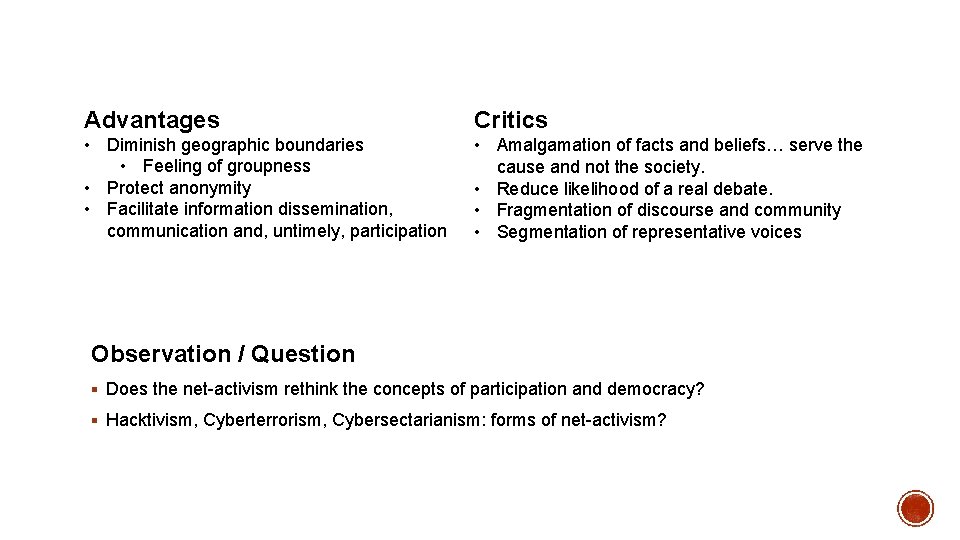
Advantages Critics • Diminish geographic boundaries • Feeling of groupness • Protect anonymity • Facilitate information dissemination, communication and, untimely, participation • Amalgamation of facts and beliefs… serve the cause and not the society. • Reduce likelihood of a real debate. • Fragmentation of discourse and community • Segmentation of representative voices Observation / Question § Does the net-activism rethink the concepts of participation and democracy? § Hacktivism, Cyberterrorism, Cybersectarianism: forms of net-activism?
“Internet's impact on socio-political movements varies depending upon how economic factors, government regulation and users collectively shape the Internet as a socio-political technology. ”
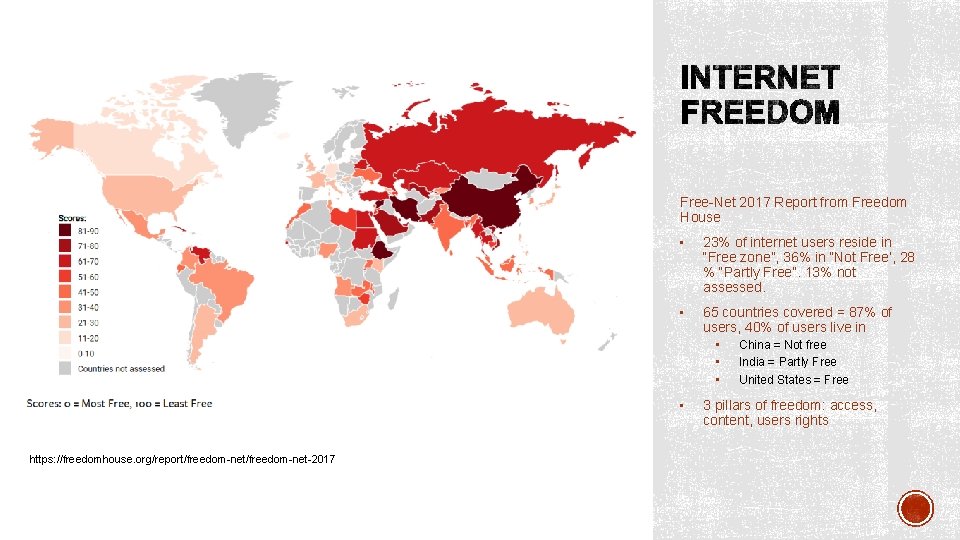
Free-Net 2017 Report from Freedom House • 23% of internet users reside in “Free zone”, 36% in “Not Free’, 28 % “Partly Free”. 13% not assessed. • 65 countries covered = 87% of users, 40% of users live in • • https: //freedomhouse. org/report/freedom-net-2017 China = Not free India = Partly Free United States = Free 3 pillars of freedom: access, content, users rights
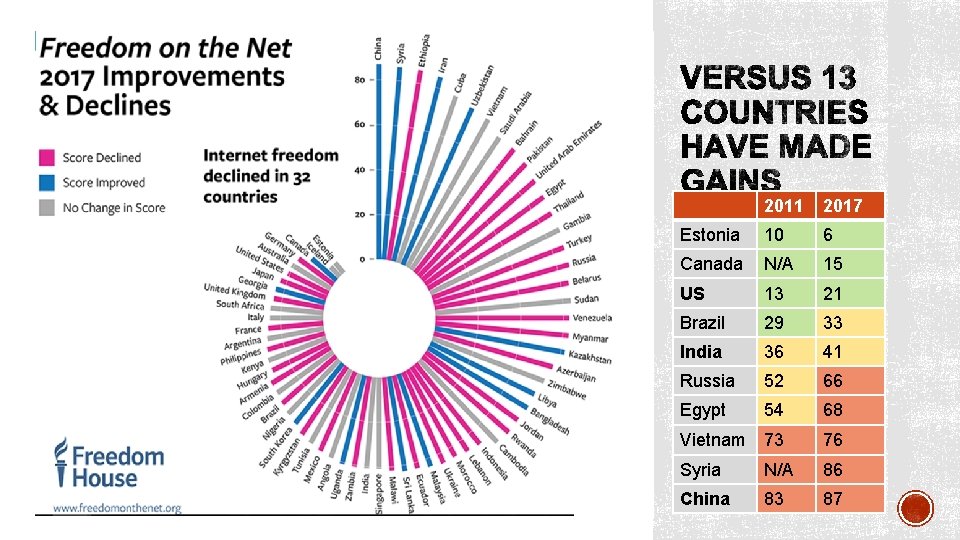
2011 2017 Estonia 10 6 Canada N/A 15 US 13 21 Brazil 29 33 India 36 41 Russia 52 66 Egypt 54 68 Vietnam 73 76 Syria N/A 86 China 83 87
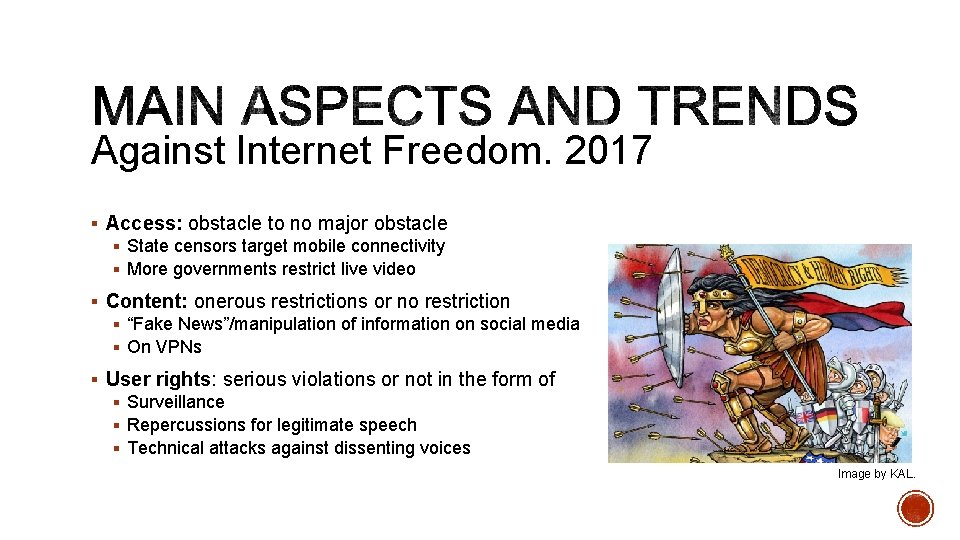
Against Internet Freedom. 2017 § Access: obstacle to no major obstacle § State censors target mobile connectivity § More governments restrict live video § Content: onerous restrictions or no restriction § “Fake News”/manipulation of information on social media § On VPNs § User rights: serious violations or not in the form of § Surveillance § Repercussions for legitimate speech § Technical attacks against dissenting voices Image by KAL.
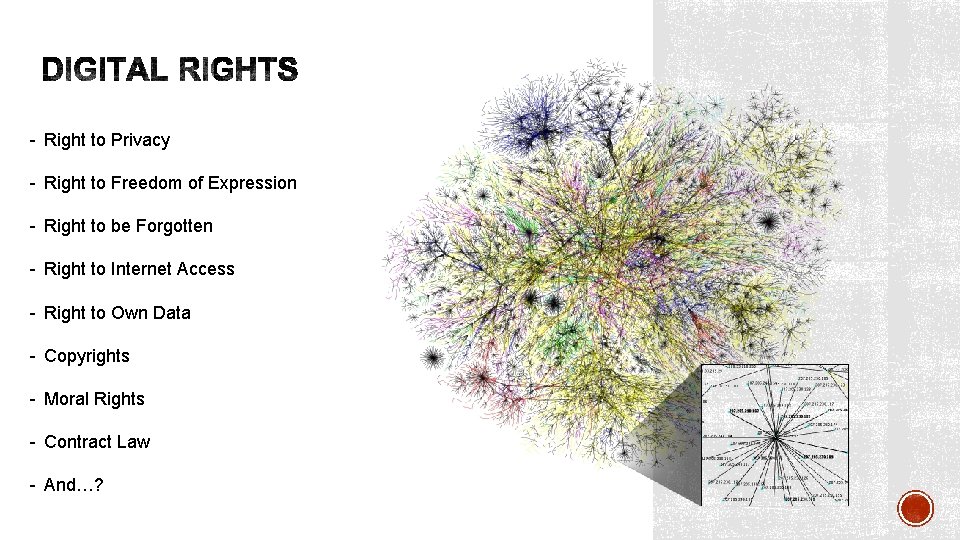
- Right to Privacy - Right to Freedom of Expression - Right to be Forgotten - Right to Internet Access - Right to Own Data - Copyrights - Moral Rights - Contract Law - And…?
Promoting Net-Activism
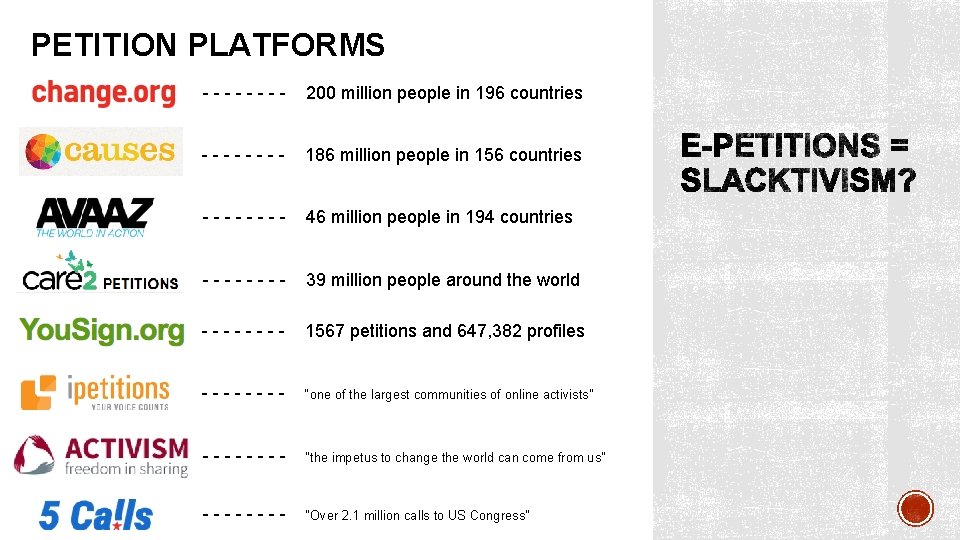
PETITION PLATFORMS - - - - 200 million people in 196 countries - - - - 186 million people in 156 countries - - - - 46 million people in 194 countries - - - - 39 million people around the world - - - - 1567 petitions and 647, 382 profiles - - - - “one of the largest communities of online activists” - - - - “the impetus to change the world can come from us” - - - - “Over 2. 1 million calls to US Congress”
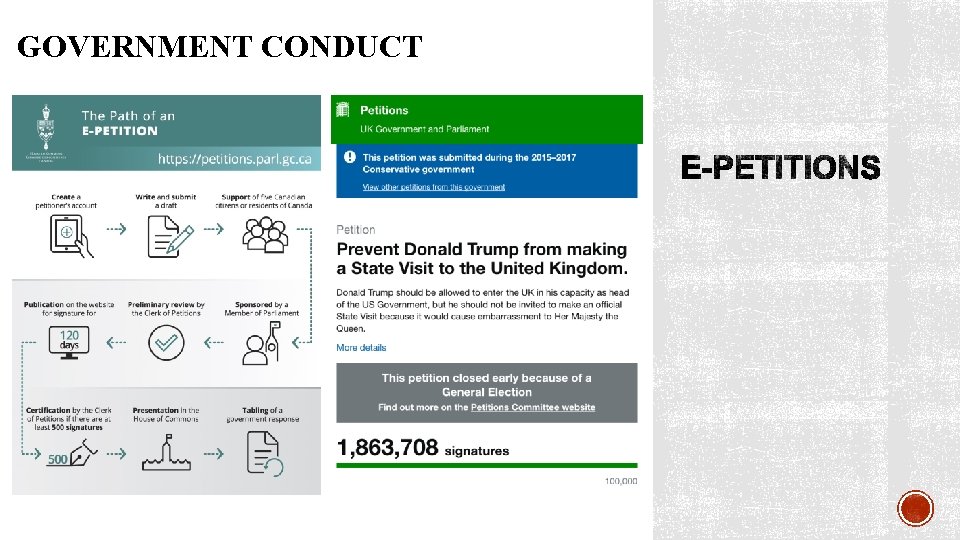
GOVERNMENT CONDUCT
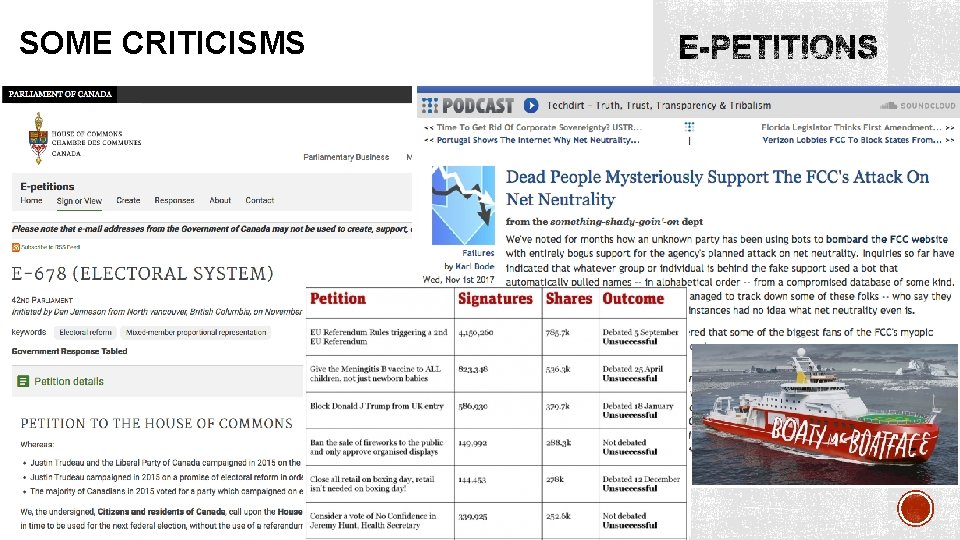
SOME CRITICISMS
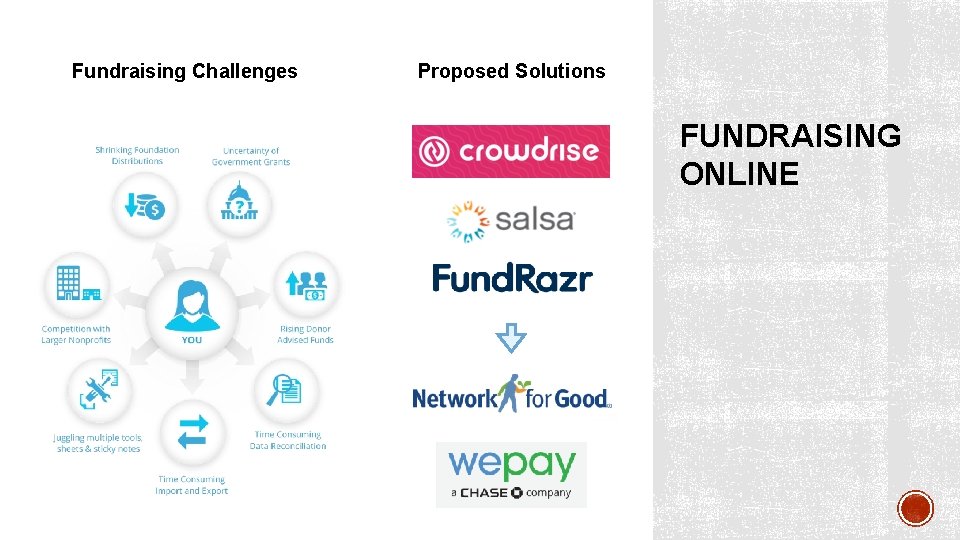
Fundraising Challenges Proposed Solutions FUNDRAISING ONLINE

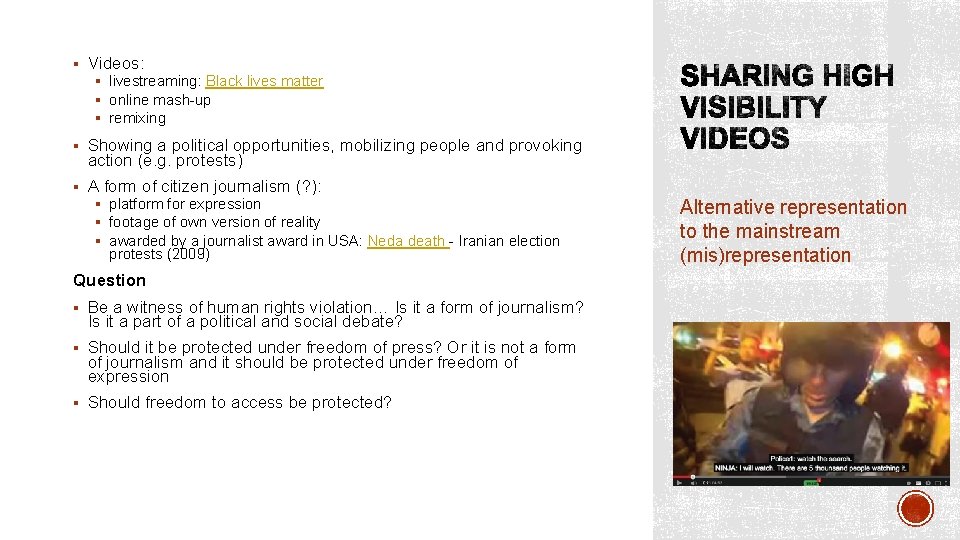
§ Videos: § livestreaming: Black lives matter § online mash-up § remixing § Showing a political opportunities, mobilizing people and provoking action (e. g. protests) § A form of citizen journalism (? ): § platform for expression § footage of own version of reality § awarded by a journalist award in USA: Neda death - Iranian election protests (2009) Question § Be a witness of human rights violation… Is it a form of journalism? Is it a part of a political and social debate? § Should it be protected under freedom of press? Or it is not a form of journalism and it should be protected under freedom of expression § Should freedom to access be protected? Alternative representation to the mainstream (mis)representation
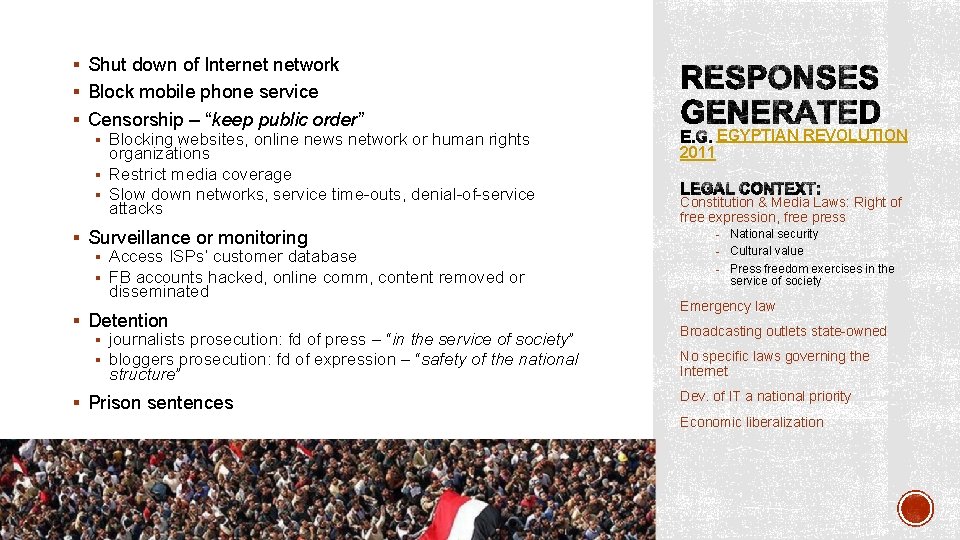
§ Shut down of Internet network § Block mobile phone service § Censorship – “keep public order” § Blocking websites, online news network or human rights organizations § Restrict media coverage § Slow down networks, service time-outs, denial-of-service attacks § Surveillance or monitoring § Access ISPs’ customer database § FB accounts hacked, online comm, content removed or disseminated § Detention § journalists prosecution: fd of press – “in the service of society” § bloggers prosecution: fd of expression – “safety of the national structure” § Prison sentences 2011 EGYPTIAN REVOLUTION Constitution & Media Laws: Right of free expression, free press - National security - Cultural value - Press freedom exercises in the service of society Emergency law Broadcasting outlets state-owned No specific laws governing the Internet Dev. of IT a national priority Economic liberalization
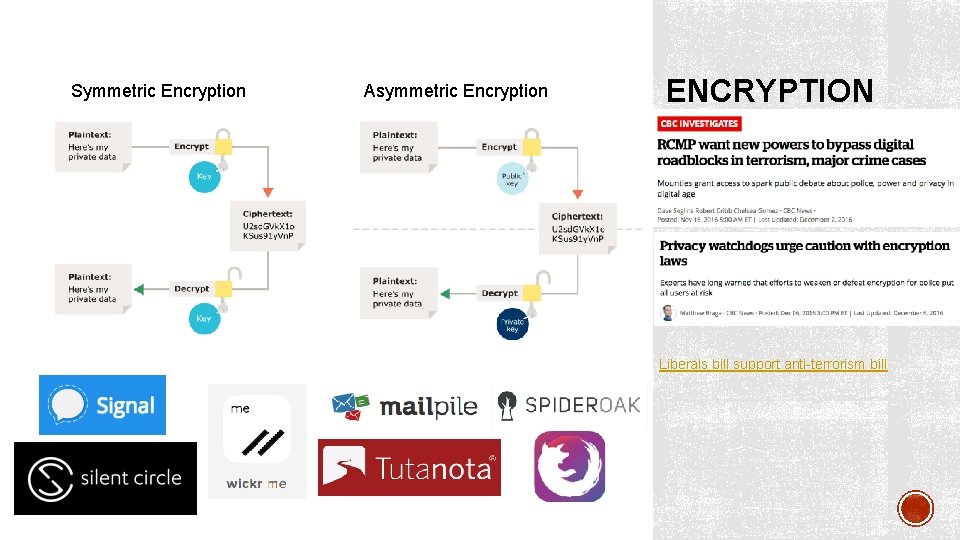
Symmetric Encryption Asymmetric Encryption ENCRYPTION Liberals bill support anti-terrorism bill
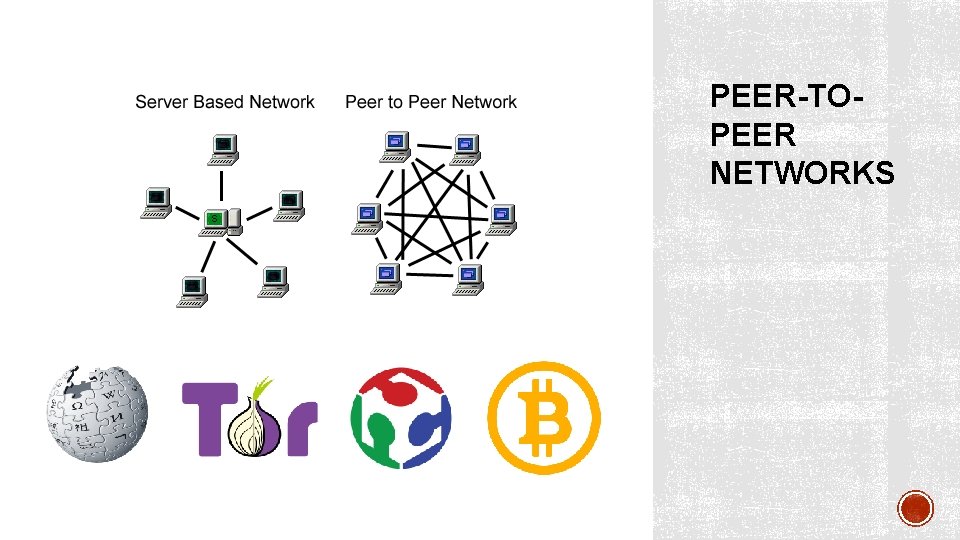
PEER-TOPEER NETWORKS

HACKTIVISM Common Hacking Techniques: - Keyloggers = Data breaches Distributed Denial of Service Attacks Waterhole attacks/Fake Wifi Phishing - Virus/Trojan, Worms, Malware Click. Jacking Attacks Cookie Theft Eavesdropping
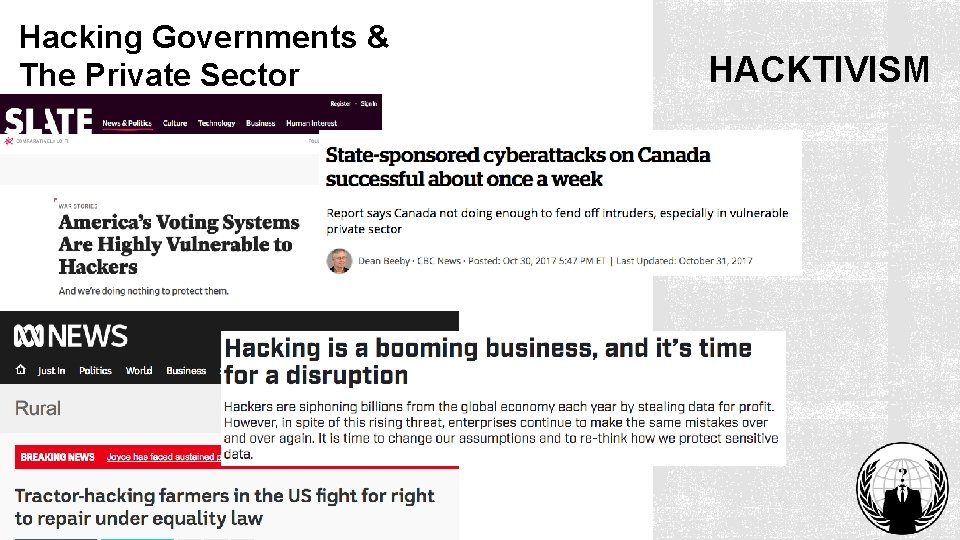
Hacking Governments & The Private Sector HACKTIVISM
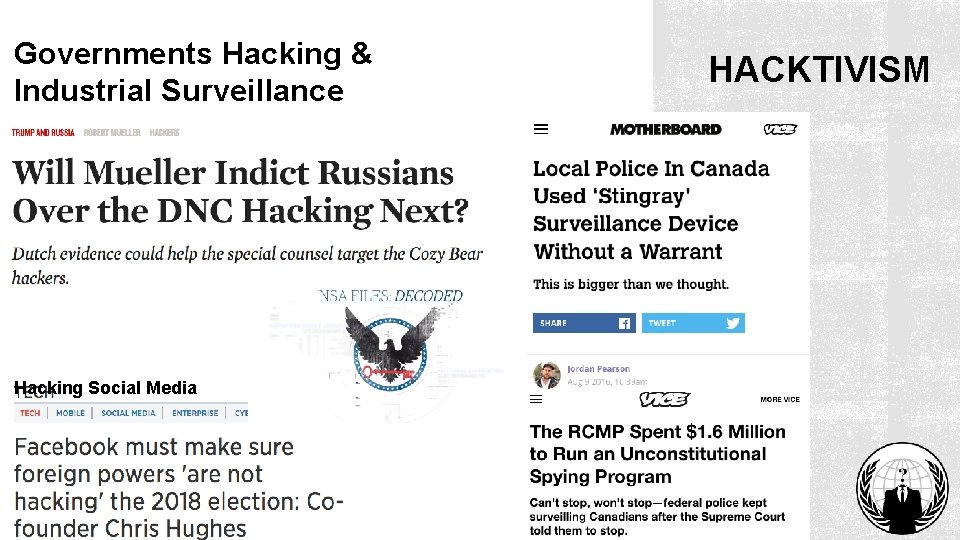
Governments Hacking & Industrial Surveillance Hacking Social Media HACKTIVISM
“While technology shapes the future, it is people who shape technology, and decide to what uses it can and should be put”.
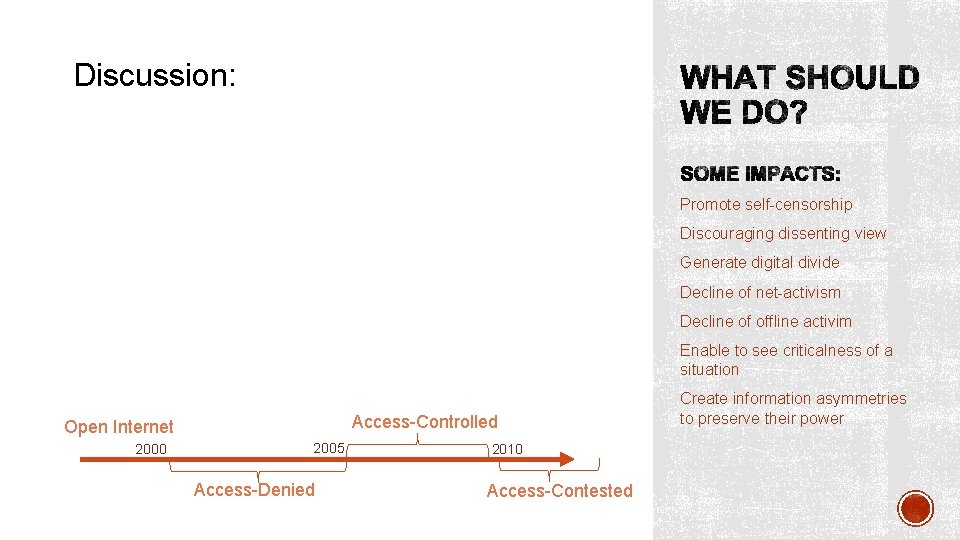
Discussion: Promote self-censorship Discouraging dissenting view Generate digital divide Decline of net-activism Decline of offline activim Enable to see criticalness of a situation Access-Controlled Open Internet 2000 2005 Access-Denied 2010 Access-Contested Create information asymmetries to preserve their power
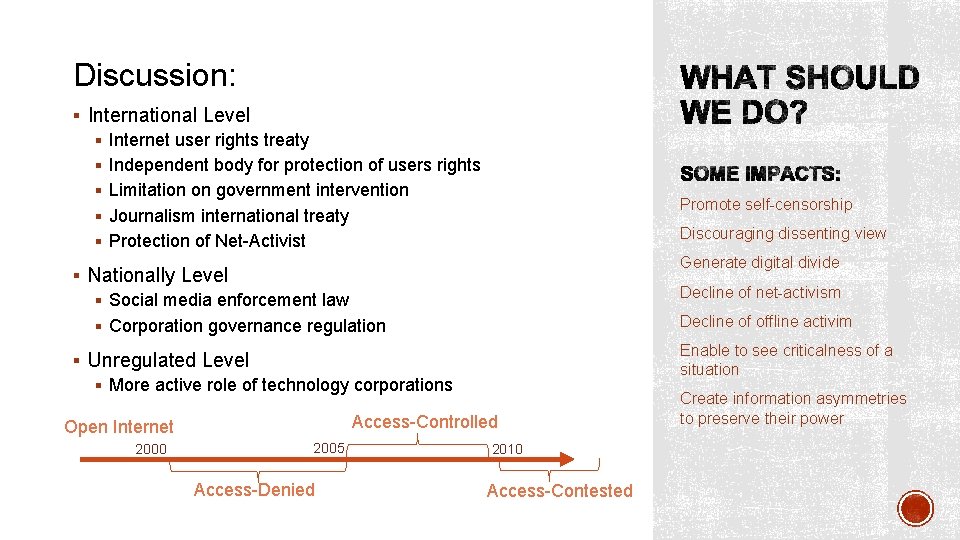
Discussion: § International Level § Internet user rights treaty § Independent body for protection of users rights § Limitation on government intervention § Journalism international treaty § Protection of Net-Activist Promote self-censorship Discouraging dissenting view Generate digital divide § Nationally Level § Social media enforcement law § Corporation governance regulation Decline of net-activism Decline of offline activim Enable to see criticalness of a situation § Unregulated Level § More active role of technology corporations Access-Controlled Open Internet 2000 2005 Access-Denied 2010 Access-Contested Create information asymmetries to preserve their power
Net-Activism by Claudio Storelli and Laura Courdi
- Slides: 31