
By Aakanksha Verma Department of Home Science Introduction
By Aakanksha Verma Department of Home Science
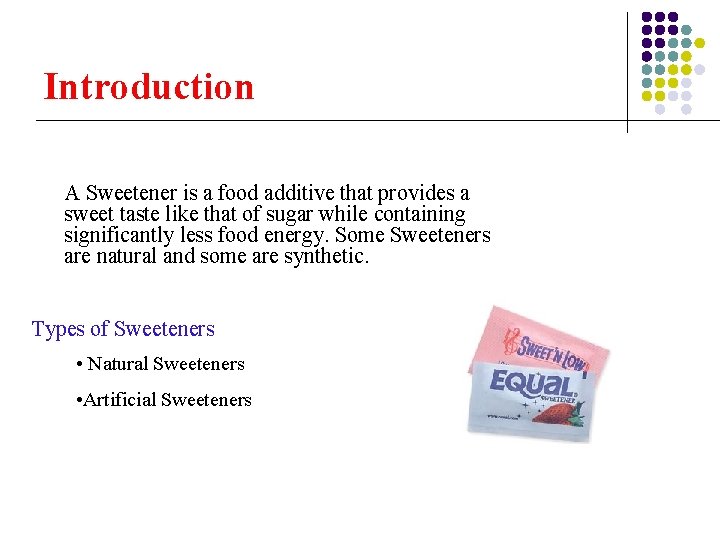
Introduction A Sweetener is a food additive that provides a sweet taste like that of sugar while containing significantly less food energy. Some Sweeteners are natural and some are synthetic. Types of Sweeteners • Natural Sweeteners • Artificial Sweeteners
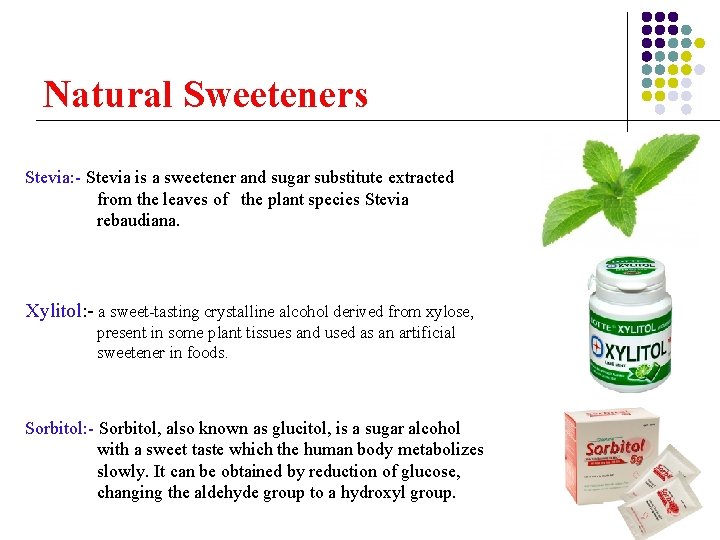
Natural Sweeteners Stevia: - Stevia is a sweetener and sugar substitute extracted from the leaves of the plant species Stevia rebaudiana. Xylitol: - a sweet-tasting crystalline alcohol derived from xylose, present in some plant tissues and used as an artificial sweetener in foods. Sorbitol: - Sorbitol, also known as glucitol, is a sugar alcohol with a sweet taste which the human body metabolizes slowly. It can be obtained by reduction of glucose, changing the aldehyde group to a hydroxyl group.
Approved Artificial Sweeteners Saccharin l 300 times sweeter than sucrose Sucralose l l Made from sugar, so it tastes like sugar 500 -600 times sweeter than sucrose Acesulfame potassium l 100 -200 times sweeter than sucrose Neotame l 8, 000 to 13, 000 times sweeter than sucrose Aspartame l l 180 -200 times sweeter than sucrose Not stable at high temperatures Cyclamate 30– 50 times sweeter than sucrose Advantame l 37000 times sweeter than sucrose l
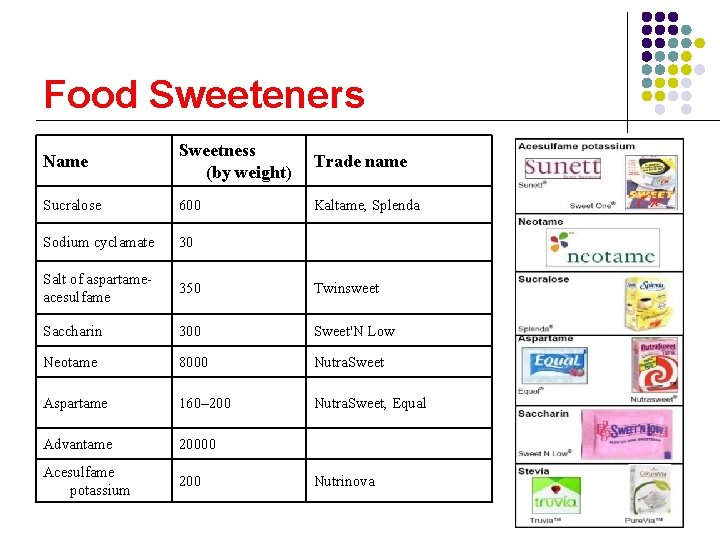
Food Sweeteners Name Sweetness (by weight) Trade name Sucralose 600 Kaltame, Splenda Sodium cyclamate 30 Salt of aspartameacesulfame 350 Twinsweet Saccharin 300 Sweet'N Low Neotame 8000 Nutra. Sweet Aspartame 160– 200 Nutra. Sweet, Equal Advantame 20000 Acesulfame potassium 200 Nutrinova
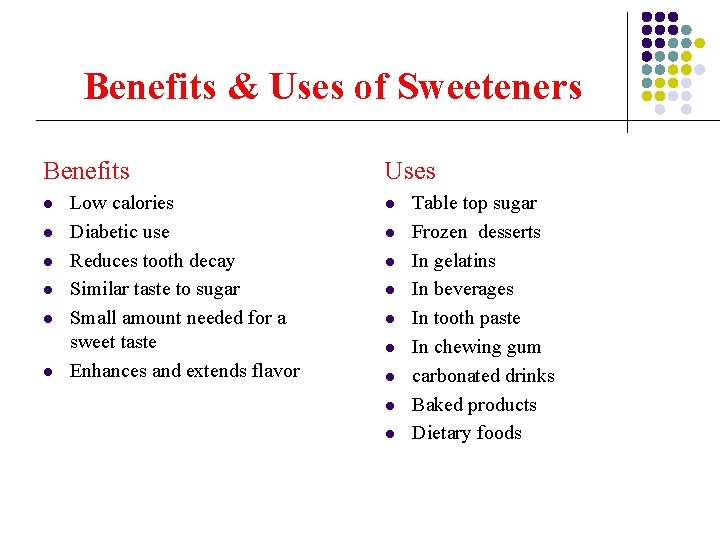
Benefits & Uses of Sweeteners Benefits l l l Low calories Diabetic use Reduces tooth decay Similar taste to sugar Small amount needed for a sweet taste Enhances and extends flavor Uses l l l l l Table top sugar Frozen desserts In gelatins In beverages In tooth paste In chewing gum carbonated drinks Baked products Dietary foods

Thank you
- Slides: 7