
BVD the disease the veterinarian and the control
BVD – the disease, the veterinarian and the control strategies Joe Brownlie © 2008 Royal Veterinary College
• BVD Disease Ø……. and the Vet! • European Dimension • Control, Vaccination & Eradication Joe Brownlie © 2008 Royal Veterinary College

Pieces that need to be in place. . Education Joe Brownlie © 2008 Royal Veterinary College Veterinary motivation
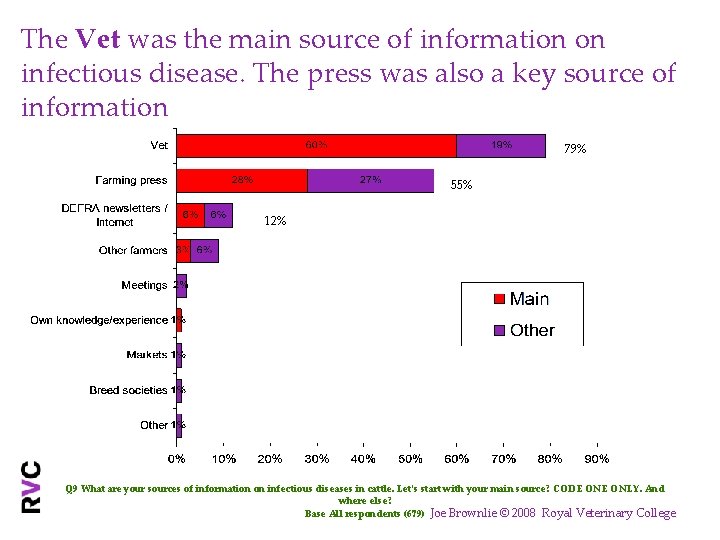
The Vet was the main source of information on infectious disease. The press was also a key source of information 79% 55% 12% Q 9 What are your sources of information on infectious diseases in cattle. Let's start with your main source? CODE ONLY. And where else? Base All respondents (679) Joe Brownlie © 2008 Royal Veterinary College
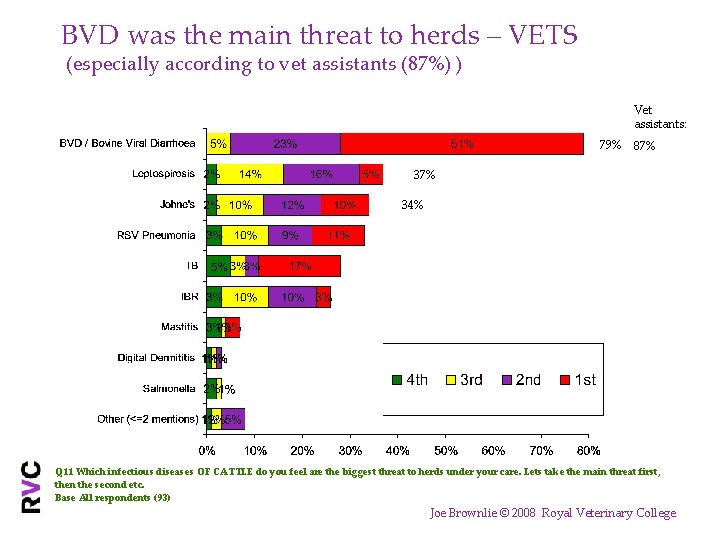
BVD was the main threat to herds – VETS (especially according to vet assistants (87%) ) Vet assistants: 79% 87% 34% Q 11 Which infectious diseases OF CATTLE do you feel are the biggest threat to herds under your care. Lets take the main threat first, then the second etc. Base All respondents (93) Joe Brownlie © 2008 Royal Veterinary College

Pieces that need to be in place. . Motivation Education Joe Brownlie © 2008 Royal Veterinary College Veterinary motivation
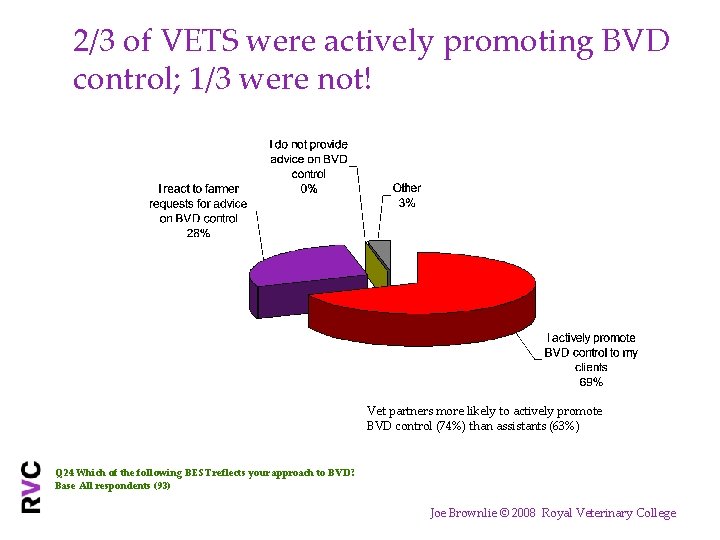
2/3 of VETS were actively promoting BVD control; 1/3 were not! Vet partners more likely to actively promote BVD control (74%) than assistants (63%) Q 24 Which of the following BEST reflects your approach to BVD? Base All respondents (93) Joe Brownlie © 2008 Royal Veterinary College
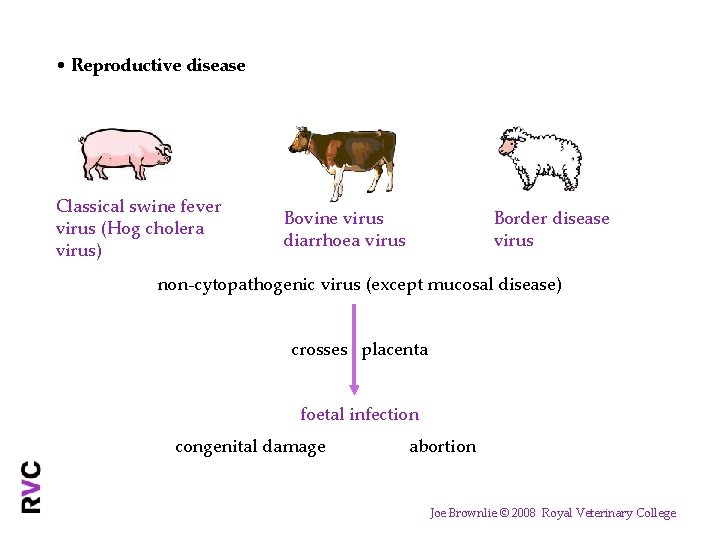
• Reproductive disease Classical swine fever virus (Hog cholera virus) Bovine virus diarrhoea virus Border disease virus non-cytopathogenic virus (except mucosal disease) crosses placenta foetal infection congenital damage abortion Joe Brownlie © 2008 Royal Veterinary College
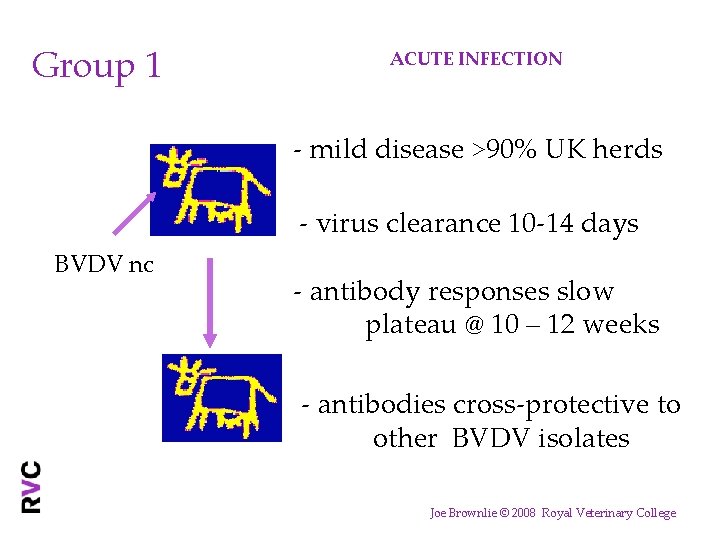
Group 1 ACUTE INFECTION - mild disease >90% UK herds - virus clearance 10 -14 days BVDV nc - antibody responses slow plateau @ 10 – 12 weeks - antibodies cross-protective to other BVDV isolates Joe Brownlie © 2008 Royal Veterinary College
Joe Brownlie © 2008 Royal Veterinary College
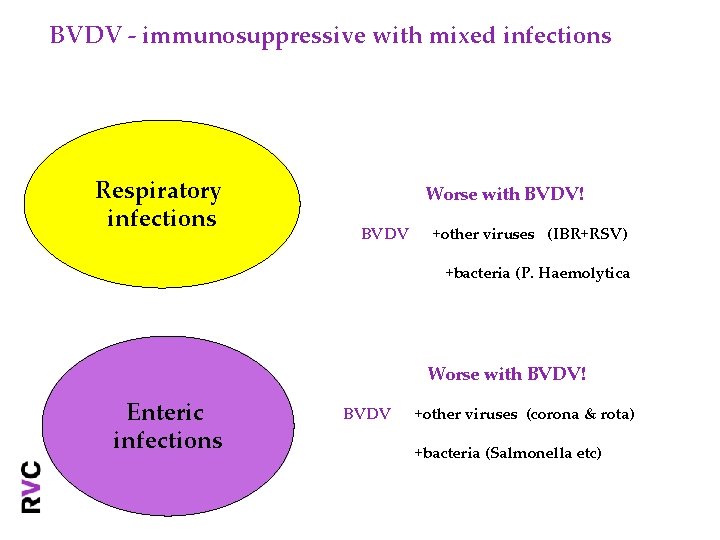
BVDV - immunosuppressive with mixed infections Respiratory infections Worse with BVDV! BVDV +other viruses (IBR+RSV) +bacteria (P. Haemolytica) Worse with BVDV! Enteric infections BVDV +other viruses (corona & rota) +bacteria (Salmonella etc)
Severe Haemorrhagic Syndrome • Thrombocytopenia in acute infections • field: (Perdrizet et al, 1987 Cornell Vet Rebhun et al, 1989 J Vet Int Med) • experimental: (Corapi et al, 1989 J Virology) • Acute fatal diseases in adult cattle (Hibberd et al 1993 Vet Record David et al 1993 Vet Record) Joe Brownlie © 2008 Royal Veterinary College

Group 2 ACUTE INFECTION - severe disease often fatal - virus clearance 28 – 38 days BVDV nc - thrombocytopenia, diarrhoea, haemorrhagic disease - weak cross-protection to Group 1 BVDV antibodies - distinct 5’ UTR clustering Joe Brownlie © 2008 Royal Veterinary College
Reproductive disease Joe Brownlie © 2008 Royal Veterinary College
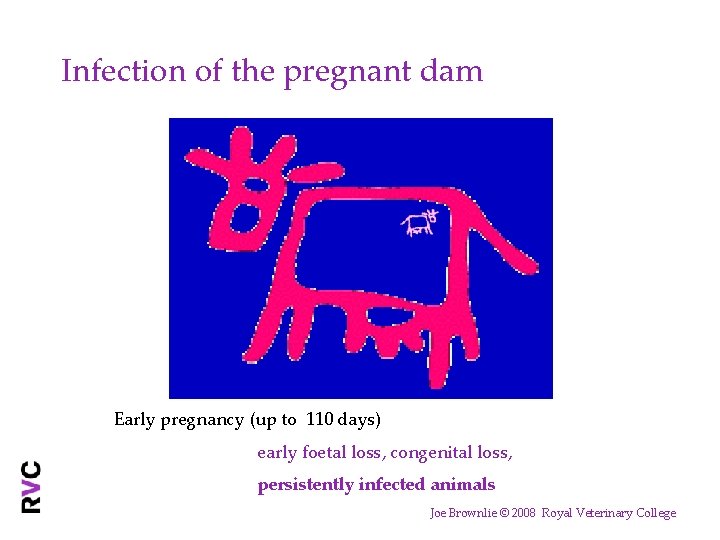
Infection of the pregnant dam Early pregnancy (up to 110 days) early foetal loss, congenital loss, persistently infected animals Joe Brownlie © 2008 Royal Veterinary College
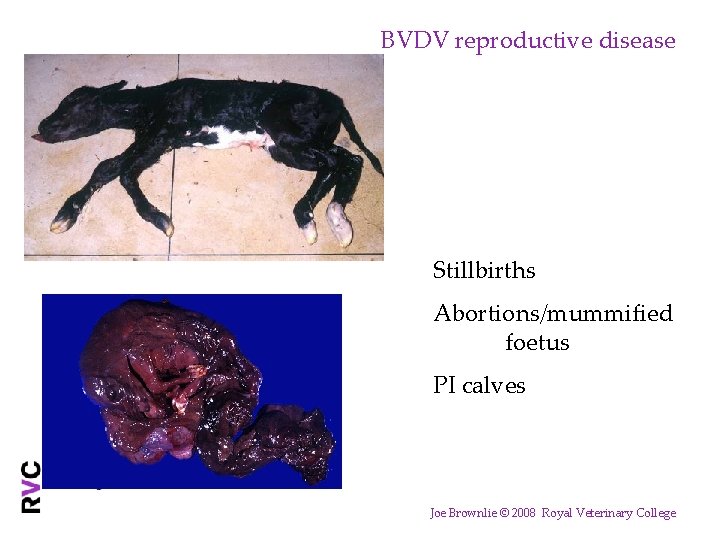
BVDV reproductive disease Stillbirths Abortions/mummified foetus PI calves BVD Joe Brownlie © 2008 Royal Veterinary College
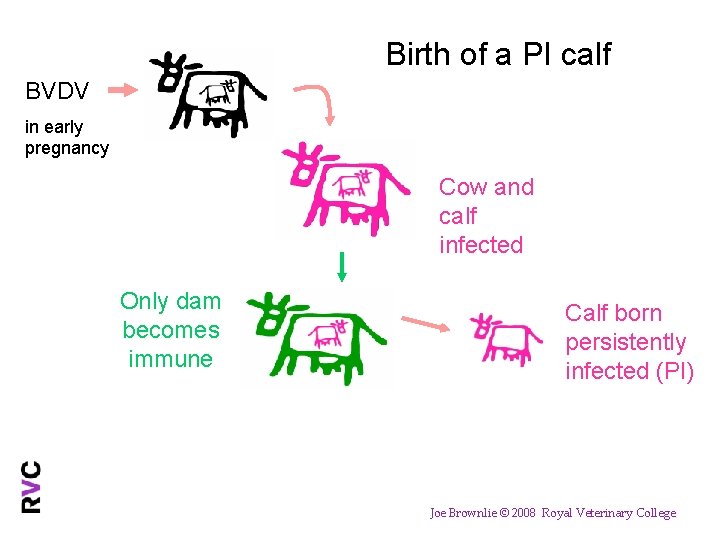
Birth of a PI calf BVDV in early pregnancy Cow and calf infected Only dam becomes immune Calf born persistently infected (PI) Joe Brownlie © 2008 Royal Veterinary College
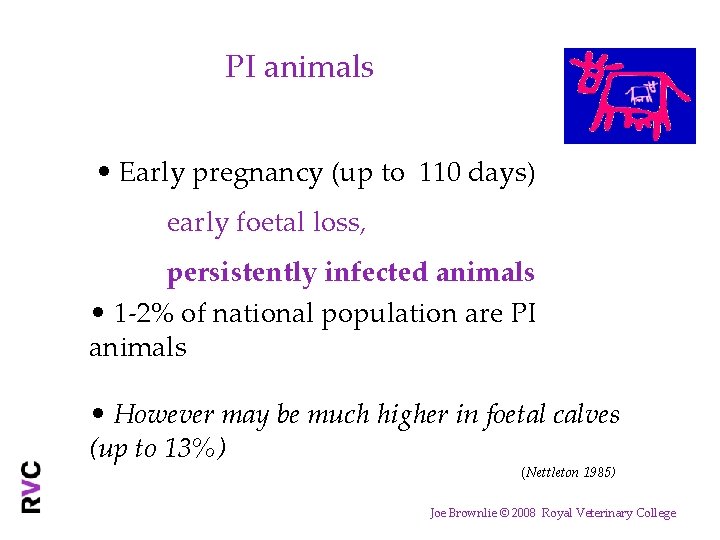
PI animals • Early pregnancy (up to 110 days) early foetal loss, persistently infected animals • 1 -2% of national population are PI animals • However may be much higher in foetal calves (up to 13%) (Nettleton 1985) Joe Brownlie © 2008 Royal Veterinary College
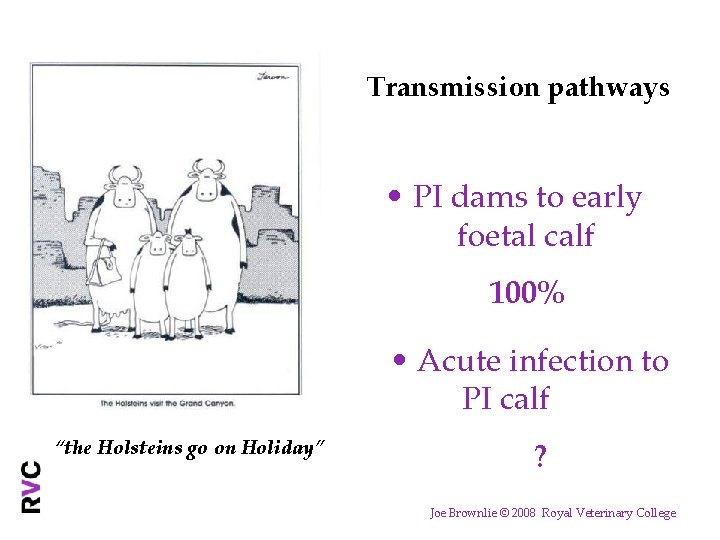
Transmission pathways • PI dams to early foetal calf 100% • Acute infection to PI calf “the Holsteins go on Holiday” ? Joe Brownlie © 2008 Royal Veterinary College
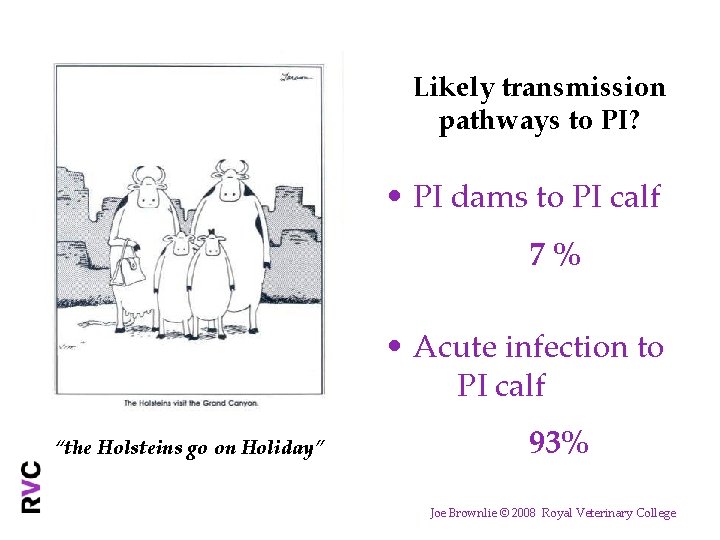
Likely transmission pathways to PI? • PI dams to PI calf 7% • Acute infection to PI calf “the Holsteins go on Holiday” 93% Joe Brownlie © 2008 Royal Veterinary College
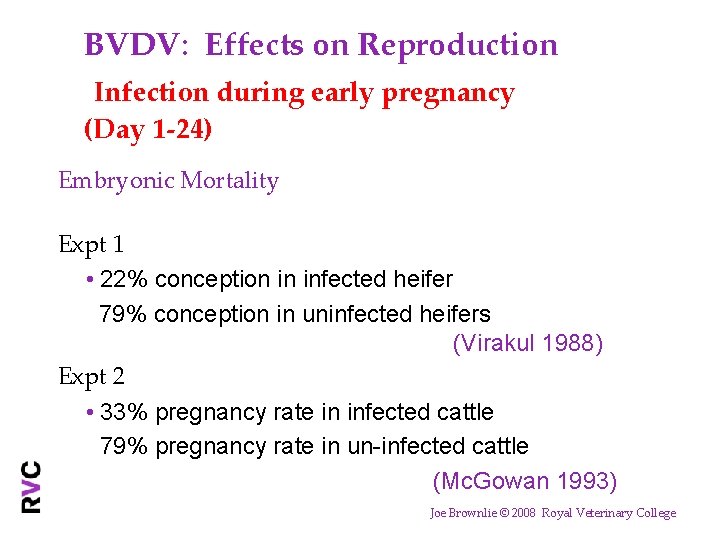
BVDV: Effects on Reproduction Infection during early pregnancy (Day 1 -24) Embryonic Mortality Expt 1 • 22% conception in infected heifer 79% conception in uninfected heifers (Virakul 1988) Expt 2 • 33% pregnancy rate in infected cattle 79% pregnancy rate in un-infected cattle (Mc. Gowan 1993) Joe Brownlie © 2008 Royal Veterinary College
Joe Brownlie © 2008 Royal Veterinary College
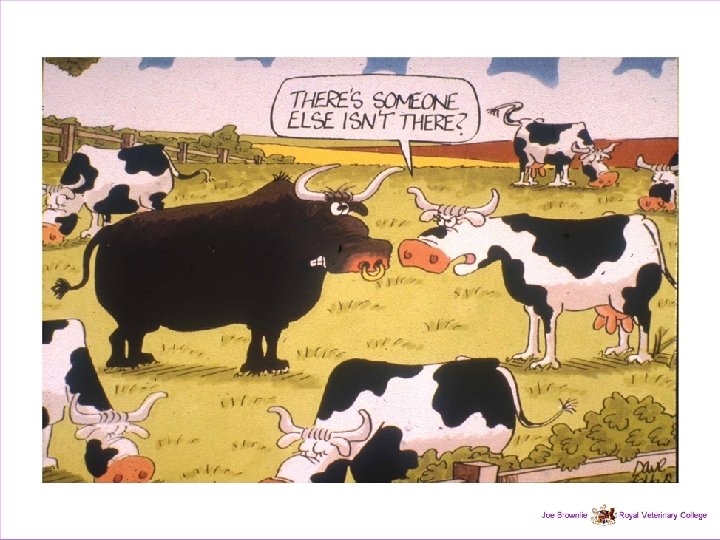
The Bull • Can be PI • Can be acutely infected • ‘Cumulus’ bull ALWAYS TEST THEM Joe Brownlie © 2008 Royal Veterinary College
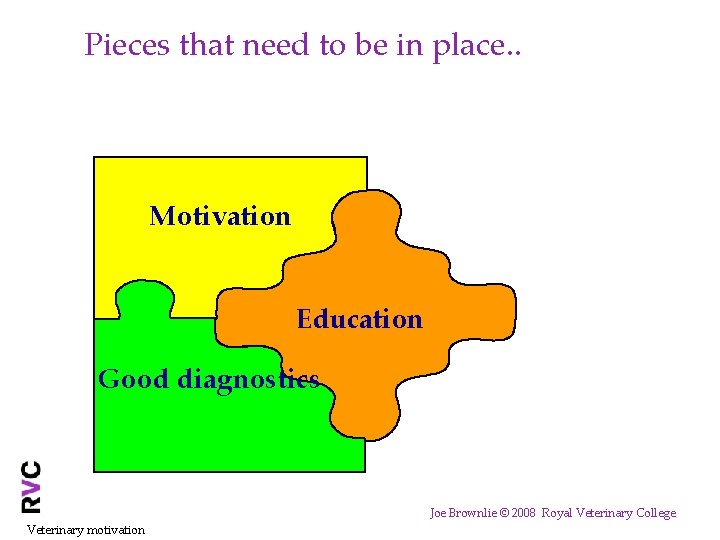
Pieces that need to be in place. . Motivation Education Good diagnostics Joe Brownlie © 2008 Royal Veterinary College Veterinary motivation
Mucosal Disease A fatal disease of cattle, usually between 6 -18 months, associated with BVDv (? ) Joe Brownlie © 2008 Royal Veterinary College
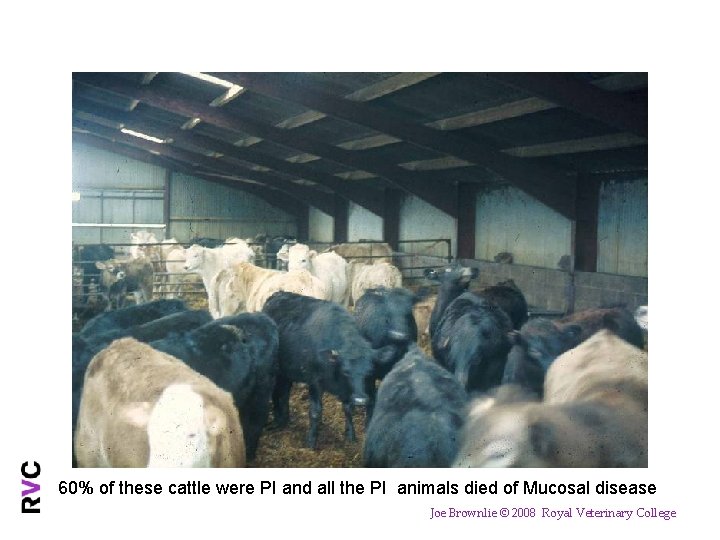
60% of these cattle were PI and all the PI animals died of Mucosal disease Joe Brownlie © 2008 Royal Veterinary College
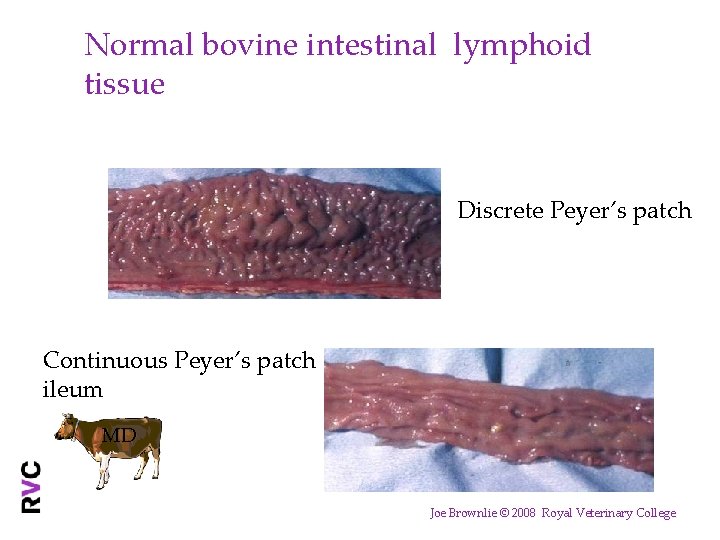
Normal bovine intestinal lymphoid tissue Discrete Peyer’s patch Continuous Peyer’s patch ileum MD Joe Brownlie © 2008 Royal Veterinary College
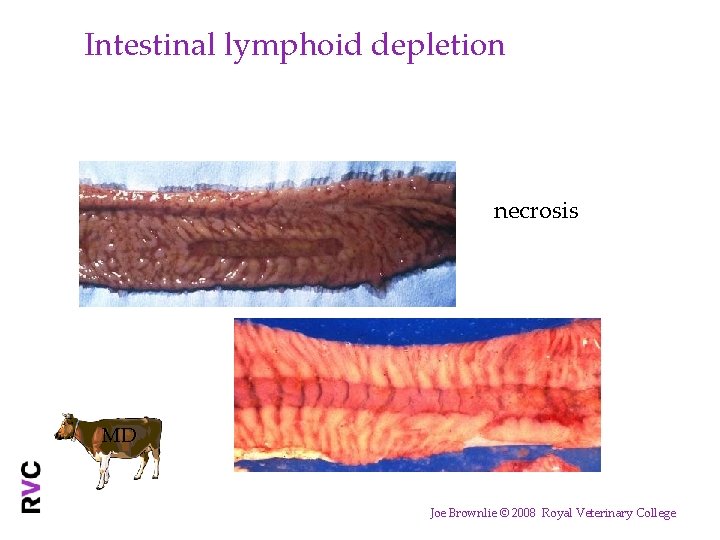
Intestinal lymphoid depletion necrosis MD Joe Brownlie © 2008 Royal Veterinary College
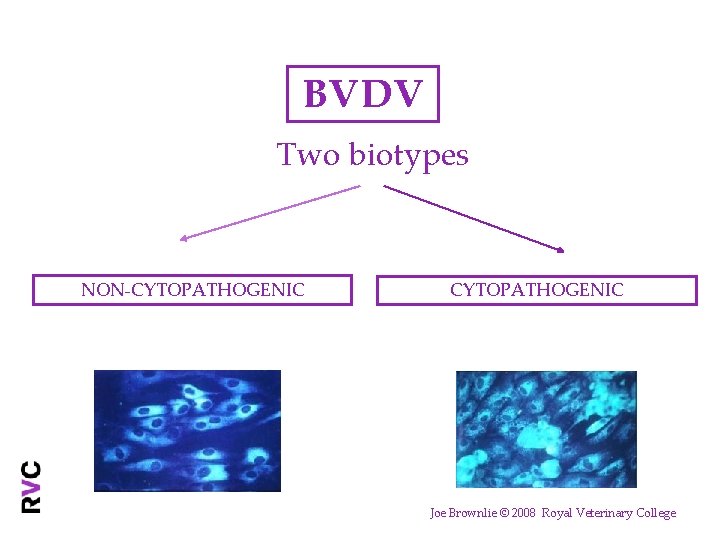
BVDV Two biotypes NON-CYTOPATHOGENIC Joe Brownlie © 2008 Royal Veterinary College
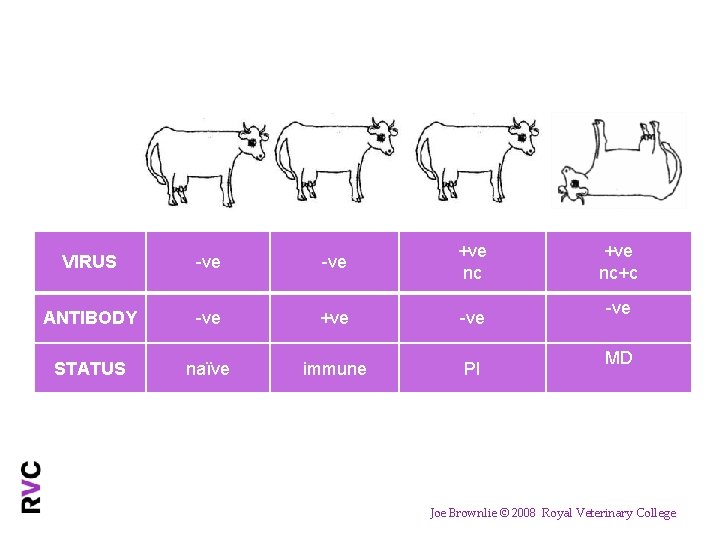
VIRUS -ve +ve nc ANTIBODY -ve +ve -ve STATUS naïve immune PI +ve nc+c -ve MD Joe Brownlie © 2008 Royal Veterinary College
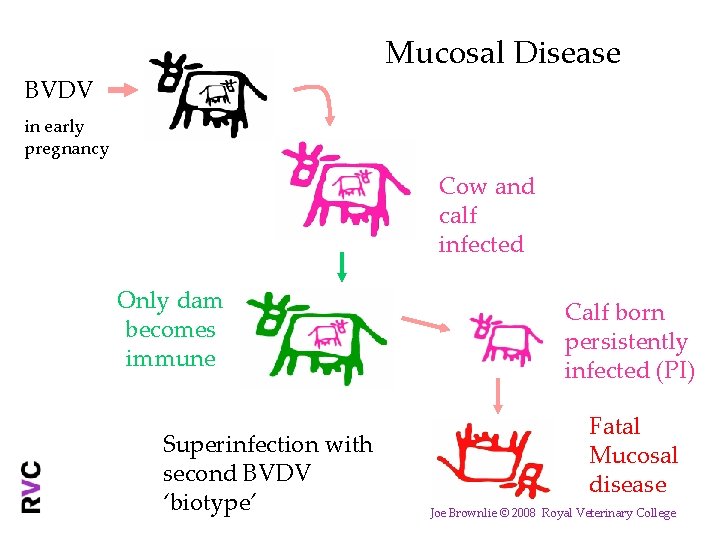
Mucosal Disease BVDV in early pregnancy Cow and calf infected Only dam becomes immune Superinfection with second BVDV ‘biotype’ Calf born persistently infected (PI) Fatal Mucosal disease Joe Brownlie © 2008 Royal Veterinary College

What is happening in Europe? Joe Brownlie © 2008 Royal Veterinary College
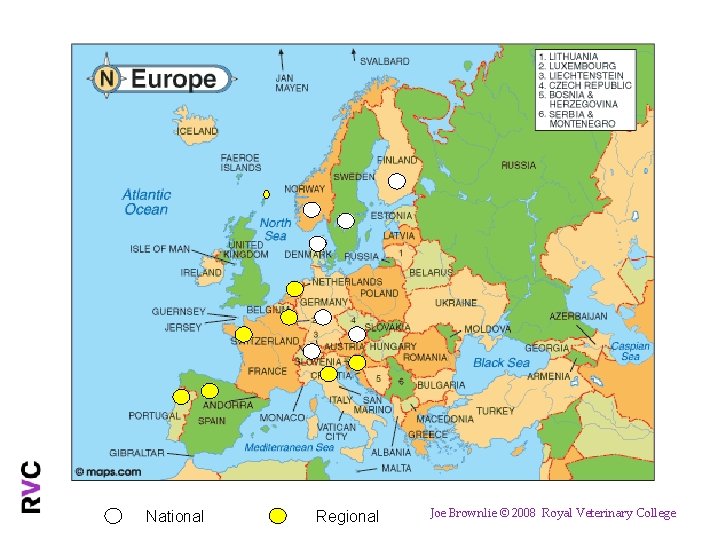
National Regional Joe Brownlie © 2008 Royal Veterinary College
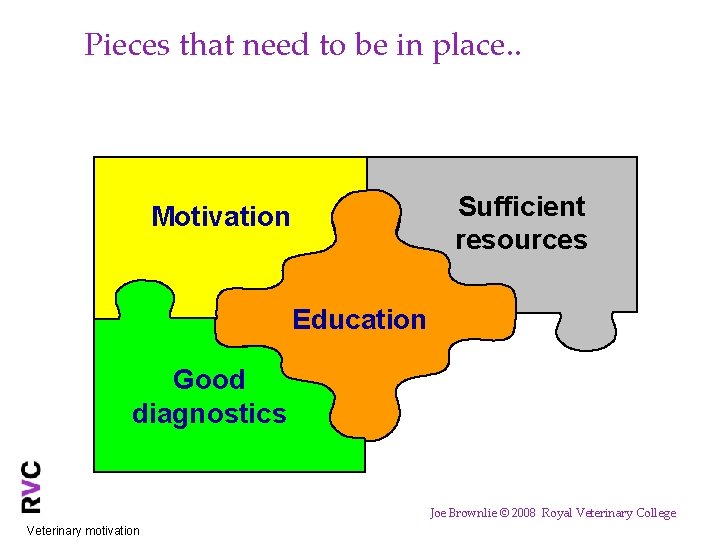
Pieces that need to be in place. . Sufficient resources Motivation Education Good diagnostics Joe Brownlie © 2008 Royal Veterinary College Veterinary motivation
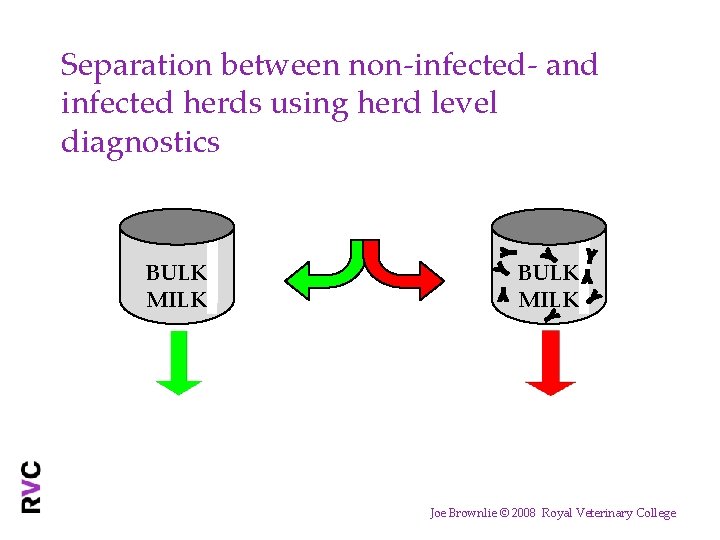
Separation between non-infected- and infected herds using herd level diagnostics BULK MILK Joe Brownlie © 2008 Royal Veterinary College
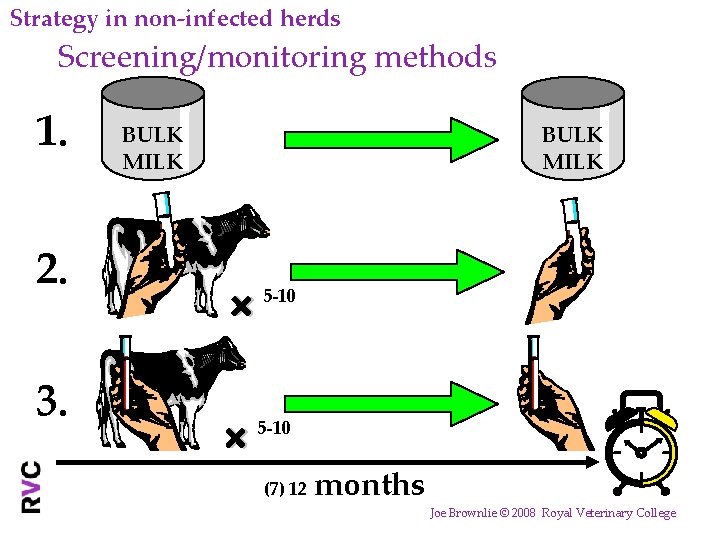
Strategy in non-infected herds Screening/monitoring methods 1. 2. 3. BULK MILK 5 -10 (7) 12 months Joe Brownlie © 2008 Royal Veterinary College
VA C CI Measles NE BVD Virus Joe Brownlie © 2008 Royal Veterinary College
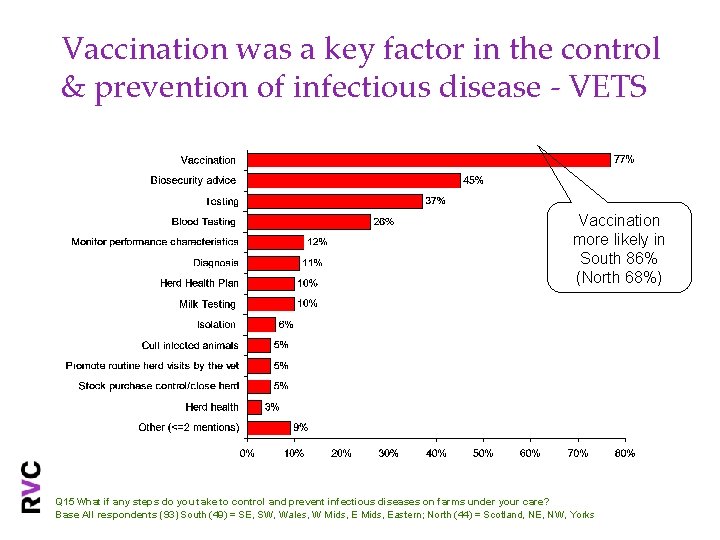
Vaccination was a key factor in the control & prevention of infectious disease - VETS Vaccination more likely in South 86% (North 68%) Q 15 What if any steps do you take to control and prevent infectious diseases on farms under your care? Base All respondents (93) South (49) = SE, SW, Wales, W Mids, Eastern; North (44) = Scotland, NE, NW, Yorks
Non-Systematic Approach Involving Vaccination What can 40 years of vaccination and 160 currently licensed vaccines* do to eradicate a disease? When you are talking about bovine viral diarrhea virus, apparently not much — it is still thriving. Although applied almost world-wide, just unsystematically vaccinating cattle does not even influence the high incidence of BVDV infections * in the USA ** J. Ridpath, 2002: http: //www. avma. org/onlnews/javma Joe Brownlie © 2008 Royal Veterinary College
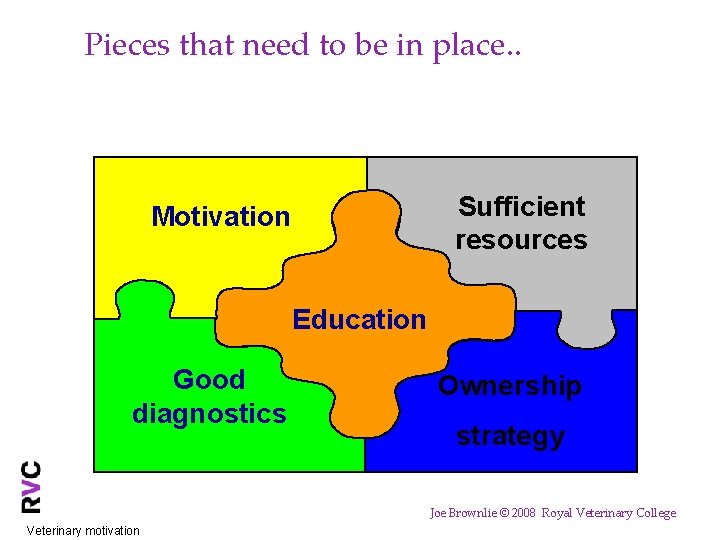
Pieces that need to be in place. . Sufficient resources Motivation Education Good diagnostics Ownership strategy Joe Brownlie © 2008 Royal Veterinary College Veterinary motivation

Is there a UK national strategy? Joe Brownlie © 2008 Royal Veterinary College
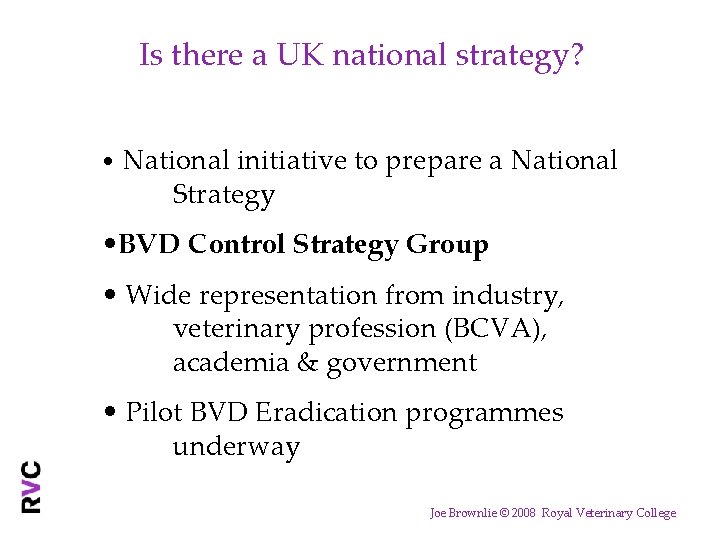
Is there a UK national strategy? • National initiative to prepare a National Strategy • BVD Control Strategy Group • Wide representation from industry, veterinary profession (BCVA), academia & government • Pilot BVD Eradication programmes underway Joe Brownlie © 2008 Royal Veterinary College
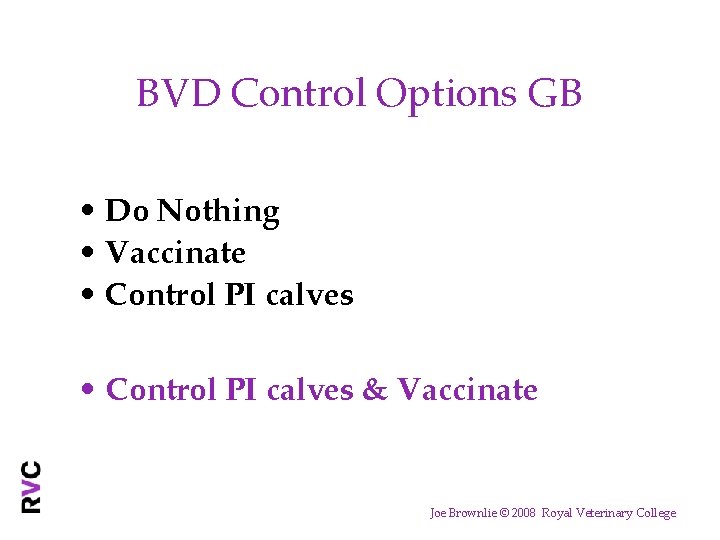
BVD Control Options GB • Do Nothing • Vaccinate • Control PI calves & Vaccinate Joe Brownlie © 2008 Royal Veterinary College
- Slides: 44