
BusinesstoBusiness Markets How and Why Organizations Buy Chapter
Business-to-Business Markets: How and Why Organizations Buy
Chapter Objectives • Describe the general characteristics of business-tobusiness markets • Explain the unique characteristics of business demand • Describe how business or organizational markets are classified • Explain the business buying situation and describe business buyers • Explain the roles in the business buying center • Understand the stages in the business buying decision process • Understand the growing role of B 2 B e-commerce 2
Business Markets: Buying and Selling When Stakes Are High • Business-to-business marketing: the marketing of goods and services that businesses and other organizations buy for purposes other than personal consumption • Business-to-business (organizational) markets include manufacturers, wholesalers, retailers, and other organizations 3
Characteristics That Make a Difference in Business Markets • Multiple buyers Ø multiple needs to satisfy • Number of customers Ø Fewer and far between, effect on 4 P’s!! • Size of purchases Ø Both in terms of quantity and price of individual purchase • Geographic concentration Ø E. g. Silicon Valley 4
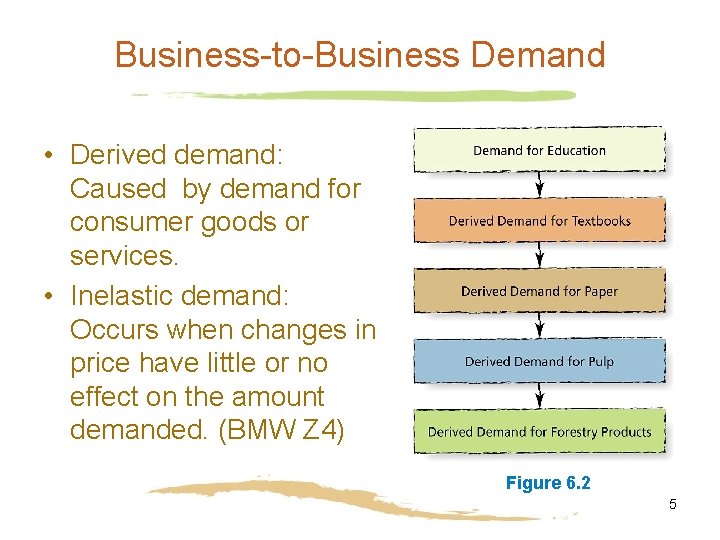
Business-to-Business Demand • Derived demand: Caused by demand for consumer goods or services. • Inelastic demand: Occurs when changes in price have little or no effect on the amount demanded. (BMW Z 4) Figure 6. 2 5
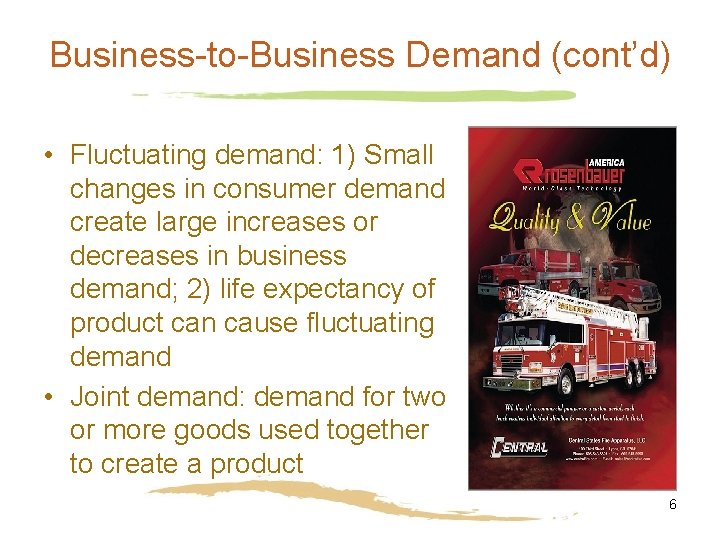
Business-to-Business Demand (cont’d) • Fluctuating demand: 1) Small changes in consumer demand create large increases or decreases in business demand; 2) life expectancy of product can cause fluctuating demand • Joint demand: demand for two or more goods used together to create a product 6
Types of Business-to-Business Markets • Producers: for production of other goods and services • Resellers: for reselling, renting or leasing • Organizations Ø Government markets Ø Not-for-profit institutions FEDBIZOPPS. GOV 7
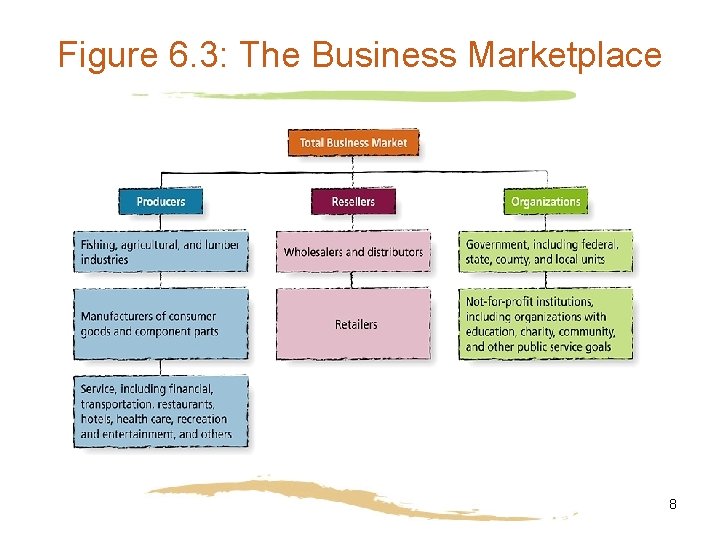
Figure 6. 3: The Business Marketplace 8
The Buying Situation • Buy class framework: identifies degree of effort firm needs to collect information and make a purchase decision Ø Straight rebuy: Routine purchases that require minimal decision-making Ø Modified rebuy: Previous purchases that require some change and limited decision-making. Ø New-task buy: New and complex or risky purchases that require extensive decision-making. 9
The Professional Buyer • Trained professional buyers typically carry out buying in business-to-business markets: Ø Purchasing agents Ø Procurement officers Ø Directors of materials management 10
The Buying Center • The group of people in an organization who participate in a purchasing decision Ø Ø Ø Initiator User Gatekeeper Influencer Decider Buyer 11
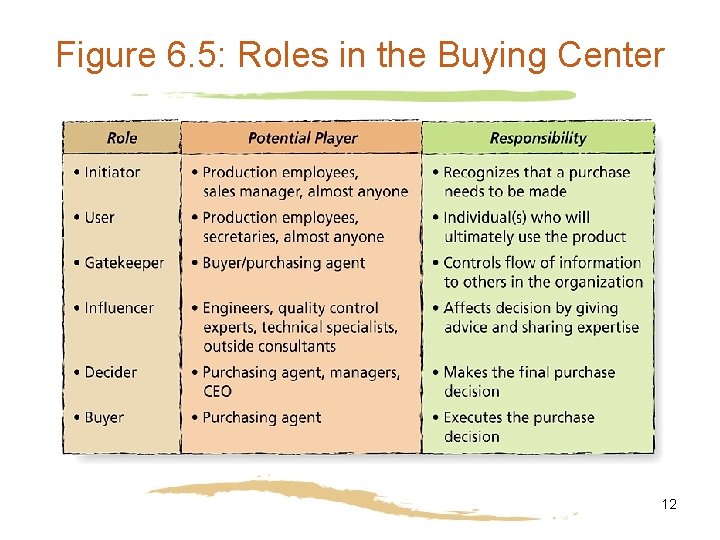
Figure 6. 5: Roles in the Buying Center 12
Discussion • The gatekeeper determines which possible sellers are heard and which are not Ø Does the gatekeeper have too much power? Ø What policies might the firm implement to make sure all possible sellers are treated fairly? 13
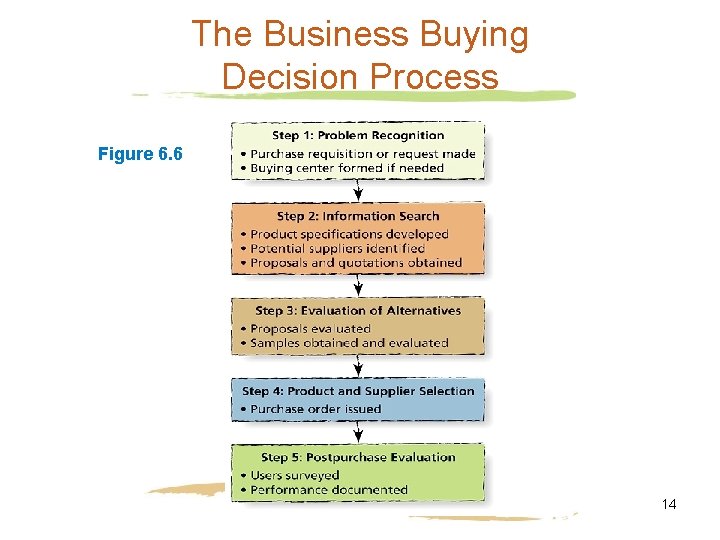
The Business Buying Decision Process Figure 6. 6 14
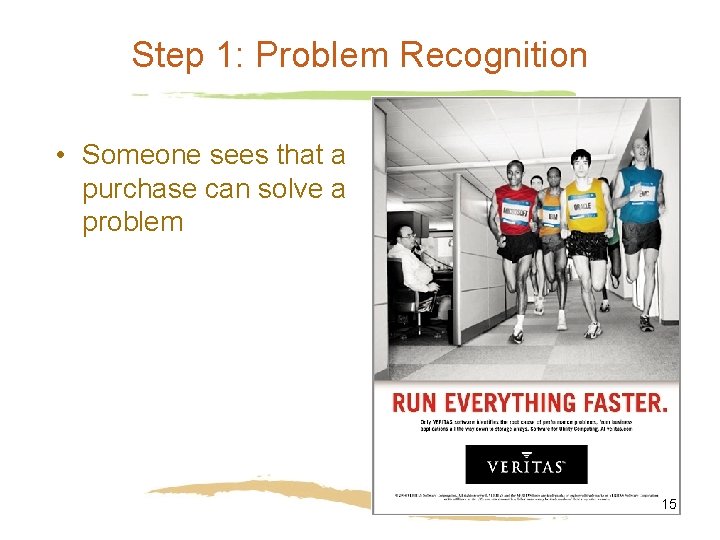
Step 1: Problem Recognition • Someone sees that a purchase can solve a problem 15
Step 2: Information Search • Buying center searches for information about products and suppliers • Develops product specifications -- a written description of the quality, size, weight, color -- for the purchase • Identifies potential suppliers and obtains proposals 16
Step 3: Evaluation of Alternatives • Buying center assesses proposals • Evaluations include discount policies, returned-goods policies, cost of repair, terms of maintenance, cost of financing, etc. 17
Step 4: Product and Supplier Selection • Single sourcing: relying on a single supplier. • Multiple sourcing: buying from several different suppliers. • Reciprocity: “I’ll buy from you, and you’ll buy from me. ” 18
Step 4: Product and Supplier Selection (cont’d) • Outsourcing: firms obtain outside vendors to provide goods/services that might otherwise be supplied in-house • Crowdsourcing: firms use expertise from around the globe to solve a problem • Reverse marketing: buyers try to find capable suppliers and “sell” their purchase to the suppliers 19
Step 5: Postpurchase Evaluation • Assess whether the performance of the product and the supplier is living up to expectations 20
Business-to-Business E-Commerce • Internet exchanges between two or more businesses • Include exchanges of information, products, services, and payments 21
Intranets, Extranets, and Private Exchanges • Intranets link employees in a private corporate computer network. • Extranets allow authorized suppliers, customers, and other outsiders to access the firm’s intranet. • Private exchanges link an invited group of suppliers and partners over the Web. 22
Security Threats • Security threats come from hackers and wellmeaning employees who give out passwords • Firewall: Hardware and software that ensures only authorized individuals gain entry to a computer system • Encryption: Software that scrambles a message so only another individual (or computer) with the right key can unscramble it CREDITCARDS. COM 23
Marketing Plan Exercise • Pick a product you often buy in the grocery store Ø What key elements of the organizational market (the grocer) must the product’s manufacturer plan for, to market to the grocer successfully? Ø How do the elements you identified in question 1 differ from those the store uses in marketing to you as an end user? Ø Which market for the product is more important (the grocer or you), and why? 24
Homework!! • As director of purchasing for a motorcycle manufacturer, you’ve been notified that the price of an important part used in the manufacture of the bikes has nearly doubled…you see your company having three choices: Ø Pass the cost on to the customer Ø Absorb the increase in cost Ø Buy a lower-priced part • Discuss the pros and cons of each 25
- Slides: 25