
Business Society ETLW 302 Tara Ceranic Salinas Ph
Business & Society ETLW 302 Tara Ceranic Salinas, Ph. D SCHOOL OF BUSINESS
SCHOOL OF BUSINESS
Ponder tips • • • Sign up via link on course page Wait until page is fully uploaded Striped v solid P Reading list: Can add sites (within reason) Browser compatibility • App for i. Pad and i. Phone • DOES NOT WORK WITH SAFARI SCHOOL OF BUSINESS
Professionalism • Technology “You’re connected to each other in ways those who came before you could never have dreamed of. ” However, “turn the thing off [thing being technology] at least one hour a day to have real conversations with friends and family, to experience the world around you through your senses and not just a screen” (Eric Schmidt, Google 2012). SCHOOL OF BUSINESS
Morals v. ethics? Morals = individual compass of right and wrong Ethics = standardized rules across group SCHOOL OF BUSINESS
How do you define morality? SCHOOL OF BUSINESS
The Meaning of Ethics Not about FEELINGS! Well-founded standards of right and wrong that prescribe what humans ought to do in terms of: Rights Obligations Benefits to society Fairness Specific virtues SCHOOL OF BUSINESS
Business Ethics The application of well-founded standards of right and wrong to business behavior SCHOOL OF BUSINESS
E. T. H. I. C. S. Enumerate the facts Think through ethical issues Highlight stakeholder groups Identify obligations and consequences Check your gut Structure counter arguments SCHOOL OF BUSINESS
Parable of the Sadhu What would you have done? Are there any good solutions? • How would we compare solutions? What is the best way to decide the right course of action? SCHOOL OF BUSINESS
Moral Imagination An ability to imaginatively discern various possibilities for acting in a given situation and to envision the potential help and harm that are likely to result from a given action. This is a SKILL! SCHOOL OF BUSINESS
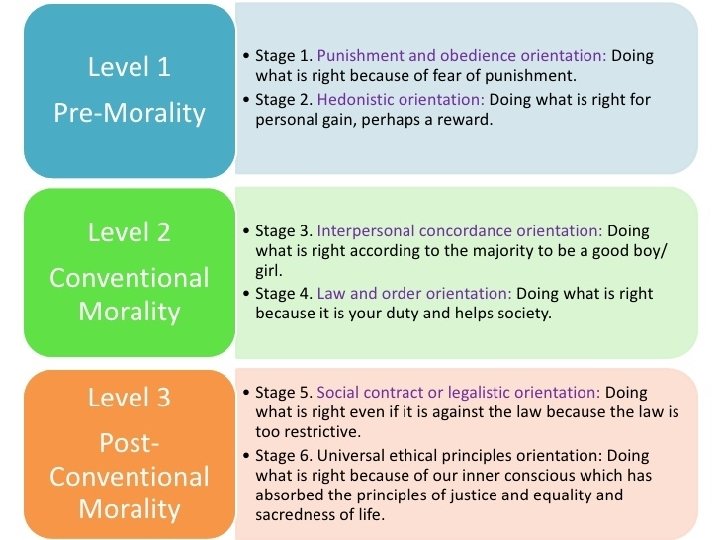
Kohlberg (1970 s) Moral reasoning is the foundation of ethical behavior Moral development is principally concerned with justice SCHOOL OF BUSINESS
SCHOOL OF BUSINESS
Heinz Dilemma So Heinz got desperate and broke into the man's store to steal the drug for his wife. Should Heinz have broken into the store to steal the drug for his wife? Why or why not? SCHOOL OF BUSINESS
Stages 1 & 2 Obedience • Heinz should not steal the medicine because he will consequently be put in prison which will mean he is a bad person. • Heinz should steal the medicine because it is only worth $200 and not how much the druggist wanted for it; Heinz had even offered to pay for it and was not stealing anything else. Self-interest • Heinz should steal the medicine because he will be much happier if he saves his wife, even if he will have to serve a prison sentence. • Heinz should not steal the medicine because prison is an awful place, and he would probably languish over a jail cell more than his wife's death. SCHOOL OF BUSINESS
Stages 3 & 4 Conformity • Heinz should steal the medicine because his wife expects it; he wants to be a good husband. • Heinz should not steal the drug because stealing is bad and he is not a criminal; he tried to do everything he could without breaking the law, you cannot blame him. Law-and-order • Heinz should not steal the medicine because the law prohibits stealing, making it illegal. • Heinz should steal the drug for his wife but also take the prescribed punishment for the crime as well as paying the druggist what he is owed. Criminals cannot just run around without regard for the law; actions have consequences. SCHOOL OF BUSINESS
Stages 5 & 6 Human rights • Heinz should steal the medicine because everyone has a right to choose life, regardless of the law. • Heinz should not steal the medicine because the scientist has a right to fair compensation. Even if his wife is sick, it does not make his actions right. Universal human ethics • Heinz should steal the medicine, because saving a human life is a more fundamental value than the property rights of another person. • Heinz should not steal the medicine, because others may need the medicine just as badly, and their lives are equally significant. SCHOOL OF BUSINESS
Who cares about my stage? ! -Your stage matters! -Problem-solving changes in your 20 s-30 s -Specific educational attempts to influence awareness -Behavior is influenced by moral perception and moral judgments Kohlberg cared… SCHOOL OF BUSINESS
Rest: 4 stage model Moral awareness � moral judgment � moral intent � moral behavior All of these together = moral maturity and correct decisions SCHOOL OF BUSINESS
Moral awareness (moral sensitivity) Interpreting the situation as moral Recognizing how your decision can impact others SCHOOL OF BUSINESS
Moral Judgment Defining the morally ideal course of actions Determining what should be done Formulate a plan that applies a moral standard (justice, virtue, etc. ) SCHOOL OF BUSINESS
Moral Intent (moral motivation) Deciding what to do How would various courses of action serve moral and non-moral values SCHOOL OF BUSINESS
Moral Behavior (moral action) Executing and implementing a moral plan of action Follow through! SCHOOL OF BUSINESS
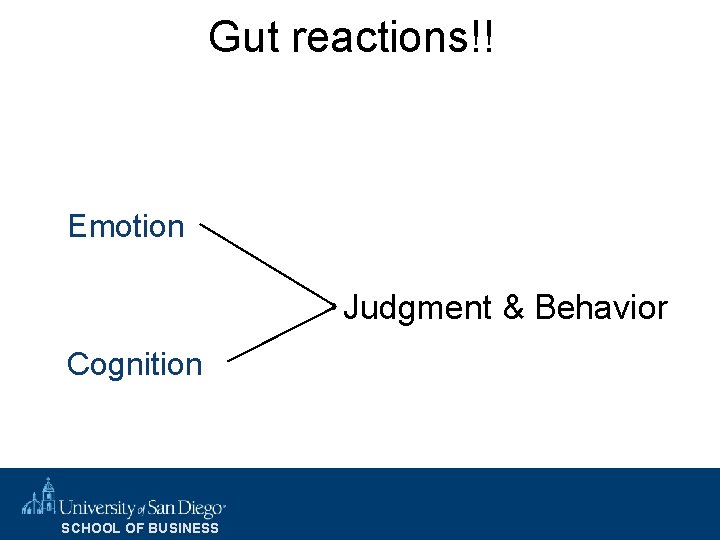
Gut reactions!! Emotion Judgment & Behavior Cognition SCHOOL OF BUSINESS
Ethical Relativism When in Rome… This makes ethics only a matter of opinion Denies that we can make rational or objective ethical judgments No right or wrong SCHOOL OF BUSINESS
“Relative” harassment? A male manager tells a female job applicant she will only be hired if she submits to his sexual advances. The manager feels the behavior is fine and the woman feels it’s wrong. According to the relativist: • Each opinion is equally valid. • Everyone is entitled to their own opinion. SCHOOL OF BUSINESS
Ethical Dilemmas = Tension Rules vs. results Means vs. ends The good vs. the right Principle vs. practicality The needs of many vs. the rights of the few (or the one) SCHOOL OF BUSINESS
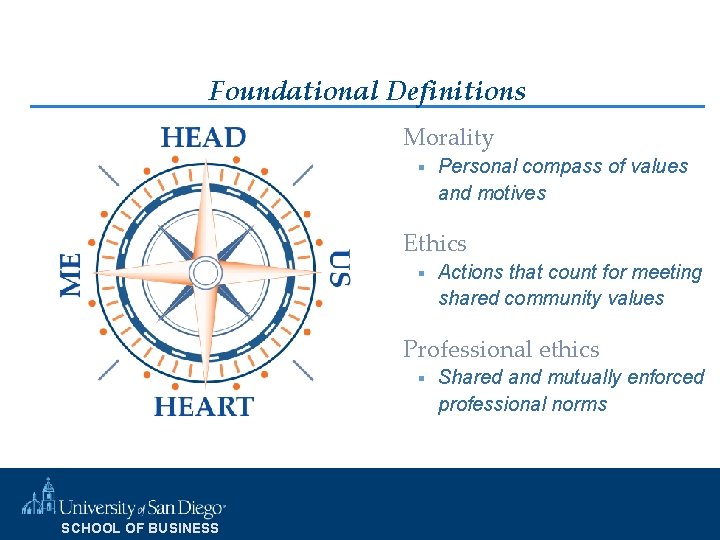
Foundational Definitions Morality § Personal compass of values and motives Ethics § Actions that count for meeting shared community values Professional ethics § SCHOOL OF BUSINESS Shared and mutually enforced professional norms
T. L. Ceranic SCHOOL OF BUSINESS Business & Society
T. L. Ceranic SCHOOL OF BUSINESS Business & Society (ETLW 302)
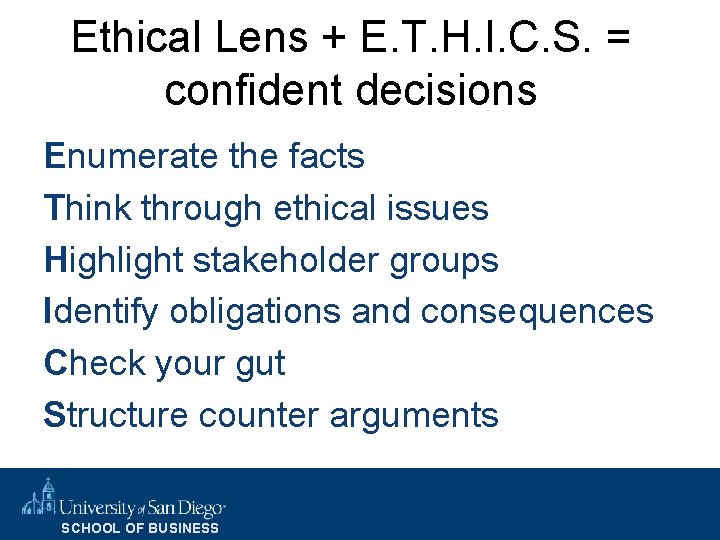
Ethical Lens + E. T. H. I. C. S. = confident decisions Enumerate the facts Think through ethical issues Highlight stakeholder groups Identify obligations and consequences Check your gut Structure counter arguments SCHOOL OF BUSINESS
SCHOOL OF BUSINESS
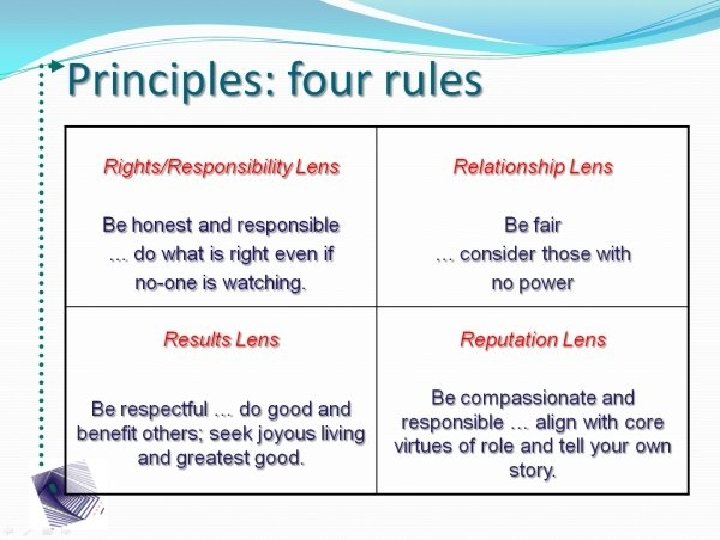
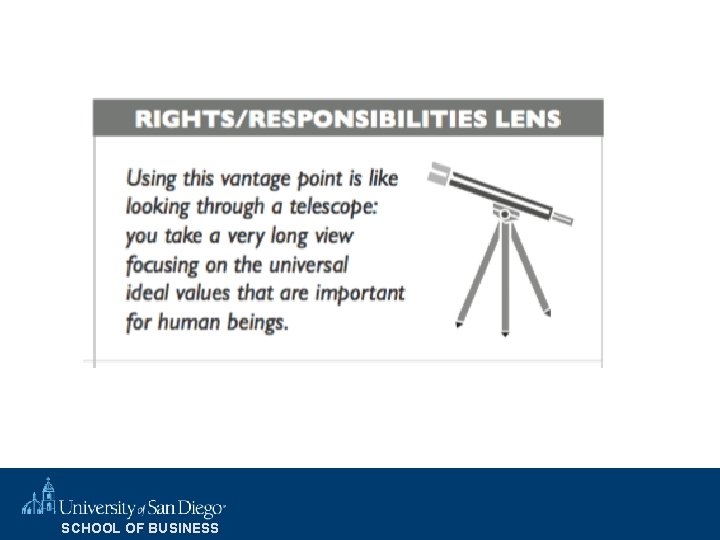
Emphasis on duty § Universal moral duty to do what is right for it’s OWN sake § Consequences play a minor role § Golden Rule SCHOOL OF BUSINESS
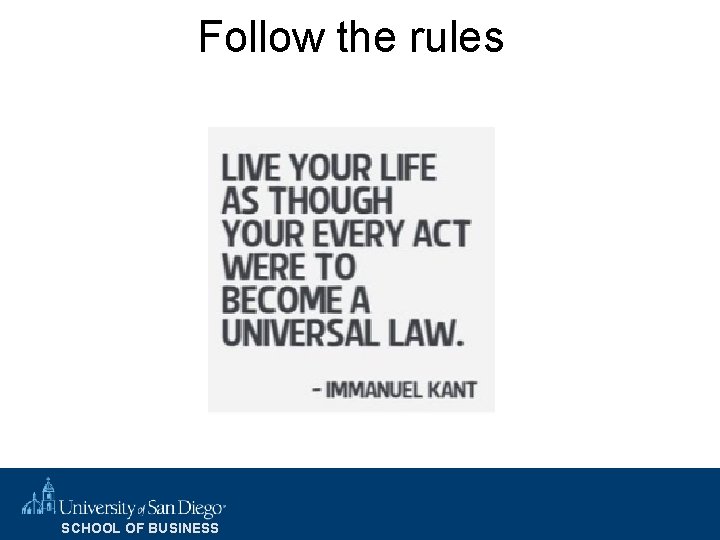
Follow the rules SCHOOL OF BUSINESS
Communicative Ethics • Can be utilized by a group of individuals or organizations to challenge or develop moral standards, • Does not prescribe what is ethical • Assumes that the better argument will prevail as a result of inclusive group dialogue • Acknowledges the conflicting values that exist in groups and allows individuals to work together to create a moral theory that will satisfy everyone. SCHOOL OF BUSINESS
SCHOOL OF BUSINESS
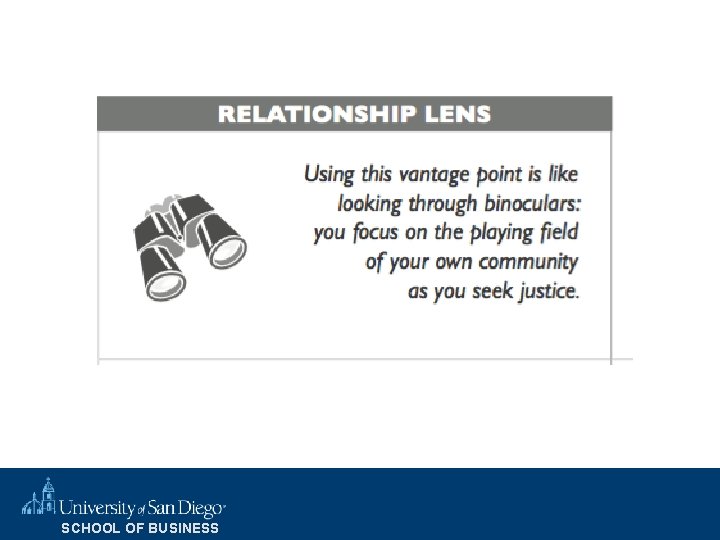
Emphasis on fair systems Seeks justice and to care for those less fortunate SCHOOL OF BUSINESS
John Rawls (1921 -2002) Distributive Justice • Free people need to agree on some ground rules in order to live together in harmony. • Original position: A hypothetical situation in which the future members of a society meet to agree upon the general political principles to govern their society. • • The Veil of Ignorance Being redistributed is not merely money or ‘stuff’, but rights and liberties, and even opportunities. SCHOOL OF BUSINESS
Difference principle • Regulates inequalities: it only permits inequalities that work to the advantage of the worst-off. • NOT trickle-down economics • Wealth “diffuses up” • Guarantees the worst-off in society a fair deal SCHOOL OF BUSINESS
Robert Nozick (1938 -2002) Role of the State Ought to be severely limited: Police protection National defense Administration of courts of law - education, social insurance, welfare, and so forth - taken over by religious bodies, charities, and other private institutions operating in a free market. SCHOOL OF BUSINESS
Some pretty big differences with the justice approaches • Legitimacy of governmental redistribution of wealth • Entitlement theory: individual holdings of various social and economic goods are justified only if they derive from just acquisitions or (voluntary) transfers. • No safety nets allowed (acquisitions from social programs are not just because they are funded through the involuntary transfer of wealth via taxation and are therefore taboo). • No accommodations for free-riders should be made. SCHOOL OF BUSINESS
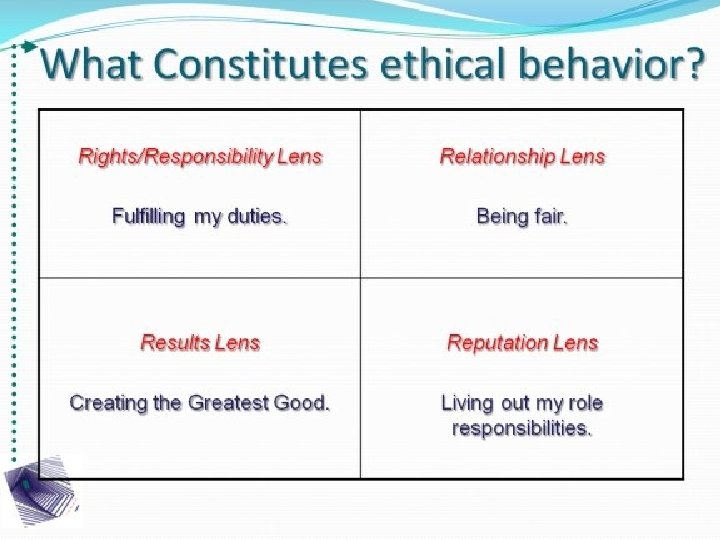
Pros + Cons Rationality (reason/head) Rights/Responsibilities Lens Relationship Lens (Deontological Theories) (Justice Theories) Autonomy Equality (individual) (community) Results Lens Reputation Lens (Consequentialist Theories) (Virtue Theories) Sensibility (intuition/heart) SCHOOL OF BUSINESS
Rationality (BLACK/WHITE) Pros • Protects the means • Protects individual rights • Morally more appealing Cons • Inflexible • Impractical SCHOOL OF BUSINESS
SCHOOL OF BUSINESS
Emphasizes goals and outcomes Jeremey Bentham The purpose of morality is to make life better by INCREASING the amount of good things (such as pleasure and happiness) in the world and DECREASING the amount of bad things (such as pain and unhappiness). SCHOOL OF BUSINESS
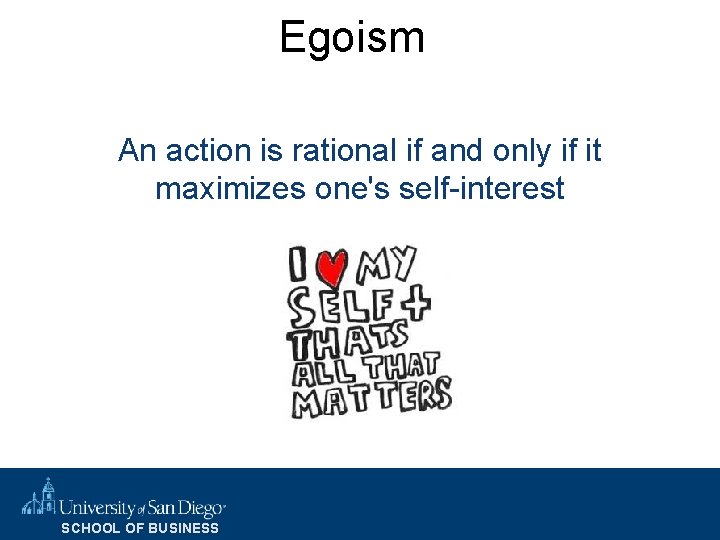
Egoism An action is rational if and only if it maximizes one's self-interest SCHOOL OF BUSINESS
Ayn Rand (1905 -1982) SCHOOL OF BUSINESS
SCHOOL OF BUSINESS
Emphasis on virtue What makes us responsible and virtuous citizens within our workplace/community? SCHOOL OF BUSINESS
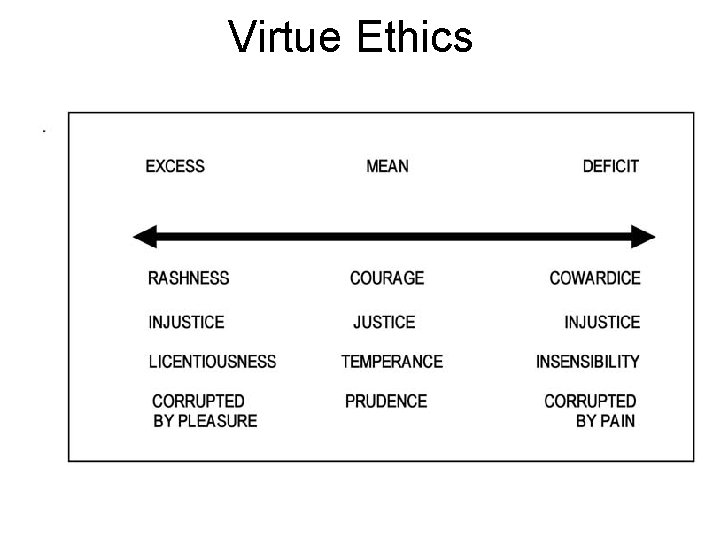
Virtue Ethics
Ethic of Care: People are dependent and interdependent 1. Moral attention (situations are complex) 2. Sympathetic understanding 3. Relationship awareness (accountability) 4. Harmony (preserve balance) SCHOOL OF BUSINESS
When do we have an obligation to care? 1. A relationship exists 2. A need for care exists 3. We have the ability to provide care SCHOOL OF BUSINESS
Stoicism: Self-control and fortitude as a means of overcoming destructive emotions. Does not seek to extinguish emotions completely, but to transform them by an abstinence from worldly pleasures, which enables a person to develop clear judgment, inner calm and freedom from suffering: the ultimate goal. SCHOOL OF BUSINESS
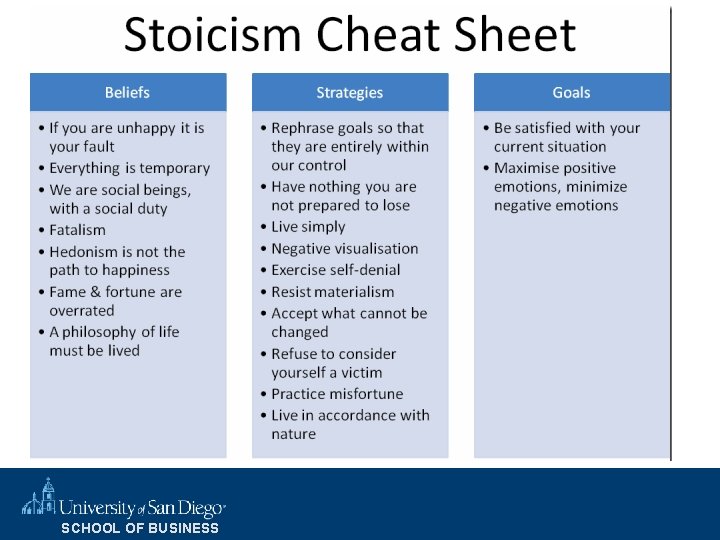
SCHOOL OF BUSINESS
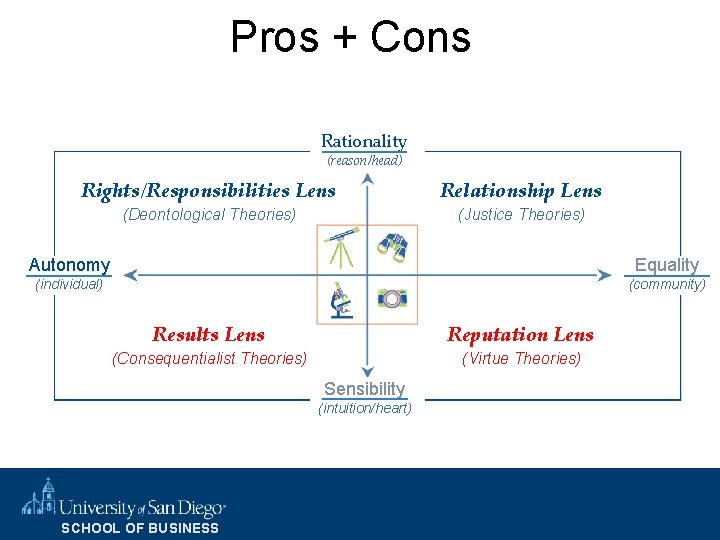
Pros + Cons Rationality (reason/head) Rights/Responsibilities Lens Relationship Lens (Deontological Theories) (Justice Theories) Autonomy Equality (individual) (community) Results Lens Reputation Lens (Consequentialist Theories) (Virtue Theories) Sensibility (intuition/heart) SCHOOL OF BUSINESS
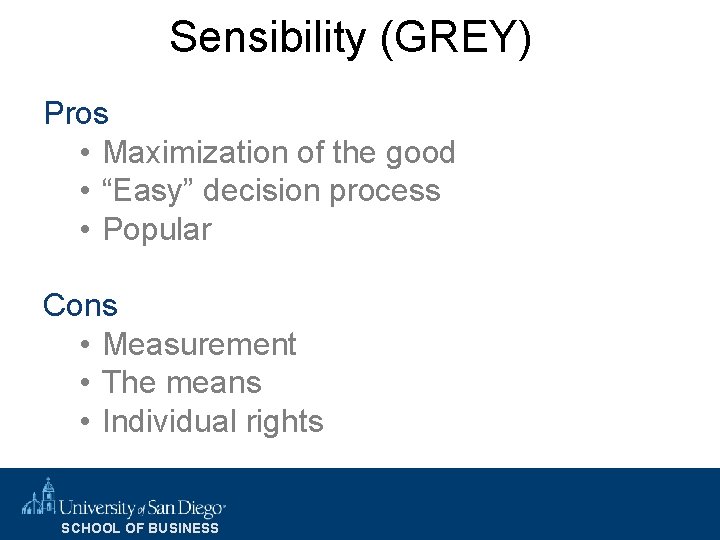
Sensibility (GREY) Pros • Maximization of the good • “Easy” decision process • Popular Cons • Measurement • The means • Individual rights SCHOOL OF BUSINESS
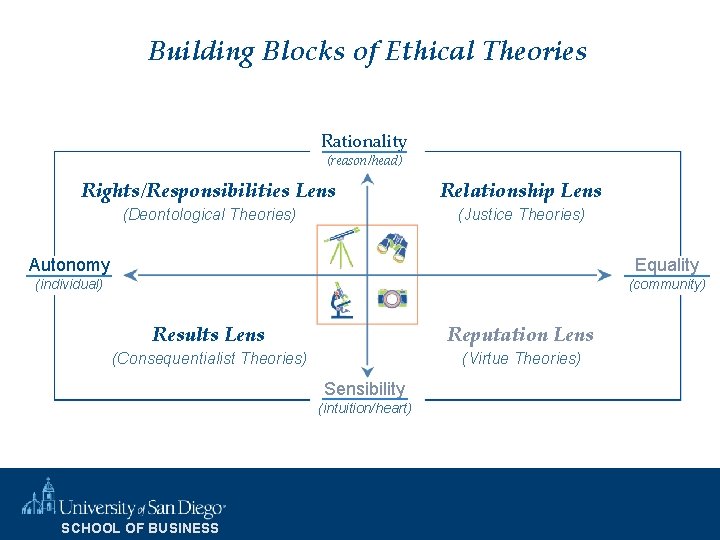
Building Blocks of Ethical Theories Rationality (reason/head) Rights/Responsibilities Lens Relationship Lens (Deontological Theories) (Justice Theories) Autonomy Equality (individual) (community) Results Lens Reputation Lens (Consequentialist Theories) (Virtue Theories) Sensibility (intuition/heart) SCHOOL OF BUSINESS
Blind Spots + Temptations + Vices § Blind spots represent those places we are not aware § Temptations are faced when we are under stress § Vices emerge as we choose to act unethically § What was your response to information about your blind spots? SCHOOL OF BUSINESS
Why is this important? § § To understand how we make decisions To understand multiple positions To uncover biases To create powerful and effective responses § To generate options § To make ethical decisions SCHOOL OF BUSINESS
- Slides: 59