
Business Policy and Strategy Lecture 27 1 Recap
Business Policy and Strategy Lecture 27 1
Recap • MEANS FOR ACHIEVING STRATEGIES – Joint Venture – Mergers and acquisitions – Leveraged Buyouts (LBOs) – First Mover Advantages – Outsourcing 2
Today’s Lecture • Nature of Strategy Analysis & Choice • Comprehensive Strategy-Formulation Framework – SWOT Matrix – Strategic Position and Action Evaluation (SPACE) 3
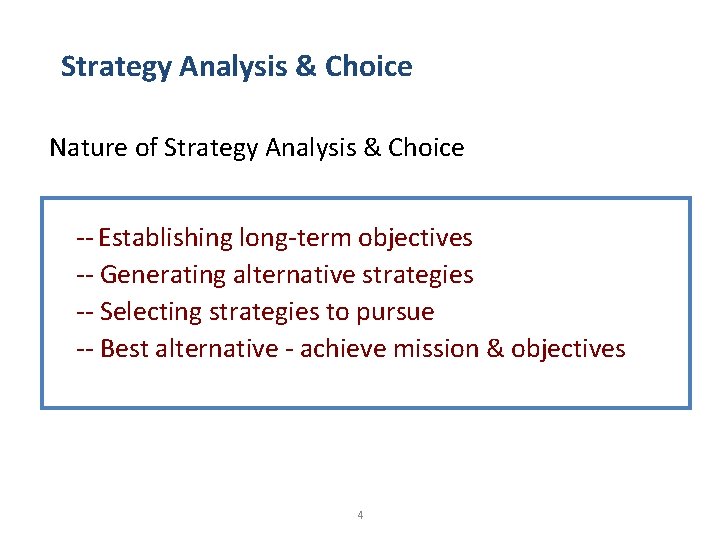
Strategy Analysis & Choice Nature of Strategy Analysis & Choice -- Establishing long-term objectives -- Generating alternative strategies -- Selecting strategies to pursue -- Best alternative - achieve mission & objectives 4
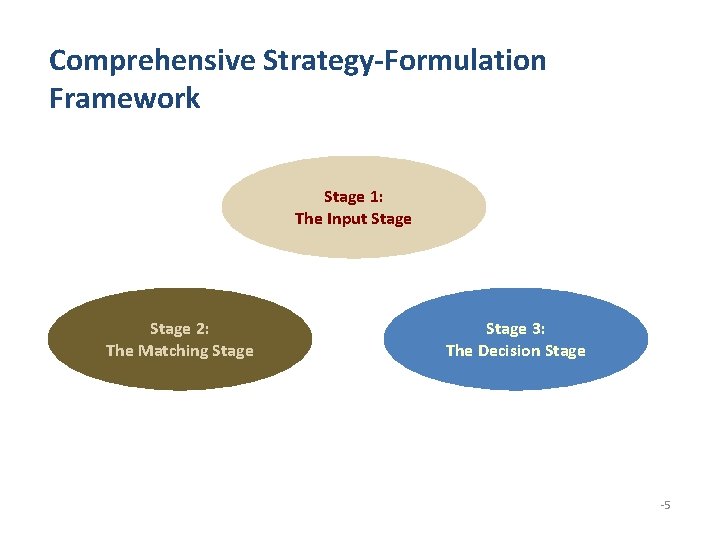
Comprehensive Strategy-Formulation Framework Stage 1: The Input Stage 2: The Matching Stage 3: The Decision Stage -5
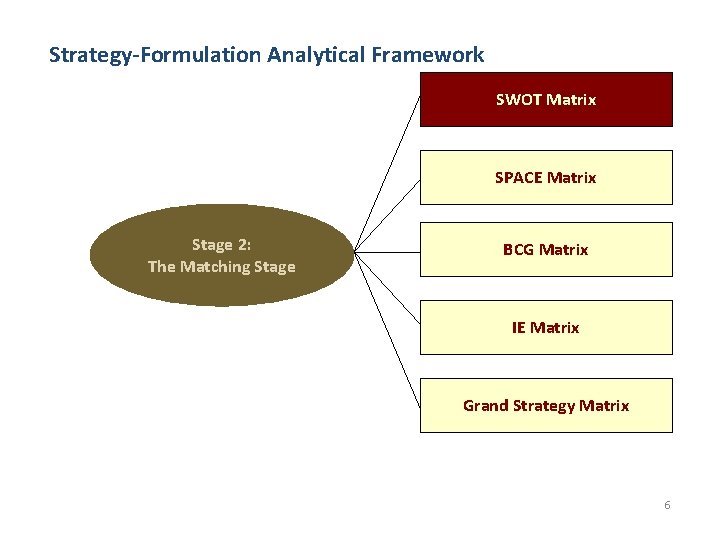
Strategy-Formulation Analytical Framework SWOT Matrix SPACE Matrix Stage 2: The Matching Stage BCG Matrix IE Matrix Grand Strategy Matrix 6
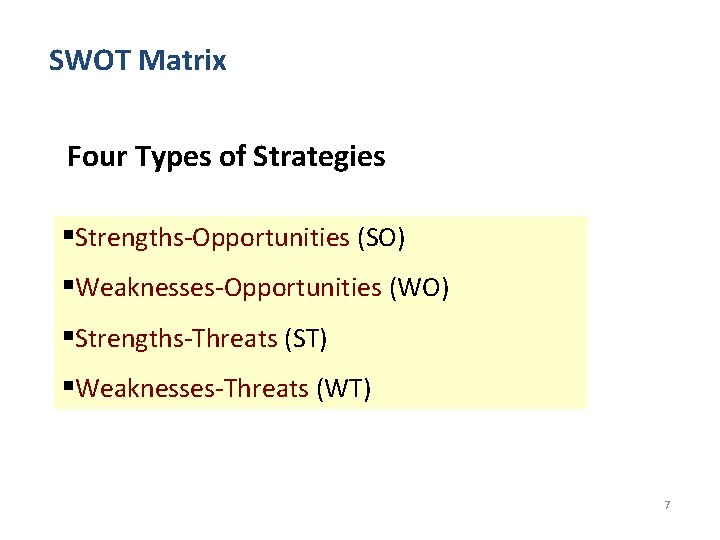
SWOT Matrix Four Types of Strategies §Strengths-Opportunities (SO) §Weaknesses-Opportunities (WO) §Strengths-Threats (ST) §Weaknesses-Threats (WT) 7
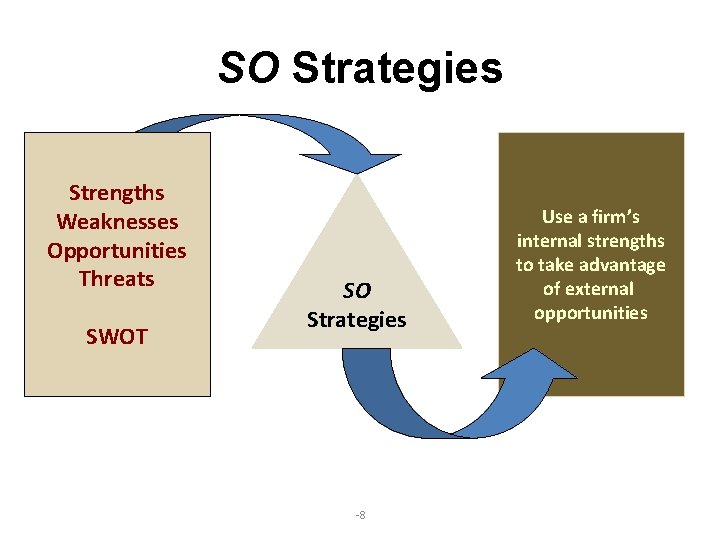
SO Strategies Strengths Weaknesses Opportunities Threats SWOT SO Strategies -8 Use a firm’s internal strengths to take advantage of external opportunities
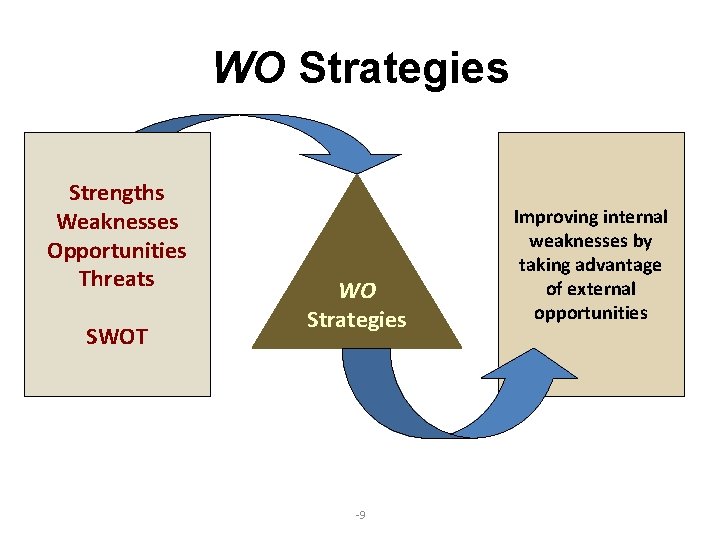
WO Strategies Strengths Weaknesses Opportunities Threats SWOT WO Strategies -9 Improving internal weaknesses by taking advantage of external opportunities
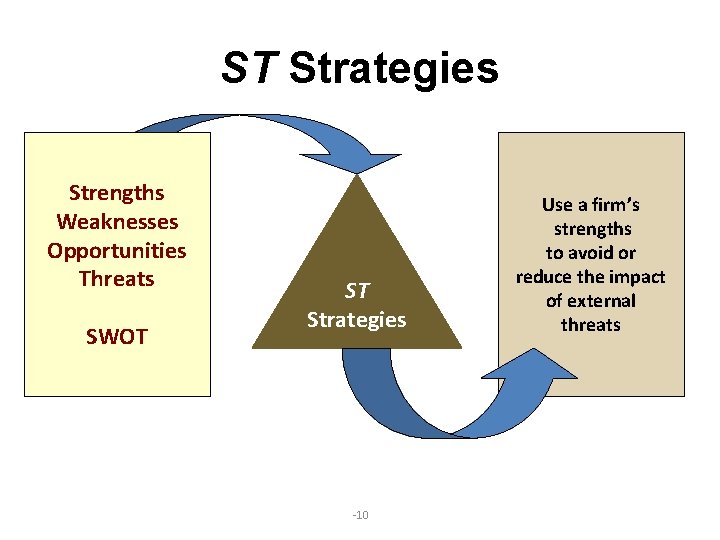
ST Strategies Strengths Weaknesses Opportunities Threats SWOT ST Strategies -10 Use a firm’s strengths to avoid or reduce the impact of external threats
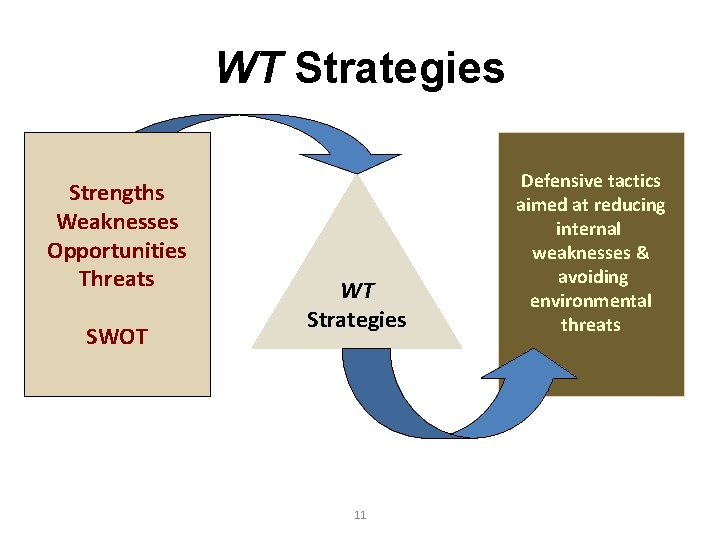
WT Strategies Strengths Weaknesses Opportunities Threats SWOT WT Strategies 11 Defensive tactics aimed at reducing internal weaknesses & avoiding environmental threats
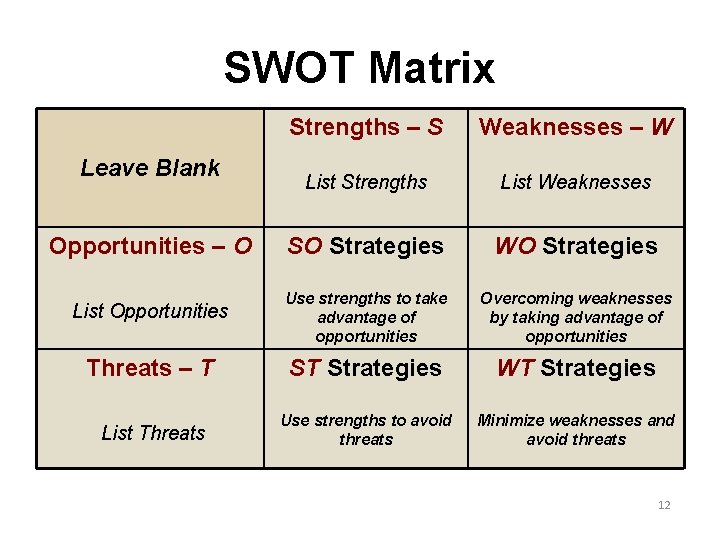
SWOT Matrix Strengths – S Weaknesses – W List Strengths List Weaknesses Opportunities – O SO Strategies WO Strategies List Opportunities Use strengths to take advantage of opportunities Overcoming weaknesses by taking advantage of opportunities Threats – T ST Strategies WT Strategies List Threats Use strengths to avoid threats Minimize weaknesses and avoid threats Leave Blank 12
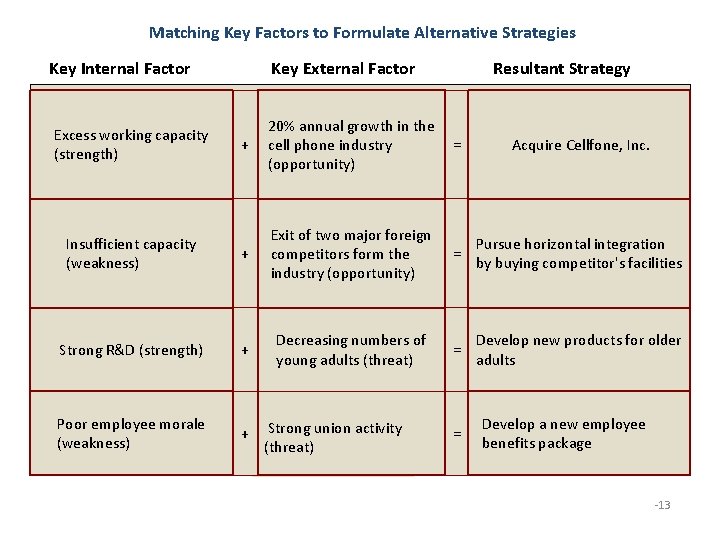
Matching Key Factors to Formulate Alternative Strategies Key Internal Factor Key External Factor Excess working capacity (strength) + 20% annual growth in the cell phone industry (opportunity) = Acquire Cellfone, Inc. Insufficient capacity (weakness) + Exit of two major foreign competitors form the industry (opportunity) = Pursue horizontal integration by buying competitor's facilities Strong R&D (strength) + Decreasing numbers of young adults (threat) = Develop new products for older adults Poor employee morale (weakness) + Strong union activity (threat) Resultant Strategy = Develop a new employee benefits package -13
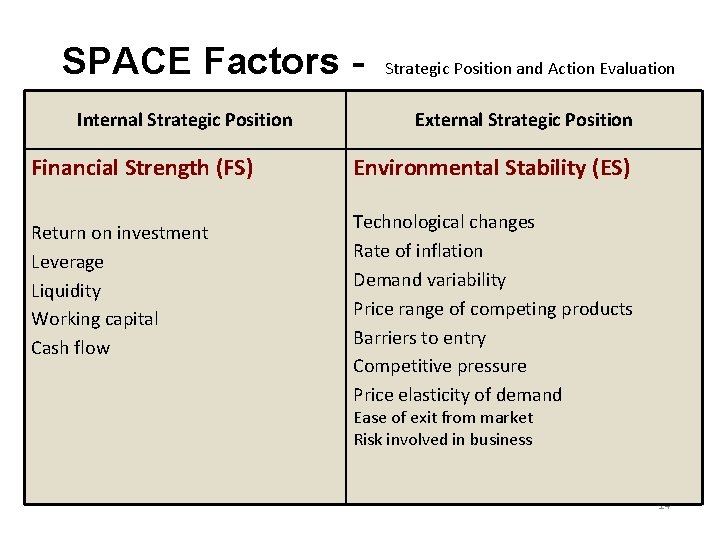
SPACE Factors Internal Strategic Position Financial Strength (FS) Return on investment Leverage Liquidity Working capital Cash flow Strategic Position and Action Evaluation External Strategic Position Environmental Stability (ES) Technological changes Rate of inflation Demand variability Price range of competing products Barriers to entry Competitive pressure Price elasticity of demand Ease of exit from market Risk involved in business 14
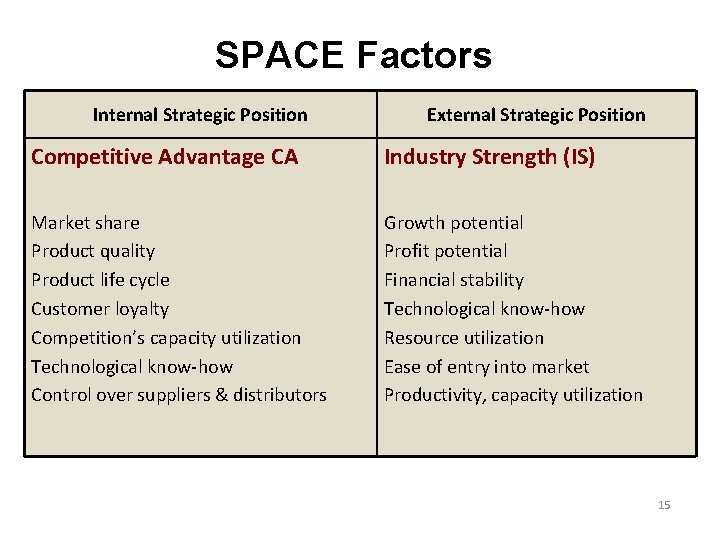
SPACE Factors Internal Strategic Position External Strategic Position Competitive Advantage CA Industry Strength (IS) Market share Product quality Product life cycle Customer loyalty Competition’s capacity utilization Technological know-how Control over suppliers & distributors Growth potential Profit potential Financial stability Technological know-how Resource utilization Ease of entry into market Productivity, capacity utilization 15
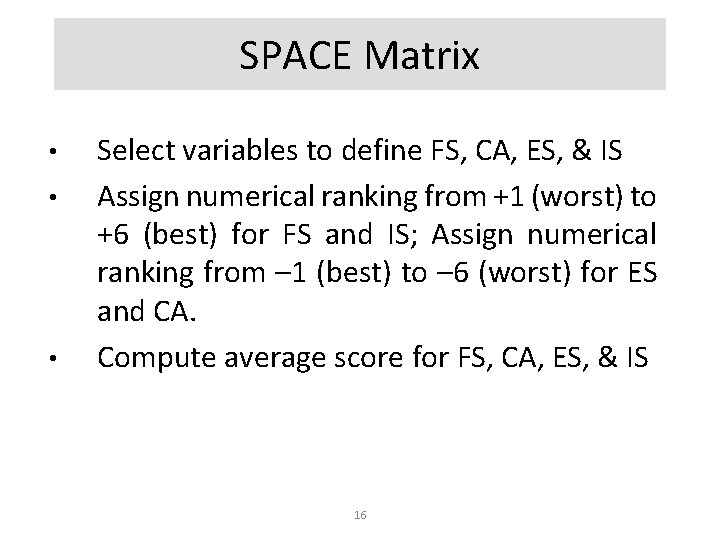
SPACE Matrix • • • Select variables to define FS, CA, ES, & IS Assign numerical ranking from +1 (worst) to +6 (best) for FS and IS; Assign numerical ranking from – 1 (best) to – 6 (worst) for ES and CA. Compute average score for FS, CA, ES, & IS 16
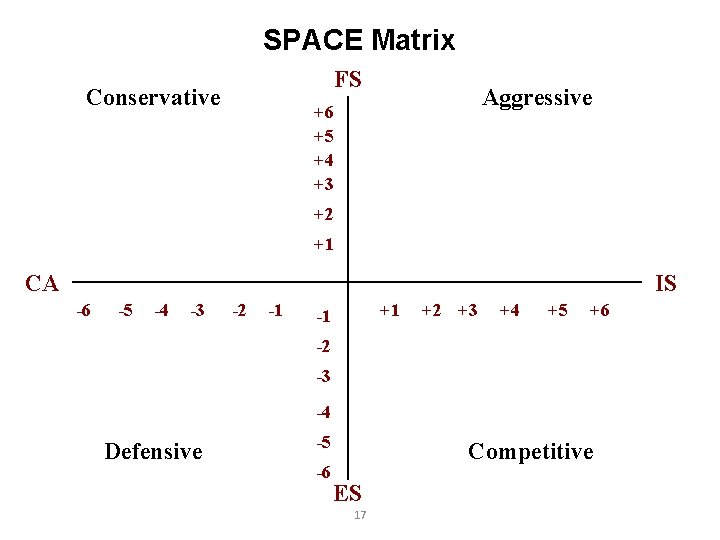
SPACE Matrix FS Conservative Aggressive +6 +5 +4 +3 +2 +1 CA IS -6 -5 -4 -3 -2 -1 +1 -1 +2 +3 +4 +5 +6 -2 -3 -4 Defensive -5 -6 Competitive ES 17
SPACE Matrix • • • Plot the average scores on the Matrix Add the two scores on the x-axis and plot point on X. Add the scores on the y-axis and plot Y. Plot the intersection of the new xy point. Draw a directional vector from origin through the new intersection point. 18
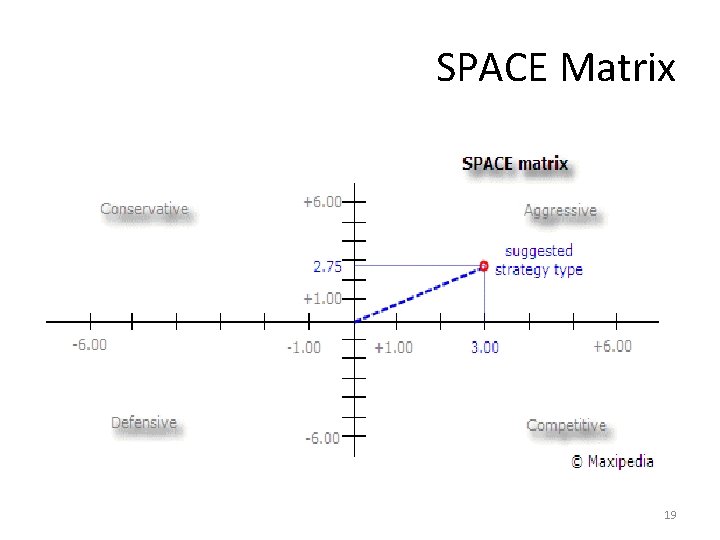
SPACE Matrix 19
Summary • Nature of Strategy Analysis & Choice • Comprehensive Strategy-Formulation Framework – SWOT Matrix – Strategic Position and Action Evaluation (SPACE) 20
Next Lecture • BCG Matrix • The Internal-External Matrix • Quantitative Strategic Planning Matrix 21
- Slides: 21