
Business of Platforms Platforms version 09242020 n n
Business of Platforms: Platforms (version 09242020) n n n A platform is a collection of essential components that brings together a variety of components or complementary goods and allows them to function together Platform’s output could be sold to the same customers, e. g. i. Phone and i. Phone apps Or a platform could bring together two different groups, e. g. drivers and riders in Uber 1
Examples n n n Intel microchip allows a keyboard, an OS, a video monitor, and other components to connect and function Windows platform allows a variety of applications to function In computing systems, a platform opens hooks (Application Programming Interfaces, APIs) to which components or applications attach 2
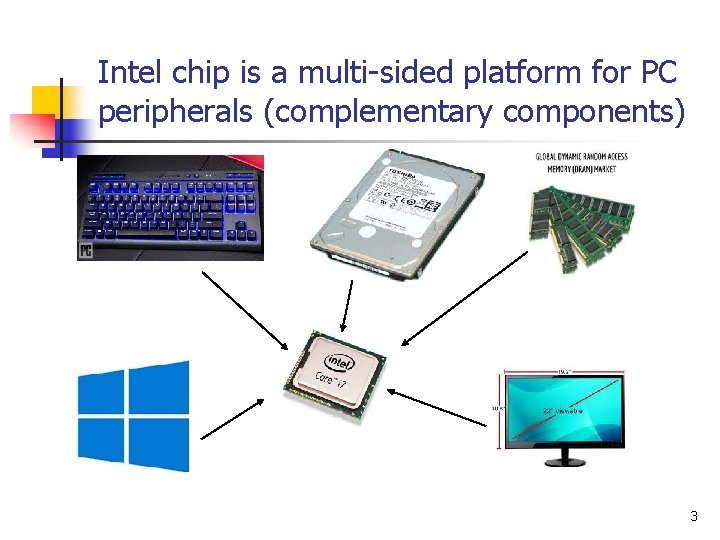
Intel chip is a multi-sided platform for PC peripherals (complementary components) 3
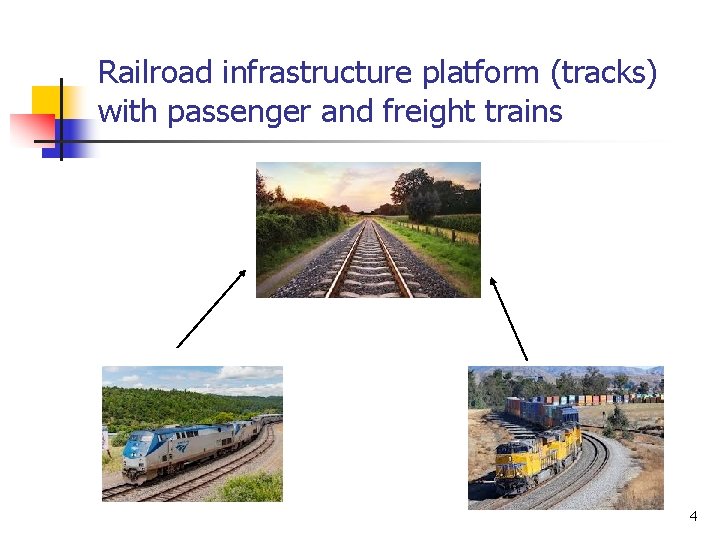
Railroad infrastructure platform (tracks) with passenger and freight trains 4
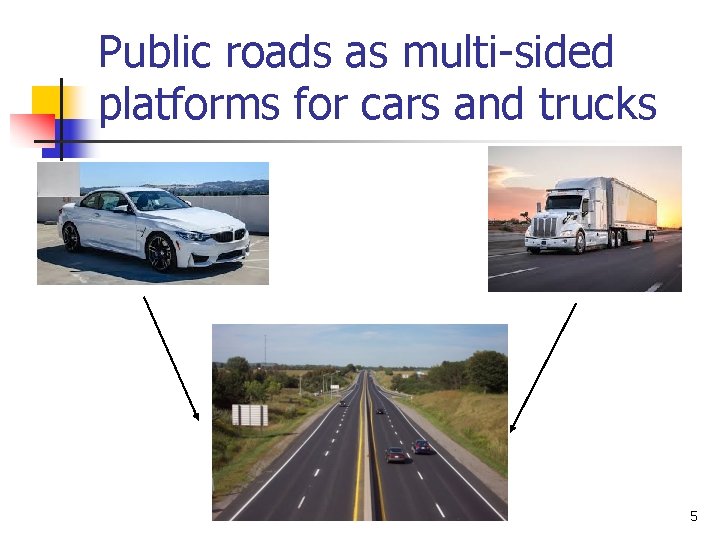
Public roads as multi-sided platforms for cars and trucks 5
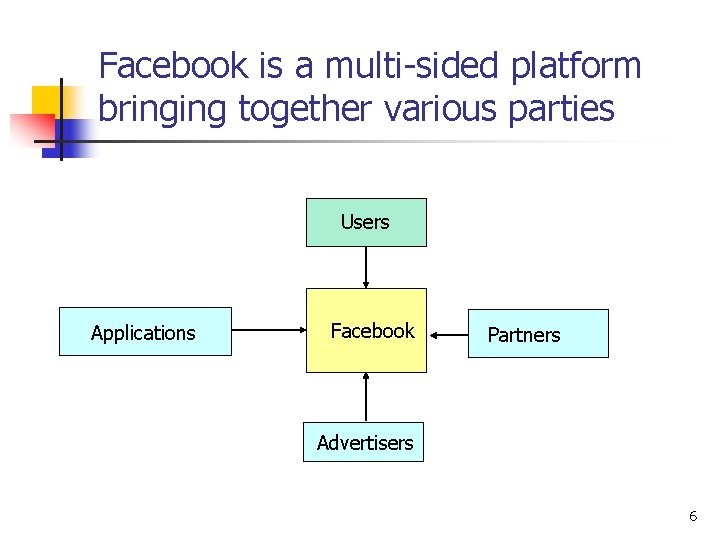
Facebook is a multi-sided platform bringing together various parties Users Applications Facebook Partners Advertisers 6
Multi-sided platforms n A platform n n defines the intermediary that connects and coordinates buyers and sellers (or, in general, complementary sets of actors or functions) typically exploits network effects and feedback loops (to discuss later) 7
A platform n May facilitate transactions (transactional platform) n n May facilitate innovation (innovation platform) n n Amex connects merchants and buyers CRSPR Could be both transactional and innovative n Windows facilitates transactions as well as new innovative apps 8
Innovation platform: Gene editing using the CRISPR technology n n n Treated cases of sickle cell anemia Edited T-cells to fight lymphoma and other cancers Edited photoreceptor cells to treat inherited blindness Edited bacteria to eat carbon dioxide Still in early years … 9
Who gets charged by the platform n n Some platforms collect from both sides, some from one side only and the other side pays nothing, and some collect from one side and subsidize the other Prices are determined by the two markets’ characteristics Generally, prices are higher on the less elastic side of the market Do you charge per unit or through a subscription fee? 10
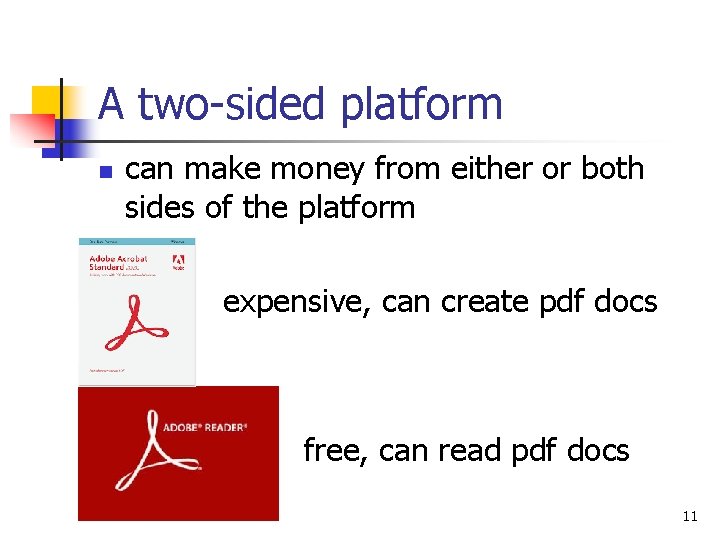
A two-sided platform n n can make money from either or both sides of the platform expensive, can create pdf docs n free, can read pdf docs 11
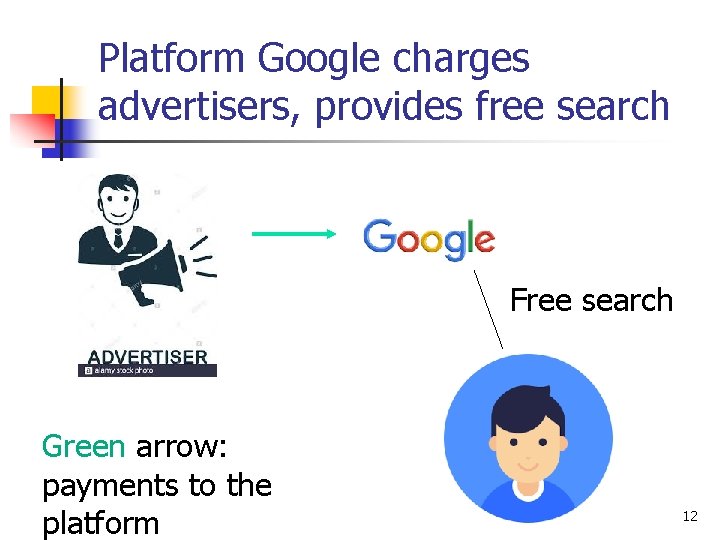
Platform Google charges advertisers, provides free search Free search Green arrow: payments to the platform 12
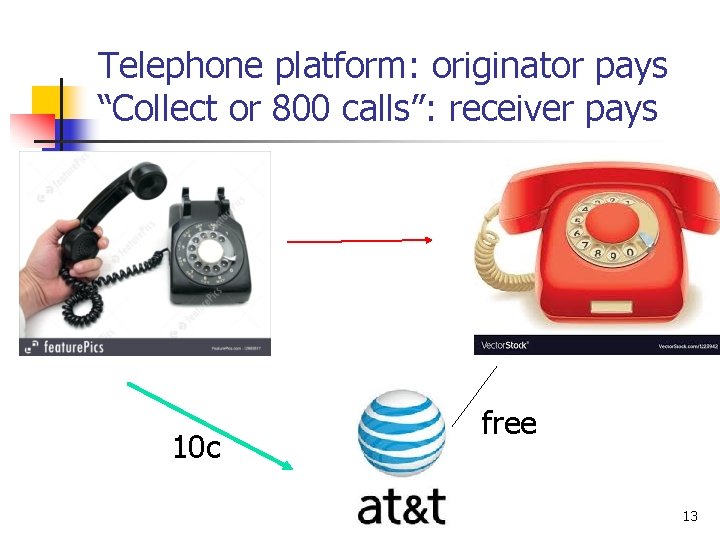
Telephone platform: originator pays “Collect or 800 calls”: receiver pays 10 c free 13
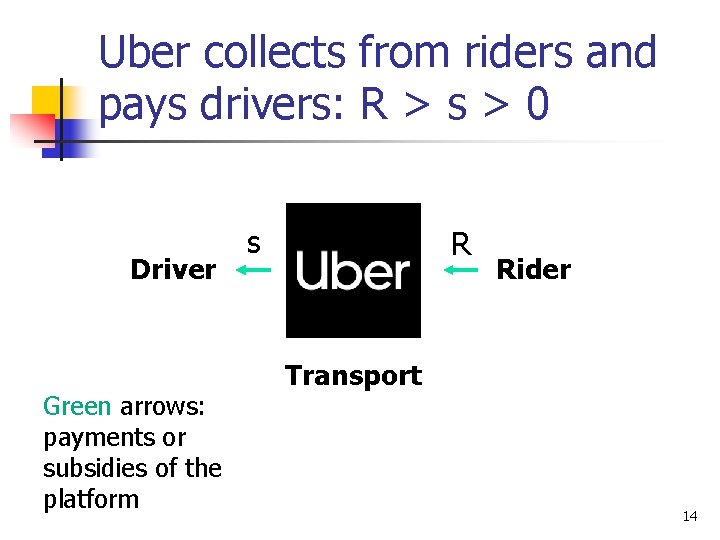
Uber collects from riders and pays drivers: R > s > 0 Driver Green arrows: payments or subsidies of the platform s R Rider Transport 14
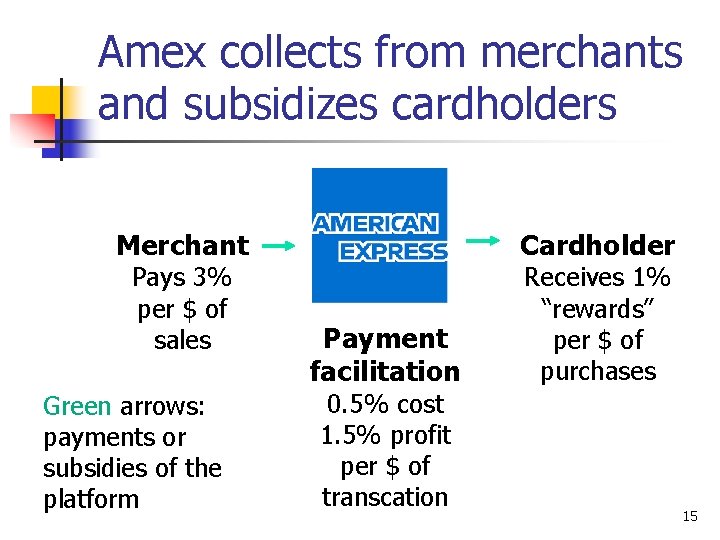
Amex collects from merchants and subsidizes cardholders Merchant Pays 3% per $ of sales Green arrows: payments or subsidies of the platform Cardholder Payment facilitation 0. 5% cost 1. 5% profit per $ of transcation Receives 1% “rewards” per $ of purchases 15
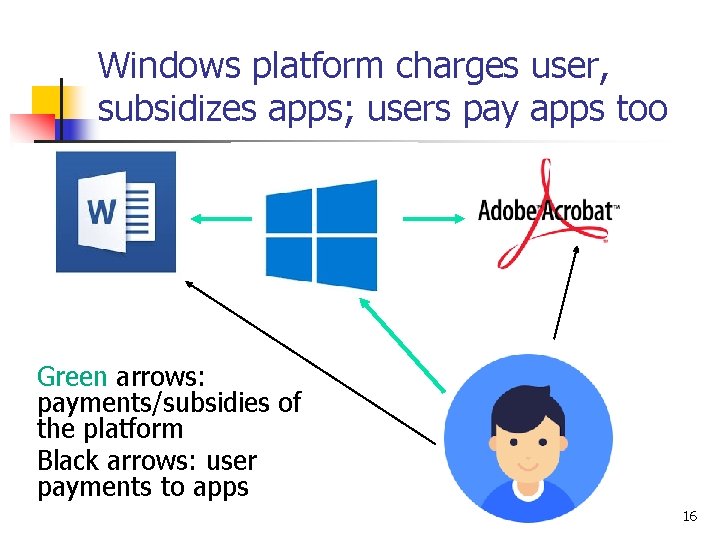
Windows platform charges user, subsidizes apps; users pay apps too Green arrows: payments/subsidies of the platform Black arrows: user payments to apps 16
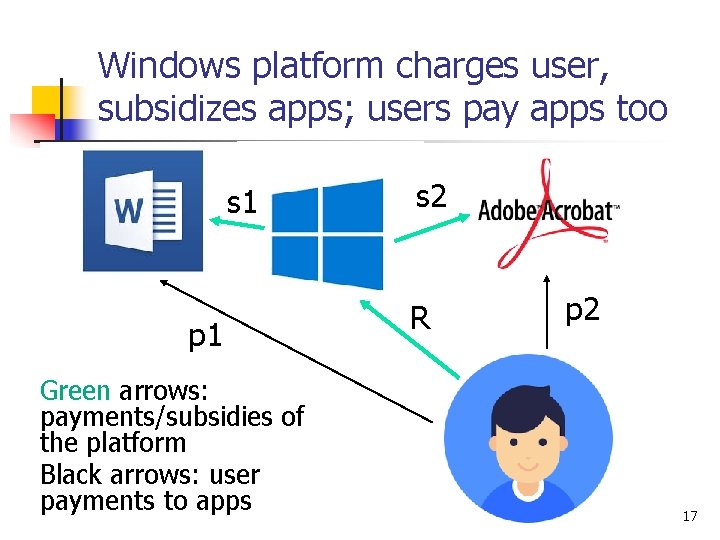
Windows platform charges user, subsidizes apps; users pay apps too s 1 p 1 Green arrows: payments/subsidies of the platform Black arrows: user payments to apps s 2 R p 2 17
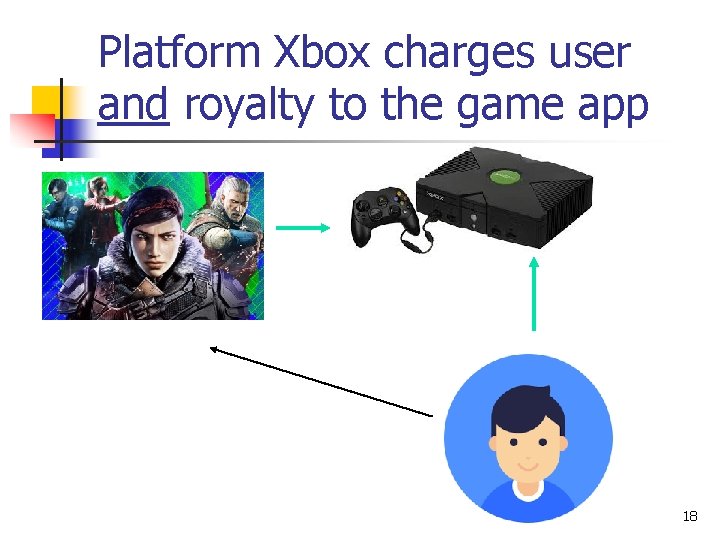
Platform Xbox charges user and royalty to the game app 18
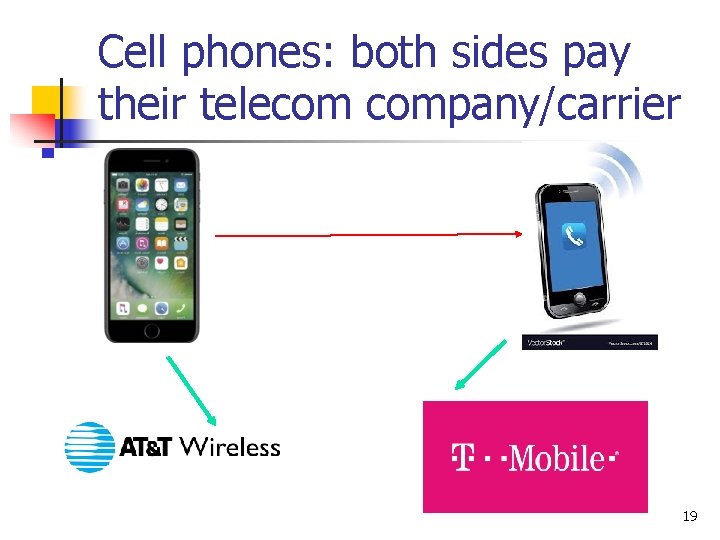
Cell phones: both sides pay their telecom company/carrier 19
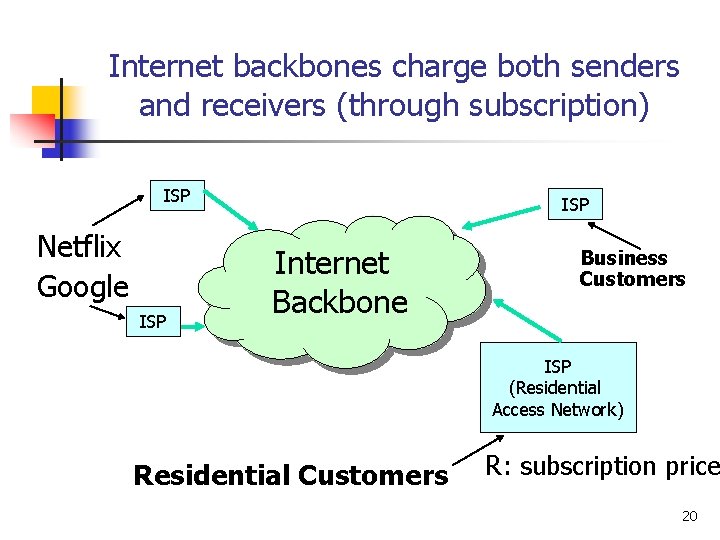
Internet backbones charge both senders and receivers (through subscription) ISP Netflix Google ISP Internet Backbone Business Customers ISP (Residential Access Network) Residential Customers R: subscription price 20
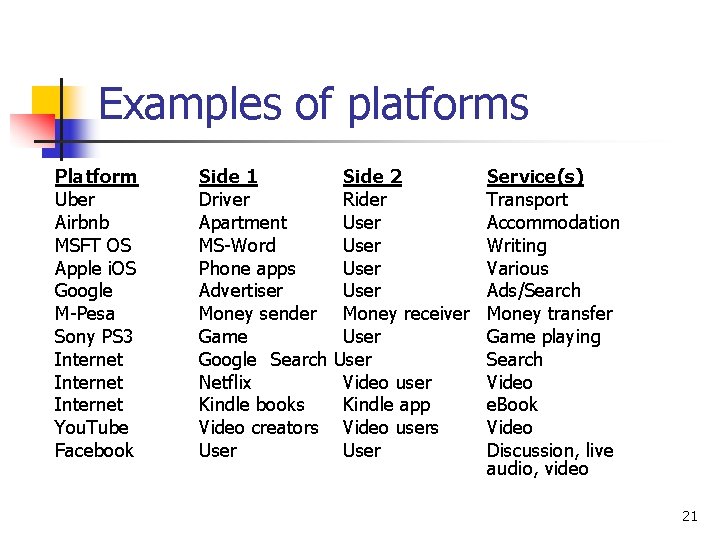
Examples of platforms Platform Uber Airbnb MSFT OS Apple i. OS Google M-Pesa Sony PS 3 Internet You. Tube Facebook Side 1 Driver Apartment MS-Word Phone apps Advertiser Money sender Game Google Search Netflix Kindle books Video creators User Side 2 Rider User Money receiver User Video user Kindle app Video users User Service(s) Transport Accommodation Writing Various Ads/Search Money transfer Game playing Search Video e. Book Video Discussion, live audio, video 21
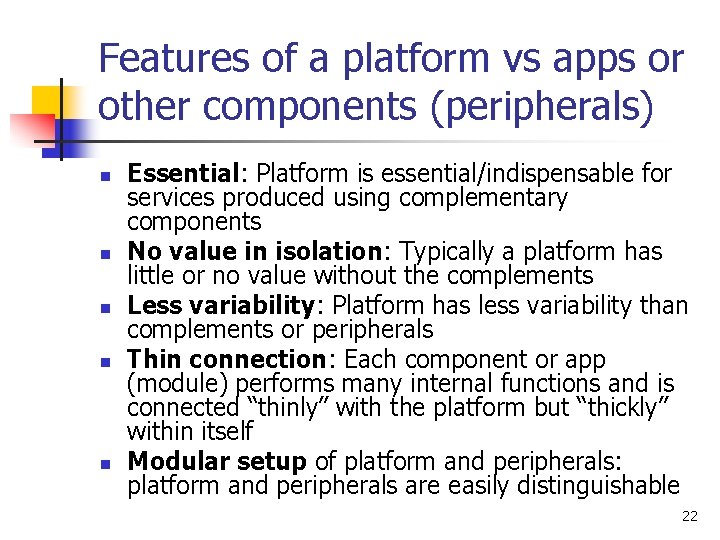
Features of a platform vs apps or other components (peripherals) n n n Essential: Platform is essential/indispensable for services produced using complementary components No value in isolation: Typically a platform has little or no value without the complements Less variability: Platform has less variability than complements or peripherals Thin connection: Each component or app (module) performs many internal functions and is connected “thinly” with the platform but “thickly” within itself Modular setup of platform and peripherals: platform and peripherals are easily distinguishable 22
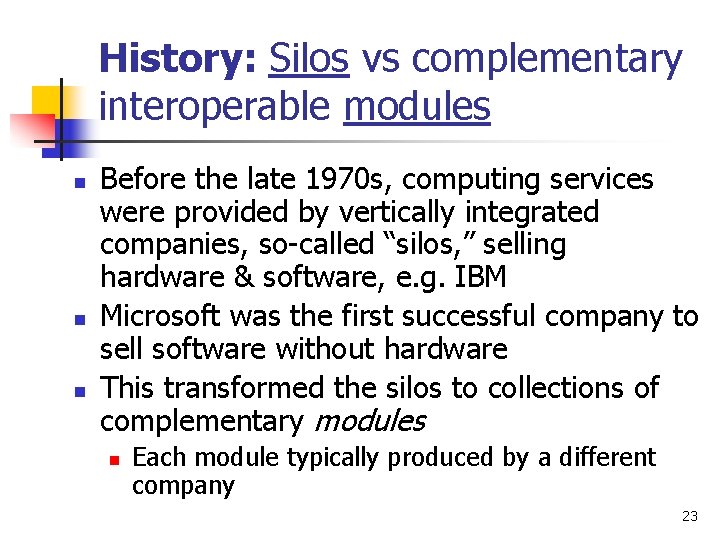
History: Silos vs complementary interoperable modules n n n Before the late 1970 s, computing services were provided by vertically integrated companies, so-called “silos, ” selling hardware & software, e. g. IBM Microsoft was the first successful company to sell software without hardware This transformed the silos to collections of complementary modules n Each module typically produced by a different company 23
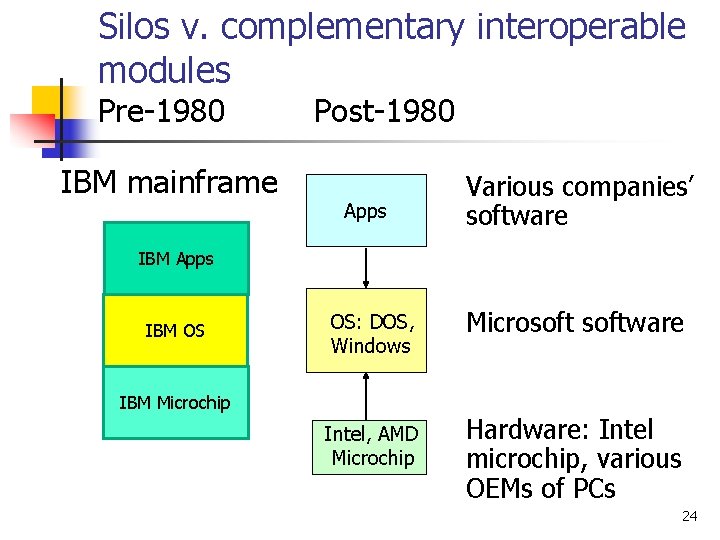
Silos v. complementary interoperable modules Pre-1980 IBM mainframe Post-1980 Apps Various companies’ software IBM Apps IBM OS OS: DOS, Windows Microsoftware Intel, AMD Microchip Hardware: Intel microchip, various OEMs of PCs IBM Microchip 24
Silos v. complementary modules n Pricing: Silos set up a single price for the package of hardware and software n n Limitations of silos: n n n Typically, price was for the hardware and software was bundled for free You could only use the software of the hardware seller Hardware difficult to scale down Major advantage of silos: Hardware was top of the line 25
Advantages of modularity n n n In principle, could combine the best of each: hardware, OS, apps (“mix and match”) Large variety of software produced by third parties Faster technological change in both software and hardware 26
Modules interconnection requires technical standards n n n defining the connections between hardware and OS (set by Intel) and between OS and apps (set by Microsoft) Platforms such as Microsoft and Intel defined these technical standards, called “application product interfaces, ” APIs Platforms created barriers to entry to rival platforms through these APIs 27
The birth of Microsoft, the first software-only computer company n n https: //www. youtube. com/watch? v=c. S Ox 0 Hv 8 s 3 g Microsoft’s slogan in 1980 s: n n “a computer on every desk and in every home” We are now at n “a computer in every pocket" 28

29
Who makes most of the money in the ecosystem? n Typically, the platform makes much more money than the apps or peripherals n n Constant complaint against platforms Microsoft, Google, Intel by apps Will go in details later in the course 30
Power of platforms: Best platform wins over best product n n n Apple’s Mac was considered a better product than DOS or early Windows PCs But Windows had wide adoption and a huge number of apps in comparison Result: the Windows platform has 95% market share vs Mac’s 5% over the last 40 years 31
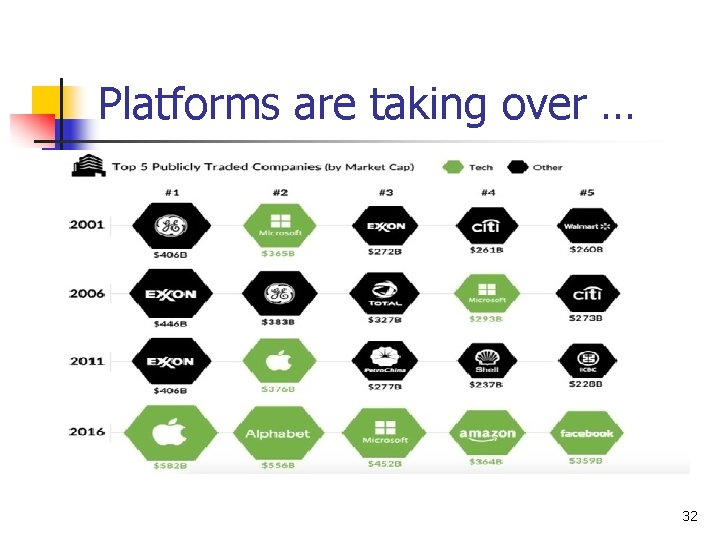
Platforms are taking over … 32
Why are platforms so profitable? n n n Two reasons: Network effects Platforms have only small fixed and variable investments 33
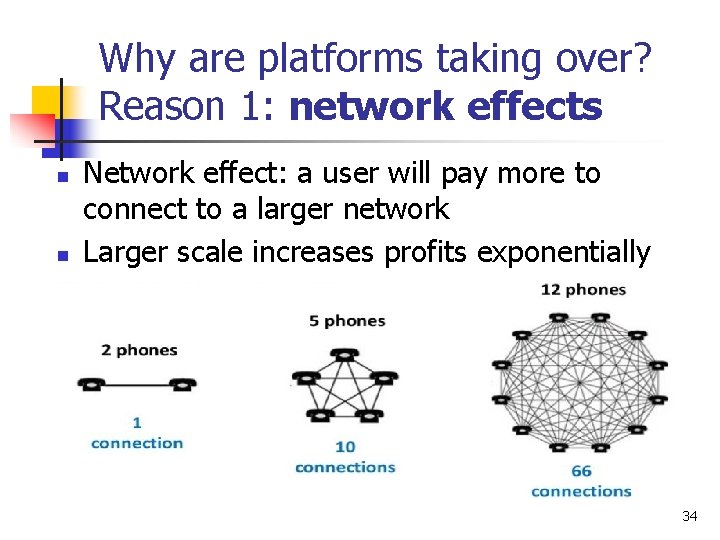
Why are platforms taking over? Reason 1: network effects n n Network effect: a user will pay more to connect to a larger network Larger scale increases profits exponentially 34
Special features of markets with network effects Increasing returns to scale in consumption (network effects) A market exhibits network effects when the value of a transaction (or subscription) is higher when more units change hands, everything else being equal Two types of network effects: n n n Direct (same side) Indirect (cross-side) 35
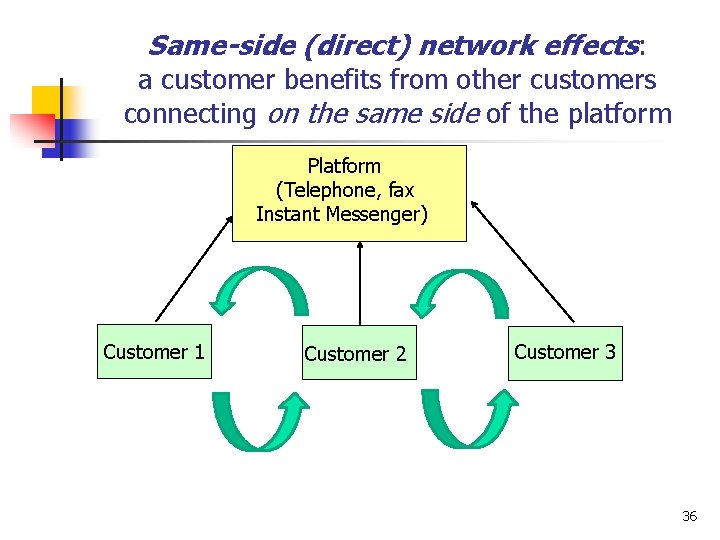
Same-side (direct) network effects: a customer benefits from other customers connecting on the same side of the platform Platform (Telephone, fax Instant Messenger) Customer 1 Customer 2 Customer 3 36
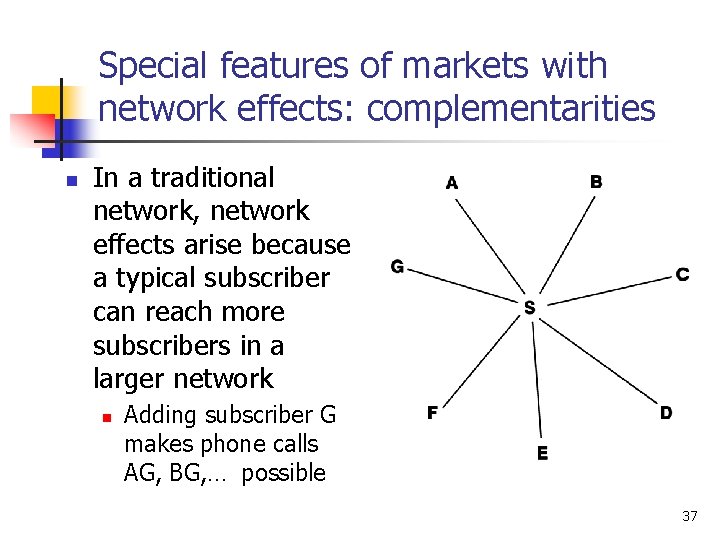
Special features of markets with network effects: complementarities n In a traditional network, network effects arise because a typical subscriber can reach more subscribers in a larger network n Adding subscriber G makes phone calls AG, BG, … possible 37
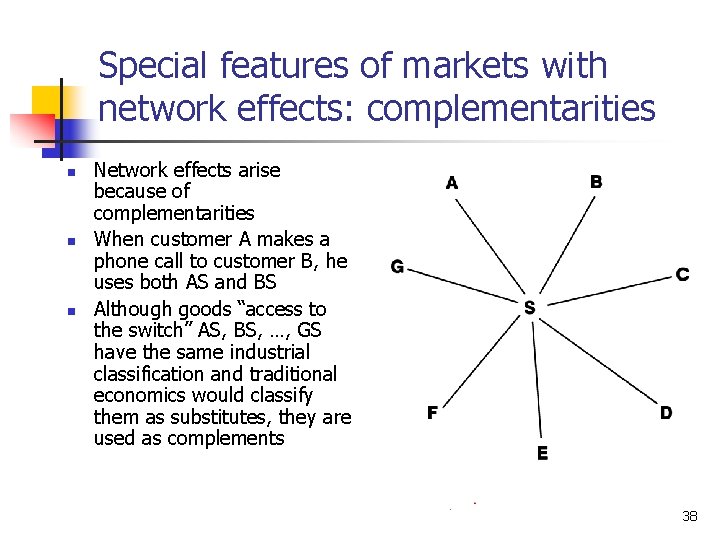
Special features of markets with network effects: complementarities n n n Network effects arise because of complementarities When customer A makes a phone call to customer B, he uses both AS and BS Although goods “access to the switch” AS, BS, …, GS have the same industrial classification and traditional economics would classify them as substitutes, they are used as complements 38
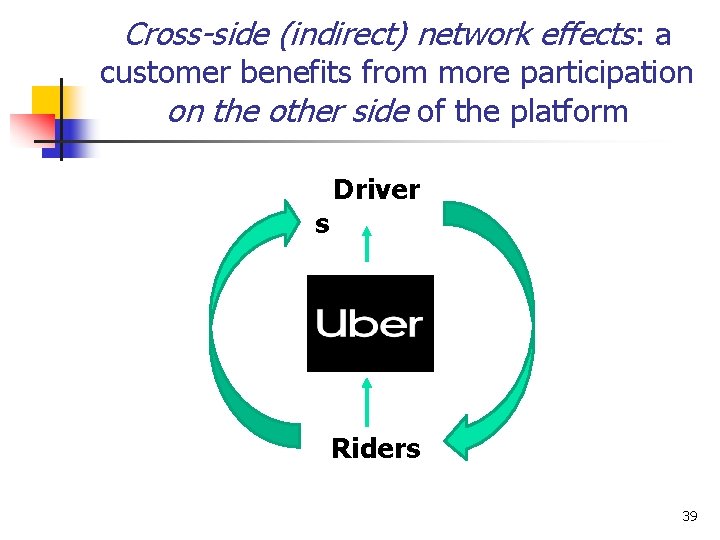
Cross-side (indirect) network effects: a customer benefits from more participation on the other side of the platform s Driver Riders 39
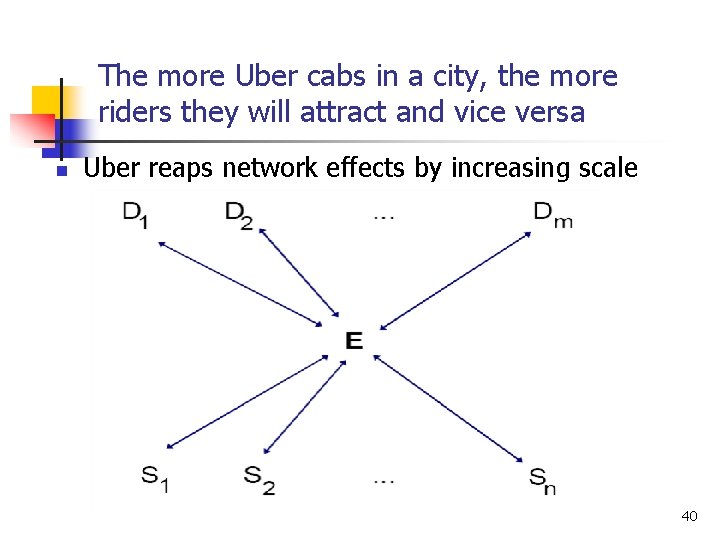
The more Uber cabs in a city, the more riders they will attract and vice versa n Uber reaps network effects by increasing scale 40
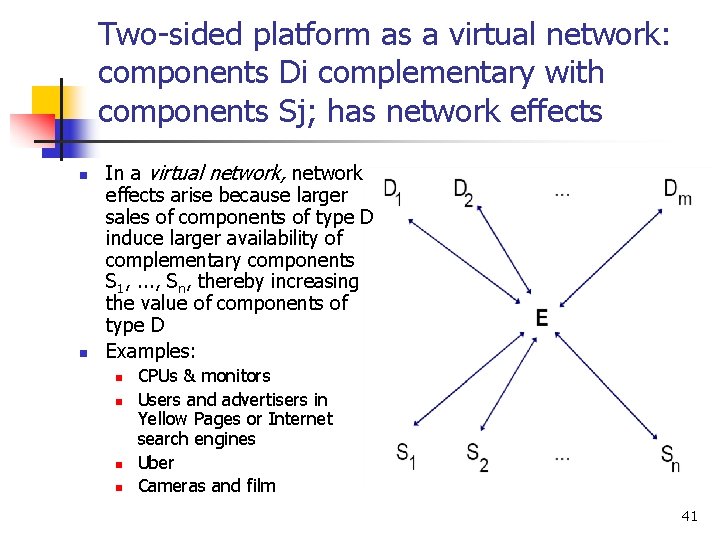
Two-sided platform as a virtual network: components Di complementary with components Sj; has network effects n n In a virtual network, network effects arise because larger sales of components of type D induce larger availability of complementary components S 1, . . . , Sn, thereby increasing the value of components of type D Examples: n n CPUs & monitors Users and advertisers in Yellow Pages or Internet search engines Uber Cameras and film 41
What happens when there are two or more competing platforms? Examples n n n n Android phones vs i. Phones MS-DOS v. DR-DOS (OSs for PCs) Windows v. IBM’s OS/2 (OSs GUIs for PCs) Intel v. AMD microchips for PCs Uber v. Lyft Google search v. Bing VHS v. Betamax video recorder In most cases, competition results in a clear winner: MS-DOS, Windows, Intel, Uber, Google search, VHS n Why? 42
“Winner-takes-most” (1) n n With network effects, larger sales size is the equivalent of higher quality Consumers prefer products with higher sales because they have many complements n n Prefer Windows because of many apps, even when stand-alone Mac is more desirable Prefer a large instant messenger network to alternative smaller IM network 43
“Winner-takes-most” (2) n n n Result 1: High sales make the product more desirable and drive even higher sales (positive feedback loop) Result 2: High inequality in sales and profits across companies Result 3: Very concentrated markets 44
“Winner-takes-most” (3) n n n Profits of “winners” increase exponentially with scale/sales Top company has much higher sales and profits than the second largest; second one much larger than third, etc. Often the fourth or fifth largest company are too small to make any difference in the market structure n Do you know which is the 4 th or 5 th largest OSs for PCs? I bet you do not … 45
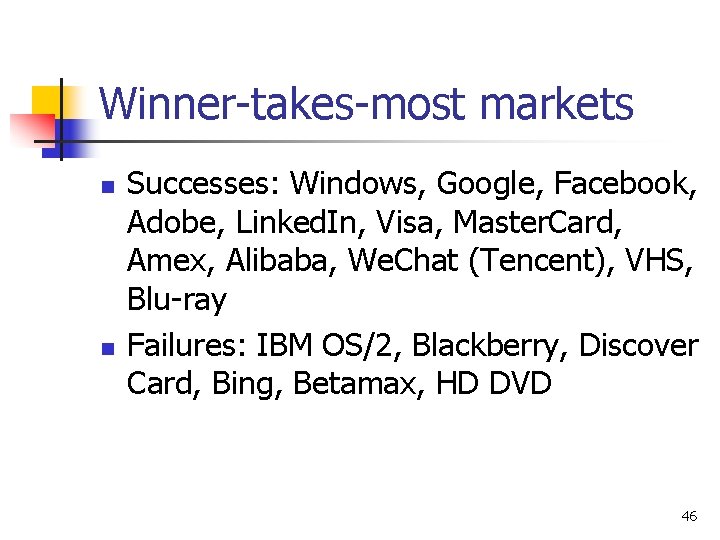
Winner-takes-most markets n n Successes: Windows, Google, Facebook, Adobe, Linked. In, Visa, Master. Card, Amex, Alibaba, We. Chat (Tencent), VHS, Blu-ray Failures: IBM OS/2, Blackberry, Discover Card, Bing, Betamax, HD DVD 46
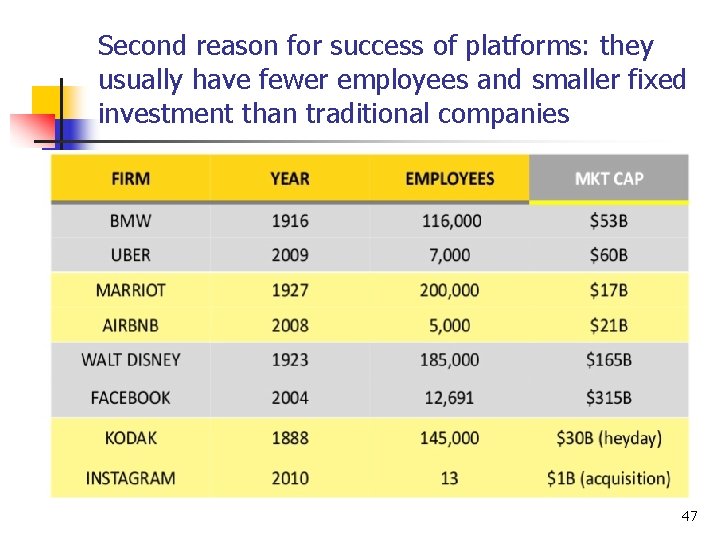
Second reason for success of platforms: they usually have fewer employees and smaller fixed investment than traditional companies 47
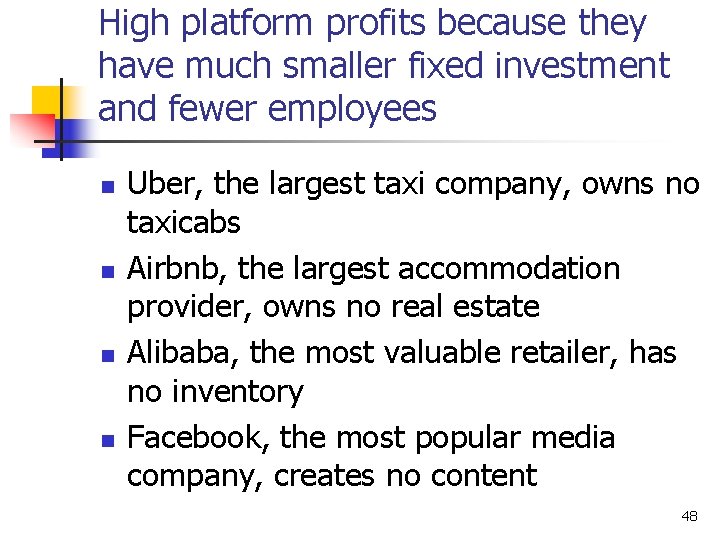
High platform profits because they have much smaller fixed investment and fewer employees n n Uber, the largest taxi company, owns no taxicabs Airbnb, the largest accommodation provider, owns no real estate Alibaba, the most valuable retailer, has no inventory Facebook, the most popular media company, creates no content 48
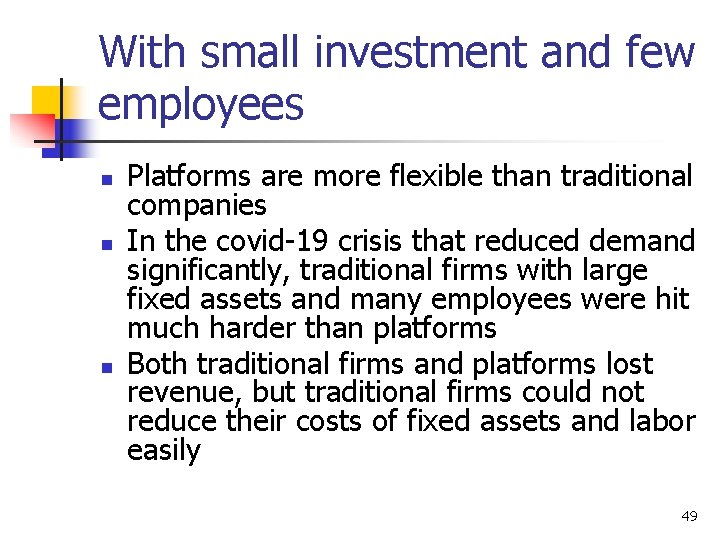
With small investment and few employees n n n Platforms are more flexible than traditional companies In the covid-19 crisis that reduced demand significantly, traditional firms with large fixed assets and many employees were hit much harder than platforms Both traditional firms and platforms lost revenue, but traditional firms could not reduce their costs of fixed assets and labor easily 49
Traditionally, the focus of the company was internal n n Tweaking the value chain to make perfect products In contrast, for platforms the focus is external n n A platform tries to bring together as many as possible from both (or all) sides, match them and create transactions Need to minimize the conflicts among them 50
Multi-homing and competition n Multi-home = same agent uses multiple platforms that provide similar services n Ex. Uber/Lyft n n n User can easily use both, depending on convenience and price Driver can work for either one, depending on availability and pay Single-home examples n n PCs or Macs: most users use only one Even though each user has many credit cards, typically users use only one most of the time 51
Multi-homing and “tipping” to dominance or monopoly n n Often, an industry starts with multi-homing but ends with a single dominant platform. This is called tipping. Examples: n n PCs OSs: originally MS-DOS and DR-DOS, tipped to MS-DOS PCs OSs GUIs: originally Windows and IBMs’ OS/2, tipped to Windows Betamax and VHS video recorders tipped to VHS HD DVD and Blue-ray players tipped to Blue-ray 52
High barriers to entry can freeze industry structure for some time n Often very hard to replicate a platform ecosystem because n n n Therefore, typically high barriers to entry in platforms n n n Need demand from both (or many) sides Both individuals and apps will flock to the dominant platform because there is more business there Microsoft dominant in PCs OS for 40+ years Dominance in games changes only with a new platform However, significant innovation can overcome barriers to entry n Google organic search vs. old Yahoo search 53
More efficient platforms disrupt traditional business n n n Amazon displaced bookstores for hard copy books and is now displacing retailers in many types of products Netflix, Hulu, Amazon displacing subscription cable TV Google, Bing displaced the “yellow pages” advertising phone books 54
Platforms disrupt traditional business by creating new or enhanced products n n e. Book platforms Kindle and Nook Uber, Lyft reserve in real time Airbnb in short-term rentals M-Pesa platform transferring money across cell phones in Africa (using SMS) 55
Not easy to do platforms correctly n n Microsoft almost killed the Mac in the 1980 s by attracting more developers to write applications for Windows Microsoft killed IBM’s OS/2 Recently, Android and Apple killed Microsoft’s cellphones Android (Google) is taking over from i. Phone as dominant phone platform 56
Some failing strategies in platforms n Mispricing n n Mistrust n n Slow loading in Friendster, overtaken by Facebook Hubris n n n e. Bay in China did not use escrow accounts Technical issues n n First mover Sidecar failed to raise capital, while Uber and Lyft subsidized their business IE (Microsoft) at 95% market share, MSFT stopped development Also slow development, Firefox (2002), Chrome (2008) Timing n Windows phone (with Nokia) came too late to create significant apps development 57
Micro consequences of the prominence of platforms n n Data becomes even more important Companies collect all data “just in case” n n n E. g. Fitbit acquisition by Google Data analysis without a prior economic/econometric model has become the norm Robustness of these analyses is doubtful 58
Battleground industries for platforms: where you should focus as a platform entrepreneur n Banks, payment systems, loans … Health systems, hospitals, pharma distribution, health insurance Investment management Internet of things Computational biology platforms n New technologies: blockchain, AI n n 59
Building a platform (1) n n n Choose sides (users, complementors, peripherals) Identify the network effects Work to create demand on both sides (chicken and egg problem) Attract third parties by aligning their profit incentives with the platform’s Create rules on what each agent can do 60
Building a platform (2) n Who pays? Subscription or per unit? Who gets subsidized? Are payments higher than subsidies (make sure you make money!)? n Generally, the inelastic demand side pays n n Merchants pay, users do not in credit cards Men pay, women subsidized in dating platforms 61
Building a platform (3) n But it is possible to have elastic overall market demand but each company facing inelastic demand n A payments platform can restrict competition on the same side of a market making each merchant face an inelastic demand 62
Exercise: build a new payment system platform (1) n n n Identify the type of trade you will focus on (B 2 B, B 2 C, C 2 C) Identify rivals Ans. credit cards, banks, others? Identify friends Ans. Walmart, Kroger, Walgreens Should these be your partners or clients? 63
Build a new payment system platform (2) n Identify the technical aspects of the platform n n n Say it is on the phone like We. Chat Open APIs to consumers and merchants Invite third parties (marketing, add-on, data sales) to add value 64
Build a new payment system platform (3) n n n Create supply and demand (chicken and egg problem) Can your merchant friends help? What strategies do you deploy toward your deadly enemies (banks)? n n n But you need banks to interconnect … Are you planning an IPO or to be bought; how do you stop FB, GOOG, AMZN preemption? Many more steps … 65
Are platforms good or evil? n n n Provide new goods or old goods more efficiently and/or at low or zero price Often platforms organize the economy more efficiently and increase innovation Successful platforms are extremely profitable and have tremendous power for good or evil (examples Google, Facebook) 66
Macro long term effects of platforms taking over Because of the intense use of computing technology and artificial intelligence, platforms need less labor that traditional industries This leads to: n High profits n Lower labor share of national income n Higher income inequality because shareholders (who receive the profits) tend to be wealthier n Both the macro and micro consequences of platforms will intensify over the next decade n 67
Summary (1) n Platforms have high profits because they n n n Take advantage of network effects Have low fixed investment and low labor use Platforms may use a zero price or subsidies on one side of the market or positive prices to both sides Platforms result in a “winner-takes-most” market with big inequalities in market shares, prices, and profits Low use of labor by many platforms results in higher income inequality 68
Review Questions (1) n n n What are multi-sided platforms? Two-sided platforms? Who are the players in some of the platforms that you know? Give an example of a two-sided platform where pricing is positive for both sides? Free for one side and positive price for the other? Positive for one and negative for the other? What are the two types of potential network effects on a platform? Give some examples of competing platforms, some successes, some failures Describe “winner-take-most” markets. Give two real world examples. 69
Review Questions (2) n n True or False: Platforms usually require a large labor force but low fixed investment in order to maintain their networks, however big they are, resulting in low profit margins Why have some traditional businesses failed to compete successfully against various rising business platforms? Describe the difference between silos and complementary modules Discuss two non-digital platforms 70
- Slides: 70