
Business Marketing Unit 6 Promotion Business and Marketing
Business & Marketing Unit 6: Promotion
Business and Marketing Unit 6: PROMOTION 2 nd Semester Mr. Schurig
Transition 17 -1 • With groups of 2 to 4: – Share and list the most interesting or outrageous stories you have witnessed or heard from a company promoting a new product. – In your opinion, did the technique work? – Explain your answers – Title: Marketing Transition 17 -1 – Save Word document as: Marketing-transition 17 -1 -filastname – Be prepared to share with the class
Promotional Concepts and Strategies Chapter 17
Sec. 17. 1 – Promotion and the Promotion Mix What you’ll learn • The role of promotion in marketing • The concept of promotional mix • The characteristics of personal selling and advertising • The nature and scope of publicity
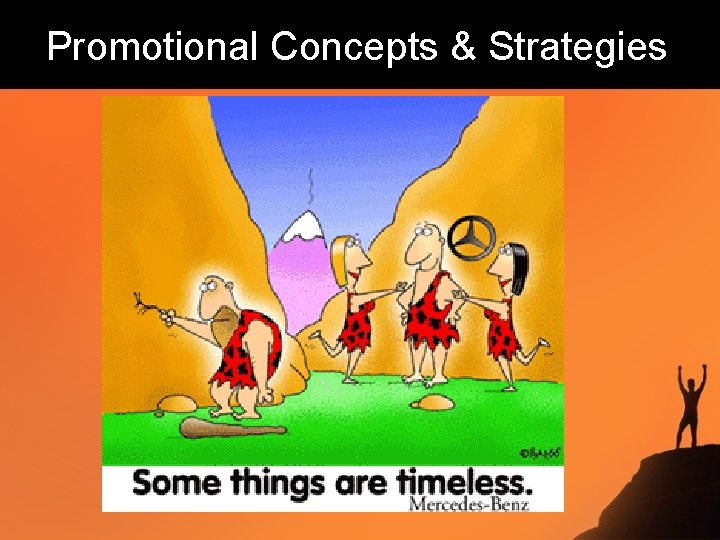
Promotional Concepts & Strategies
Promotion • Any form of communication a business or organization uses to inform, persuade, or remind people about its products
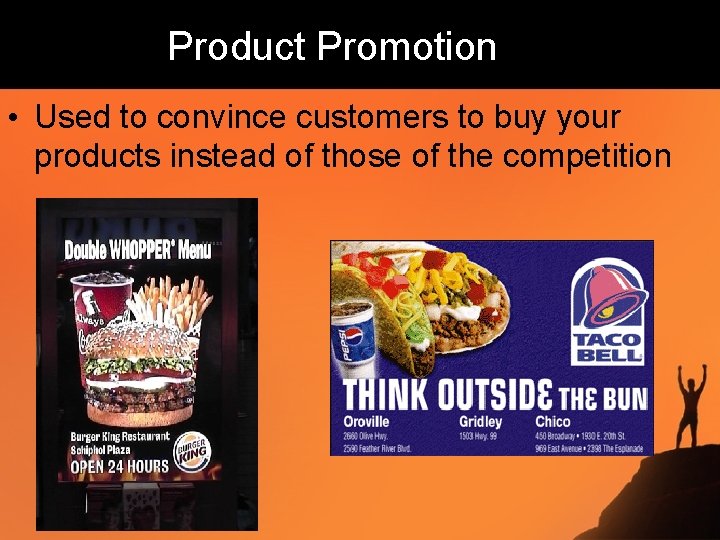
Product Promotion • Used to convince customers to buy your products instead of those of the competition
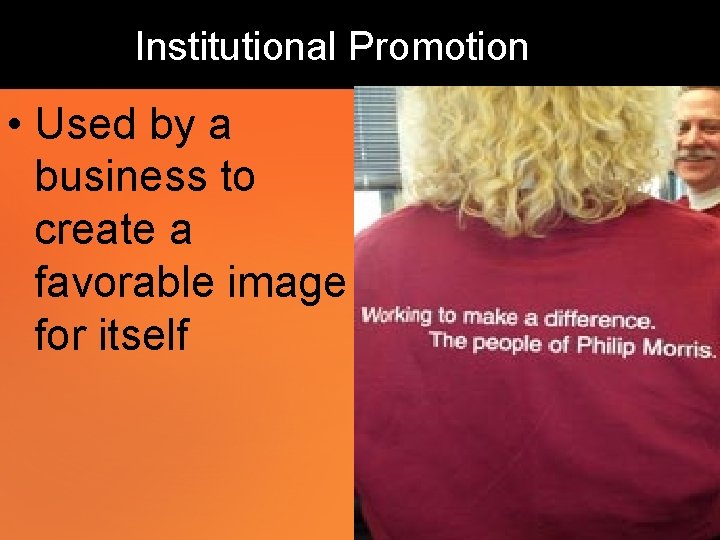
Institutional Promotion • Used by a business to create a favorable image for itself
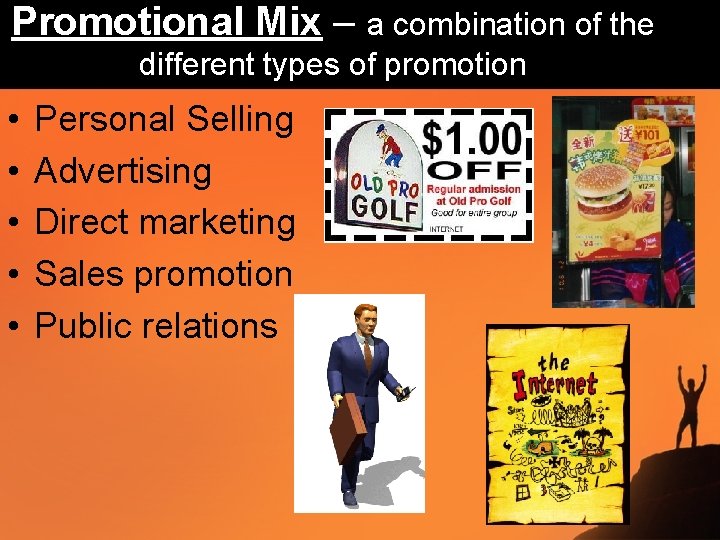
Promotional Mix – a combination of the different types of promotion • • • Personal Selling Advertising Direct marketing Sales promotion Public relations
Personal Selling • Any form of direct contact occurring between a salesperson and a customer
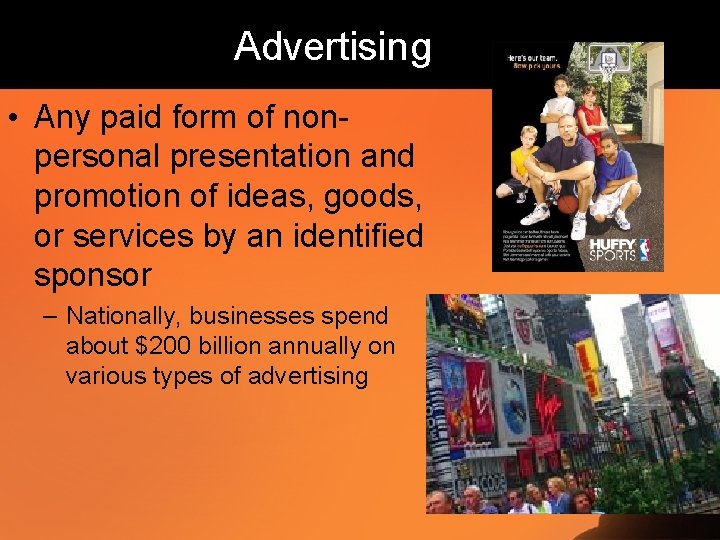
Advertising • Any paid form of nonpersonal presentation and promotion of ideas, goods, or services by an identified sponsor – Nationally, businesses spend about $200 billion annually on various types of advertising
Direct Marketing • A type of advertising directed to a targeted group of prospects and customers rather than to a mass audience. – Printed direct mail, sent via regular mail to a home or business – Electronic direct mail • It’s goal is to generate sales or leads for sales representatives to pursue
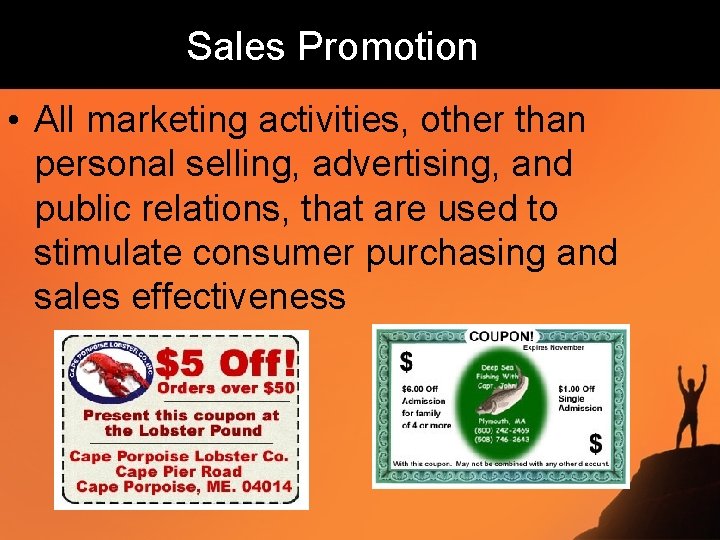
Sales Promotion • All marketing activities, other than personal selling, advertising, and public relations, that are used to stimulate consumer purchasing and sales effectiveness

Public Relations and Publicity • Public Relations – any activity designed to create a favorable image toward a business, its products, or its policies
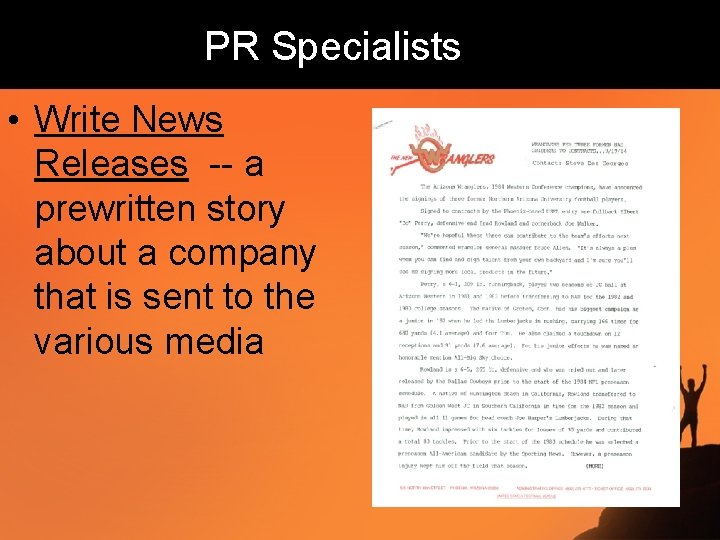
PR Specialists • Write News Releases -- a prewritten story about a company that is sent to the various media
Writing News Releases • First paragraph should answer Who, What, When, Where, and Why questions. • Develop important facts in next few paragraphs. • Less important information can follow but should be edited. • Include the full name and position of any people mentioned. • Include the name, address, and phone number of the contact person. • Be brief – only one or two pages. “###” at the bottom of the last page signifies the end.
Public Relations and Publicity • Publicity – a specific kind of public relations that involves placing positive and newsworthy information about a business, its products, or its policies in the media.
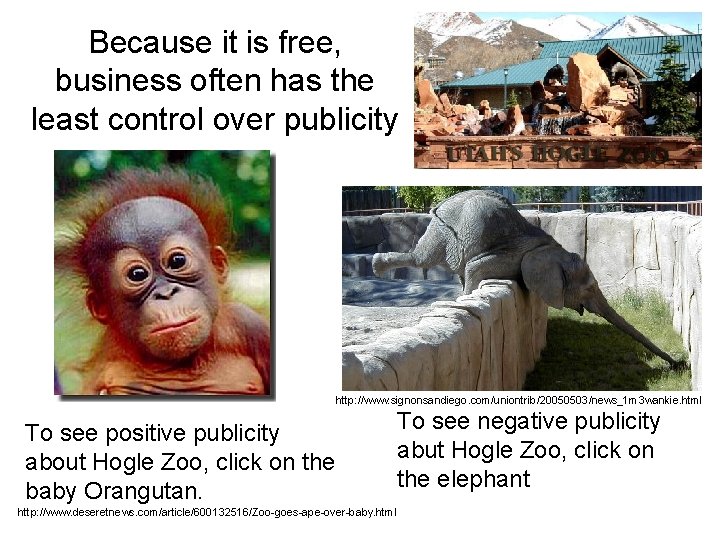
Because it is free, business often has the least control over publicity http: //www. signonsandiego. com/uniontrib/20050503/news_1 m 3 wankie. html To see positive publicity about Hogle Zoo, click on the baby Orangutan. http: //www. deseretnews. com/article/600132516/Zoo-goes-ape-over-baby. html To see negative publicity abut Hogle Zoo, click on the elephant
Coordination of Promotional Mix • Most businesses use more than one type • All types of promotion must be coordinated • Must consider the promotional budget
Class Work: 17 -1 • Textbook: –Page 368, 1 – 4 –Page 377, 20 – 21 • Save as: Marketing-CW 17 -1 -filastname • Researching Publicity –Page 378, #29 –Save as: Publicity-Research-filastname • Next Class: Finish Chapter 17
Promotion Chapter 17
Transition 17 -2 • With groups of 2 – 4: 755 – Brainstorm and list some of the types of promotions you encounter: • Discounts, coupons, gifts, free offers, etc. 1. How do these affect your buying decision? 2. How does the promotion affect your feelings toward the business? 3. Would you be likely to buy from that business without a promotion? • Save as: Marketing-promotions 17 -2 -filastname
Types of Promotions: • Coupons • Premiums (Free offers) • Limited price discounts • Rebates • Product Samples
Sec. 17. 2 – Types of Promotion What you’ll learn • The characteristics of sales promotion • The concept of trade promotions • The different kinds of consumer sales promotions
Sales Promotion Incentives that encourage customers to buy products or services
Trade Promotions – Designed to gain manufacturers’, wholesalers’, and retailers’ support for a product
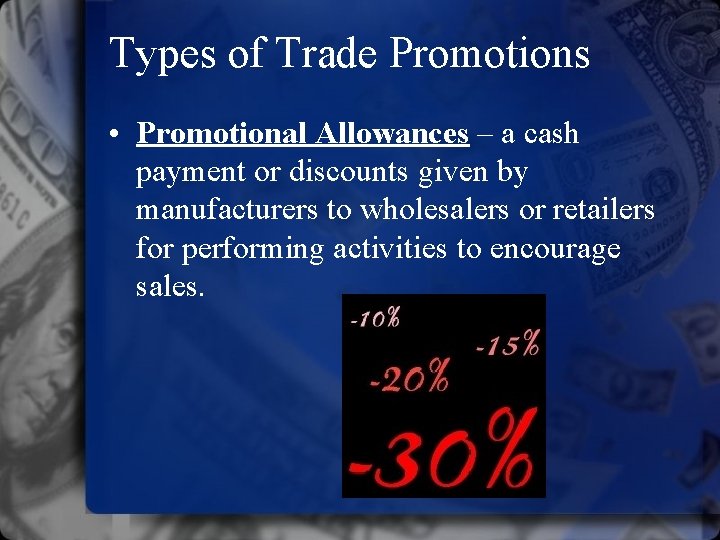
Types of Trade Promotions • Promotional Allowances – a cash payment or discounts given by manufacturers to wholesalers or retailers for performing activities to encourage sales.
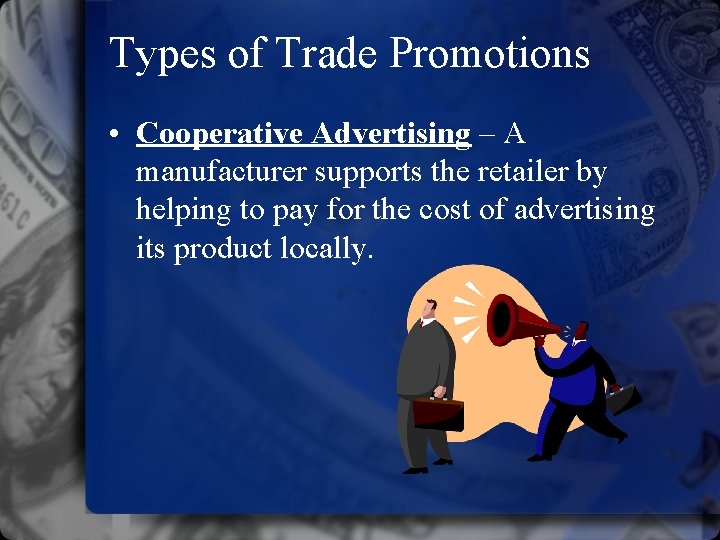
Types of Trade Promotions • Cooperative Advertising – A manufacturer supports the retailer by helping to pay for the cost of advertising its product locally.
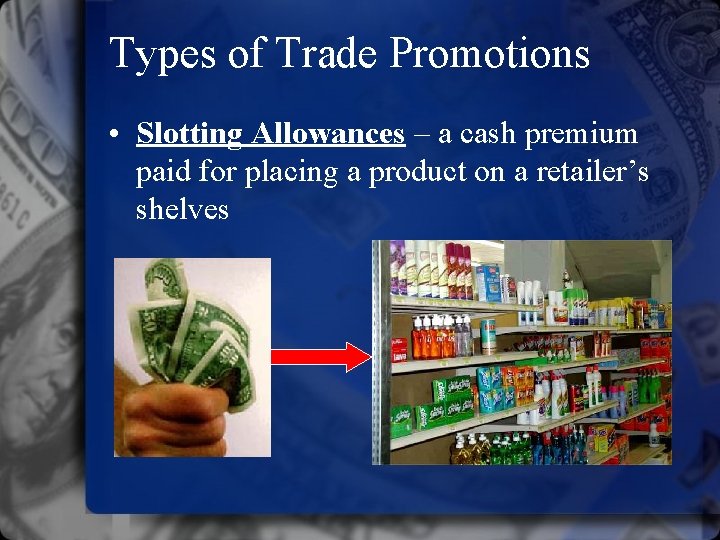
Types of Trade Promotions • Slotting Allowances – a cash premium paid for placing a product on a retailer’s shelves
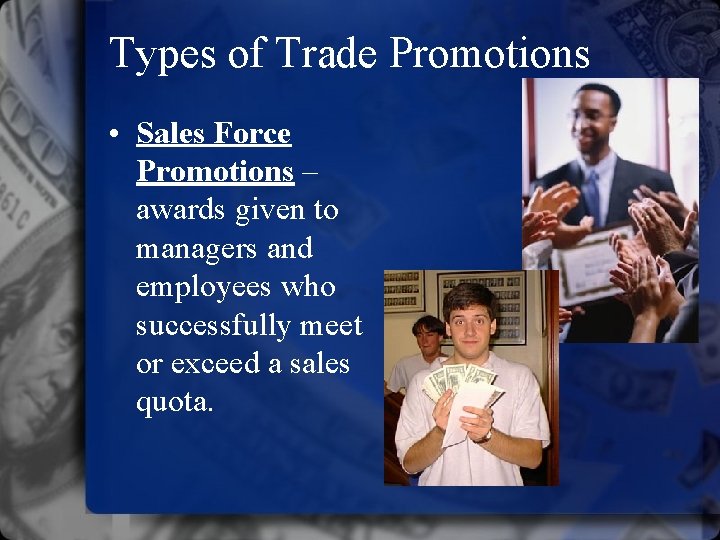
Types of Trade Promotions • Sales Force Promotions – awards given to managers and employees who successfully meet or exceed a sales quota.
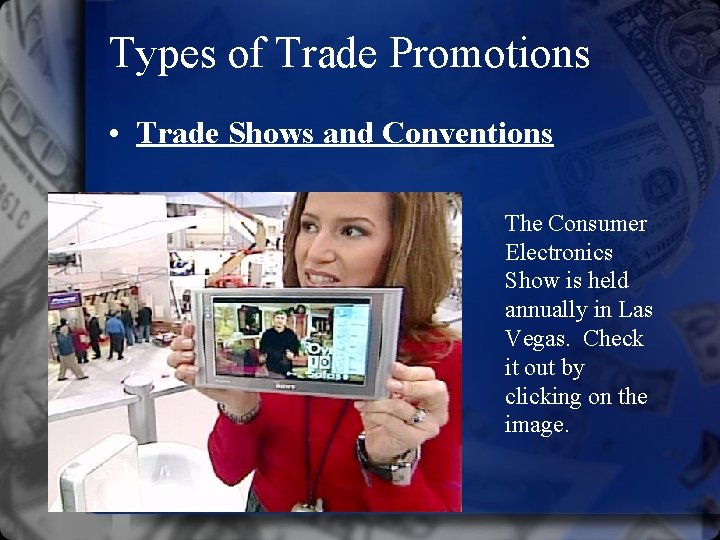
Types of Trade Promotions • Trade Shows and Conventions The Consumer Electronics Show is held annually in Las Vegas. Check it out by clicking on the image.
Consumer Sales Promotions – designed to encourage customers to buy a product
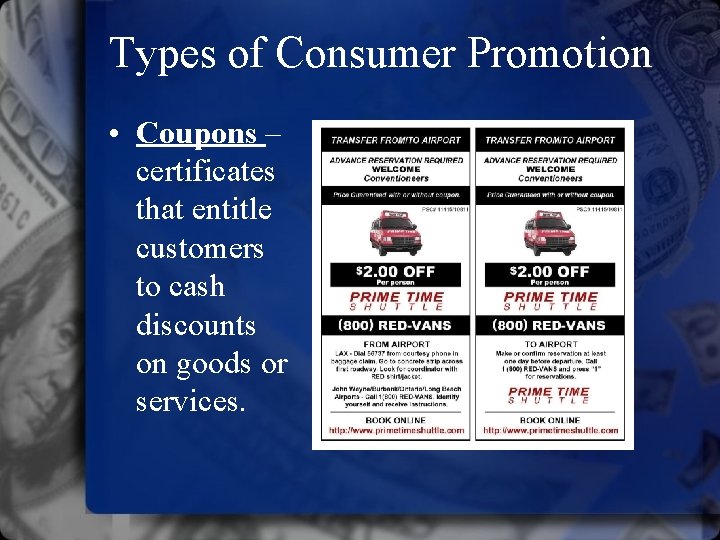
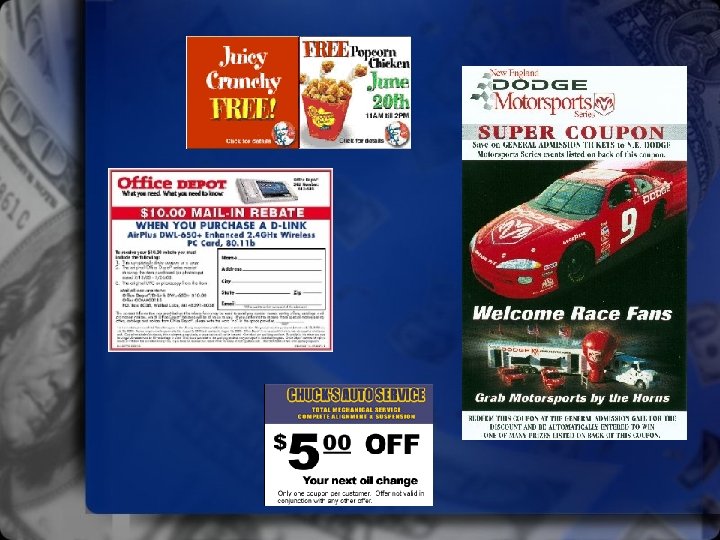
Types of Consumer Promotion • Coupons – certificates that entitle customers to cash discounts on goods or services.
Types of Consumer Promotion • Premiums – low-cost items given to consumers at a discount or free – Should: – be low-cost – provide added value – negate the target audience’s price issue – effectively differentiate the product from the competition – create an immediate need to buy
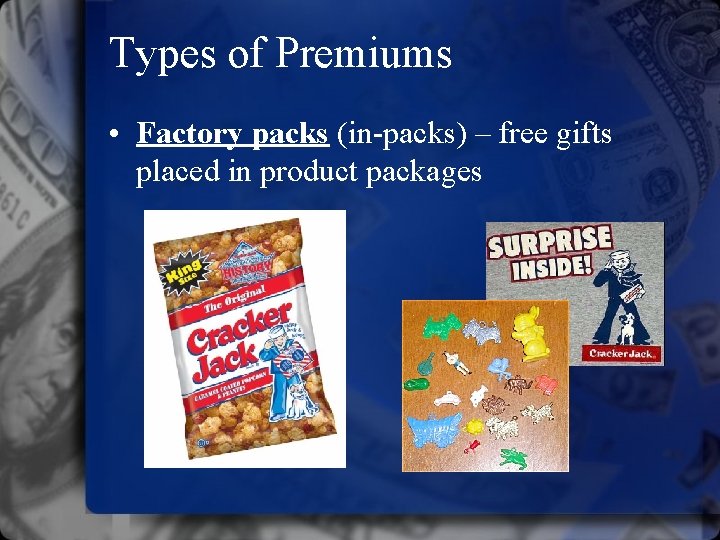
Types of Premiums • Factory packs (in-packs) – free gifts placed in product packages
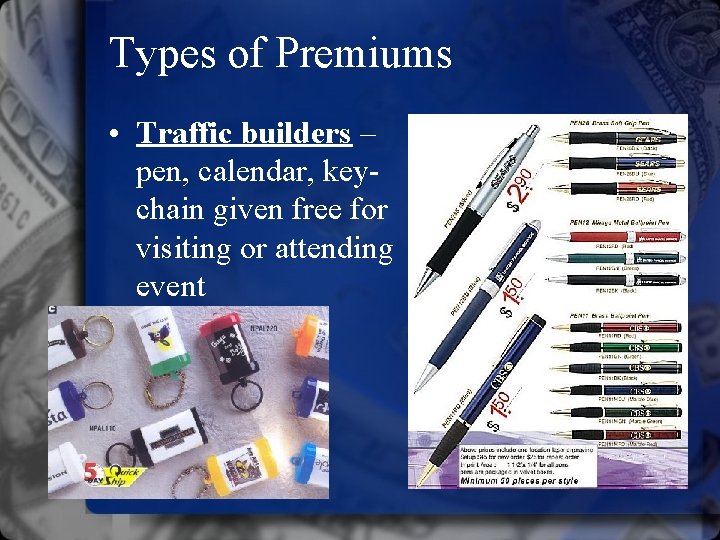
Types of Premiums • Traffic builders – pen, calendar, keychain given free for visiting or attending event
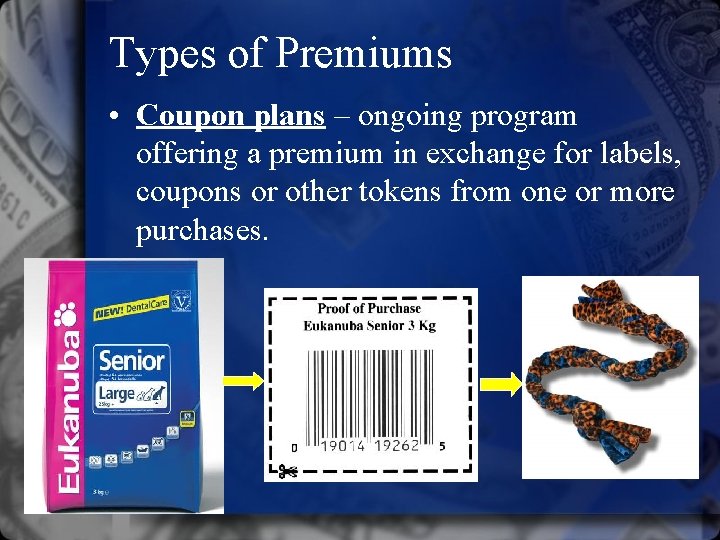
Types of Premiums • Coupon plans – ongoing program offering a premium in exchange for labels, coupons or other tokens from one or more purchases.
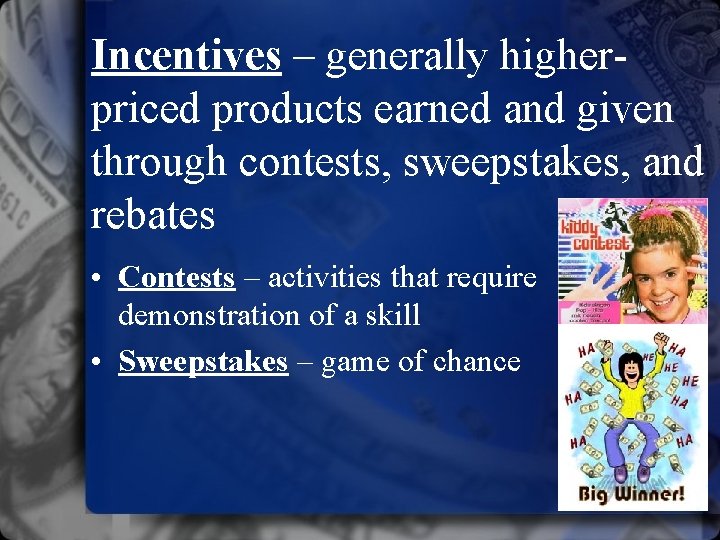
Incentives – generally higherpriced products earned and given through contests, sweepstakes, and rebates • Contests – activities that require demonstration of a skill • Sweepstakes – game of chance
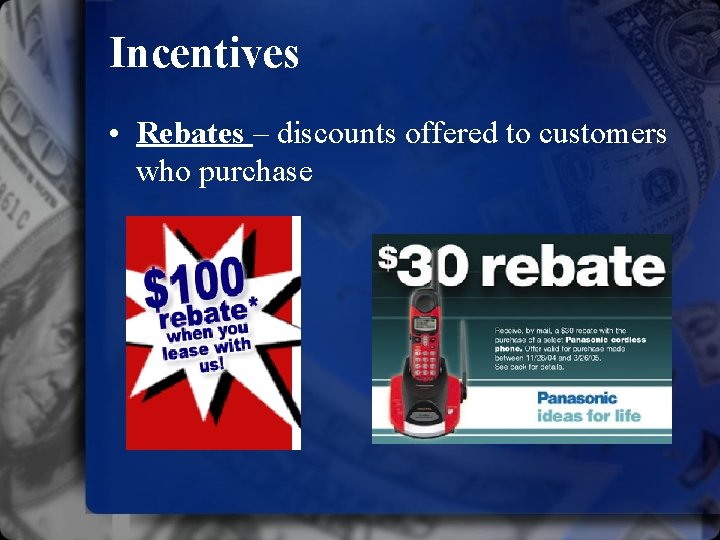
Incentives • Rebates – discounts offered to customers who purchase
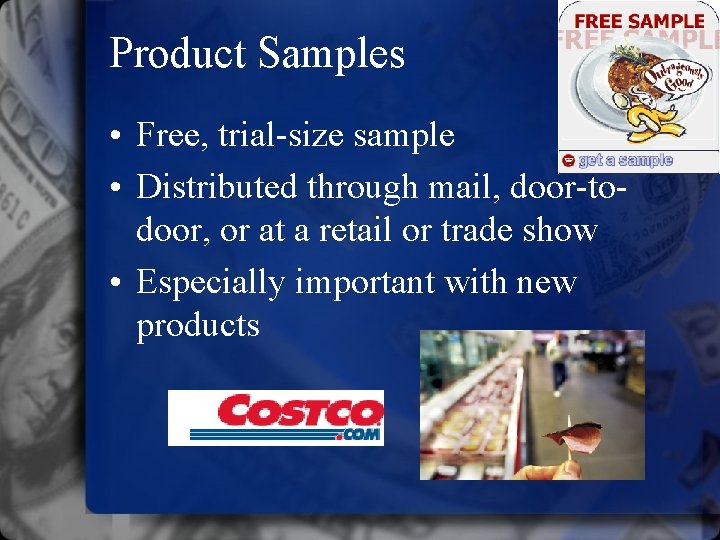
Product Samples • Free, trial-size sample • Distributed through mail, door-todoor, or at a retail or trade show • Especially important with new products
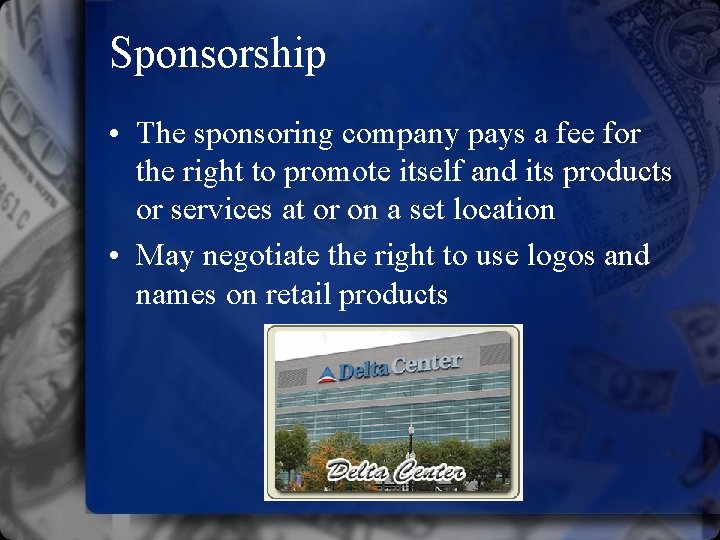
Sponsorship • The sponsoring company pays a fee for the right to promote itself and its products or services at or on a set location • May negotiate the right to use logos and names on retail products
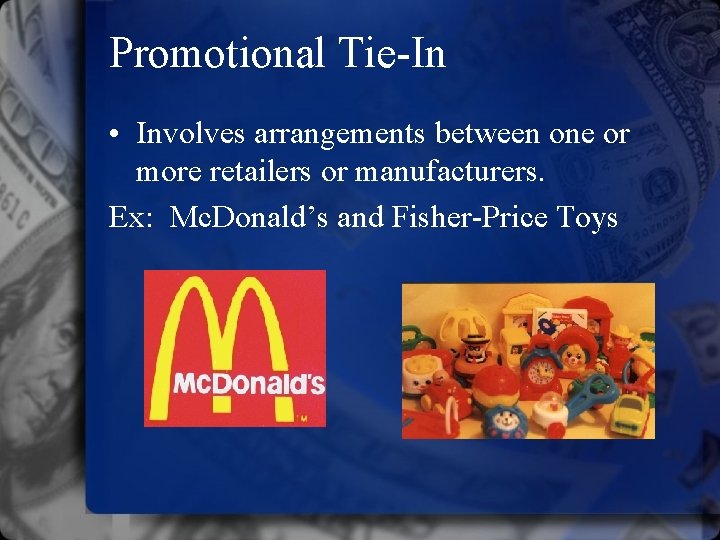
Promotional Tie-In • Involves arrangements between one or more retailers or manufacturers. Ex: Mc. Donald’s and Fisher-Price Toys
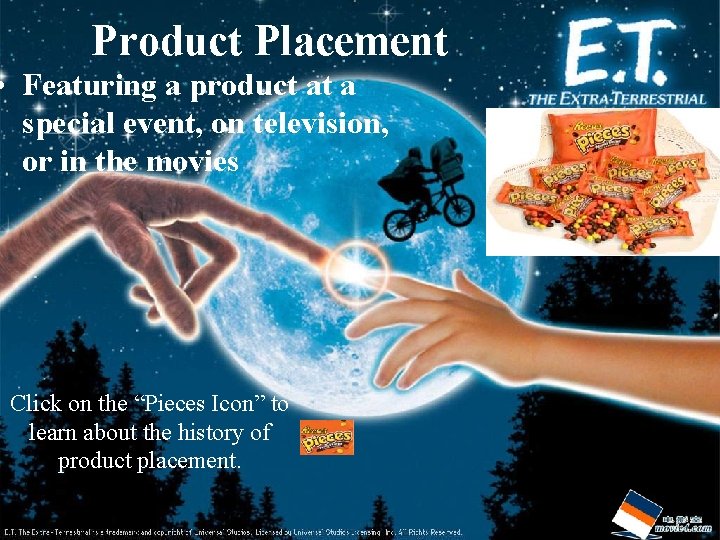
Product Placement • Featuring a product at a special event, on television, or in the movies Click on the “Pieces Icon” to learn about the history of product placement.
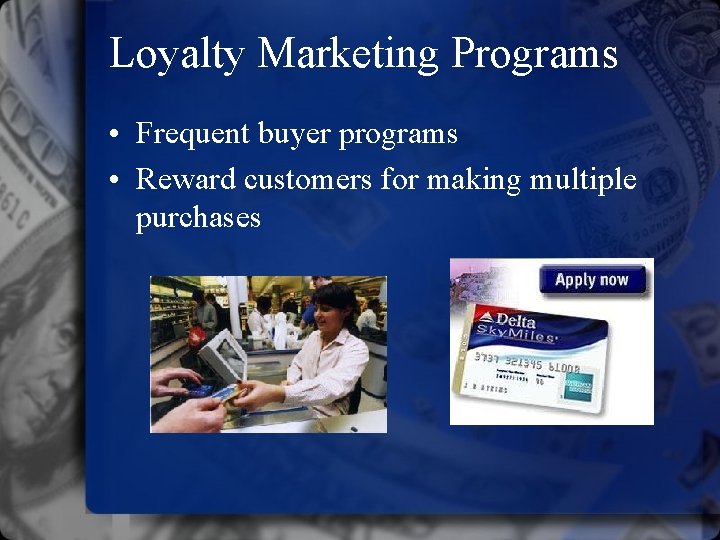
Loyalty Marketing Programs • Frequent buyer programs • Reward customers for making multiple purchases
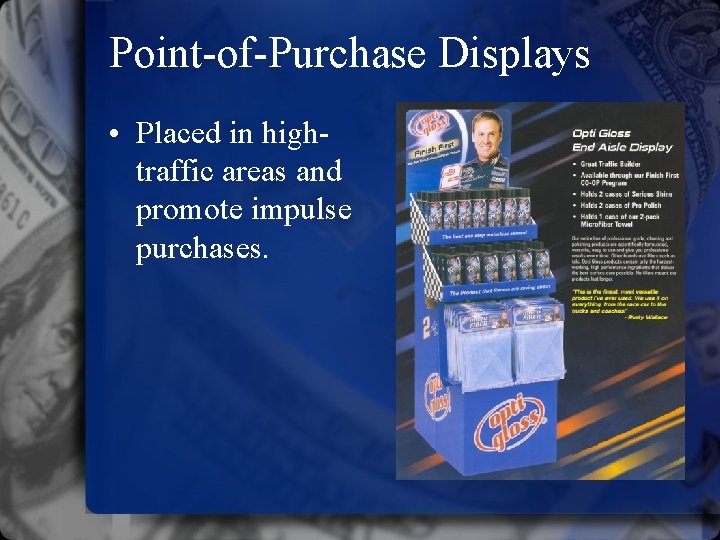
Point-of-Purchase Displays • Placed in hightraffic areas and promote impulse purchases.
Class Work & Home Work 17 -2 • Textbook: – Page 375, 1 – 4 – Page 377, 22 – 24 • Workbook: – Page 141 - 142 • Save as: Marketing-CW 17 -2 -filastname • Chapter 17 Activity Packet and Quiz
- Slides: 48