
Business IT Alignment Copyright 2016 Keystone Technology Consultants
Business – IT Alignment Copyright © 2016 Keystone Technology Consultants August 2016
Agenda � Two IT types: ◦ Those that do not think about this ◦ Those that do, but want a framework and tools � We will cover: ◦ Why is this important? ◦ How can I accomplish it?
Terms to know � IT Function: The entire IT operation, including internal and external people, the technology, process, and business relationship. � Alignment: The coordinated efforts of the IT function intended to support and develop business goals. � Capability Maturity Model (CMM) – A way to measure a function on its capabilities in a continuum.
What is Business – IT Alignment? � What is an example of an IT Project? � What project most often fails to meet its goals and why?
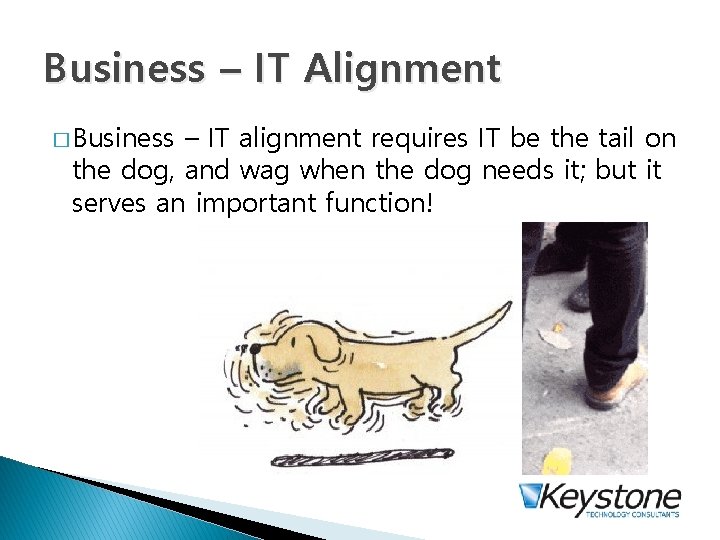
Business – IT Alignment � Business – IT alignment requires IT be the tail on the dog, and wag when the dog needs it; but it serves an important function!
How do we get aligned? � Process with Three Phases: ◦ Assess and Baseline ◦ Deeper Analysis, and Define and Design Based on Findings ◦ Ongoing Operational Work � Then Repeat… ◦ You are in a relationship now, with a framework, keep going back to it!
Step 1: Assess and Baseline
Step 1: Assess and Baseline � Goal: Identify resources available to the organization, and how the users and leadership perceive them. � Three Primary Activities: ◦ Survey for baseline against “world class” ◦ Interview key business personnel ◦ Interview key IT personnel
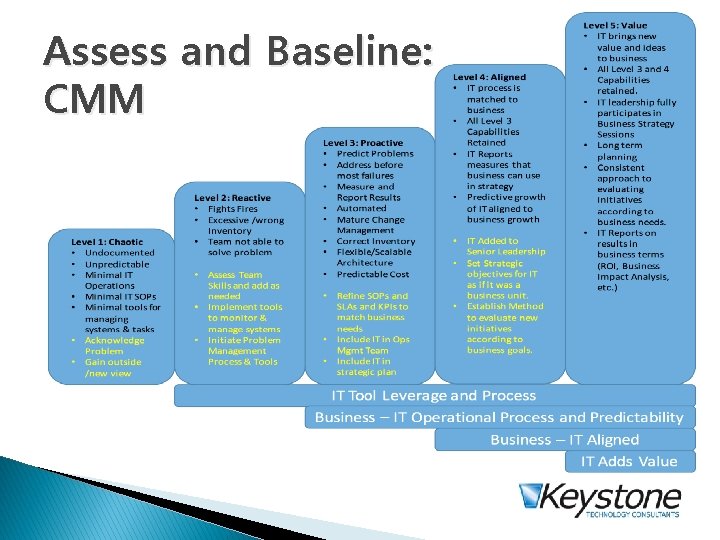
Assess and Baseline: CMM
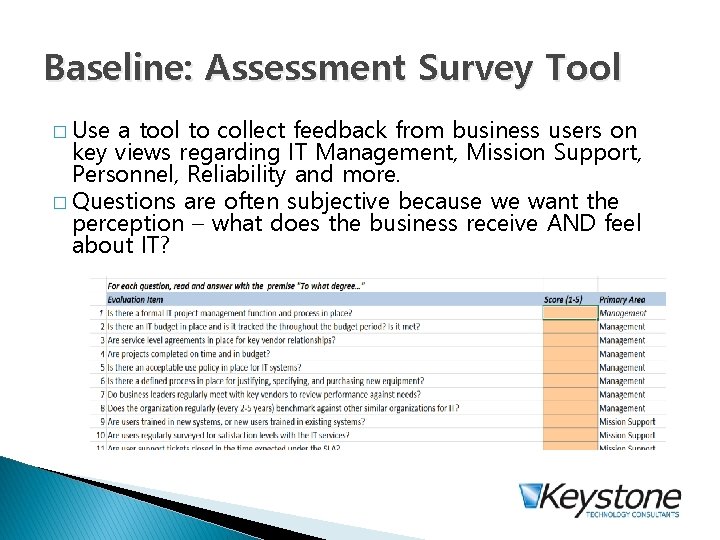
Baseline: Assessment Survey Tool � Use a tool to collect feedback from business users on key views regarding IT Management, Mission Support, Personnel, Reliability and more. � Questions are often subjective because we want the perception – what does the business receive AND feel about IT?
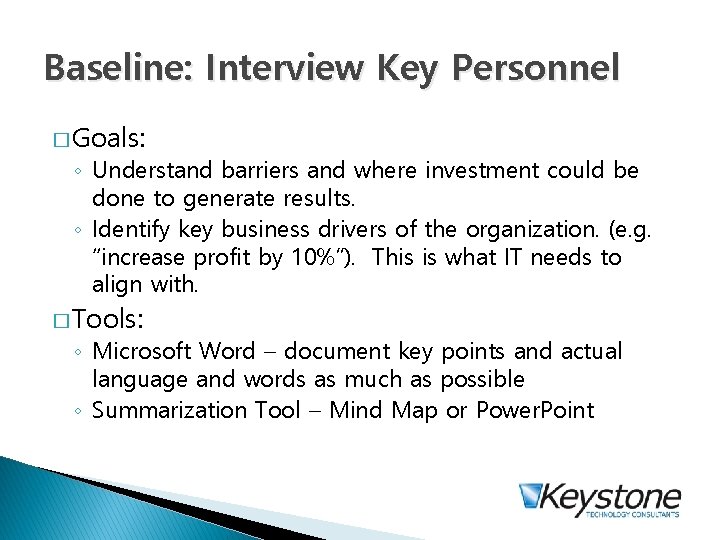
Baseline: Interview Key Personnel � Goals: ◦ Understand barriers and where investment could be done to generate results. ◦ Identify key business drivers of the organization. (e. g. “increase profit by 10%”). This is what IT needs to align with. � Tools: ◦ Microsoft Word – document key points and actual language and words as much as possible ◦ Summarization Tool – Mind Map or Power. Point
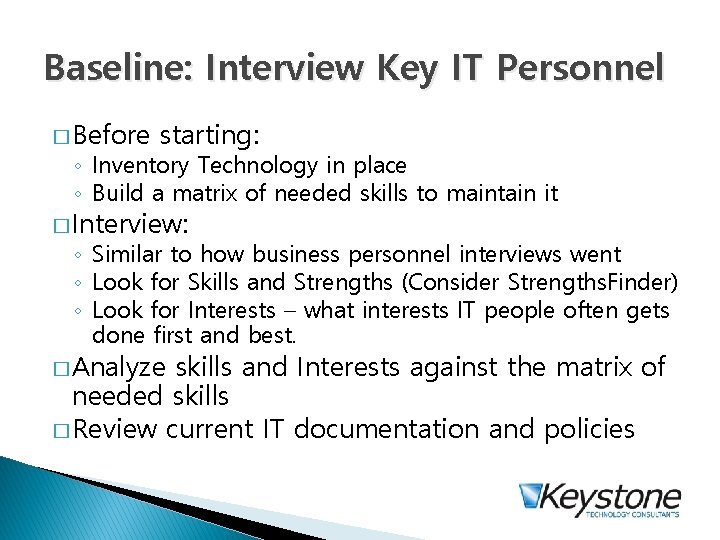
Baseline: Interview Key IT Personnel � Before starting: ◦ Inventory Technology in place ◦ Build a matrix of needed skills to maintain it � Interview: ◦ Similar to how business personnel interviews went ◦ Look for Skills and Strengths (Consider Strengths. Finder) ◦ Look for Interests – what interests IT people often gets done first and best. � Analyze skills and Interests against the matrix of needed skills � Review current IT documentation and policies
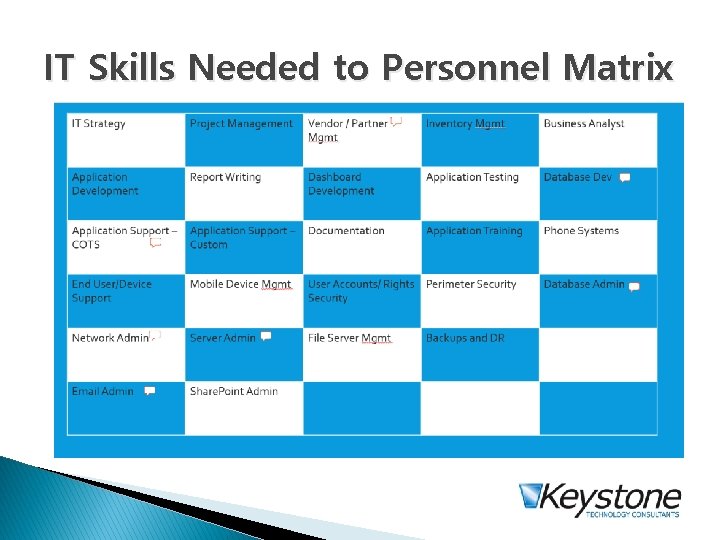
IT Skills Needed to Personnel Matrix
Step 2: Deeper Analysis; and Define and Design Based on Findings
Step 2: Deeper Analysis; and Define and Design Based on Findings � Goal: Identify specific trends, and areas to investigate further. I. E. “Start to look for the key problems and possible solutions” � Process: ◦ Process Mapping and identify costs for processes (optional) ◦ Assess Opportunities to improve the Technology Function ◦ Define opportunities to improve
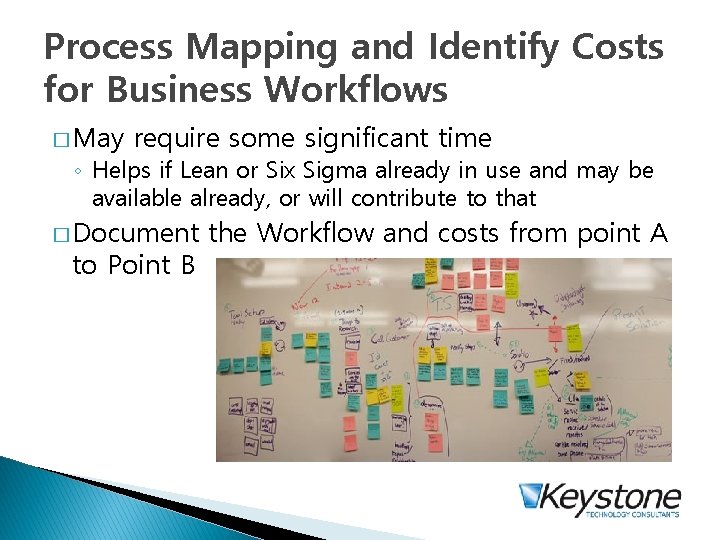
Process Mapping and Identify Costs for Business Workflows � May require some significant time ◦ Helps if Lean or Six Sigma already in use and may be available already, or will contribute to that � Document to Point B the Workflow and costs from point A
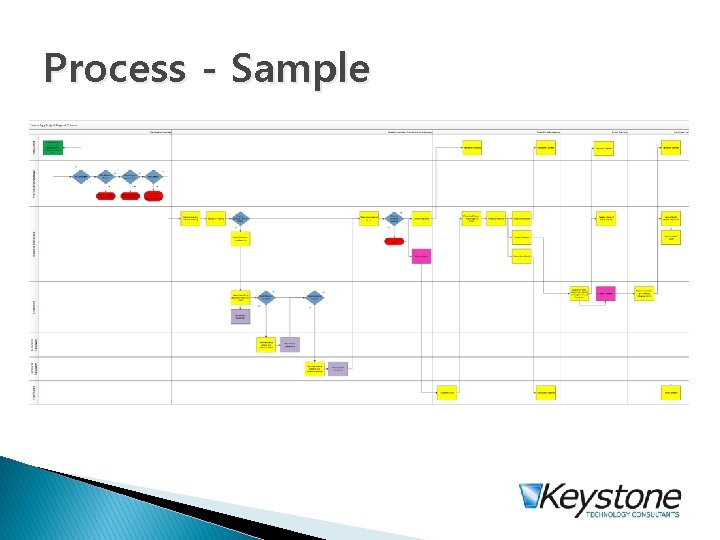
Process - Sample
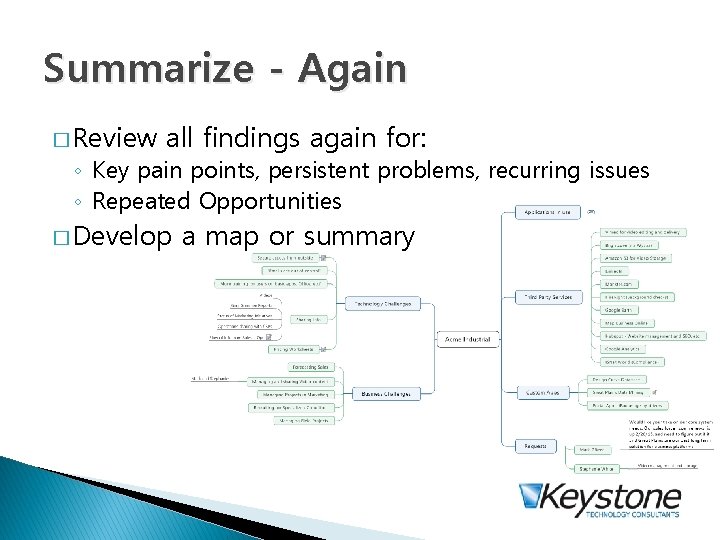
Summarize - Again � Review all findings again for: ◦ Key pain points, persistent problems, recurring issues ◦ Repeated Opportunities � Develop a map or summary
Identify Value Added Opportunities � Review notes and analysis for key pain points � Review IT personnel use and realign as needed � Change IT policies, SLAs, services � For any opportunity, ensure you have: ◦ A champion from the business ◦ A way to assess multiple options (Excel tool for identifying requirements, weighting, and scoring)
Phase 3: Establish and Operate an IT Steering Committee
Phase 3: Establish and Operate an IT Steering Committee � Focus: Involve business leaders who have business goals and could benefit from the right technology solutions to meet those goals. � Translate business goals into initiatives that include technology.
Goals of the IT Steering Committee � Project Approval � Project Prioritization � IT Strategic Planning � IT Policies and Standards � IT Project Portfolio Monitoring � IT budgeting and Forecasting
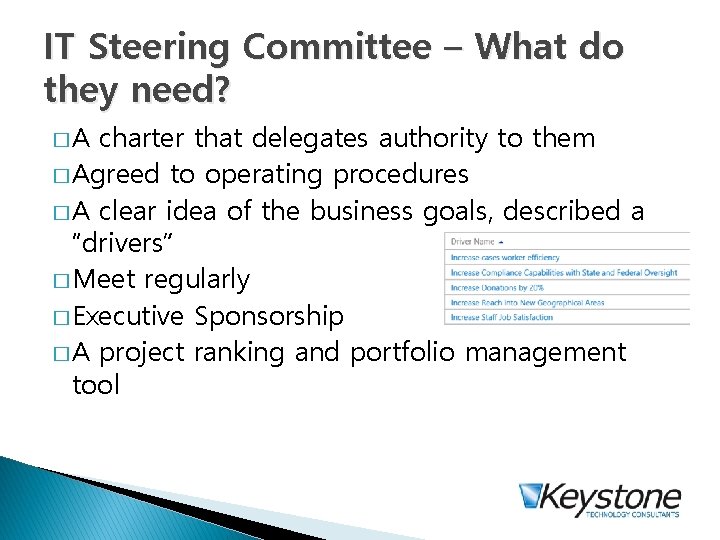
IT Steering Committee – What do they need? �A charter that delegates authority to them � Agreed to operating procedures � A clear idea of the business goals, described a “drivers” � Meet regularly � Executive Sponsorship � A project ranking and portfolio management tool
Questions? Contact the Keystone Technology Consultants � David. H@Keystone. Corp. com � Gene. W@Keystone. Corp. com � 330 -666 -6200 http: //www. Keystone. Corp. com
- Slides: 24