
BUSINESS INTERRUPTION RISK FEATURES PETE HOLMES BUSINESS RESILIENCE

BUSINESS INTERRUPTION RISK FEATURES PETE HOLMES BUSINESS RESILIENCE FORUM APRIL 2015
Financial Discussion in this area to detail the Income streams for the business, and associated aspects: • Protected Income • Inter-company/ group Trading • Committed Costs • Previous years performance • Coming years budget
Financial The most important detail to obtain is: SUM INSURED CALCULATION Does policy SI accurately represent what should be covered, over the Maximum Indemnity Period?

Financial Maximum Indemnity Period Is it adequate? 12 Months is nearly always inadequate! Has rebuilding the business, and not just the premises been taken into account?
Business Interruption Risk Features Business trend Alternative temporary premises Customers and market place Computer dependency Seasonality Data storage Buildings Recovery assistance Machinery Business Continuity Planning Supplies Dominant trade features
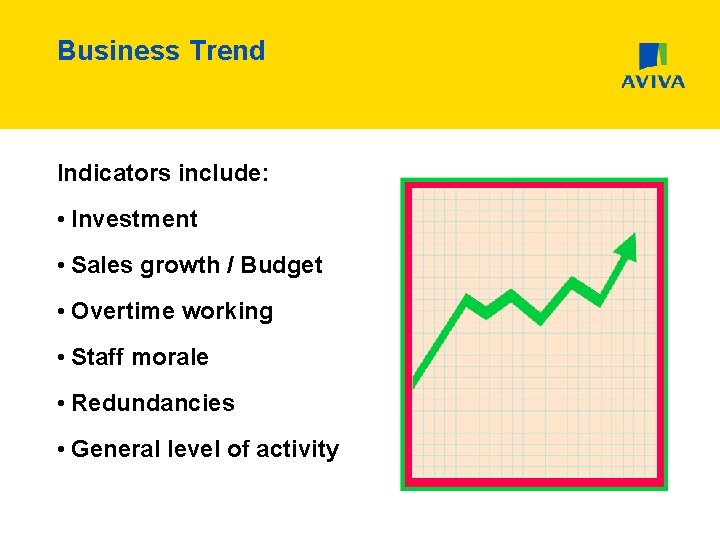
Business Trend Indicators include: • Investment • Sales growth / Budget • Overtime working • Staff morale • Redundancies • General level of activity
Customers & Market Place • Who the major customers are • Who the major competitors are • How many customers there are? • How reliant is the business on the largest customers? • Are the biggest customers tied in any way? • Is there a good degree of customer loyalty? • How competitive is the market? • Can new customers be “easily” found?
Seasonality The extent of a loss and the speed of recovery can be influenced by how seasonal the sales of the business are. Typical factors that may influence sales include: • Christmas • Easter • Summer holidays • Fashion seasons • Sports seasons • School Terms/ Years
Seasonality Consider the effect if damage occurred at the beginning of Q 2 and the interruption lasted 6 months Avoid 18 Month MIPs Businesses need to consider recovering the income and customer base, to expected levels. Not just rebuilding the premises.
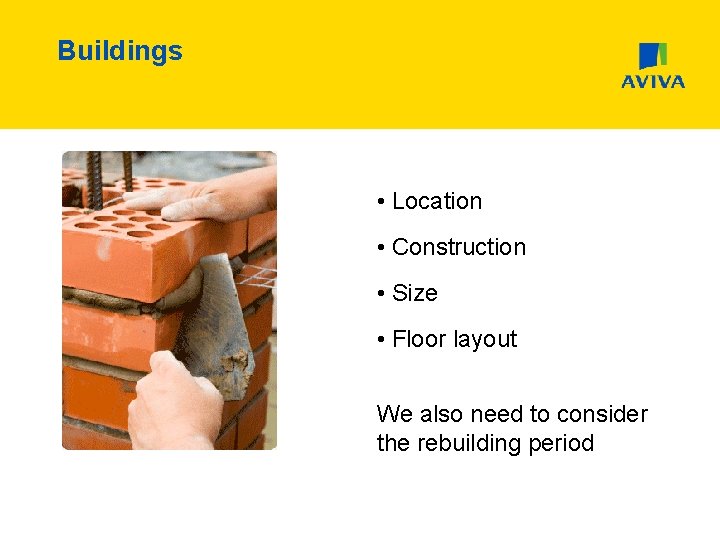
Buildings • Location • Construction • Size • Floor layout We also need to consider the rebuilding period
Factors influencing a Rebuilding Period Construction materials Local construction market Size Site pollution Design complexity Asbestos contamination Installed Machinery Planning problems Congested location Listed status / Heritage considerations Site access problems Authority controls / regulation and licence issues
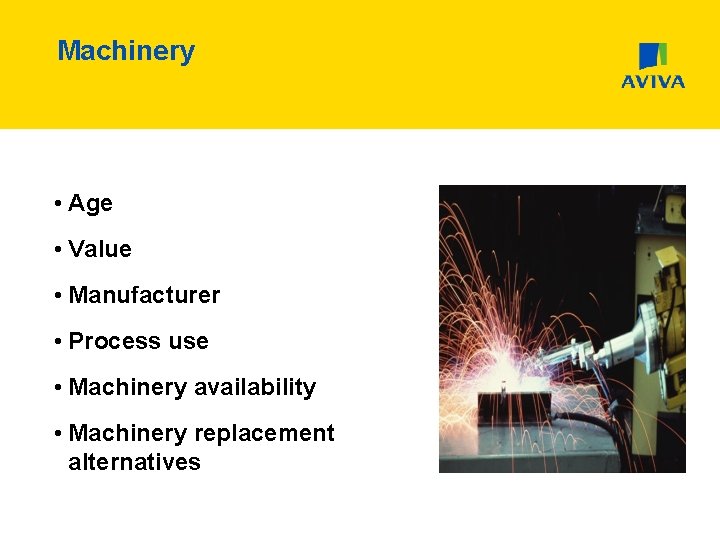
Machinery • Age • Value • Manufacturer • Process use • Machinery availability • Machinery replacement alternatives
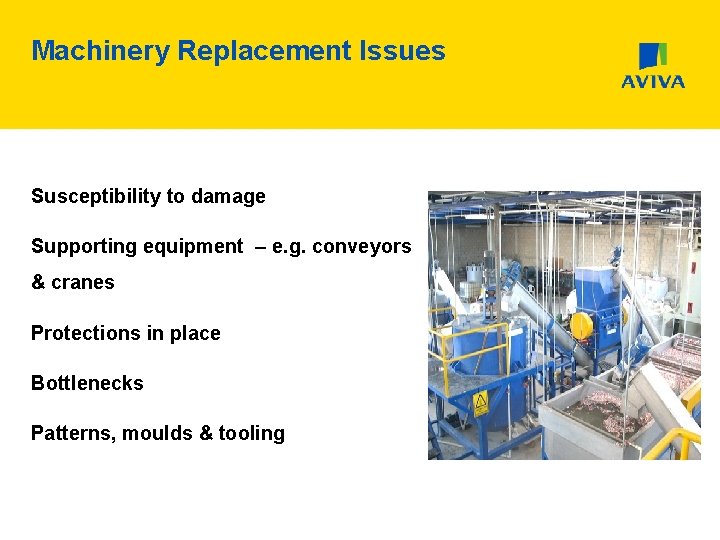
Machinery Replacement Issues Susceptibility to damage Supporting equipment – e. g. conveyors & cranes Protections in place Bottlenecks Patterns, moulds & tooling
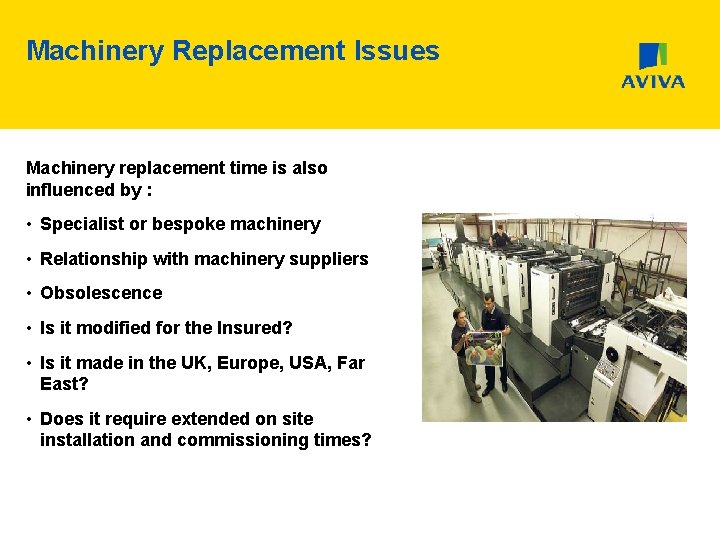
Machinery Replacement Issues Machinery replacement time is also influenced by : • Specialist or bespoke machinery • Relationship with machinery suppliers • Obsolescence • Is it modified for the Insured? • Is it made in the UK, Europe, USA, Far East? • Does it require extended on site installation and commissioning times?
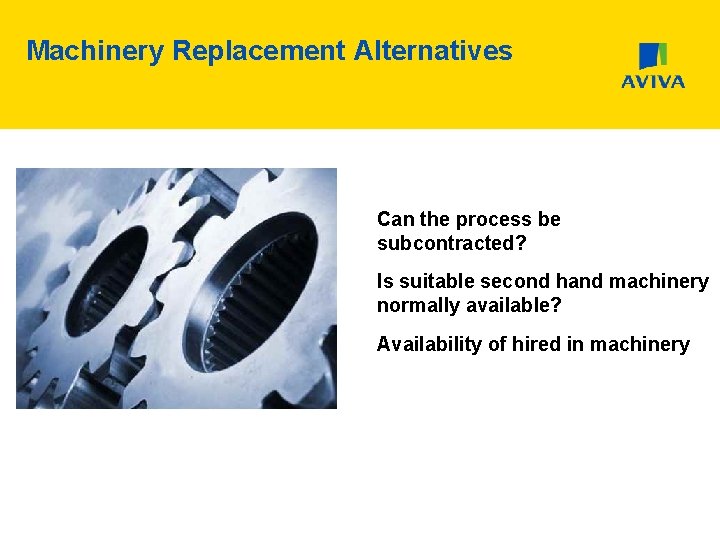
Machinery Replacement Alternatives Can the process be subcontracted? Is suitable second hand machinery normally available? Availability of hired in machinery
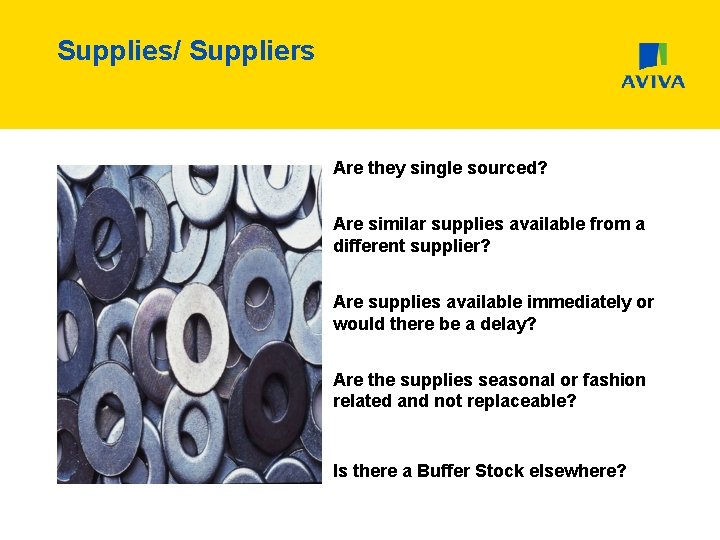
Supplies/ Suppliers Are they single sourced? Are similar supplies available from a different supplier? Are supplies available immediately or would there be a delay? Are the supplies seasonal or fashion related and not replaceable? Is there a Buffer Stock elsewhere?
Alternative Temporary Premises Factors to consider: • contracted workplace recovery facility • use of portable buildings • use of multiple buildings • use of buildings in the wider area • modifications that may have to be made to the building • would enhanced utility supplies be required? • is the location essential for the business? • regulatory needs / licences Trading from temporary premises may not be viable
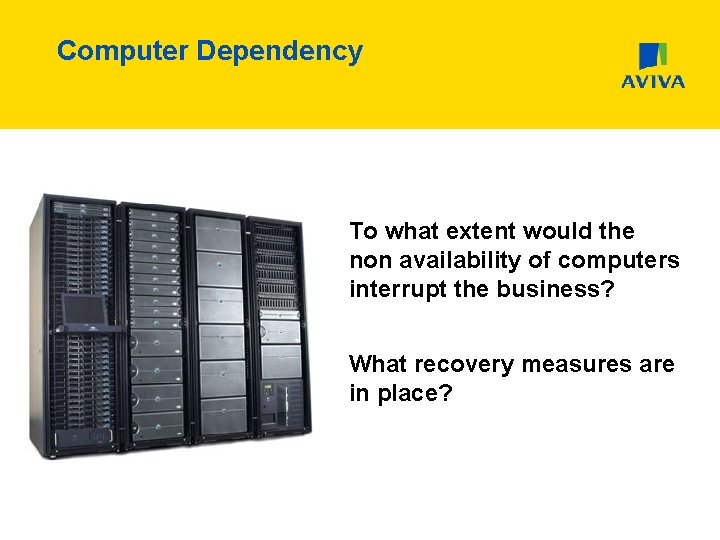
Computer Dependency To what extent would the non availability of computers interrupt the business? What recovery measures are in place?
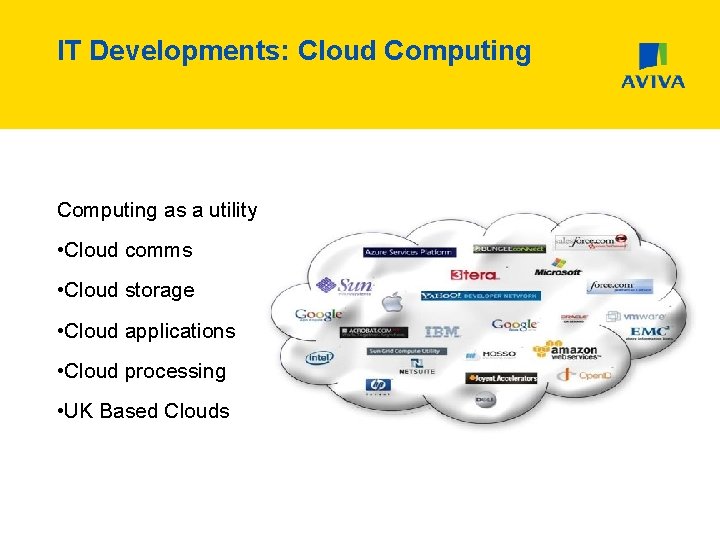
IT Developments: Cloud Computing as a utility • Cloud comms • Cloud storage • Cloud applications • Cloud processing • UK Based Clouds
Computer Dependency Factors Is production machinery controlled by computers? Are key business processes dependent on computers? Office risks - how long can the business continue without computers? Are there links into suppliers and customers for order data and/or billing data?
Computer Dependency Recovery Factors Tested manual work rounds Computer / office recovery contracts “Hot start” agreements Excellent data storage arrangements Off site server duplication / telecomms duplication Active fire protection of server suites
Data Storage – Good Features Daily backup/ GFS Duplicate copies of backups Offsite data storage/ Hosting Use of approved Data cabinets Mirroring of data
Recovery Assistance INTERNAL EXTERNAL Reorganising undamaged portions of premises Using third party storage locations Help from other sites operated by the Insured Subcontracting part / all of process Redeploying staff to different roles Buying in alternative finished goods Reciprocal agreements
Business Continuity Planning A process designed to • MINIMISE the risk of a disaster befalling the organisation • MAXIMISE the ability of the organisation to recover from a disaster
BCP Key Questions What is the coverage of the plan? Does it include Business Impact Analysis? Does it provide for the long term recovery of the business as well as Emergency action? Is the plan tested in any way?
One Final Thought Most businesses are completely dominated by one factor that outweighs all others in importance Building Location Machinery Seasonality Supplier Time
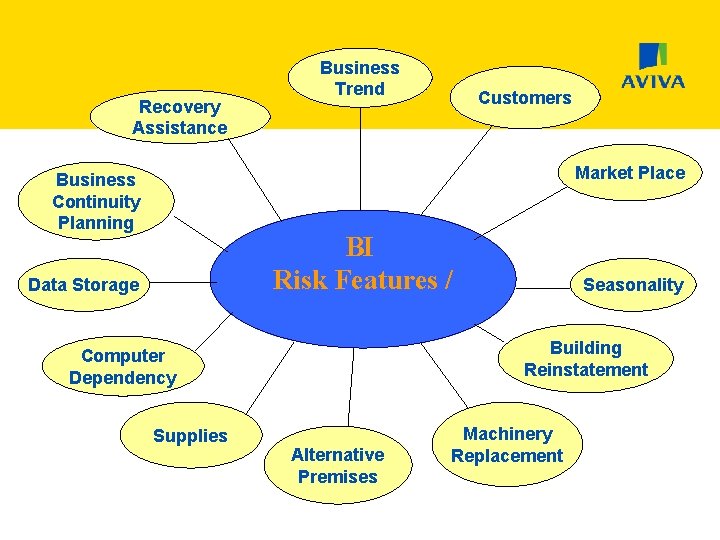
Recovery Assistance Business Trend Customers Market Place Business Continuity Planning BI Risk Features / Data Storage Building Reinstatement Computer Dependency Supplies Seasonality Alternative Premises Machinery Replacement

Any Questions?
- Slides: 28