
Business in the Gilded Age 1865 1914 Public
Business in the “Gilded Age” 1865 -1914
Public Good vs. Private Gain • The conflict between public good and private gain was most noted in the actions of Andrew Carnegie and John D. Rockefeller • These business leaders made the industries they dominated bigger and more productive than any that had existed before. • Both men were philanthropists and donated large amounts of money to build libraries, schools, hospitals, and other institutions. • For these actions they were know as Captains of Industry.
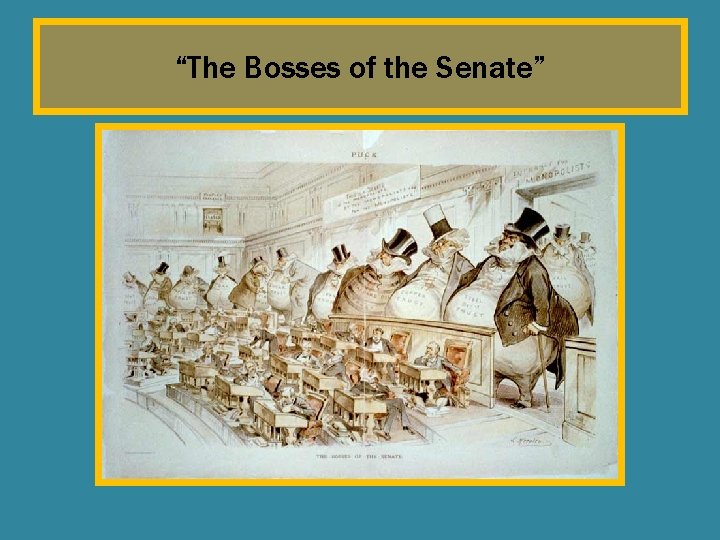
• On the other hand, Carnegie and Rockefeller –and other business leaders of the age-did not concern themselves with fairness. • Workers received low wages, poor working conditions, and no health protections. • Competitors were put of business by whatever means a big business chose to use, including secret agreements with railroads and temporary price cuts. • With their vast accumulations of wealth, these business leaders were able to buy influence in government , particularly in the US Senate. • These practices led to these leaders being known as robber barons.
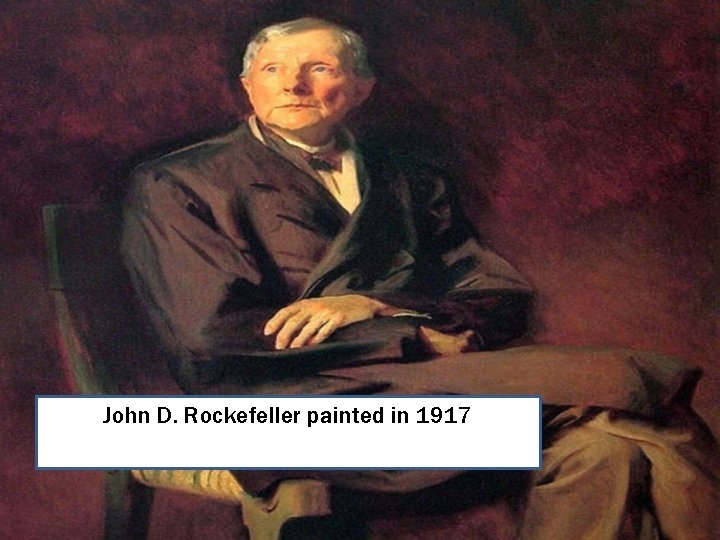
John D. Rockefeller painted in 1917
Rockefeller and Standard Oil • When Rockefeller began his company in 1870 he had 200 competitors in the oil refining business. By 1880, only a few competitors remained and Standard Oil controlled 90% of all oil refined in the US. • Rockefeller crushed his competitors by – 1. Convincing railroad companies to give him rebates 2. Whenever a competitor was struggling, he would come in with an offer to buy them out 3. To avoid paying shipping charges, Rockefeller increased his competitive advantage by shipping oil more cheaply through pipelines built and owned by Standard Oil. 4. The type of monopoly structure was called horizontal integration: completely controlling one aspect of a business
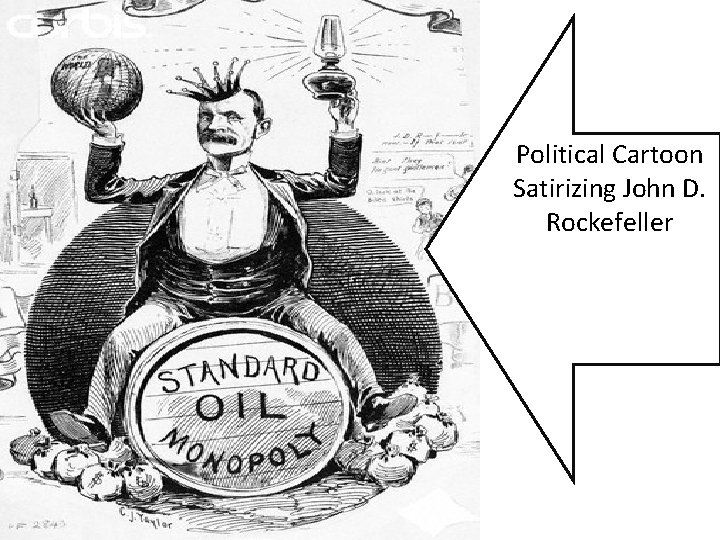
Political Cartoon Satirizing John D. Rockefeller
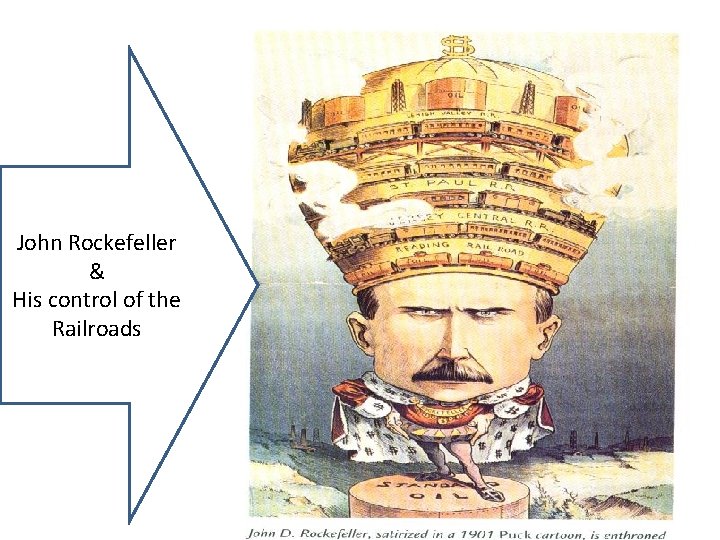
John Rockefeller & His control of the Railroads
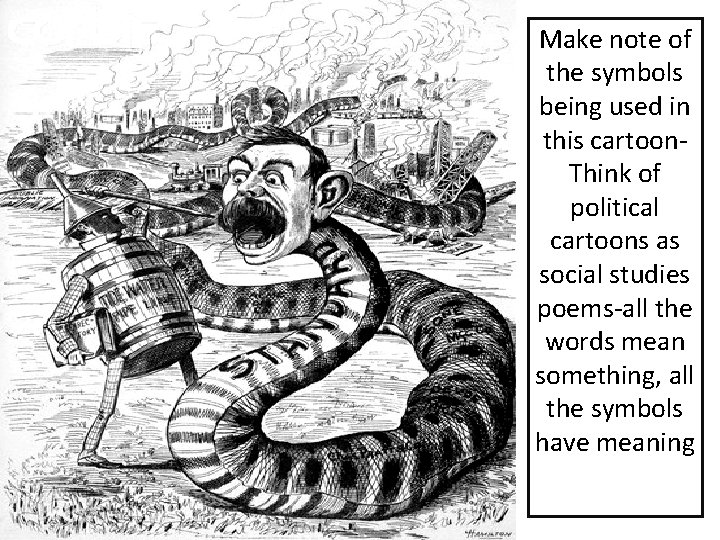
Make note of the symbols being used in this cartoon. Think of political cartoons as social studies poems-all the words mean something, all the symbols have meaning
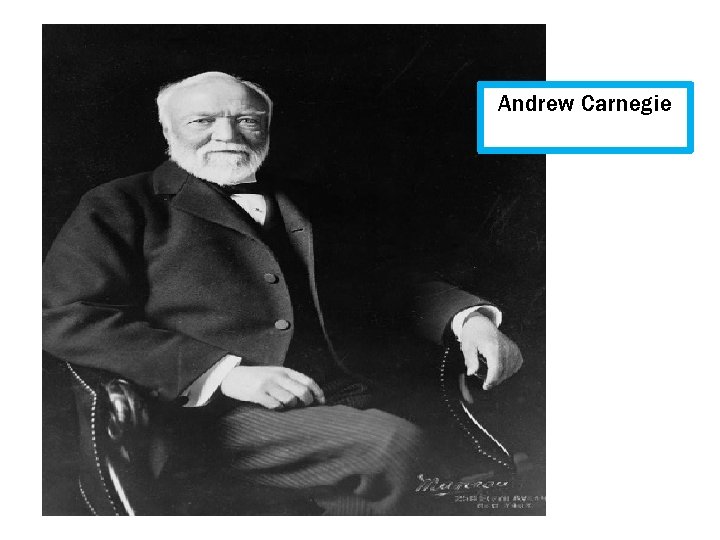
Andrew Carnegie and US Steel • Born in Scotland, Carnegie came to the US with thousands of other immigrants in 1840. • He originally started out as a mill worker but good luck and ability won him a job working directly for the president of Pennsylvania Railroad. In a short time he became a millionaire due to his investments in iron mills, railroad sleeping cars, and eventually steel • Carnegie began the company US Steel which he later sold to J. P. Morgan in 1901 for $500 million

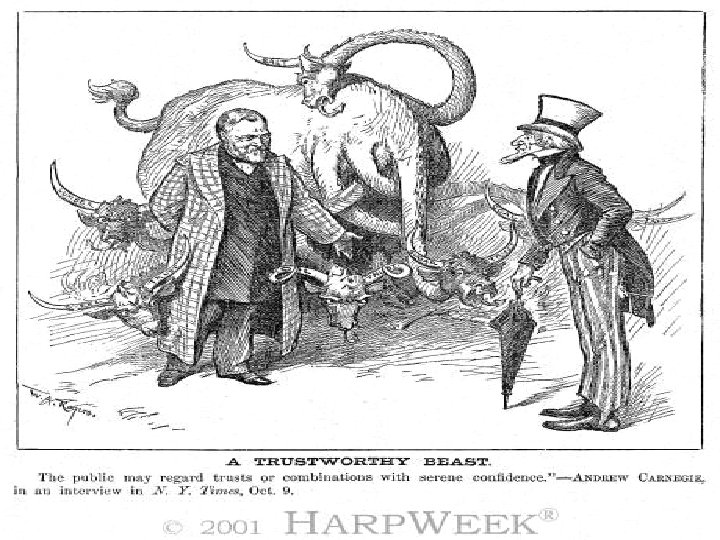
Carnegie’s Methods • Carnegie was a hard-driving owner of his own company; he paid his workers low wages, drove tough bargains with railroads, and did all in his power to bankrupt competitors. • Carnegie practiced vertical integration-owning all the means of production from the ore mines to the delivery
Andrew Carnegie
“The Bosses of the Senate”
- Slides: 13