
Business Etiquette Manners in the Modern Workplace By

Business Etiquette Manners in the Modern Workplace By Will Talley
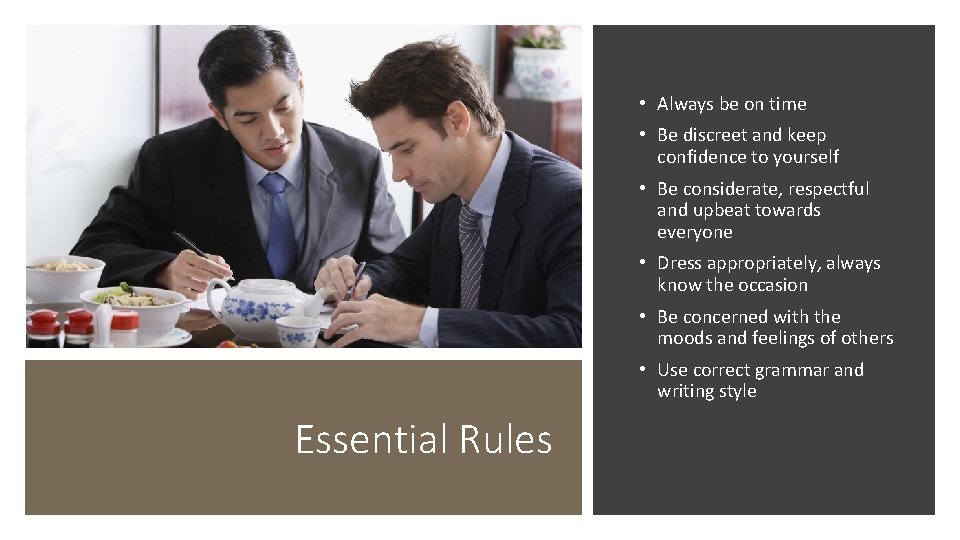
• Always be on time • Be discreet and keep confidence to yourself • Be considerate, respectful and upbeat towards everyone • Dress appropriately, always know the occasion • Be concerned with the moods and feelings of others • Use correct grammar and writing style Essential Rules
Introductions • When introducing yourself, state your name and put yourself on common ground with whoever you are introducing yourself to. • Always try to remember the person’s name that you are meeting, and repeat it to yourself to ensure you don’t forget. • Presentation is key. Dress professionally and neatly, and wear the RIGHT number of accessories. More isn’t always more, sometimes less is more. • Never dress yourself or get ready in public or near a new person.
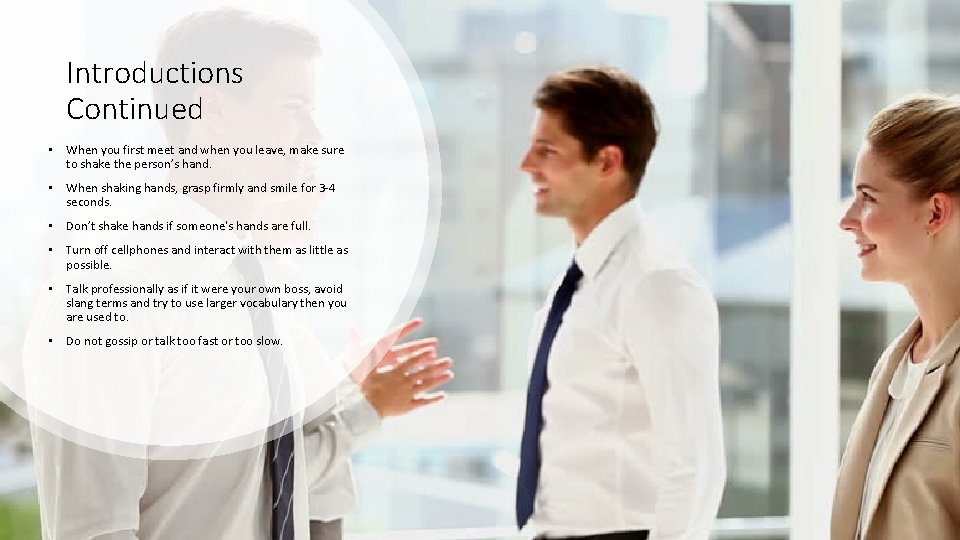
Introductions Continued • When you first meet and when you leave, make sure to shake the person’s hand. • When shaking hands, grasp firmly and smile for 3 -4 seconds. • Don’t shake hands if someone's hands are full. • Turn off cellphones and interact with them as little as possible. • Talk professionally as if it were your own boss, avoid slang terms and try to use larger vocabulary then you are used to. • Do not gossip or talk too fast or too slow.
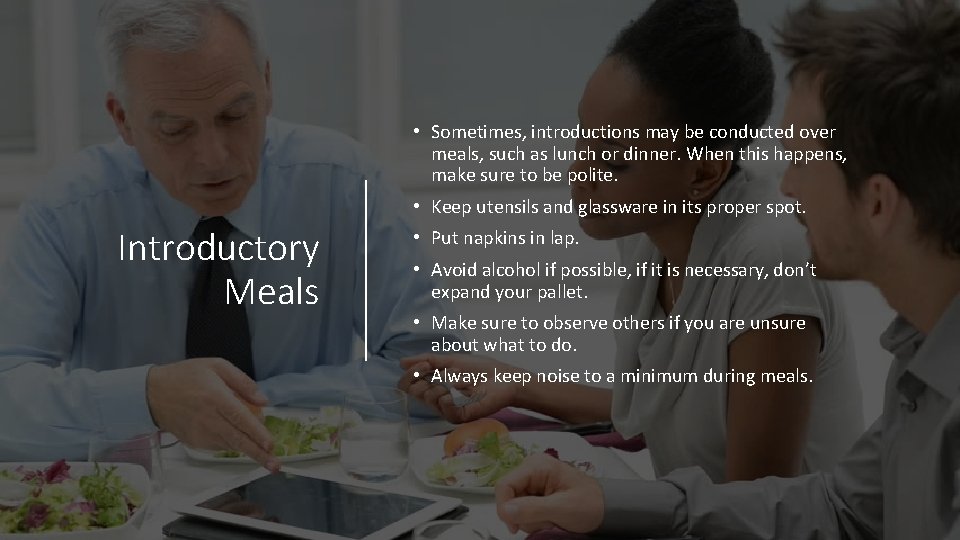
• Sometimes, introductions may be conducted over meals, such as lunch or dinner. When this happens, make sure to be polite. • Keep utensils and glassware in its proper spot. Introductory Meals • Put napkins in lap. • Avoid alcohol if possible, if it is necessary, don’t expand your pallet. • Make sure to observe others if you are unsure about what to do. • Always keep noise to a minimum during meals.
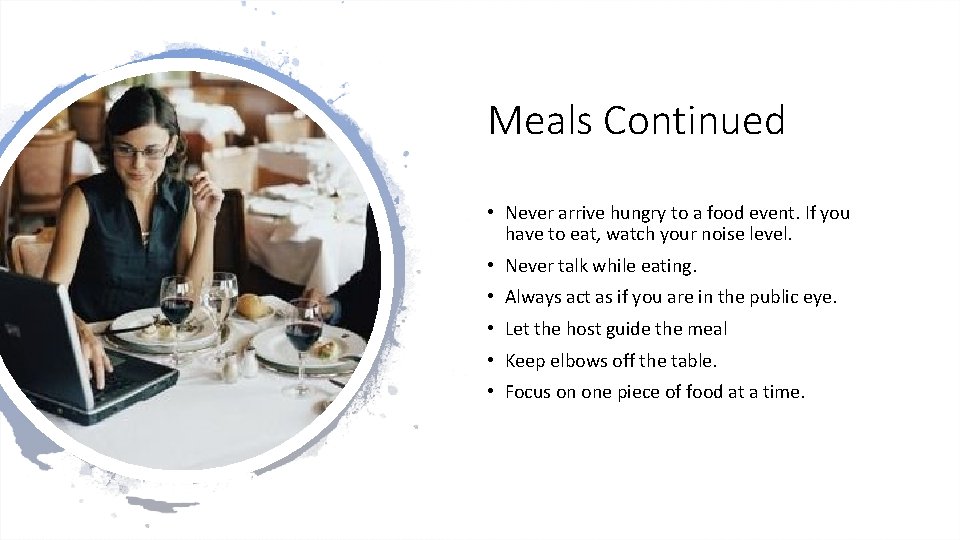
Meals Continued • Never arrive hungry to a food event. If you have to eat, watch your noise level. • Never talk while eating. • Always act as if you are in the public eye. • Let the host guide the meal • Keep elbows off the table. • Focus on one piece of food at a time.
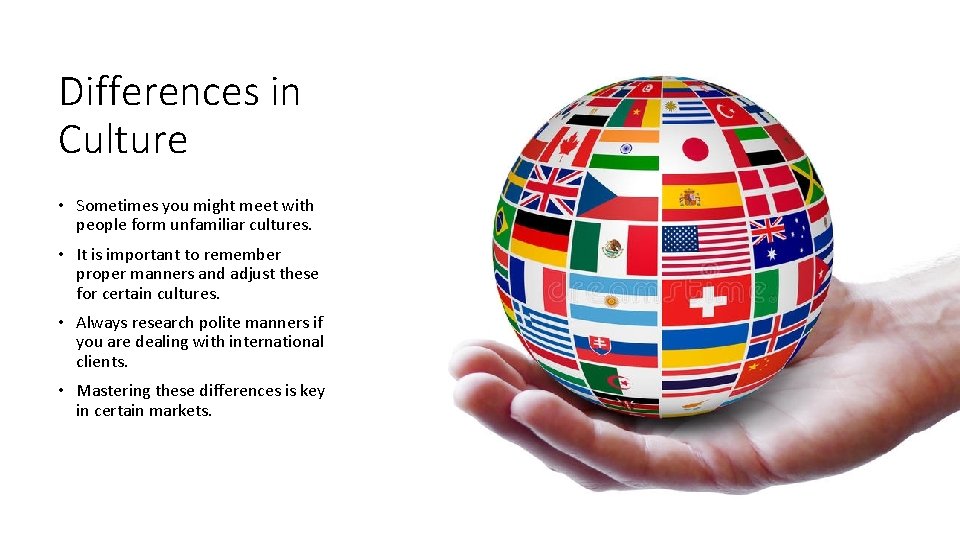
Differences in Culture • Sometimes you might meet with people form unfamiliar cultures. • It is important to remember proper manners and adjust these for certain cultures. • Always research polite manners if you are dealing with international clients. • Mastering these differences is key in certain markets.
Examples of Cultural Differences • In China, writing with red ink implies death • In Thailand it is rude to show your shoe soles. • In Japan it is polite to slurp noodles • In Sweden spouses are included in business dinners • In Brazil it is common to initially fabricate facts in a meeting • In France toothpicks are considered rude
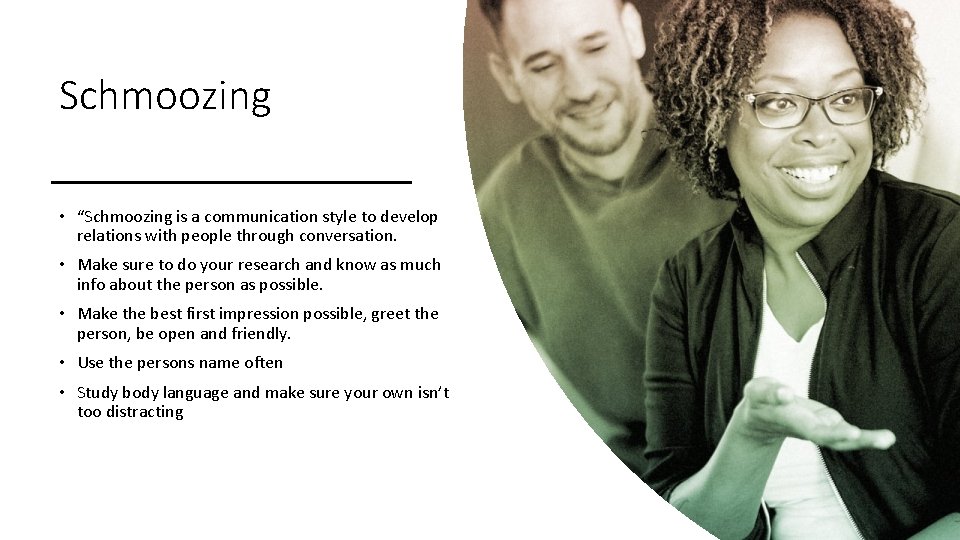
Schmoozing • “Schmoozing is a communication style to develop relations with people through conversation. • Make sure to do your research and know as much info about the person as possible. • Make the best first impression possible, greet the person, be open and friendly. • Use the persons name often • Study body language and make sure your own isn’t too distracting
Email Etiquette • Make sure to add the email addresses last. • Double check consistently and often. • Make sure that you are using correct pronouns and names. • Never shorten a recipients name unless specifically asked to
Email Etiquette Continued • Ensure that your email address you are using is professional and strictly work related. • Never start and email with “I”. • Have consistent and professional fonts. No Comic Sans! • Avoid putting any words in all caps
Further Email Etiquette • Mark emails as “urgent” very sparingly and only do so if completely necessary. • Maintain a consistent and appropriate tone at all times • Proofread at least once before sending • Reply to any emails you get so that coworkers know you are listening • Avoid uses of humor.
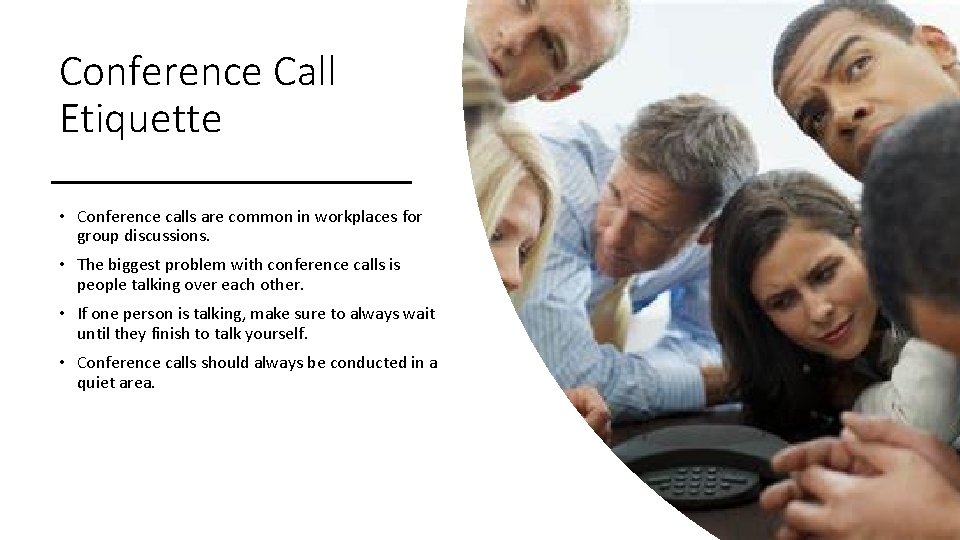
Conference Call Etiquette • Conference calls are common in workplaces for group discussions. • The biggest problem with conference calls is people talking over each other. • If one person is talking, make sure to always wait until they finish to talk yourself. • Conference calls should always be conducted in a quiet area.
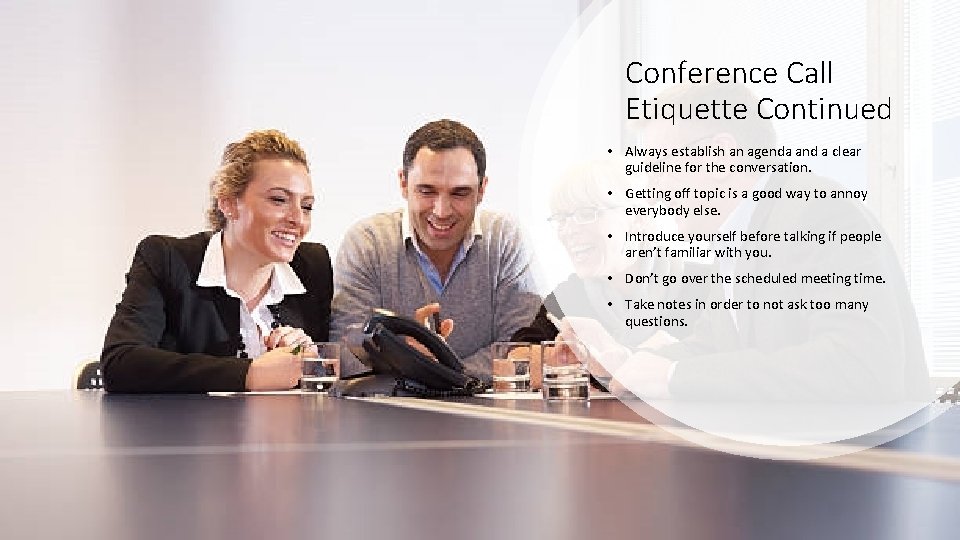
Conference Call Etiquette Continued • Always establish an agenda and a clear guideline for the conversation. • Getting off topic is a good way to annoy everybody else. • Introduce yourself before talking if people aren’t familiar with you. • Don’t go over the scheduled meeting time. • Take notes in order to not ask too many questions.
Further Conference Call Etiquette • Conference calls are still common, despite new technology, so make sure to brush up on your skills. • Know when and how to mute calls if a problem comes up. • Be transparent about muting and getting muted. • Control volume at all times.
References • https: //www. businessinsider. com/email-etiquette-rulesevery-professional-needs-to-know-2017 -7#know-thatpeople-from-different-cultures-speak-and-write-differently 13 • https: //www. businessnewsdaily. com/8205 -conference-callfaux-pas. html
- Slides: 16