
Business Essentials Twelfth Edition Chapter 5 Managing the
Business Essentials Twelfth Edition Chapter 5 Managing the Business Copyright © 2019, 2016, 2013 Pearson Education, Inc. All Rights Reserved.
Introduction • In this chapter we – explore the importance of strategic management and effective goal setting to organizational success – examine the functions that constitute the management process and identify different types of managers likely to be found in an organization by level and area – look at basic management skills and roles and explain the importance of corporate culture Copyright © 2019, 2016, 2013 Pearson Education, Inc. All Rights Reserved.
Learning Objectives (1 of 2) 1. Describe the nature of management and identify the four basic functions that constitute the management process. 2. Identify different types of managers likely to be found in an organization by level and area. 3. Describe the basic roles and skills required of managers. 4. Explain the importance of strategic management and effective goal setting in organizational success. Copyright © 2019, 2016, 2013 Pearson Education, Inc. All Rights Reserved.
Learning Objectives (2 of 2) 5. Discuss contingency planning and crisis management in today’s business world. 6. Describe the development and explain the importance of corporate culture. Copyright © 2019, 2016, 2013 Pearson Education, Inc. All Rights Reserved.
The Management Process (1 of 2) • Management – process of planning, organizing, leading, and controlling an organization’s resources to achieve its goals Copyright © 2019, 2016, 2013 Pearson Education, Inc. All Rights Reserved.
Basic Management Functions (1 of 2) • Planning – management process of determining what an organization needs to do and how best to get it done • Organizing – management process of determining how best to arrange an organization’s resources and activities into a coherent structure Copyright © 2019, 2016, 2013 Pearson Education, Inc. All Rights Reserved.
Basic Management Functions (2 of 2) • Leading – management process of guiding and motivating employees to meet an organization’s objectives • Controlling – management process of monitoring an organization’s performance to ensure that it is meeting its goals Copyright © 2019, 2016, 2013 Pearson Education, Inc. All Rights Reserved.
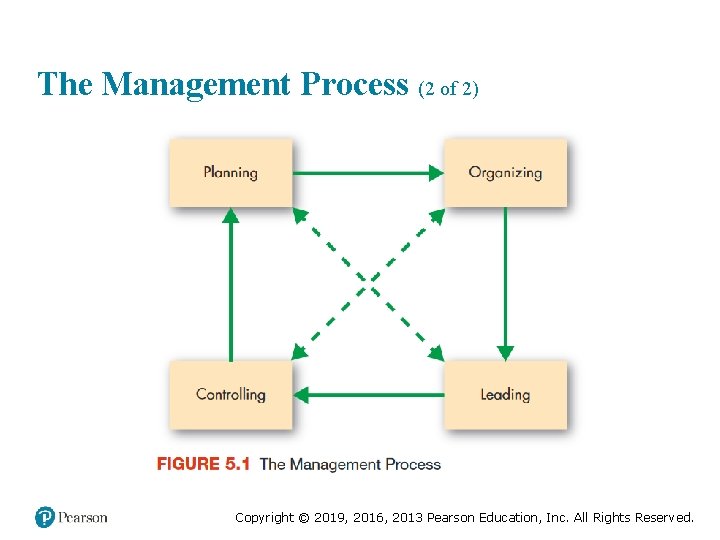
The Management Process (2 of 2) Copyright © 2019, 2016, 2013 Pearson Education, Inc. All Rights Reserved.
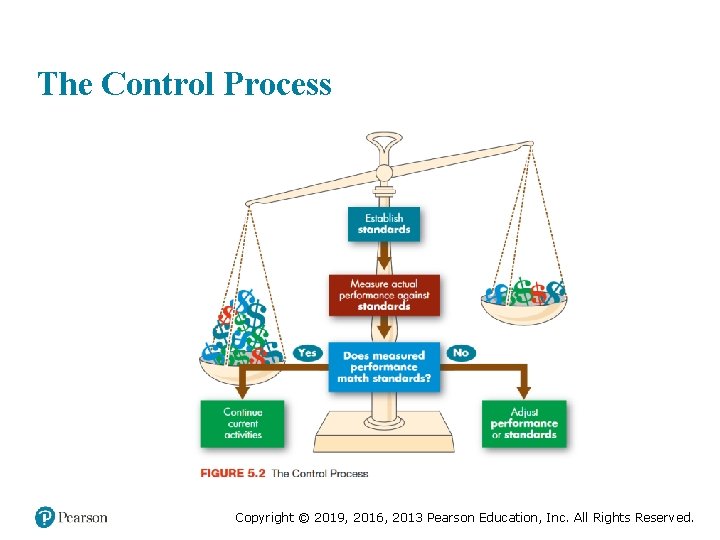
The Control Process Copyright © 2019, 2016, 2013 Pearson Education, Inc. All Rights Reserved.
Types of Managers • Top Manager – manager responsible for a firm’s overall performance and effectiveness • Middle Manager – manager responsible for implementing the strategies and working toward the goals set by top managers • First-Line Manager – manager responsible for supervising the work of employees Copyright © 2019, 2016, 2013 Pearson Education, Inc. All Rights Reserved.
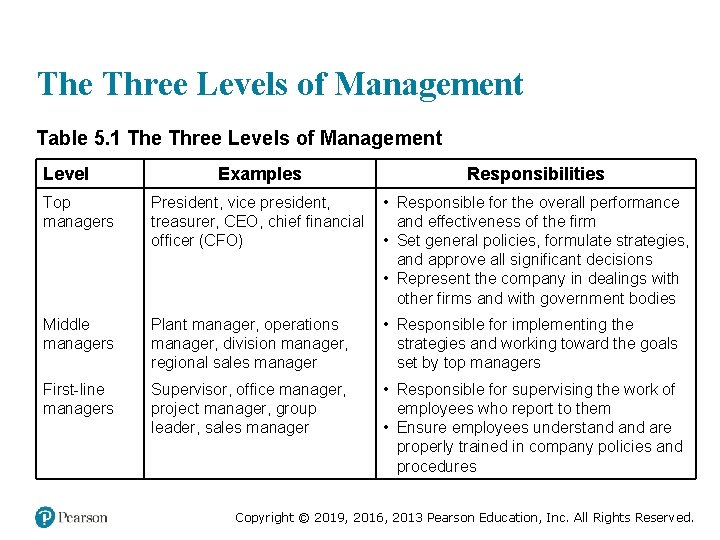
The Three Levels of Management Table 5. 1 The Three Levels of Management Level Examples Responsibilities Top managers President, vice president, treasurer, CEO, chief financial officer (CFO) • Responsible for the overall performance and effectiveness of the firm • Set general policies, formulate strategies, and approve all significant decisions • Represent the company in dealings with other firms and with government bodies Middle managers Plant manager, operations manager, division manager, regional sales manager • Responsible for implementing the strategies and working toward the goals set by top managers First-line managers Supervisor, office manager, project manager, group leader, sales manager • Responsible for supervising the work of employees who report to them • Ensure employees understand are properly trained in company policies and procedures Copyright © 2019, 2016, 2013 Pearson Education, Inc. All Rights Reserved.
Areas of Management (1 of 2) • Human Resource Managers – hire and train employees, evaluate performance, and determine compensation • Operations Managers – responsible for production, inventory, and quality control • Marketing Managers – responsible for getting products from producers to consumers Copyright © 2019, 2016, 2013 Pearson Education, Inc. All Rights Reserved.
Areas of Management (2 of 2) • Information Managers – design and implement systems to gather, organize, and distribute information • Financial Managers – plan and oversee accounting functions and financial resources Copyright © 2019, 2016, 2013 Pearson Education, Inc. All Rights Reserved.
Management Roles and Skills • Interpersonal Roles – a category of managerial roles including figurehead, leader, and liaison • Informational Roles – a category of managerial roles including monitor, disseminator, and spokesperson • Decisional Roles – a category of managerial roles including entrepreneur, disturbance handler, resource allocator, and negotiator Copyright © 2019, 2016, 2013 Pearson Education, Inc. All Rights Reserved.

Basic Managerial Roles Table 5. 2 Basic Managerial Roles Category Role Sample Activities Interpersonal Figurehead Leader Liaison Attending ribbon-cutting ceremony for new plant Encouraging employees to improve productivity Coordinating activities of two project groups Informational Monitor Disseminator Spokesperson Scanning industry reports to stay abreast of developments Sending memos outlining new organizational initiatives Making a speech to discuss growth plans Decisional Entrepreneur Disturbance handler Resource allocator Negotiator Developing new ideas and fostering innovation Resolving conflict between two subordinates Reviewing and revising budget requests Reaching agreement with a key supplier or labor union Copyright © 2019, 2016, 2013 Pearson Education, Inc. All Rights Reserved.
Basic Management Skills (1 of 2) • Technical Skills – skills needed to perform specialized tasks • Human Relations Skills – skills in understanding and getting along with people • Conceptual Skills – abilities to think in the abstract, diagnose and analyze different situations, and see beyond the present situation Copyright © 2019, 2016, 2013 Pearson Education, Inc. All Rights Reserved.
Basic Management Skills (2 of 2) • Decision-Making Skills – skills in defining problems and selecting the best courses of action • Time Management Skills – skills associated with the productive use of time Copyright © 2019, 2016, 2013 Pearson Education, Inc. All Rights Reserved.
Leading Causes of Wasted Time 1. Paperwork 2. Telephone calls 3. Meetings 4. E-mail Copyright © 2019, 2016, 2013 Pearson Education, Inc. All Rights Reserved.

Management Skills for the Twenty-First Century (1 of 2) • Global Management Skills – Managers will need to understand foreign markets, cultural differences, and the motives and practices of foreign rivals. – Managers will also need to understand how to collaborate with others around the world on a real-time basis. Copyright © 2019, 2016, 2013 Pearson Education, Inc. All Rights Reserved.
Management Skills for the Twenty-First Century (2 of 2) • Management and Technology Skills – New forms of technology have added to a manager’s ability to process information while simultaneously making it even more important to organize and interpret an ever-increasing wealth of input. Copyright © 2019, 2016, 2013 Pearson Education, Inc. All Rights Reserved.
Strategic Management: Setting Goals and Formulating Strategy • Strategic Management – process of helping an organization maintain an effective alignment with its environment • Strategy – broad set of organizational plans for implementing the decisions made for achieving organizational goals Copyright © 2019, 2016, 2013 Pearson Education, Inc. All Rights Reserved.
Setting Business Goals • Goals – the means by which organizations and their managers measure success or failure at every level – objective that a business hopes and plans to achieve Copyright © 2019, 2016, 2013 Pearson Education, Inc. All Rights Reserved.

Purposes of Goal Setting 1. Provides direction and guidance for managers at all levels 2. Helps firms allocate resources 3. Helps to define corporate culture 4. Helps managers assess performance Copyright © 2019, 2016, 2013 Pearson Education, Inc. All Rights Reserved.

Kinds of Goals (1 of 2) • Mission Statement – organization’s statement of how it will achieve its purpose in the environment in which it conducts its business Copyright © 2019, 2016, 2013 Pearson Education, Inc. All Rights Reserved.
Kinds of Goals (2 of 2) • Long-Term Goal – goal set for an extended time, typically five years or more into the future • Intermediate Goal – goal set for a period of one to five years into the future • Short-Term Goal – goal set for the very near future Copyright © 2019, 2016, 2013 Pearson Education, Inc. All Rights Reserved.
Types of Strategy (1 of 2) • Corporate Strategy – strategy for determining the firm’s overall attitude toward growth and the way it will manage its businesses or product lines • Business (or Competitive) Strategy – strategy, at the business-unit or product-line level, focusing on improving a firm’s competitive position Copyright © 2019, 2016, 2013 Pearson Education, Inc. All Rights Reserved.
Types of Strategy (2 of 2) • Functional Strategy – strategy by which managers in specific areas decide how best to achieve corporate goals through productivity Copyright © 2019, 2016, 2013 Pearson Education, Inc. All Rights Reserved.
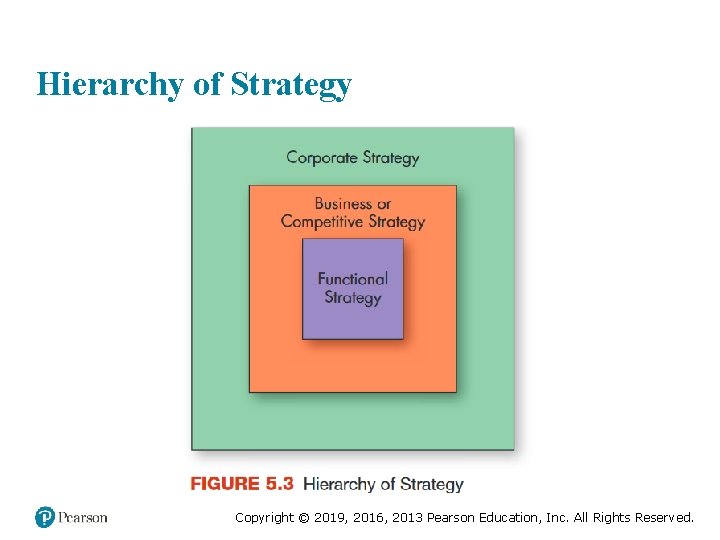
Hierarchy of Strategy Copyright © 2019, 2016, 2013 Pearson Education, Inc. All Rights Reserved.
Formulating Strategy (1 of 3) Step 1: Setting Strategic Goals Step 2: Analyzing the Organization and the Environment: SWOT Analysis Step 3: Matching the Organization and Its Environment Copyright © 2019, 2016, 2013 Pearson Education, Inc. All Rights Reserved.
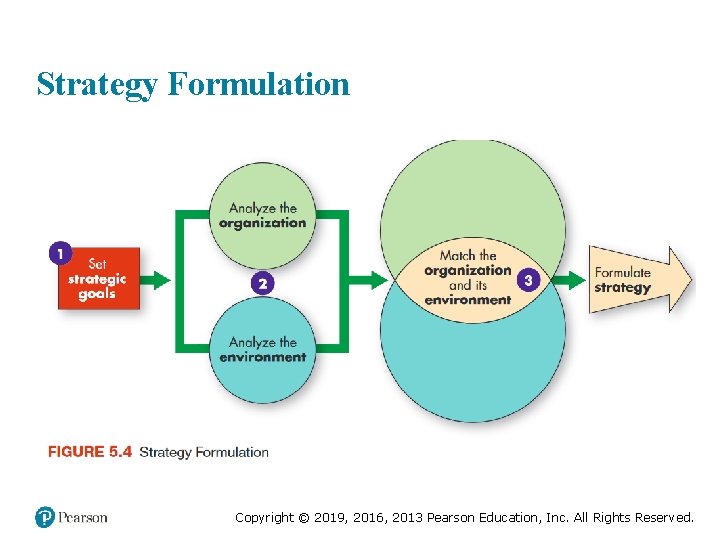
Strategy Formulation Copyright © 2019, 2016, 2013 Pearson Education, Inc. All Rights Reserved.
Formulating Strategy (2 of 3) • SWOT Analysis – identification and analysis of organizational strengths and weaknesses and environmental opportunities and threats as part of strategy formulation Copyright © 2019, 2016, 2013 Pearson Education, Inc. All Rights Reserved.
Formulating Strategy (3 of 3) • Environmental Analysis – process of scanning the business environment for threats and opportunities • Organizational Analysis – process of analyzing a firm’s strengths and weaknesses Copyright © 2019, 2016, 2013 Pearson Education, Inc. All Rights Reserved.
A Hierarchy of Plans • Strategic Plan – plan reflecting decisions about resource allocations, company priorities, and steps needed to meet strategic goals • Tactical Plan – generally short-term plan concerned with implementing specific aspects of a company’s strategic plans • Operational Plan – plan setting short-term targets for daily, weekly, or monthly performance Copyright © 2019, 2016, 2013 Pearson Education, Inc. All Rights Reserved.
Contingency Planning and Crisis Management • Contingency Planning – identifying aspects of a business or its environment that might entail changes in strategy • Crisis Management – organization’s methods for dealing with emergencies Copyright © 2019, 2016, 2013 Pearson Education, Inc. All Rights Reserved.
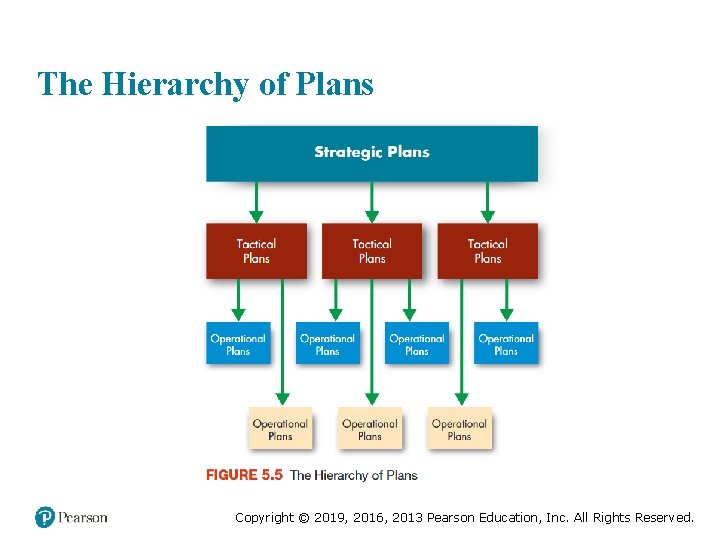
The Hierarchy of Plans Copyright © 2019, 2016, 2013 Pearson Education, Inc. All Rights Reserved.
Management and the Corporate Culture • Corporate culture – the shared experiences, stories, beliefs, and norms that characterize an organization – helps define the work and business climate that exists in an organization Copyright © 2019, 2016, 2013 Pearson Education, Inc. All Rights Reserved.
Communicating the Culture and Managing Change • Managers themselves must have a clear understanding of the culture • Must transmit the culture to others in the organization • Should maintain the culture by rewarding and promoting those who understand it and work toward maintaining it Copyright © 2019, 2016, 2013 Pearson Education, Inc. All Rights Reserved.
Managing Change – Three Stages 1. At the highest level, analysis of the company’s environment highlights extensive change as the most effective response to its problems. 2. Top management begins to formulate a vision of a new company. 3. The firm sets up new systems for appraising and compensating employees who enforce the firm’s new values. Copyright © 2019, 2016, 2013 Pearson Education, Inc. All Rights Reserved.
Applying What You’ve Learned (1 of 2) 1. Describe the nature of management and identify the four basic functions that constitute the management process. 2. Identify different types of managers likely to be found in an organization by level and area. 3. Describe the basic roles and skills required of managers. 4. Explain the importance of strategic management and effective goal setting in organizational success. Copyright © 2019, 2016, 2013 Pearson Education, Inc. All Rights Reserved.
Applying What You’ve Learned (2 of 2) 5. Discuss contingency planning and crisis management in today’s business world. 6. Describe the development and explain the importance of corporate culture. Copyright © 2019, 2016, 2013 Pearson Education, Inc. All Rights Reserved.
Copyright © 2019, 2016, 2013 Pearson Education, Inc. All Rights Reserved.
- Slides: 41