
Business Driven Information Systems Chapter 1 SECTION 1
Business Driven Information Systems Chapter 1

SECTION 1. 1 Chapter 1 INFORMATION SYSTEMS IN BUSINESS 1 -3
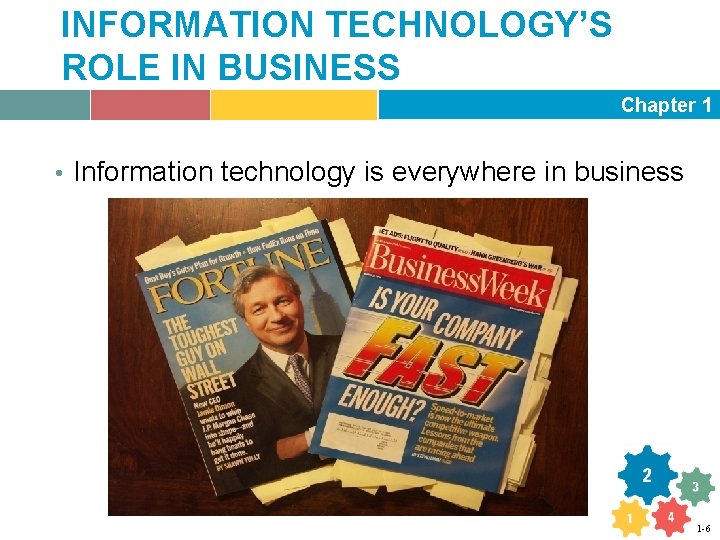
INFORMATION TECHNOLOGY’S ROLE IN BUSINESS Chapter 1 • Information technology is everywhere in business 1 -6
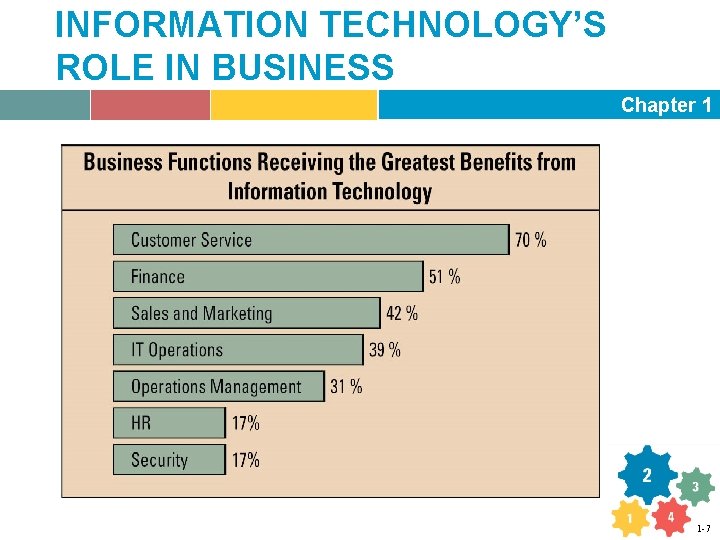
INFORMATION TECHNOLOGY’S ROLE IN BUSINESS Chapter 1 1 -7
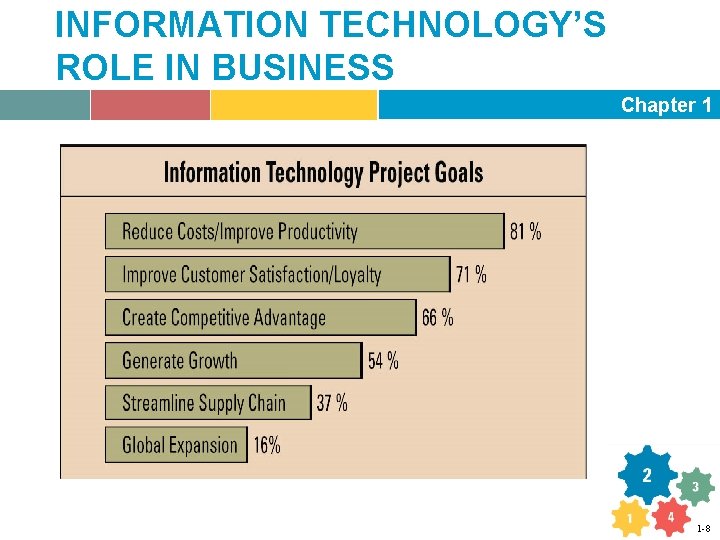
INFORMATION TECHNOLOGY’S ROLE IN BUSINESS Chapter 1 1 -8
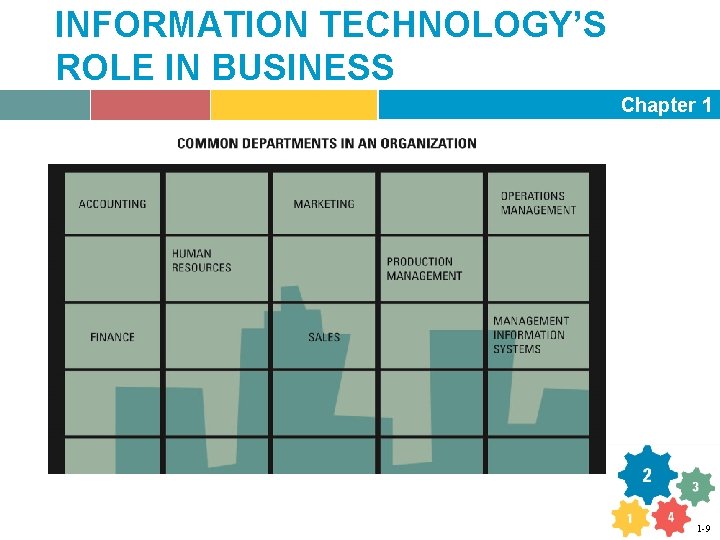
INFORMATION TECHNOLOGY’S ROLE IN BUSINESS Chapter 1 1 -9
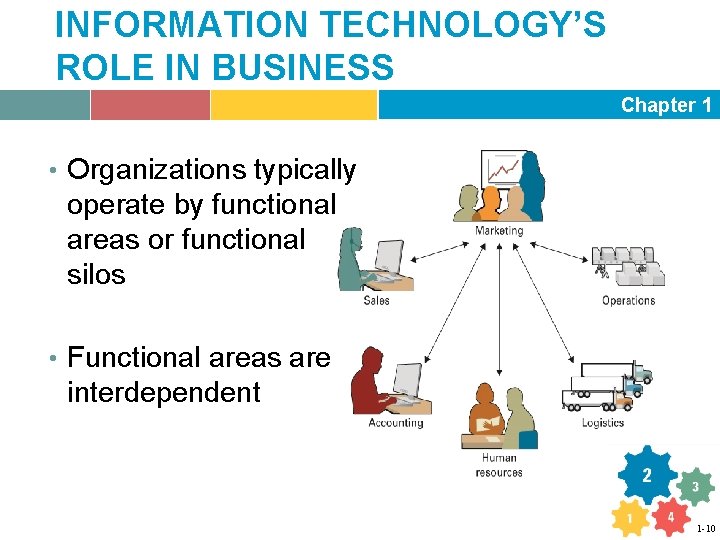
INFORMATION TECHNOLOGY’S ROLE IN BUSINESS Chapter 1 • Organizations typically operate by functional areas or functional silos • Functional areas are interdependent 1 -10
INFORMATION TECHNOLOGY BASICS Chapter 1 • Information technology (IT) • Information technology is an important enabler of business success and innovation 1 -11
INFORMATION TECHNOLOGY BASICS Chapter 1 • Management information systems (MIS) • MIS is a business function, similar to Accounting, Finance, Operations, and Human Resources 1 -12
INFORMATION Chapter 1 • Data • Information • Business intelligence 1 -14
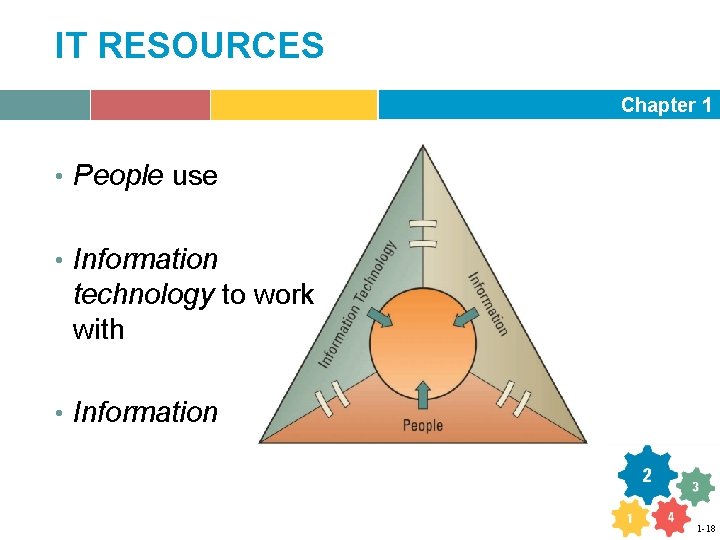
IT RESOURCES Chapter 1 • People use • Information technology to work with • Information 1 -18
IT CULTURES Chapter 1 • Organizational information cultures include: § Information-functional culture § Information-sharing culture § Information-inquiring culture § Information-discovery culture 1 -19
THE GAP BETWEEN BUSINESS PERSONNEL AND IT PERSONNEL Chapter 1 • Business personnel possess expertise in functional areas such as marketing, accounting, and sales • IT personnel have the technological expertise • This typically causes a communications gap between the business personnel and IT personnel 1 -26
MEASURING IT’S SUCCESS Chapter 1 • Questions executives should ask regarding IT systems § Is the internal IT operation performing satisfactorily? § Should I outsource some or all of the IT operations? § How is my outsourcer performing? § What are the risk factors to consider in an IT project? 1 -28
MEASURING IT’S SUCCESS Chapter 1 • Key performance indicator (KPI) • Metrics are detailed measures that feed KPIs • Performance metrics fall into the nebulous area of business intelligence that is neither technology, nor business centered, but requires input from both IT and business professionals 1 -29
EFFICIENCY AND EFFECTIVENESS METRICS Chapter 1 • Efficiency IT metric • Effectiveness IT metric 1 -30
BENCHMARKING – BASELINING METRICS Chapter 1 • Benchmarks • Benchmarking 1 -31
THE INTERRELATIONSHIPS OF EFFICIENCY AND EFFECTIVENESS IT METRICS Chapter 1 • Efficiency IT metrics focus on technology and include: § Throughput § Transaction speed § System availability § Information accuracy § Web traffic § Response time 1 -33
THE INTERRELATIONSHIPS OF EFFICIENCY AND EFFECTIVENESS IT METRICS Chapter 1 • Effectiveness IT metrics focus on an organization’s goals, strategies, and objectives and include: § Usability § Customer satisfaction § Conversion rates § Financial 1 -34
THE INTERRELATIONSHIPS OF EFFICIENCY AND EFFECTIVENESS IT METRICS Chapter 1 • Security is an issue for any organization offering products or services over the Internet • It is inefficient for an organization to implement Internet security, since it slows down processing, however, to be effective it must implement Internet security 1 -35
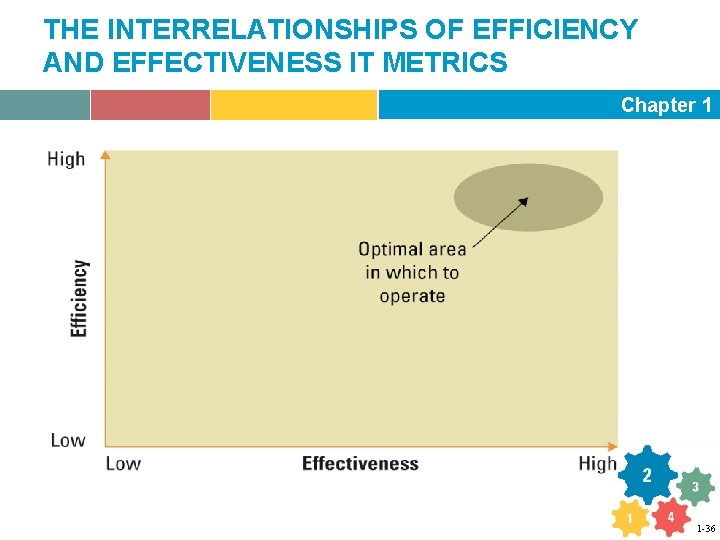
THE INTERRELATIONSHIPS OF EFFICIENCY AND EFFECTIVENESS IT METRICS Chapter 1 1 -36
SECTION 1. 2 Chapter 1 BUSINESS STRATEGY 1 -37
IDENTIFYING COMPETITIVE ADVANTAGES Chapter 1 • To survive and thrive an organization must create a competitive advantage § Competitive advantage § First-mover advantage 1 -39
IDENTIFYING COMPETITIVE ADVANTAGES Chapter 1 • Organizations watch their competition through environmental scanning § Environmental scanning • Three common tools used in industry to analyze and develop competitive advantages include: § Porter’s Five Forces Model § Porter’s three generic strategies § Value chains 1 -40
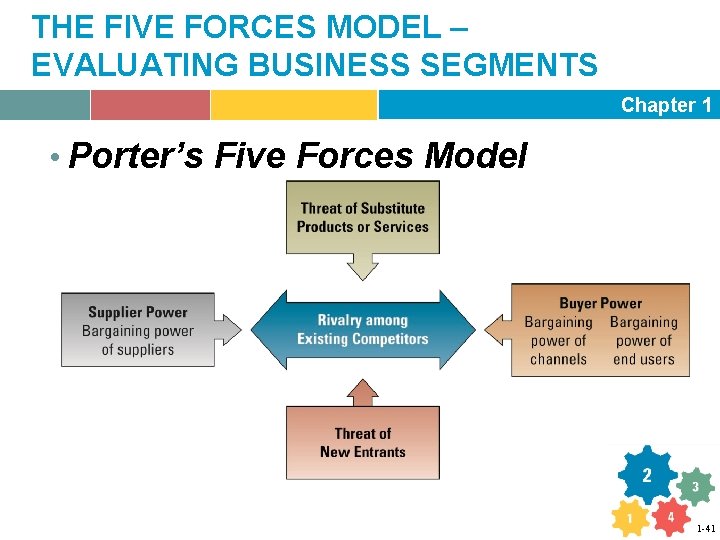
THE FIVE FORCES MODEL – EVALUATING BUSINESS SEGMENTS Chapter 1 • Porter’s Five Forces Model 1 -41
BUYER POWER Chapter 1 • Loyalty program 1 -42
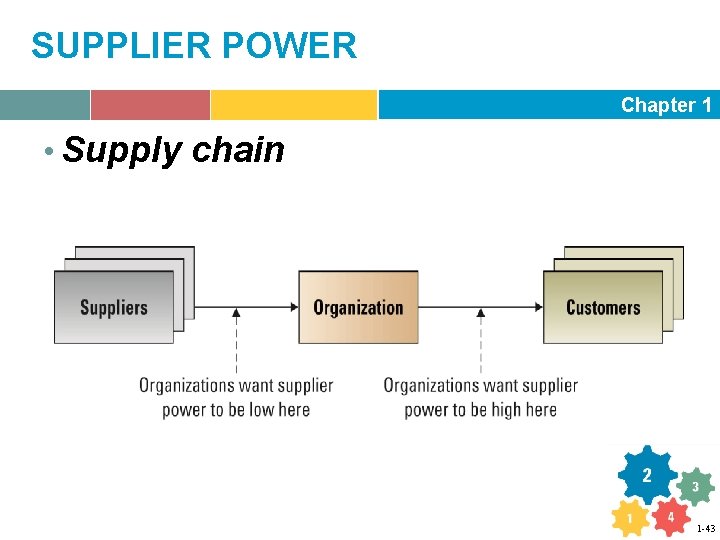
SUPPLIER POWER Chapter 1 • Supply chain 1 -43
SUPPLIER POWER Chapter 1 • Business-to-Business (B 2 B) marketplace § Private exchange § Reverse auction 1 -44
THREAT OF SUBSTITUTE PRODUCTS OR SERVICES Chapter 1 • Switching cost 1 -46
THREAT OF NEW ENTRANTS Chapter 1 • Entry barrier 1 -47
RIVALRY AMONG EXISTING COMPETITORS Chapter 1 • Although competition is always more intense in some industries than in others, the overall trend is toward increased competition in just about every industry 1 -48
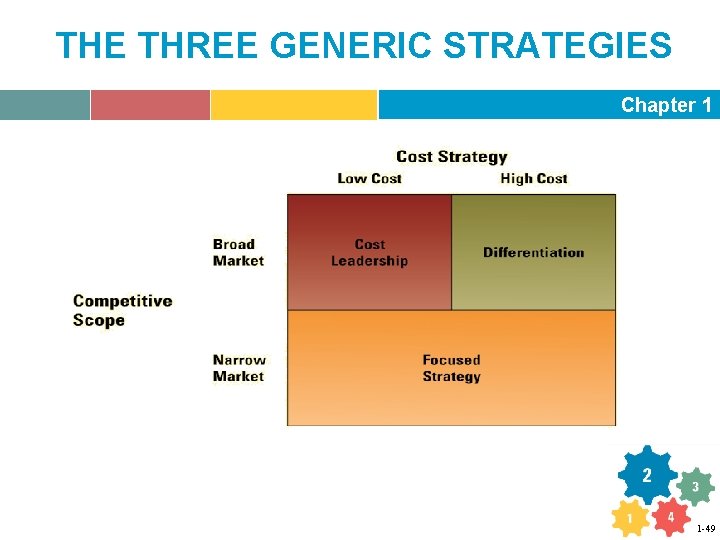
THE THREE GENERIC STRATEGIES Chapter 1 1 -49
VALUE CREATION Chapter 1 • Business process • Value chain 1 -51
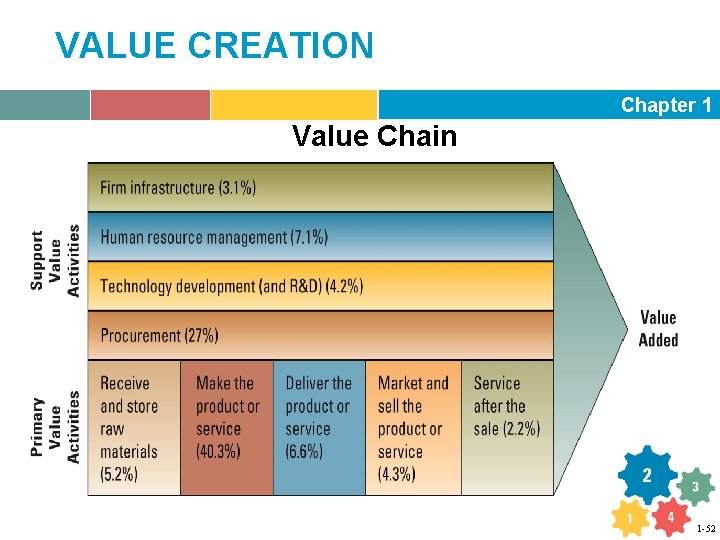
VALUE CREATION Chapter 1 Value Chain 1 -52
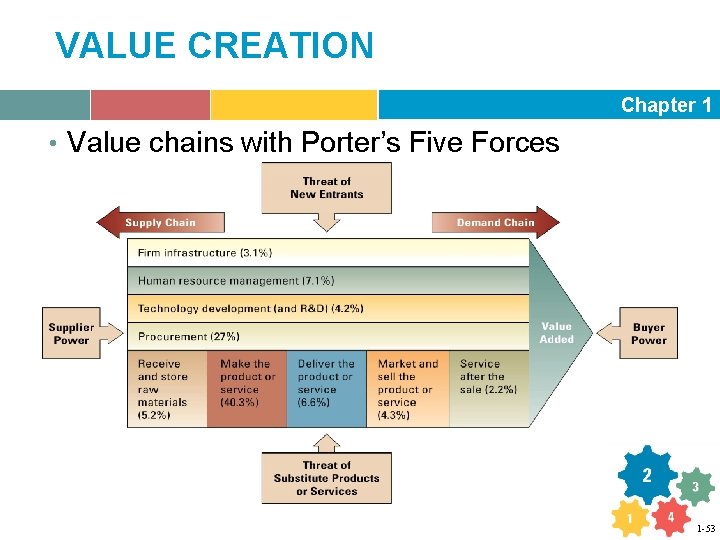
VALUE CREATION Chapter 1 • Value chains with Porter’s Five Forces 1 -53

Chapter 1
- Slides: 36