
Business Cycle Theory Objectives 1 Analyze business cycles
Business Cycle Theory Objectives: 1. Analyze business cycles using key economic indicators. 2. Interpret economic data, including unemployment rate, gross domestic product, GDP per capita as a measure of national wealth, and rate of inflation.
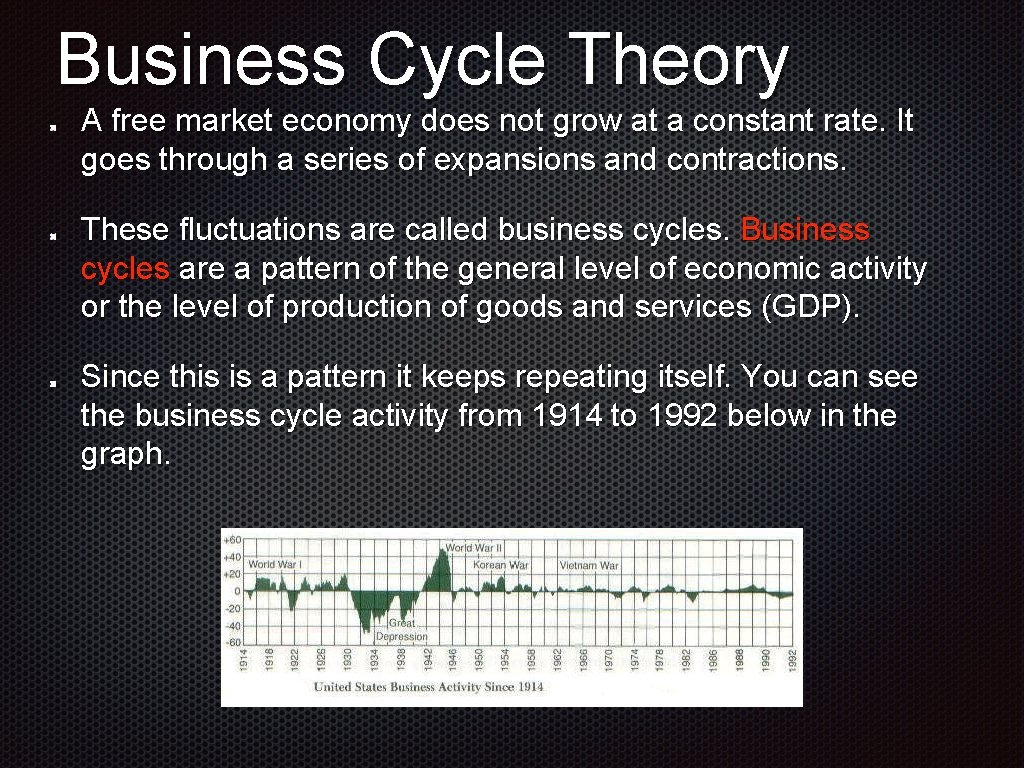
Business Cycle Theory A free market economy does not grow at a constant rate. It goes through a series of expansions and contractions. These fluctuations are called business cycles. Business cycles are a pattern of the general level of economic activity or the level of production of goods and services (GDP). Since this is a pattern it keeps repeating itself. You can see the business cycle activity from 1914 to 1992 below in the graph.
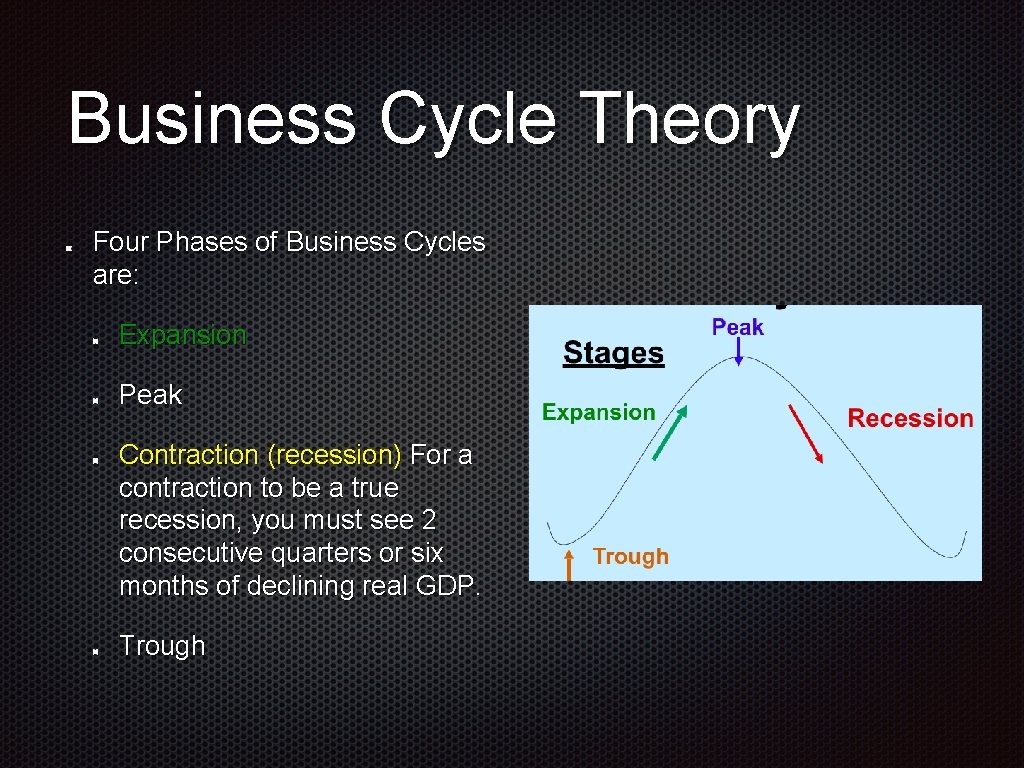
Business Cycle Theory Four Phases of Business Cycles are: Expansion Peak Contraction (recession) For a contraction to be a true recession, you must see 2 consecutive quarters or six months of declining real GDP. Trough
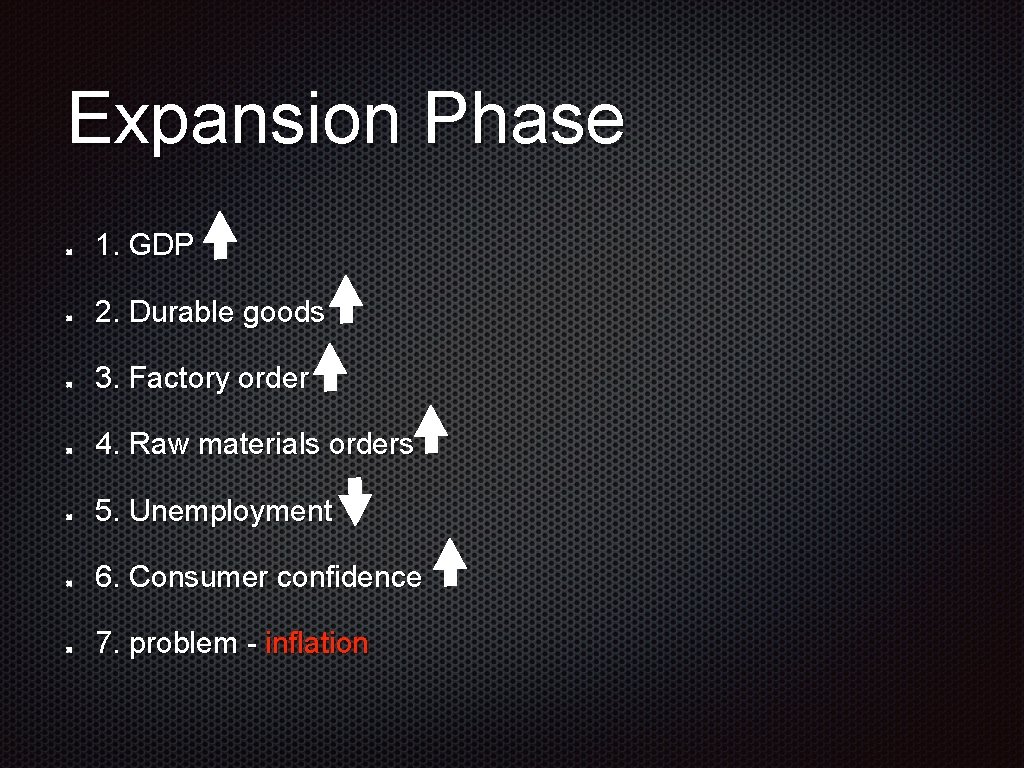
Expansion Phase 1. GDP 2. Durable goods 3. Factory order 4. Raw materials orders 5. Unemployment 6. Consumer confidence 7. problem - inflation
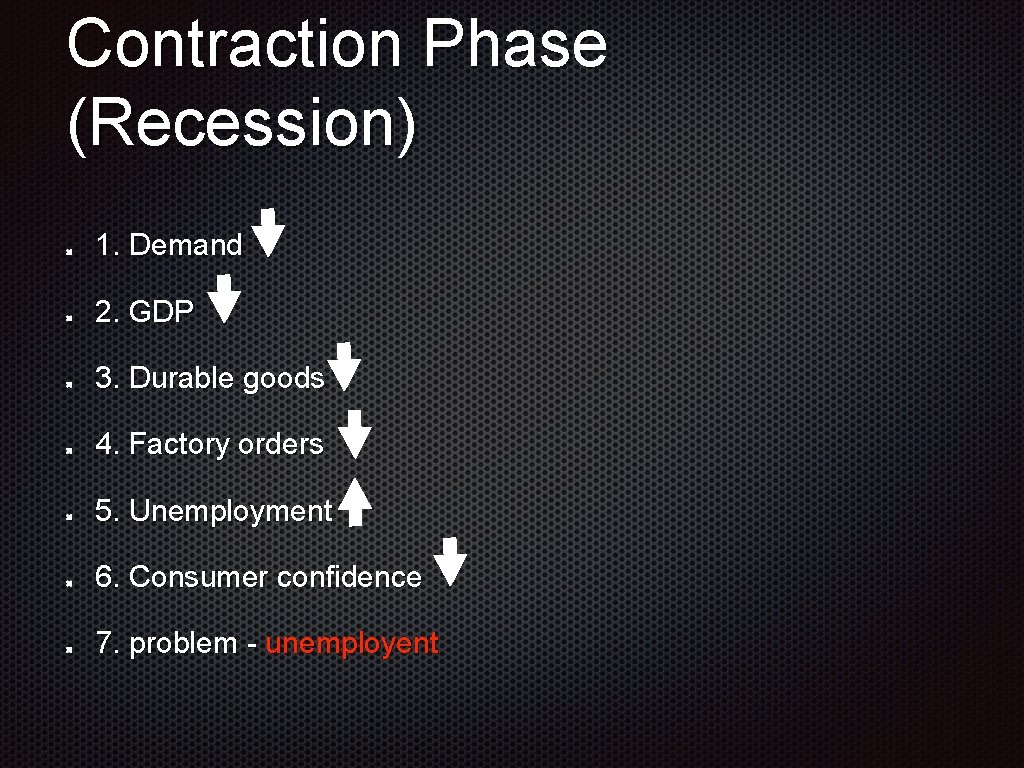
Contraction Phase (Recession) 1. Demand 2. GDP 3. Durable goods 4. Factory orders 5. Unemployment 6. Consumer confidence 7. problem - unemployent
Causes There are several things that may lead to fluctuations in the economy. Some are within the economy and we call them internal factors. Some are outside the economy and we call them external factors.
Internal factors (within the economic system) 1. Business Investment - In an expanding economy firms invest in new capital goods. This investment spending creates new jobs and growth. If firms decide to halt investment, this slows the economy down and can cause unemployment. 2. Interest Rates and Credit - When interest rates go up, consumers will not make big ticket purchases. Lower demand slows down economy. When interest rates go down we see more purchases being made - causing growth. 3. Consumer Expectations - Fears of the economy slowing down cause consumers to stop spending. This will then actually slow down the economy. If consumers feel confident about the economy, they spend more. Spending more can cause growth.
External factors (outside the economic system) External Shocks - These are factors outside the economic system, buy they can cause fluctuations in business activities. Examples include: wars natural disasters foreign economies 9/11
- Slides: 8