
Business Continuity and Disaster Recovery Planning Agenda Introductions
Business Continuity and Disaster Recovery Planning
Agenda • • • Introductions Definitions Common Mistakes Basic Concepts Proper Framework Q&A
Introductions • Steve Akers – – VP of Consulting, Tru. Arx Inc. 12 Years Experience in IT 10 Years Experience in Information Security Military Police, Energy Industry, and Security Technology and Services Companies
Definitions • Disaster Recovery (DR) – – – Part of Business Continuity Objective: Restore Critical Business Processes Focus: Data Recovery Timeframe: First 30 Days Solution: Hot Site Recovery • Business Continuity (BC) – – Objective: Restore Business back to prior state Focus: Return to Normal Timeframe: 30+ Days Solution: New Equipment, New Building
Definitions • What is a DR/BC Plan. . ? – The methods, processes, and procedures needed to minimize the impact of a disaster upon information and data required for critical business processes. – The guidelines and activities required to restore systems, operations, and the business to the conditions that prevailed prior to the disaster. – A well-written and properly tested plan that allows recovery personnel to administer recovery efforts that result in a timely restoration of services.
Common Mistakes • • No Business Impact Analysis Technology Focus Don’t Involve the Business Operations Personnel Responsible Document too Complex No Plan for Maintenance and Updates No Training Use of Templates
Common Mistakes • Lack of understanding of need – Compliancy – Due Diligence – “Never Happen to Me” • Never Getting Started
Basic Concepts • • Readiness Assessment Flow is Critical Identification of Critical Paths Must unite Technology with Business Minimize Decision Making Training, Training Part of Change Management
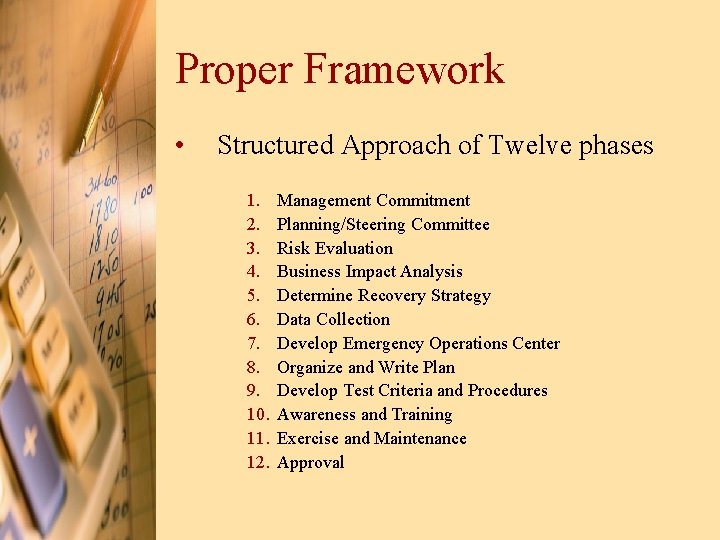
Proper Framework • Structured Approach of Twelve phases 1. 2. 3. 4. 5. 6. 7. 8. 9. 10. 11. 12. Management Commitment Planning/Steering Committee Risk Evaluation Business Impact Analysis Determine Recovery Strategy Data Collection Develop Emergency Operations Center Organize and Write Plan Develop Test Criteria and Procedures Awareness and Training Exercise and Maintenance Approval
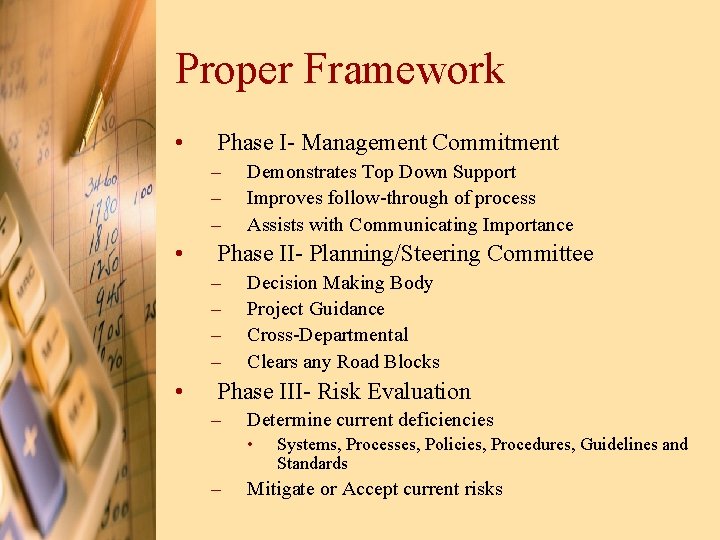
Proper Framework • Phase I- Management Commitment – – – • Phase II- Planning/Steering Committee – – • Demonstrates Top Down Support Improves follow-through of process Assists with Communicating Importance Decision Making Body Project Guidance Cross-Departmental Clears any Road Blocks Phase III- Risk Evaluation – Determine current deficiencies • – Systems, Processes, Policies, Procedures, Guidelines and Standards Mitigate or Accept current risks
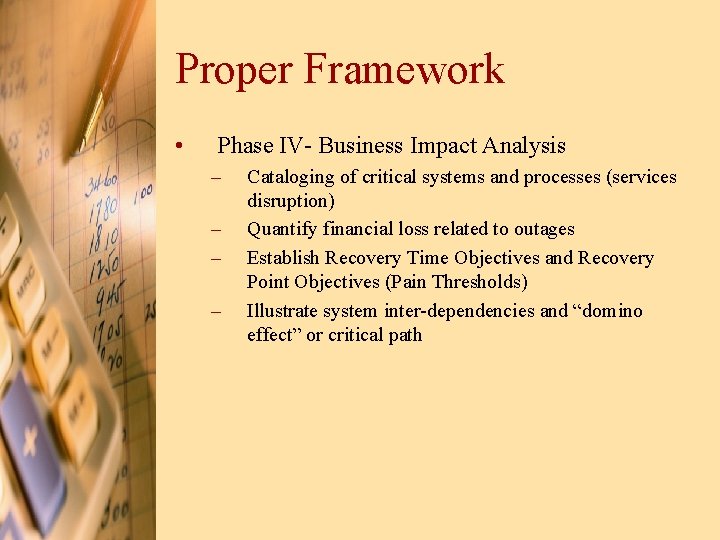
Proper Framework • Phase IV- Business Impact Analysis – – Cataloging of critical systems and processes (services disruption) Quantify financial loss related to outages Establish Recovery Time Objectives and Recovery Point Objectives (Pain Thresholds) Illustrate system inter-dependencies and “domino effect” or critical path
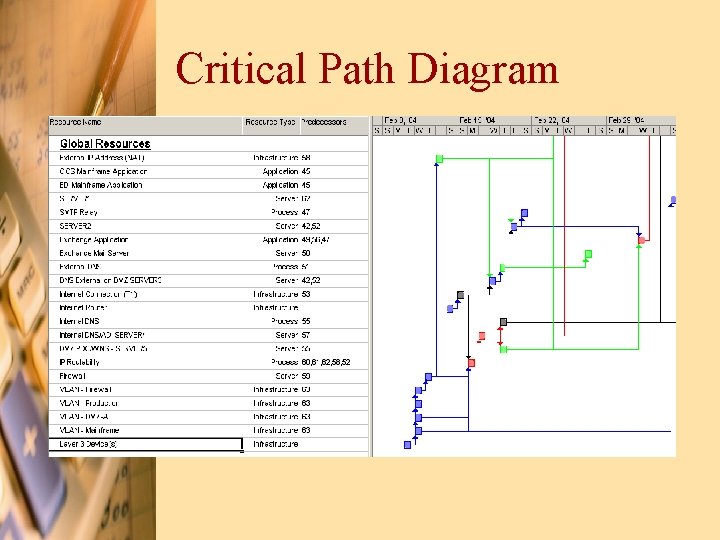
Critical Path Diagram
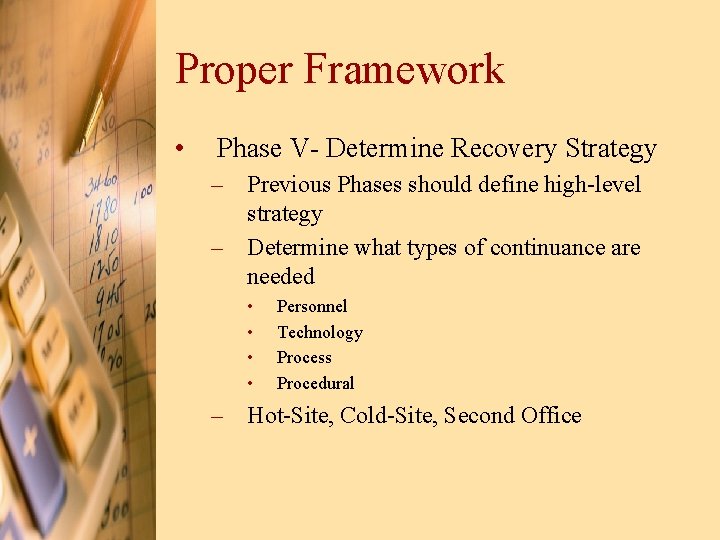
Proper Framework • Phase V- Determine Recovery Strategy – Previous Phases should define high-level strategy – Determine what types of continuance are needed • • Personnel Technology Process Procedural – Hot-Site, Cold-Site, Second Office
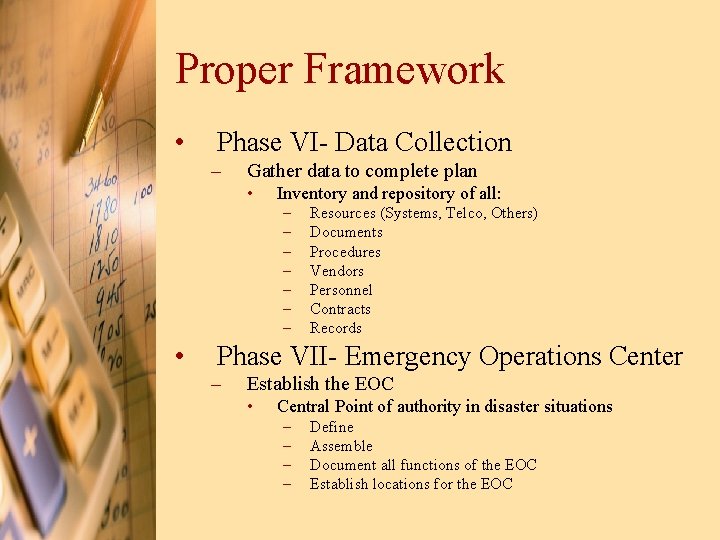
Proper Framework • Phase VI- Data Collection – Gather data to complete plan • Inventory and repository of all: – – – – • Resources (Systems, Telco, Others) Documents Procedures Vendors Personnel Contracts Records Phase VII- Emergency Operations Center – Establish the EOC • Central Point of authority in disaster situations – – Define Assemble Document all functions of the EOC Establish locations for the EOC
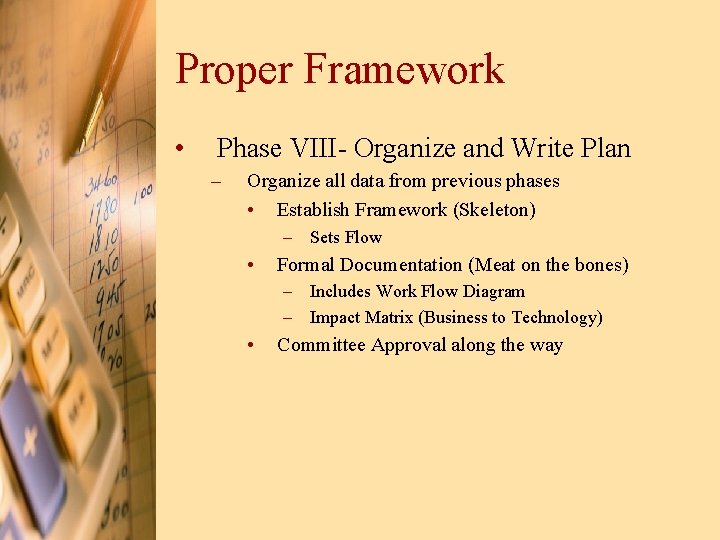
Proper Framework • Phase VIII- Organize and Write Plan – Organize all data from previous phases • Establish Framework (Skeleton) – Sets Flow • Formal Documentation (Meat on the bones) – Includes Work Flow Diagram – Impact Matrix (Business to Technology) • Committee Approval along the way
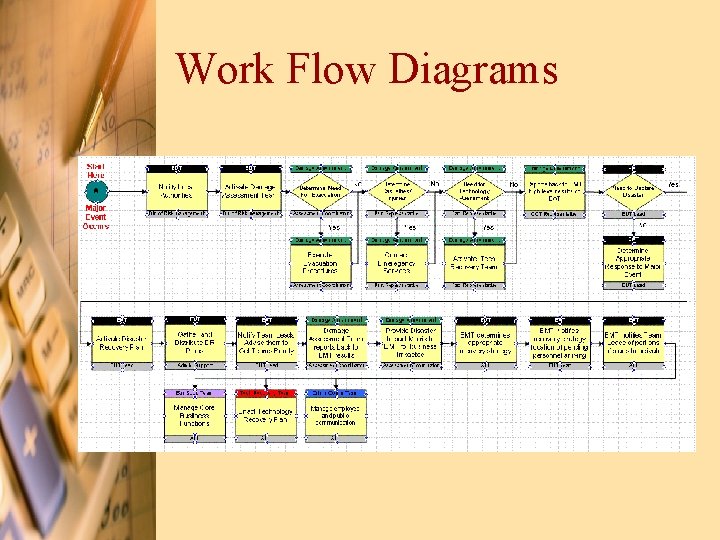
Work Flow Diagrams
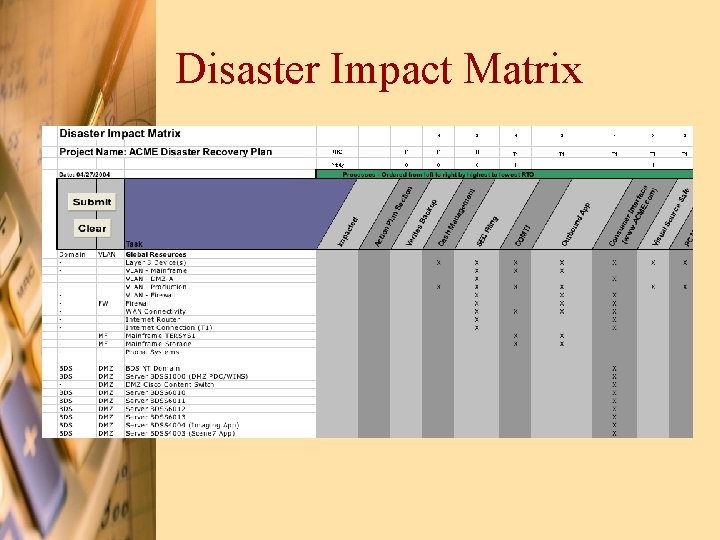
Disaster Impact Matrix
Proper Framework • Phase IX- Develop Materials – – • Need Material for both Training and Testing Establish Scope, Criteria, and Type (Full, Tabletop) Creation of all procedures Should Educate and Prove the credibility of the plan Phase X- Awareness and Training – Familiarize People with their roles – Repetitive Learning – Not a one time event
Proper Framework • Phase XI- Testing and Maintenance – – • Perform actual testing of the plan Capture Failures, Recommendations Improve Flow, Update Plan Establish Maintenance Process Phase XII- Approval – – Present Testing Results Final approval of plan Documentation Present to steering committee
Ending Note If the billions of dollars spent on technology annually to maintain a competitive edge is an indication of how reliant our society is on technology, then failing to implement a disaster recovery plan is an indication of organizational negligence. Standards of care and due diligence are required of all organizations, public or private. Not having a disaster recovery plan violates that fiduciary standard of care. – Tari Schreider, Contigency Planning and Research, Inc. – Legal Issues of Disaster Recovery Planning

Q&A If you would like a copy of this presentation please email me at sbakers@truarx. com or provide me with your business card.
- Slides: 21