
Business Communications Chapter 3 Digital Written Communication Emailing
Business Communications Chapter 3: Digital Written Communication
Emailing & Memos 3. 1
Format: The Basics �Context-appropriate subject line �Person and context-specific salutation �Text body: � Clearly worded � To the point � One subject �Polite and courteous closing line
The Subject Line �Informative �Clear intent �Concise �Who it concerns � 40 to 60 characters �Highlight urgency �Indicate subject of email

The Greeting and Closing Lines �Salutation: crucial for how your email will be received by receiver �Non-verbal cues eliminated �Know who you are addressing and why �Closers to follow same level of courtesy as salutation
The Body �Concise and focused on one thing �No more than one screen in length �Use proper � Punctuation � Grammar � Spelling � Capitalization �Attachments �Paragraphs
Tone, Style, and Form �Easy to overlook how you are replying �Take time to craft the right message �Be considerate with wording
Inter-Office vs. Intra-Office �“Inter” � Affairs with other offices �“Intra” � Affairs within the office you work with directly
Inter-Office Tone/Formality �Courteous �Helpful �Professional �Coming off too formal: � Condescending � Pretentious � Wordy �Strike a balance
Intra-Office Tone/Formality �More flexibility with language �Remain professional and courteous �Occasional joke is fine (context) �Stay on point �Be aware of organizational structure
Communicating with Clients and Colleagues �Clients are you most valuable assets �Certain hurdles to overcome: � Cultural differences � Conflicts of opinion � Clients and colleagues who do not hold up their end of the bargain
Conflict Resolution �Bound to get into some disagreements �All disputes need to be resolved with: � Respect � Dignity � Everybody’s interest in mind �Person-to person �Voice-to-voice
Accountability �Focus on the issue/problem, not the person �Think of the problem as a whole �Watch tone
Avoidance and Ambiguity �Avoiding a problem will only make it worse �Establish open communication and rational discussion �Be concrete about meeting times and game plans �Summarize conflict resolution meetings
Be Firm �Stay calm �Have a clear goal �Balance with: � Directness � Honesty � Constructive criticism
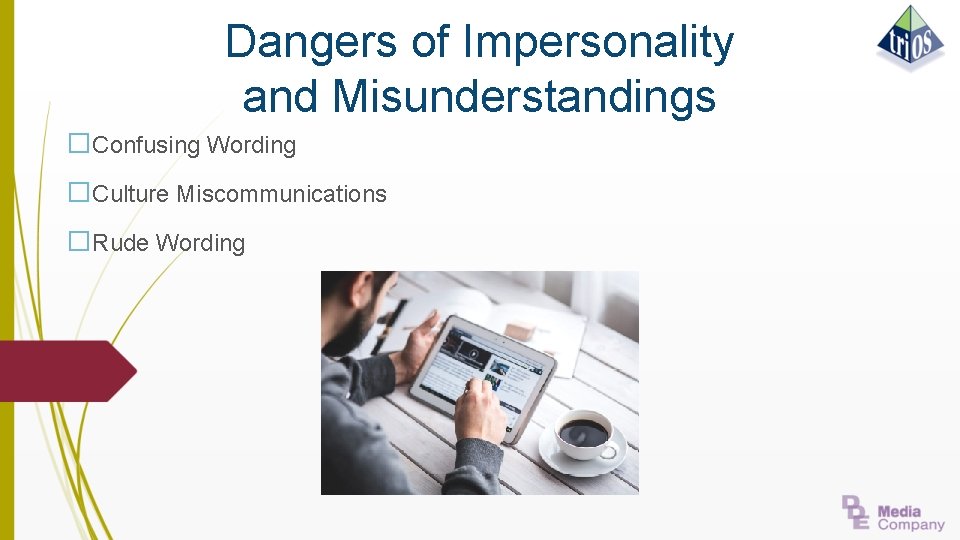
Dangers of Impersonality and Misunderstandings �Confusing Wording �Culture Miscommunications �Rude Wording
Cellphones - Texting, and Much, Much More 3. 2
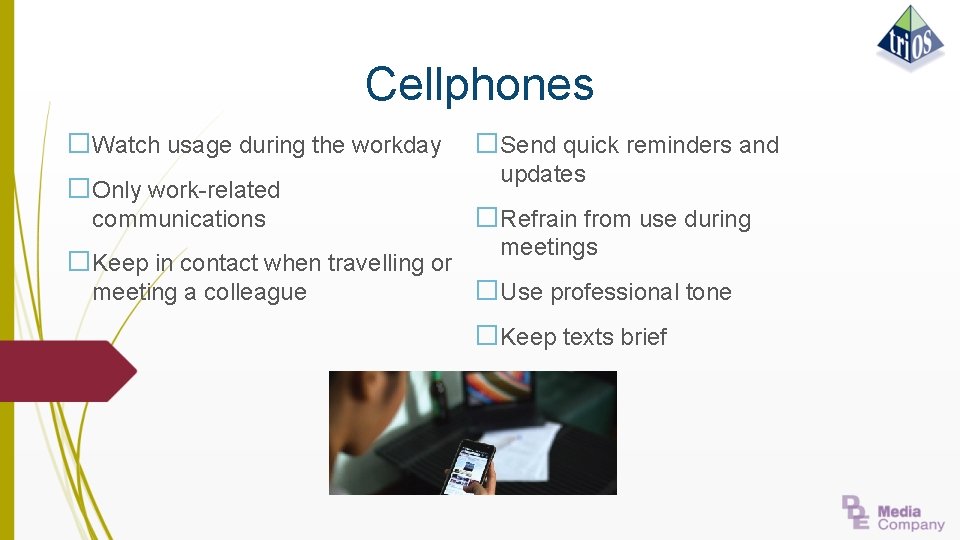
Cellphones �Watch usage during the workday �Only work-related communications �Keep in contact when travelling or meeting a colleague �Send quick reminders and updates �Refrain from use during meetings �Use professional tone �Keep texts brief
Writing Memos 3. 3
Memo �Memorandum �Reminder of: � Due Date � Meeting � Notice of resignation � Inform employees of a new policy
When To Write �Written to ask staff for information or to provide them with information �Update Memo �Inquiry Memo �Policy Memo �Notice-of-Change Memo
Format • Top structure of the memo should reflect: • TO: • FROM: • DATE: • SUBJECT: • BODY PARAGRAPH(S):
Chapter 3 Recap
- Slides: 23