
BUSINESS COMMUNICATION Skills Test Review COMMUNICATION PROCESS Sender
BUSINESS COMMUNICATION Skills Test Review

COMMUNICATION PROCESS Sender ENCODES message Message SENT Receiver RECEIVED message Receiver SENDS FEEDBACK
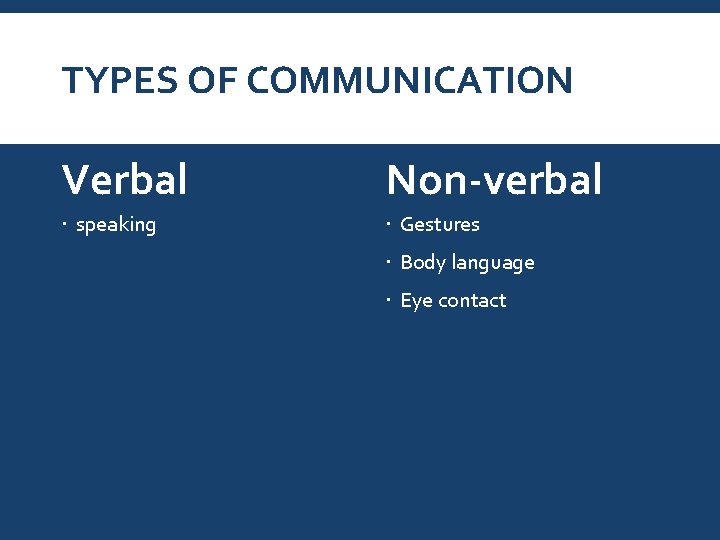
TYPES OF COMMUNICATION Verbal Non-verbal speaking Gestures Body language Eye contact
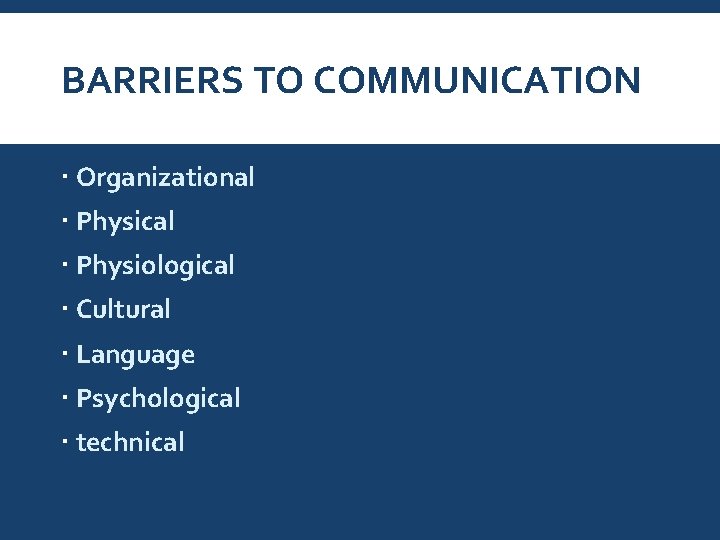
BARRIERS TO COMMUNICATION Organizational Physical Physiological Cultural Language Psychological technical
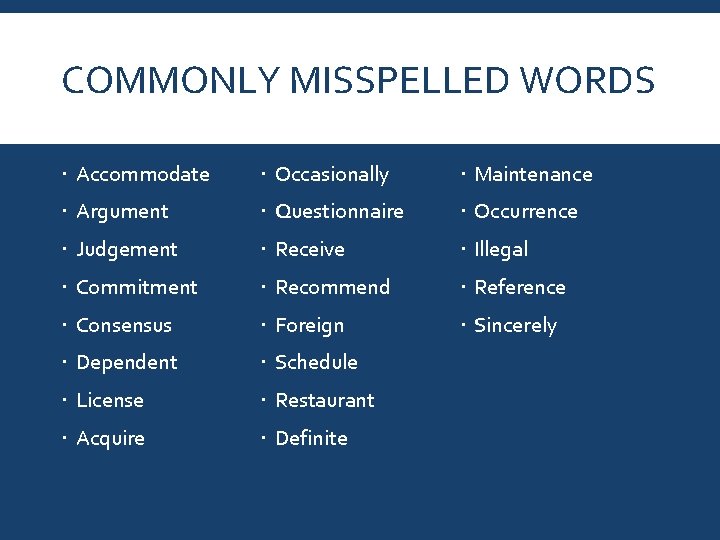
COMMONLY MISSPELLED WORDS Accommodate Occasionally Maintenance Argument Questionnaire Occurrence Judgement Receive Illegal Commitment Recommend Reference Consensus Foreign Sincerely Dependent Schedule License Restaurant Acquire Definite
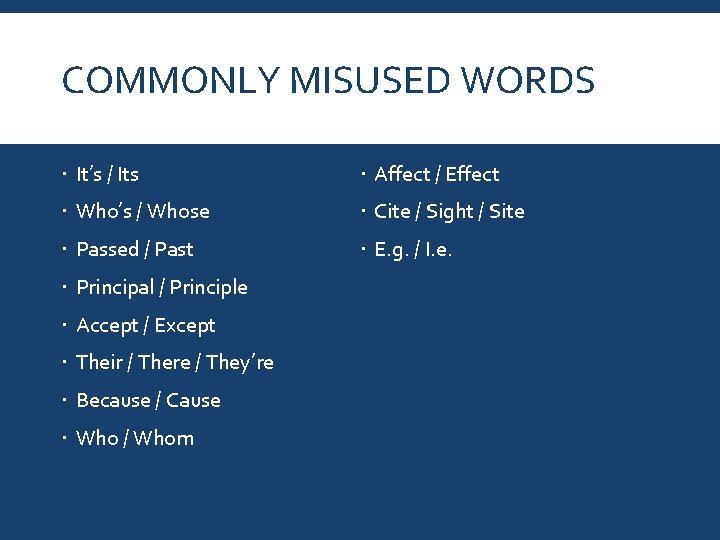
COMMONLY MISUSED WORDS It’s / Its Affect / Effect Who’s / Whose Cite / Sight / Site Passed / Past E. g. / I. e. Principal / Principle Accept / Except Their / There / They’re Because / Cause Who / Whom
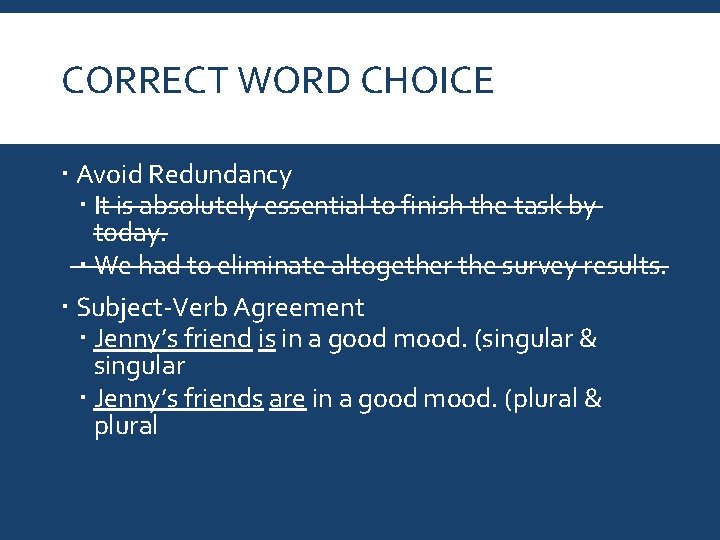
CORRECT WORD CHOICE Avoid Redundancy It is absolutely essential to finish the task by today. We had to eliminate altogether the survey results. Subject-Verb Agreement Jenny’s friend is in a good mood. (singular & singular Jenny’s friends are in a good mood. (plural & plural
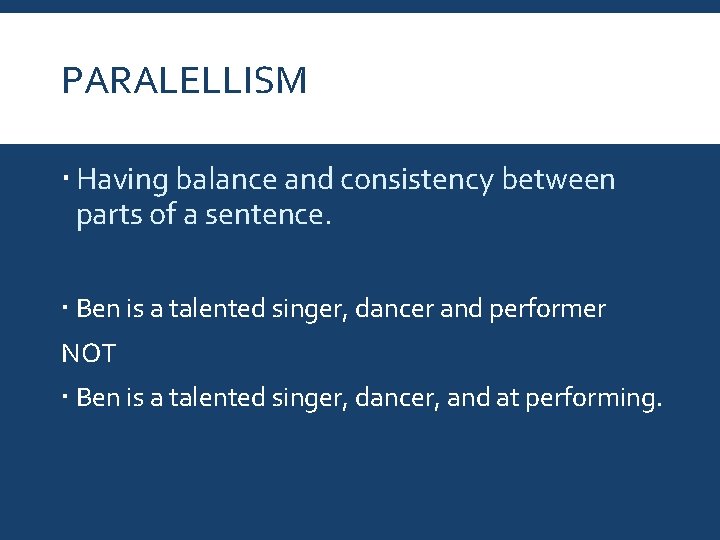
PARALELLISM Having balance and consistency between parts of a sentence. Ben is a talented singer, dancer and performer NOT Ben is a talented singer, dancer, and at performing.
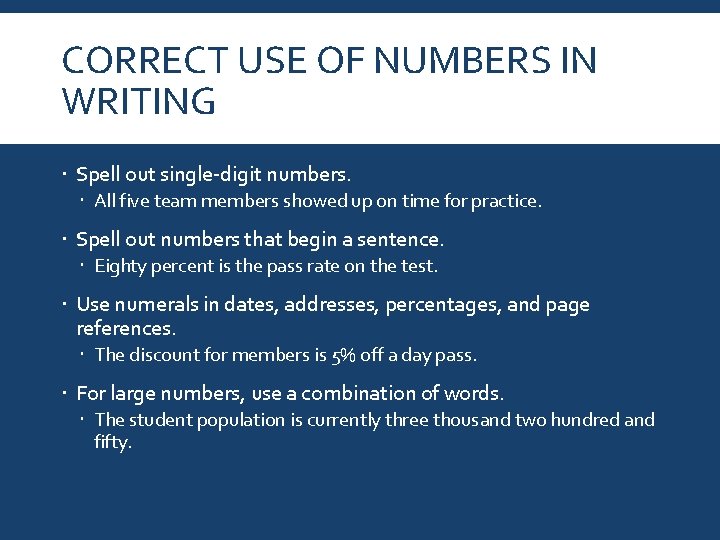
CORRECT USE OF NUMBERS IN WRITING Spell out single-digit numbers. All five team members showed up on time for practice. Spell out numbers that begin a sentence. Eighty percent is the pass rate on the test. Use numerals in dates, addresses, percentages, and page references. The discount for members is 5% off a day pass. For large numbers, use a combination of words. The student population is currently three thousand two hundred and fifty.
ORAL COMMUNICATION Pronunciation: how to say words Enunciation: saying words clearly Tone: pitch Cadence: Rhythm
Interpersonal communication Between 2 or more people Intrapersonal communication Within one’s own mind Organizational Communication Rhetorical Communication Winning over an audience
JARGON: Technical Language (mega-bytes) PROPOGANDA: Deliberate attempt to shape perceptions, behavior to achieve certain response (“Selective” facts – appeals to EMOTION) BIAS FREE COMMUNICATION: Free from stereotypes – treating people with respect (“You people” / “Those foreigners” / “Dumb blonde” etc. ) CULTURAL , REGIONAL, AND INTERNATIONAL:
AUDIENCE ANALYSIS How does audience and situation effect style and tone?
READING Skimming: rapidly reading to get a general overview Scanning: rapidly reading in order to find specific facts Summarizing: reading to find the more important ideas and ignoring irrelevant information Speed reading: rapidly reading several phrases or sentences at once Close reading: thoughtful, critical analysis of a text Purpose of the message: Propaganda, biased, literal, inferential, and factual

WRITING PROCESS 1. 2. 3. 4. Planning Composing Editing Publishing *Remember to be clear, courteous, concise, complete & correct!
TYPES OF LETTERS: Sales/persuasive Bad news/refusal letter Everyday/routine/good news AIDA: Attention, Interest, Desire, Action!
POINTS OF VIEW ACTIVE/PASSIVE VOICE First person: “I” am telling the story Active: subject performs the action Second person: The story is told to “you” Passive: subject receives the action or is not doing the action Third person: The story is about “he” or “she”
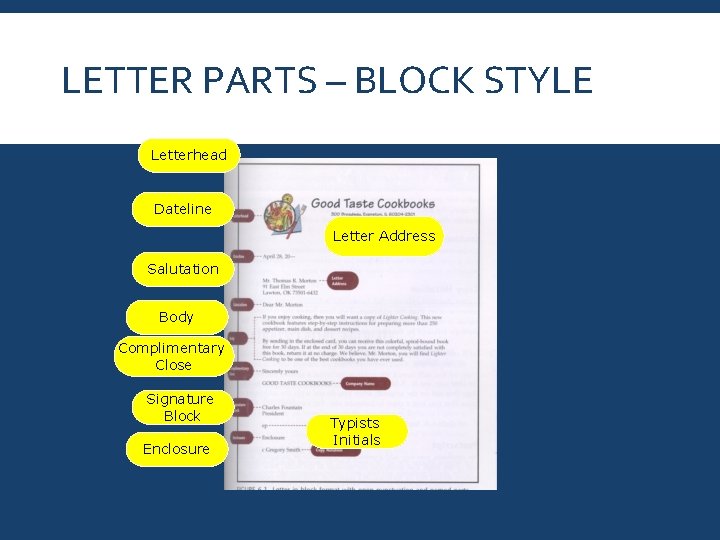
LETTER PARTS – BLOCK STYLE Letterhead Dateline Letter Address Salutation Body Complimentary Close Signature Block Enclosure Typists Initials
EFFECTIVE LISTENING • Face speaker with EYE contact • Pay attention to WHAT ISN’T BEING SAID – Nonverbal • Give Feedback • Smile, Nod, Clap, Eye Contact • Ask Questions • Take accurate Notes
PHONE MESSAGE ETIQUETTE Who they are calling for Verbal cues Who is calling -- name of the person Speak clearly What business is the person calling from Handle difficult callers Be courteous Contact information Plan outgoing calls Reason for call Take part in conversation Leave effective, concise, and thorough messages
CONFLICT RESOLUTION Clarify the disagreement Establish a common goal Discuss ways to meet the goal Determine barriers to the goal Agree on the best way to resolve the conflict Acknowledge the solution and determine responsibility for those involved
LEADERSHIP SKILLS Planning Organizing Monitoring Delegating Inform Communicate!! OVER COMMUNICATE! Goal, Why Person, Who Tasks, How Deadline, When Monitoring
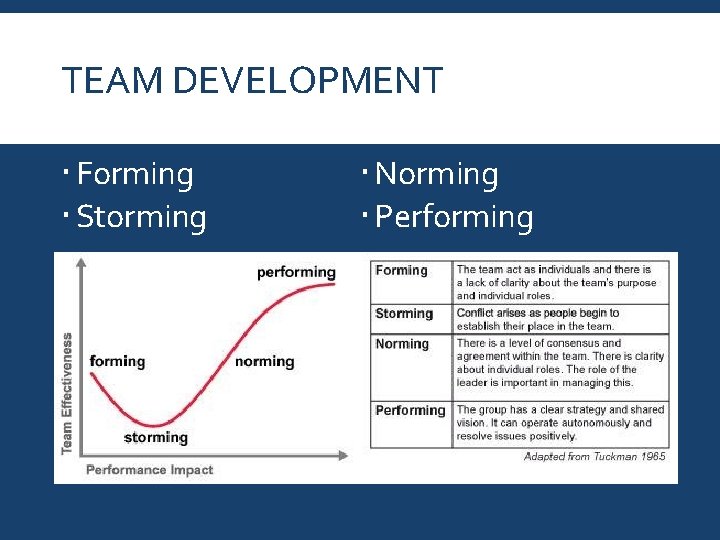
TEAM DEVELOPMENT Forming Storming Norming Performing
THREE CHAINS OF COMMAND Upward – students up to principal Downward – principal down to students Horizontal – group consensus
APPLICATION SOFTWARE Spell check Red underline Grammar check Green underline Thesaurus Finds words with similar meanings *LAYOUT, DESIGN, AND GRAPHICS ENHANCE DOCUMENTS!
- Slides: 26