
Business Communication Skills for Managers Module 1 Communicating
Business Communication Skills for Managers Module 1: Communicating in Business
Why learn to effectively communicate in business?
Effective Communication in Business
Learning Outcomes: Effective Communication in Business 1. 1 Discuss the importance of effective communication in business 1. 1. 1 Discuss how effective communication improves you as an employee 1. 1. 2 Identify characteristics of your audience in business communication 1. 1. 3 Discuss the process of the social communication model 1. 1. 4 Identify key features of effective writing in business 1. 1. 5 Discuss the overlap between professional and personal communication
Discuss the importance of effective communication As a business professional, make your contribution to the uncovering and understanding process, you should strive to be: ● ● ● ● Clear Concise Objective Consistent Complete Relevant Understanding of Audience Knowledge These are the seven pillars, or principles, of business communication.
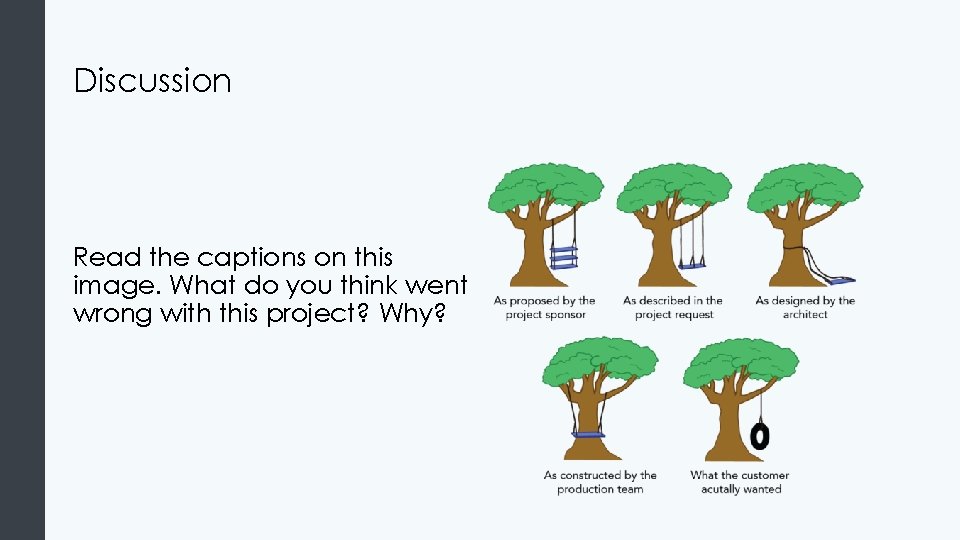
Discussion Read the captions on this image. What do you think went wrong with this project? Why?

The Business Audience Why is it important to understand primary and secondary audiences? What are the differences between them? Reminder: Primary audience • the audience that your communication is intended for Secondary audience • the group of people that aren’t real stakeholders in your communication
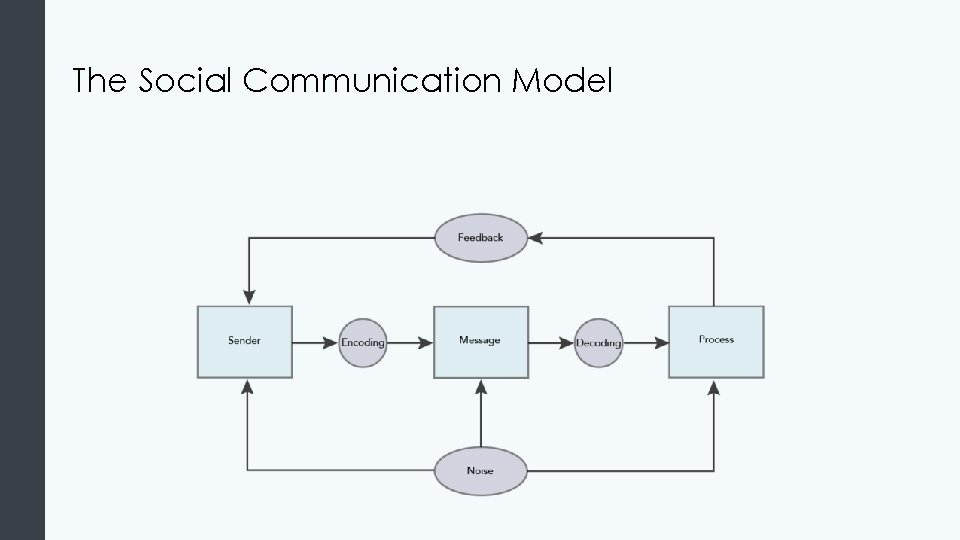
The Social Communication Model
Writing in Business Rely on seven principles of business communication • • clear concise objective consistent complete relevant considerate of audience knowledge Personal vs. Professional communication • What is the level of formality between the communicator and the intended audience?
Activity If you had to write a communication to your team about a system outage that you rely on to complete work as an organization, what seven principles would make your message effective? With a partner or in a small group, list what you would write using the seven principles of communication.
Methods of Communication
Learning Outcomes: Methods of Communication 1. 2 Differentiate between different methods of communication 1. 2. 1 Discuss the importance of listening 1. 2. 2 Discuss verbal communication and its role in business 1. 2. 3 Discuss nonverbal communication and its role in business
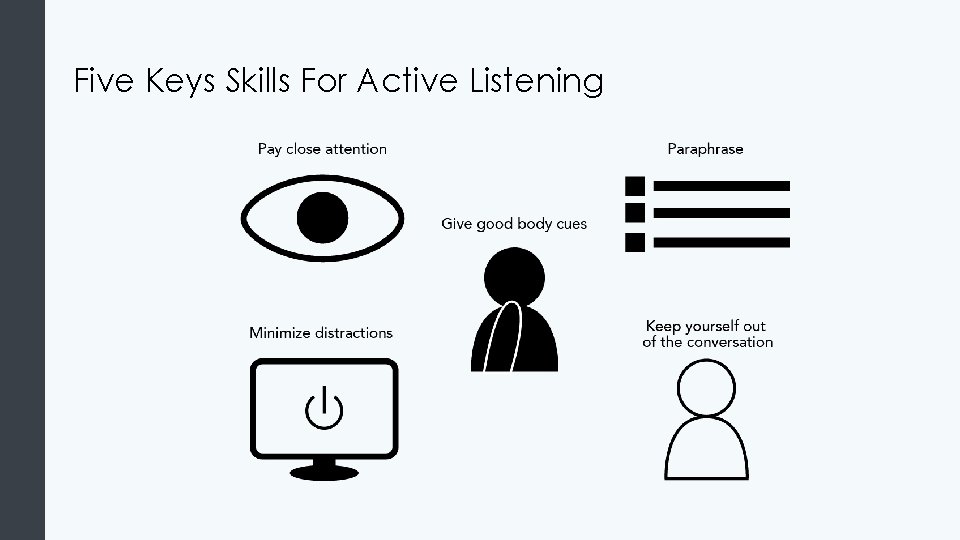
Five Keys Skills For Active Listening
Practice Question 1 An associate is sharing a story of how the CEO has pushed back for additional information before a decision can be made on a capital purchase. What is the most appropriate response if you are practicing being an active listener?
Verbal and Nonverbal Communication Spoken Communication • • • Less Formal Synchronous Build a sense of trust Written Communication • • • More Formal Asynchronous More impersonal
Verbal Communication What are the benefits of spoken communication? • easier to understand • allows chances for feedback • may be emotional • allows for input • creates relationships and bonds to listeners • creates a higher degree of certainty
Nonverbal Communication Here are some types of nonverbal communication and the effects they can have on the success of your communication: • • • Facial expressions Gestures Proximity Touch Eye contact Appearance
Ethics in Business Communication
Learning Outcomes: Ethics in Business Communication 1. 3 Discuss the importance of ethical communication 1. 3. 1 Identify key guidelines for ethical business communication 1. 3. 2 Describe how to communicate ethically online
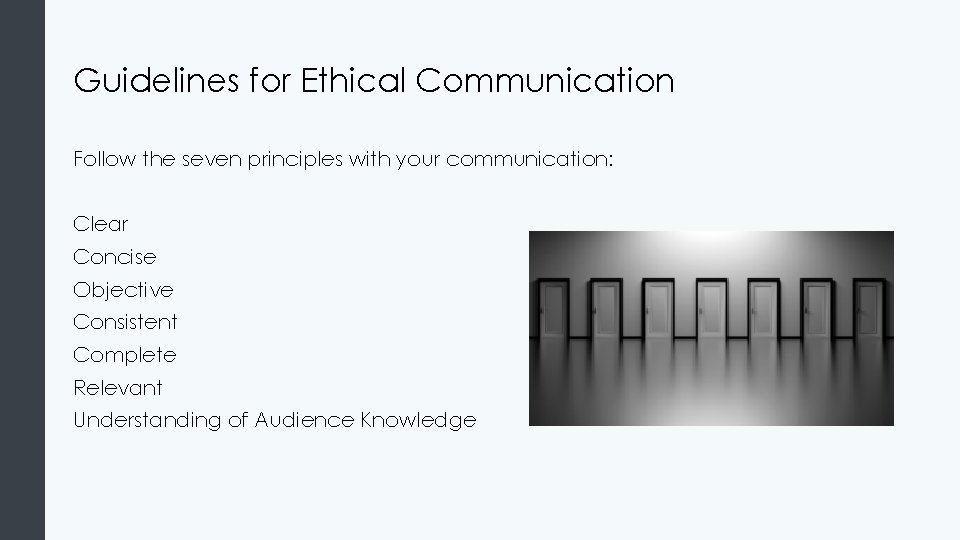
Guidelines for Ethical Communication Follow the seven principles with your communication: Clear Concise Objective Consistent Complete Relevant Understanding of Audience Knowledge
Guidelines for Ethical Communication I am honest —my actions bring respect for and trust in the communication profession. I communicate accurate information and promptly correct any errors. I obey laws and public policies ; if I violate any law or public policy, I act promptly to correct the situation. I protect confidential information while acting within the law. I support the ideals of free speech, freedom of assembly, and access to an open marketplace of ideas. I am sensitive to others’ cultural values and beliefs.
Guidelines for Ethical Communication (Continued) I give credit to others for their work and cite my sources. I do not use confidential information for personal benefit. I do not represent conflicting or competing interests the written consent of those involved. without full disclosure and I do not accept undisclosed gifts or payments for professional services from anyone other than a client or employer. I do not guarantee results that are beyond my power to deliver.
Practice Question 2 As a communicator, you are nearly assured of composing an ethical communication if you a) stick to the seven principles of communication b) use tricky language that your audience might not understand c) give credit to your sources
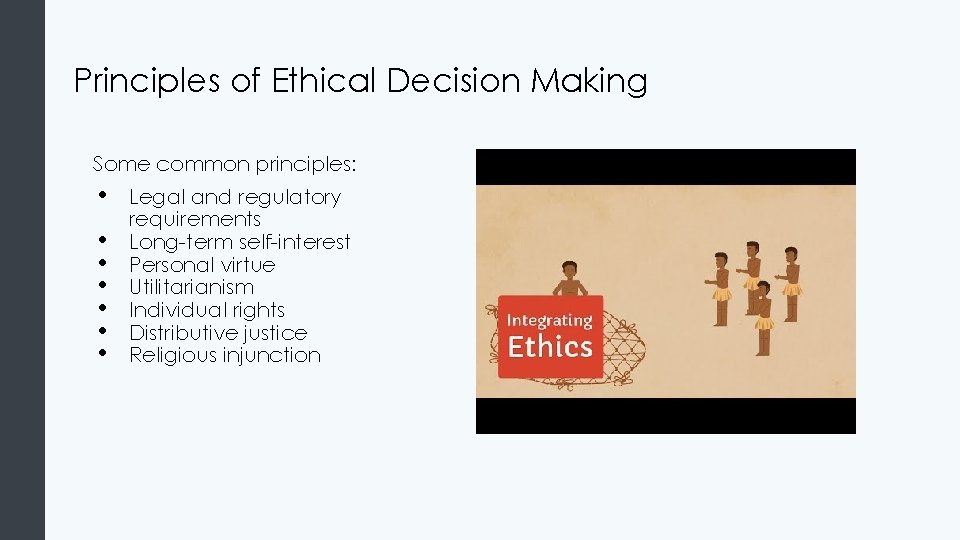
Principles of Ethical Decision Making Some common principles: • • Legal and regulatory requirements Long-term self-interest Personal virtue Utilitarianism Individual rights Distributive justice Religious injunction
Being Ethical Online When posting create factual information and ensure confidentiality When using materials, be sure to check the integrity of the source and the copyright

Staying Connected
Learning Outcomes: Staying Connected 1. 4 Discuss the importance of staying connected with colleagues, other professionals, and customers in the digital age 1. 4. 1 Discuss the importance of staying connected with colleagues and other professionals in the digital age 1. 4. 2 Discuss the importance of staying connected with customers in the digital age
Staying Connected: Colleagues List document and work sharing tools Describe private messaging and “chat” tools Share ideas of quality video communication
Staying Connected: Customers Digital communication tools can provide those avenues, but they also need to facilitate various methods of communication and complete the social communication model’s circuit if they’re going to be effective. Here are some tools: Project and document sharing tools Websites Blogging and Social Media Private message and “chat” tools Video chat
Quick Review • • • What are some ways that you can evaluate conversations using the seven principles of business communication? How would you describe the features of the Social Communication Model? What are the positive and negative consequences of verbal communication? What are the positive and negative consequences of nonverbal communication? Why is ethical communication? What are some ways that you can stay connected with coworkers and customers?
- Slides: 30