
Business Analysis and Essential Competencies BABOK Requirements Classification
Business Analysis and Essential Competencies BABOK
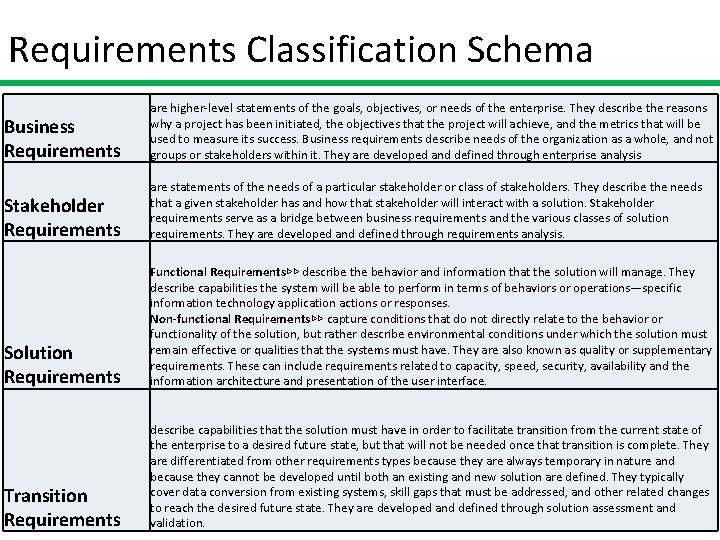
Requirements Classification Schema Business Requirements are higher-level statements of the goals, objectives, or needs of the enterprise. They describe the reasons why a project has been initiated, the objectives that the project will achieve, and the metrics that will be used to measure its success. Business requirements describe needs of the organization as a whole, and not groups or stakeholders within it. They are developed and defined through enterprise analysis Stakeholder Requirements are statements of the needs of a particular stakeholder or class of stakeholders. They describe the needs that a given stakeholder has and how that stakeholder will interact with a solution. Stakeholder requirements serve as a bridge between business requirements and the various classes of solution requirements. They are developed and defined through requirements analysis. Solution Requirements Functional Requirements▷▷ describe the behavior and information that the solution will manage. They describe capabilities the system will be able to perform in terms of behaviors or operations—specific information technology application actions or responses. Non-functional Requirements▷▷ capture conditions that do not directly relate to the behavior or functionality of the solution, but rather describe environmental conditions under which the solution must remain effective or qualities that the systems must have. They are also known as quality or supplementary requirements. These can include requirements related to capacity, speed, security, availability and the information architecture and presentation of the user interface. Transition Requirements describe capabilities that the solution must have in order to facilitate transition from the current state of the enterprise to a desired future state, but that will not be needed once that transition is complete. They are differentiated from other requirements types because they are always temporary in nature and because they cannot be developed until both an existing and new solution are defined. They typically cover data conversion from existing systems, skill gaps that must be addressed, and other related changes to reach the desired future state. They are developed and defined through solution assessment and validation.
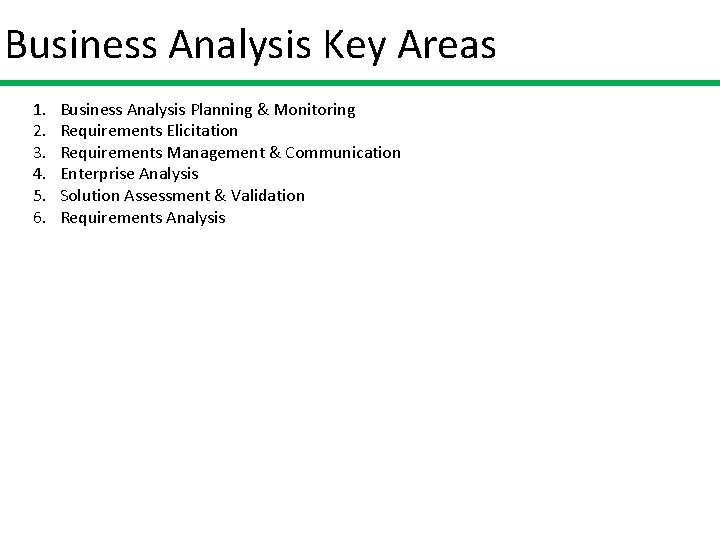
Business Analysis Key Areas 1. 2. 3. 4. 5. 6. Business Analysis Planning & Monitoring Requirements Elicitation Requirements Management & Communication Enterprise Analysis Solution Assessment & Validation Requirements Analysis
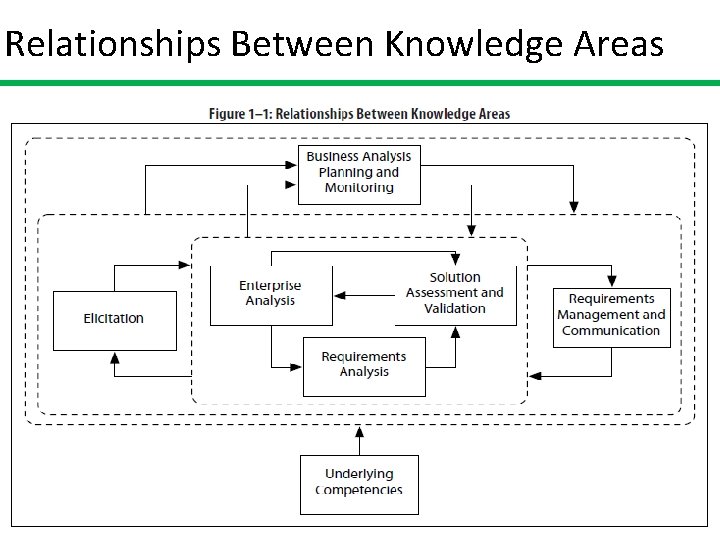
Relationships Between Knowledge Areas
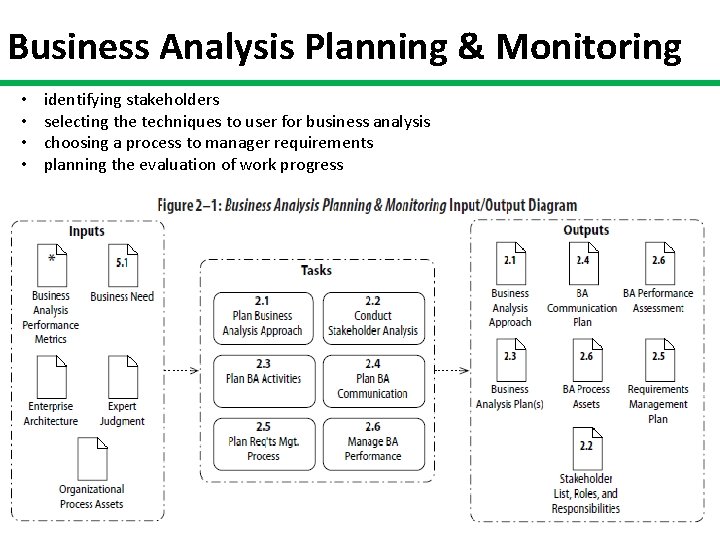
Business Analysis Planning & Monitoring • • identifying stakeholders selecting the techniques to user for business analysis choosing a process to manager requirements planning the evaluation of work progress
![Business Analysis Planning & Monitoring-1 • identifying stakeholders [R]esponsible▶▶ does the work, [A]ccountable▶▶ is](http://slidetodoc.com/presentation_image_h2/9d3813f75b87e5e78bfda612196d0f1b/image-6.jpg "Business Analysis Planning & Monitoring-1 • identifying stakeholders [R]esponsible▶▶ does the work, [A]ccountable▶▶ is")
Business Analysis Planning & Monitoring-1 • identifying stakeholders [R]esponsible▶▶ does the work, [A]ccountable▶▶ is the decision maker (only one) [C]onsulted▶▶ must be consulted prior to the work and gives input [I]nformed▶▶ means that they must be notified of the outcome
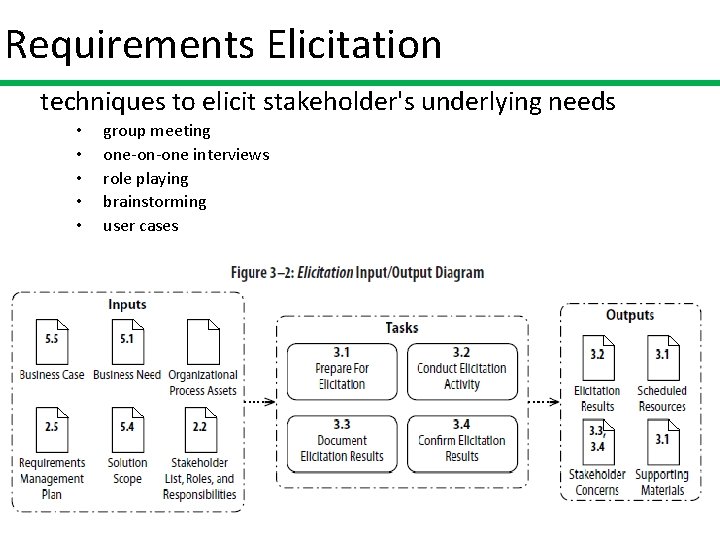
Requirements Elicitation techniques to elicit stakeholder's underlying needs • • • group meeting one-on-one interviews role playing brainstorming user cases
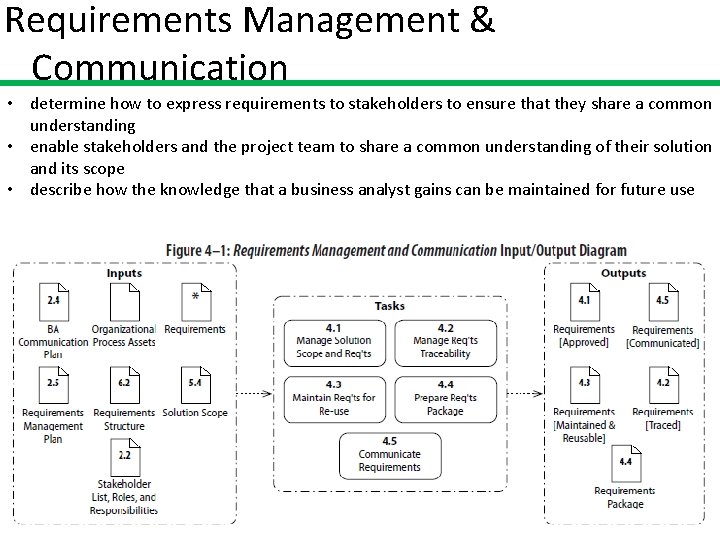
Requirements Management & Communication • determine how to express requirements to stakeholders to ensure that they share a common understanding • enable stakeholders and the project team to share a common understanding of their solution and its scope • describe how the knowledge that a business analyst gains can be maintained for future use
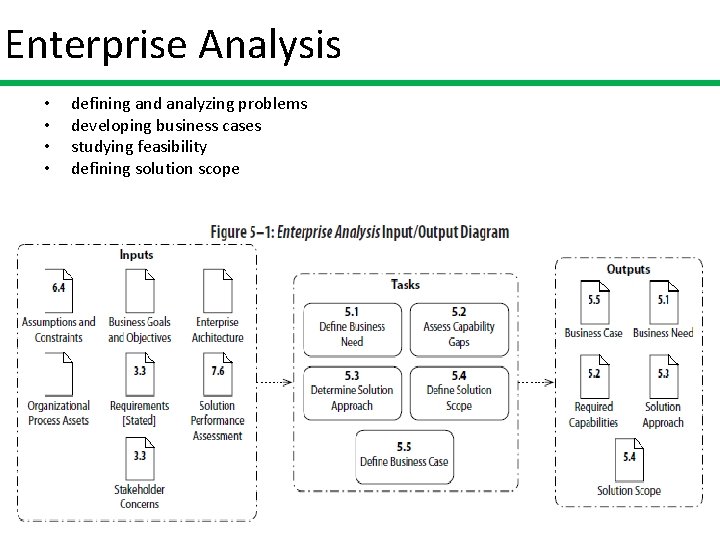
Enterprise Analysis • • defining and analyzing problems developing business cases studying feasibility defining solution scope
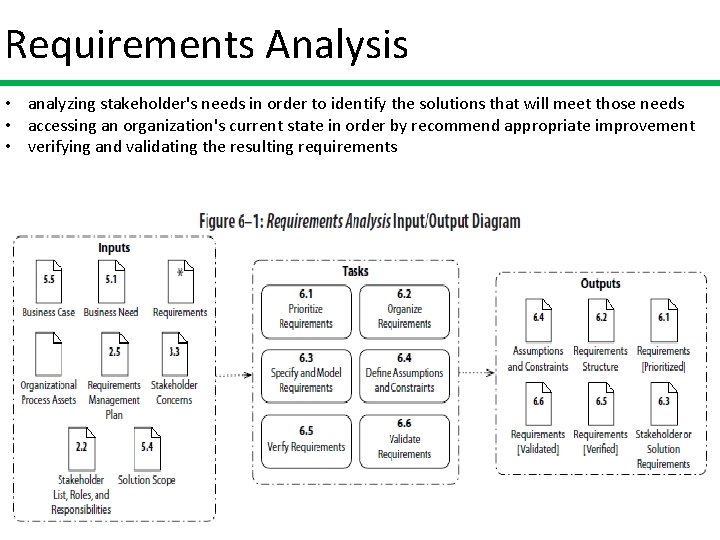
Requirements Analysis • analyzing stakeholder's needs in order to identify the solutions that will meet those needs • accessing an organization's current state in order by recommend appropriate improvement • verifying and validating the resulting requirements
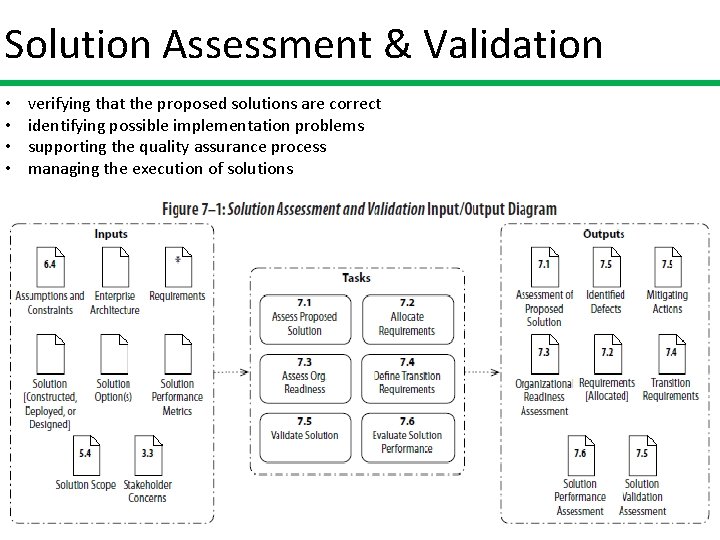
Solution Assessment & Validation • • verifying that the proposed solutions are correct identifying possible implementation problems supporting the quality assurance process managing the execution of solutions
Chapter 8 Underlying Competencies 1. analytical thinking and problem solving • Analytical Thinking and Problem Solving • creative thinking • decision making • learning • problem solving • systems thinking 2. appropriate behavioral characteristics 3. business and software knowledge : Industry knowledge ; Organization knowledge ; solutions knowledge 4. communication and interaction skills
Chapter 9 Techniques 1. analytical thinking and problem solving • Analytical Thinking and Problem Solving • creative thinking • decision making • learning • problem solving • systems thinking 2. appropriate behavioral characteristics 3. business and software knowledge : Industry knowledge ; Organization knowledge ; solutions knowledge 4. communication and interaction skills
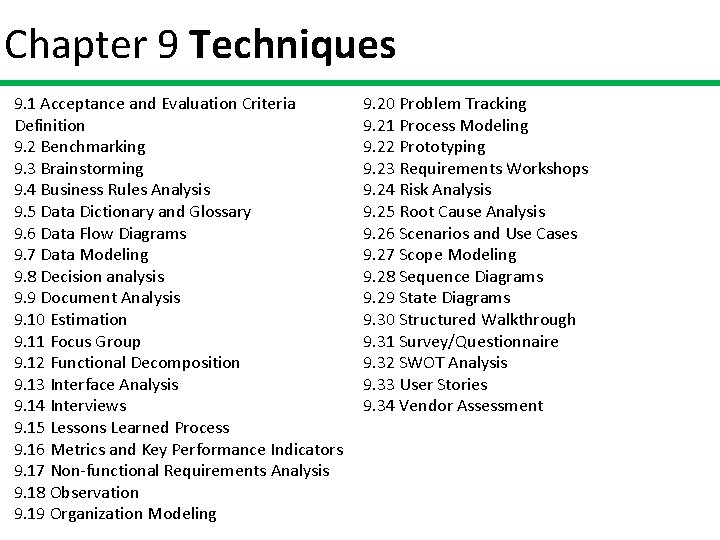
Chapter 9 Techniques 9. 1 Acceptance and Evaluation Criteria Definition 9. 2 Benchmarking 9. 3 Brainstorming 9. 4 Business Rules Analysis 9. 5 Data Dictionary and Glossary 9. 6 Data Flow Diagrams 9. 7 Data Modeling 9. 8 Decision analysis 9. 9 Document Analysis 9. 10 Estimation 9. 11 Focus Group 9. 12 Functional Decomposition 9. 13 Interface Analysis 9. 14 Interviews 9. 15 Lessons Learned Process 9. 16 Metrics and Key Performance Indicators 9. 17 Non-functional Requirements Analysis 9. 18 Observation 9. 19 Organization Modeling 9. 20 Problem Tracking 9. 21 Process Modeling 9. 22 Prototyping 9. 23 Requirements Workshops 9. 24 Risk Analysis 9. 25 Root Cause Analysis 9. 26 Scenarios and Use Cases 9. 27 Scope Modeling 9. 28 Sequence Diagrams 9. 29 State Diagrams 9. 30 Structured Walkthrough 9. 31 Survey/Questionnaire 9. 32 SWOT Analysis 9. 33 User Stories 9. 34 Vendor Assessment
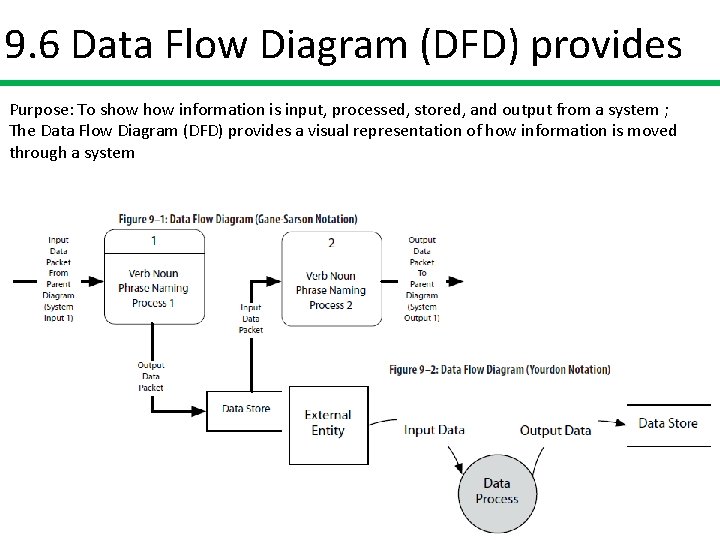
9. 6 Data Flow Diagram (DFD) provides Purpose: To show information is input, processed, stored, and output from a system ; The Data Flow Diagram (DFD) provides a visual representation of how information is moved through a system
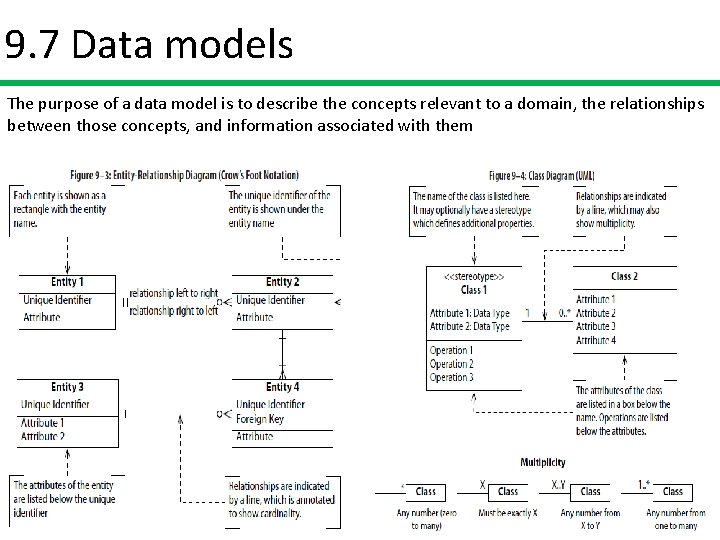
9. 7 Data models The purpose of a data model is to describe the concepts relevant to a domain, the relationships between those concepts, and information associated with them
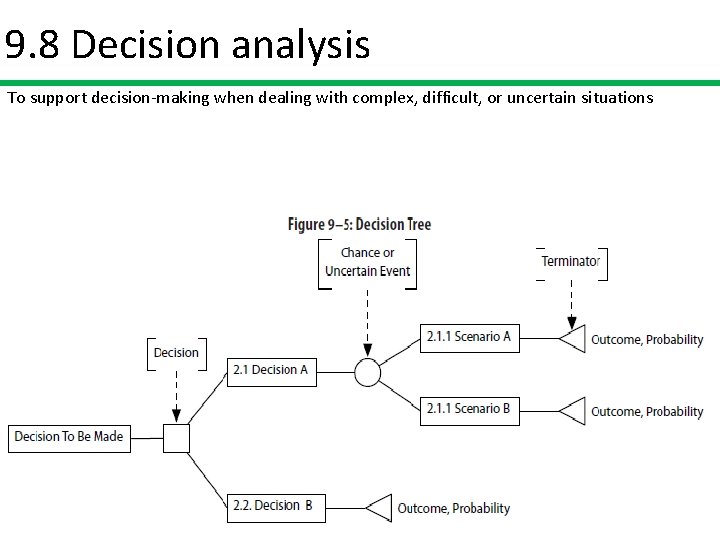
9. 8 Decision analysis To support decision-making when dealing with complex, difficult, or uncertain situations
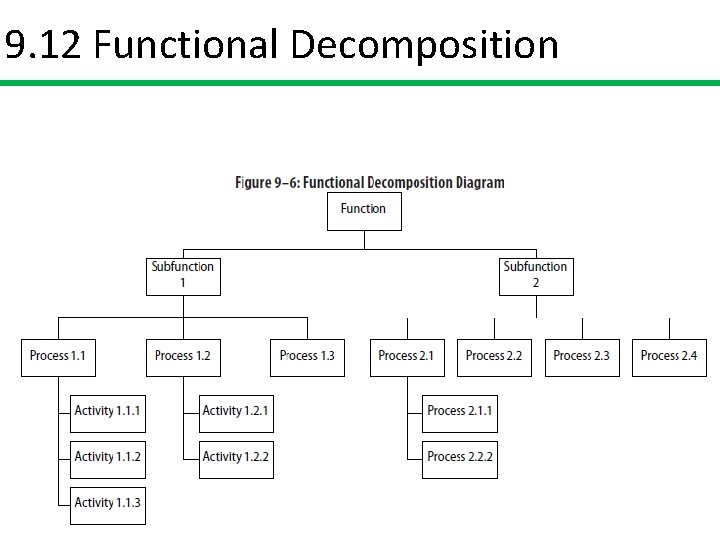
9. 12 Functional Decomposition
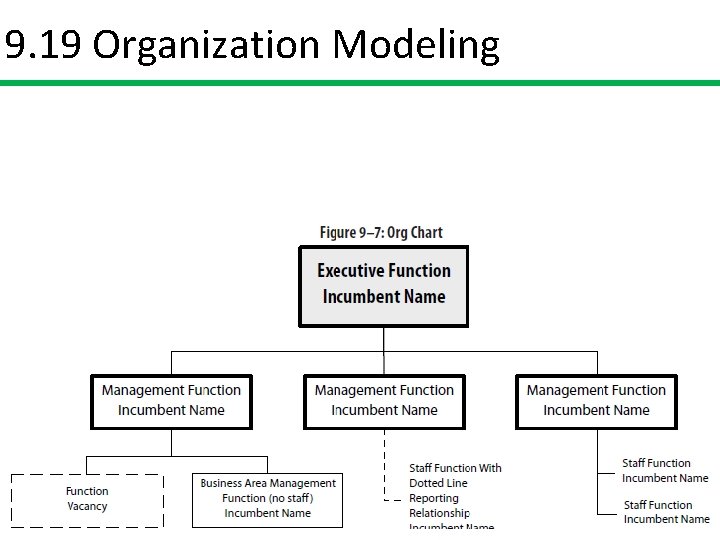
9. 19 Organization Modeling
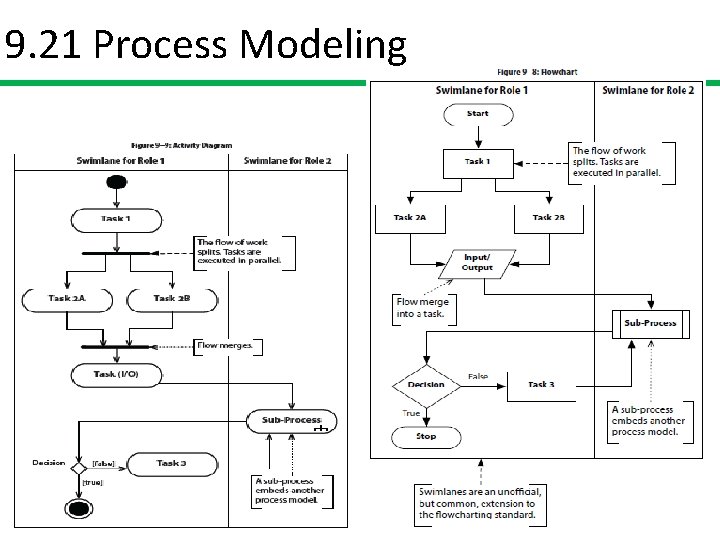
9. 21 Process Modeling
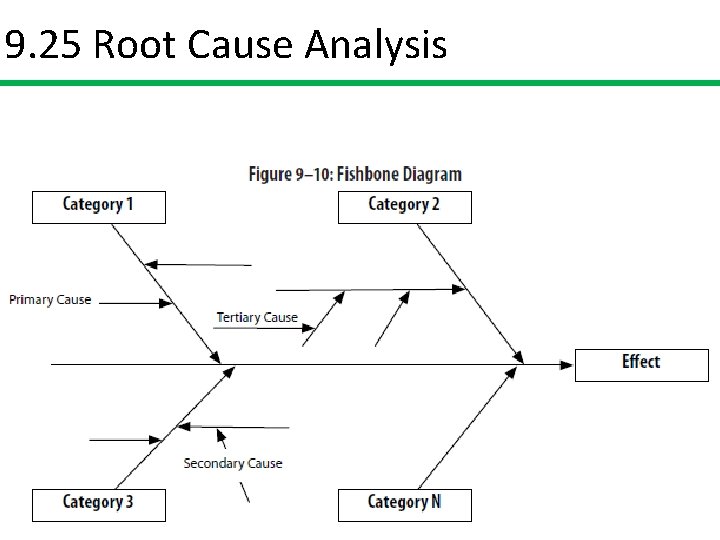
9. 25 Root Cause Analysis
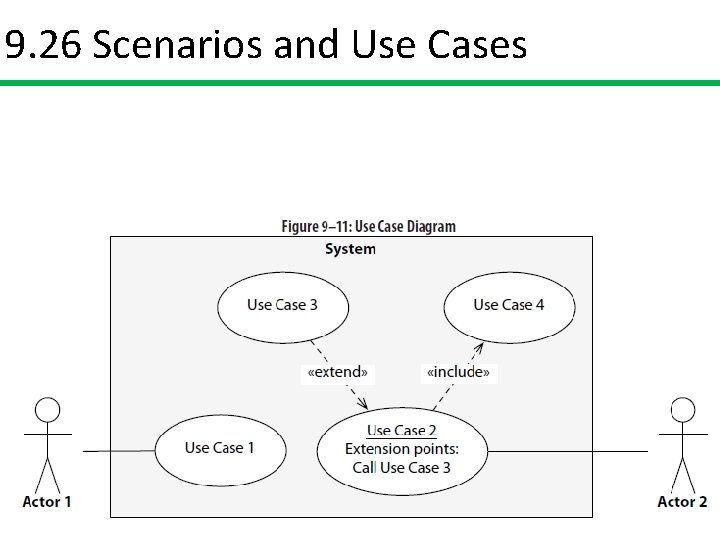
9. 26 Scenarios and Use Cases
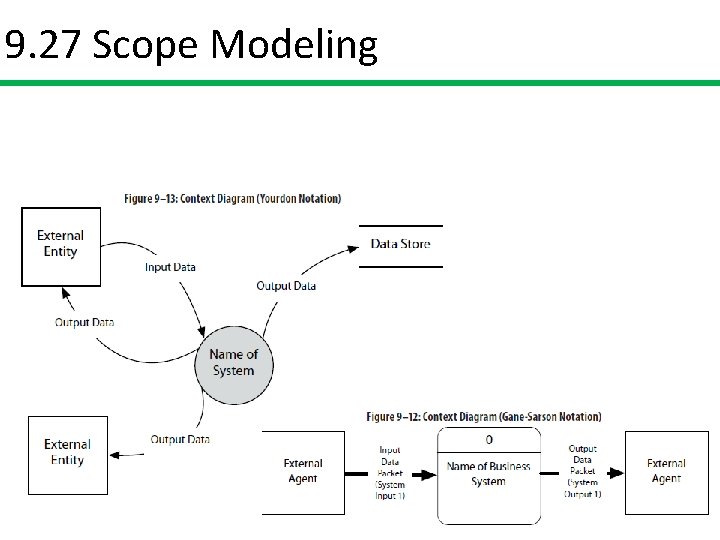
9. 27 Scope Modeling
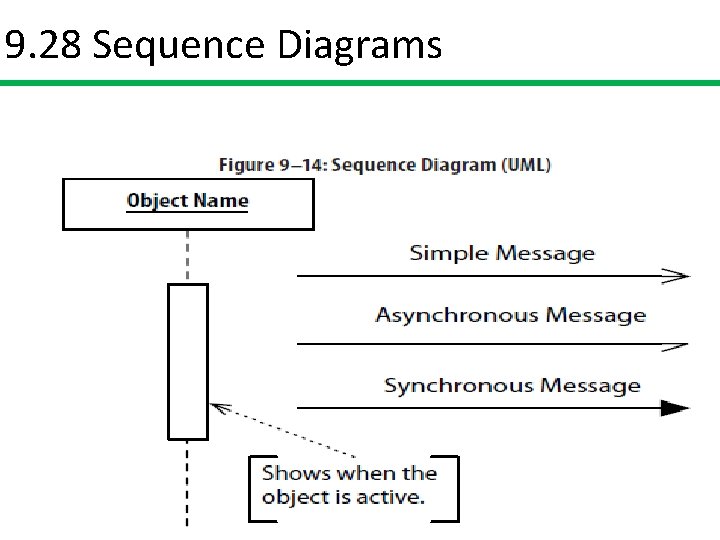
9. 28 Sequence Diagrams
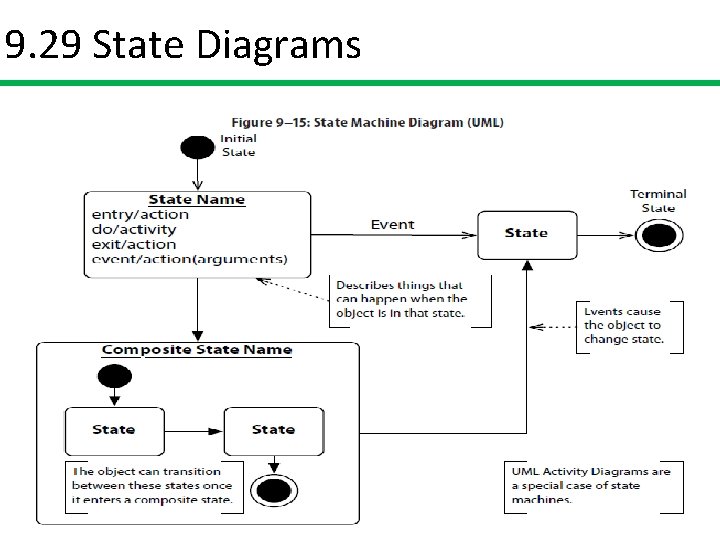
9. 29 State Diagrams
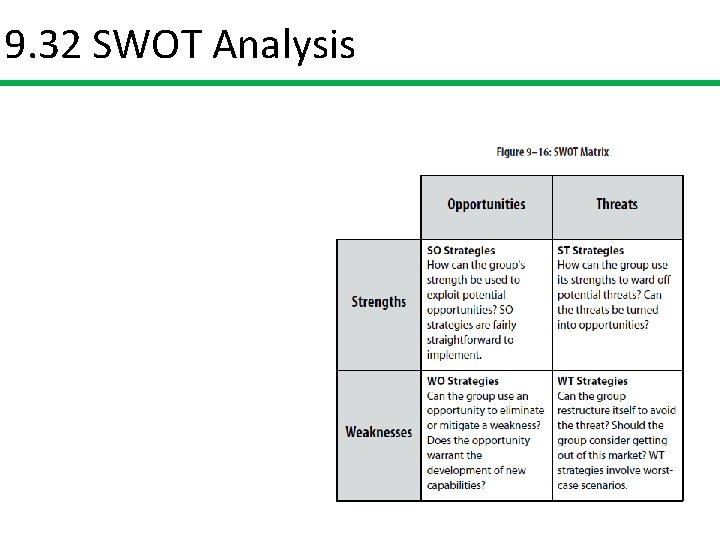
9. 32 SWOT Analysis
- Slides: 26