
Business Accounting Chapter 7 The Accounting Cycle helps
Business Accounting Chapter 7
The Accounting Cycle -helps keep accounting records in order 1. Collect and verify source documents 2. Analyze each transaction 3. Journalize each transaction 4. Posting to the general ledger 5. Preparing a trial balance

The General Ledger • book containing accounts a business uses
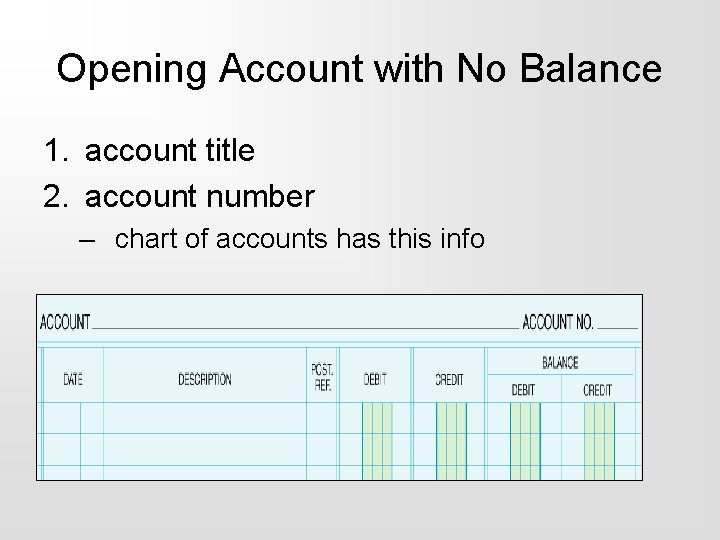
Opening Account with No Balance 1. account title 2. account number – chart of accounts has this info
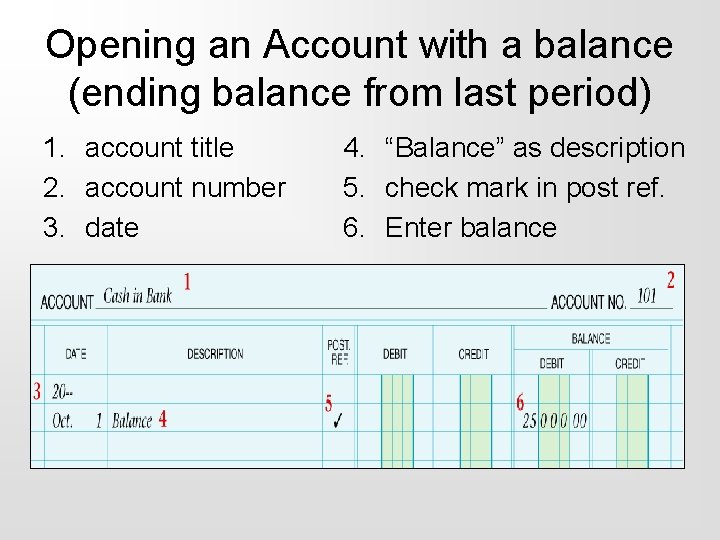
Opening an Account with a balance (ending balance from last period) 1. account title 2. account number 3. date 4. “Balance” as description 5. check mark in post ref. 6. Enter balance

The Posting Process • Frequency of posting depends on the size of the business. • Large businesses post daily • Information posted from general journal to general ledger. • For every journal entry you will post to at least two ledger accounts.
Post from left to right 1. date 2. source document as explanation • (some businesses leave this blank) 3. journal abbreviation and page number • in POST REF column in the ledger 4. debit or credit amount 5. update new balance 6. record account number • in POST REF column in the journal
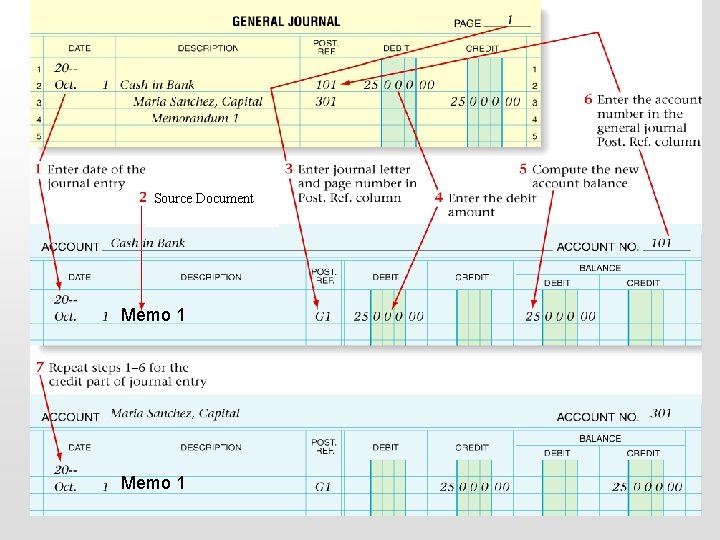
Source Document Memo 1
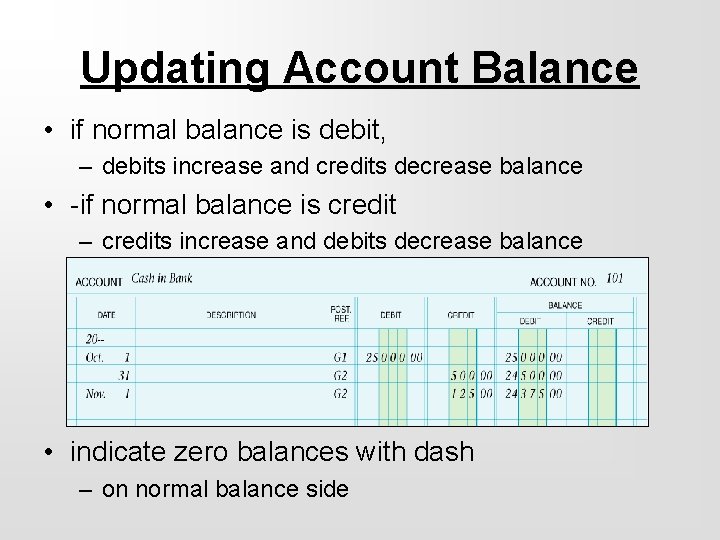
Updating Account Balance • if normal balance is debit, – debits increase and credits decrease balance • -if normal balance is credit – credits increase and debits decrease balance • indicate zero balances with dash – on normal balance side
Usefulness of Journals & Ledgers • Journals: – chronological listing of all business transactions – provide information to managers about specific transaction • Ledgers: – where you find accounts information • increase, decrease and balance of specific account – provide detailed information on a specific account • Posting: – must be accurate and timely • to be useful to accountants and managers who are making the business decisions.
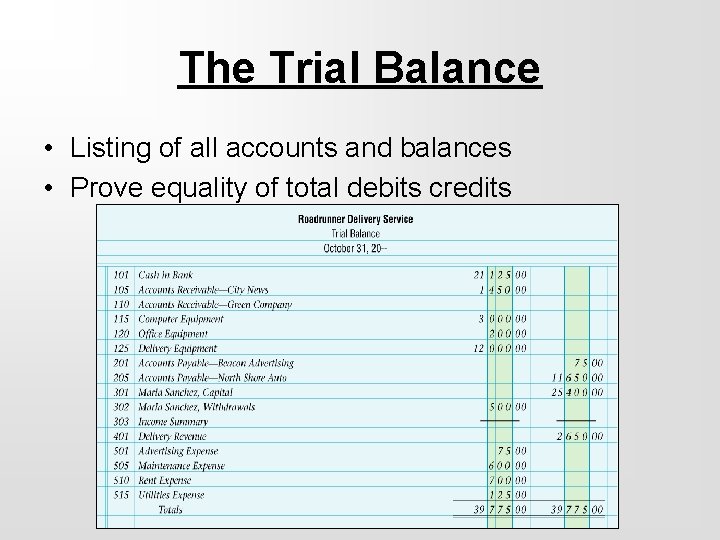
The Trial Balance • Listing of all accounts and balances • Prove equality of total debits credits
- Slides: 11