
Busch Complexity Lectures A Universal Turing Machine 1
Busch Complexity Lectures: A Universal Turing Machine 1
A limitation of Turing Machines: Turing Machines are “hardwired” they execute only one program Real Computers are re-programmable 2
Solution: Universal Turing Machine Attributes: • Reprogrammable machine • Simulates any other Turing Machine 3
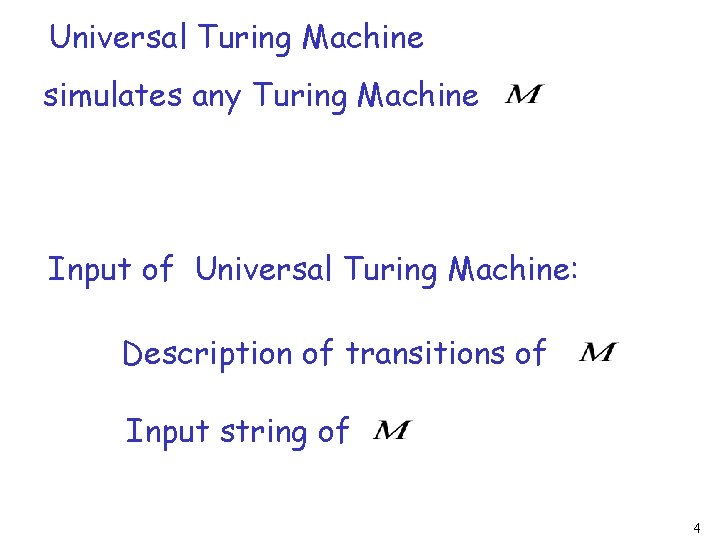
Universal Turing Machine simulates any Turing Machine Input of Universal Turing Machine: Description of transitions of Input string of 4
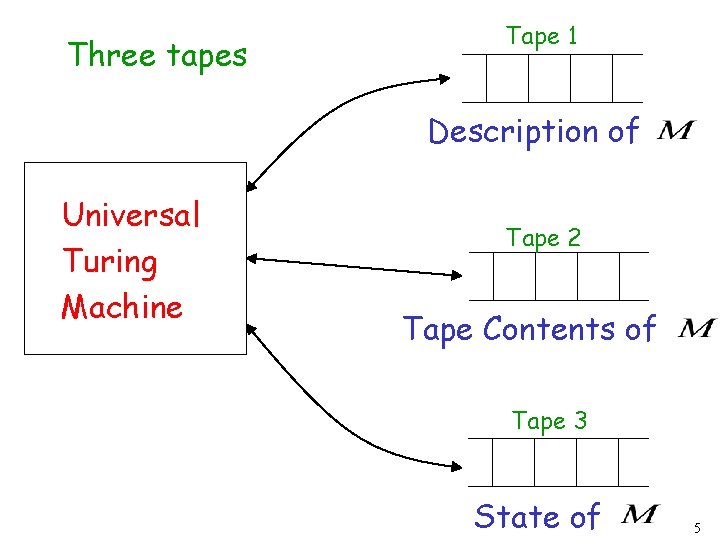
Three tapes Tape 1 Description of Universal Turing Machine Tape 2 Tape Contents of Tape 3 State of 5
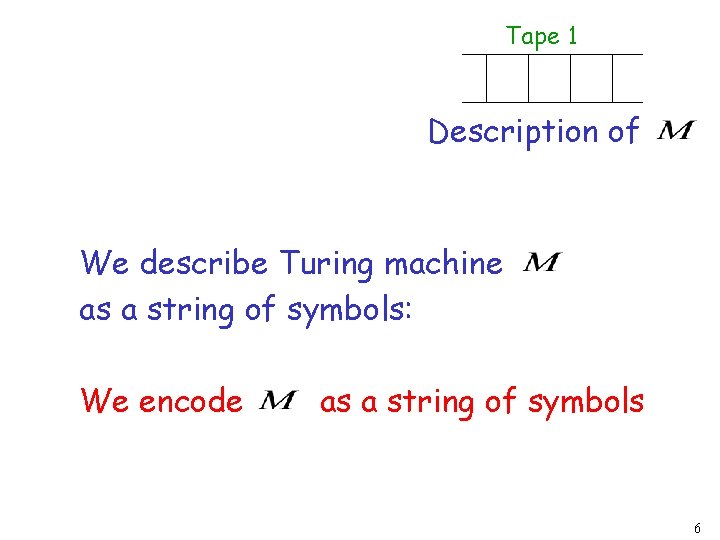
Tape 1 Description of We describe Turing machine as a string of symbols: We encode as a string of symbols 6
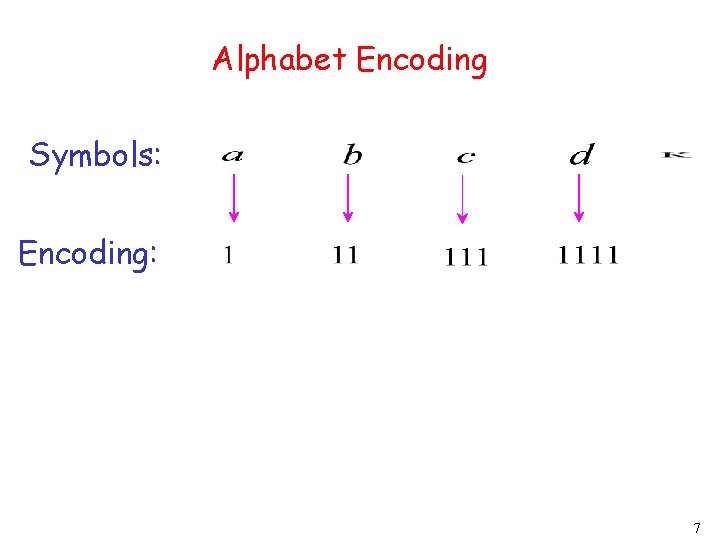
Alphabet Encoding Symbols: Encoding: 7
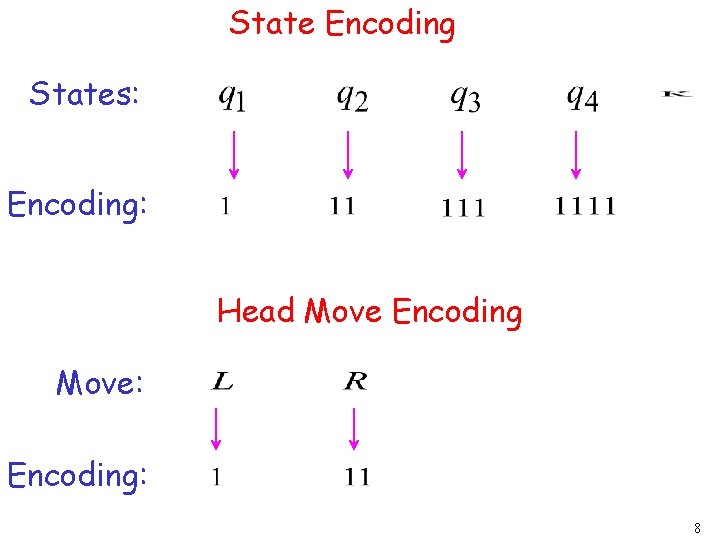
State Encoding States: Encoding: Head Move Encoding Move: Encoding: 8
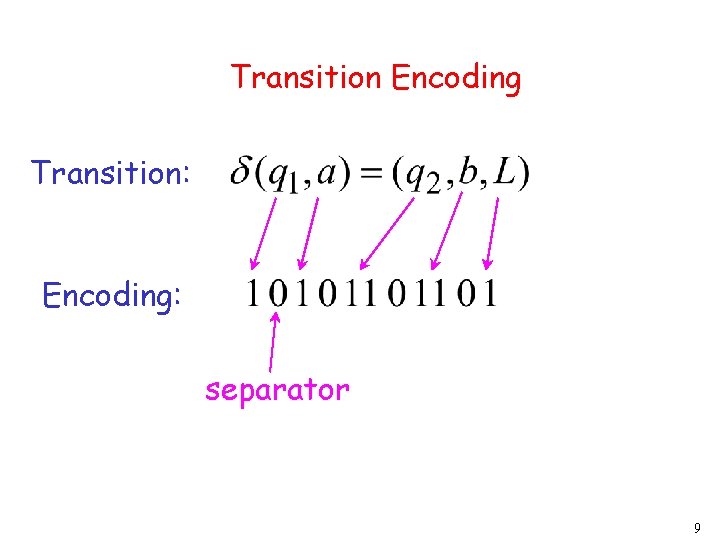
Transition Encoding Transition: Encoding: separator 9
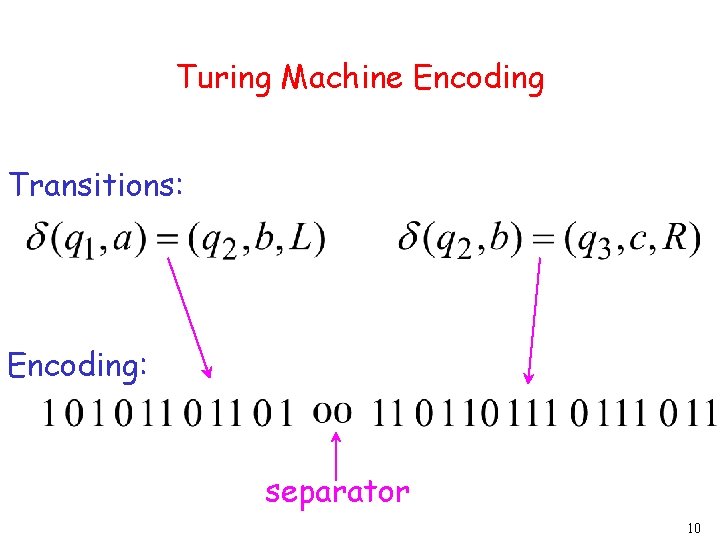
Turing Machine Encoding Transitions: Encoding: separator 10
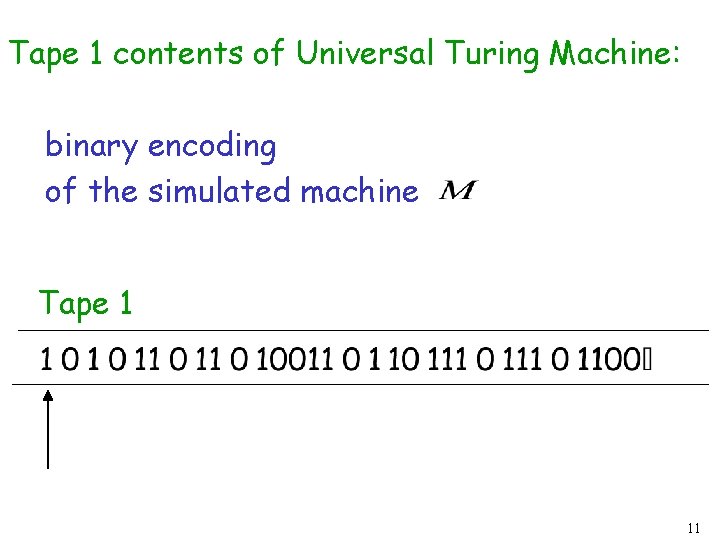
Tape 1 contents of Universal Turing Machine: binary encoding of the simulated machine Tape 1 11
A Turing Machine is described with a binary string of 0’s and 1’s Therefore: The set of Turing machines forms a language: each string of this language is the binary encoding of a Turing Machine 12
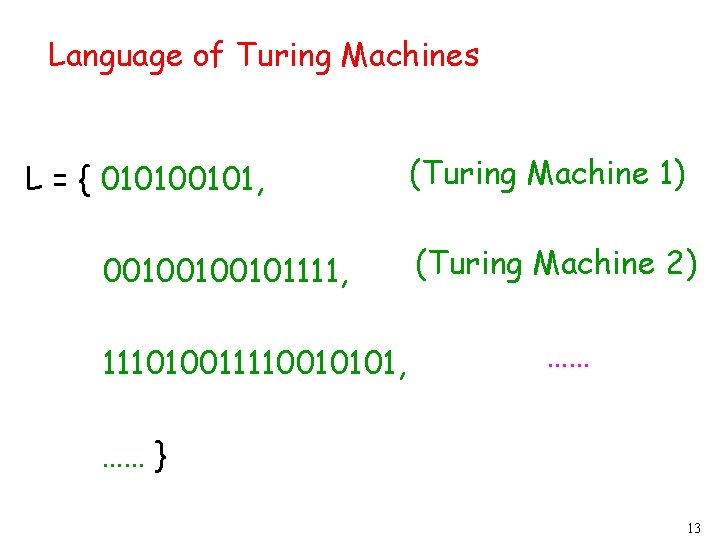
Language of Turing Machines L = { 010100101, 00100100101111, 111010011110010101, (Turing Machine 1) (Turing Machine 2) …… …… } 13
Countable Sets 14
Infinite sets are either: Countable or Uncountable 15
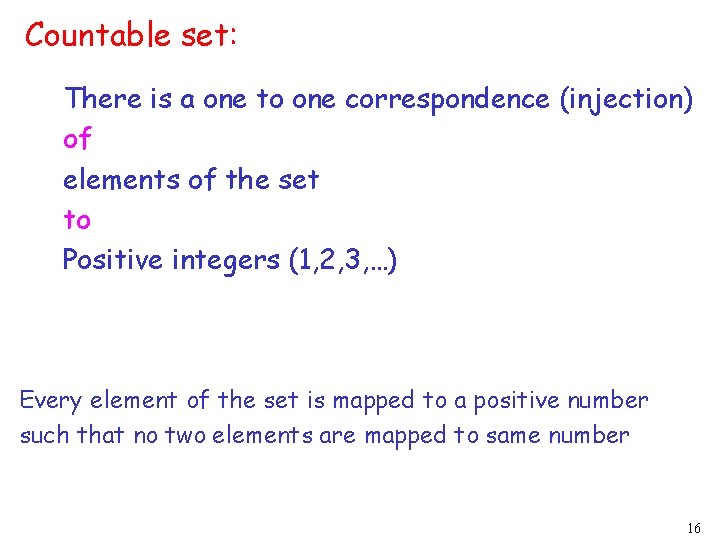
Countable set: There is a one to one correspondence (injection) of elements of the set to Positive integers (1, 2, 3, …) Every element of the set is mapped to a positive number such that no two elements are mapped to same number 16
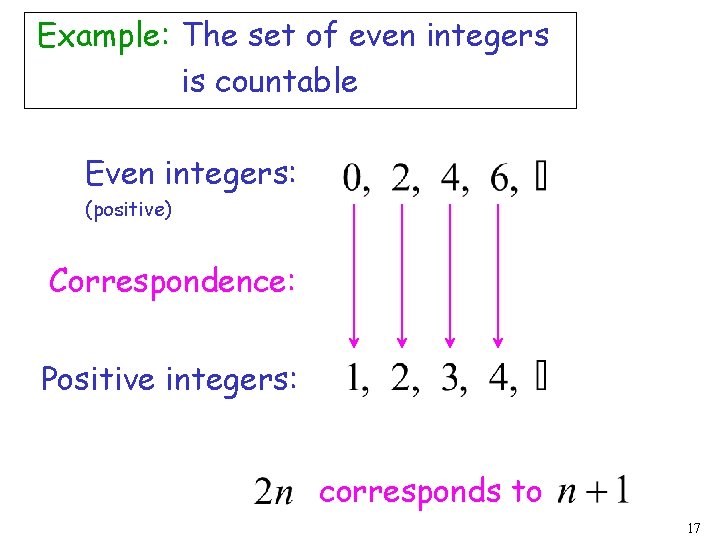
Example: The set of even integers is countable Even integers: (positive) Correspondence: Positive integers: corresponds to 17
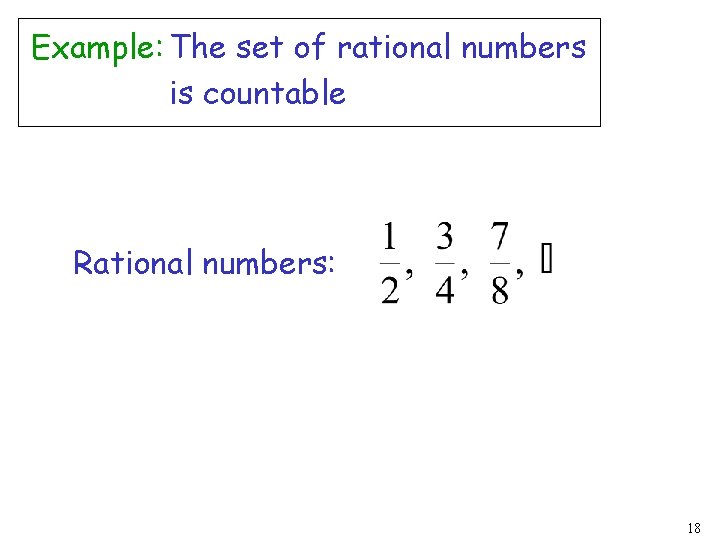
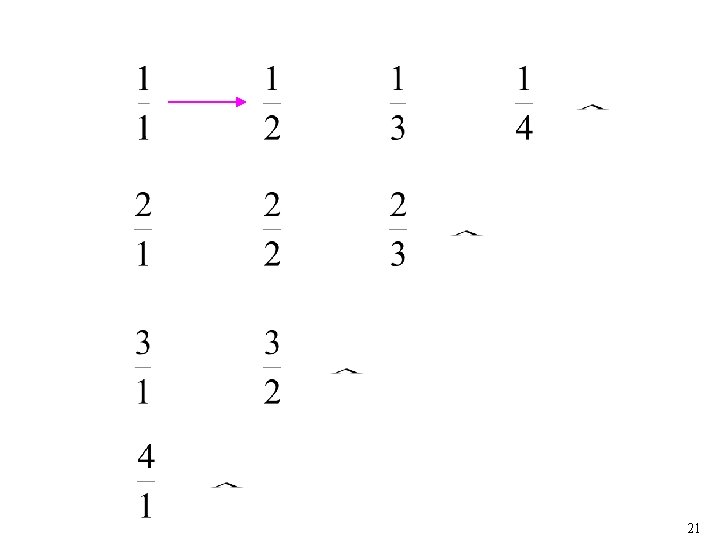
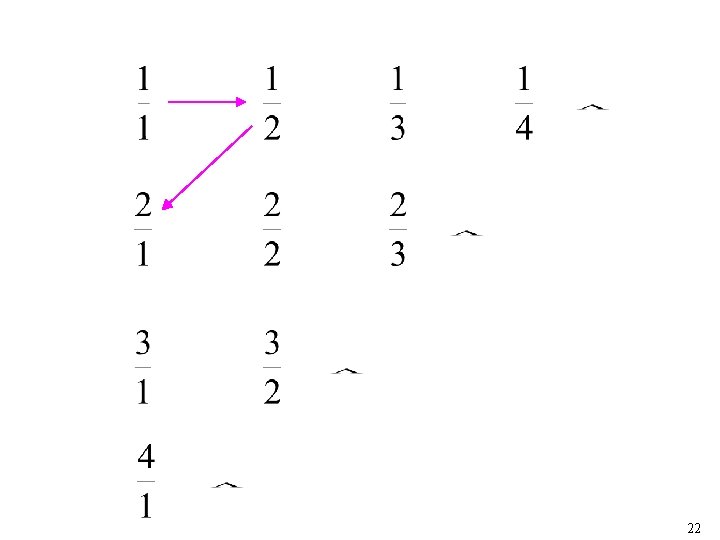
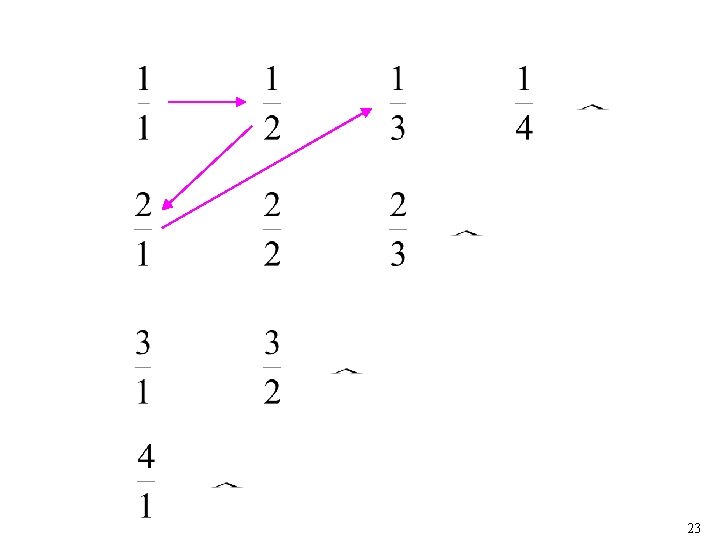
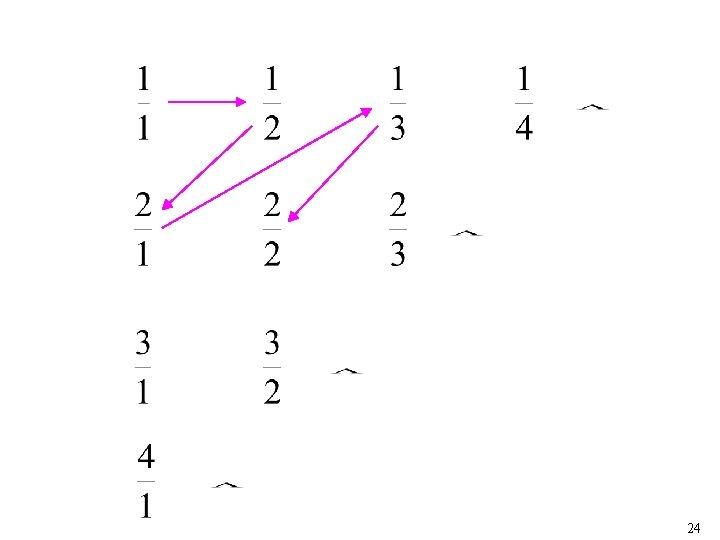
Example: The set of rational numbers is countable Rational numbers: 18
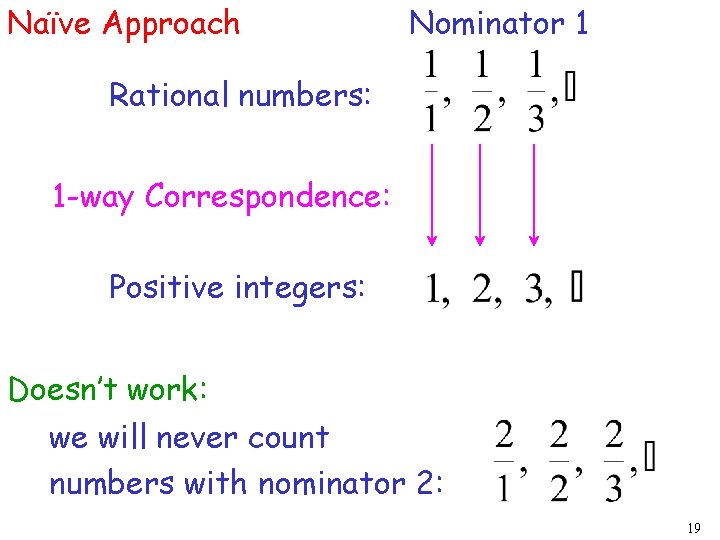
Naïve Approach Nominator 1 Rational numbers: 1 -way Correspondence: Positive integers: Doesn’t work: we will never count numbers with nominator 2: 19
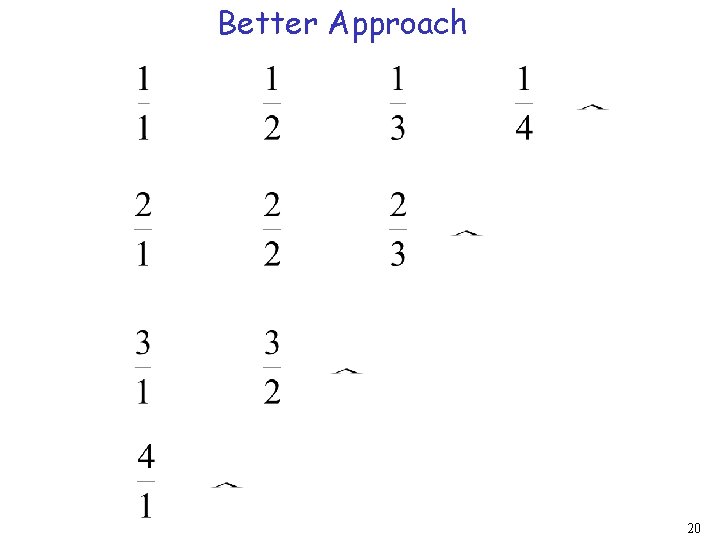
Better Approach 20
21
22
23
24
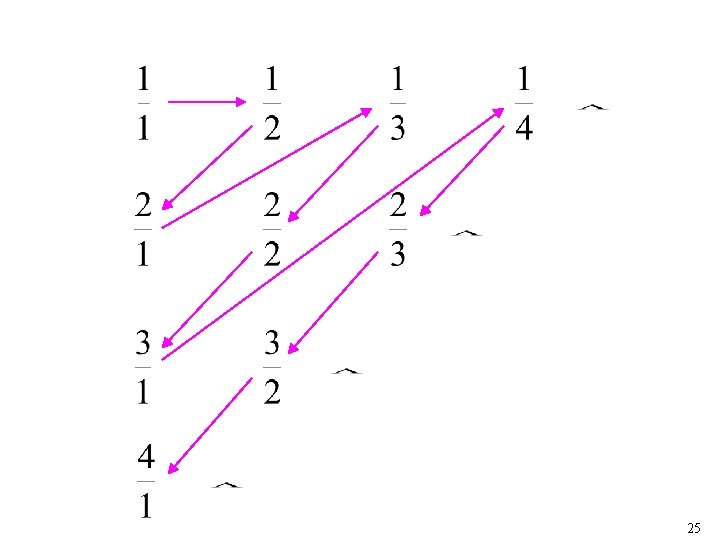
25
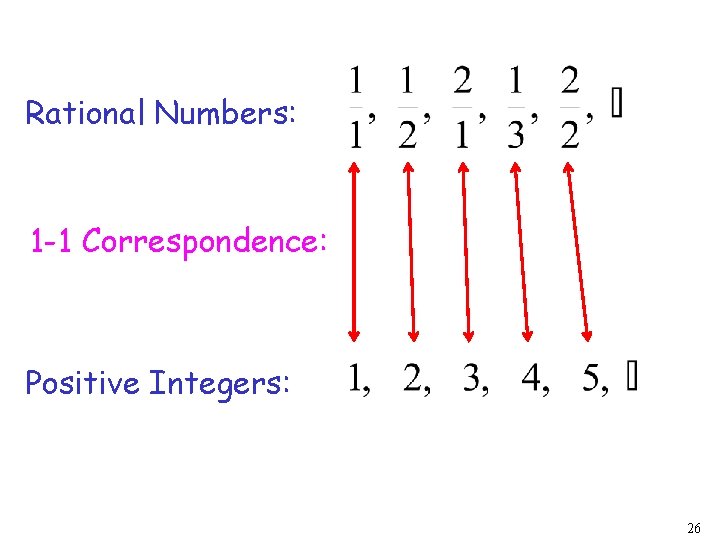
Rational Numbers: 1 -1 Correspondence: Positive Integers: 26
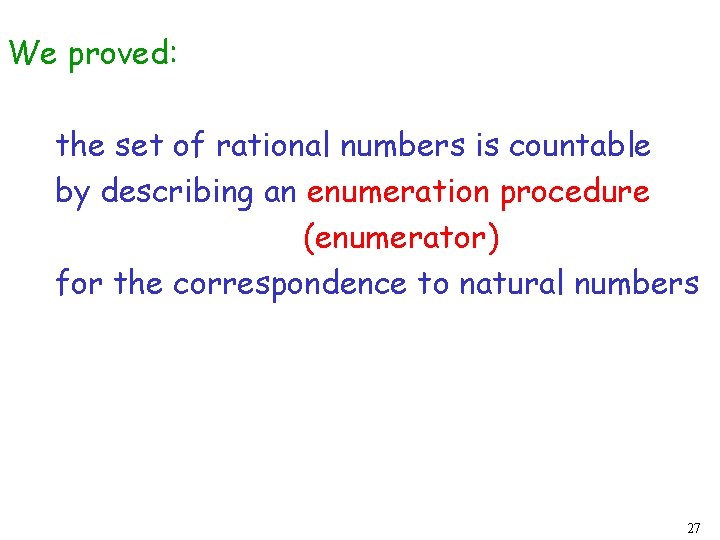
We proved: the set of rational numbers is countable by describing an enumeration procedure (enumerator) for the correspondence to natural numbers 27
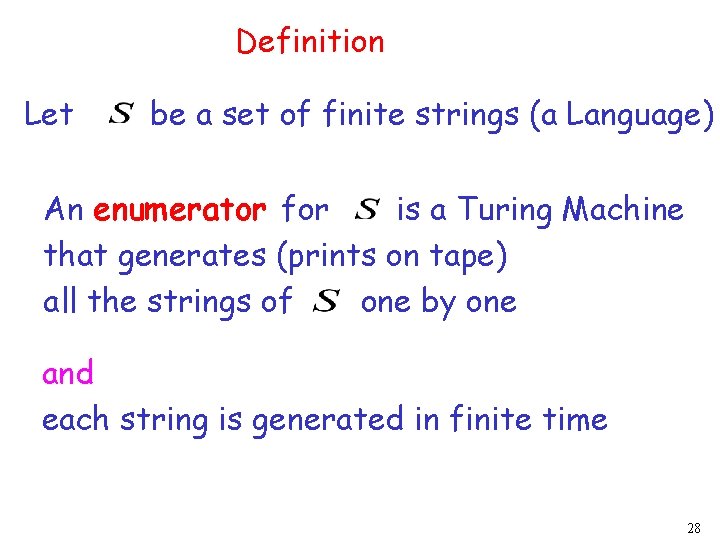
Definition Let be a set of finite strings (a Language) An enumerator for is a Turing Machine that generates (prints on tape) all the strings of one by one and each string is generated in finite time 28
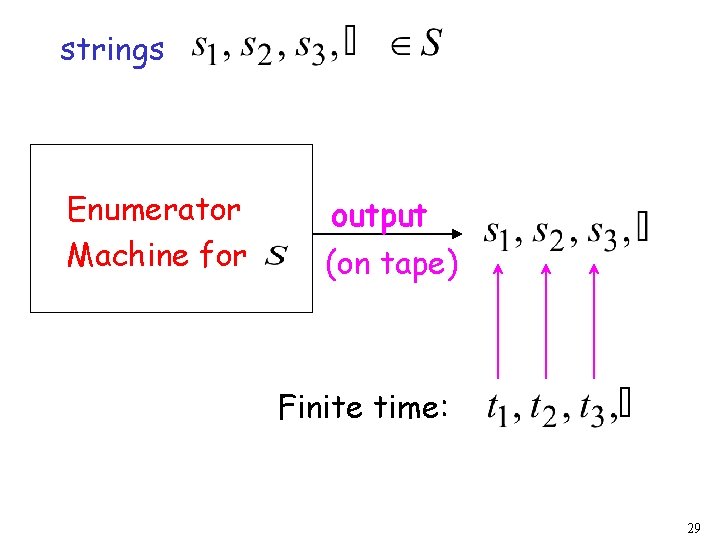
strings Enumerator Machine for output (on tape) Finite time: 29
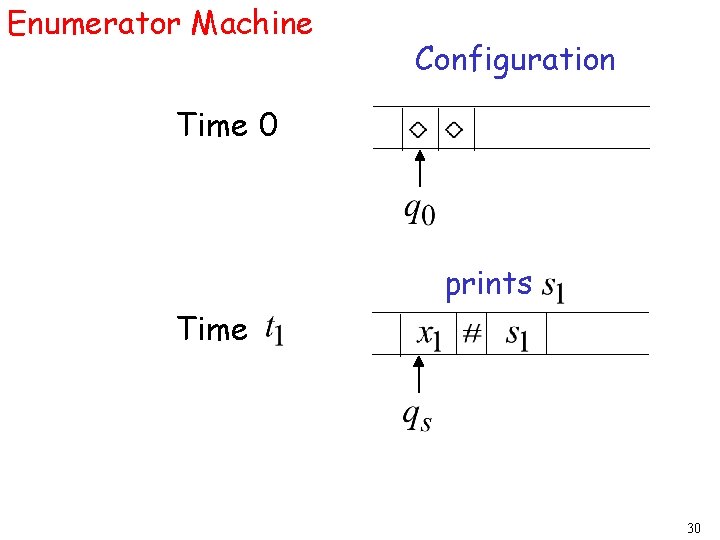
Enumerator Machine Configuration Time 0 prints Time 30
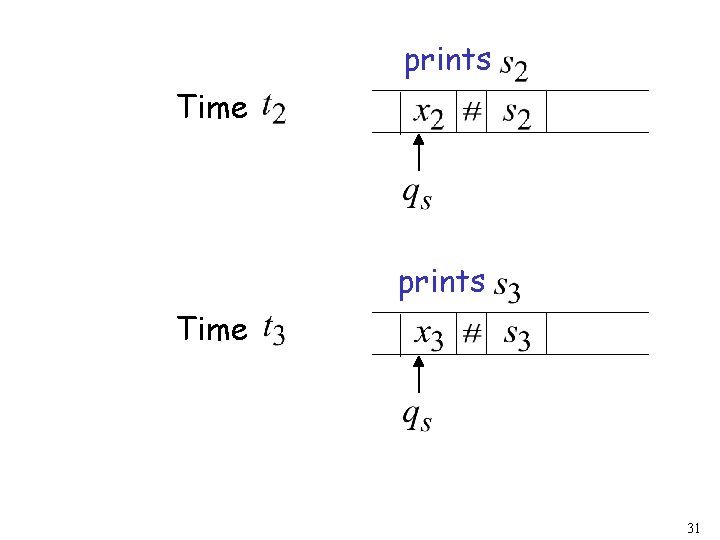
prints Time 31
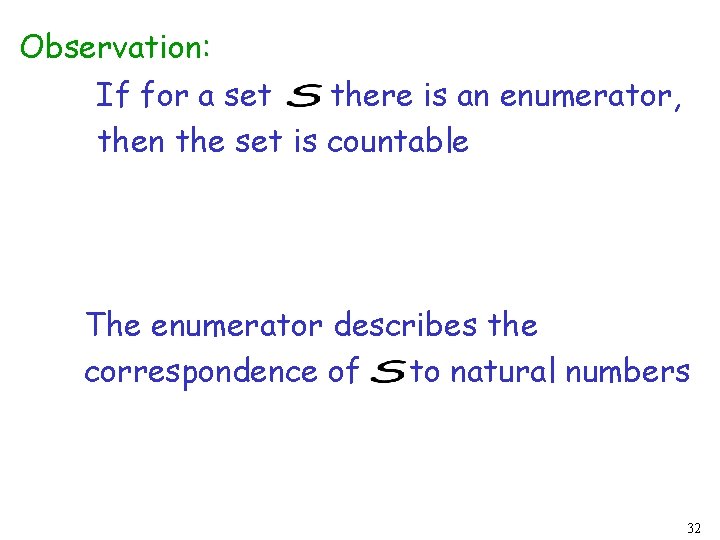
Observation: If for a set there is an enumerator, then the set is countable The enumerator describes the correspondence of to natural numbers 32
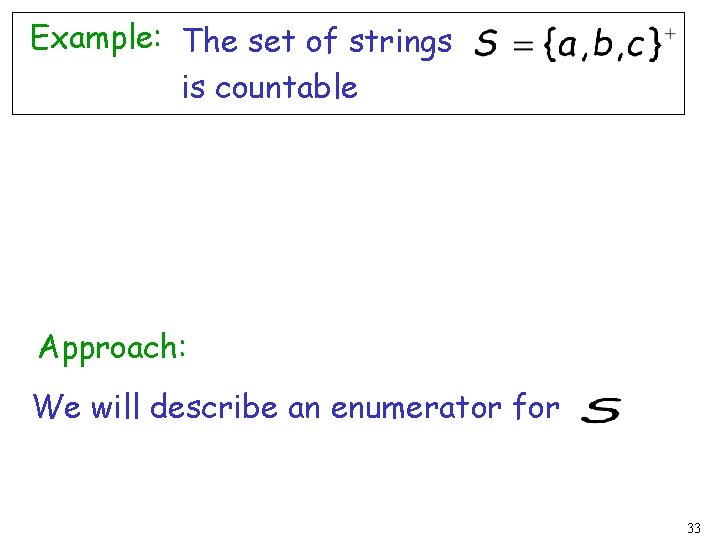
Example: The set of strings is countable Approach: We will describe an enumerator for 33
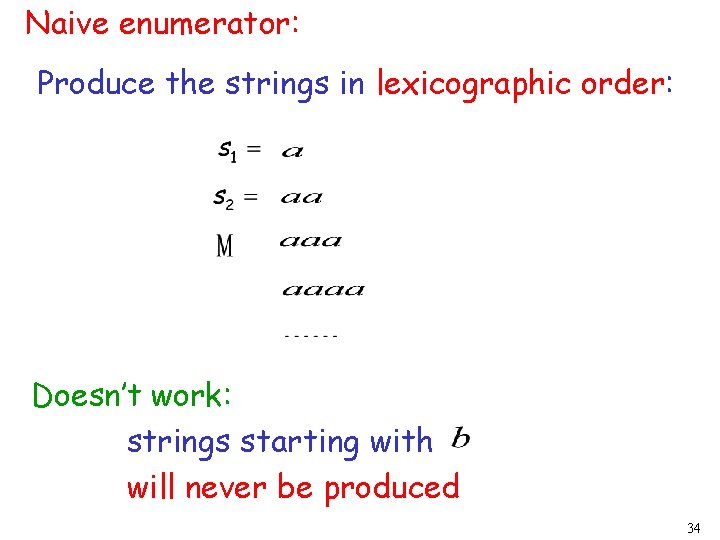
Naive enumerator: Produce the strings in lexicographic order: Doesn’t work: strings starting with will never be produced 34
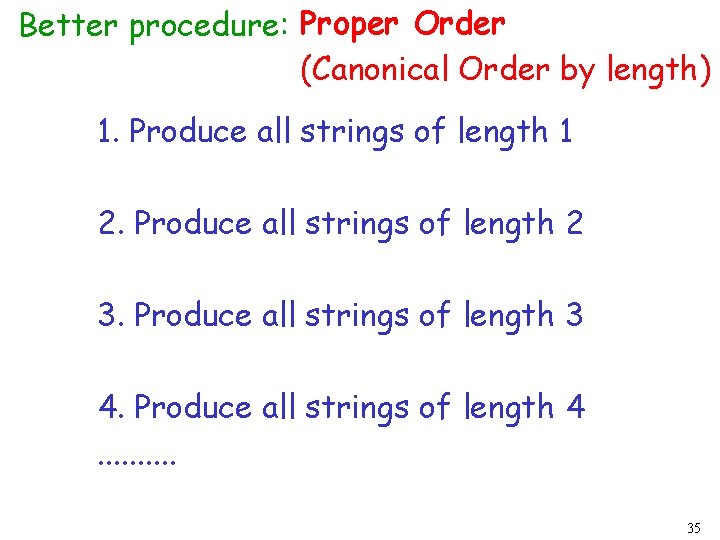
Better procedure: Proper Order (Canonical Order by length) 1. Produce all strings of length 1 2. Produce all strings of length 2 3. Produce all strings of length 3 4. Produce all strings of length 4. . 35
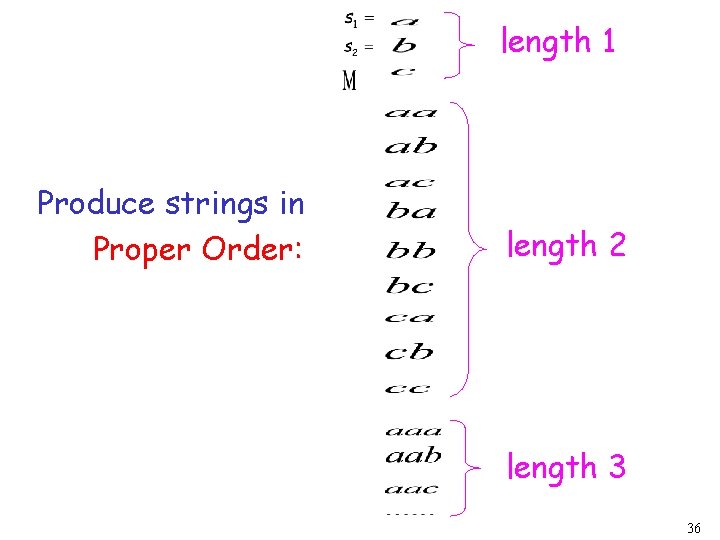
length 1 Produce strings in Proper Order: length 2 length 3 36
Theorem: The set of all Turing Machines is countable Proof: Any Turing Machine can be encoded with a binary string of 0’s and 1’s Find an enumeration procedure for the set of Turing Machine strings 37
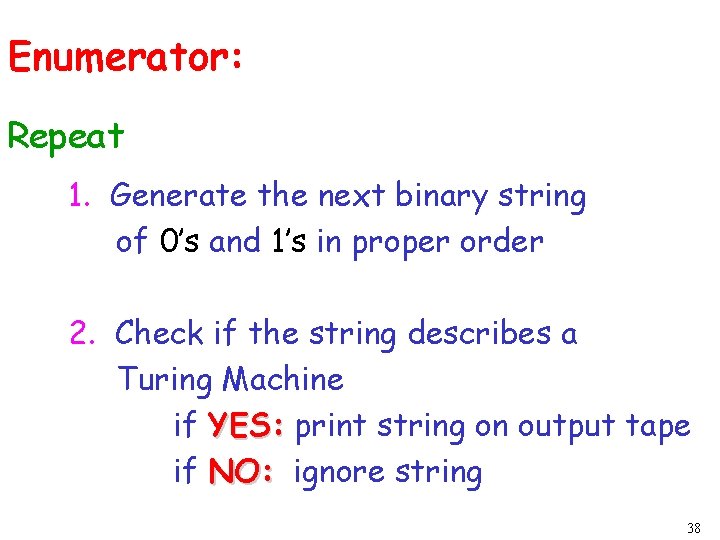
Enumerator: Repeat 1. Generate the next binary string of 0’s and 1’s in proper order 2. Check if the string describes a Turing Machine if YES: print string on output tape if NO: ignore string 38
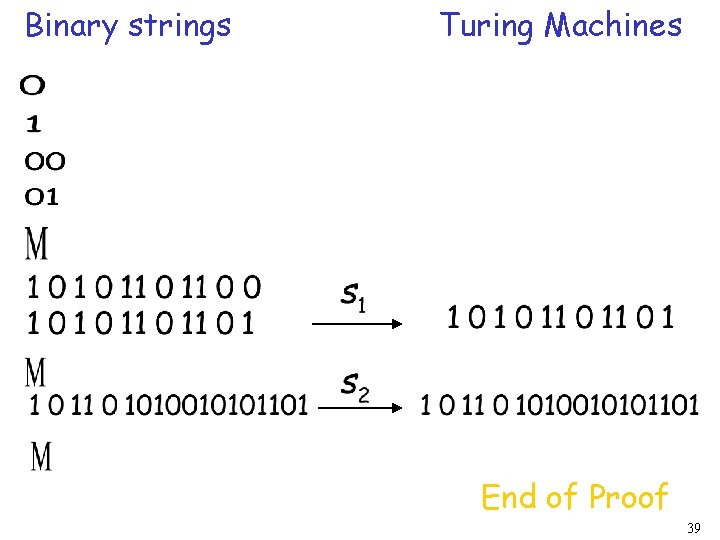
Binary strings Turing Machines End of Proof 39
Uncountable Sets 40
We will prove that there is a language which is not accepted by any Turing machine Technique: Turing machines are countable Languages are uncountable (there are more languages than Turing Machines) 41
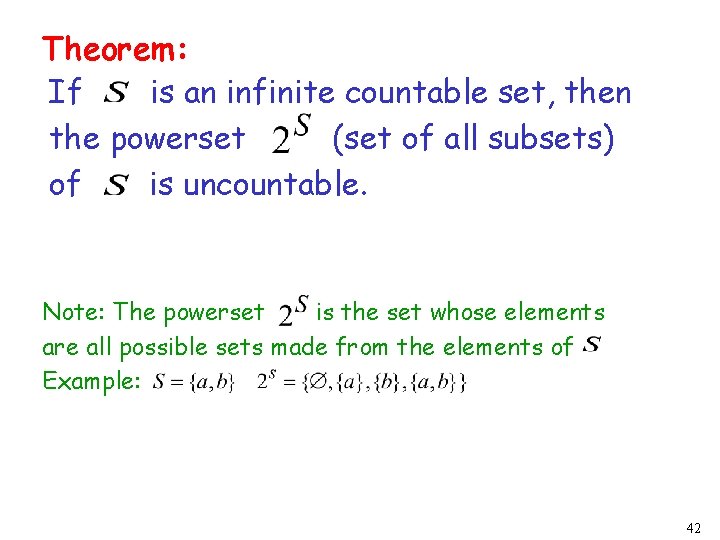
Theorem: If is an infinite countable set, then the powerset (set of all subsets) of is uncountable. Note: The powerset is the set whose elements are all possible sets made from the elements of Example: 42
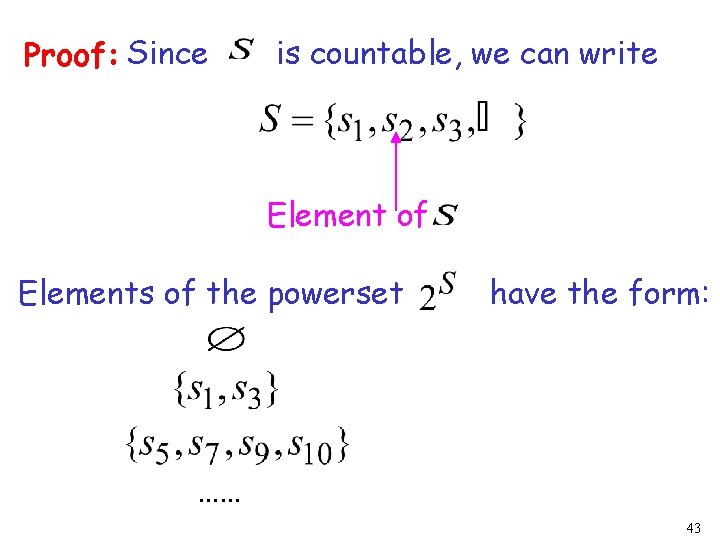
Proof: Since is countable, we can write Element of Elements of the powerset have the form: …… 43
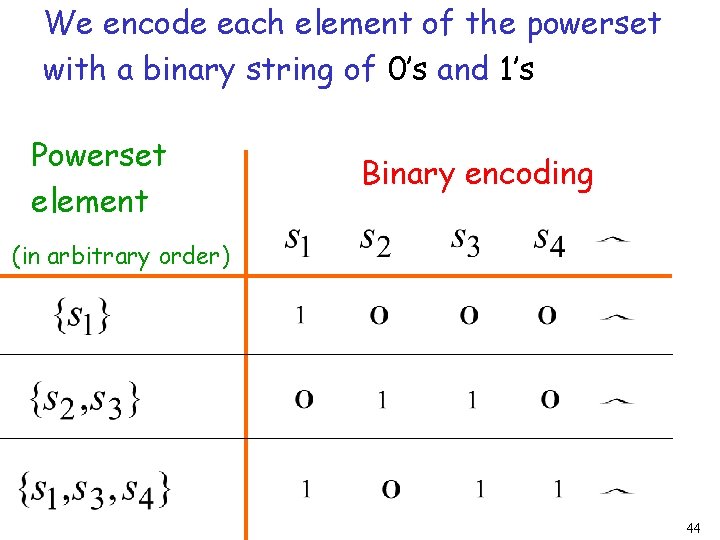
We encode each element of the powerset with a binary string of 0’s and 1’s Powerset element Binary encoding (in arbitrary order) 44
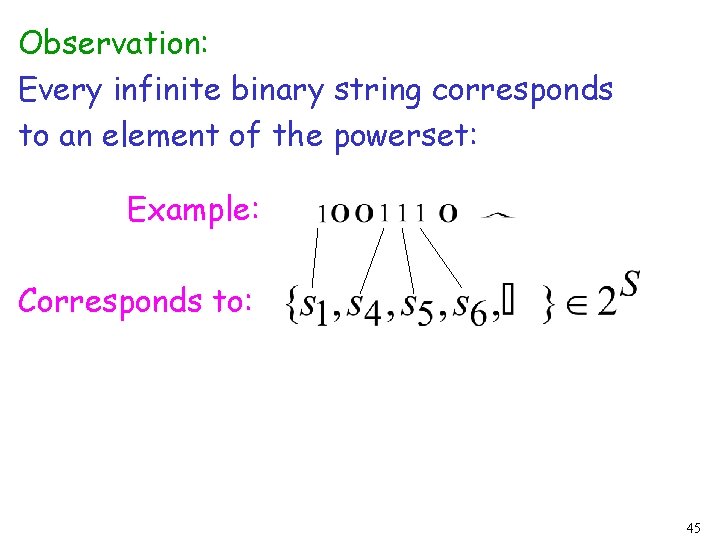
Observation: Every infinite binary string corresponds to an element of the powerset: Example: Corresponds to: 45
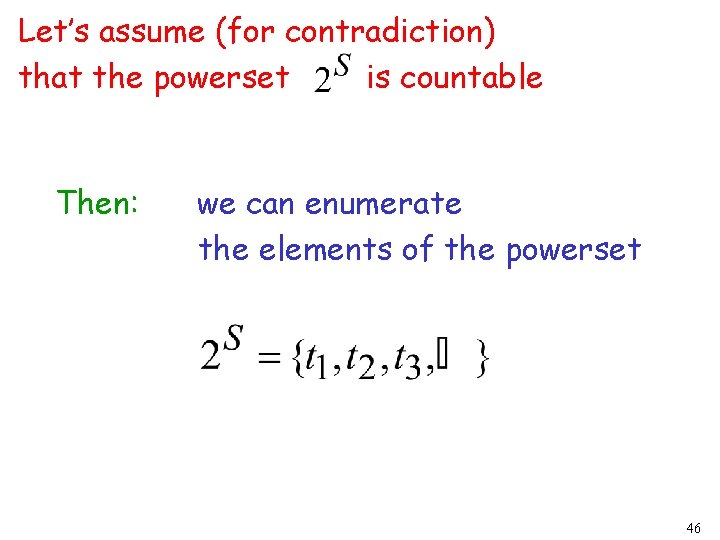
Let’s assume (for contradiction) that the powerset is countable Then: we can enumerate the elements of the powerset 46
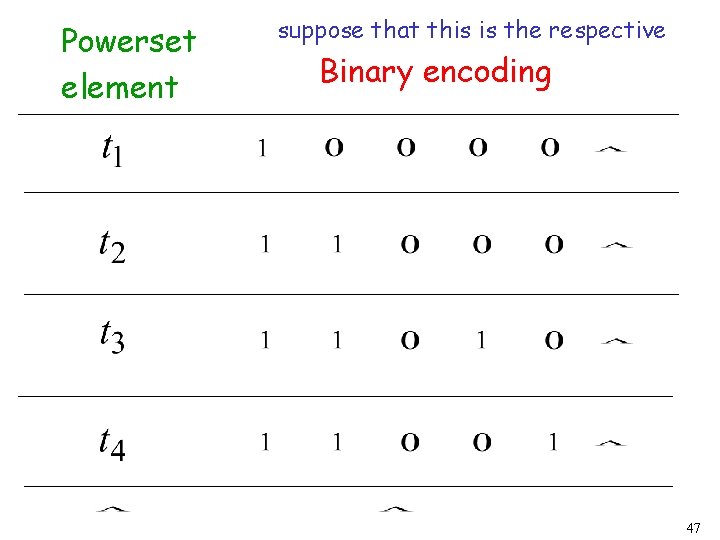
Powerset element suppose that this is the respective Binary encoding 47
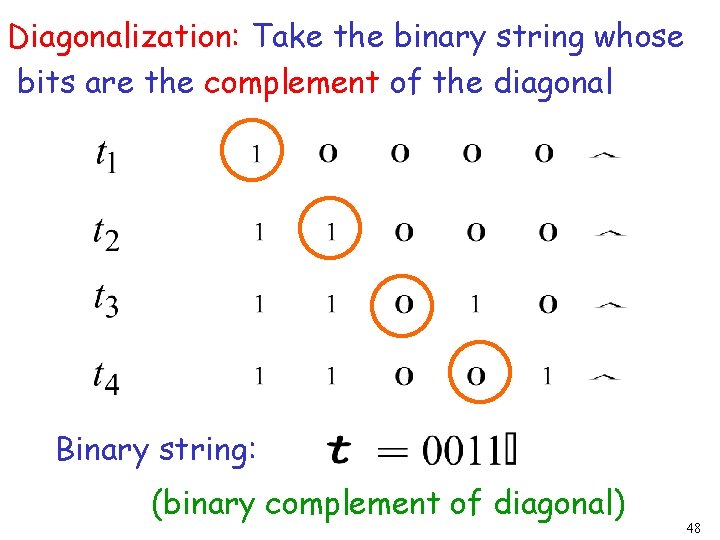
Diagonalization: Take the binary string whose bits are the complement of the diagonal Binary string: (binary complement of diagonal) 48
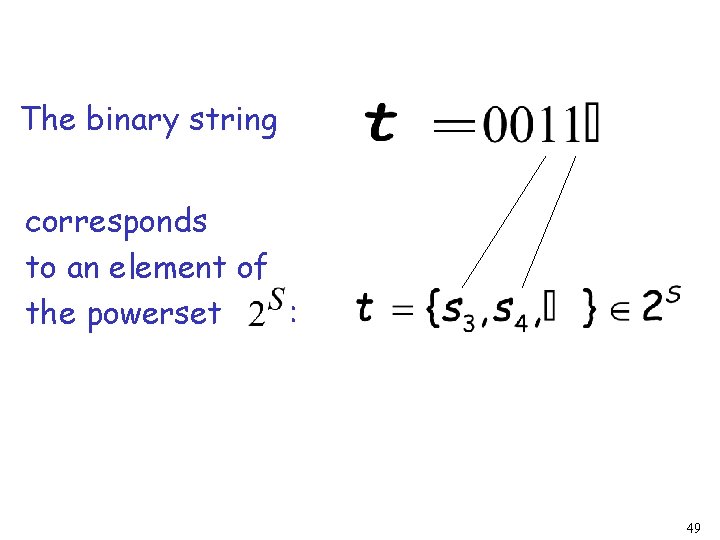
The binary string corresponds to an element of the powerset : 49
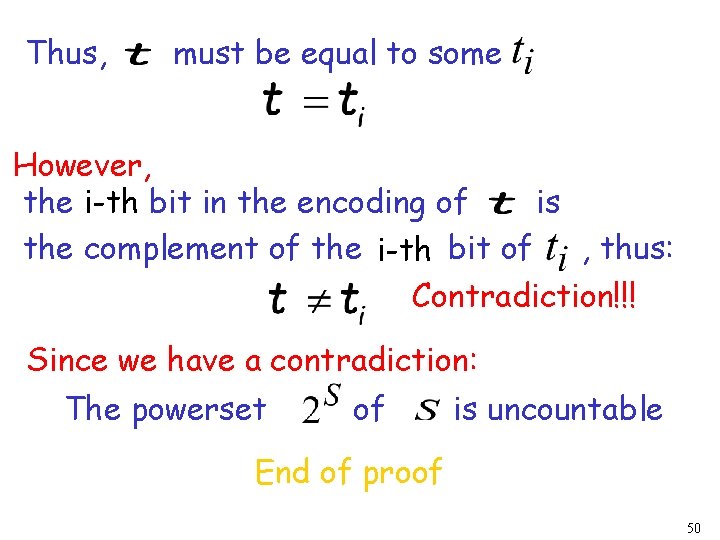
Thus, must be equal to some However, the i-th bit in the encoding of is the complement of the i-th bit of , thus: Contradiction!!! Since we have a contradiction: The powerset of is uncountable End of proof 50
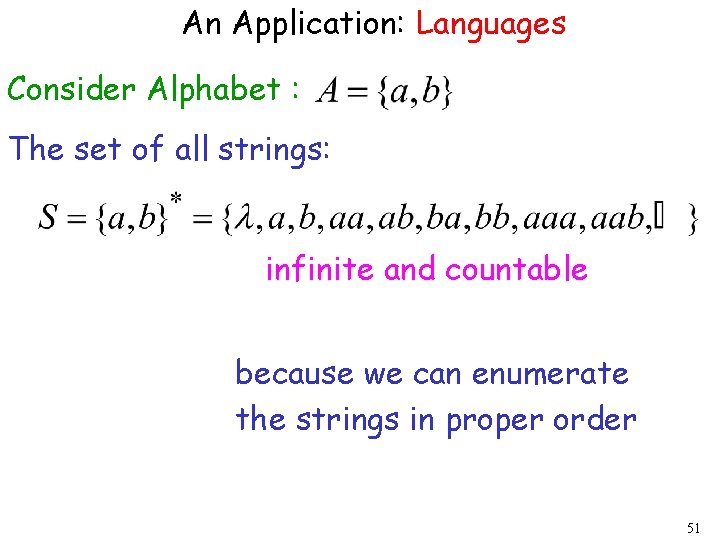
An Application: Languages Consider Alphabet : The set of all strings: infinite and countable because we can enumerate the strings in proper order 51
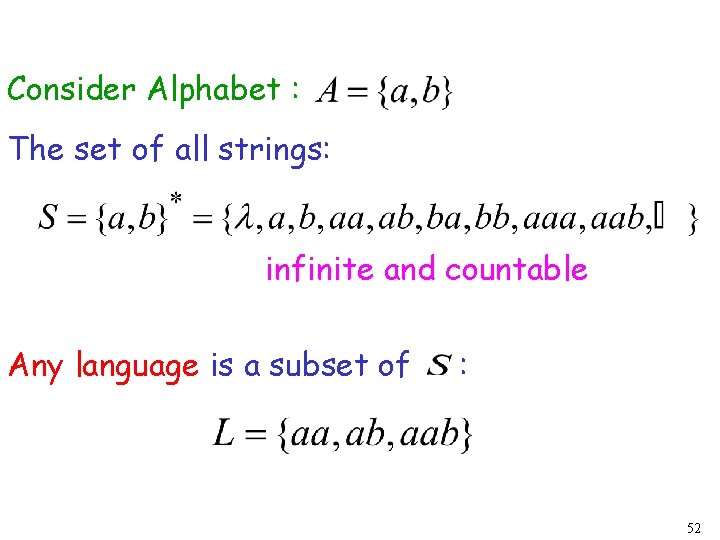
Consider Alphabet : The set of all strings: infinite and countable Any language is a subset of : 52
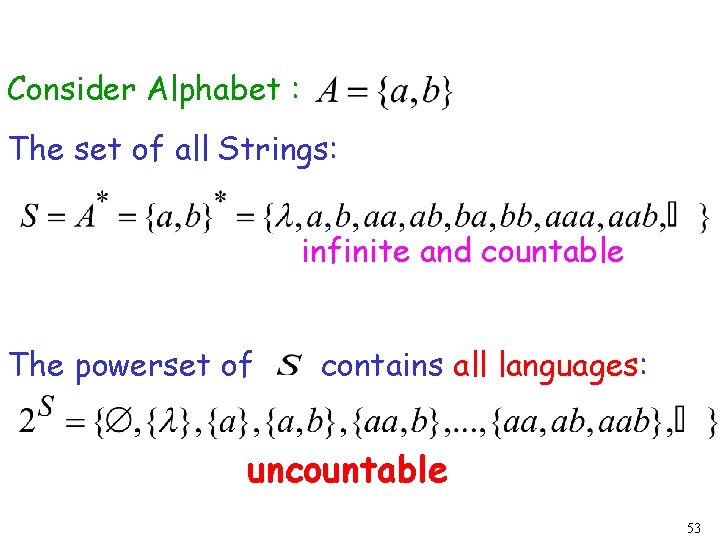
Consider Alphabet : The set of all Strings: infinite and countable The powerset of contains all languages: uncountable 53
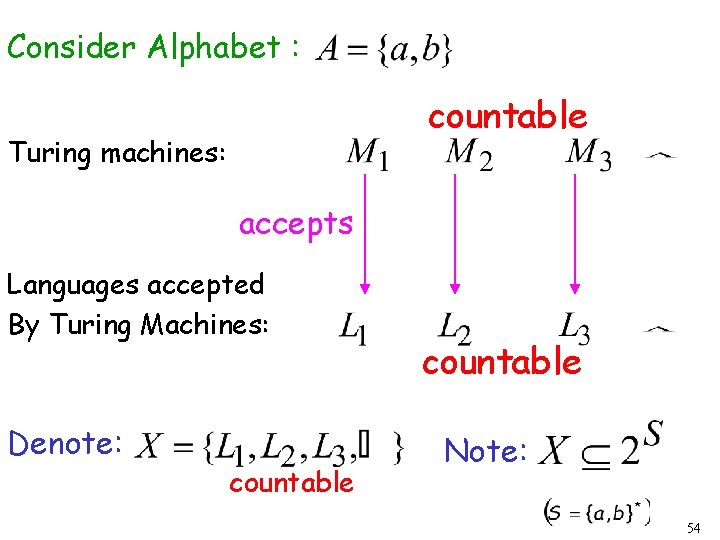
Consider Alphabet : countable Turing machines: accepts Languages accepted By Turing Machines: Denote: countable Note: 54
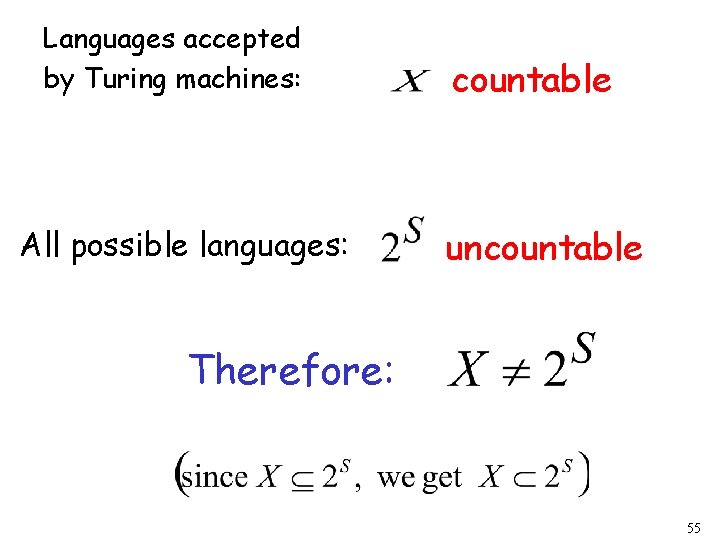
Languages accepted by Turing machines: All possible languages: countable uncountable Therefore: 55
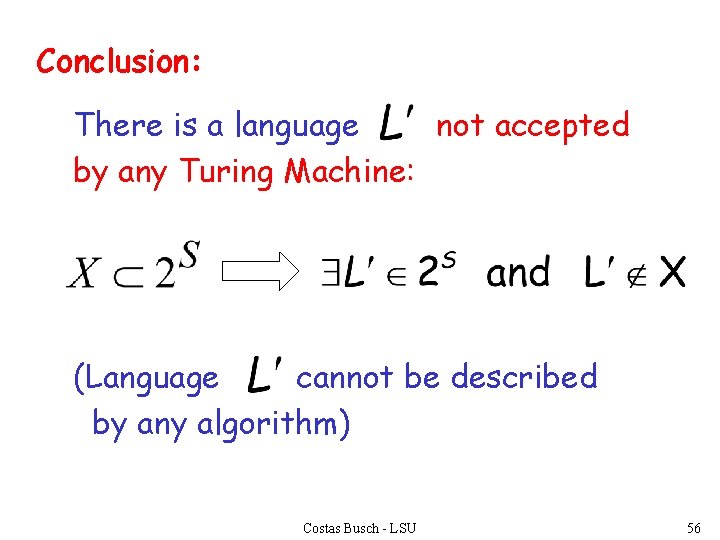
Conclusion: There is a language not accepted by any Turing Machine: (Language cannot be described by any algorithm) Costas Busch - LSU 56
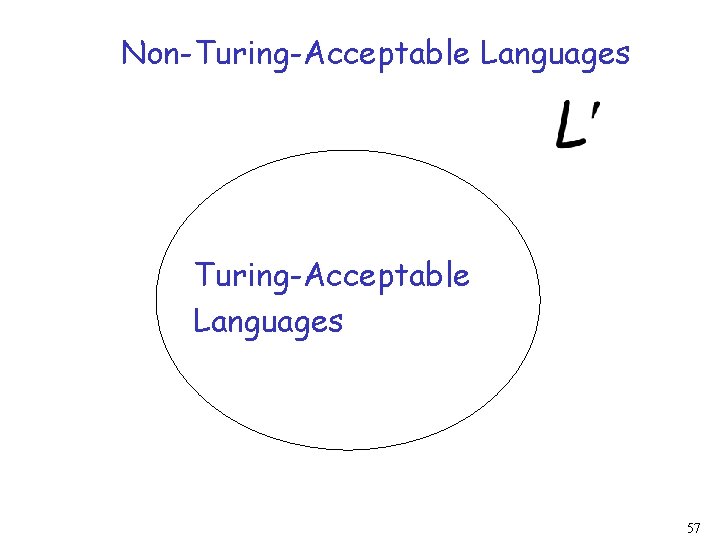
Non-Turing-Acceptable Languages 57
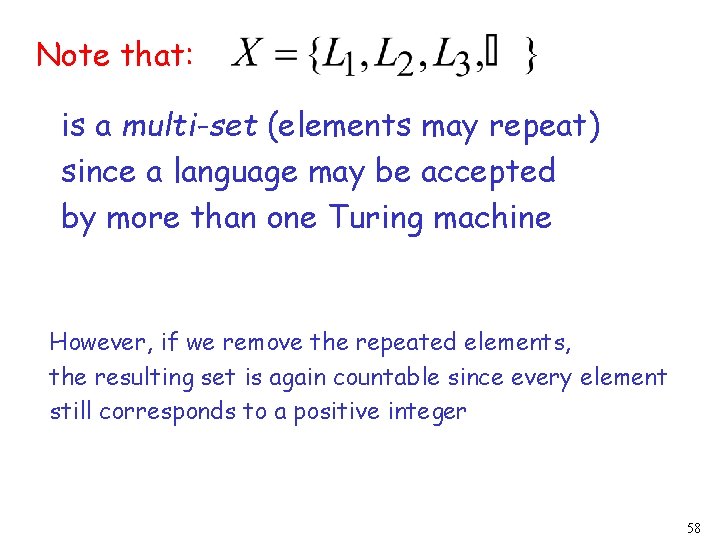
Note that: is a multi-set (elements may repeat) since a language may be accepted by more than one Turing machine However, if we remove the repeated elements, the resulting set is again countable since every element still corresponds to a positive integer 58
- Slides: 58