
BUS LANE CAPACITY Bus Lane Capacity 1 CAPACITY
BUS LANE CAPACITY Bus Lane Capacity 1

CAPACITY DEFAULTS 30 YEARS AGO Bus Lane 6000 Tram / LRT Metro 15000 passengers/hour/direction Bus Lane Capacity 2
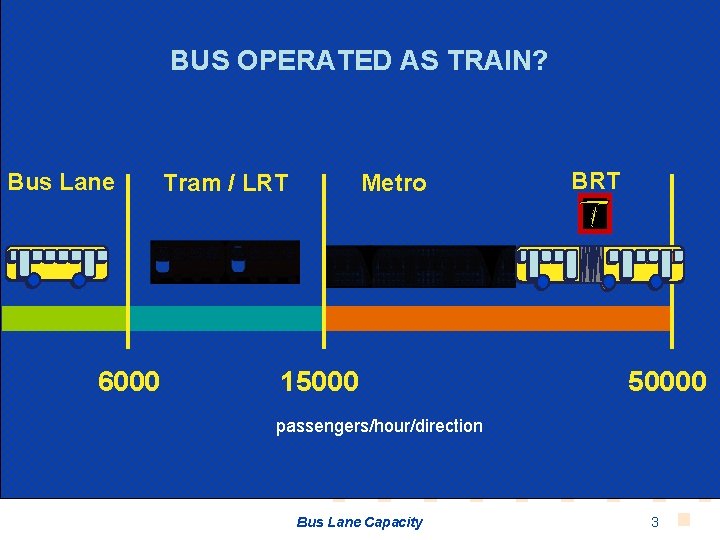
BUS OPERATED AS TRAIN? Bus Lane 6000 Tram / LRT Metro 15000 BRT 50000 passengers/hour/direction Bus Lane Capacity 3
BUS LANE CAPACITY Bus Lane Capacity 4
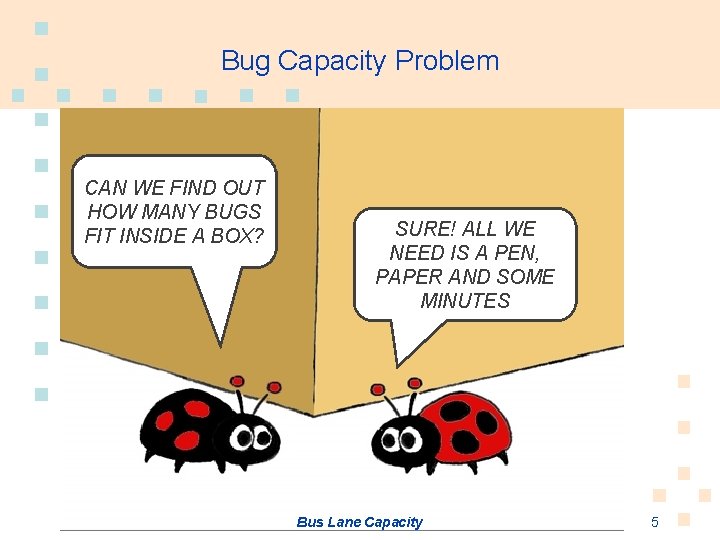
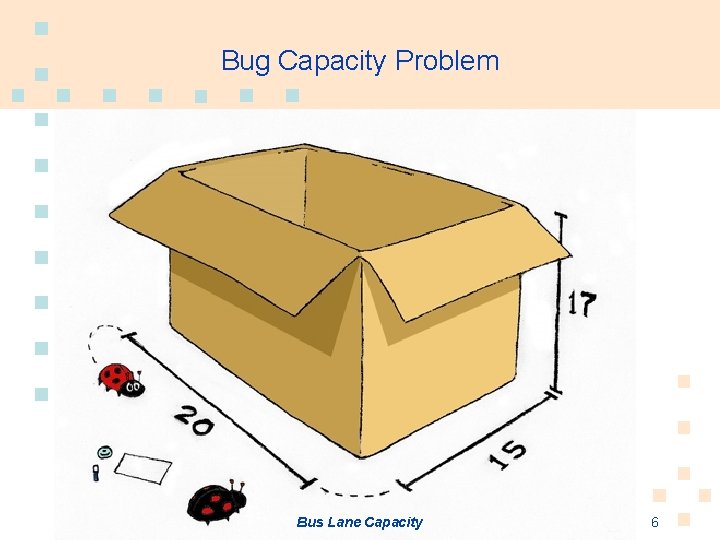
Bug Capacity Problem CAN WE FIND OUT HOW MANY BUGS FIT INSIDE A BOX? SURE! ALL WE NEED IS A PEN, PAPER AND SOME MINUTES Bus Lane Capacity 5
Bug Capacity Problem Bus Lane Capacity 6

Bug Capacity Problem Bus Lane Capacity 7
Bug Capacity Problem Bus Lane Capacity 8
Bug Capacity Problem 1, 2, 3… 17, 18, 19… 45, 46, 47… 101, 108, 111… Bus Lane Capacity 9
Bug Capacity Problem 3025, 3026, 3027! 3027 BUGS! DID YOU JUST JUMP FROM 1890 TO 1981? DO YOU THINK SO? IF I DID, THERE ARE JUST… 2937 BUGS! Bus Lane Capacity 10
Bug Capacity Problem OH, WE’LL NEVER KNOW A BOX CAPACITY… WHAT IF WE PLACE AN ELETRONIC BUG COUNTER AT DOOR? WHAT IF WE ASK Bus Lane FORCapacity HELP? 11
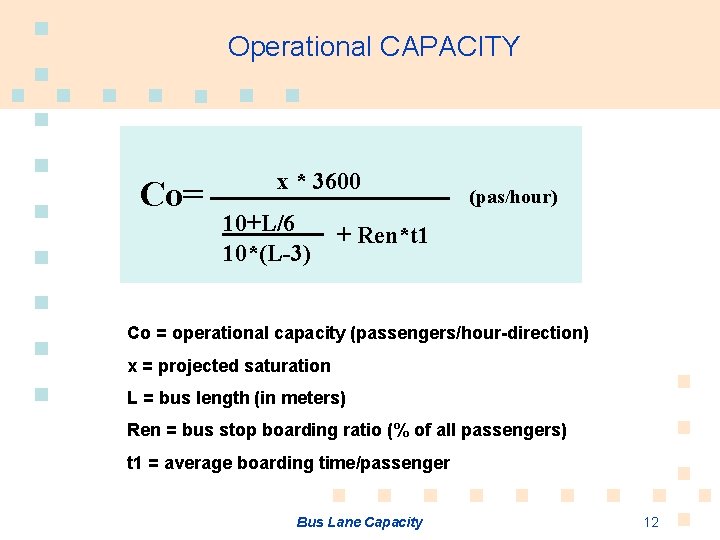
Operational CAPACITY Co= x * 3600 10+L/6 10*(L-3) (pas/hour) + Ren*t 1 Co = operational capacity (passengers/hour-direction) x = projected saturation L = bus length (in meters) Ren = bus stop boarding ratio (% of all passengers) t 1 = average boarding time/passenger Bus Lane Capacity 12
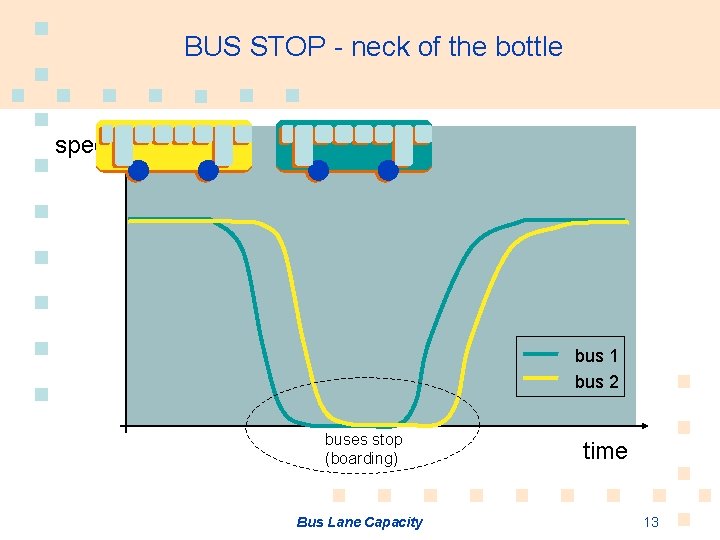
BUS STOP - neck of the bottle speed bus 1 bus 2 buses stop (boarding) Bus Lane Capacity time 13
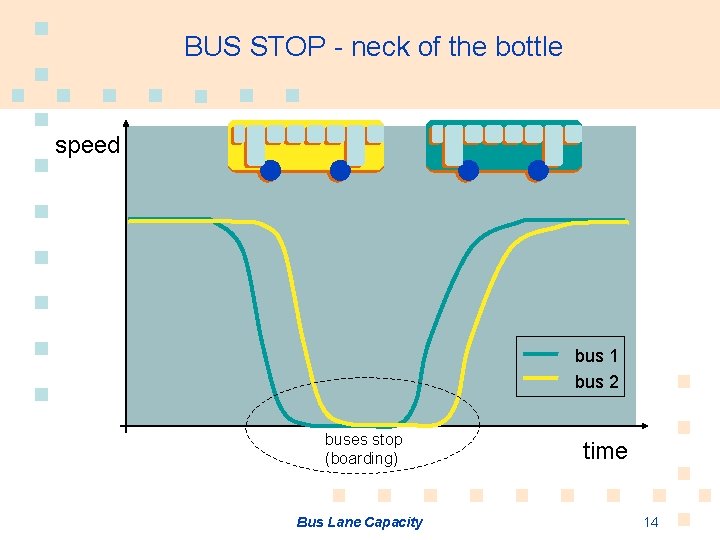
BUS STOP - neck of the bottle speed bus 1 bus 2 buses stop (boarding) Bus Lane Capacity time 14
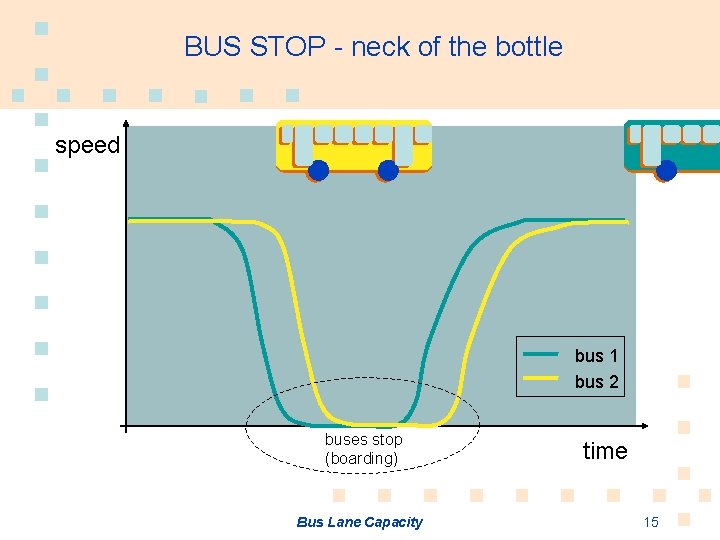
BUS STOP - neck of the bottle speed bus 1 bus 2 buses stop (boarding) Bus Lane Capacity time 15
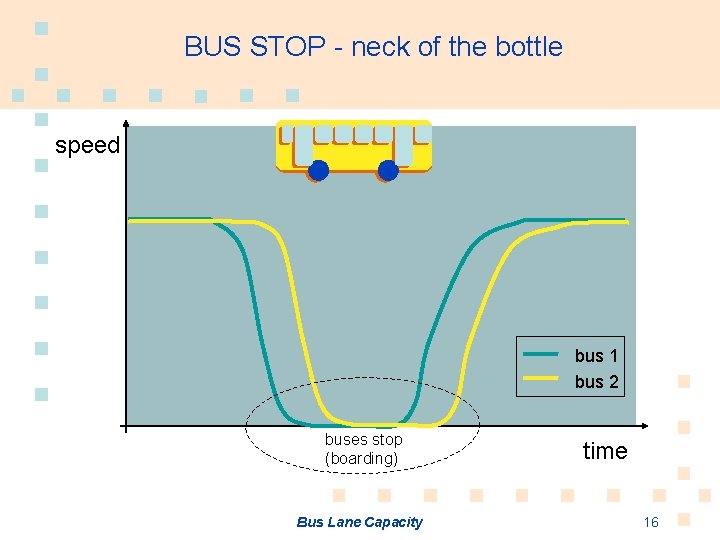
BUS STOP - neck of the bottle speed bus 1 bus 2 buses stop (boarding) Bus Lane Capacity time 16
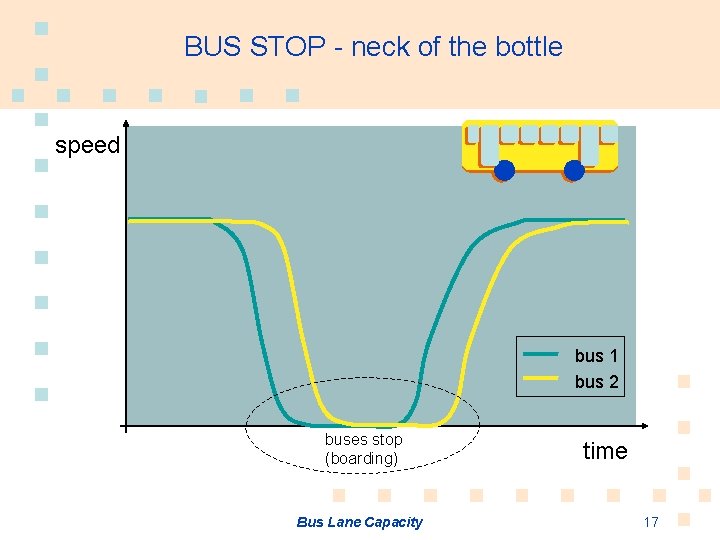
BUS STOP - neck of the bottle speed bus 1 bus 2 buses stop (boarding) Bus Lane Capacity time 17
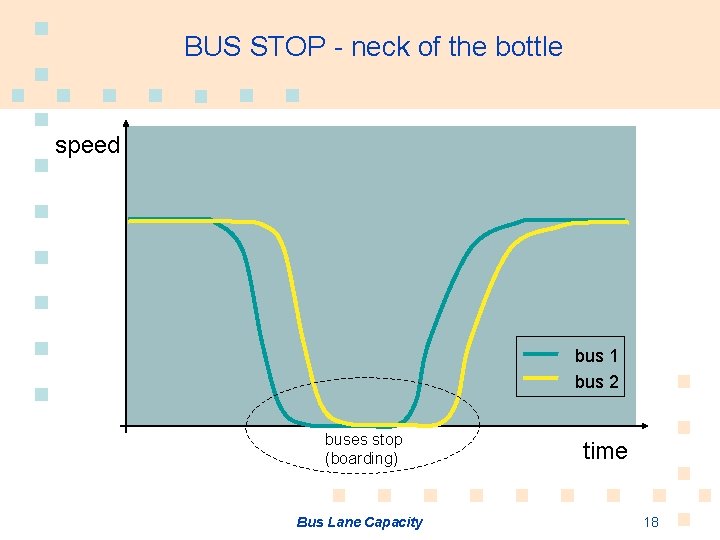
BUS STOP - neck of the bottle speed bus 1 bus 2 buses stop (boarding) Bus Lane Capacity time 18
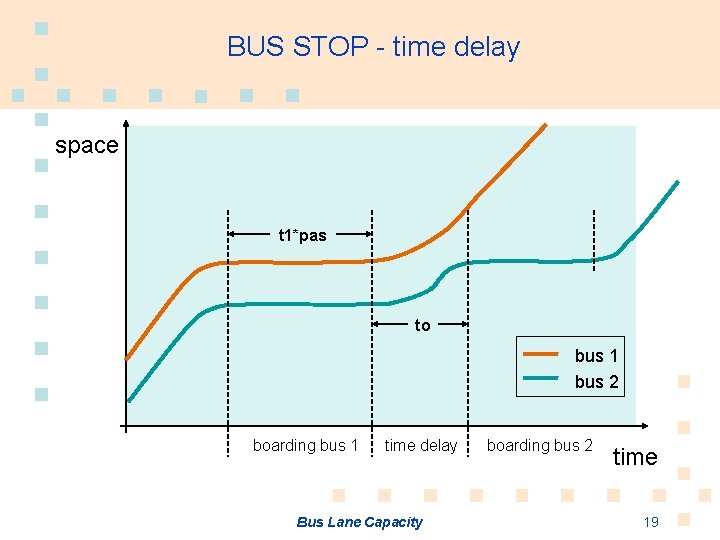
BUS STOP - time delay space t 1*pas to bus 1 bus 2 boarding bus 1 time delay Bus Lane Capacity boarding bus 2 time 19
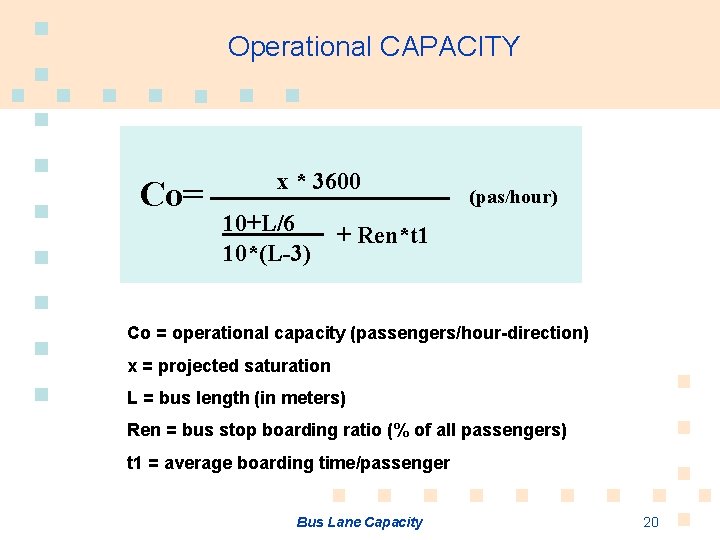
Operational CAPACITY Co= x * 3600 10+L/6 10*(L-3) (pas/hour) + Ren*t 1 Co = operational capacity (passengers/hour-direction) x = projected saturation L = bus length (in meters) Ren = bus stop boarding ratio (% of all passengers) t 1 = average boarding time/passenger Bus Lane Capacity 20
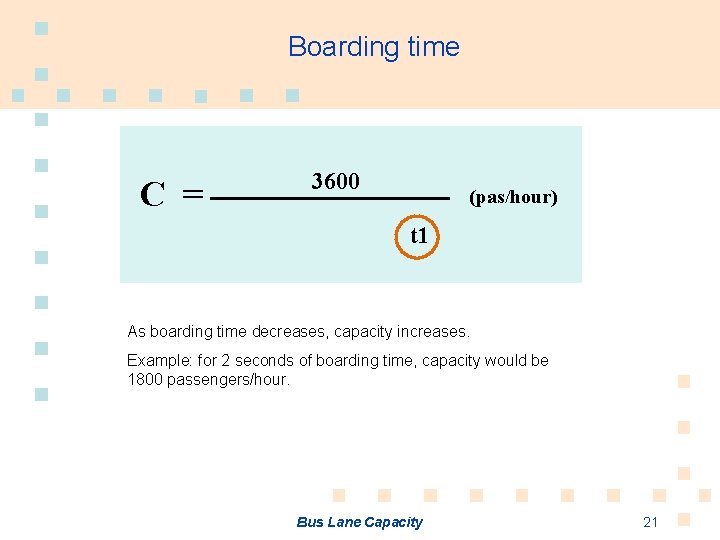
Boarding time Co= x * 3600 10+L/6 10*(L-3) (pas/hour) + Ren*t 1 As boarding time decreases, capacity increases. Example: for 2 seconds of boarding time, capacity would be 1800 passengers/hour. Bus Lane Capacity 21
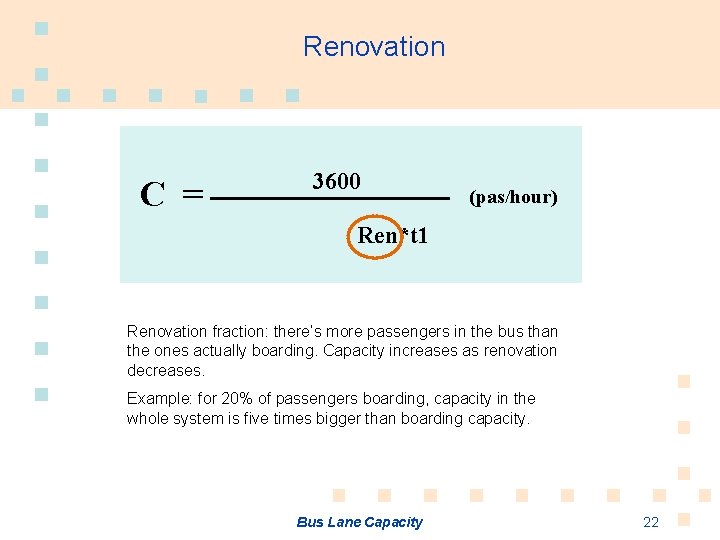
Renovation Co= x * 3600 10+L/6 10*(L-3) (pas/hour) + Ren*t 1 Renovation fraction: there’s more passengers in the bus than the ones actually boarding. Capacity increases as renovation decreases. Example: for 20% of passengers boarding, capacity in the whole system is five times bigger than boarding capacity. Bus Lane Capacity 22
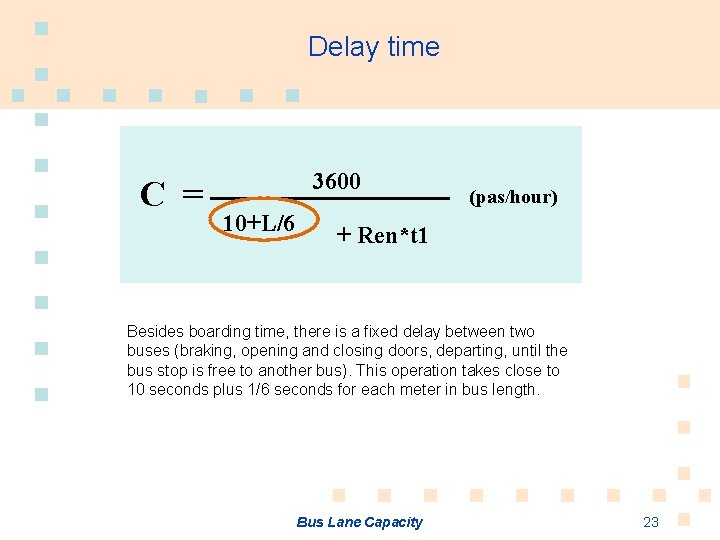
Delay time Co= x * 3600 10+L/6 10*(L-3) (pas/hour) + Ren*t 1 Besides boarding time, there is a fixed delay between two buses (braking, opening and closing doors, departing, until the bus stop is free to another bus). This operation takes close to 10 seconds plus 1/6 seconds for each meter in bus length. Bus Lane Capacity 23
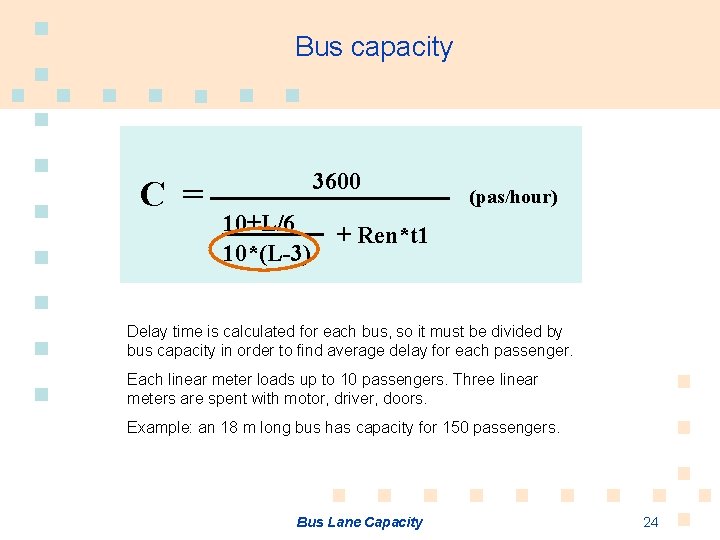
Bus capacity Co= x * 3600 10+L/6 10*(L-3) (pas/hour) + Ren*t 1 Delay time is calculated for each bus, so it must be divided by bus capacity in order to find average delay for each passenger. Each linear meter loads up to 10 passengers. Three linear meters are spent with motor, driver, doors. Example: an 18 m long bus has capacity for 150 passengers. Bus Lane Capacity 24
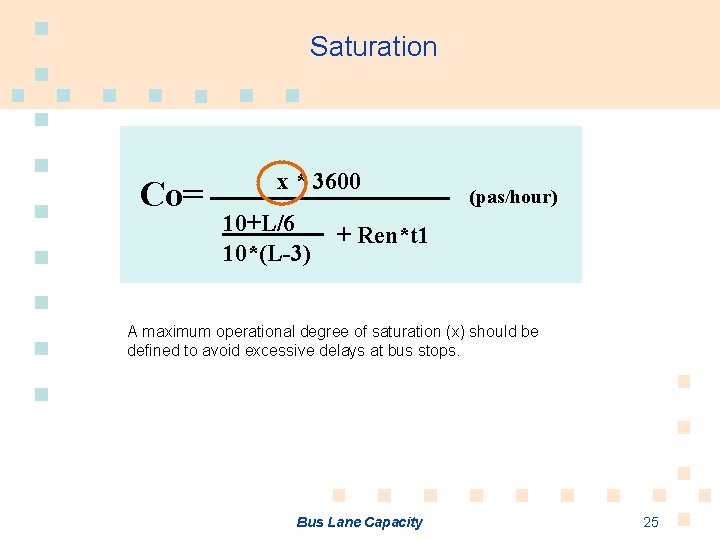
Saturation Co= x * 3600 10+L/6 10*(L-3) (pas/hour) + Ren*t 1 A maximum operational degree of saturation (x) should be defined to avoid excessive delays at bus stops. Bus Lane Capacity 25
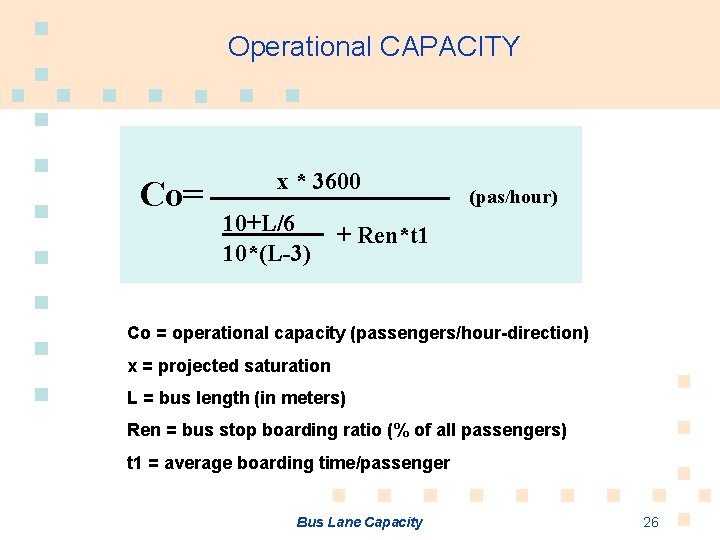
Operational CAPACITY Co= x * 3600 10+L/6 10*(L-3) (pas/hour) + Ren*t 1 Co = operational capacity (passengers/hour-direction) x = projected saturation L = bus length (in meters) Ren = bus stop boarding ratio (% of all passengers) t 1 = average boarding time/passenger Bus Lane Capacity 26
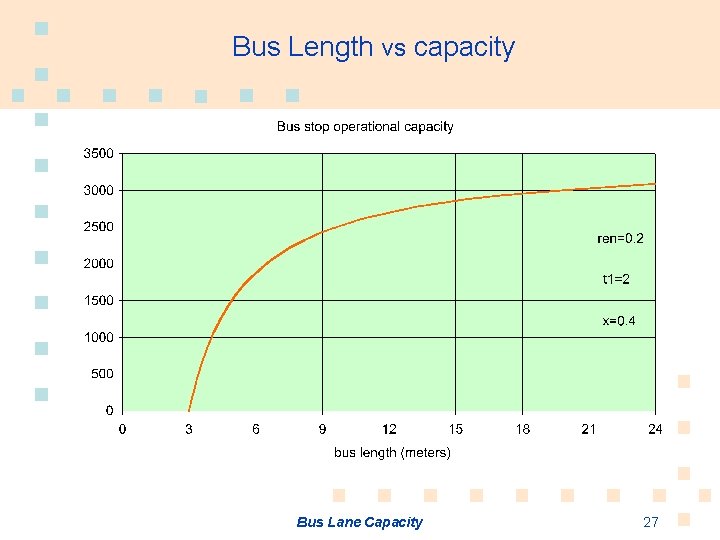
Bus Length vs capacity Bus Lane Capacity 27
Boarding time vs capacity Bus Lane Capacity 28
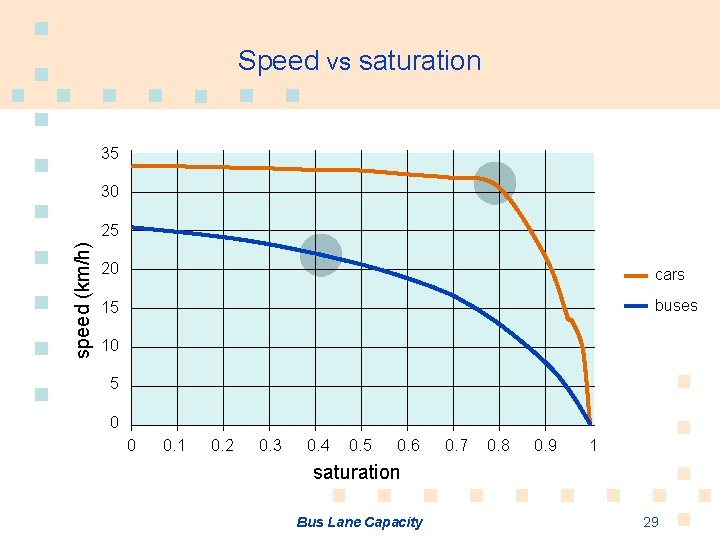
Speed vs saturation 35 30 speed (km/h) 25 20 cars 15 buses 10 5 0 0 0. 1 0. 2 0. 3 0. 4 0. 5 0. 6 0. 7 0. 8 0. 9 1 saturation Bus Lane Capacity 29
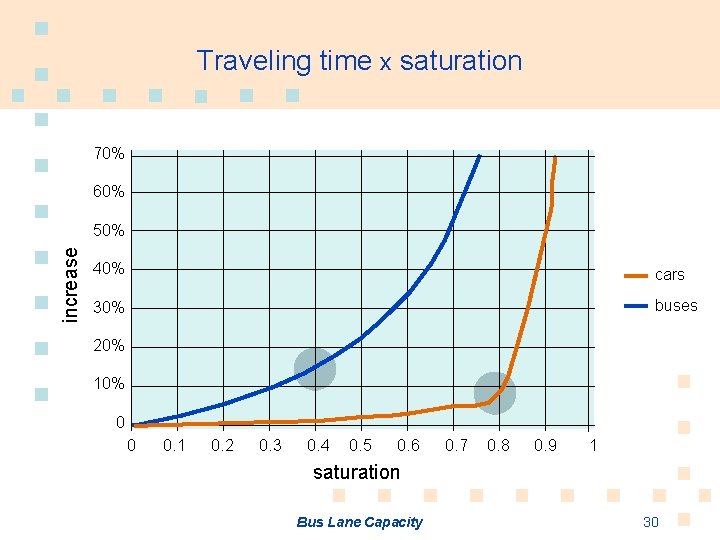
Traveling time x saturation 70% 60% increase 50% 40% cars 30% buses 20% 10% 0 0 0. 1 0. 2 0. 3 0. 4 0. 5 0. 6 0. 7 0. 8 0. 9 1 saturation Bus Lane Capacity 30
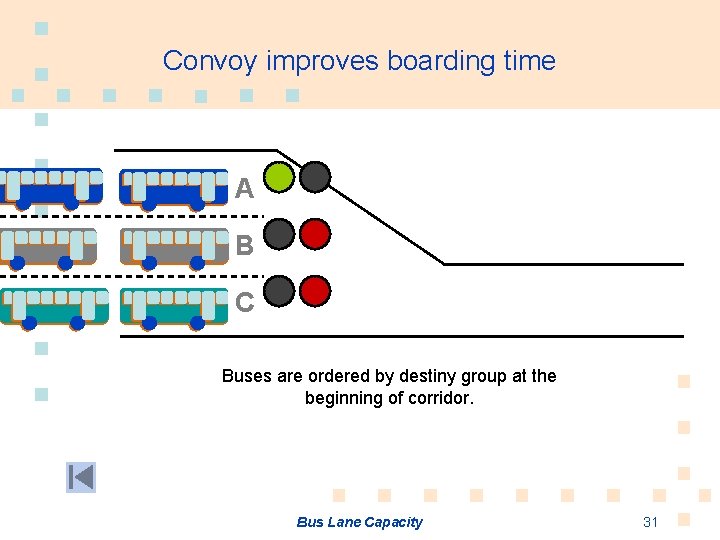
Convoy improves boarding time A B C Buses are ordered by destiny group at the beginning of corridor. Bus Lane Capacity 31
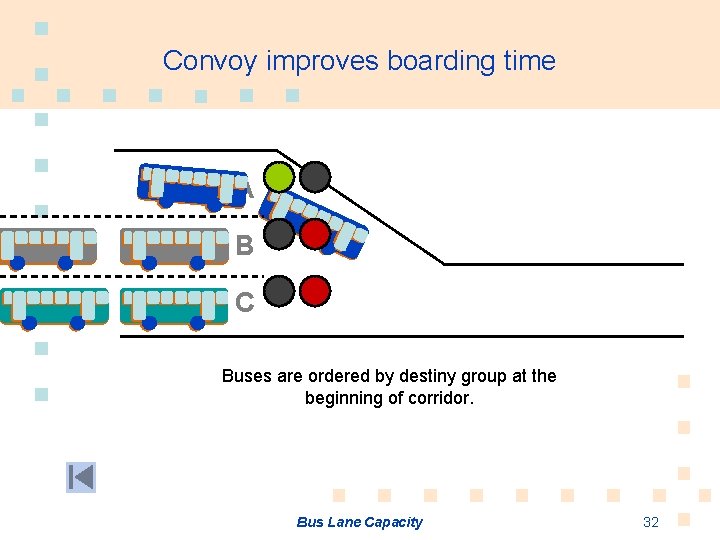
Convoy improves boarding time A B C Buses are ordered by destiny group at the beginning of corridor. Bus Lane Capacity 32
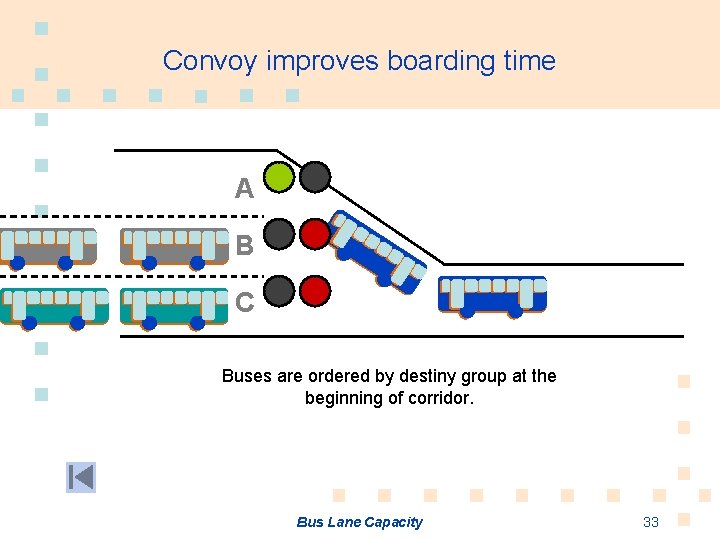
Convoy improves boarding time A B C Buses are ordered by destiny group at the beginning of corridor. Bus Lane Capacity 33
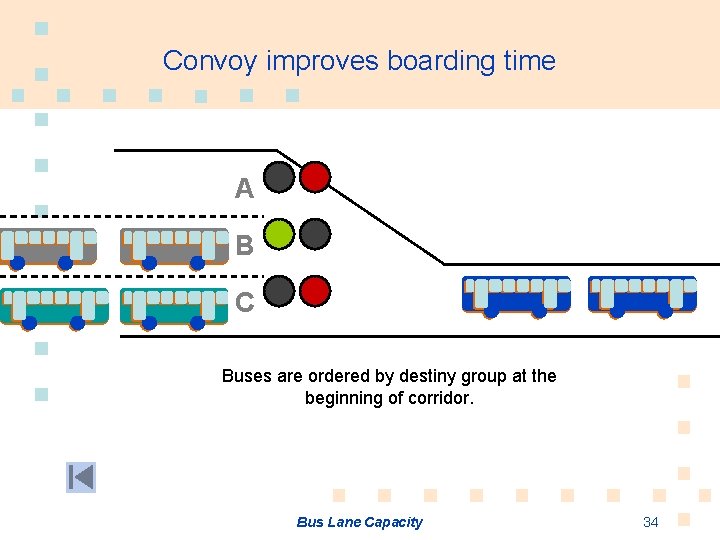
Convoy improves boarding time A B C Buses are ordered by destiny group at the beginning of corridor. Bus Lane Capacity 34
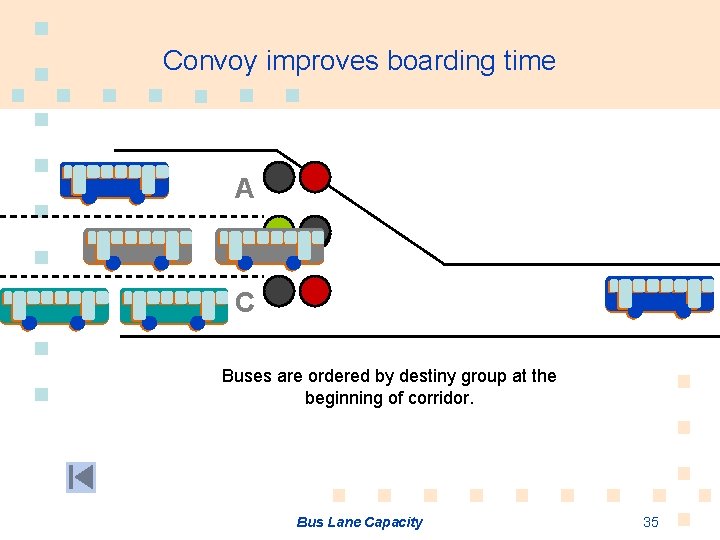
Convoy improves boarding time A B C Buses are ordered by destiny group at the beginning of corridor. Bus Lane Capacity 35
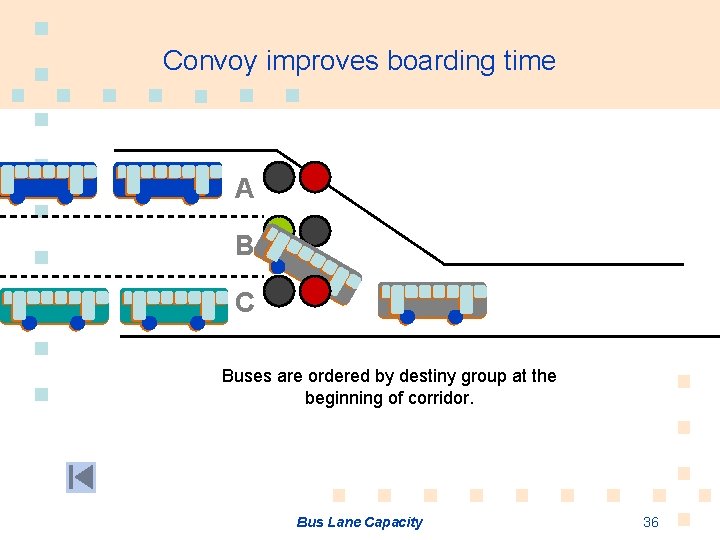
Convoy improves boarding time A B C Buses are ordered by destiny group at the beginning of corridor. Bus Lane Capacity 36
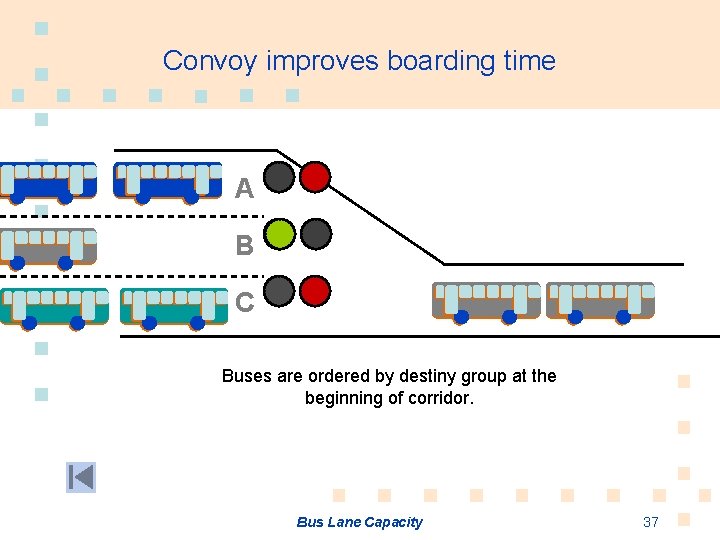
Convoy improves boarding time A B C Buses are ordered by destiny group at the beginning of corridor. Bus Lane Capacity 37
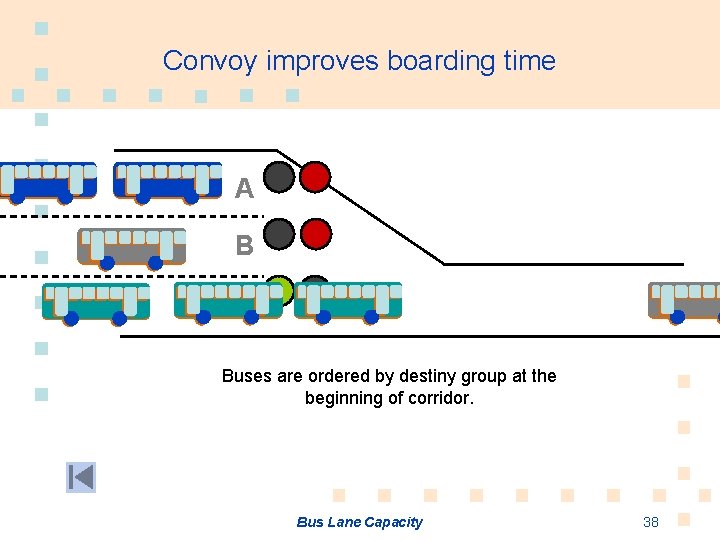
Convoy improves boarding time A B C Buses are ordered by destiny group at the beginning of corridor. Bus Lane Capacity 38
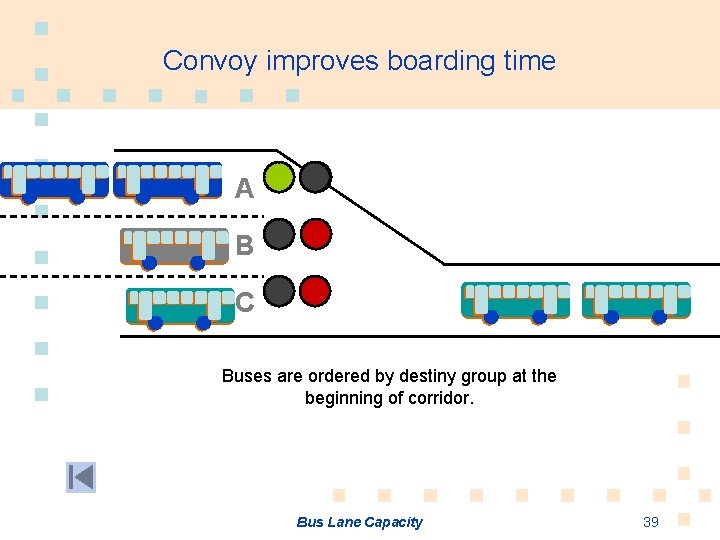
Convoy improves boarding time A B C Buses are ordered by destiny group at the beginning of corridor. Bus Lane Capacity 39
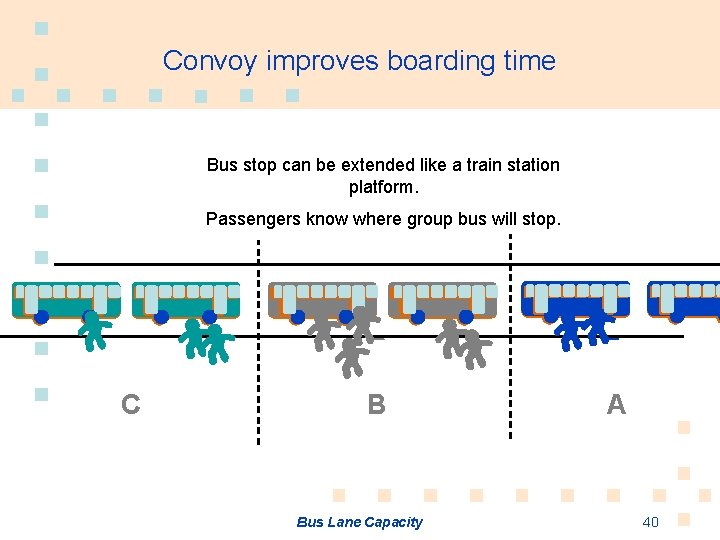
Convoy improves boarding time Bus stop can be extended like a train station platform. Passengers know where group bus will stop. C B Bus Lane Capacity A 40
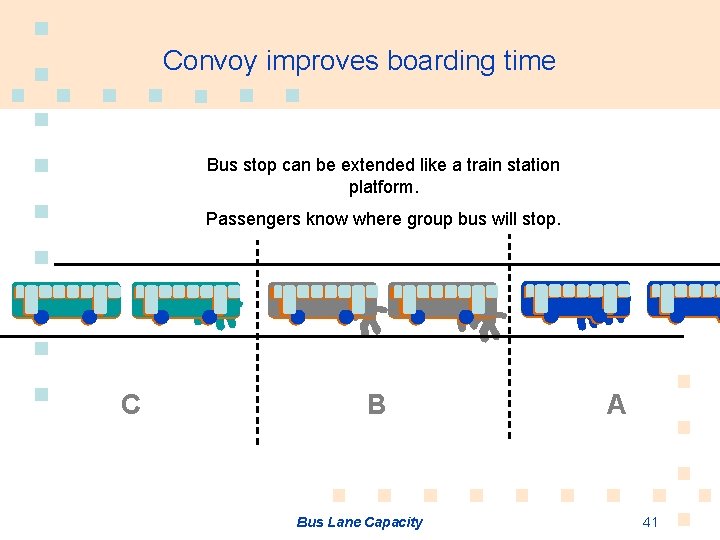
Convoy improves boarding time Bus stop can be extended like a train station platform. Passengers know where group bus will stop. C B Bus Lane Capacity A 41
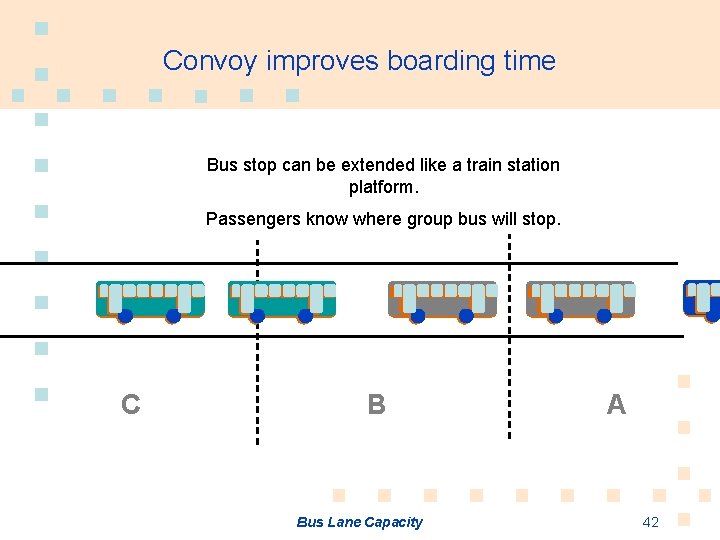
Convoy improves boarding time Bus stop can be extended like a train station platform. Passengers know where group bus will stop. C B Bus Lane Capacity A 42
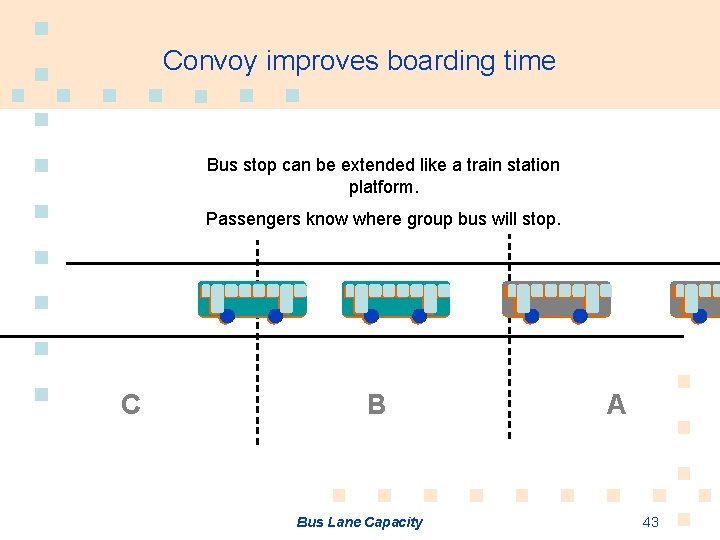
Convoy improves boarding time Bus stop can be extended like a train station platform. Passengers know where group bus will stop. C B Bus Lane Capacity A 43
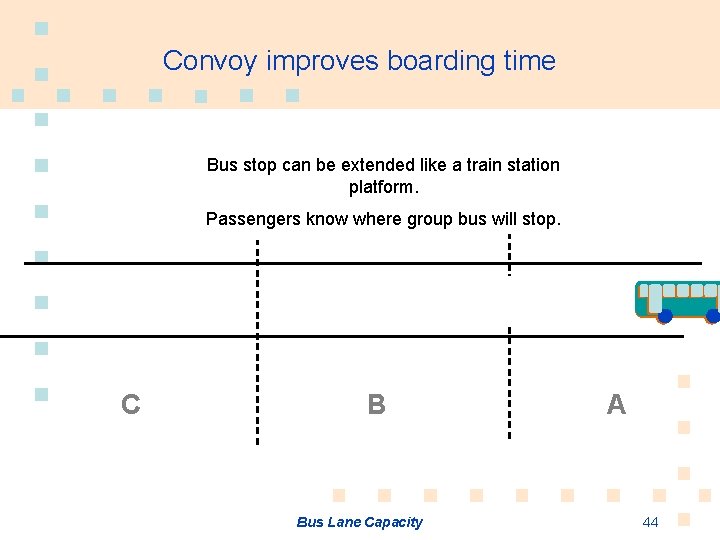
Convoy improves boarding time Bus stop can be extended like a train station platform. Passengers know where group bus will stop. C B Bus Lane Capacity A 44
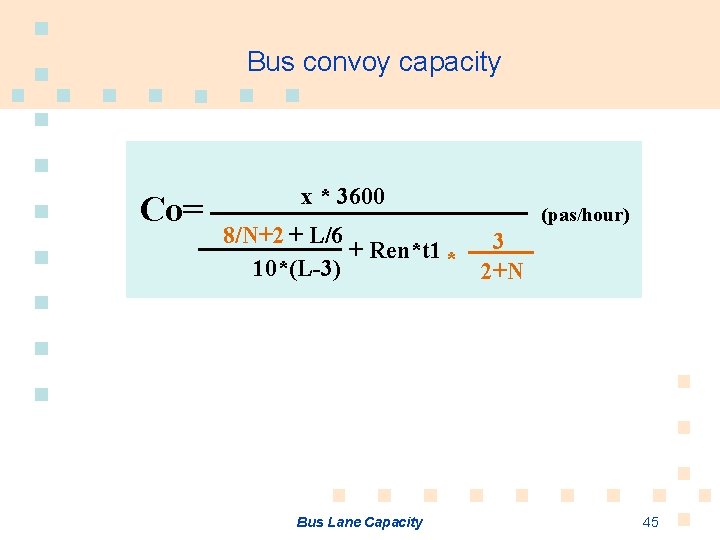
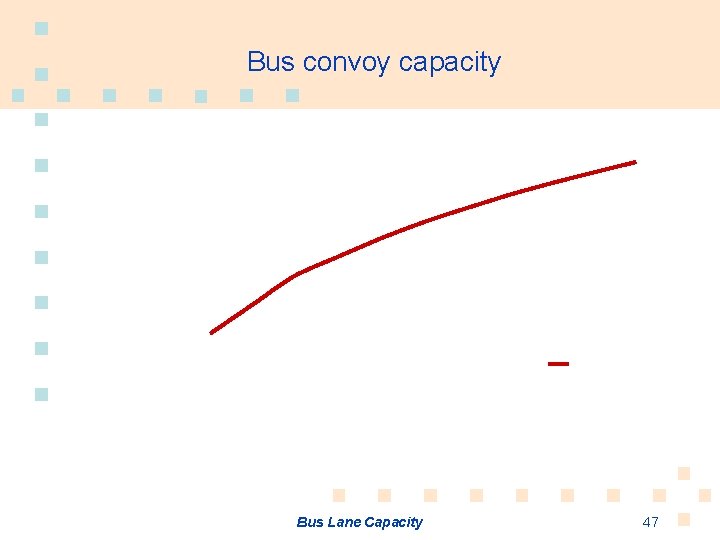
Bus convoy capacity Co= x * 3600 8/N+2 10+ L/6 + Ren*t 1 * 10*(L-3) Bus Lane Capacity (pas/hour) 3 2+N 45
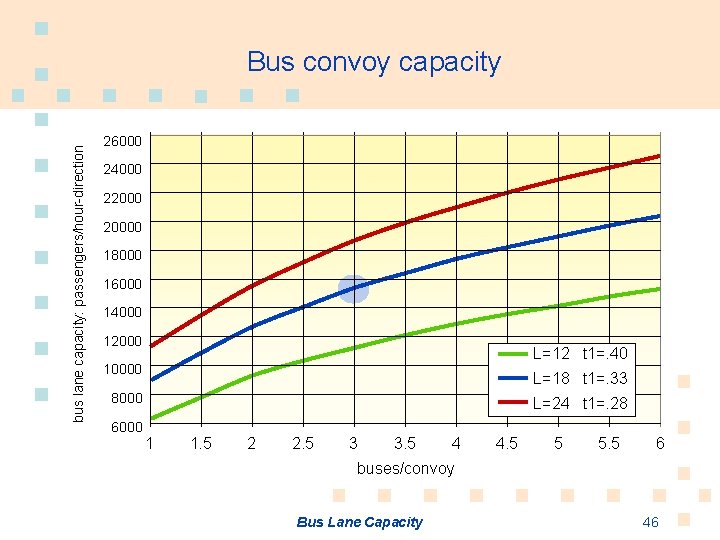
bus lane capacity: passengers/hour-direction Bus convoy capacity 26000 24000 220000 18000 16000 14000 12000 L=12 t 1=. 40 10000 L=18 t 1=. 33 8000 6000 L=24 t 1=. 28 1 1. 5 2 2. 5 3 3. 5 4 4. 5 5 5. 5 6 buses/convoy Bus Lane Capacity 46
Bus convoy capacity Bus Lane Capacity 47
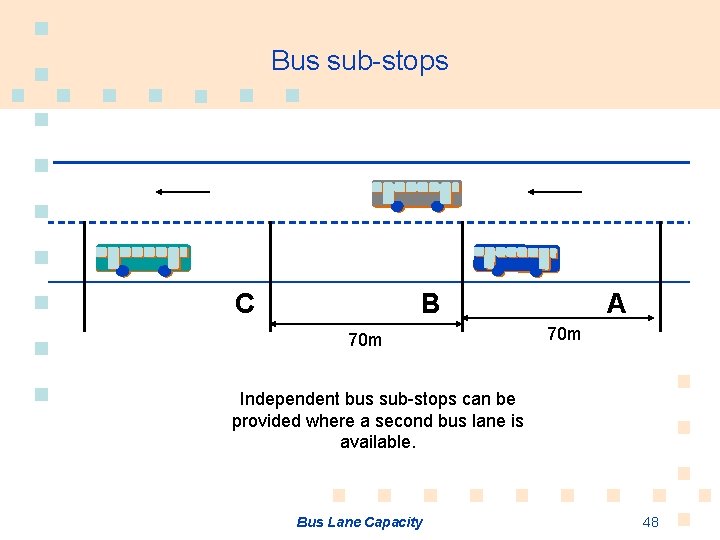
Bus sub-stops C B 70 m A 70 m Independent bus sub-stops can be provided where a second bus lane is available. Bus Lane Capacity 48
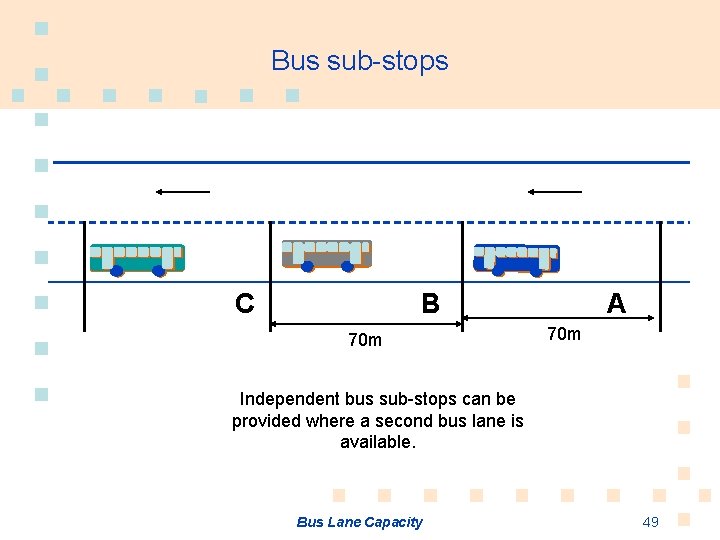
Bus sub-stops C B 70 m A 70 m Independent bus sub-stops can be provided where a second bus lane is available. Bus Lane Capacity 49
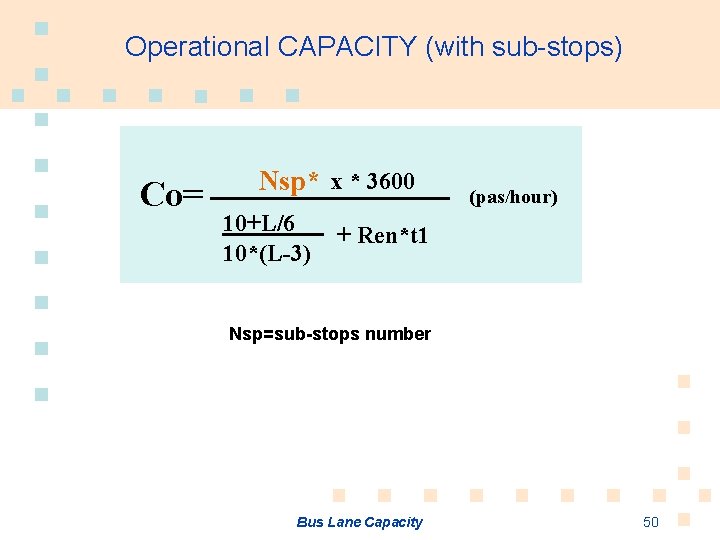
Operational CAPACITY (with sub-stops) Co= Nsp* x * 3600 10+L/6 10*(L-3) (pas/hour) + Ren*t 1 Nsp=sub-stops number Bus Lane Capacity 50
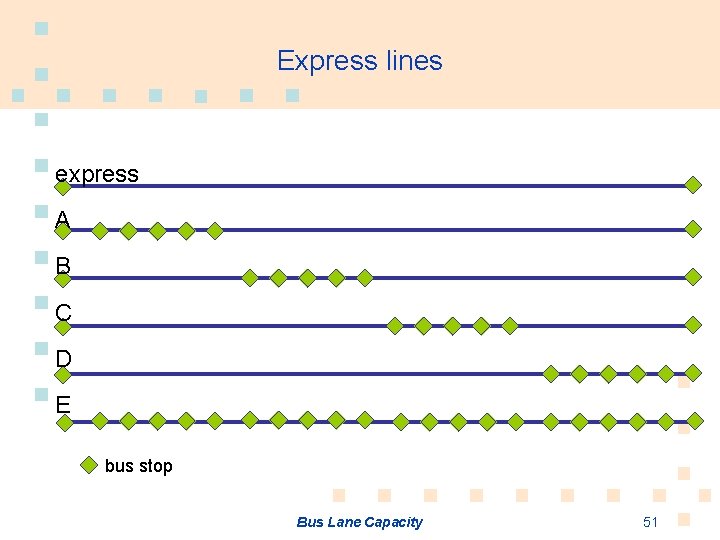
Express lines express A B C D E bus stop Bus Lane Capacity 51
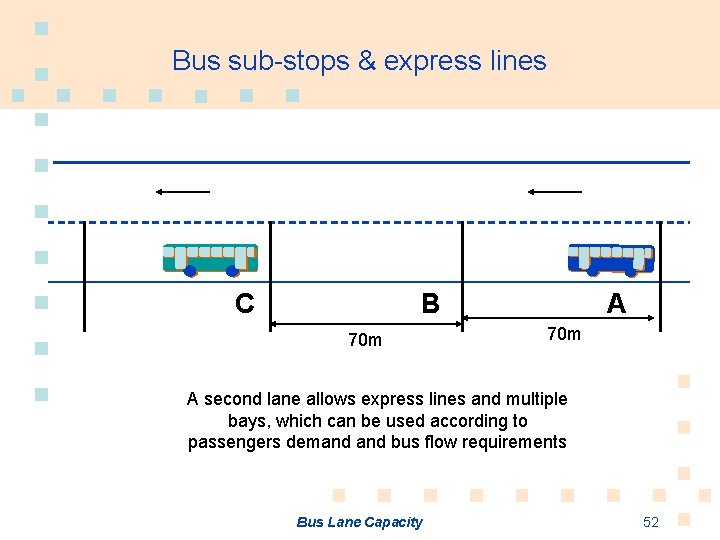
Bus sub-stops & express lines C B 70 m A second lane allows express lines and multiple bays, which can be used according to passengers demand bus flow requirements Bus Lane Capacity 52
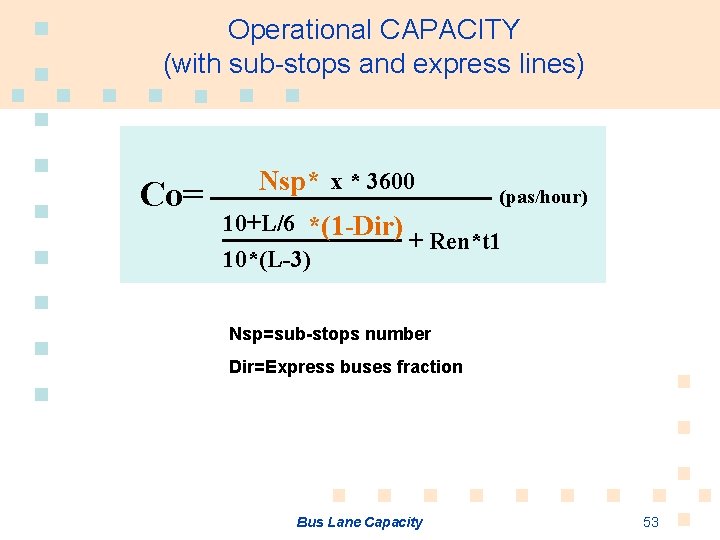
Operational CAPACITY (with sub-stops and express lines) Co= Nsp* x * 3600 (pas/hour) 10+L/6 *(1 -Dir) + Ren*t 1 10*(L-3) Nsp=sub-stops number Dir=Express buses fraction Bus Lane Capacity 53
How to boost your bus corridor Bus Lane Capacity 54
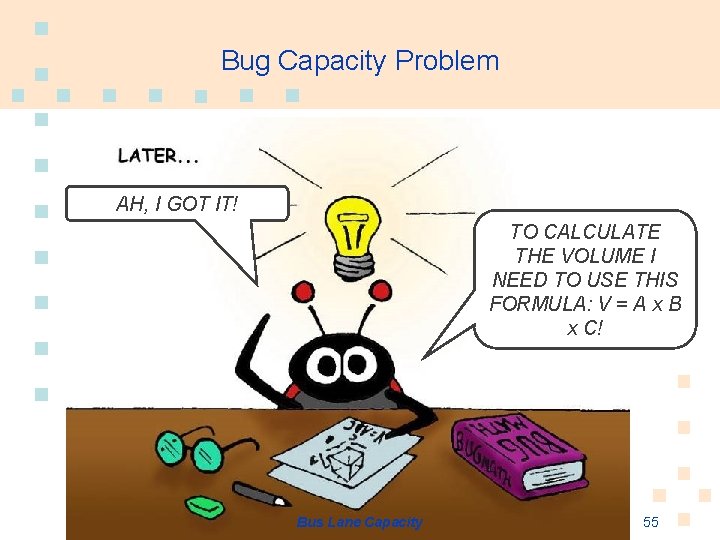
Bug Capacity Problem AH, I GOT IT! TO CALCULATE THE VOLUME I NEED TO USE THIS FORMULA: V = A x B x C! Bus Lane Capacity 55
Bug Capacity Problem HEY, RED BUG! WE NEED TO FIND OUT THE BUG CAPACITY OF ANOTHER BOX! Bus Lane Capacity NO PROBLEM. I KNOW THE VOLUME FORMULA NOW. GIVE ME THE PROBLEM 56
Bus Lane Capacity 57
Bug Capacity Problem GREAT! THEN I’LL TAKE THE MEASURES AND YOU CAN CALCULATE… Bus Lane Capacity EEEEEK! 58
- Slides: 58