
BURST DISC EXPERIENCES AT CEA TEST STAND C
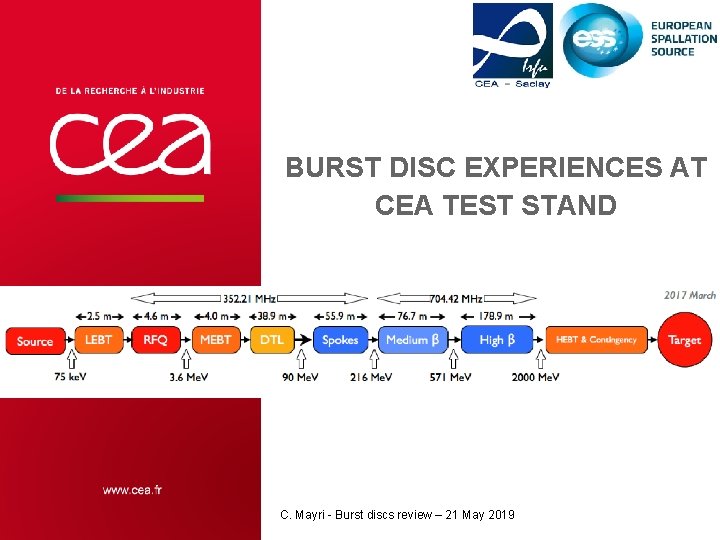
BURST DISC EXPERIENCES AT CEA TEST STAND C. Mayri - Burst discs review – 21 May 2019
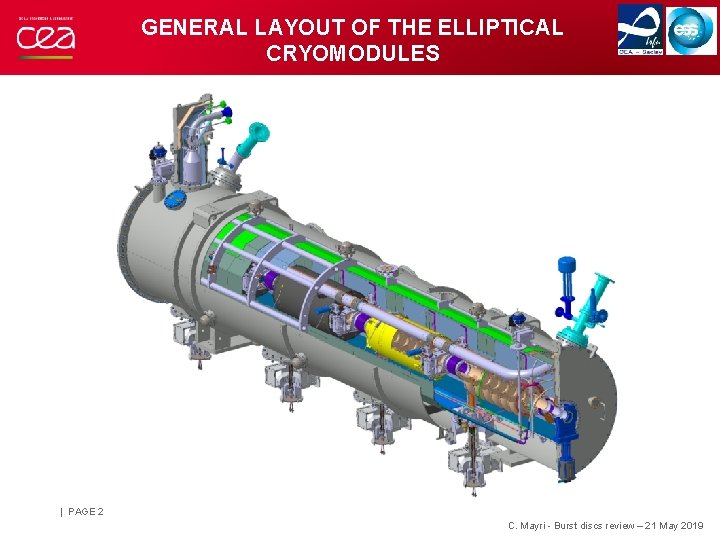
GENERAL LAYOUT OF THE ELLIPTICAL CRYOMODULES | PAGE 2 C. Mayri - Burst discs review – 21 May 2019
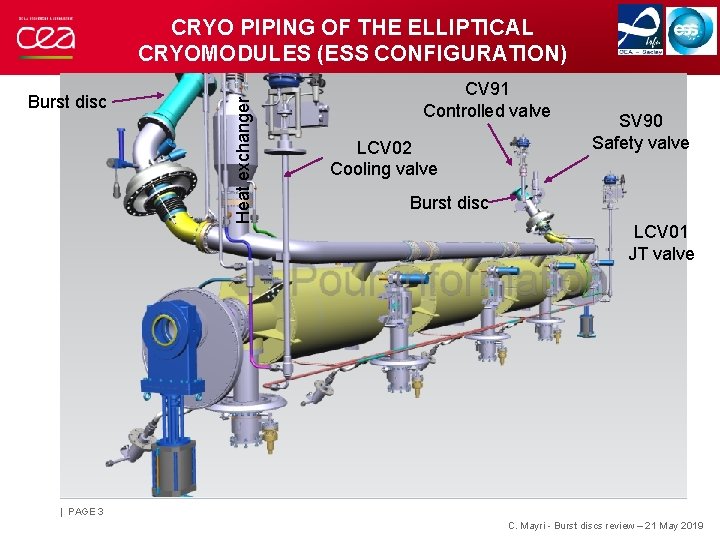
Burst disc Heat exchanger CRYO PIPING OF THE ELLIPTICAL CRYOMODULES (ESS CONFIGURATION) CV 91 Controlled valve LCV 02 Cooling valve SV 90 Safety valve Burst disc LCV 01 JT valve | PAGE 3 C. Mayri - Burst discs review – 21 May 2019
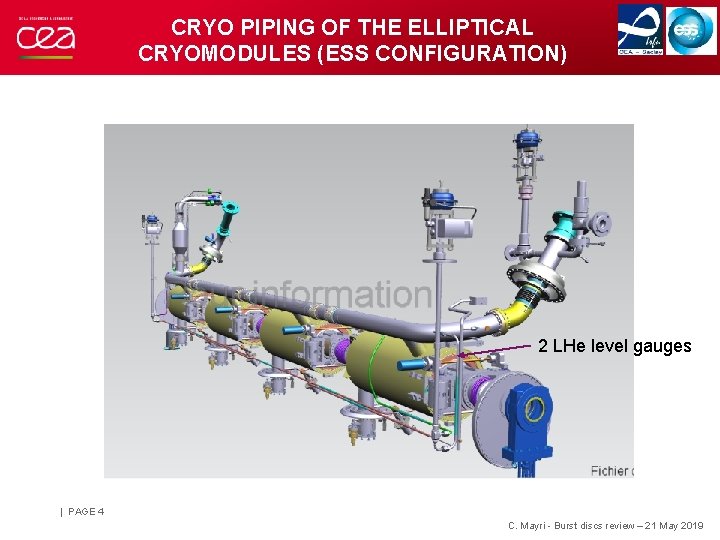
CRYO PIPING OF THE ELLIPTICAL CRYOMODULES (ESS CONFIGURATION) 2 LHe level gauges | PAGE 4 C. Mayri - Burst discs review – 21 May 2019
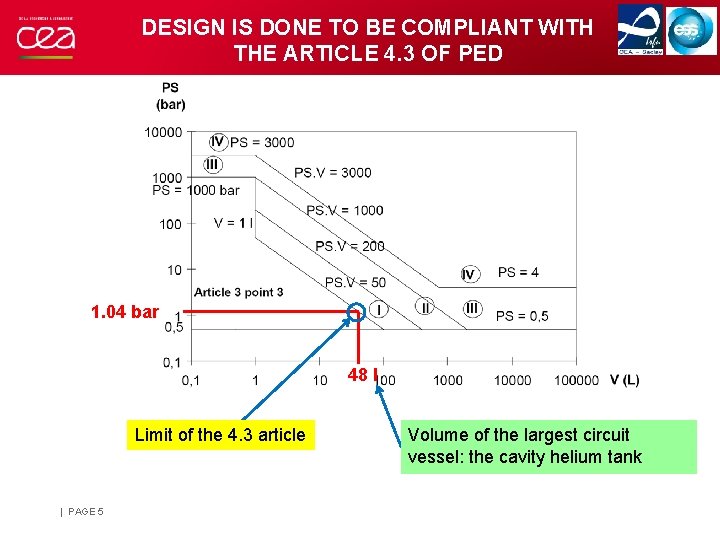
DESIGN IS DONE TO BE COMPLIANT WITH THE ARTICLE 4. 3 OF PED 1. 04 bar 48 l Limit of the 4. 3 article | PAGE 5 Volume of the largest circuit vessel: the cavity helium tank
SIZING OF THE SAFETY EQUIPMENT | PAGE 6 C. Mayri - Burst discs review – 21 May 2019
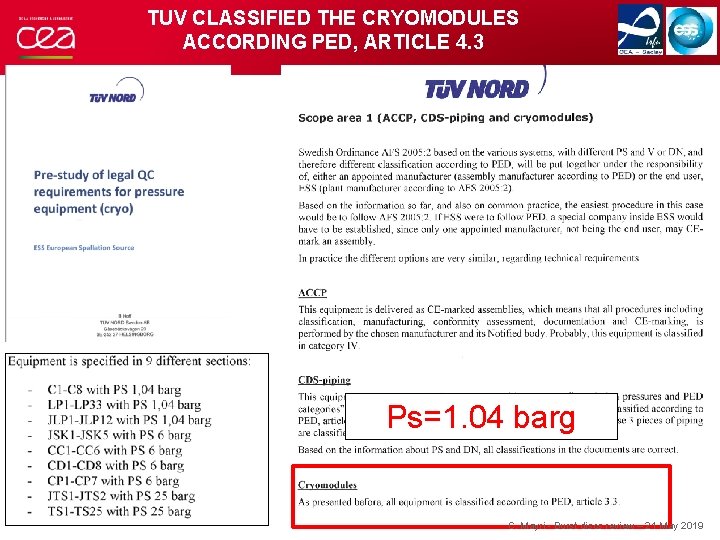
TUV CLASSIFIED THE CRYOMODULES ACCORDING PED, ARTICLE 4. 3 Ps=1. 04 barg | PAGE 7 C. Mayri - Burst discs review – 21 May 2019
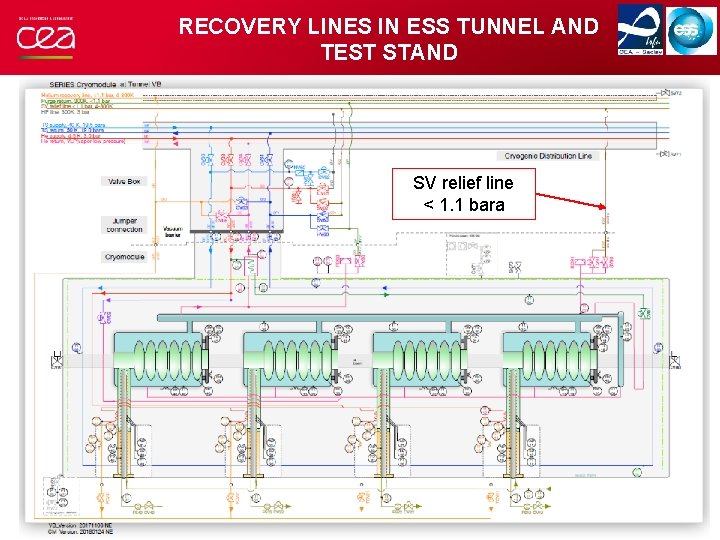
RECOVERY LINES IN ESS TUNNEL AND TEST STAND SV relief line < 1. 1 bara | PAGE 8
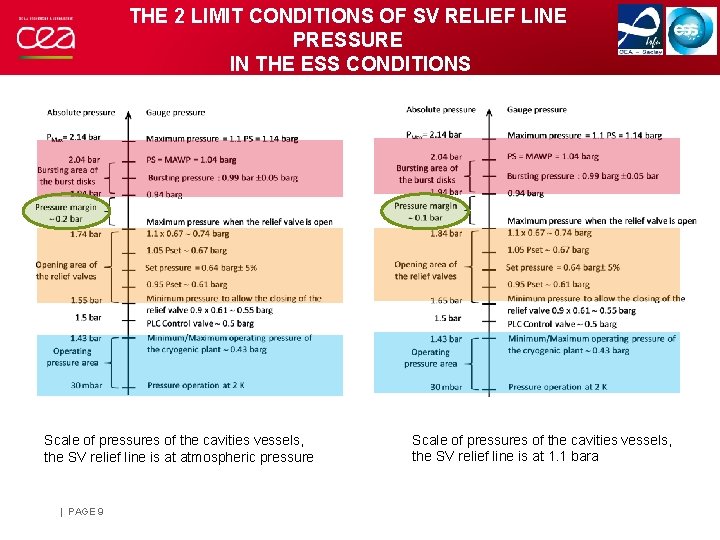
THE 2 LIMIT CONDITIONS OF SV RELIEF LINE PRESSURE IN THE ESS CONDITIONS Scale of pressures of the cavities vessels, the SV relief line is at atmospheric pressure | PAGE 9 Scale of pressures of the cavities vessels, the SV relief line is at 1. 1 bara
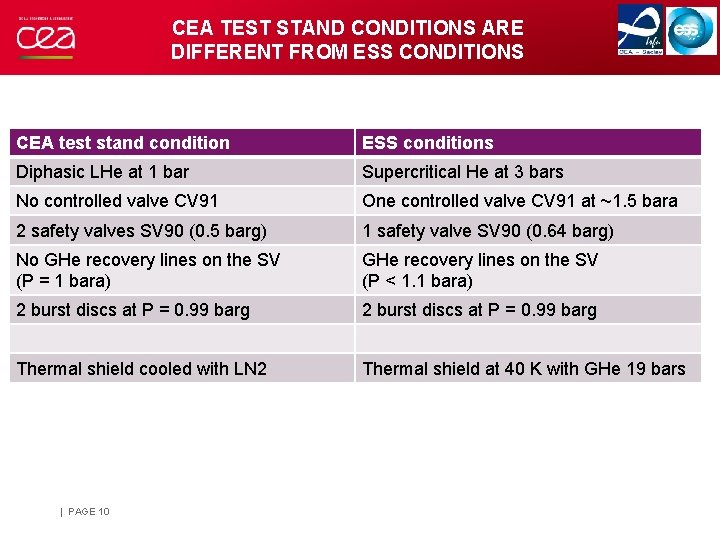
CEA TEST STAND CONDITIONS ARE DIFFERENT FROM ESS CONDITIONS CEA test stand condition ESS conditions Diphasic LHe at 1 bar Supercritical He at 3 bars No controlled valve CV 91 One controlled valve CV 91 at ~1. 5 bara 2 safety valves SV 90 (0. 5 barg) 1 safety valve SV 90 (0. 64 barg) No GHe recovery lines on the SV (P = 1 bara) GHe recovery lines on the SV (P < 1. 1 bara) 2 burst discs at P = 0. 99 barg Thermal shield cooled with LN 2 Thermal shield at 40 K with GHe 19 bars | PAGE 10
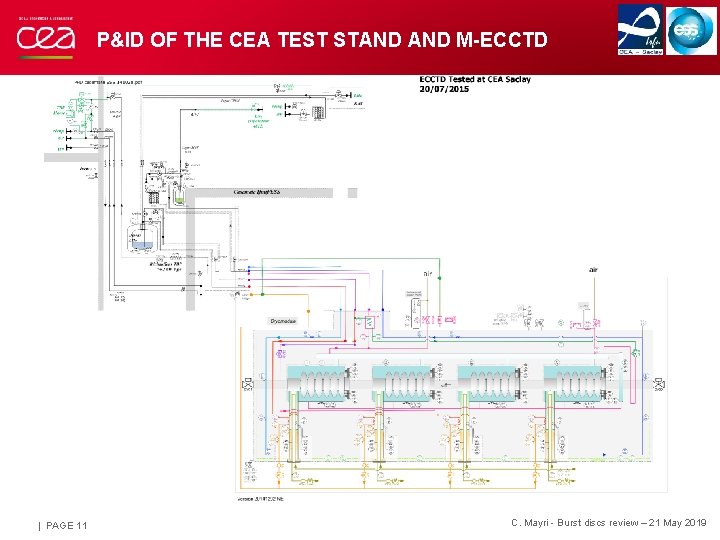
P&ID OF THE CEA TEST STAND M-ECCTD | PAGE 11 C. Mayri - Burst discs review – 21 May 2019
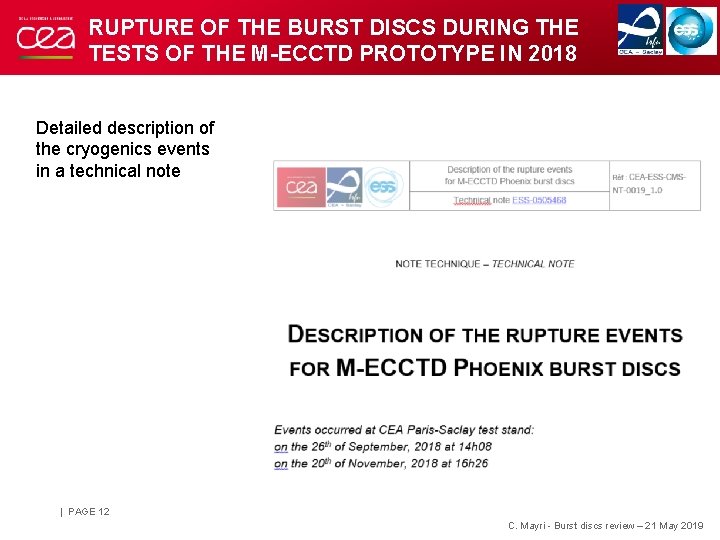
RUPTURE OF THE BURST DISCS DURING THE TESTS OF THE M-ECCTD PROTOTYPE IN 2018 Detailed description of the cryogenics events in a technical note | PAGE 12 C. Mayri - Burst discs review – 21 May 2019
EXPLANATION OF THE RUPTURE EVENTS The following characteristics of the M-ECCTD cryomodule and the characteristics of the CEA test stand are the main origins of the events: 1. Problem of design on the LHe gauges chamber 2. A Hampson type heat exchanger optimized for supercritical He at 3 bars used with diphasic LHe at 1 bar in CEA test stand 3. No phase separator between the LHe filling line and the cryomodule | PAGE 13 C. Mayri - Burst discs review – 21 May 2019
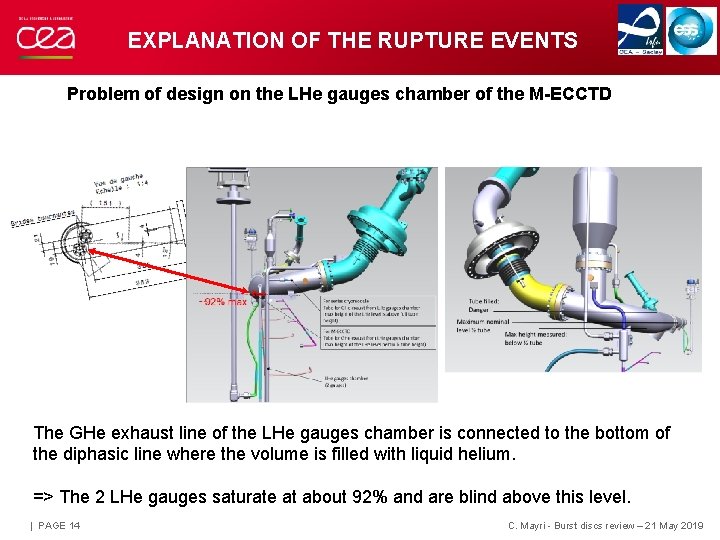
EXPLANATION OF THE RUPTURE EVENTS Problem of design on the LHe gauges chamber of the M-ECCTD The GHe exhaust line of the LHe gauges chamber is connected to the bottom of the diphasic line where the volume is filled with liquid helium. => The 2 LHe gauges saturate at about 92% and are blind above this level. | PAGE 14 C. Mayri - Burst discs review – 21 May 2019
EXPLANATION OF THE RUPTURE EVENTS • The problem of design on the LHe gauges chamber led to uncontrolled LHe level above ~92% (lower part of the diphasic pipe) • The use of Hampson HX with diphasic LHe containing a high level of GHe caused cryogenic instabilities and difficulties to keep a stable LHe level at 2 K in the diphasic pipe over long periods. • Filling the cavities with LHe at 2 K was possible but it was needed to use the LCV 02 cooling valve in addition to LCV 01 JT valve. • The RF power tests of the cavities required to take some risks relative to the cryogenics pushing the 2 K LHe level higher than 92%. Before the disc burst we probably completely filled the diphasic pipe (confirmed by the drop of the TT 02 sensor - see description in the technical note). The exhaust of the GHe at the opposite side of the jumper connection can only be done by pushing the LHe to the jumper side warm pipes generating fast vaporization that pushes back the liquid in the opposite side. The pressure increase on both sides was so fast that the SV had not time to open before the discs burst. | PAGE 15 C. Mayri - Burst discs review – 21 May 2019
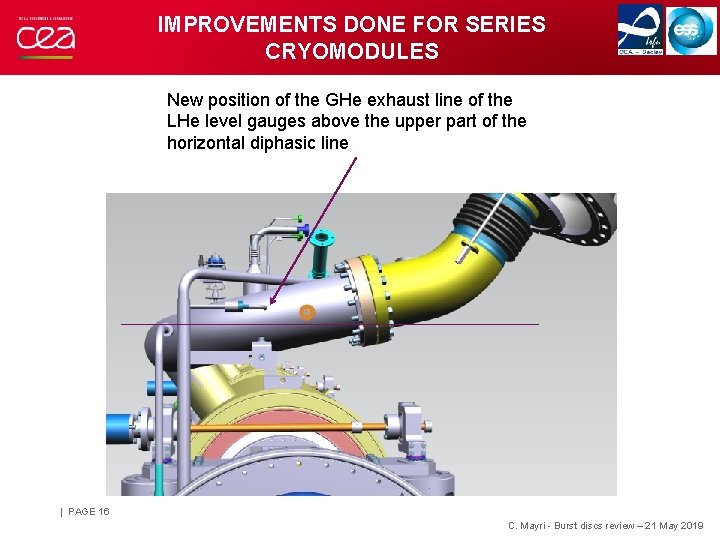
IMPROVEMENTS DONE FOR SERIES CRYOMODULES New position of the GHe exhaust line of the LHe level gauges above the upper part of the horizontal diphasic line | PAGE 16 C. Mayri - Burst discs review – 21 May 2019
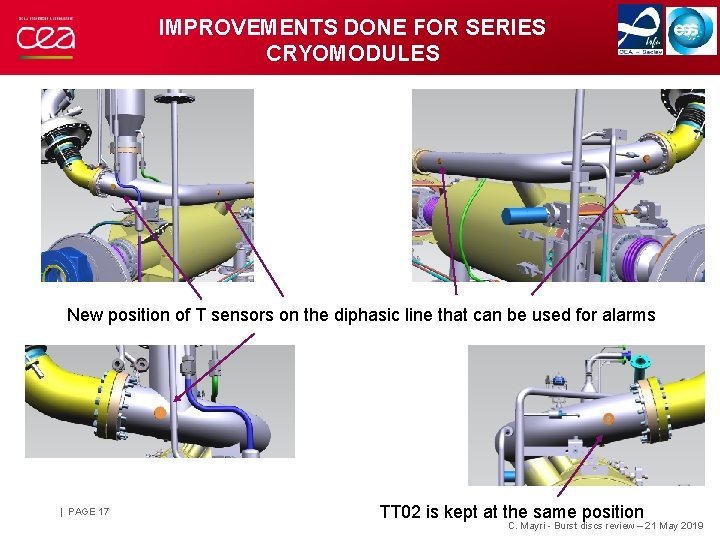
IMPROVEMENTS DONE FOR SERIES CRYOMODULES New position of T sensors on the diphasic line that can be used for alarms | PAGE 17 TT 02 is kept at the same position C. Mayri - Burst discs review – 21 May 2019
CONCLUSIONS The explanation we have of the rupture event leads to comfort us in the better behavior of the elliptical cryomodules in the ESS conditions • with supercritical He at 3 bars • with a correct GHe exhaust connection of the LHe level gauges to the diphasic pipe The LHe level should be correctly controlled in the middle of the diphasic pipe. Thermal sensors will be placed on the diphasic pipe in adequate location for using them for alarms and closing LCV 01 and LCV 02 if necessary for avoiding complete filling of this pipe. In the CEA test stand an additional phase separator is added on the LHe filling line to remove the GHe at the cryomodule connection. That should help to improve the efficiency of the Hampson heat exchanger and suppress the cryogenic instabilities observed. | PAGE 18 C. Mayri - Burst discs review – 21 May 2019
THANK YOU FOR YOUR ATTENTION ESS/CEA coordination committee | 23 rd november 2018 - Saclay | PAGE 19
- Slides: 19