
Burns Z Rozkydal Epidermis Dermis blood vessels nerves

Burns Z. Rozkydal
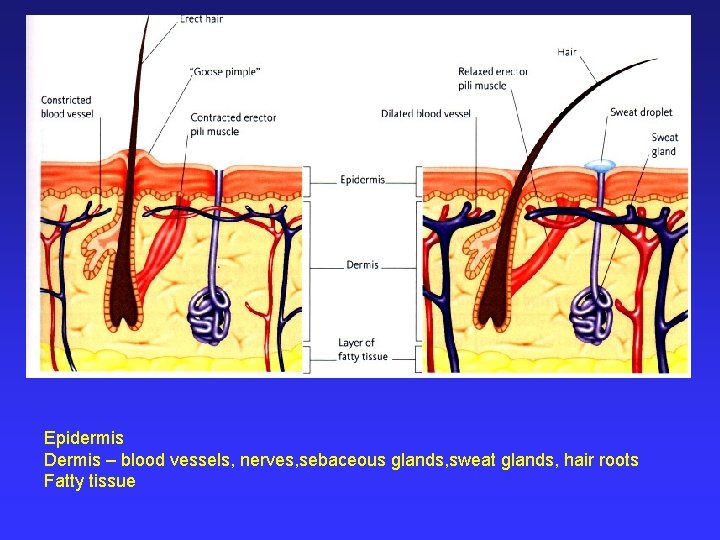
Epidermis Dermis – blood vessels, nerves, sebaceous glands, sweat glands, hair roots Fatty tissue

Burns Dry burn- flames, contact with hot objects Scald- steam, hot liquids Electrical burns- low- voltage current high- voltage current lightening strikes Cold injury- frostbite, contact with freezing metal Chemical burns- industrial chemicals, acid, alkali Radiation burns- sunburn, exposure to radioactive source
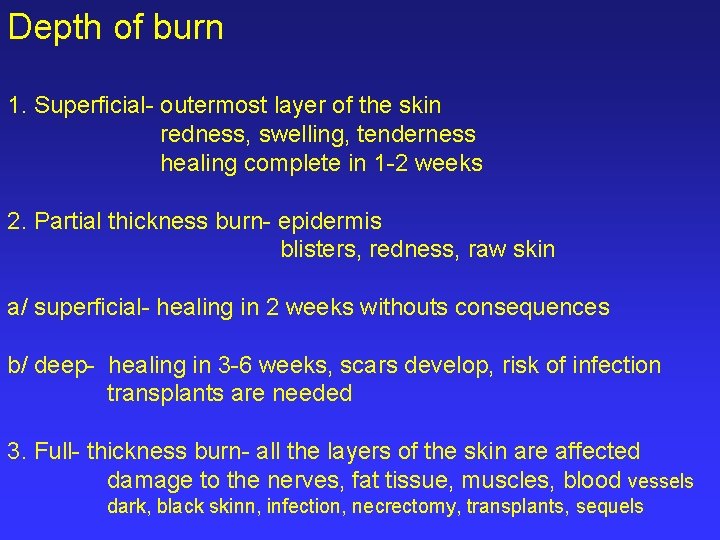
Depth of burn 1. Superficial- outermost layer of the skin redness, swelling, tenderness healing complete in 1 -2 weeks 2. Partial thickness burn- epidermis blisters, redness, raw skin a/ superficial- healing in 2 weeks withouts consequences b/ deep- healing in 3 -6 weeks, scars develop, risk of infection transplants are needed 3. Full- thickness burn- all the layers of the skin are affected damage to the nerves, fat tissue, muscles, blood vessels dark, black skinn, infection, necrectomy, transplants, sequels

Superficial burn Partial thickness burn Full thickness burn
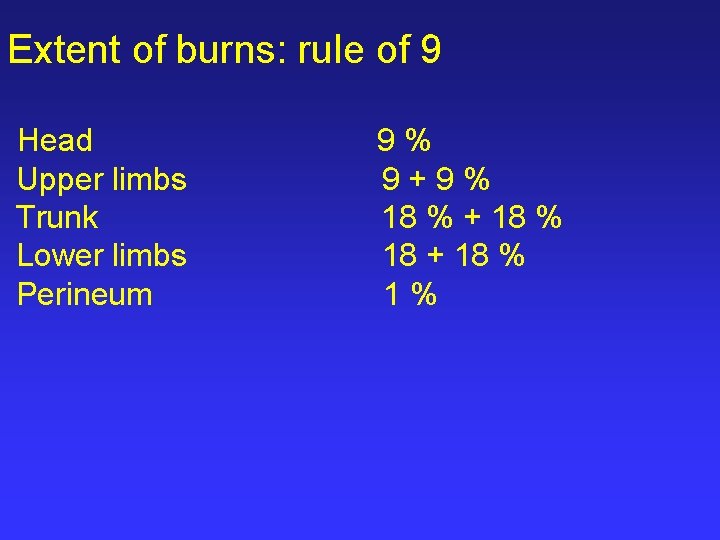
Extent of burns: rule of 9 Head 9 % Upper limbs 9 + 9 % Trunk 18 % + 18 % Lower limbs 18 + 18 % Perineum 1 %
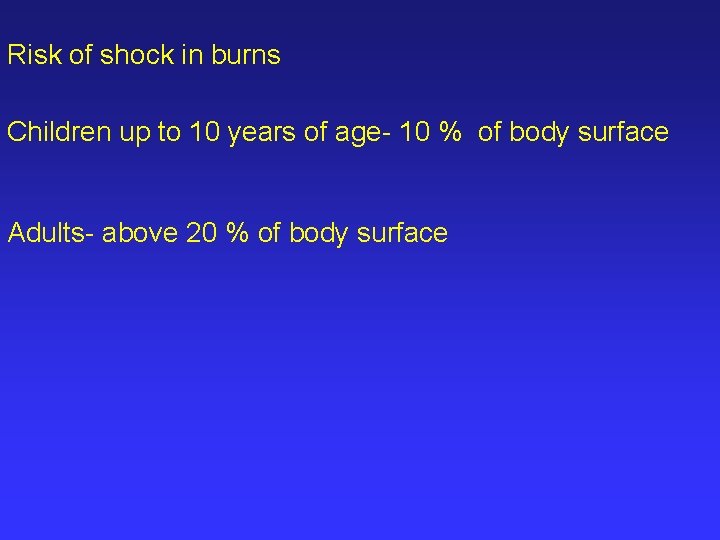
Risk of shock in burns Children up to 10 years of age- 10 % of body surface Adults- above 20 % of body surface
Signs Severe pain, local signs of a burn Oedema, escape of fluids and proteins from injuried area Hypovolemic shock Damage to the airways- bronchospasm, dyspnoe
First aid Stop the burning as soon as possible Maintain open airways Remove him from the site of injury Start cooling the injury as soon as possible - tap water, ice packs – at least 10 minutes Remove any rings, watches, belts, shoes Cover the area with a kitchen film, plastic bag or apply sterile dressing Do not remove sticking cloths Do not burst any blisters Do not use adhesive dressing, ointments and powders Do not to allow him to eat and drink Treat him as a shocked casualty Monitor vital signs

Chemicals Acids (dark skin) Alkali (yellow- brown, green skin) First aid Cooling with a plain water Acids soap water, soda water Alkali Lemon water, vinegar water
Surburn Overexposure to the sun or sunlamp High altidudes Some medicines can trigger high sensitivity to sunlight Skin is red, blistered, painful First aid Remove him from the sun Cold water on the skin Sun lotions Frequent sips of cold water
Heat exhaustion Loss of salt and water from the body through excessive sweating Develops gradually In humid conditions, dancing in warm enviroment etc. Signs: fatique, exhaustion, vomiting, diarrhoea First aid Tu put him to a cool, shady place Plenty of water to drink Monitor vital signs
Heatstroke The body is overheated Prolonged exposure to heat or due to a high fever Drugs Signs Headache, dizzines, confusion Hot, flush and dry skin Rapid pulse Body temperature over 40º C Impaired consciousness First aid Remove him to a cool place Cold wet sheet, cold water Cold drinks
Hypothermia Body temperature falls bellow 35º C Severe hypothermia- bellow 30º C- is often fatal Prolonged exposure to cold Wind- chill factor, immersion to cold water Poorly heated houses, homeless people Thin and frail persons, alcohol, chronic illness Signs Shivering, pale, dry skin Apathy, desorientation Slow breathing and pulse Impaired consciousness
Hypothermia First aid Take the casualty to a sheltered place Remove any wet cold clothing Rewarm him Warm room, warm blankets Insulating material, dry sleeping bag Survival bag Monitor vital signs In children- mechanism for regulating body temperature is underdeveloped – first aid and medical advice
Frostbite 1. Pale skin, less sensation 2. Yellowish skin with blisters, no sensation 3. Necrotic skin
Frostbite Occurs in freezing or cold and windy conditions Pale skin, numbness Hardening of the skin Stiffening of the skin Change of colour – white, mottled, blue, red painful, blistered, black in gangrene First aid Put him to a warm place Remove gloves, rings etc, sterile dressing Rewarm him slowly Avoid direct heat Transport to hospital
- Slides: 17