
Burn Escharotomy LTCret Jim Reed MSN CRNA Point
Burn Escharotomy LTC(ret) Jim Reed MSN, CRNA
Point of Injury • 1. In the field, INTERRUPT THE BURNING PROCESS and address any life threatening bleeding, airway compromise, or tension pneumothorax as directed by Tactical Combat Casualty Care guidelines. Burn casualties may have additional traumatic injuries which may be more life threatening and require immediate attention. • 2. Address any life threatening bleeding, airway compromise, or tension pneumothorax per tactical combat casualty care guidelines.
Point of Injury Continued • 3. Rinse off dirt and any contaminating chemicals, including hydrocarbon fuels, with clean water. Dry chemicals should be brushed off before irrigation. Once a survey of injuries is performed, cover the patient with blankets to prevent hypothermia. • 4. Evacuate the casualty as soon as possible. Tactical considerations and distance may precipitate prolonged field care in which resuscitation is begun under pre-hospital conditions.
Escharotomy • Escharotomy is normally performed in the setting of a circumferential full thickness burn. If the burn is superficial or not circumferential and pulses are absent, first rule out hypovolemia, hypotension, or occult bleeding. Escharotomy incises the skin but not the fascia, and is usually sufficient for compartment syndrome caused by burns unless there is underlying muscle damage or over resuscitation.
Escharotomy • The requirement for escharotomy or fasciotomy usually presents in the first 6 -24 hours following injury. If the need for either procedure has not been identified within the first 24 -48 hours, then circulation is likely to remain adequate without surgical intervention. Elevation of the burned extremities 30 -45° is required to decrease edema
Escharotomy • patient who required escharotomy or fasciotomy at a lower echelon of care should always have their extremity compartments reassessed upon arrival at the next echelon of care. Extension of the incision(s) may be required to restore circulation. This situation can occur if large IV fluid volumes are given during transport, compounding tissue edema
Escharotomy • The threshold for escharotomy should be low in patients requiring transportation, but must take into account the ability to transfuse the patient after the procedure • During each stop along the evacuation route, assess distal circulation of all extremities by palpating the radial, dorsalis pedis, and posterior tibial arteries. If available, use handheld Doppler ultrasound to assess distal circulation. Absent Doppler signals or pulses that are diminishing on serial exam 30 minutes to one hour apart should prompt consideration of surgical decompression
Escharotomy • If available, use handheld Doppler ultrasound to assess the palmar arch, dorsalis pedis, and posterior tibialis. A triphasic signal in the above vessels is considered normal. Consider performing escharotomy early, based upon the vascular exam. Consider fasciotomy in the operating room if pulses remain undetectable even after escharotomy. Continue hourly pulse checks to ensure adequate perfusion following surgical decompression.
Escharotomy • Escharotomy is performed by incising full thickness burns into the subcutaneous fat. Patients will require analgesia, sedation, and usually intubation. Because escharotomy can be associated with significant blood loss, at times it may be more prudent to rapidly evacuate the patient to a higher echelon of care rather than initiate the procedure in an austere environment. This is a judgment call based upon assessment of local resources and transportation time and availability.
Escharotomy • Escharotomy is performed by incising full thickness burns into the subcutaneous fat. Patients will require analgesia, sedation, and usually intubation. Because escharotomy can be associated with significant blood loss, at times it may be more prudent to rapidly evacuate the patient to a higher echelon of care rather than initiate the procedure in an austere environment. This is a judgment call based upon assessment of local resources and transportation time and availability.

Escharotomy of the Chest
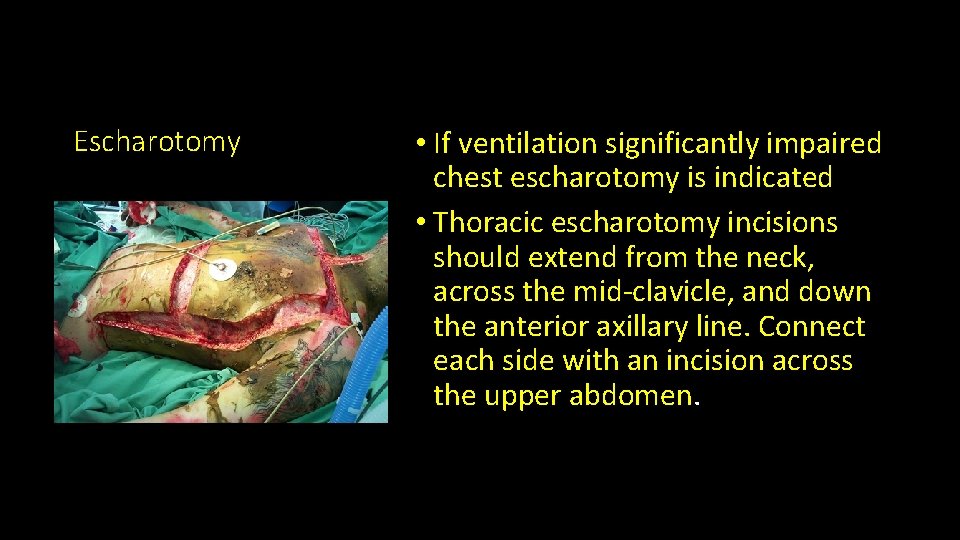
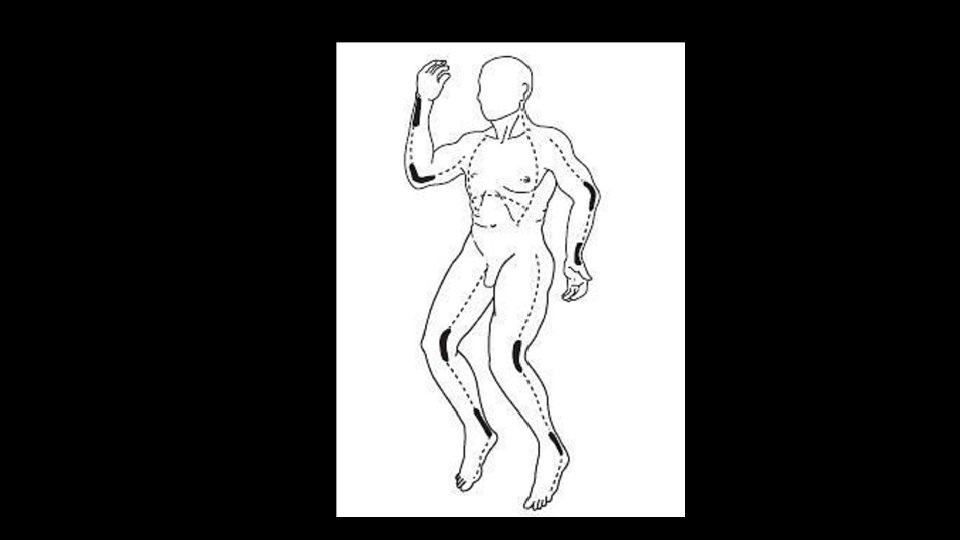
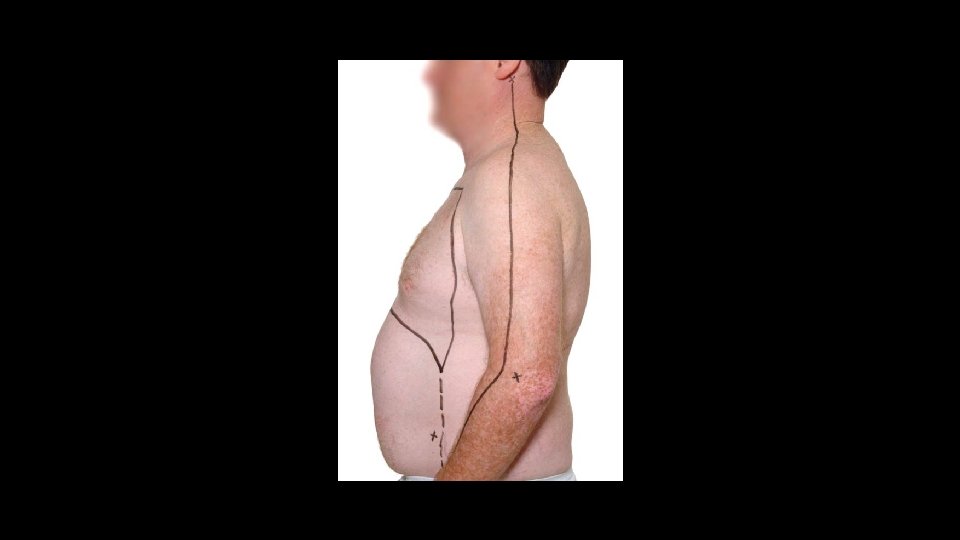
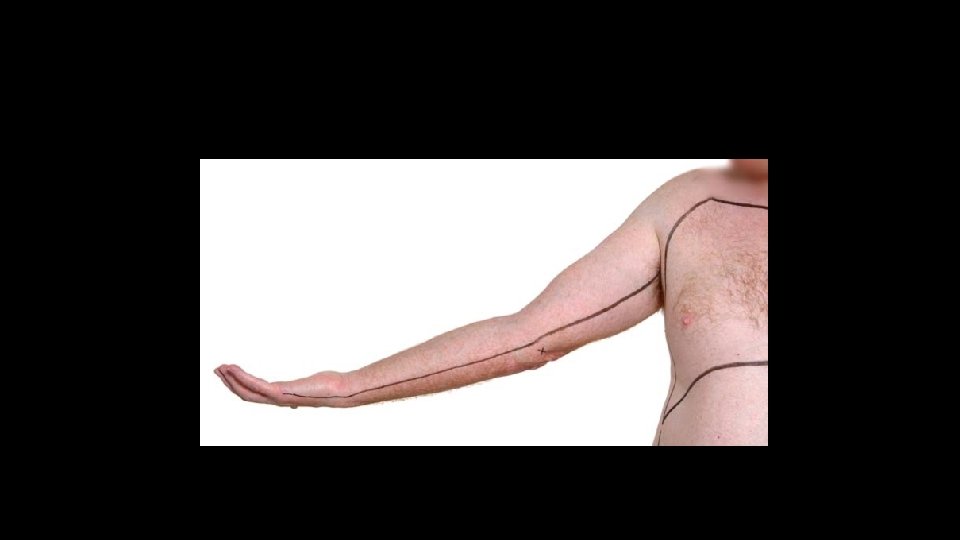
Escharotomy • If ventilation significantly impaired chest escharotomy is indicated • Thoracic escharotomy incisions should extend from the neck, across the mid-clavicle, and down the anterior axillary line. Connect each side with an incision across the upper abdomen.
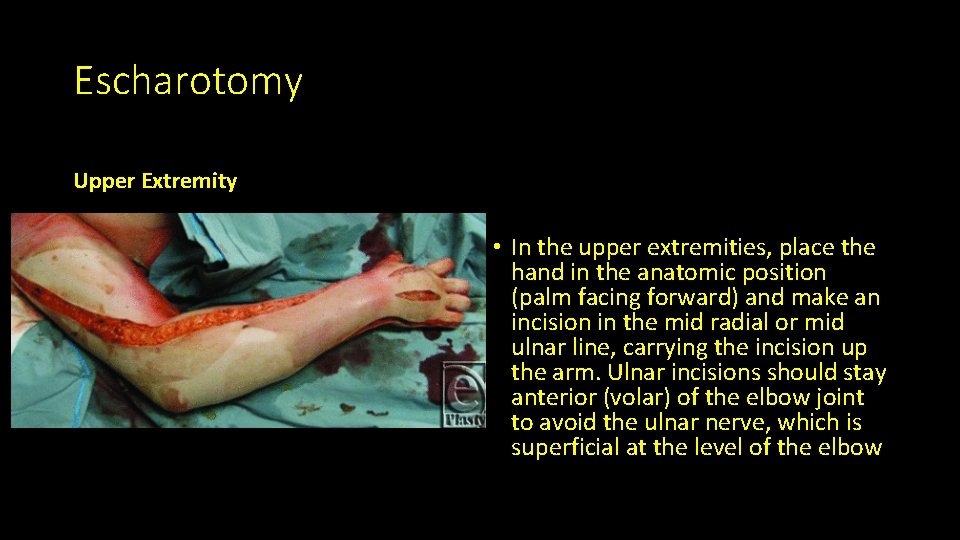
Escharotomy Upper Extremity • In the upper extremities, place the hand in the anatomic position (palm facing forward) and make an incision in the mid radial or mid ulnar line, carrying the incision up the arm. Ulnar incisions should stay anterior (volar) of the elbow joint to avoid the ulnar nerve, which is superficial at the level of the elbow
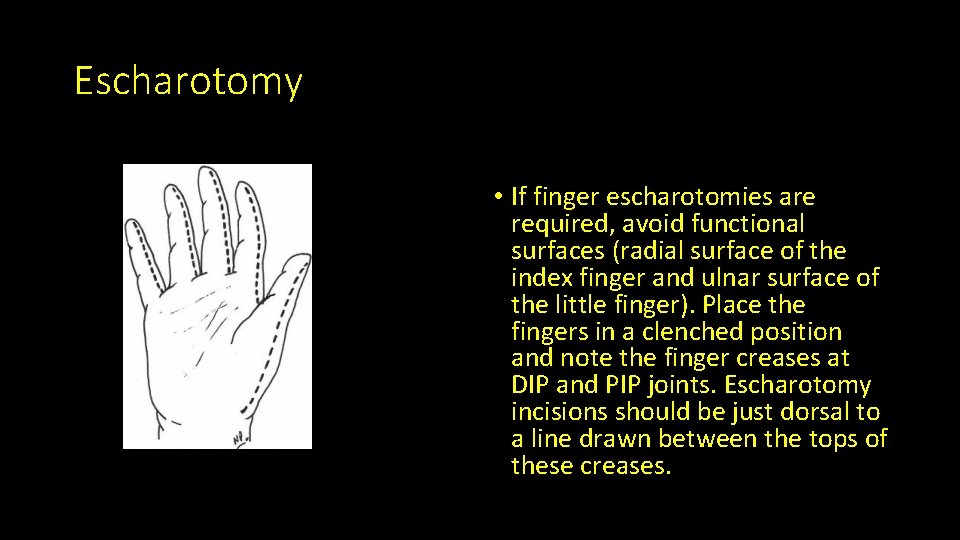
Escharotomy • If finger escharotomies are required, avoid functional surfaces (radial surface of the index finger and ulnar surface of the little finger). Place the fingers in a clenched position and note the finger creases at DIP and PIP joints. Escharotomy incisions should be just dorsal to a line drawn between the tops of these creases.
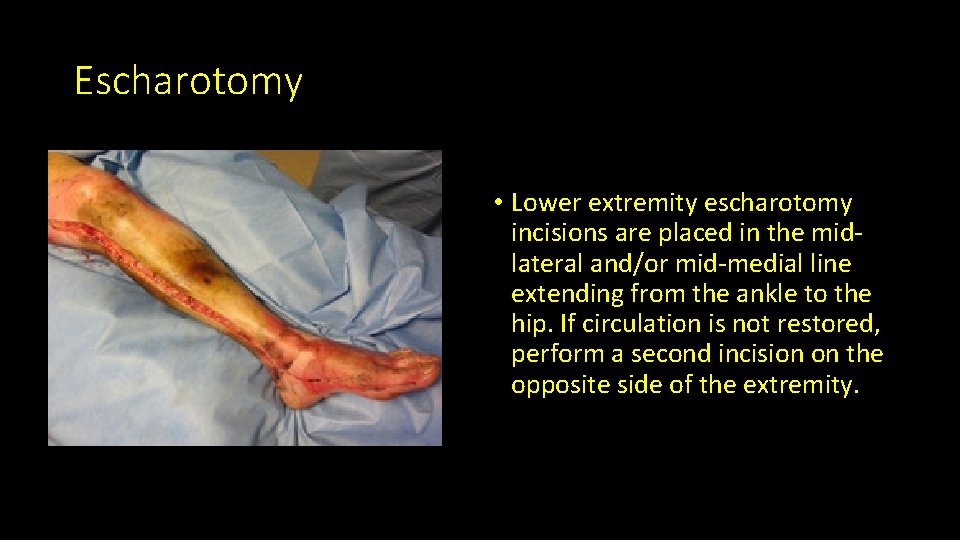
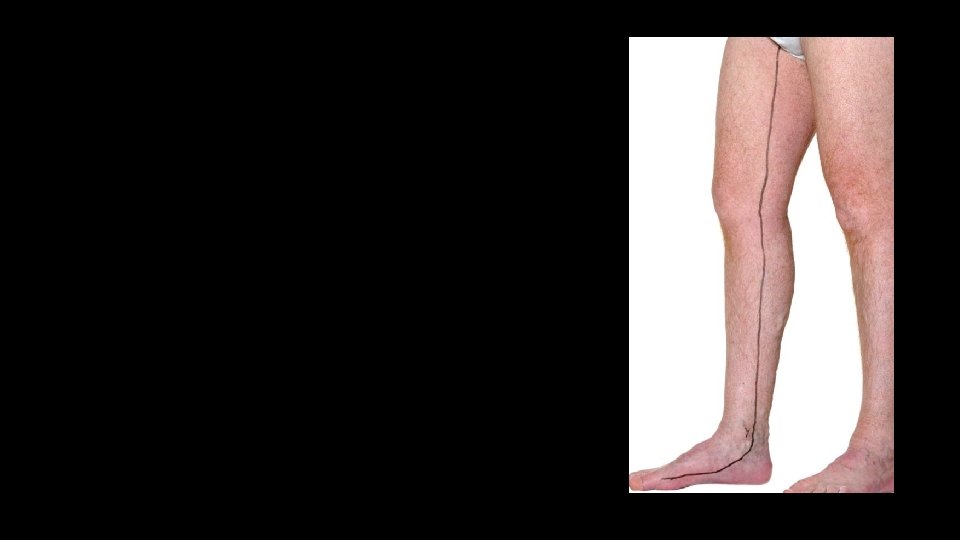
Escharotomy • Lower extremity escharotomy incisions are placed in the midlateral and/or mid-medial line extending from the ankle to the hip. If circulation is not restored, perform a second incision on the opposite side of the extremity.
Escharotomy • If bilateral extremity escharotomy incisions do not restore circulation, reevaluate the adequacy of the patient’s overall hemodynamic status. Reassess for a possible missed injury or ongoing bleeding. • Consider fasciotomy in the operating room (OR) if pulses remain undetectable after escharotomy. Continue hourly exams to ensure adequate perfusion following interventions. Optimal fluid resuscitation and prompt escharotomy usually mitigates the need for fasciotomy
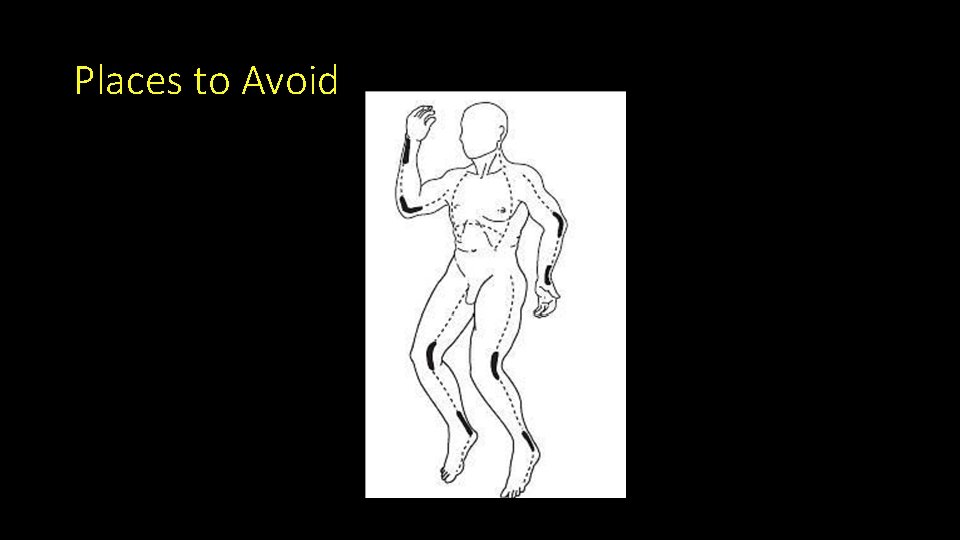
Places to Avoid
References • Burn Care • Joint Trauma System Clinical Practice Guideline, 11 May 2016
- Slides: 22