
Bunsen Burner Introducing Science In this chapter you
Bunsen Burner Introducing Science
In this chapter, you will learn: l l What is a Bunsen burner. How to use the Bunsen burner. Heating substances with a Bunsen burner. Find out which flame is hotter.

A Bunsen Burner The first Bunsen burner • • • Outer core Inner core Burner tube Stopcock Collar
Robert Bunsen l We heat things with a Bunsen burner in the laboratory. l Robert Bunsen, a German chemist, invented this apparatus in 1855.

A Bunsen Burner

What are the parts of a Bunsen burner? Label the diagram using these words. air hole chimney collar tubing gas tap chimney gas tap tubing air hole collar
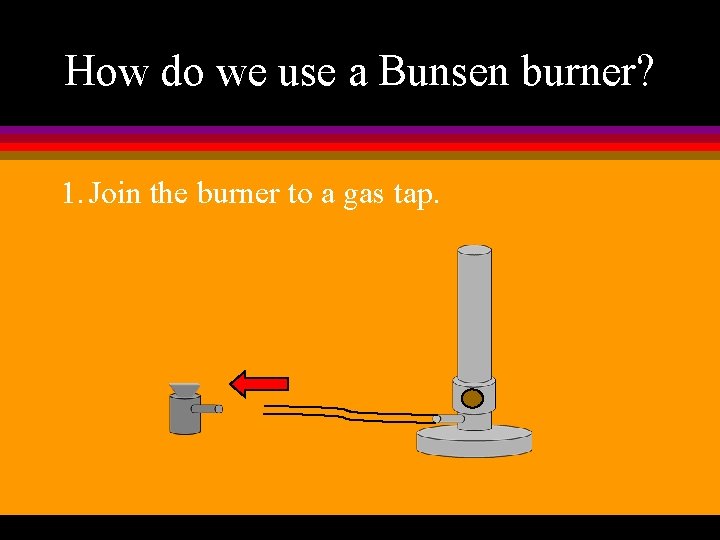
How do we use a Bunsen burner? 1. Join the burner to a gas tap.
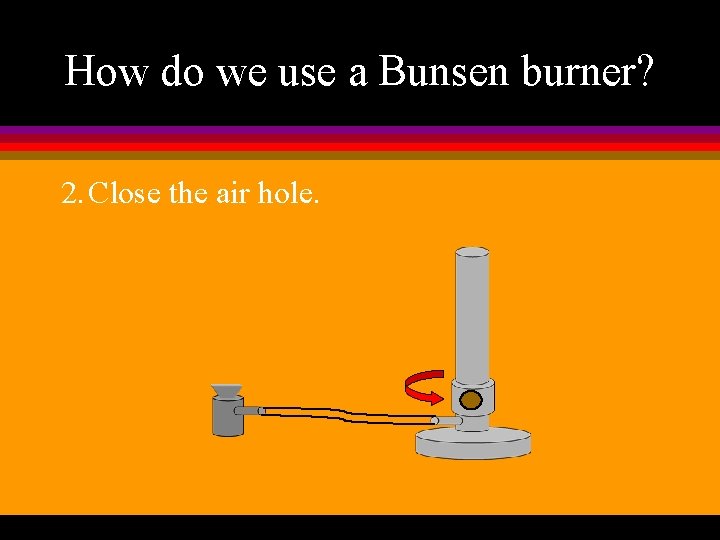
How do we use a Bunsen burner? 2. Close the air hole.
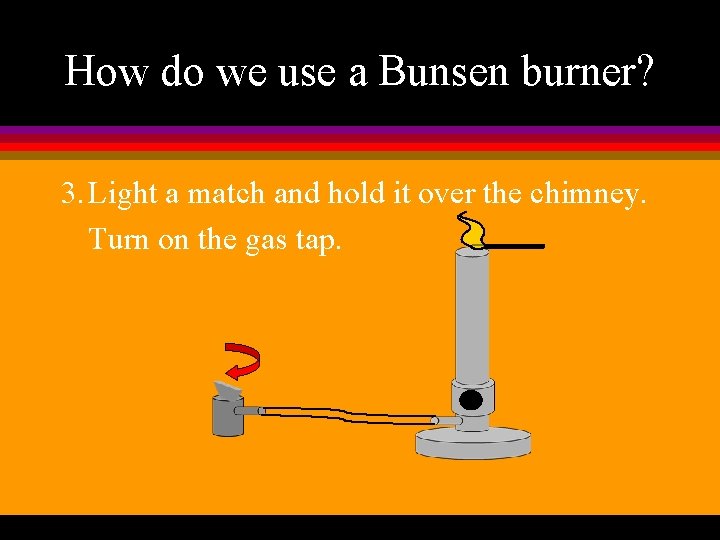
How do we use a Bunsen burner? 3. Light a match and hold it over the chimney. Turn on the gas tap.
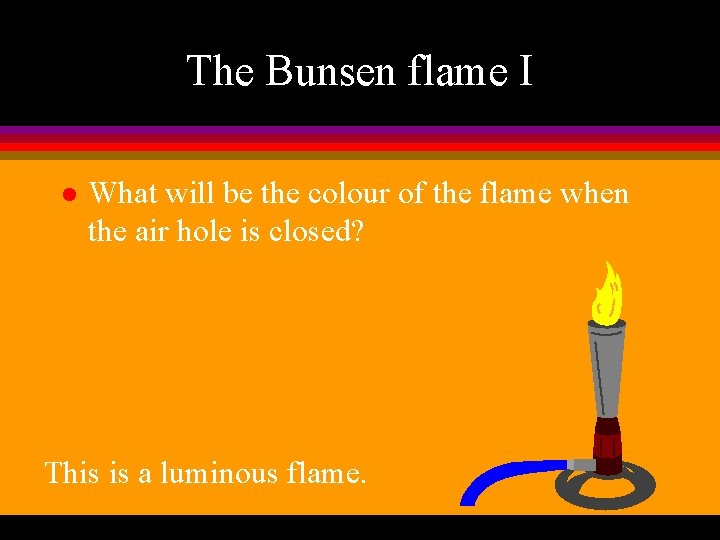
The Bunsen flame I l What will be the colour of the flame when the air hole is closed? This is a luminous flame.
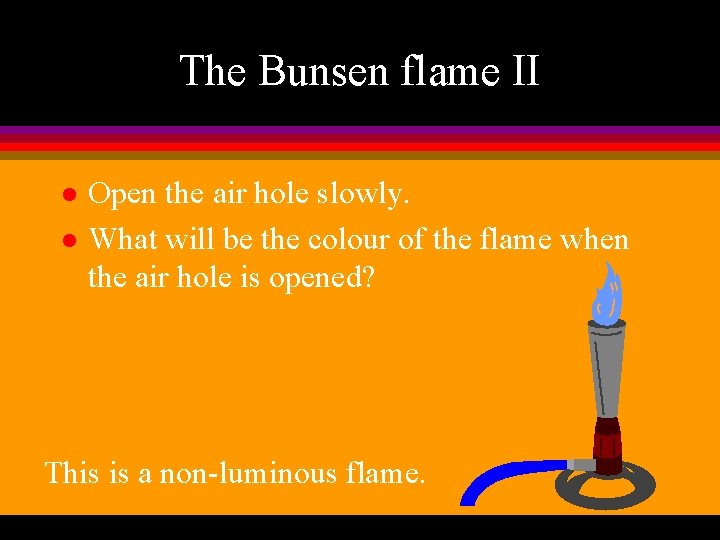
The Bunsen flame II l l Open the air hole slowly. What will be the colour of the flame when the air hole is opened? This is a non-luminous flame.
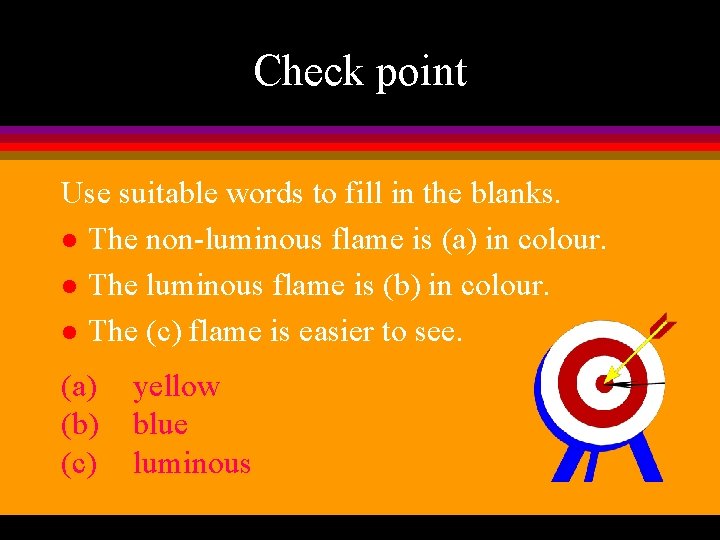
Check point Use suitable words to fill in the blanks. l The non-luminous flame is (a) in colour. l The luminous flame is (b) in colour. l The (c) flame is easier to see. (a) (b) (c) yellow blue luminous
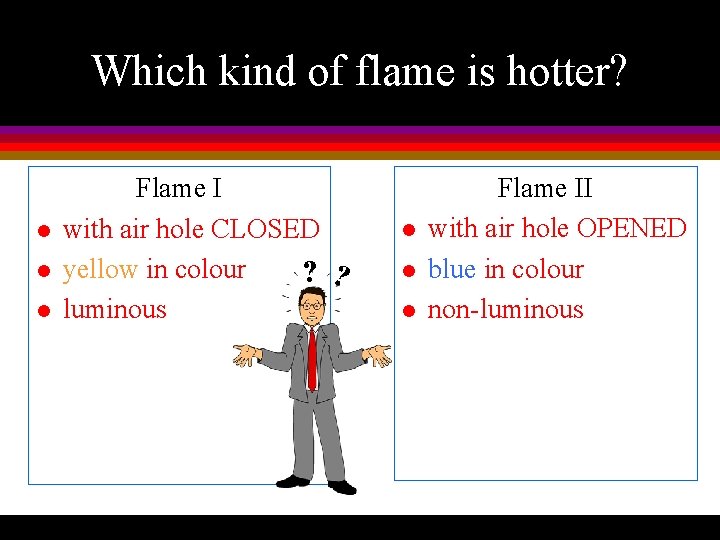
Which kind of flame is hotter? l l l Flame I with air hole CLOSED yellow in colour ? ? luminous l l l Flame II with air hole OPENED blue in colour non-luminous
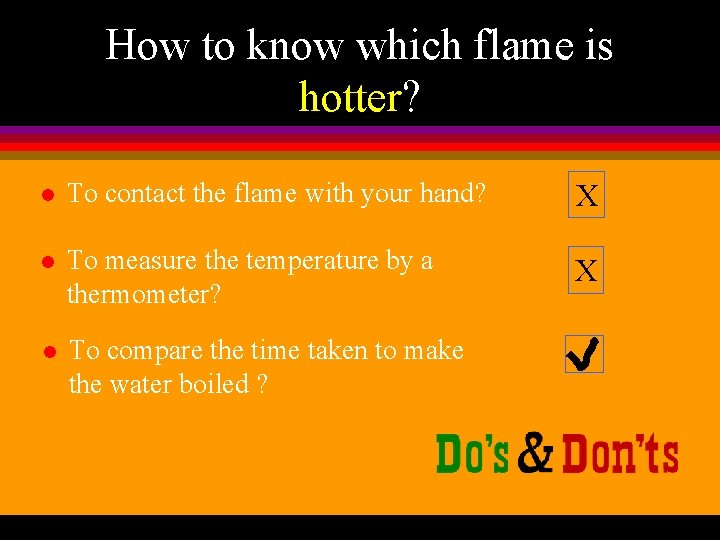
How to know which flame is hotter? l To contact the flame with your hand? X l To measure the temperature by a thermometer? X l To compare the time taken to make the water boiled ?
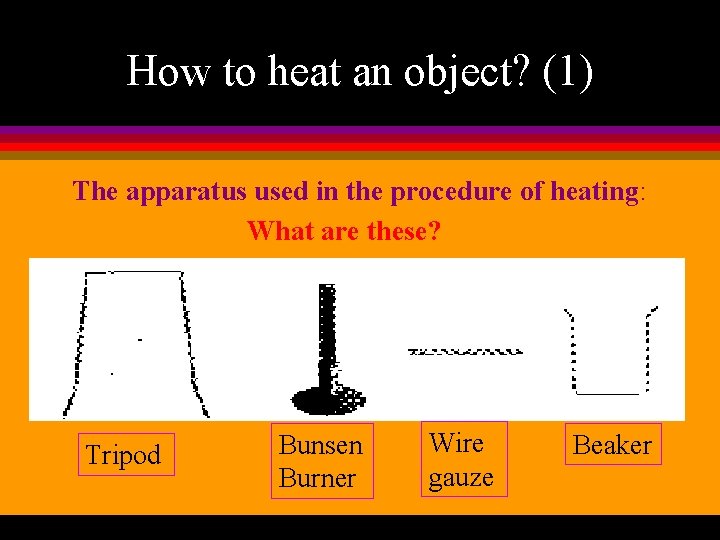
How to heat an object? (1) The apparatus used in the procedure of heating: What are these? Tripod Bunsen Burner Wire gauze Beaker
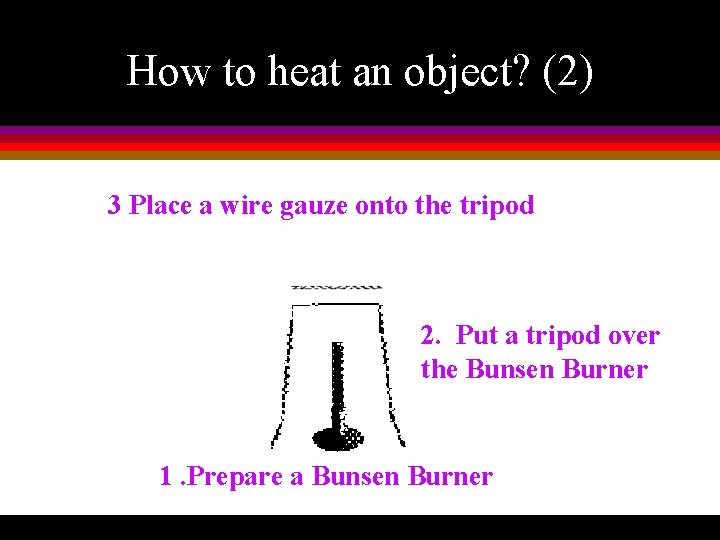
How to heat an object? (2) 3 Place a wire gauze onto the tripod 2. Put a tripod over the Bunsen Burner 1. Prepare a Bunsen Burner
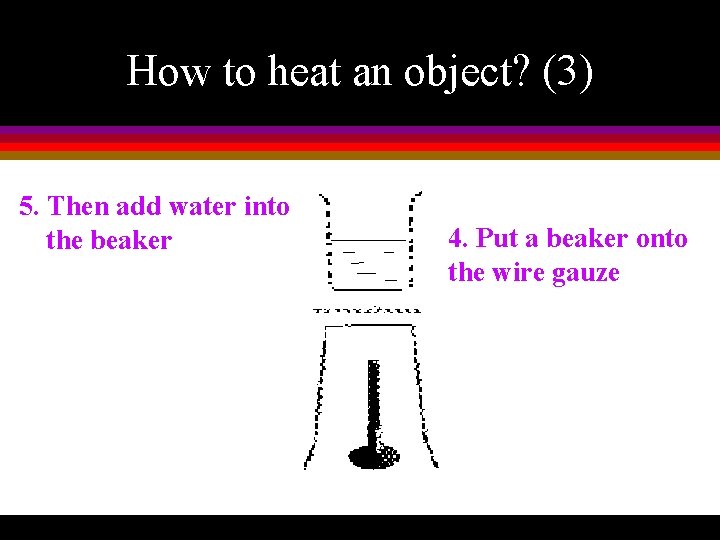
How to heat an object? (3) 5. Then add water into the beaker 4. Put a beaker onto the wire gauze
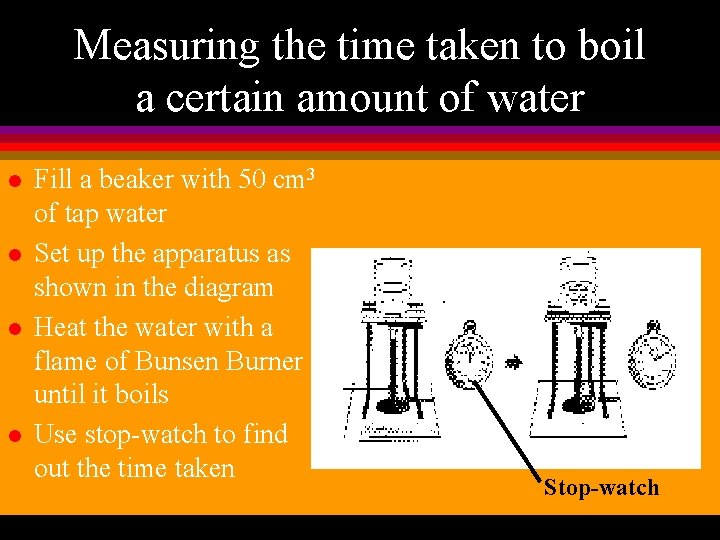
Measuring the time taken to boil a certain amount of water l l Fill a beaker with 50 cm 3 of tap water Set up the apparatus as shown in the diagram Heat the water with a flame of Bunsen Burner until it boils Use stop-watch to find out the time taken Stop-watch
Experiments to compare which flame is hotter l Experiment 1 with the air hole of Bunsen Burner CLOSED yellow flame l Experiment 2 with the air hole of Bunsen Burner OPENED blue flame
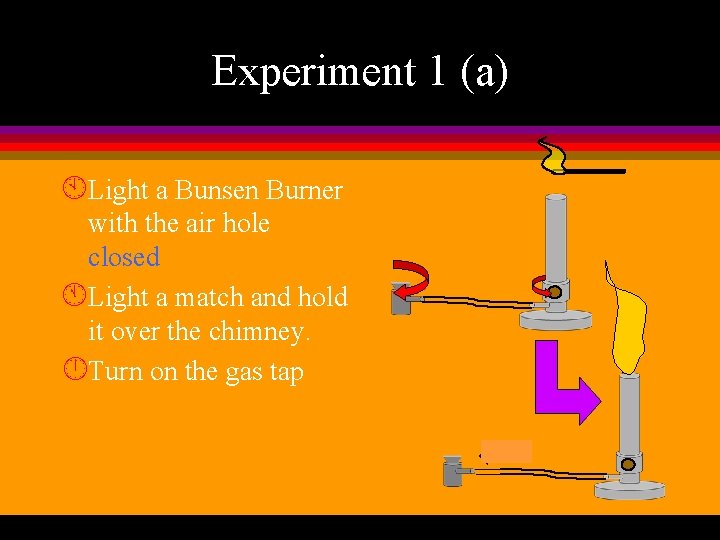
Experiment 1 (a) ÀLight a Bunsen Burner with the air hole closed ÁLight a match and hold it over the chimney. Turn on the gas tap
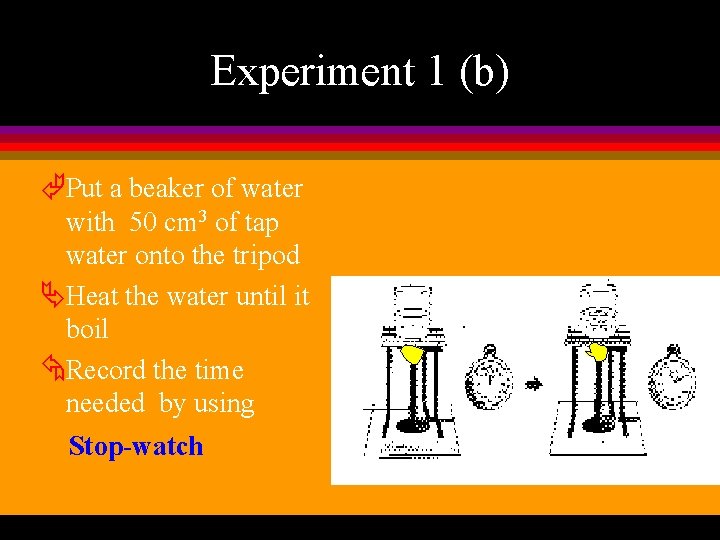
Experiment 1 (b) ÃPut a beaker of water with 50 cm 3 of tap water onto the tripod ÄHeat the water until it boil ÅRecord the time needed by using Stop-watch
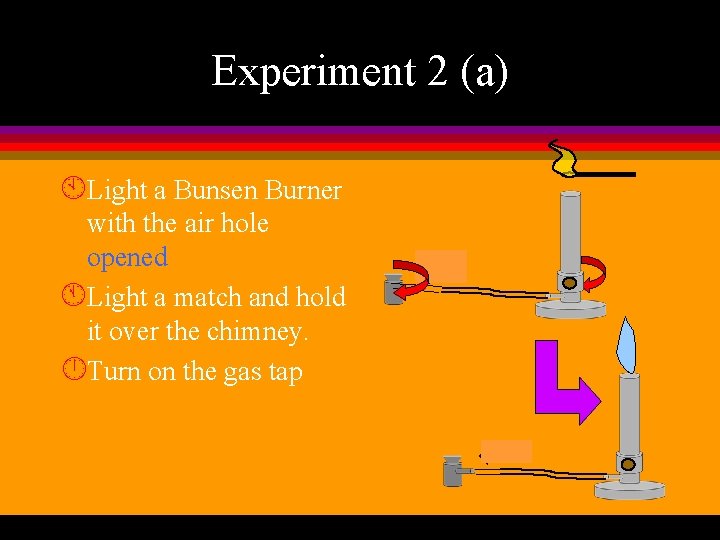
Experiment 2 (a) ÀLight a Bunsen Burner with the air hole opened ÁLight a match and hold it over the chimney. Turn on the gas tap
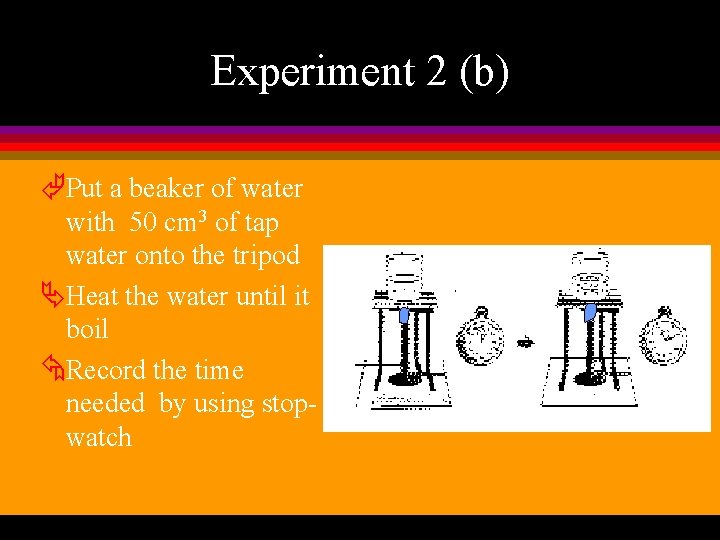
Experiment 2 (b) ÃPut a beaker of water with 50 cm 3 of tap water onto the tripod ÄHeat the water until it boil ÅRecord the time needed by using stopwatch
Result of the experiments 1. Which flame make the water boiled first? l Yellow or blue flame? Ans: Blue flame 2. Which flame is hotter? Ans: Blue flame
Conclusion l So, Blue flame is better for heating
Practical exercises l l Do you know how to use Bunsen Burner? Do you know how to boil water? Do the experiment yourself NOW!
- Slides: 26