
Bungle in The Jungle Notions on Archetypes Meanings
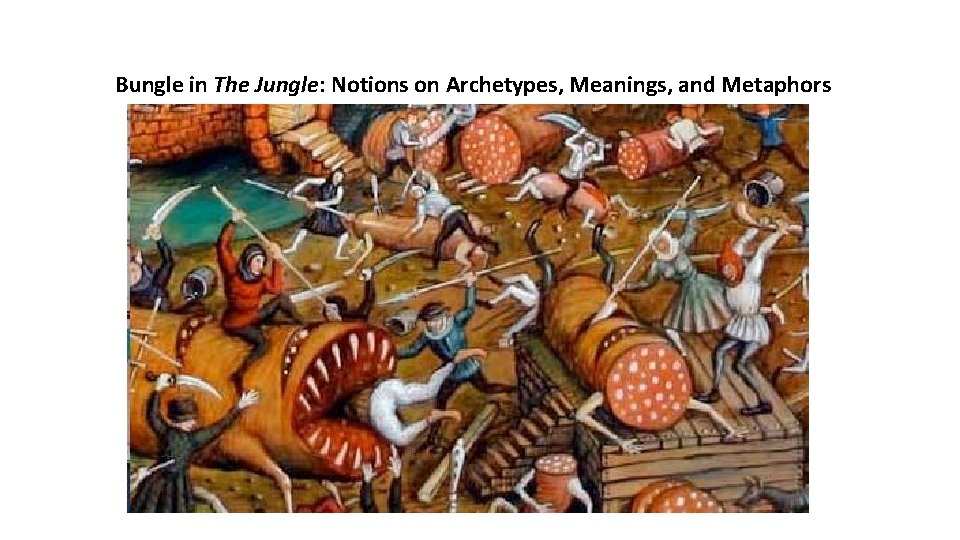
Bungle in The Jungle: Notions on Archetypes, Meanings, and Metaphors

1. The American Dream: Communist Russia may have made the symbol of the tireless worker who works for something transcendent of herself popular (after Rosie of course), but the quest of American workers to own a house is considered not only a rite of passage, but also as proof of having “made it to the promised land. ”
American Archetype: Salesman Like the used car salesman, the late 19 th and early 20 th century salesman represents the middle man who has what you desire, but does not possess your best interest at heart (they are on the hook to recover money they invested). More often than not, they are portrayed as amoral folk looking to make ends meet. *Go read Glengarry Glen Ross for another example of this archetype.
American Archetype: The Lemon You’ve heard about them. Products like new cars that possess defects. You’ve read about them in the novel: Spoiled food mixed in with the sausage and seasoned in order to process yet another log of meat fit for consumption. Did I mention the home that Jurgis bought? Yes, it too is a big fat lemon.
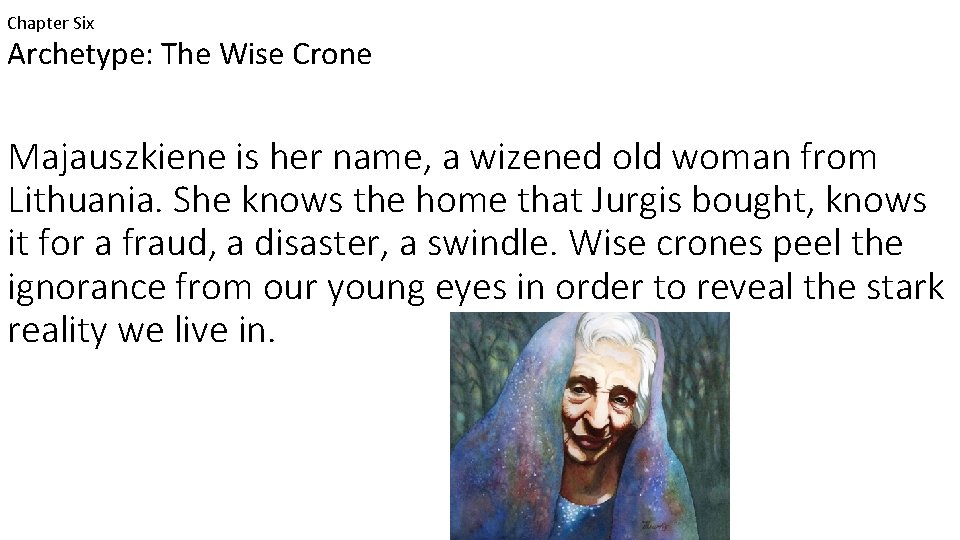
Chapter Six Archetype: The Wise Crone Majauszkiene is her name, a wizened old woman from Lithuania. She knows the home that Jurgis bought, knows it for a fraud, a disaster, a swindle. Wise crones peel the ignorance from our young eyes in order to reveal the stark reality we live in.
Archetype: The Contract (the devil is in the details) In Goethe’s Faust, the titular character makes an agreement with Mephistopheles--much like how Jurgis and his family enter an ironclad contract with their real estate salesman. How many of us will take the warning in this novel to heart? Hmm.
Archetype: The (Packingtown) Workers Readers aware of Dante’s Inferno will make the connection between hapless workers who suffer day in and day out with those who suffer in Dante’s Hell. “Hey bub, work is hell” is the perfect metaphor once you boil it down to its finer parts.
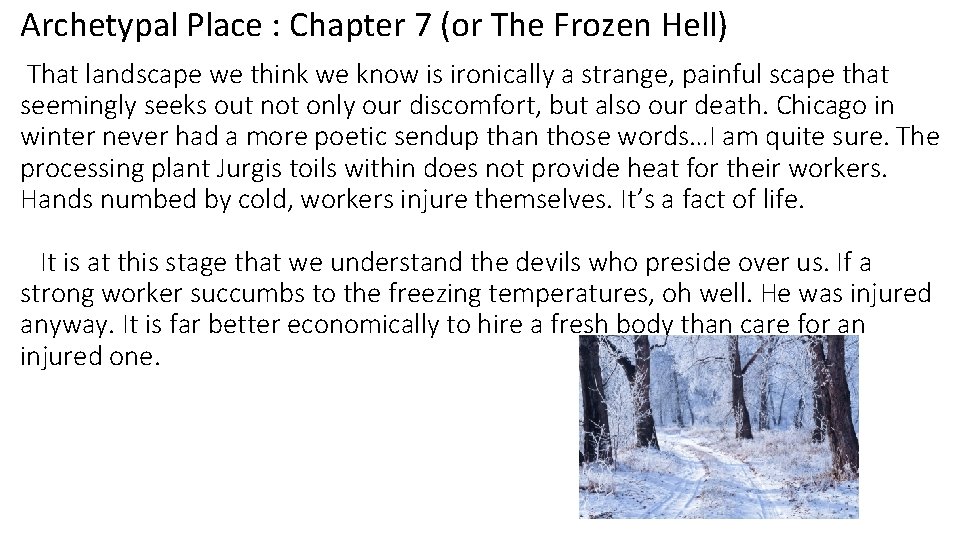
Archetypal Place : Chapter 7 (or The Frozen Hell) That landscape we think we know is ironically a strange, painful scape that seemingly seeks out not only our discomfort, but also our death. Chicago in winter never had a more poetic sendup than those words…I am quite sure. The processing plant Jurgis toils within does not provide heat for their workers. Hands numbed by cold, workers injure themselves. It’s a fact of life. It is at this stage that we understand the devils who preside over us. If a strong worker succumbs to the freezing temperatures, oh well. He was injured anyway. It is far better economically to hire a fresh body than care for an injured one.
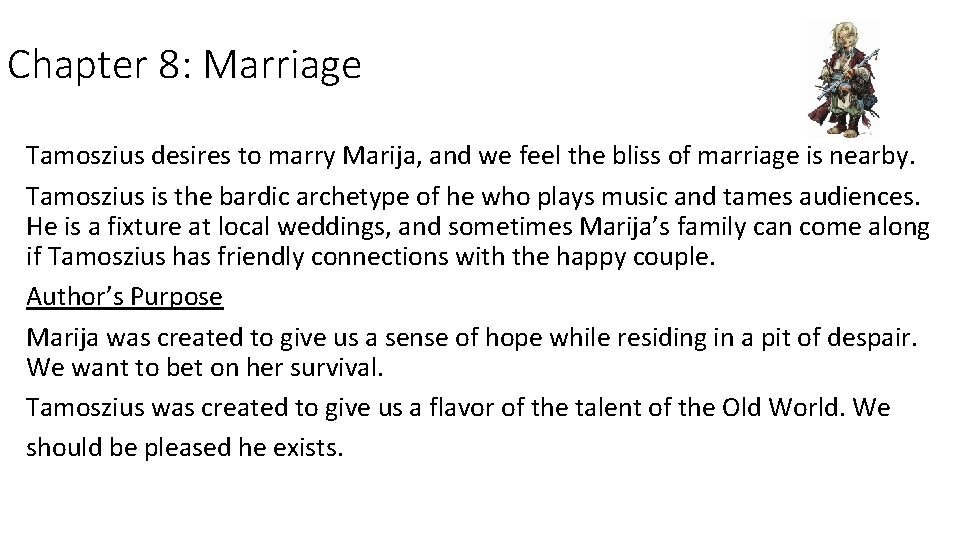
Chapter 8: Marriage Tamoszius desires to marry Marija, and we feel the bliss of marriage is nearby. Tamoszius is the bardic archetype of he who plays music and tames audiences. He is a fixture at local weddings, and sometimes Marija’s family can come along if Tamoszius has friendly connections with the happy couple. Author’s Purpose Marija was created to give us a sense of hope while residing in a pit of despair. We want to bet on her survival. Tamoszius was created to give us a flavor of the talent of the Old World. We should be pleased he exists.
- Slides: 10