
BULLYING PRESENTATION FOR GRADES 7 TO 12 WHAT
BULLYING PRESENTATION FOR GRADES 7 TO 12
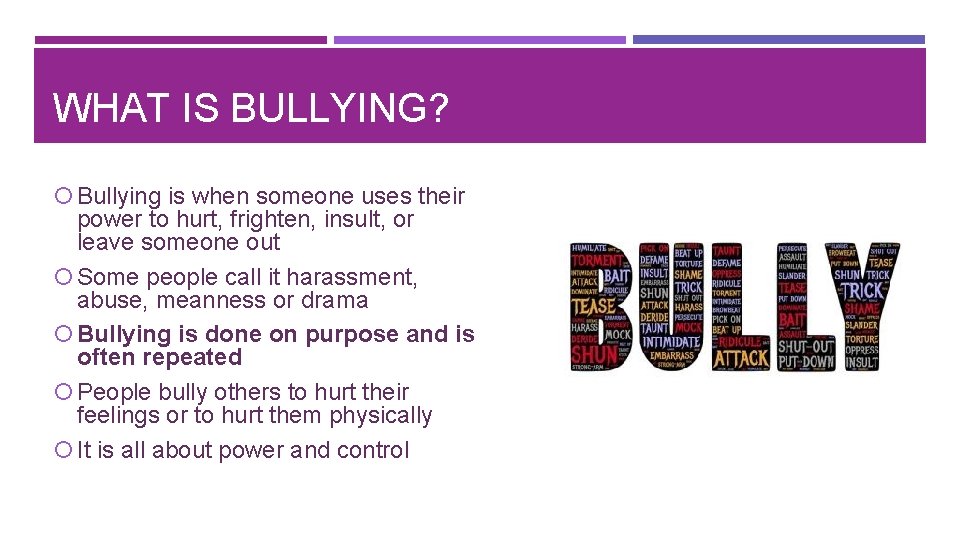
WHAT IS BULLYING? Bullying is when someone uses their power to hurt, frighten, insult, or leave someone out Some people call it harassment, abuse, meanness or drama Bullying is done on purpose and is often repeated People bully others to hurt their feelings or to hurt them physically It is all about power and control
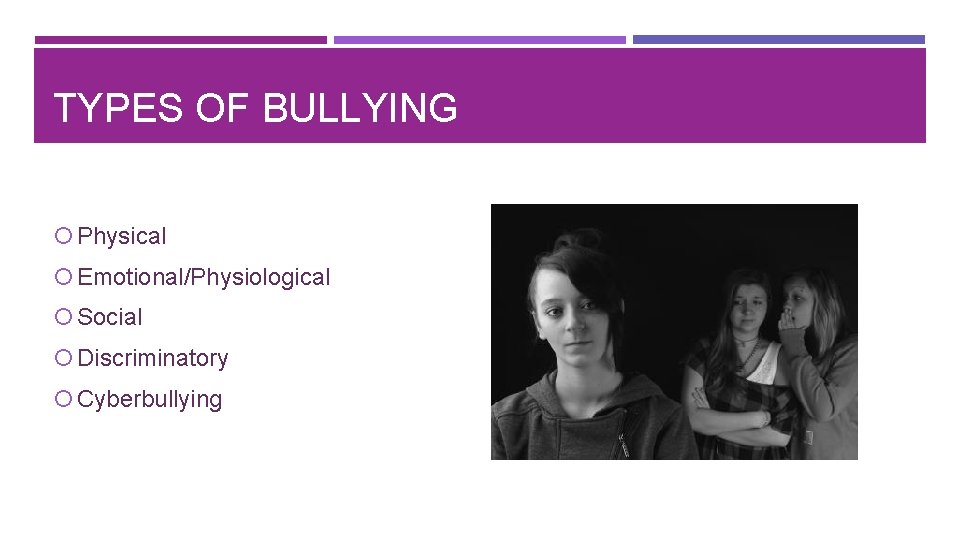
TYPES OF BULLYING Physical Emotional/Physiological Social Discriminatory Cyberbullying
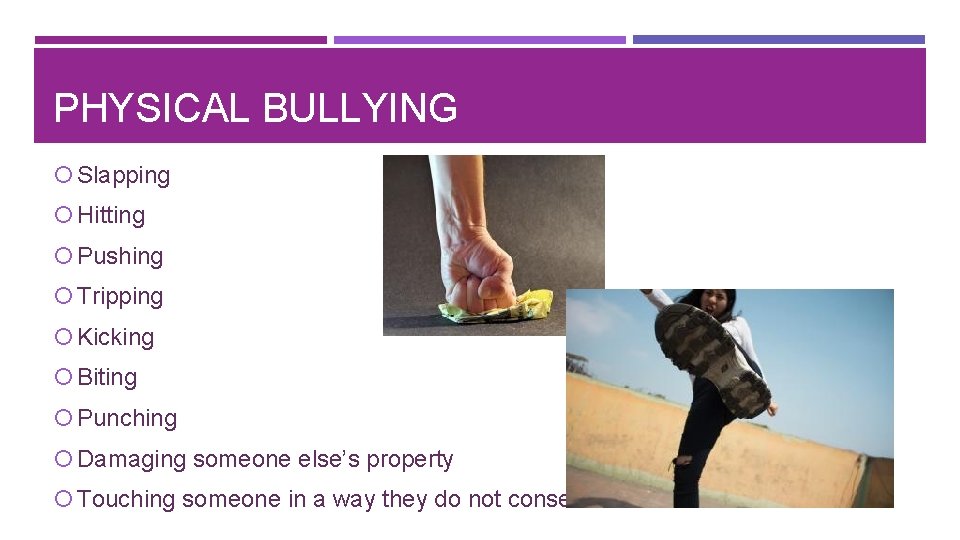
PHYSICAL BULLYING Slapping Hitting Pushing Tripping Kicking Biting Punching Damaging someone else’s property Touching someone in a way they do not consent
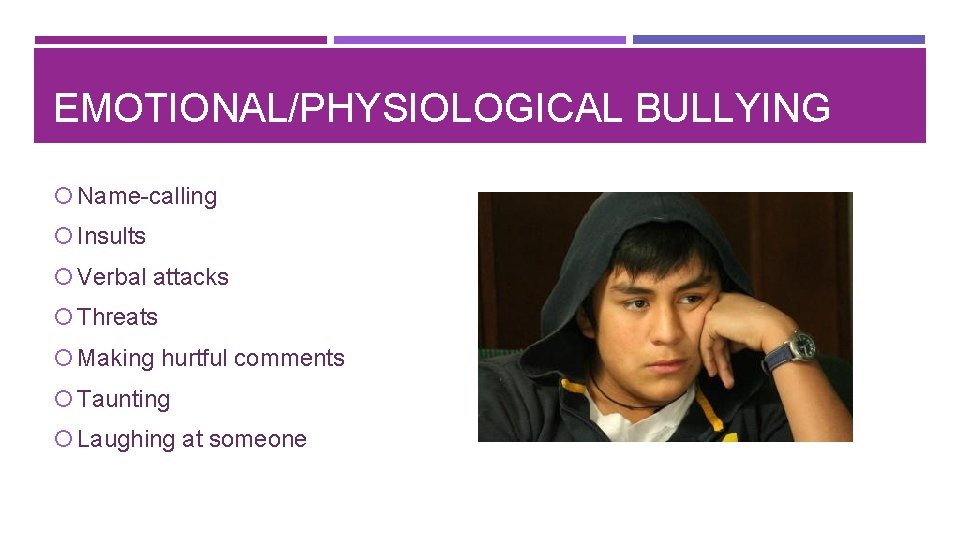
EMOTIONAL/PHYSIOLOGICAL BULLYING Name-calling Insults Verbal attacks Threats Making hurtful comments Taunting Laughing at someone
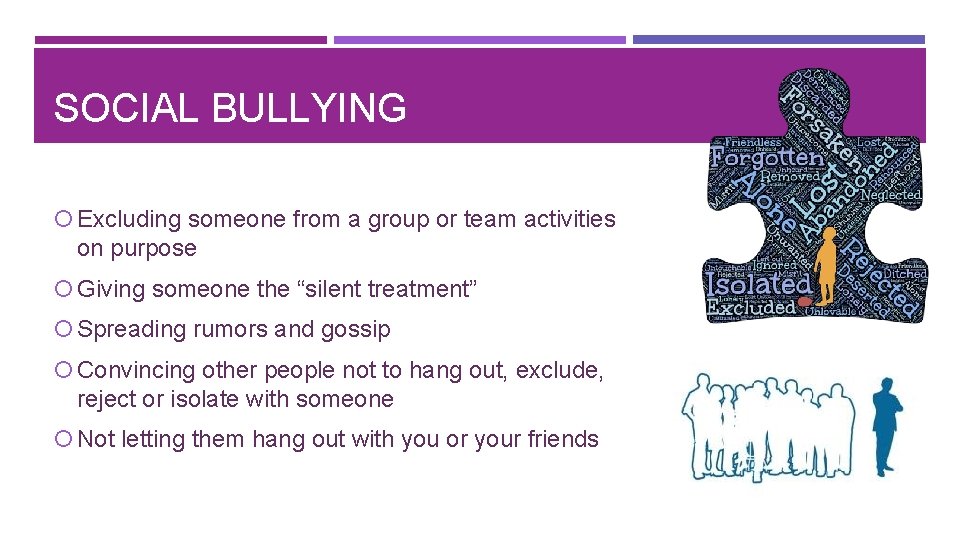
SOCIAL BULLYING Excluding someone from a group or team activities on purpose Giving someone the “silent treatment” Spreading rumors and gossip Convincing other people not to hang out, exclude, reject or isolate with someone Not letting them hang out with you or your friends
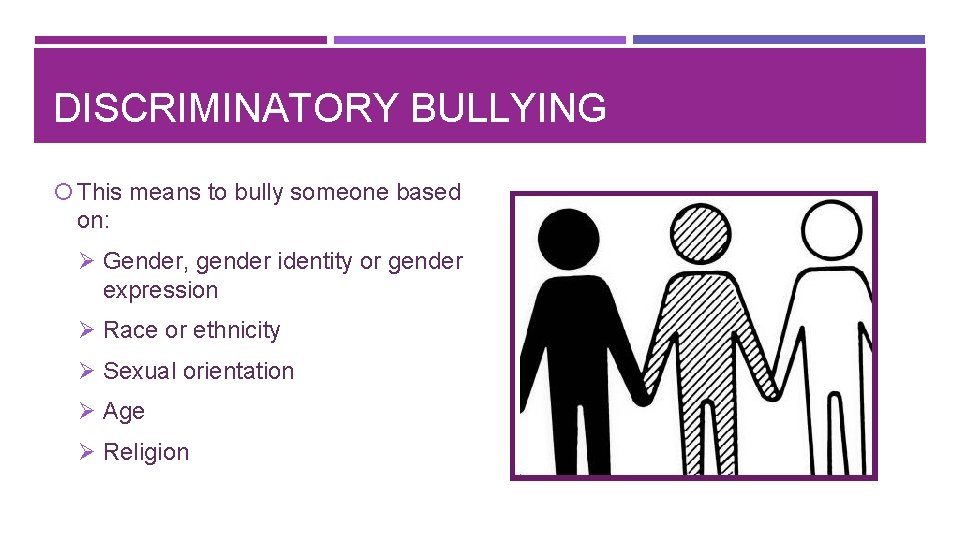
DISCRIMINATORY BULLYING This means to bully someone based on: Ø Gender, gender identity or gender expression Ø Race or ethnicity Ø Sexual orientation Ø Age Ø Religion
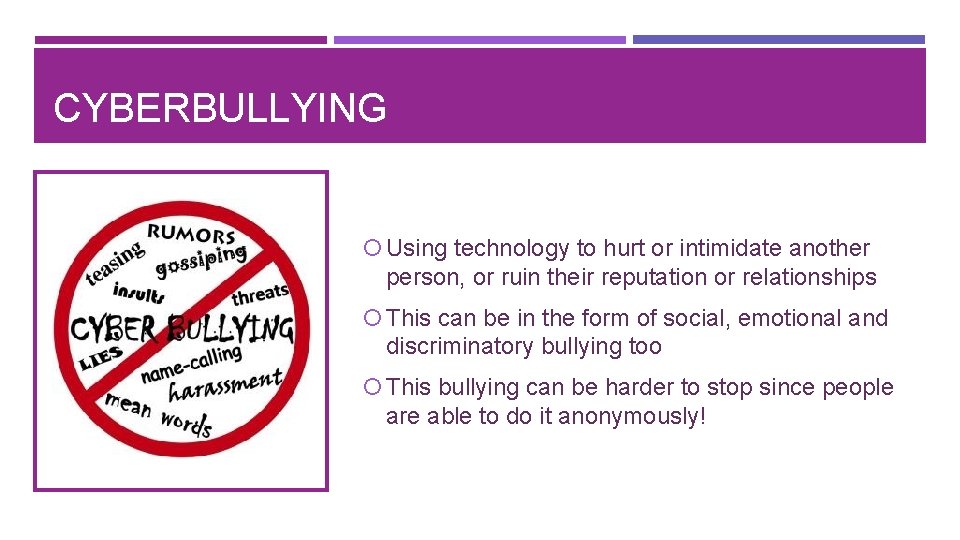
CYBERBULLYING Using technology to hurt or intimidate another person, or ruin their reputation or relationships This can be in the form of social, emotional and discriminatory bullying too This bullying can be harder to stop since people are able to do it anonymously!
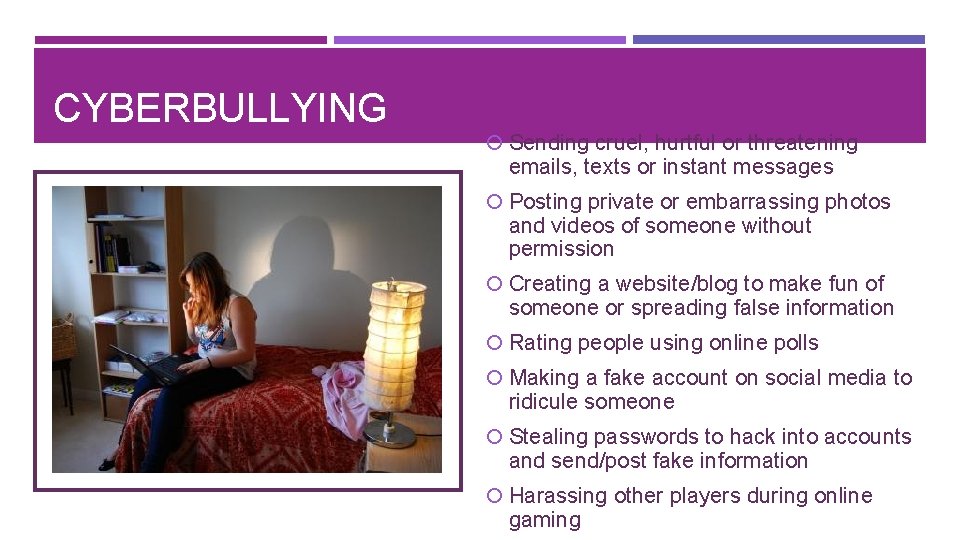
CYBERBULLYING Sending cruel, hurtful or threatening emails, texts or instant messages Posting private or embarrassing photos and videos of someone without permission Creating a website/blog to make fun of someone or spreading false information Rating people using online polls Making a fake account on social media to ridicule someone Stealing passwords to hack into accounts and send/post fake information Harassing other players during online gaming
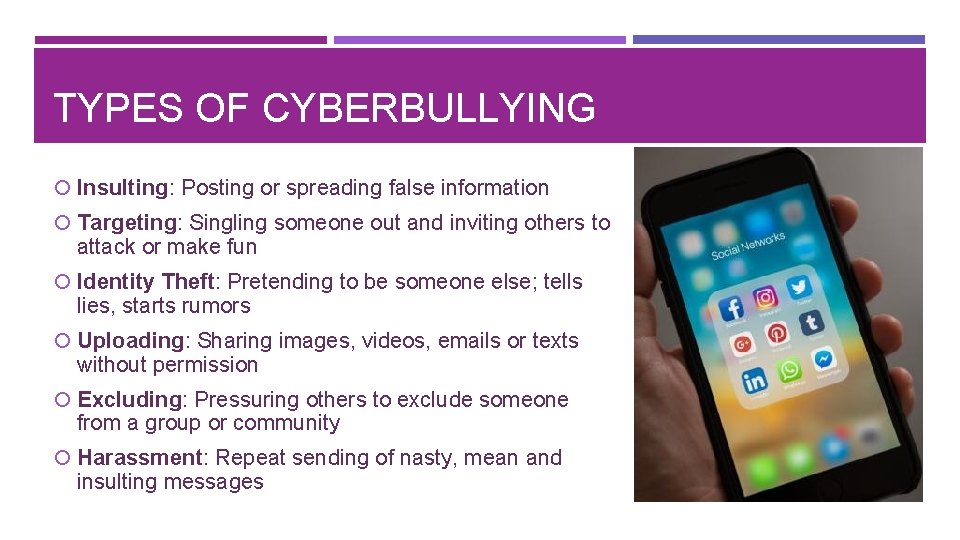
TYPES OF CYBERBULLYING Insulting: Posting or spreading false information Targeting: Singling someone out and inviting others to attack or make fun Identity Theft: Pretending to be someone else; tells lies, starts rumors Uploading: Sharing images, videos, emails or texts without permission Excluding: Pressuring others to exclude someone from a group or community Harassment: Repeat sending of nasty, mean and insulting messages
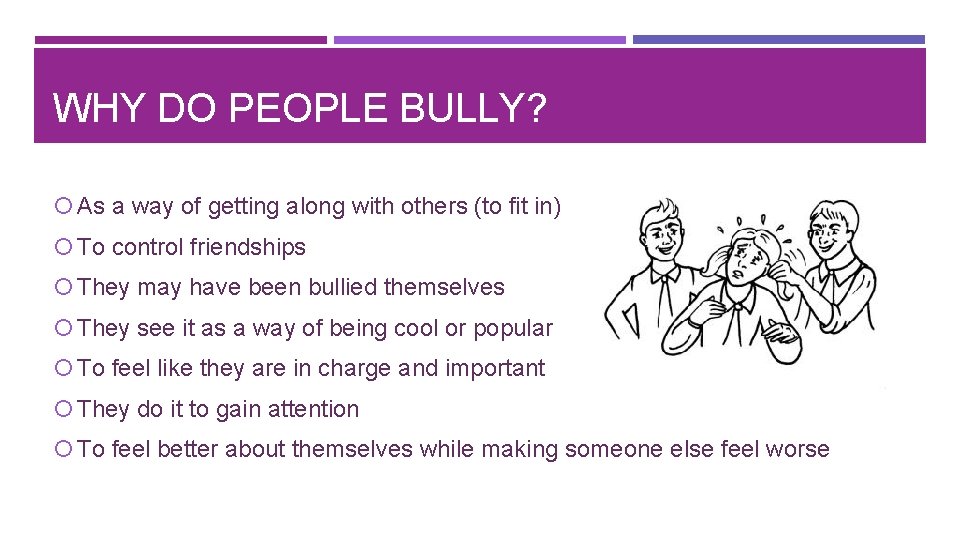
WHY DO PEOPLE BULLY? As a way of getting along with others (to fit in) To control friendships They may have been bullied themselves They see it as a way of being cool or popular To feel like they are in charge and important They do it to gain attention To feel better about themselves while making someone else feel worse
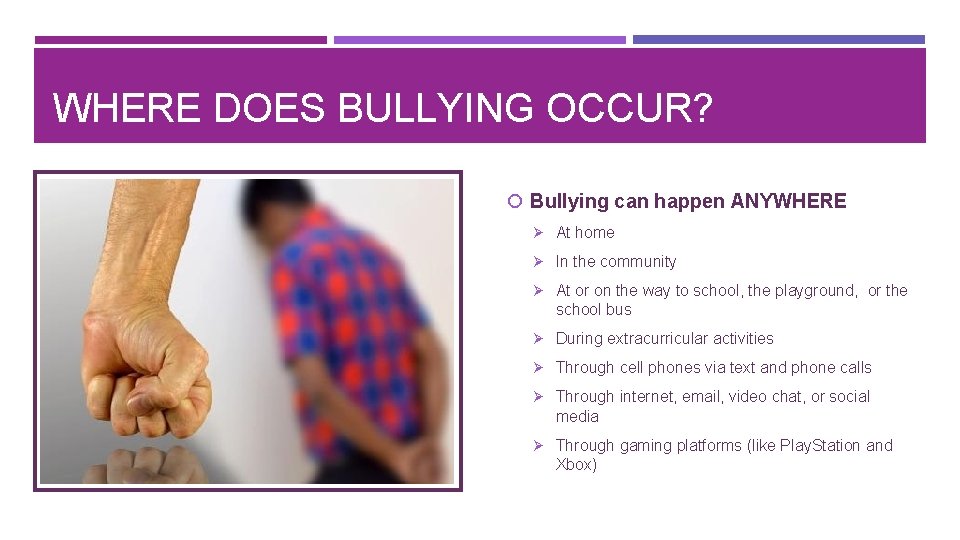
WHERE DOES BULLYING OCCUR? Bullying can happen ANYWHERE Ø At home Ø In the community Ø At or on the way to school, the playground, or the school bus Ø During extracurricular activities Ø Through cell phones via text and phone calls Ø Through internet, email, video chat, or social media Ø Through gaming platforms (like Play. Station and Xbox)
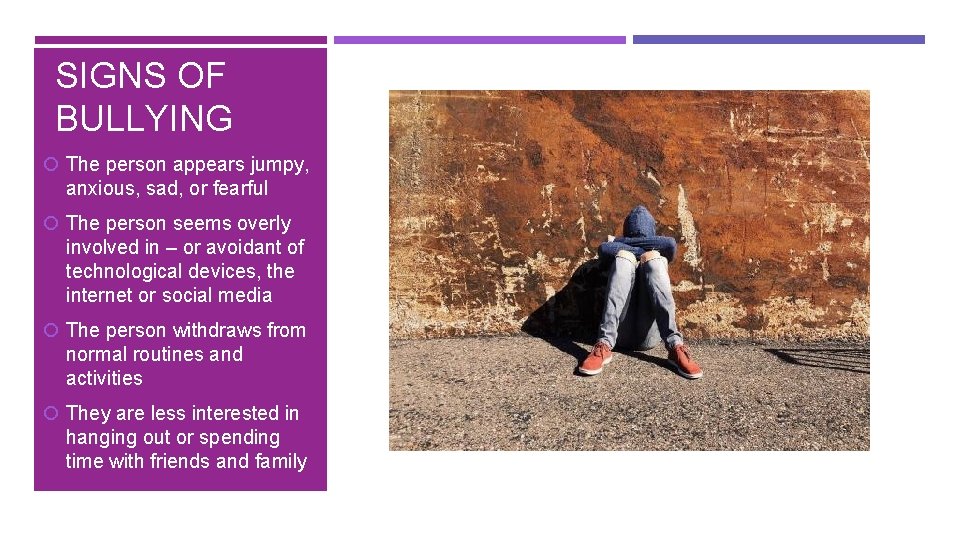
SIGNS OF BULLYING The person appears jumpy, anxious, sad, or fearful The person seems overly involved in – or avoidant of technological devices, the internet or social media The person withdraws from normal routines and activities They are less interested in hanging out or spending time with friends and family
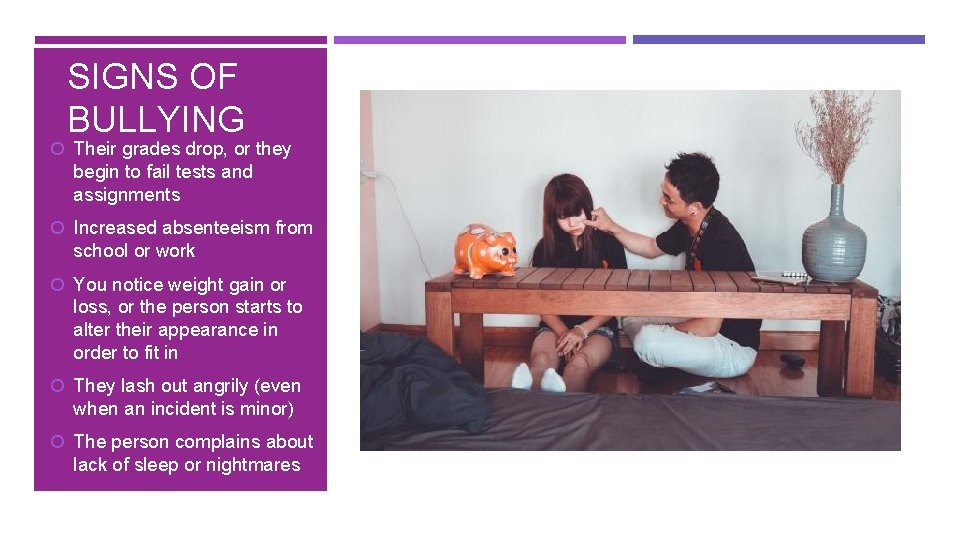
SIGNS OF BULLYING Their grades drop, or they begin to fail tests and assignments Increased absenteeism from school or work You notice weight gain or loss, or the person starts to alter their appearance in order to fit in They lash out angrily (even when an incident is minor) The person complains about lack of sleep or nightmares
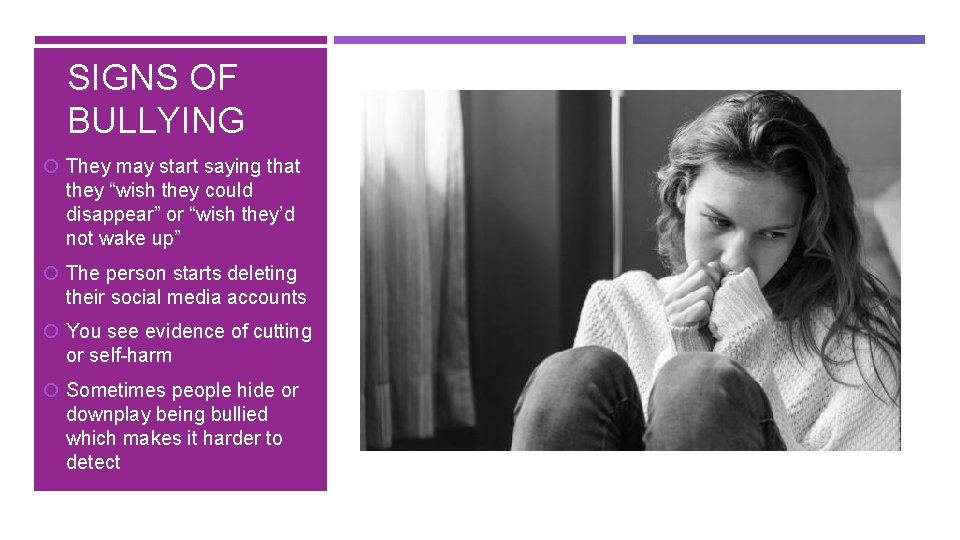
SIGNS OF BULLYING They may start saying that they “wish they could disappear” or “wish they’d not wake up” The person starts deleting their social media accounts You see evidence of cutting or self-harm Sometimes people hide or downplay being bullied which makes it harder to detect
EFFECTS OF BULLYING Avoiding friends which may lead to loss of friendships and feeling lonely Struggling in school The development of physical ailments such as migraine, insomnia, stomach ache, fatigue, disordered eating, etc. The use of substances (alcohol or drugs) as a means to cope (can lead to addiction) The person might bully others as a way to stop feeling powerless Belief that you are not good at anything Feelings of sadness and anger May be abused by others in future relationships (they have come to accept and expect harassment and abuse from others) Suicidal ideation/death by suicide
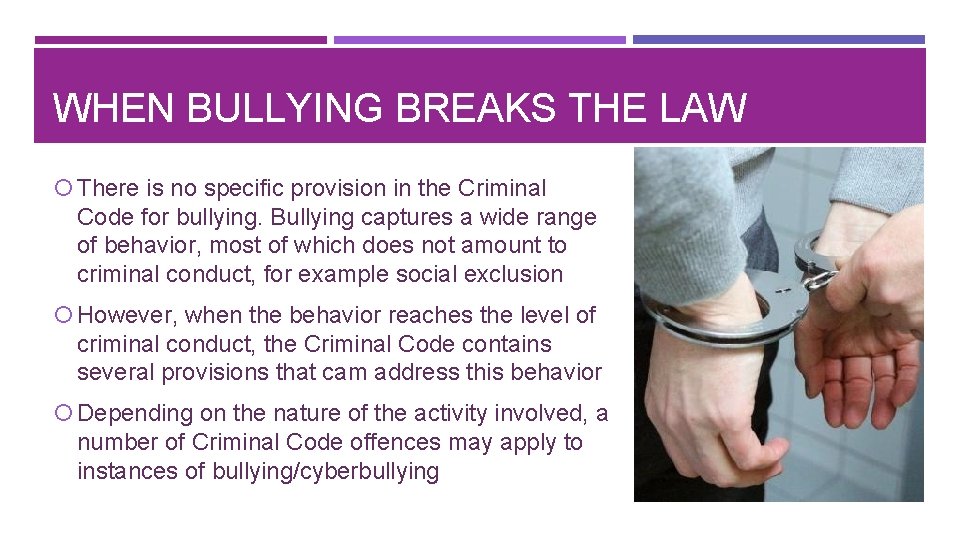
WHEN BULLYING BREAKS THE LAW There is no specific provision in the Criminal Code for bullying. Bullying captures a wide range of behavior, most of which does not amount to criminal conduct, for example social exclusion However, when the behavior reaches the level of criminal conduct, the Criminal Code contains several provisions that cam address this behavior Depending on the nature of the activity involved, a number of Criminal Code offences may apply to instances of bullying/cyberbullying
CRIMINAL CODE OFFENCES RELATED TO BULLYING Criminal Harassment: Repeated tormenting online, with texts, phone calls, and/or emails causing the other person to fear for their safety Child Pornography: Sharing intimate photos and videos of minors (under the age of 18) Uttering Threats and Extortion: Threatening to share someone’s personal information with others if they do not do what you want them to do Non-Consensual Distribution of Intimate Images: A violation of the depicted person’s privacy in relation to images, the distribution of which is likely to be embarrassing, humiliating, harassing, and degrading or to otherwise harm that person Assault: Threats or acts of non-consensual force, violence, bodily harm, or destruction of personal property Identity Theft/Fraud: Creating a fake online profile to ruin someone’s reputation Defamatory Libel: Spreading rumors about someone
WHEN BULLYING BREAKS THE LAW For all of these criminal offences, it is important to notify your local police detachment. Based on the available information, police will decide if an investigation is warranted and whether charges may be laid The majority of bullying incidents DO NOT constitute a criminal offence and most cases will be handled informally between kids, their parents and school officials before it becomes severe enough to violate the law
GETTING HELP If you are being bullied, there a things you can do to help yourself Ø Refuse to respond to taunts or mean messages. It is better to just walk away Ø Document the bullying by saving or taking screenshots of any texts, letters, or messages received Ø Call your cell phone provider and ask them to block the phone numbers of people who are harassing you Ø Block cyberbullies on social media and report the behavior to the administrators of the website
GETTING HELP Ø Tell a trusted adult/professional what has been happening to you – like a parent, teacher, guidance counselor, etc. Ø Report the bullying to your school administration Ø Report criminal incidents to your local police department Ø There’s safety in numbers. If possible, try to remain as part of a group. You are less likely to be picked on when there are witnesses Ø Focus on the things you do well and things you like about yourself can help you cope with what’s happening Ø Do not fight back Remember: It’s not your fault

WHAT NOT TO DO Do not respond to the bully Do not resort to being a bully yourself Do not accept the bullying, or just wait for it to stop Do not feel like its your fault Avoid confronting the person about their behavior if you are alone or it would be unsafe Do not be afraid to “tell” on the bully Do not think that engaging in self harm is the only way to cope Remember that you are not alone! People who care for you will be your friend and strongest supporter
IF YOU ARE BULLYING SOMEONE Stop the aggressive, controlling behavior Take responsibility for your actions Treat people how you would want to be treated Learn how to be a good friend Talk to someone you trust – ask for help
SUPPORTING A FRIEND Believe them Listen to them Encourage them to report the bullying Let your friend know that the bullying is not their fault and they should be treated with respect Stay with your friend Stop rumors Ignore the bully
SUPPORTING A FRIEND Remove the person from the scene Help collect and document Encourage your friend to talk with an adult about how they are feeling Refuse to keep secrets – If a friend asks you to not say anything about them being bullied, its still important for you to report the behavior
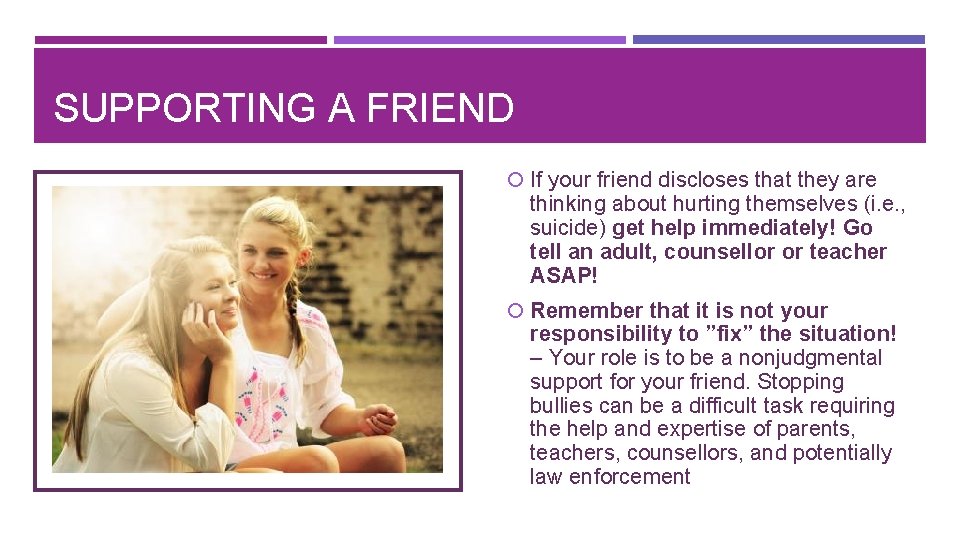
SUPPORTING A FRIEND If your friend discloses that they are thinking about hurting themselves (i. e. , suicide) get help immediately! Go tell an adult, counsellor or teacher ASAP! Remember that it is not your responsibility to ”fix” the situation! – Your role is to be a nonjudgmental support for your friend. Stopping bullies can be a difficult task requiring the help and expertise of parents, teachers, counsellors, and potentially law enforcement
WHERE TO GET HELP Parents Teachers Principal Guidance Counselor Police Friends Coaches Kids Help Line 1 -800 -668 -6868
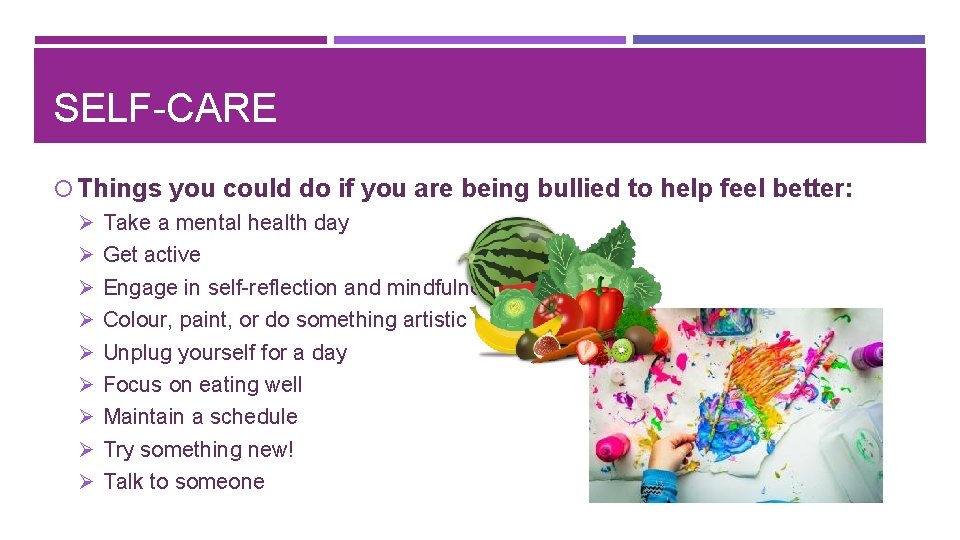
SELF-CARE Things you could do if you are being bullied to help feel better: Ø Take a mental health day Ø Get active Ø Engage in self-reflection and mindfulness Ø Colour, paint, or do something artistic Ø Unplug yourself for a day Ø Focus on eating well Ø Maintain a schedule Ø Try something new! Ø Talk to someone
RELATIONSHIPS FIRST: RESTORATIVE JUSTICE Relationship First – Restorative Justice Consortium’s promotes, supports, and encourages the development of relational policies within a variety of organizations engaged with youth; and creating and sustaining relational educational cultures in NL It is implemented through: Ø Ripples of Relationship Video Ø Self – To improve the relationship with ourselves Ø Colleagues – The ability for each member to value all other team members Ø Curriculum/Pedagogy – Providing learning opportunities for each objective in the curriculum Ø Institution - Striving to change policies for students and teachers Ø Circles – Various kinds of circles can be used in a positive learning environment to better implement Restorative Justice Ø Youth – Youth learn a great deal from the interaction they have with their peers in a classroom

RESOURCES Royal Canadian Mounted Police (RCMP) – 1(800) 709 -7267 Bell Island - (709) 488 -3312 Holyrood - (709) 229 -3892 Harbour Grace – (709) 596 -5014 Bay Roberts – (709) 786 -2118 St. John’s – (709) 772 -5400 Whitbourne – (709) 759 -2600/2584 Ferryland – (709) 432 -2440 Placentia – (709) 227 -2000 Newfoundland Labrador Sexual Assault Crisis Line – 1(800) 726 -2743 or (709) 726 -1411 Mental Health Crisis Line – 1(888) 737 -4668
RESOURCES CHANNAL Warm Line (11 am-11 pm) – 1(855) 753 -2560 or (709) 753 -2560 in St. John’s Kids Help Phone – 1(800) 668 -6868 or text CONNECT to 686868 Mental Health & Addictions Provincial Systems Navigator – (709) 752 -3916 or 1(877) 999 -7589 Victim Services – (709) 729 -7970 St. John’s – (709) 729 -0900 Carbonear – (709) 945 -3019/945 -3046 Crime Stoppers - 1(800) 222 -8477
RESOURCES Eastern Health Carbonear – (709) 945 -5111 Bell Island – (709) 488 -2821 Janeway – (709) 777 -6300 Placentia – (709) 227 -2061 NL Health. Line – 811 or 1(888) 709 -2929 Department of Children, Seniors & Social Development – (709) 729 -4612 After Hours - (709) 729 -4775 or (709) 759 -3369 Doorways – (709) 752 -4903
YOU HAVE RIGHTS To be treated fairly and with respect To be included To feel safe To be protected from abuse To say “no” to unwanted behavior
YOU HAVE RESPONSIBILITIES To treat others with respect To not exclude others To help protect others To not misuse your power by bullying To listen to people when they say NO!
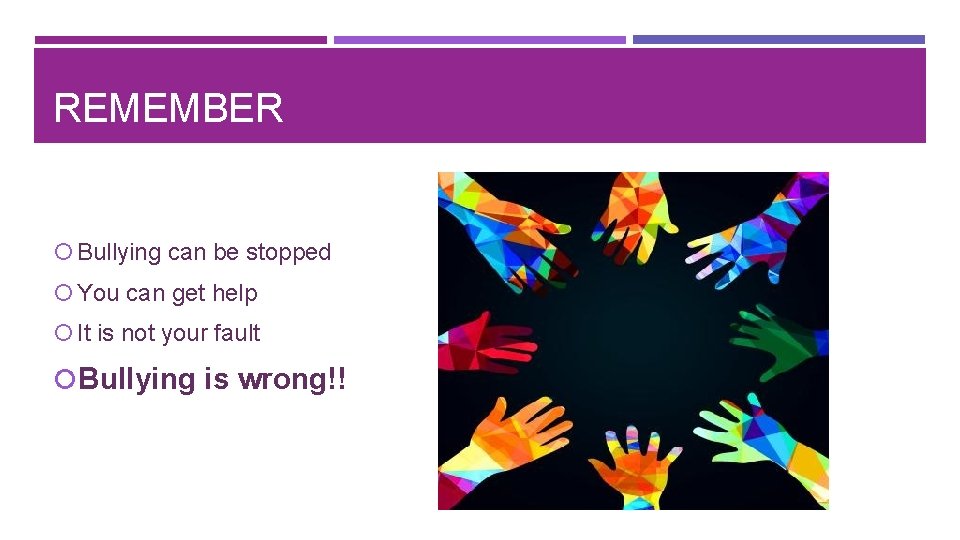
REMEMBER Bullying can be stopped You can get help It is not your fault Bullying is wrong!!
PREPARED BY: VIOLENCE PREVENTION AVALON EAST 20 HALLETT CRESCENT ST, JOHN’S NL A 1 E 1 E 2 PHONE: (709) 757 -0137 www. coalitionagainstviolence. ca @VPAvalon. East Violence Prevention Avalon East
- Slides: 36