
Bullying in the Workplace Tony Chase Manager Workplace
Bullying in the Workplace Tony Chase – Manager, Workplace Relations and General Practice Christine Neou – Workplace Relations Advisor AMA (ACT) – Private Practice Workshop August 2018
Agenda 1. 2. Background a. Defining and Identifying Bullying Behaviours b. Costs Legal Implications a. Workers Compensation b. Employer Responsibilities 3. Case Studies 4. Lessons for Employers a. 5. Conducting an investigation Questions/Discussion
What is bullying? • Workplace bullying IS the repeated and unreasonable behaviour directed towards a worker or group of workers that creates a risk to their health and safety. • Workplace bullying IS NOT performance management, goal setting exercises or managing organisational change. • Workplace bullying includes sexual harassment
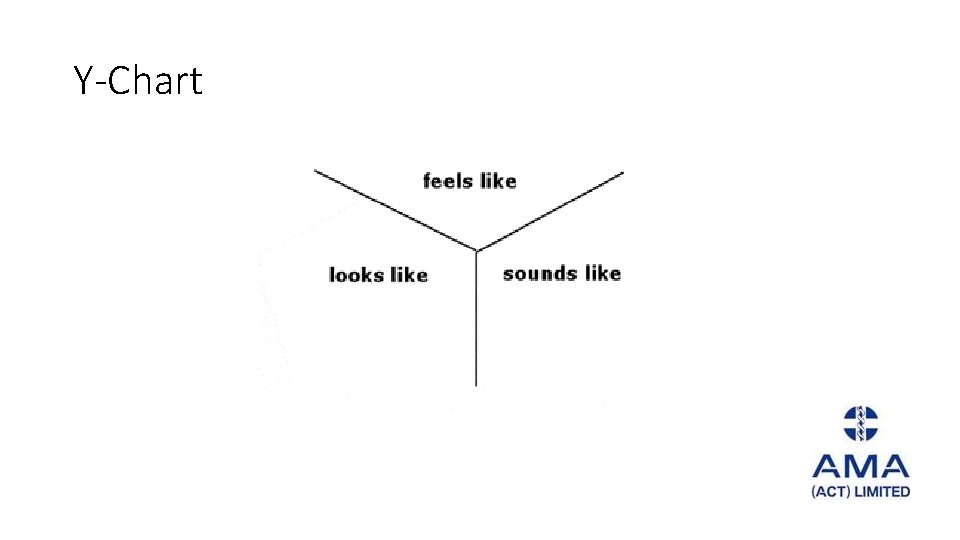
Y-Chart
Bullying Behaviours • abusive, insulting or offensive language or comments (including belittling, demeaning or patronising someone, especially in front of others) • unjustified or unreasonable criticism or complaints • singling someone out and treating them differently from others • withholding information, supervision, consultation, training or resources deliberately to prevent someone doing their job • setting unreasonable timelines or constantly changing deadlines • spreading misinformation or malicious rumours • changing work arrangements, such as rosters and leave, to deliberately inconvenience someone • setting tasks that are unreasonably below or above someone's skill level • humiliating, shouting at or threatening someone • excluding someone from taking part in activities that relate to their work • refusal to acknowledge contributions and achievements (such as finding out that a person's work – and the credit for it – has been stolen or plagiarised) • initiation or hazing – where someone is made to do humiliating or inappropriate things • teasing or playing practical jokes • refusing annual leave, sick leave, and especially compassionate leave without reasonable grounds • playing mind games, ganging up or other psychological harassment • intimidation (making someone feel less important and undervalued)
The D-Zaster Zone These risks to health and safety can be described by the D-Zaster Zone, which outlines a number of victim impacts: • Distaste, disgust, distraught, despair • Destruction: families, relationships, careers • Disengagement: life, relationships, job • Depression and nervous breakdowns • Disease: hypertension, eczema, colitis, ulcers • Drugs: self-medication (pills or alcohol) • Departures: leaving job, home, city • Death: by suicide, by disease
The Cost of Bullying • In pure economic terms the cost of sexual harassment and bullying amounts to $700 million per year. In fact this figure is in all likelihood far higher when we consider that the cost of depression alone to Australian economy according to a Safe Work Australia study in 2013 was a staggering $12. 6 billion. • In the UK a 2008 study conducted by the Chartered Management Institute found that 100 million days were lost in productivity, turnover due to sexual harassment and bullying.
Legal Requirements • Work Health and Safety Act 2011 (ACT) • Employer - reasonably practical steps to eliminate or minimise harm from risks to health and safety • Employee – duty to not expose themselves or others to work safety risks • Vicarious liability • Discrimination Act 1991 (ACT) • It is unlawful to discriminate against another person on the bases of gender, sexual orientation, religion, race, professional associations, disability, marital or parental status, pregnancy, breastfeeding, age and a range of other personal attributes. • Discrimination on any of these grounds can be referred to the ACT Human Rights Commission • Workers Compensation Act 1951 (ACT) • Private sector workers can claim compensation is respect of any medical conditions incurred as a result of workplace bullying. • Focus of this Act is on compensation, not apportioning blame.
Workers Compensation and Bullying • Accepted claims for mental stress in the workplace (about half of which are related to bullying) peaked in 2004, reaching about 8, 000 across Australia. Since then claims, have hovered around 6, 000 claims each year. • The ACT is the only jurisdiction that has no threshold or limit on Common Law claims. • The ACT is the “Workers’ Compensation Capital of Australia” • Why are the Plaintiff Lawyers spending so much on advertising? . • Over the years all reform efforts have been nobbled by influence peddling, by Unions and Plaintiff lawyers.
ACT Case Studies CASE STUDY NO. 1 • Janelle is a 25 year veteran Director of an ACT Child Care Centre • Centre employs over 70 staff mostly casual and part-time, (a sizable number of University Students) • A complaint received from a parent about poor attitude of senior child care worker at a parent/child care worker meeting • Following some routine counselling the employee lodges a WC claim alleging “bullying” by the Director. • Insurer investigation into ‘bullying’ was stalled due to absence of staff on sick leave. • Another staff member, (who happened to be a friend of the original complainant) also lodged a bullying claim who also went on sick leave.
ACT Case Studies • Employer received a phone call from a prominent local Lawyer suggesting that the employer should ‘settle quickly’. A sum of money was mentioned. • The Insurer agreed and each of the claimant’s received a reported lump sum payout of $30, 000 each in exchange for a resignation. • No investigation was ever undertaken as to the veracity of the ‘bullying’ claims. • There was some evidence that the complainant was a bully of younger staff. No action taken. • WC premium increased by 8% next year off the back of a good record.

ACT Case Studies CASE STUDY NO. 2 • Senior Executive employee at a local large community organisation after 18 months employment, claimed that she was the subject of bullying by a Board member. • At the employer’s request, I conducted an investigation into the allegations. The Senior Executive was on sick leave and continually evaded contact with the me as the investigator. Based on the limited evidence available I was unable to substantiate the allegations. • The employee lodged a WC claim based on the original bullying allegations. Subsequently, the Insurance company conducted its own investigation and did not support the claim in the first instance. • The matter was listed for hearing and on the day of the proceedings the parties settled the matter. The employee received $300, 000 as a pay out, and in exchange tendered her resignation. • The veracity of the bullying claim was never tested in Court.
How does this happen? • Under the current legislation it is not necessary for an employee to prove that they have actually been bullied. It is merely sufficient to establish that they have a reasonable perception of being bullied. • The statutory scheme of legislation is an “open invitation” for employees to run these types of claims. • It is merely sufficient for an employee to establish that work was a “contributing factor”. • The ACT Legislation is weak and does not reflect the needs of the contemporary workplace. The ACT legislation is out of step with very other jurisdiction in Australia. • The reform agenda has been such as it has been since 2002 has been ‘technical in scope’ directed towards employer’s and underwriter compliance. • The reform agenda has been politically compromised by the influence of the plaintiff lawyer lobby in the Territory and the trade unions, notably the CFMEU. • This failure must be laid squarely at the door of the ACT Government
![National Case Study • Hanrick v Meridian Lawyers [2018] FWC 3256 Common defence to](http://slidetodoc.com/presentation_image/f5ccdfece42e159473ea1a44beeb20c8/image-14.jpg "National Case Study • Hanrick v Meridian Lawyers [2018] FWC 3256 Common defence to")
National Case Study • Hanrick v Meridian Lawyers [2018] FWC 3256 Common defence to a workplace bullying claim is a counter-bullying claim; this is where the person who has a claim made against them accuses the same person, or another, of bullying them If found to be false, this is considered ‘serious misconduct’ and warrants termination of employment.
Conducting an Investigation • Bullying complaints are frequently complex and consume large quantities of time and management effort, as HR practitioners and Line Manager are more regularly being called upon to conduction investigations into staff complaints. • Courts and Tribunals are frequently criticising organisations for poorly executed investigations. • In a recent example, an employee who was sacked on harassment claims has been reinstated and paid lost earnings based on the decision made by the Australian Industrial Relations Commission (AIRC) that the company did not follow appropriate procedures for investigating and dealing with the harassment claim. The AIRC said there were ‘significant deficiencies’ in the company’s investigation and therefore the company had no reasonable basis on which to make their decision to terminate the supervisor’s employment. • What then, are some key dos and don’ts of an investigation?
The “Dos” • Make sure that you have clear “terms of reference” defining the scope of the investigation, and responsibilities of the investigator; • Ask, am I the right person to be undertaking this investigation? Do I have the objectivity, time and skill? ; • Start any investigation with an “empty head” – too frequently parties to a workplace incident will have biases; • Ensure you follow the principles of natural justice, in particular towards the rights of the person being accused of inappropriate behaviour; • Remember that the process can be very stressful and time consuming; a poorly conducted investigation can damage workplace relationships for many years to come. Haste can result in an unjust outcome. An investigation is often an educative journey for the parties who will need time to reflect upon their actions; • Make a finding in relation to each and every element of the allegation(s). No-one should be left with a cloud of doubt hanging over them; • Record in your report not only the allegation, but the arguments and/or supporting evidence given by both the complainant and the respondent; • Ensure there is a clear and logical connection between the evidence, your findings and any conclusions you might make. Demonstrate in your report that you have properly considered all of the material evidence; and • Emphasise to all parties the need for confidentiality throughout the process, ensuring secure storage of any documentation
The “Don’t’s” • Undermine your independence, resist pressure to make the finding you think is wanted by the organisation; • Put too much weight on hearsay; • Give undertakings to the parties that you will maintain confidentiality in relation to their evidence / comments. You may not be able to keep such undertakings; • Make comments that might be interpreted by the parties as bias; • Accept what you are told without testing it against evidence; • Try to deal with a matter rationally without acknowledging and dealing with emotional responses from the parties being interviewed; • Indicate your impressions prior to completing the investigation. You may actually change your initial impressions during the course of the investigation and upon the discovery of further evidence; • Don’t offer advice that has not been asked for or make a finding that a person has acted unlawfully. It is not the role of the investigator to determine if a person has acted unlawfully. You might find that their actions or behaviour “might be capable of being characterised as unlawful by a relevant court or tribunal. ”
Lessons For Employers • The Practice must have a up-to-date Bullying & Harassment Policy, and a Work Health and Safety Policy. • Staff need to be trained in work health and safety requirements. • There needs to be regular assessments of risks in the practice using safe steps. • Be proactive in addressing workplace conflict, however trivial it may appear – it can easily escalate • What Other Steps?

Questions
- Slides: 19