
Bully Prevention Henry Elementary C Larry and L
Bully Prevention Henry Elementary C. Larry and L. Kilpatrick, 2012
**How Supervisors respond to problem behavior can make or break the results of the Bully Prevention in Positive Behavior Support program. **It is critical that supervisors be prepared to reward students the first time they use one of the Bully Prevention -PBS strategies. (BP-PBS)
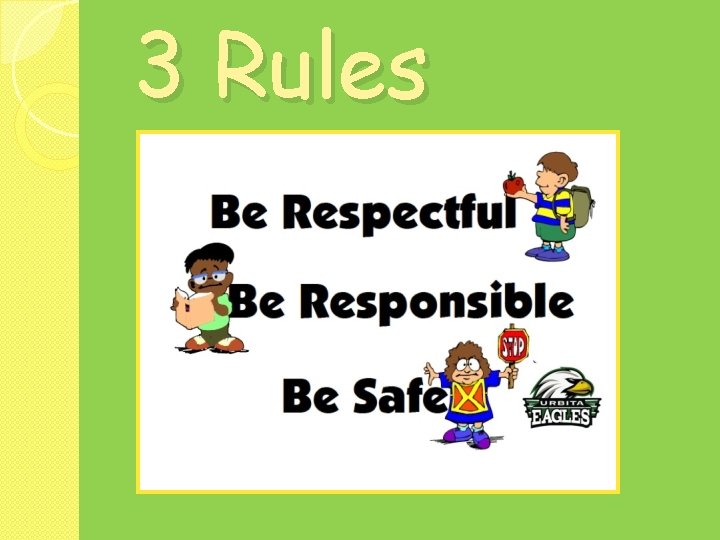
3 Rules
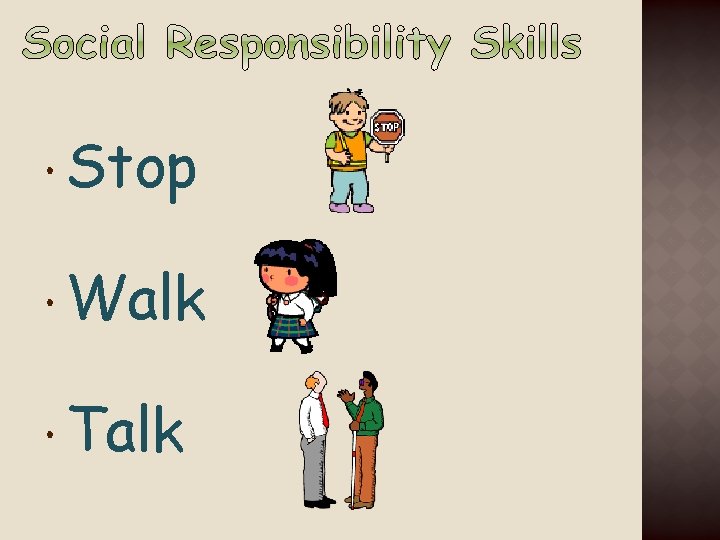
Stop Walk Talk
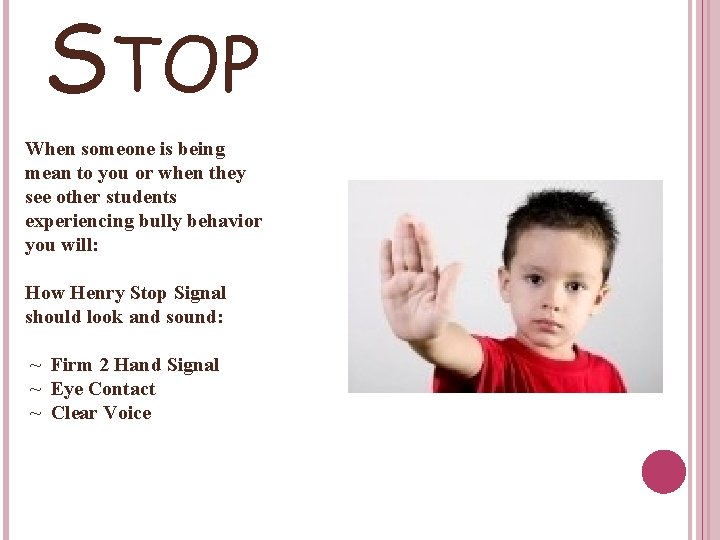
STOP When someone is being mean to you or when they see other students experiencing bully behavior you will: How Henry Stop Signal should look and sound: ~ Firm 2 Hand Signal ~ Eye Contact ~ Clear Voice
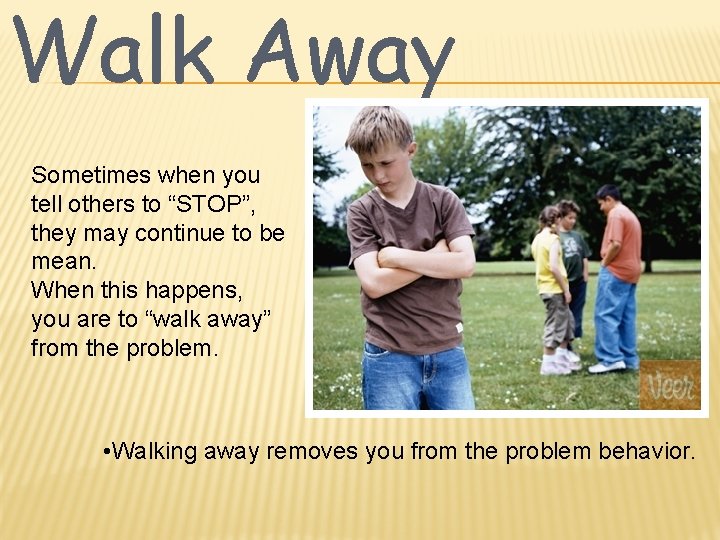
Walk Away Sometimes when you tell others to “STOP”, they may continue to be mean. When this happens, you are to “walk away” from the problem. • Walking away removes you from the problem behavior.
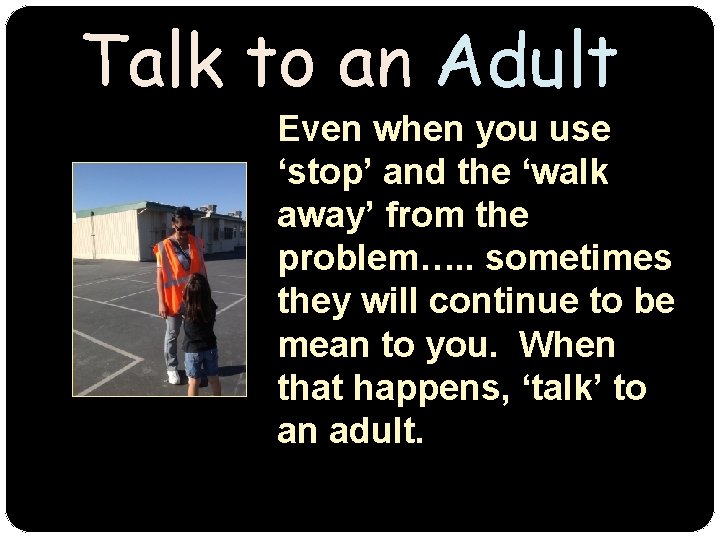
Talk to an Adult Even when you use ‘stop’ and the ‘walk away’ from the problem…. . sometimes they will continue to be mean to you. When that happens, ‘talk’ to an adult.
How Adults Will Respond 1. Adults will ask you what the problem is. 2. They will ask if you said “Stop”. 3. They will ask if you “walked away” calmly. 1 -5
Understanding the difference between Talking and Tattling u“Talking” is when you have tried to solve the problem yourself, and have used the ‘stop’ and ‘walk’ steps first: Did you request ‘stop”? Did you ‘walk away”? u Tattling is when you do not use the ‘stop’ and ‘walk away’ steps before talking to an adult. u. Tattling is when your goal is to get the other person in trouble. **If any student is in danger, the ‘stop’ and ‘walk away’ steps should be skipped, and telling an adult should happen immediately.
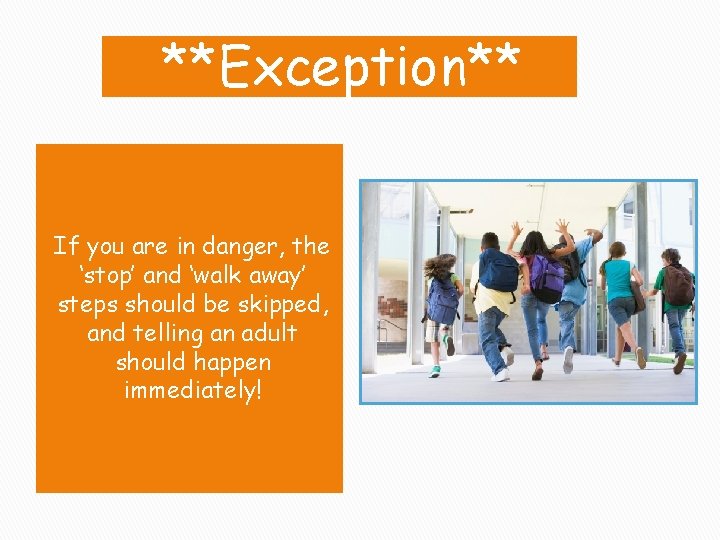
**Exception** If you are in danger, the ‘stop’ and ‘walk away’ steps should be skipped, and telling an adult should happen immediately!
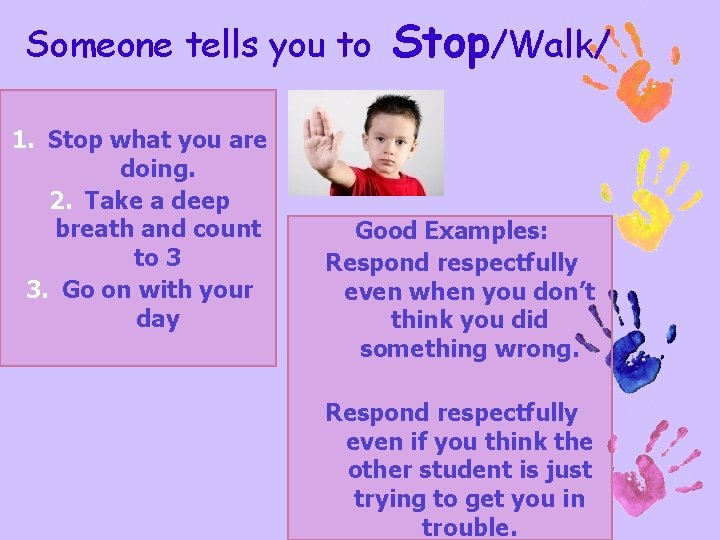
Someone tells you to 1. Stop what you are doing. 2. Take a deep breath and count to 3 3. Go on with your day Stop/Walk/ Good Examples: Respond respectfully even when you don’t think you did something wrong. Respond respectfully even if you think the other student is just trying to get you in trouble.
Rewarding Appropriate Behavior Look for Students that use the 3 step response appropriately and reward. 2. Reward them for efforts for being responsible. 1.
Should you use the Stop Signal? a) Johnny pokes Sally in the back, over and over while in line. b) Susie teases Sally and calls her names. c) Johnny accidentally breaks a rule in basketball. d) Joey tackles Sam while playing two hand touch football. e) Sally continues to poke Susie in line, even after Susie has delivered the stop signal.
Bully Prevention in Positive Behavior Support o. Using 3 steps in responding to bully behavior C. Larry and L. Kilpatrick, 2012
- Slides: 14