
Building Up to a Revolution French Society Leading
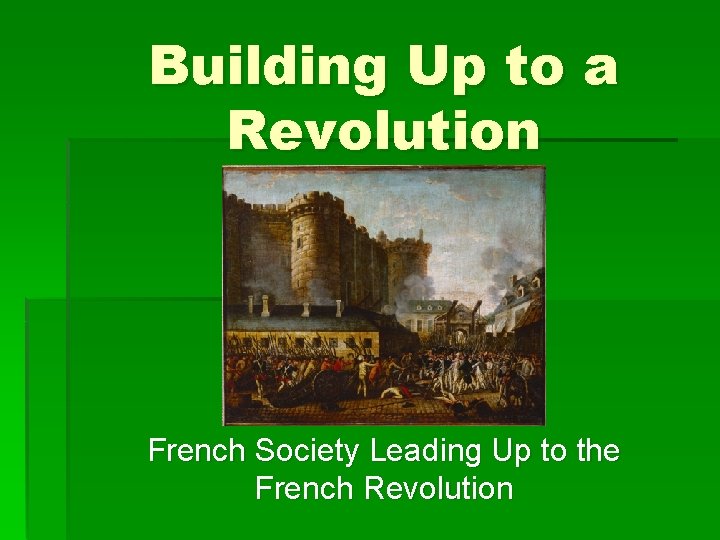
Building Up to a Revolution French Society Leading Up to the French Revolution
What is a

Definition § noun An overthrow and the thorough replacement of an established government or political system by the people governed.

In the 1700 s France was the leading country of Europe. It was the center of the new ideas of the Enlightenment. However, beneath the surface there were major problems causing unrest. Soon the nation would be torn by a violent revolution.

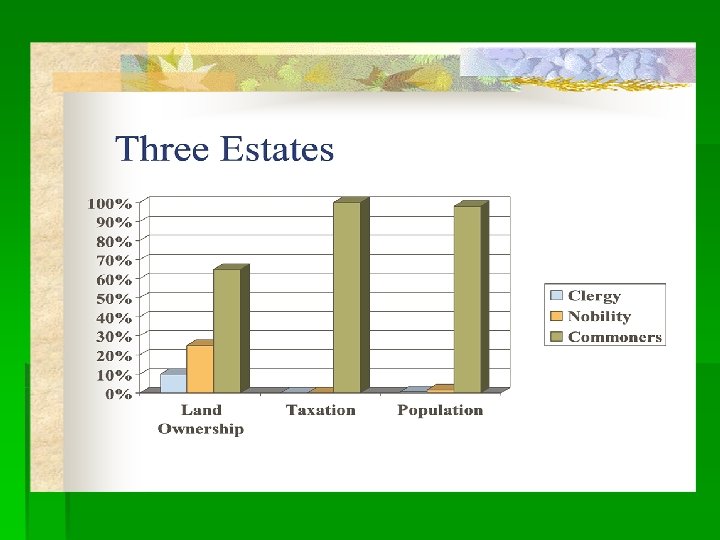
French Society was divided into three social classes or estates. § First Estate: Clergy § Second Estate: Nobility § Third Estate: Commoners
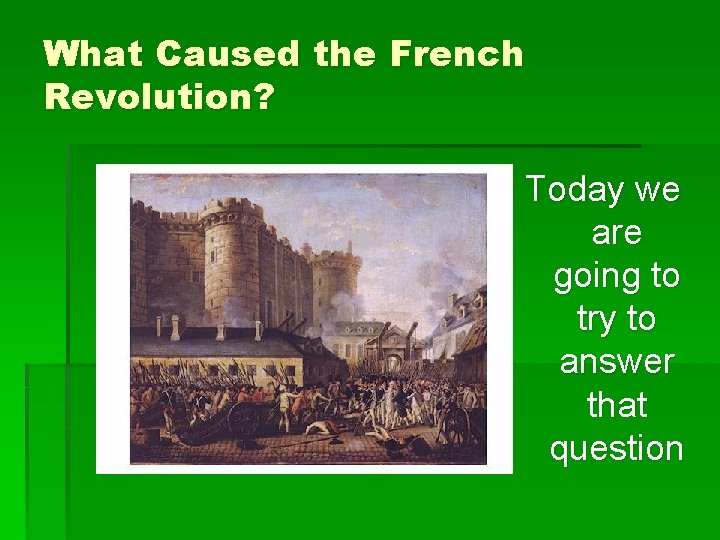
What Caused the French Revolution? Today we are going to try to answer that question
Economic Changes During the eighteenth century important economic changes took place in France. Peasants were finding it increasingly difficult to pay for the basics In life. For example, the cost of living rose by 45%, wages rose by only 22% and the population increased from 19 million at the start of the century to nearly 26 million on the eve of the Revolution.
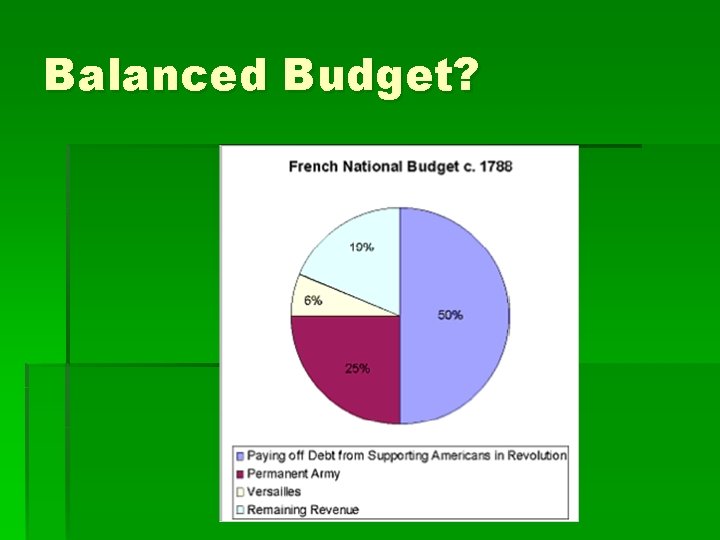
Balanced Budget?
Yearly Incomes § § § Archbishop of Paris Marquis de Mainvillette Prince de Conti A Paris parish priest A village priest A master Carpenter 50, 000 livres 20, 000 livres 14, 000 livres 10, 000 livres 750 livres 200 livres (The livre is the monetary unit used by France before being replaced by the franc in 1795)
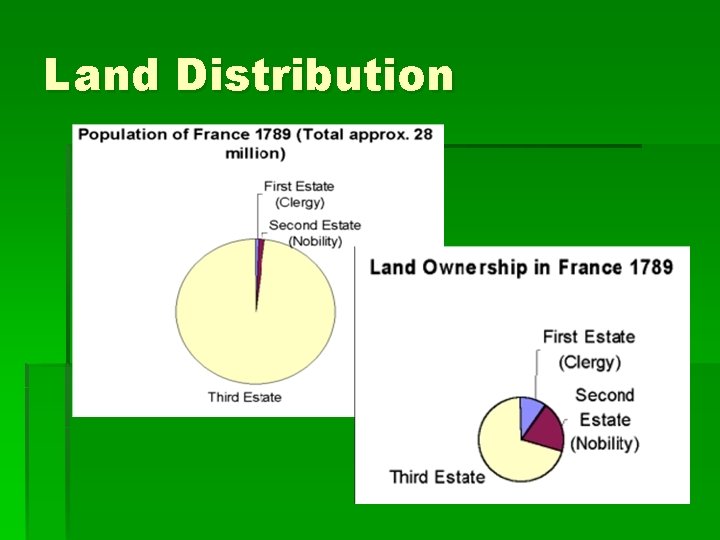
Land Distribution
Man does not live by bread alone The people of France lived on the poorest sort of bread made from barley or oats. The bread could sometimes be lifted by the barley straws sticking out of it. They also ate fruits, mainly wild, and a few vegetables from their gardens. They seldom drank wine. They ate meat less than three times a year. By 1789, the price of bread had risen to 14 sous per loaf. At times it hit 15 sous. By the spring of 1789 a poor family in Paris could be spending 88% of all their earnings on bread. Those that had lost their jobs were likely to starve. **Sous-- One of several coins formerly used in France, worth a small amount.
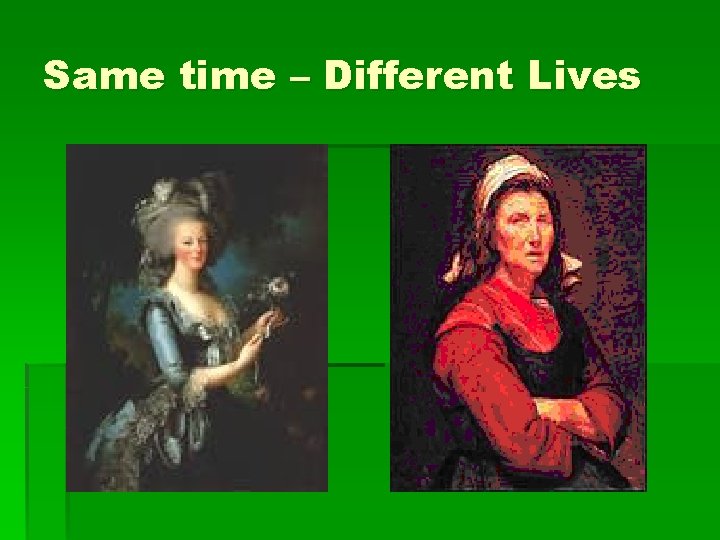
Same time – Different Lives
Noble? 1. The nobility enjoyed and owned everything, and wanted to free itself from everything. 2. The nobility commanded the army, but the army consisted of the Third Estate.
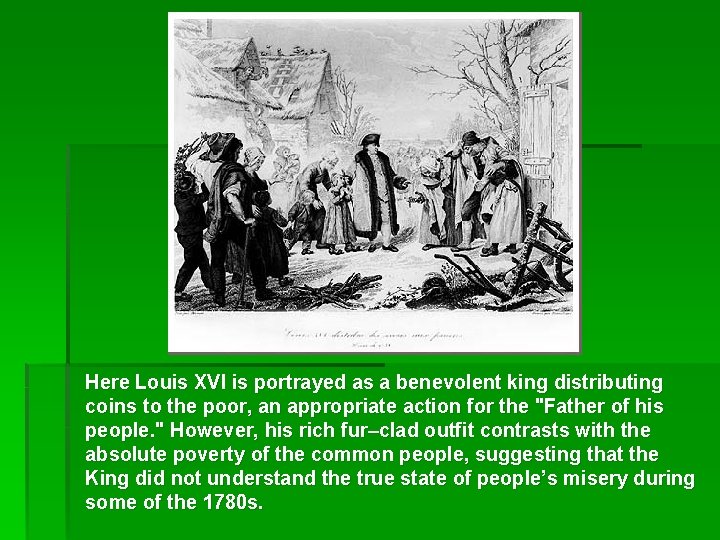
Here Louis XVI is portrayed as a benevolent king distributing coins to the poor, an appropriate action for the "Father of his people. " However, his rich fur–clad outfit contrasts with the absolute poverty of the common people, suggesting that the King did not understand the true state of people’s misery during some of the 1780 s.
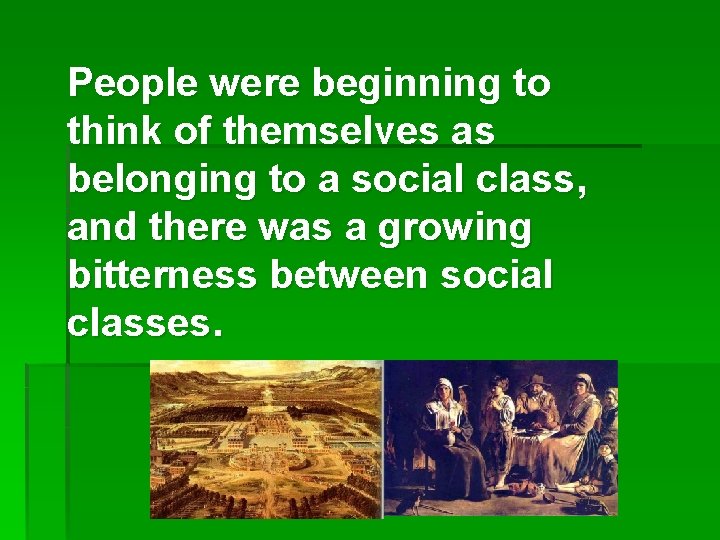
People were beginning to think of themselves as belonging to a social class, and there was a growing bitterness between social classes.
An Englishman’s view of French peasants 1787 -1790 I was joined by a poor woman who complained of the times. Her husband had only a morsel of land, one cow, and a poor horse. But they had to pay 20 kg of wheat and three chickens as feudal dues to one lord, and 60 kg of oats, one chicken, and five pence to another, along with very heavy taxes to the king’s tax collectors: “The taxes and feudal dues are crushing us. ” (Travels in France—Arthur Young, 1792)
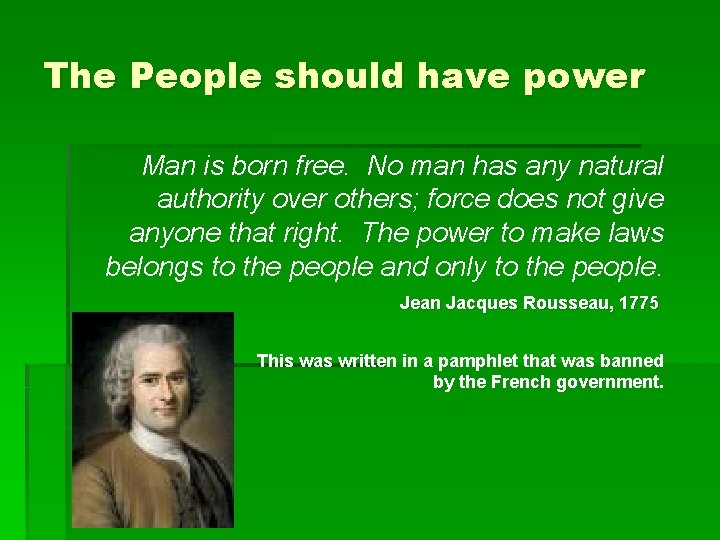
The People should have power Man is born free. No man has any natural authority over others; force does not give anyone that right. The power to make laws belongs to the people and only to the people. Jean Jacques Rousseau, 1775 This was written in a pamphlet that was banned by the French government.
- Slides: 18