
Building the Charging Pyramid What Cities Can Do
Building the Charging Pyramid: What Cities Can Do to Grow the Market Marcy Rood, Clean Cites Team Lead Dan Santini, Retired, Senior Economist Yan (Joann) Zhou, Principal Transportation Analyst Argonne National Laboratory October 29, 2018
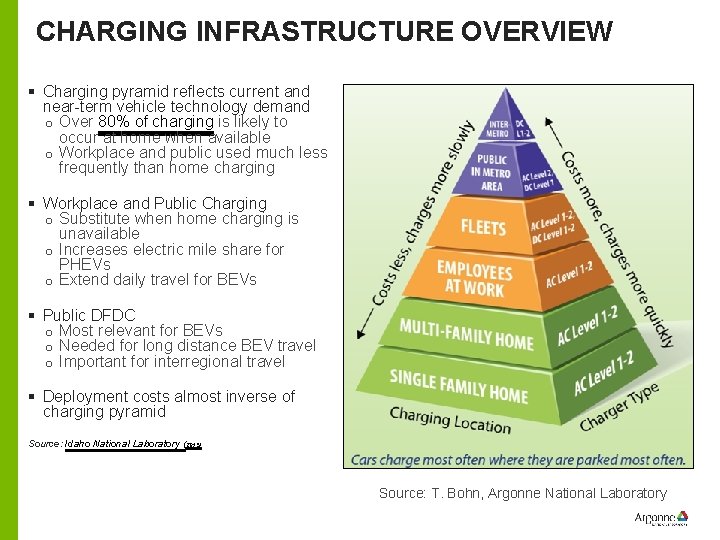
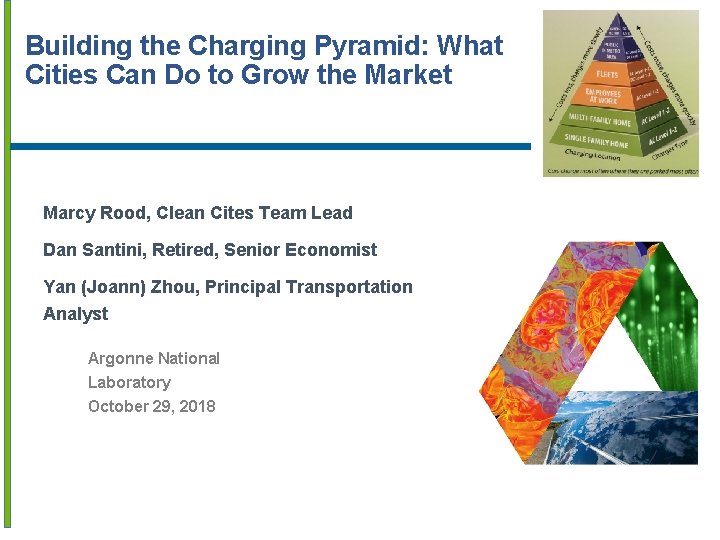
CHARGING INFRASTRUCTURE OVERVIEW § Charging pyramid reflects current and near-term vehicle technology demand o Over 80% of charging is likely to occur at home when available o Workplace and public used much less frequently than home charging § Workplace and Public Charging o Substitute when home charging is unavailable o Increases electric mile share for PHEVs o Extend daily travel for BEVs § Public DFDC o Most relevant for BEVs o Needed for long distance BEV travel o Important for interregional travel § Deployment costs almost inverse of charging pyramid Source: Idaho National Laboratory (2015) Source: T. Bohn, Argonne National Laboratory
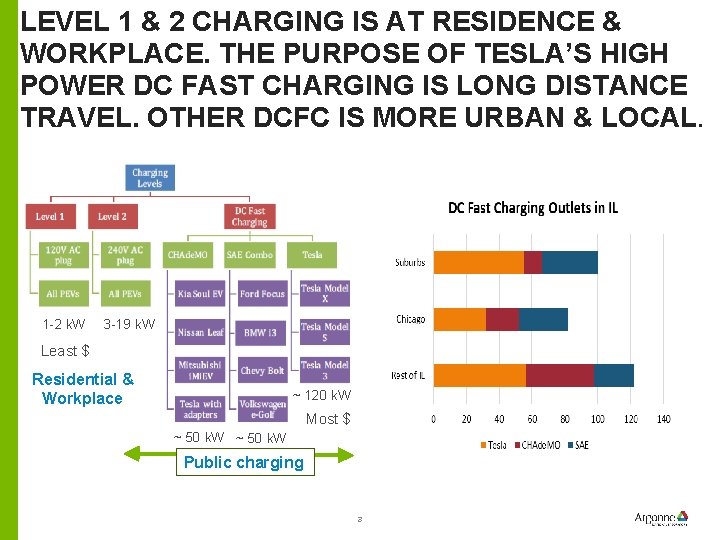
LEVEL 1 & 2 CHARGING IS AT RESIDENCE & WORKPLACE. THE PURPOSE OF TESLA’S HIGH POWER DC FAST CHARGING IS LONG DISTANCE TRAVEL. OTHER DCFC IS MORE URBAN & LOCAL. 1 -2 k. W 3 -19 k. W Least $ Residential & Workplace ~ 120 k. W Most $ ~ 50 k. W Public charging 3
MUNICIPAL ROLE §Leadership §Planning PEVs & infrastructure for fleets, employees, TNCs, and all citizens §Setting policies – to help all participants –Inspection, permitting, safety, codes –Setting zoning ordinance –Parking garages, On-street parking – ADA and enforcement –Siting, signage, space marking –New construction –Disadvantage populations §Training –Municipal staff –First responders
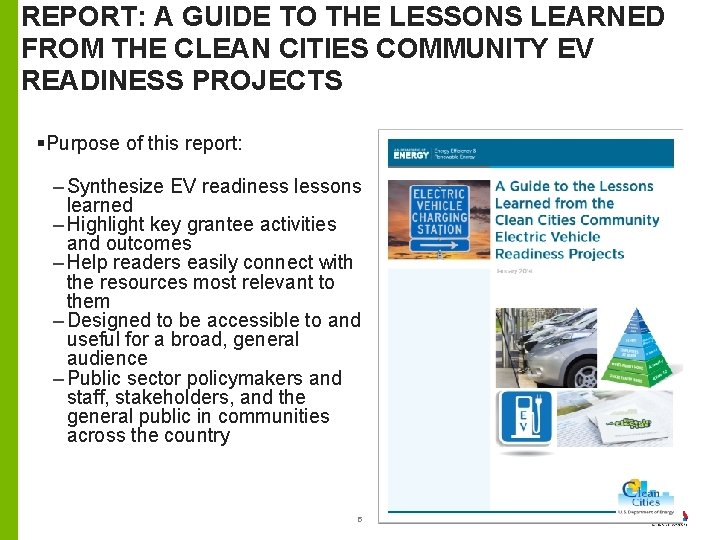
REPORT: A GUIDE TO THE LESSONS LEARNED FROM THE CLEAN CITIES COMMUNITY EV READINESS PROJECTS § Purpose of this report: – Synthesize EV readiness lessons learned – Highlight key grantee activities and outcomes – Help readers easily connect with the resources most relevant to them – Designed to be accessible to and useful for a broad, general audience – Public sector policymakers and staff, stakeholders, and the general public in communities across the country 5
M A a r. G u c i h d e 1 2 , t o 2 t 0 h 1 e 4 L e s s o n s L e LOCAL GOVERNMENTS: TOOLKITS §Local governments can be powerful supporters of charging station deployment • Toolkits providing case studies, model ordinances, and planning guidance – Master plan language – Standard definitions of PEV-related terms in local codes – Zoning ordinance updates – Building and electrical codes: clarification and/or active support – Prudent streamlining of permitting and inspection • Public parking regulation, enforcement, and signage • Consumer Education
PEV READINESS GRANTS HAD CONSISTENT POSITIVE AND GENERALLY SIGNIFICANT IMPACTS Varying sets of variables to be significantly correlated with each PEV market segment (mass, medium, luxury) at county level. § Negative effects of extreme temperature were particularly strong for the total market and for the mass-market BEVs § State and federal monetized benefits were twice as important for BEVs as for PHEVs § Level 2 public charging availability shows significant positive impacts in the mass and total PHEV markets, but not in BEV markets. § Workplace charging shows a positive but lower coefficient for BEVs than for PHEVs § PEV Readiness Grants had consistent positive and generally significant impacts in all PHEV market segments, as well as mass-market and total BEVs § HOV lane subsidies appear to be very important in the mass market § Income has significantly positive impacts in EVERY market segment, dominating the education effect. § Fuel Cost: Interestingly, gasoline prices are negatively correlated to the luxury BEVs, luxury PHEVs and mid-market PHEVs, but not mass-markets or total markets. § Longer Work Travel Time significantly decreases luxury BEV and mid-market PHEV market adoption, but not mass markets. 7
S e p PATHWAYS TO EV: PREPARING CITIES FOR THE TRANSITION t TO ELECTRIC VEHICLES e m § Key questions to ask your team when planning a b program: e r 5 , 2 0 2 1 1. 2. 3. 4. What are the characteristics of the city? What is the composition of the housing stock? What are the renewable resources of the city? Is the city near a regional corridor? § Source: Cadmus Group, Pathways to EV: Preparing cities for the transition to electric vehicles, PREPARED FOR THE URBAN SUSTAINABILITY DIRECTORS NETWORK, CITY OF COLUMBIA, MISSOURI & PARTICIPATING COMMUNITIES, JUNE 2018 8
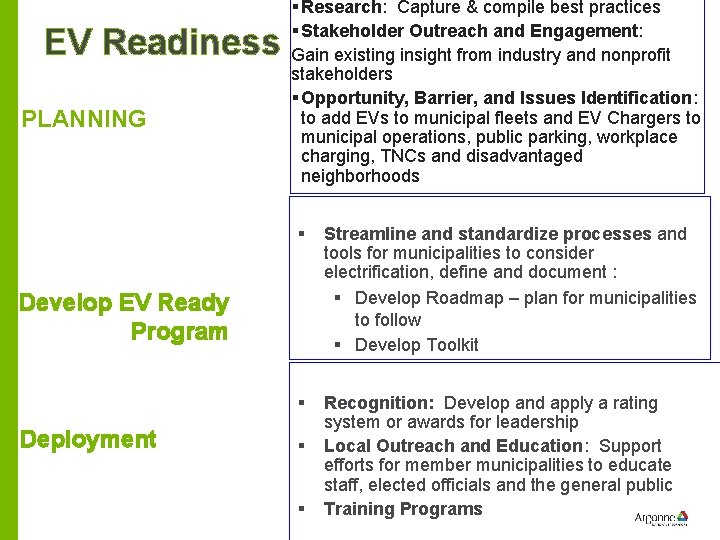
EV Readiness PLANNING § Research: Capture & compile best practices § Stakeholder Outreach and Engagement: Gain existing insight from industry and nonprofit stakeholders § Opportunity, Barrier, and Issues Identification: to add EVs to municipal fleets and EV Chargers to municipal operations, public parking, workplace charging, TNCs and disadvantaged neighborhoods § Streamline and standardize processes and tools for municipalities to consider electrification, define and document : § Develop Roadmap – plan for municipalities to follow § Develop Toolkit § Recognition: Develop and apply a rating system or awards for leadership Local Outreach and Education: Support efforts for member municipalities to educate staff, elected officials and the general public Training Programs Develop EV Ready Program Deployment § §
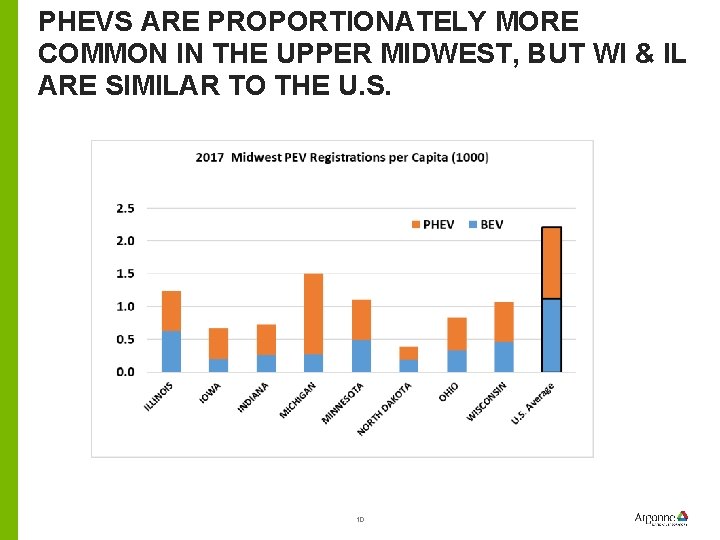
PHEVS ARE PROPORTIONATELY MORE COMMON IN THE UPPER MIDWEST, BUT WI & IL ARE SIMILAR TO THE U. S. 10
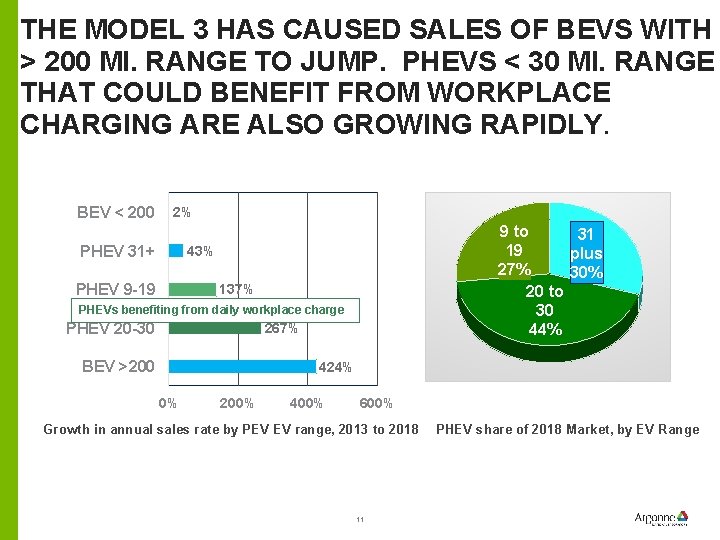
THE MODEL 3 HAS CAUSED SALES OF BEVS WITH > 200 MI. RANGE TO JUMP. PHEVS < 30 MI. RANGE THAT COULD BENEFIT FROM WORKPLACE CHARGING ARE ALSO GROWING RAPIDLY. BEV < 200 2% PHEV 31+ 9 to 31 19 plus 27% 30% 20 to 30 44% 43% PHEV 9 -19 137% PHEVs benefiting from daily workplace charge PHEV 20 -30 267% BEV >200 424% 0% 200% 400% 600% Growth in annual sales rate by PEV EV range, 2013 to 2018 11 PHEV share of 2018 Market, by EV Range
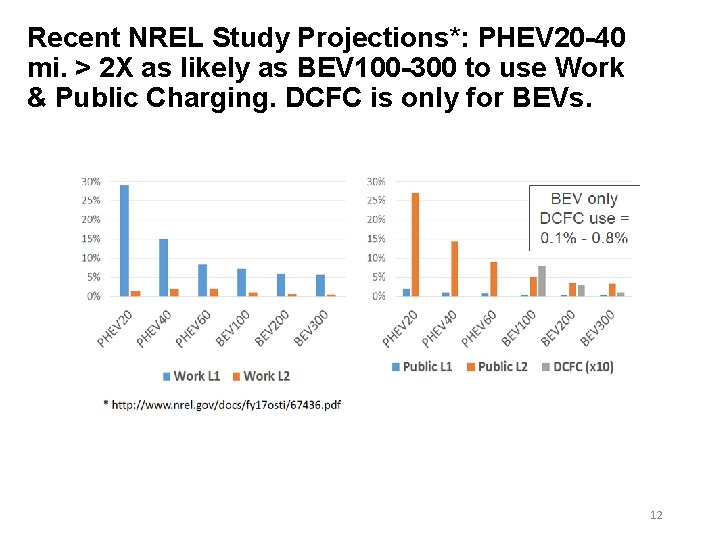
Recent NREL Study Projections*: PHEV 20 -40 mi. > 2 X as likely as BEV 100 -300 to use Work & Public Charging. DCFC is only for BEVs. 12
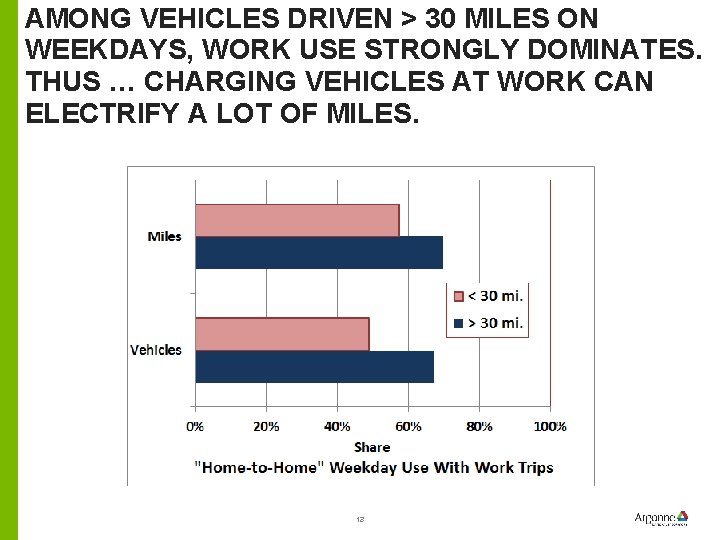
AMONG VEHICLES DRIVEN > 30 MILES ON WEEKDAYS, WORK USE STRONGLY DOMINATES. THUS … CHARGING VEHICLES AT WORK CAN ELECTRIFY A LOT OF MILES. 13
HOW MUCH CHARGING CAPACITY CAN YOU PROVIDE AND WHEN CAN YOU PROVIDE IT? How much? – Is any parking already served by electrical outlets? (probably no) – How many parking spots are close to existing electrical panels? – Do you plan to shuffle vehicles at charging spots with high k. W, or – Are you going to assign/rent parking for a day, week, month, year? – What is your property’s excess capacity on peak days? – Will those considering PEVs know how many can be served? When? – Will early arrivals be able to charge longer? Late departures? – Will charging be allowed on weekends and holidays? Late nights? – Are you going to curtail charging on peak days? 14
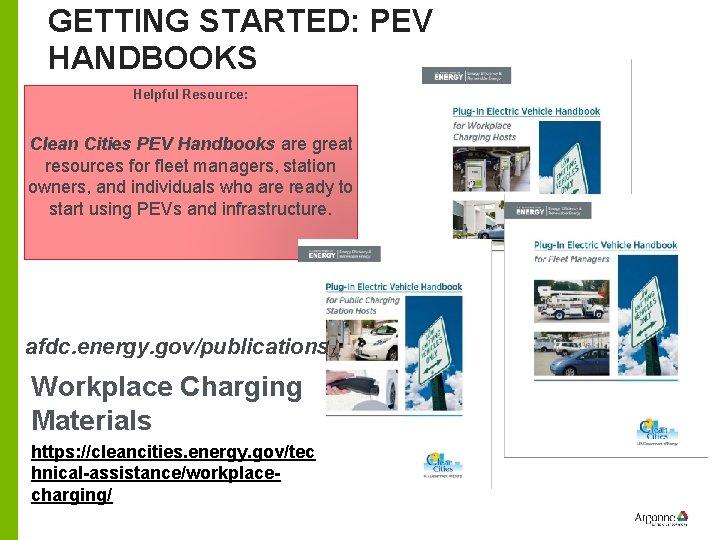
GETTING STARTED: PEV HANDBOOKS Helpful Resource: Clean Cities PEV Handbooks are great resources for fleet managers, station owners, and individuals who are ready to start using PEVs and infrastructure. afdc. energy. gov/publications Workplace Charging Materials https: //cleancities. energy. gov/tec hnical-assistance/workplacecharging/
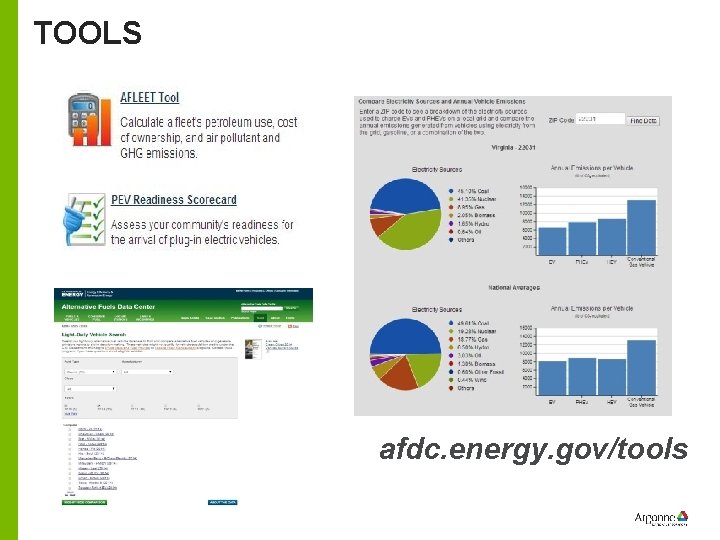
TOOLS afdc. energy. gov/tools
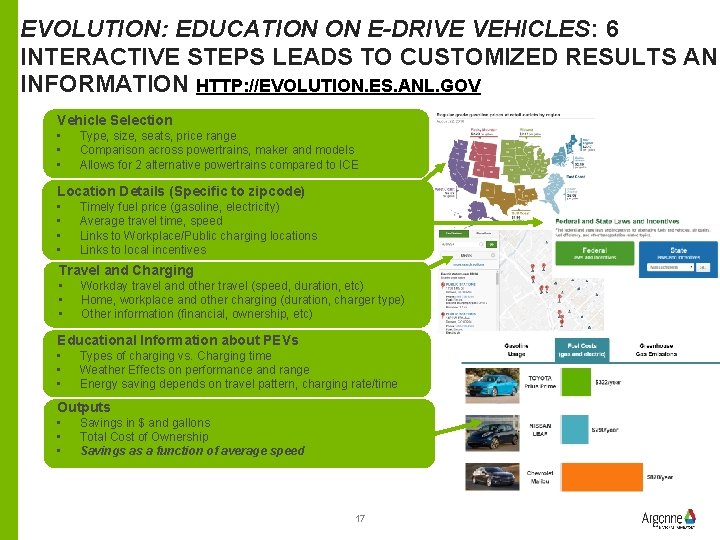
EVOLUTION: EDUCATION ON E-DRIVE VEHICLES: 6 INTERACTIVE STEPS LEADS TO CUSTOMIZED RESULTS AND INFORMATION HTTP: //EVOLUTION. ES. ANL. GOV Vehicle Selection • • • Type, size, seats, price range Comparison across powertrains, maker and models Allows for 2 alternative powertrains compared to ICE Location Details (Specific to zipcode) • • Timely fuel price (gasoline, electricity) Average travel time, speed Links to Workplace/Public charging locations Links to local incentives Travel and Charging • • • Workday travel and other travel (speed, duration, etc) Home, workplace and other charging (duration, charger type) Other information (financial, ownership, etc) Educational Information about PEVs • • • Types of charging vs. Charging time Weather Effects on performance and range Energy saving depends on travel pattern, charging rate/time Outputs • • • Savings in $ and gallons Total Cost of Ownership Savings as a function of average speed 17
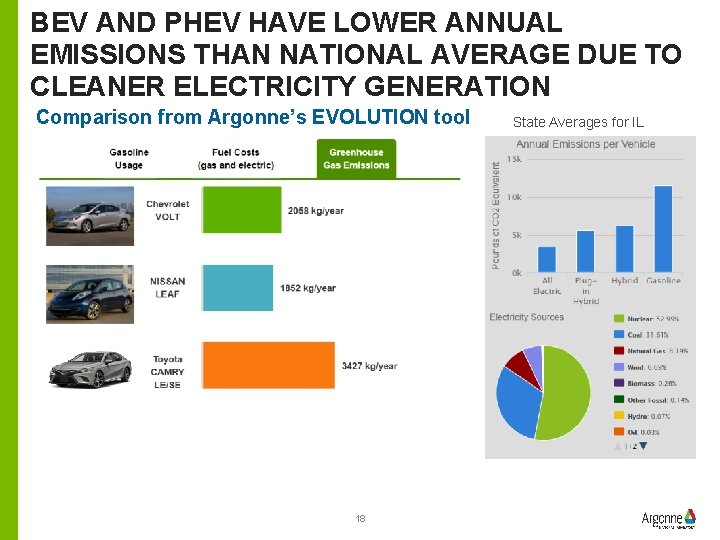
BEV AND PHEV HAVE LOWER ANNUAL EMISSIONS THAN NATIONAL AVERAGE DUE TO CLEANER ELECTRICITY GENERATION Comparison from Argonne’s EVOLUTION tool 18 State Averages for IL

About Argonne National Laboratory Argonne is a U. S. Department of Energy laboratory managed by UChicago Argonne, LLC under contract DE-AC 0206 CH 11357. The Laboratory’s main facility is outside Chicago, at 9700 South Cass Avenue, Argonne IL 60439. For information about Argonne and its pioneering science and technology programs, see www. anl. gov THANKS! Marcy Rood, mrood@anl. gov Disclaimer This presentation was prepared as an account of work sponsored by an agency of the United States Government. Neither the United States Government nor any agency thereof, nor UChicago Argonne, LLC, nor any of their employees or officers, makes any warranty, express or implied, or assumes any legal liability or responsibility for the accuracy, completeness, or usefulness of any information, apparatus, product, or process disclosed, or represents that its use would not infringe privately owned rights. Reference herein to any specific commercial product, process, or service by trade name, trademark, manufacturer, or otherwise, does not necessarily constitute or imply its endorsement, recommendation, or favoring by the United States Government or any agency thereof. The views and opinions of document authors expressed herein do not necessarily state or reflect those of the United States Government or any agency thereof, Argonne National Laboratory, or UChicago Argonne, LLC. The submitted manuscript has been created by Argonne National Laboratory, a U. S. Department of Energy laboratory managed by UChicago Argonne, LLC, under Contract No. DE-AC 02 -06 CH 11357. The U. S. Government retains for itself, and others acting on its behalf, a paid-up, nonexclusive, irrevocable worldwide license in said article to reproduce, prepare derivative works, distribute copies to the public, and perform publicly and display publicly, by or on behalf of the Government
WHAT KIND OF MONEY ARE WE TALKING ABOUT? PHEVs & BEVs allocated ~ 8 k. Wh/day and using Level 1 charging at 1. 4 - 2 k. W • $220 to $650/yr. per vehicle (11 cents/k. Wh to 33 cents/k. Wh) BEVs & “guzzler” PHEVs of “garage orphans” allocated ~ 20 k. Wh /day using Level 2 charging at 3 to 6 k. W • $600 to $2420/yr. per vehicle (12 cents/k. Wh to 48 cents/k. Wh) 20
IF YOU CAN INCREASE USE OF YOUR CHARGERS, AMORTIZED CHARGER INSTALLATION COST PER VEHICLE SERVED DROPS § Locations with multiple shifts can benefit § Locations with in-house fleets charged overnight benefit § 24/7 businesses with chargers for employees can benefit § If 2 x vehicles charged/day ($ 0. 10/k. Wh + installation) – 8 k. Wh/day using Level 1 charging at 1. 4 - 2 k. W $220 to $650/yr. per vehicle drops to $210 to $425/yr. Range of 11 cents/k. Wh to 33 cents/k. Wh drops to 10. 5 to 21 – 20 k. Wh /day using Level 2 charging at 3 to 6 k. W $600 to $2420/yr. per vehicle drops to $550 to $1460/yr. Range of 12 cents/k. Wh to 48 cents/k. Wh drops to 11 to 29 21
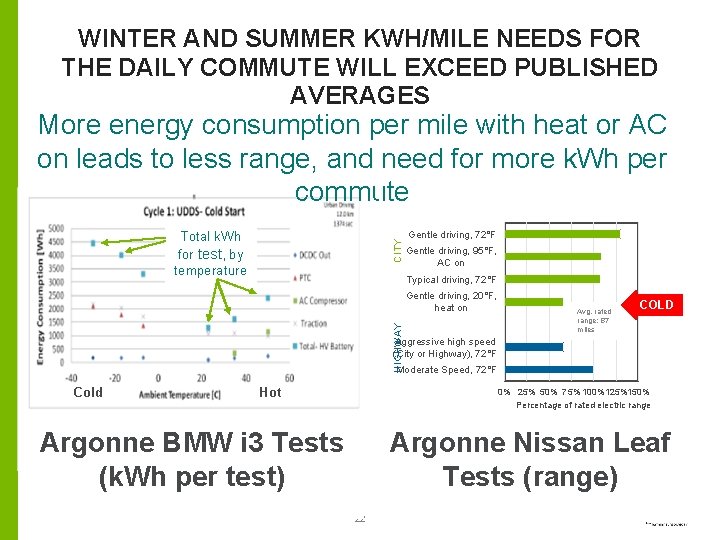
WINTER AND SUMMER KWH/MILE NEEDS FOR THE DAILY COMMUTE WILL EXCEED PUBLISHED AVERAGES More energy consumption per mile with heat or AC on leads to less range, and need for more k. Wh per commute CITY Total k. Wh for test, by temperature Gentle driving, 72°F Gentle driving, 95°F, AC on Typical driving, 72°F HIGHWAY Gentle driving, 20°F, heat on Avg. rated range: 87 miles COLD Aggressive high speed (City or Highway), 72°F Moderate Speed, 72°F Cold Hot 0% 25% 50% 75% 100%125%150% Percentage of rated electric range Argonne BMW i 3 Tests (k. Wh per test) Argonne Nissan Leaf Tests (range) 22
REMEMBER, ONE SIZE DOES NOT FIT ALL. YOUR EMPLOYEES’ PEV KW & KWH DESIRES CAN DIFFER FROM YOUR INTERESTS. § PHEVs without enough range for a full day of travel want “topping up” § Long range PHEVs can show up with differing k. Wh needs – If leaving the residence full, they won’t be empty on work arrival – If they preferentially choose work to fill up, you can force (encourage) them to do some charging at home by “only” meeting commuting needs § BEVs that have no residential charging (garage orphans) will want as much as they can get, especially if it is free. § Long range BEV owners may want high power fast charging on site – consider this desire very carefully. Suggestion – leave it to others. 23
PROVIDE ONLY NEEDED KW & KWH. DO NOT MATCH PEV KW CAPABILITIES. Hours parked at workplaces in day 2 to residences at night. Combined with nd residential, needed k. Wh for PEV commuting can easily be provided, with timing flexibility. § Be sure to increase hours of use of existing capacity and avoid installing seldom used k. W of capacity § Spread the charging out (and time it) to minimize (1) demand charges imposed by the utility and (2) EVSE construction costs on your property § Use low k. W charging. High k. W charging is only needed at public charging locations where dwell time is much less than at the workplace and residence. § Time charging to enhance use of renewables 24
- Slides: 24