
BUILDING THE BRIDGES USA JAPAN SOUTH KOREA SLOVENIA
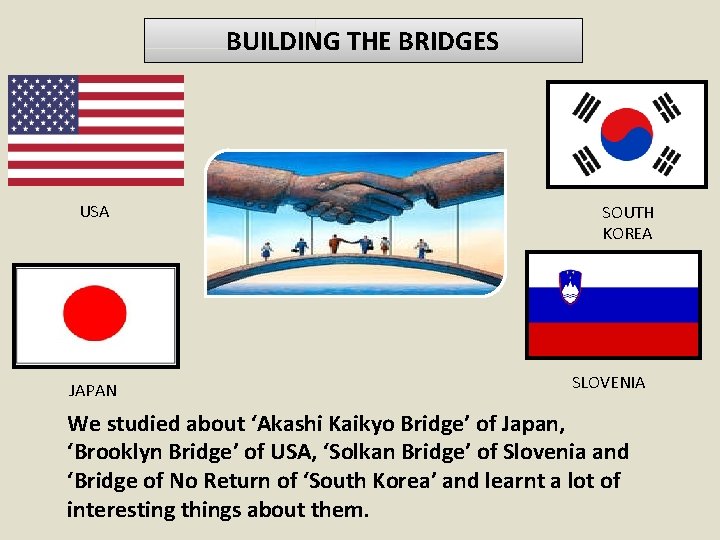
BUILDING THE BRIDGES USA JAPAN SOUTH KOREA SLOVENIA We studied about ‘Akashi Kaikyo Bridge’ of Japan, ‘Brooklyn Bridge’ of USA, ‘Solkan Bridge’ of Slovenia and ‘Bridge of No Return of ‘South Korea’ and learnt a lot of interesting things about them.
TYPES OF BRIDGES
SOLKAN BRIDGE
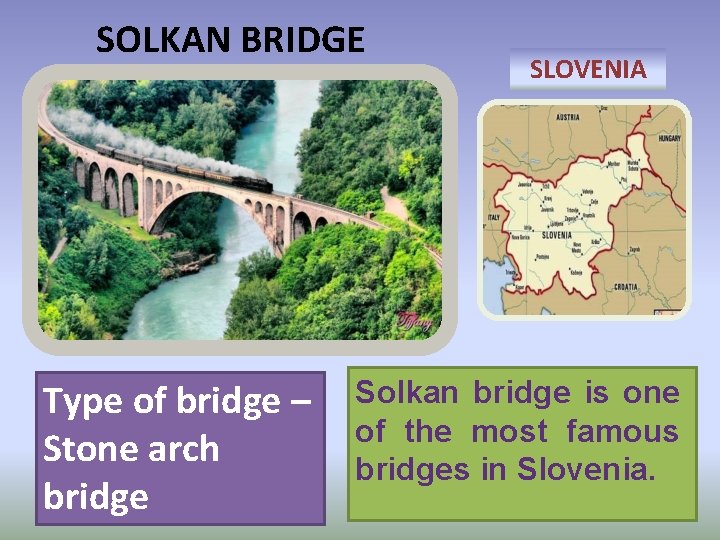
SOLKAN BRIDGE Type of bridge – Stone arch bridge SLOVENIA Solkan bridge is one of the most famous bridges in Slovenia.
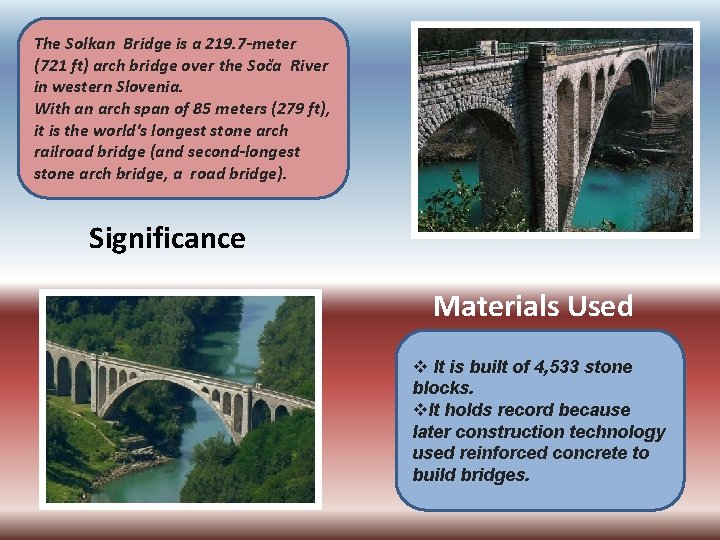
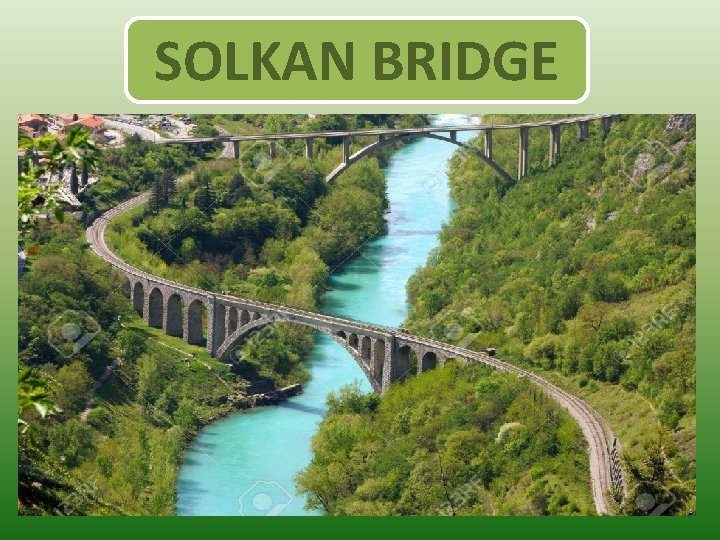
The Solkan Bridge is a 219. 7 -meter (721 ft) arch bridge over the Soča River in western Slovenia. With an arch span of 85 meters (279 ft), it is the world's longest stone arch railroad bridge (and second-longest stone arch bridge, a road bridge). Significance Materials Used v It is built of 4, 533 stone blocks. v. It holds record because later construction technology used reinforced concrete to build bridges.
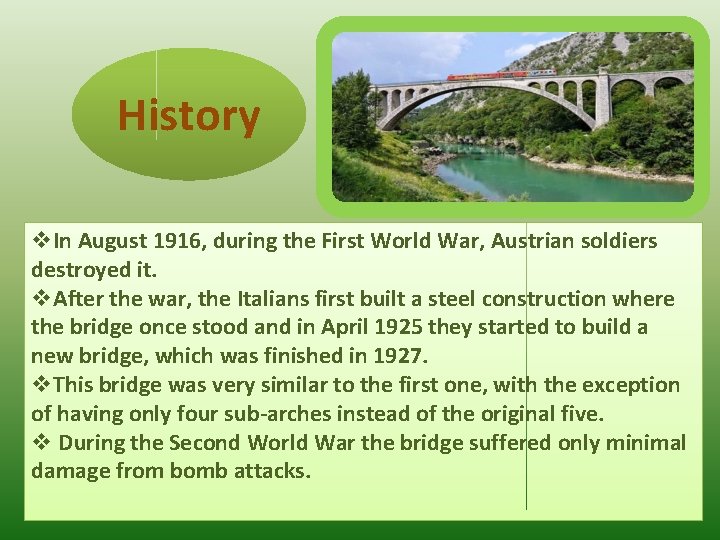
History v. In August 1916, during the First World War, Austrian soldiers destroyed it. v. After the war, the Italians first built a steel construction where the bridge once stood and in April 1925 they started to build a new bridge, which was finished in 1927. v. This bridge was very similar to the first one, with the exception of having only four sub-arches instead of the original five. v During the Second World War the bridge suffered only minimal damage from bomb attacks.
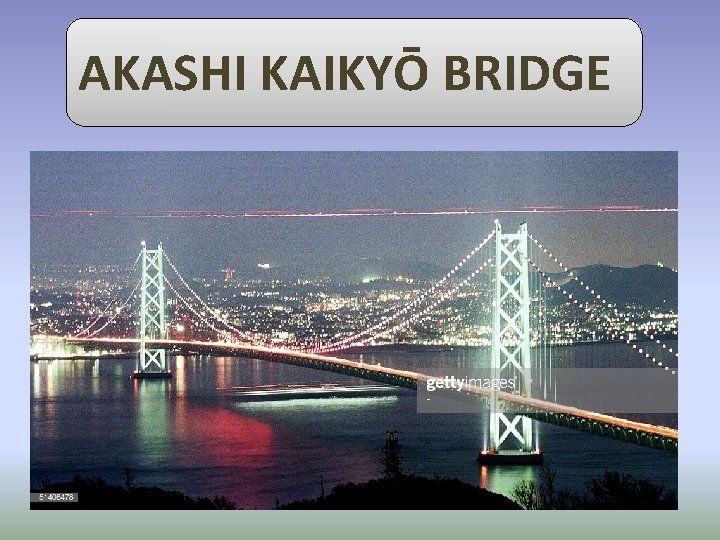
AKASHI KAIKYŌ BRIDGE
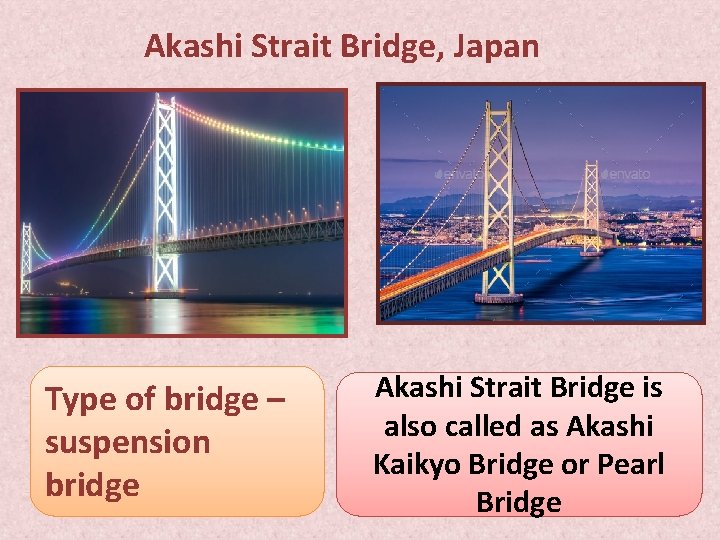
Akashi Strait Bridge, Japan Type of bridge – suspension bridge Akashi Strait Bridge is also called as Akashi Kaikyo Bridge or Pearl Bridge
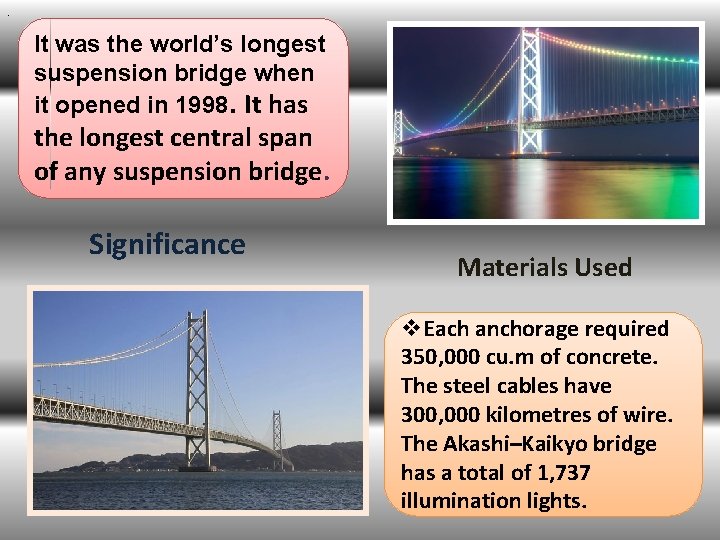
. It was the world’s longest suspension bridge when it opened in 1998. It has the longest central span of any suspension bridge. Significance Materials Used v. Each anchorage required 350, 000 cu. m of concrete. The steel cables have 300, 000 kilometres of wire. The Akashi–Kaikyo bridge has a total of 1, 737 illumination lights.
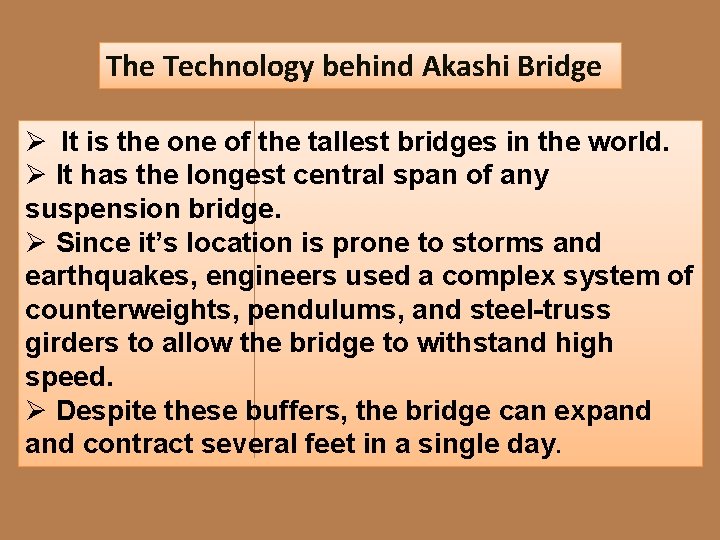
The Technology behind Akashi Bridge Ø It is the one of the tallest bridges in the world. Ø It has the longest central span of any suspension bridge. Ø Since it’s location is prone to storms and earthquakes, engineers used a complex system of counterweights, pendulums, and steel-truss girders to allow the bridge to withstand high speed. Ø Despite these buffers, the bridge can expand contract several feet in a single day.
. History v. In 1955 two ferries sank in the strait during a storm, killing 168 people. v. Then the Japanese government planned to build this. v. It involved more than 100 contractors. Present v. The bridge is used by approximately 23, 000 cars per day. v Twenty-eight patterns are used for occasions as national or regional holidays, memorial days or festivities.
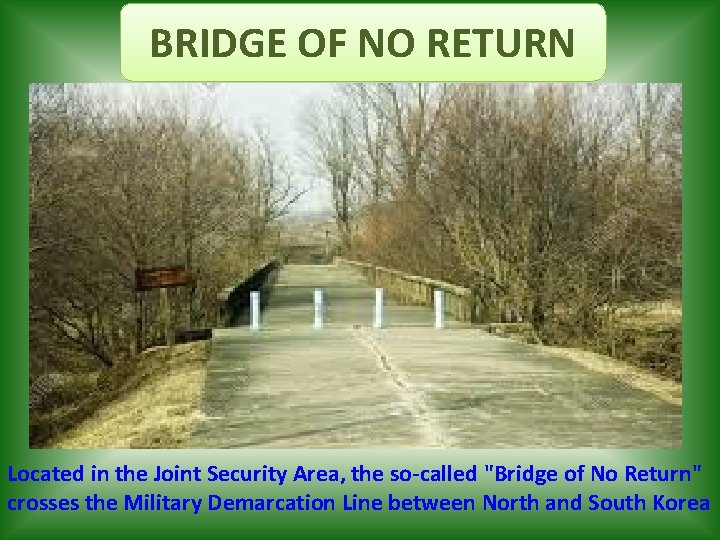
BRIDGE OF NO RETURN Located in the Joint Security Area, the so-called "Bridge of No Return" crosses the Military Demarcation Line between North and South Korea
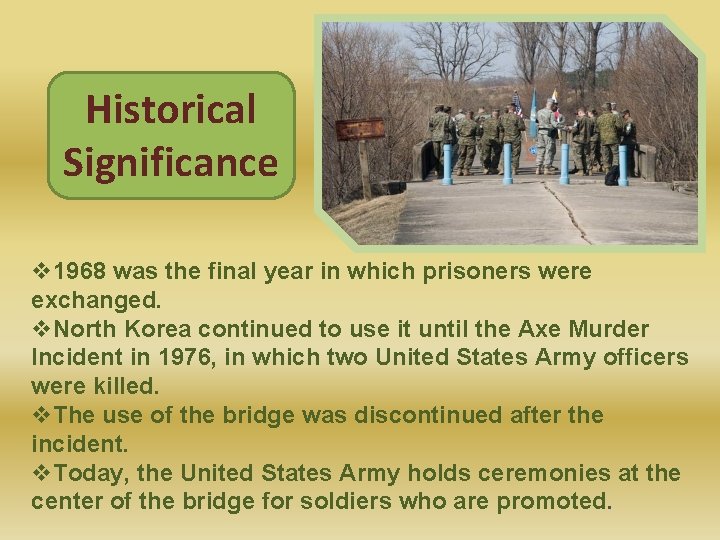
Historical Significance v 1968 was the final year in which prisoners were exchanged. v. North Korea continued to use it until the Axe Murder Incident in 1976, in which two United States Army officers were killed. v. The use of the bridge was discontinued after the incident. v. Today, the United States Army holds ceremonies at the center of the bridge for soldiers who are promoted.
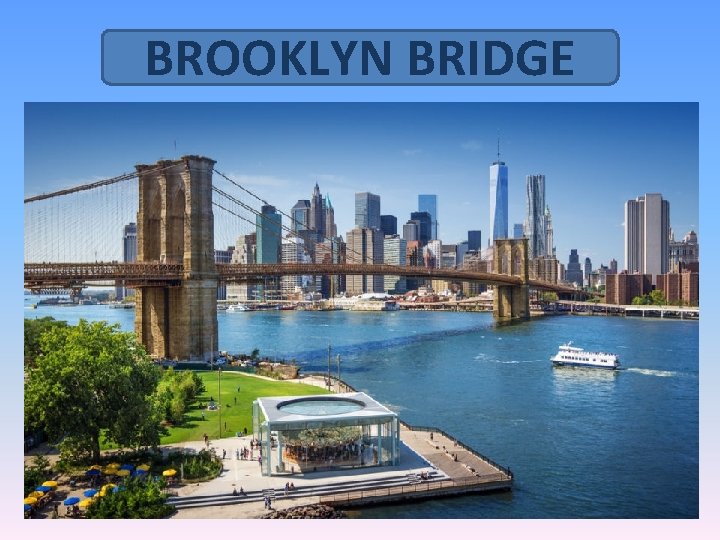
BROOKLYN BRIDGE
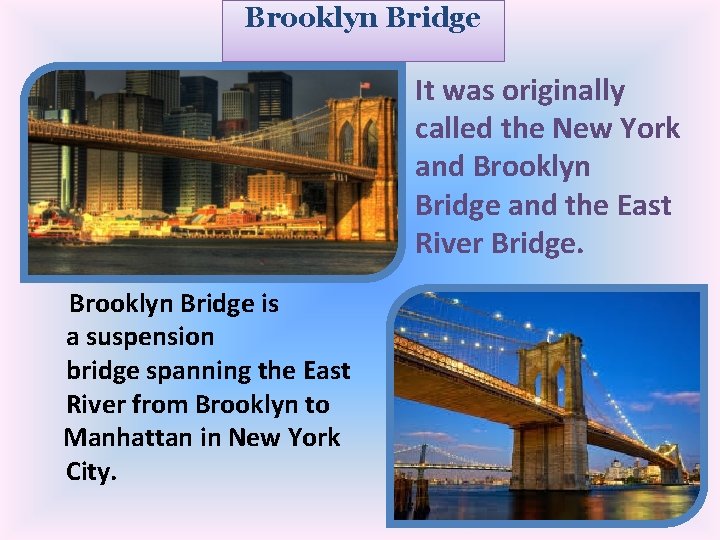
Brooklyn Bridge It was originally called the New York and Brooklyn Bridge and the East River Bridge. Brooklyn Bridge is a suspension bridge spanning the East River from Brooklyn to Manhattan in New York City.
Significance of Brooklyn Bridge v. It was the world's first steel-wire suspension bridge, as well as the first fixed crossing across the East River. v. During its construction explosives were used for the first time. v. It is one of the oldest roadway bridges in the United States. v Although the Brooklyn Bridge is technically a suspension bridge, it uses hybrid cable-stayed / suspension bridge design. v It was designated a National Historic Land mark and a National Historic Civil Engineering Landmark. v. It is also a New York City designated landmark.
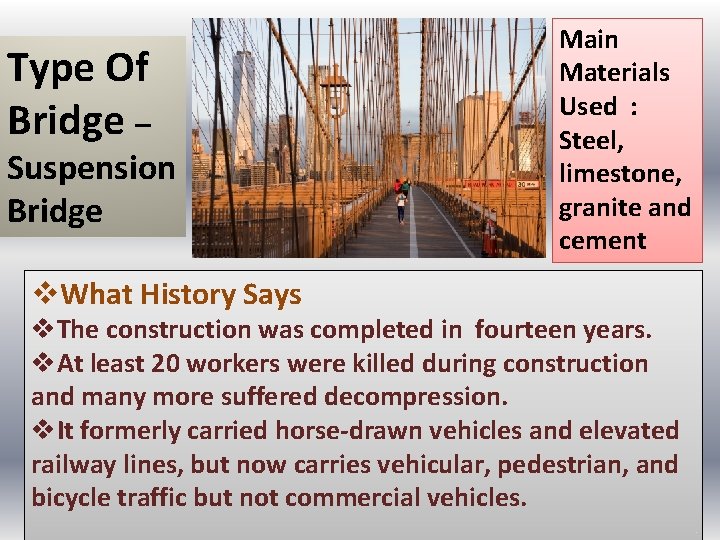
Type Of Bridge – Suspension Bridge v. What History Says Main Materials Used : Steel, limestone, granite and cement v. The construction was completed in fourteen years. v. At least 20 workers were killed during construction and many more suffered decompression. v. It formerly carried horse-drawn vehicles and elevated railway lines, but now carries vehicular, pedestrian, and bicycle traffic but not commercial vehicles.

Thank You
- Slides: 18