
Building the Bridge From EvidenceBased Practice to Hand
Building the Bridge From Evidence-Based Practice to Hand Hygiene Compliance
Hand Hygiene • Single most important measure to prevent health care associated infections (HCAIs) • Simple, cost-effective and highly efficacious in controlling the spread of HCAIs • Non-compliance leads to increased HCAIs which leads to increased use of antibiotics • Compliance among healthcare professionals and nursing students is sub-optimal • Both theoretically and clinical practice, nurse education needs to be improved
Evidence-Based Practice • Various definitions, most include 3 components: research-based information, patient preferences and clinical judgment • Research-practice gap- failure to integrate knowledge in the academic environment with clinical practice • WHO’s strategy “Five Moments of Hand Hygiene” feasible and sustainable across various healthcare settings • WHO’s strategy “Five Moments of Hand Hygiene” leads to compliance and knowledge improvement in healthcare workers
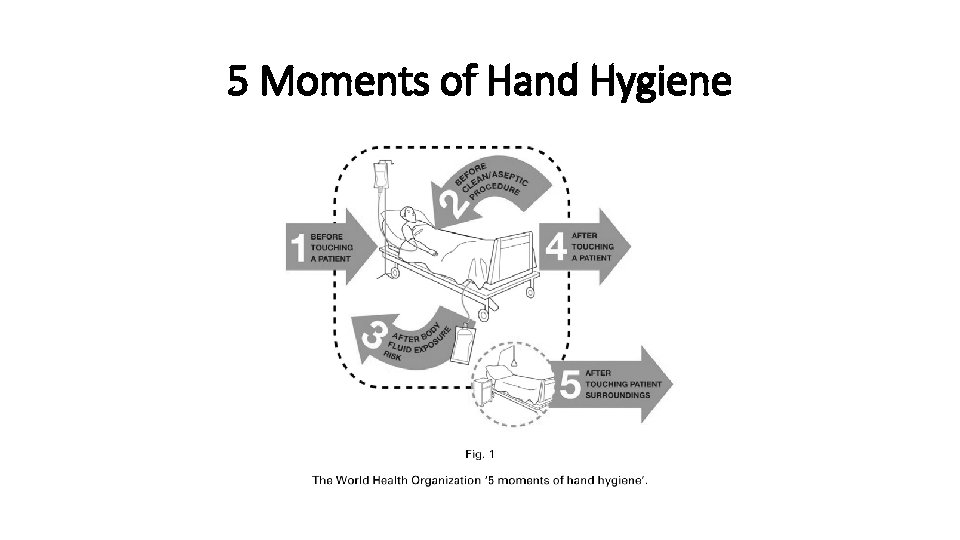
5 Moments of Hand Hygiene
#1 Before Patient Contact • When? Clean your hands before touching a patient when approaching him/her • Examples: shaking hands, helping a patient to move around or reposition a patient, physical examination • Why? To protect the patient against harmful germs carried on your hands
#2 Before an Aseptic Task • When? Clean your hands immediately before an aseptic task • Examples: oral/denture care, secretion aspiration, wound dressing, catheter insertion, preparation of food, drink, medications • Why? To protect the patient against harmful germs, including patient’s own, from entering his/her body
#3 After Body Fluid Exposure Risk • When? Clean your hands immediately after an exposure risk to body fluids and after glove removal • Examples: oral/denture care, secretion aspiration, drawing and manipulating blood, cleaning up urine, feces, handling waste • Why? To protect yourself and the health-care environment from harmful patient germs
#4 After Touching Patients • When? Clean your hands after touching any object or furniture in the patient’s immediate surroundings, when leaving the patient’s side. • Why? To protect yourself and the health-care environment from harmful patient germs.
#5 After Touching Patient Surroundings • When? Clean your hands after touching any object or furniture in the patient’s immediate surroundings, when leaving, even if the patient has not been touched • Why? To protect yourself and the health-care environment from harmful patient germs.
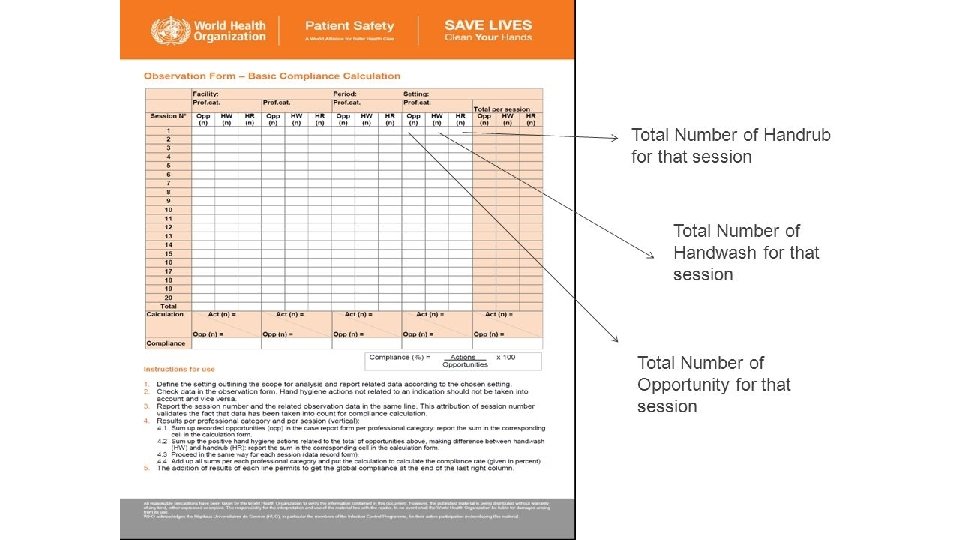
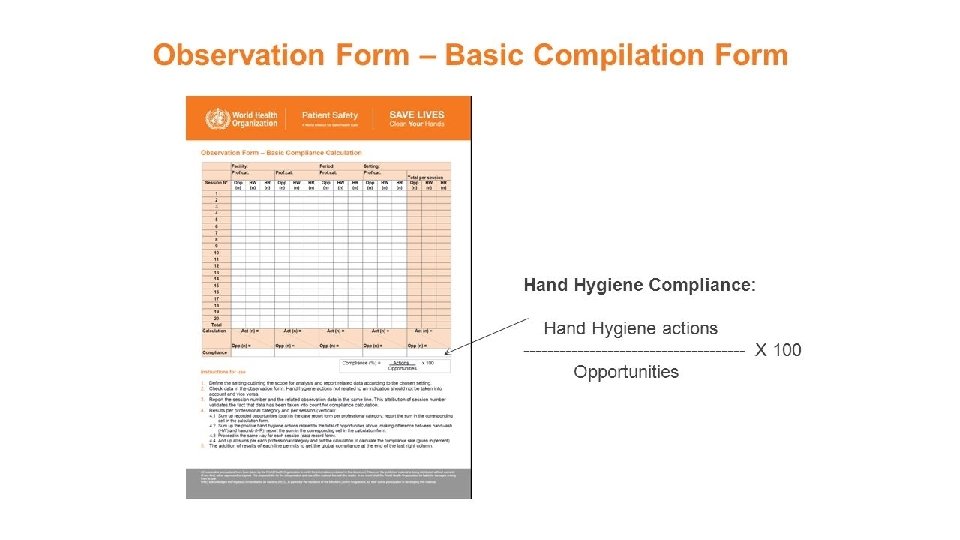
Clinical Activity • During your clinical experience, nursing students will collect data by observing their nurse preceptor’s compliance with the World Health Organization’s (WHO’s) “Five Moments of Hand Hygiene, the “gold standard” based on the WHO’s “Five Moments of Hand Hygiene” using the WHO’s Observance Form-Basic Compliance Calculation, to document your findings. • What is the rate of your nurse preceptor adherence to the WHO’s “Five Moments of Hand Hygiene? • Nursing students will be prepared to share your findings in post-conference.
Purposes of Nursing Peer Review • Quality assurance in nursing care • Accountability in nursing practice • Self regulation of nursing practice
Nursing Peer Review • Nonpunitive peer review process->improved patient outcomes
Six Principles of Nursing Peer Review 1. 2. 3. 4. 5. 6. Peer is a person of = rank Peer review is practice focused Feedback is timely and routine Feedback inspires continuous learning Feedback is not anonymous Feedback is developmentally appropriate (Novice to Expert)
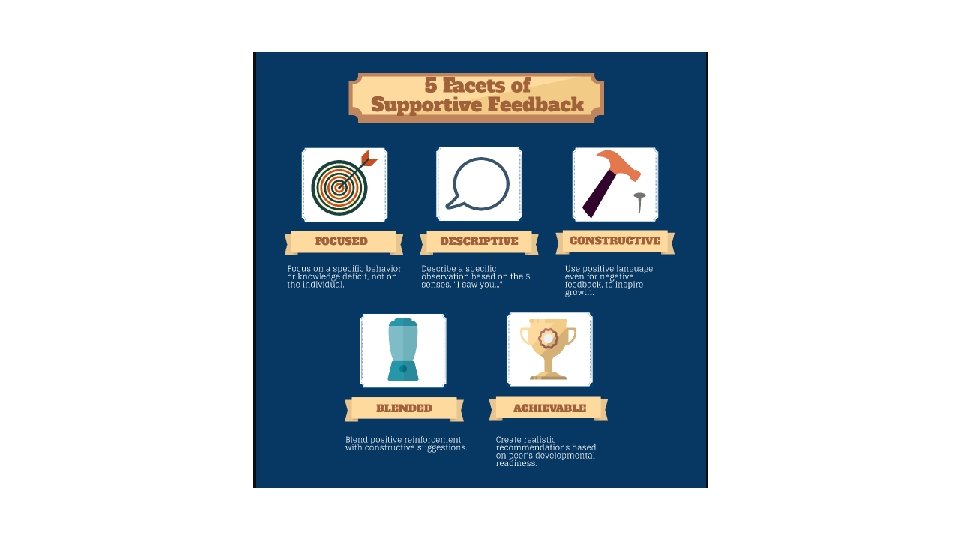
Five Facets of Supportive Feedback • Focused- specific standards of performance, behavior and action directed not personal characteristics • Descriptive- unbiased, descriptive reflection of what occurred in objective, observable terms • Constructive- stated from a position of caring about the individual, uses positive language intended to inspire growth, even for negative feedback • Blended- avoid use of naïve words of praise (great) and criticism (“I do not like”). Use even mix of reinforcement feedback and constructive suggestions • Achievable- exhibits feedforward perspective with suggestions appropriate for receiver’s developmental stage, where gaps are identified, measurable recommendations to close gaps are provided
Evaluation • Nursing students will complete a post clinical evaluation • Nursing students will participate in the peer review process using five facets of supportive feedback
References American Nurses Association. (2014). Code of Ethics for Nurses with Interpretive Statements. Retrieved from http: //nursingworld. org/documentvault/wthics-1/code-of-ethics-for-nurses. html Fischer, C. & Drake, J. (2019). Hospital and skilled nursing facility collaboration reduces infections: A team approach results in improved patient outcomes. American Nurse Today 14(9) 100 -103. Institute of Medicine. (2003). Health professions education. A bridge to quality. National Academy Press. Loyland, B. , Peveri, A. M. , Hessevaagbakke, E. , Taasen, I & Lindeflaten, K. (2019). Students’ observations of hand hygiene in nursing homes using the five moments of hand hygiene. J Clin Nursing 29 821 -830. Oermann, M. H. , Sheelenbarger, T. , & Gaberson, K. B. (2018) Clinical teaching strategies in Nursing. Fifth Edition. Springer Publishing Company. Schmidt, N. A. & Brown, J. M. (2019). Evidence-Based Practice For Nurses. Fourth Edition. Jones & Bartlett Learning. Schon, D. A. (1987). Educating the reflective practitioner: Toward a new design for teaching and learning in the profession. Jossey-Bass. Sundal et al. , (2107). The hand hygiene compliance of student nurses during clinical placements J Clin Nurs; 26: 4646 -4653 Tornwell, J. (2018). Peer assessment practices in nurse education: An integrative review. Nurse Education Today 71; 266 -275. Tornwell et al. , (2020). Effects of knowledge and value on quality of supportive peer feedback. Nurse Educator World Health Organization. (2019). 5 moments for hand hygiene. Retrieved from
- Slides: 19