
Building Systems for Todays Dynamic Networked Environments A
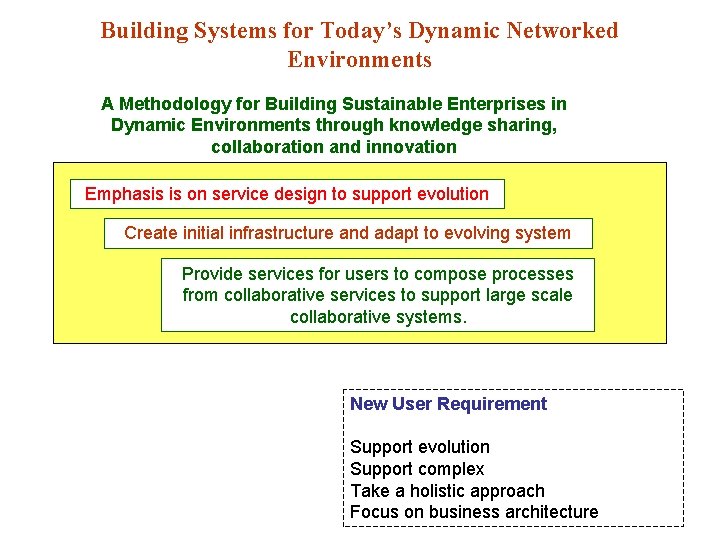
Building Systems for Today’s Dynamic Networked Environments A Methodology for Building Sustainable Enterprises in Dynamic Environments through knowledge sharing, collaboration and innovation Emphasis is on service design to support evolution Create initial infrastructure and adapt to evolving system Provide services for users to compose processes from collaborative services to support large scale collaborative systems. New User Requirement Support evolution Support complex Take a holistic approach Focus on business architecture
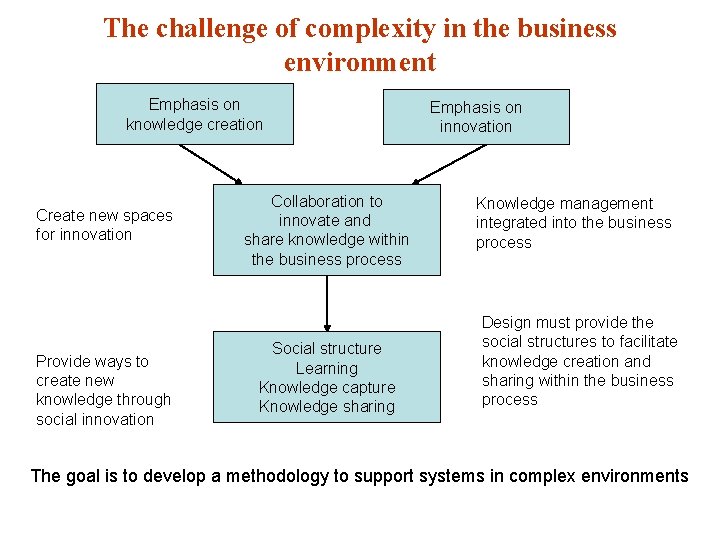
The challenge of complexity in the business environment Emphasis on knowledge creation Create new spaces for innovation Provide ways to create new knowledge through social innovation Collaboration to innovate and share knowledge within the business process Social structure Learning Knowledge capture Knowledge sharing Emphasis on innovation Knowledge management integrated into the business process Design must provide the social structures to facilitate knowledge creation and sharing within the business process The goal is to develop a methodology to support systems in complex environments
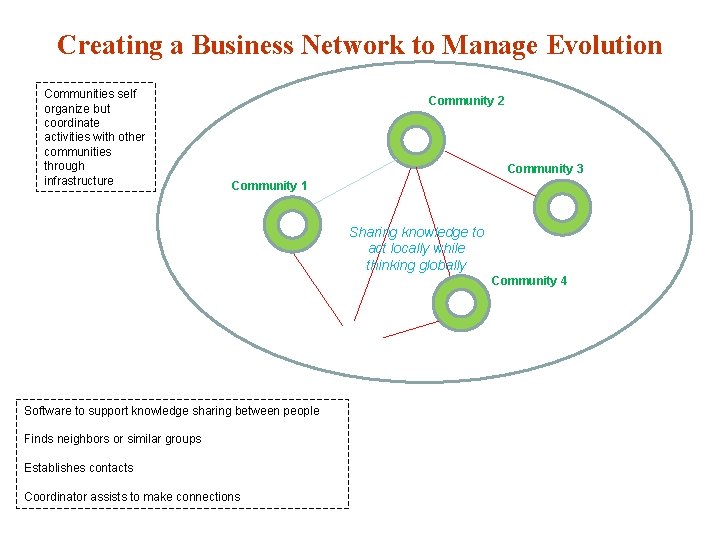
Creating a Business Network to Manage Evolution Communities self organize but coordinate activities with other communities through infrastructure Community 2 Community 3 Community 1 Sharing knowledge to act locally while thinking globally Community 4 Software to support knowledge sharing between people Finds neighbors or similar groups Establishes contacts Coordinator assists to make connections
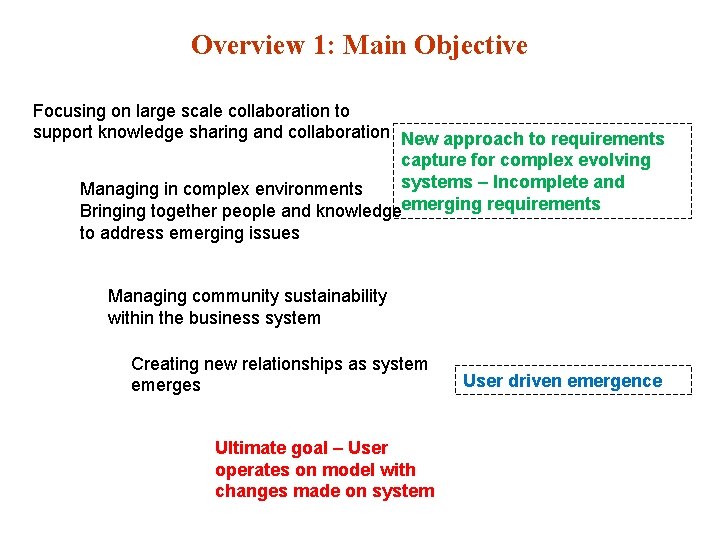
Overview 1: Main Objective Focusing on large scale collaboration to support knowledge sharing and collaboration New approach to requirements capture for complex evolving systems – Incomplete and Managing in complex environments Bringing together people and knowledgeemerging requirements to address emerging issues Managing community sustainability within the business system Creating new relationships as system emerges Ultimate goal – User operates on model with changes made on system User driven emergence
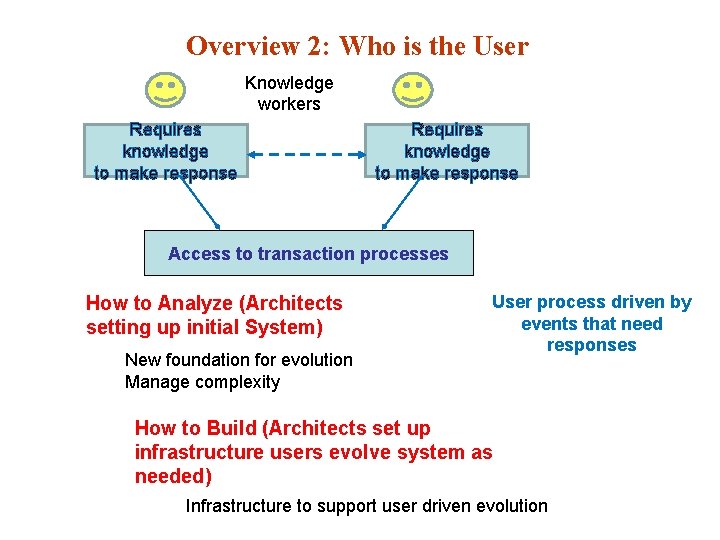
Overview 2: Who is the User Knowledge workers Requires knowledge to make response Access to transaction processes How to Analyze (Architects setting up initial System) New foundation for evolution Manage complexity User process driven by events that need responses How to Build (Architects set up infrastructure users evolve system as needed) Infrastructure to support user driven evolution
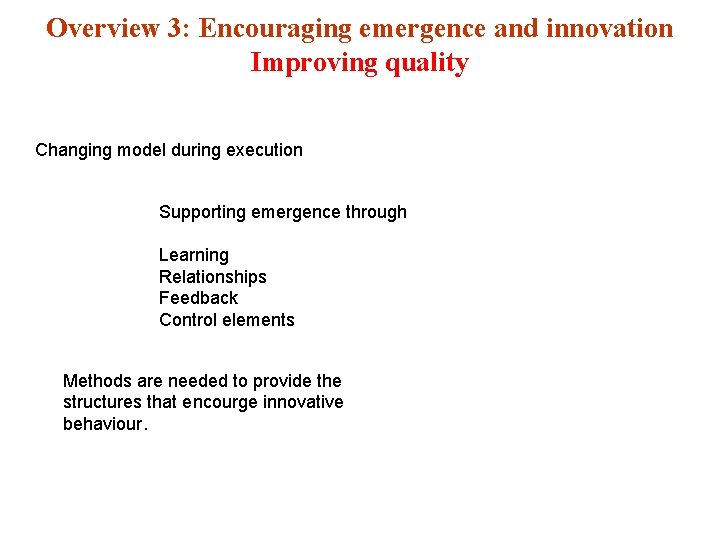
Overview 3: Encouraging emergence and innovation Improving quality Changing model during execution Supporting emergence through Learning Relationships Feedback Control elements Methods are needed to provide the structures that encourge innovative behaviour.
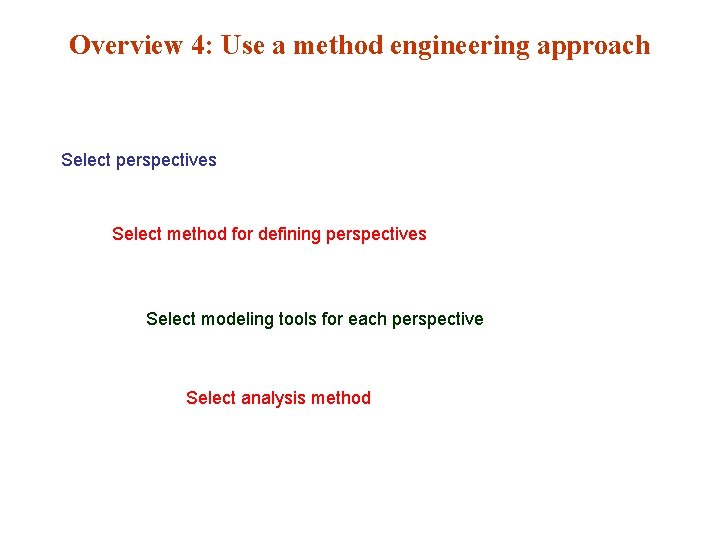
Overview 4: Use a method engineering approach Select perspectives Select method for defining perspectives Select modeling tools for each perspective Select analysis method
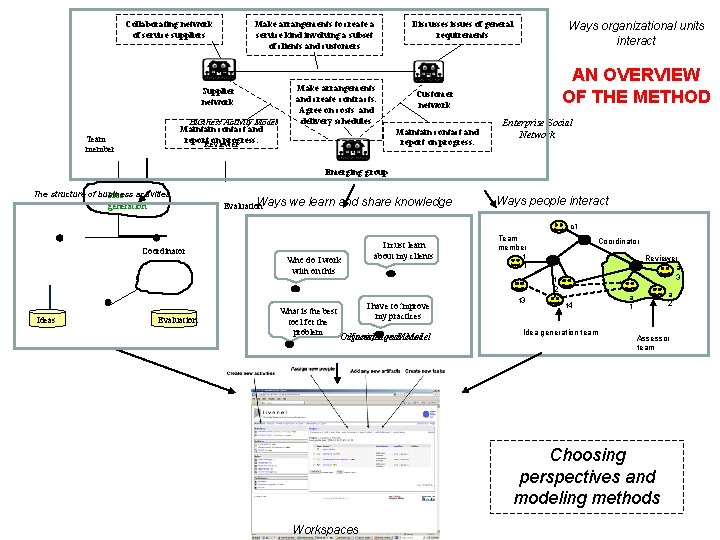
Collaborating network of service suppliers Make arrangements and create contracts. Agree on costs and delivery schedules Supplier network Business Activity Model Maintain contact and report on progress. Reviewer Team member Discusses issues of general requirements Make arrangements to create a service kind involving a subset of clients and customers Ways organizational units interact AN OVERVIEW OF THE METHOD Customer network Maintain contact and report on progress. Enterprise Social Network Emerging group The structure of business Idea activities generation Ways Evaluation we learn and share knowledge Ways people interact c 1 Coordinator Who do I work with on this I I Ideas Evaluation I must learn about my clients I I Coordinator Reviewer a 3 t 2 I have to improve my practices I I What is the best tool for the problem Organizational Knowledge Model I I Team member t 1 t 3 t 4 Idea generation team a 2 a 1 Assessor team Choosing perspectives and modeling methods Workspaces
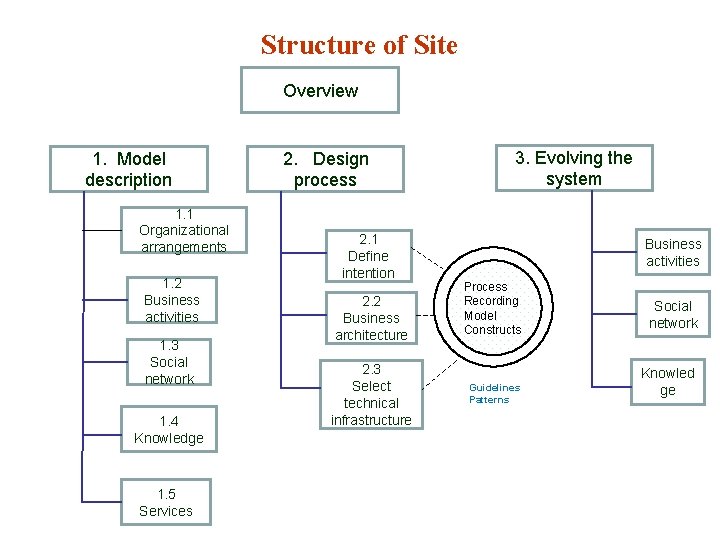
Structure of Site Overview 1. Model description 1. 1 Organizational arrangements 1. 2 Business activities 1. 3 Social network 1. 4 Knowledge 1. 5 Services 2. Design process 2. 1 Define intention 2. 2 Business architecture 2. 3 Select technical infrastructure 3. Evolving the system Business activities Process Recording Model Constructs Guidelines Patterns Social network Knowled ge
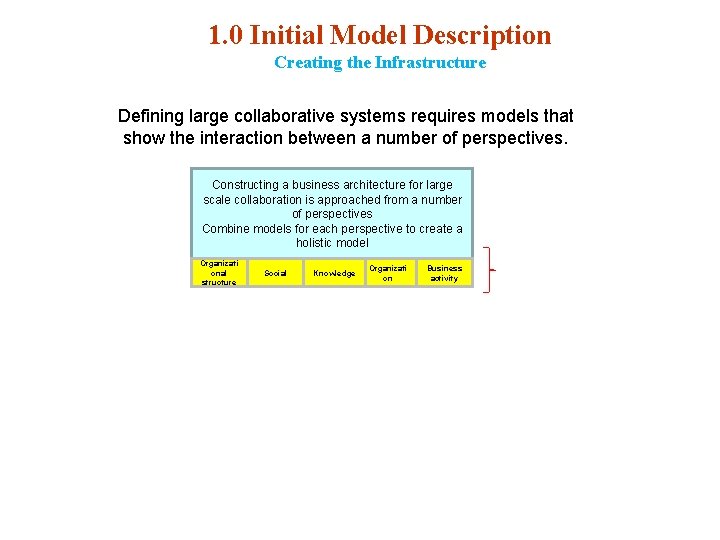
1. 0 Initial Model Description Creating the Infrastructure Defining large collaborative systems requires models that show the interaction between a number of perspectives. Constructing a business architecture for large scale collaboration is approached from a number of perspectives Combine models for each perspective to create a holistic model Organizati onal structure Social Knowledge Organizati on Business activity
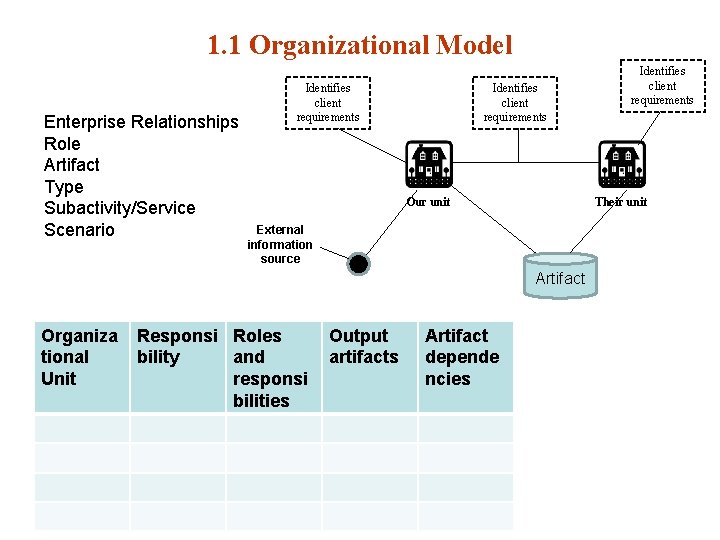
1. 1 Organizational Model Enterprise Relationships Role Artifact Type Subactivity/Service Scenario Identifies client requirements Our unit Their unit External information source Artifact Organiza tional Unit Responsi Roles bility and responsi bilities Output artifacts Artifact depende ncies Identifies client requirements
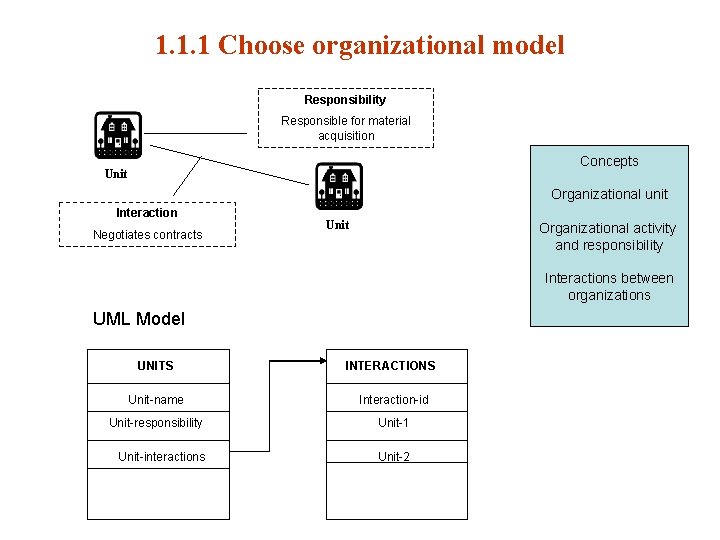
1. 1. 1 Choose organizational model Responsibility Responsible for material acquisition Concepts Unit Organizational unit Interaction Negotiates contracts Unit Organizational activity and responsibility Interactions between organizations UML Model UNITS INTERACTIONS Unit-name Interaction-id Unit-responsibility Unit-1 Unit-interactions Unit-2
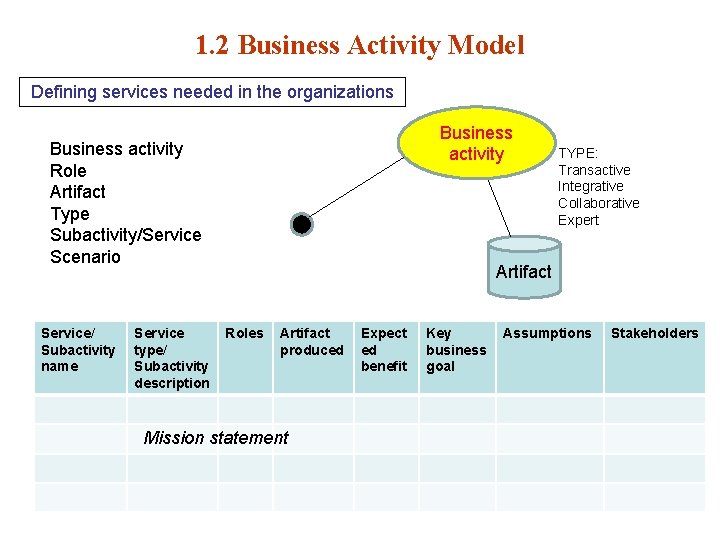
1. 2 Business Activity Model Defining services needed in the organizations Business activity Role Artifact Type Subactivity/Service Scenario Service/ Subactivity name Service type/ Subactivity description TYPE: Transactive Integrative Collaborative Expert Artifact Roles Artifact produced Mission statement Expect ed benefit Key business goal Assumptions Stakeholders
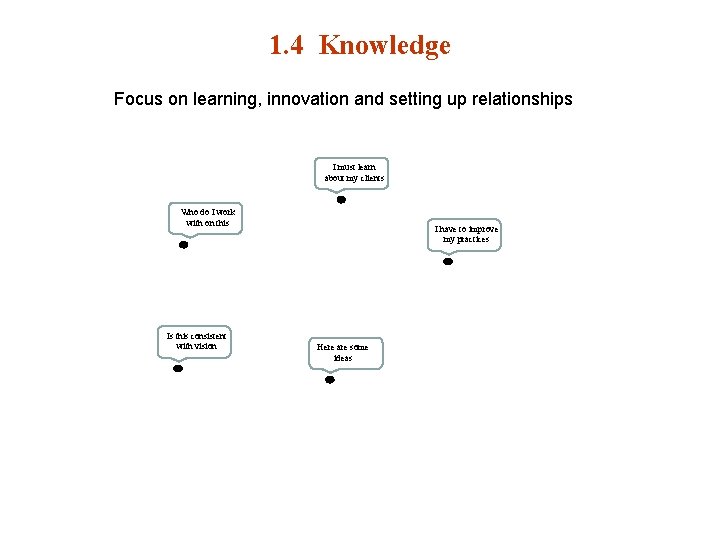
1. 4 Knowledge Focus on learning, innovation and setting up relationships I must learn about my clients Who do I work with on this Is this consistent with vision I have to improve my practices Here are some ideas
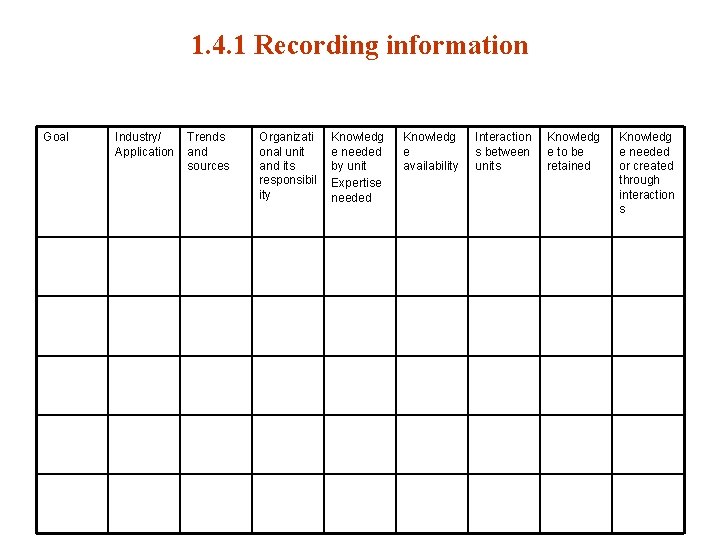
1. 4. 1 Recording information Goal Industry/ Application Trends and sources Organizati onal unit and its responsibil ity Knowledg e needed by unit Expertise needed Knowledg e availability Interaction s between units Knowledg e to be retained Knowledg e needed or created through interaction s
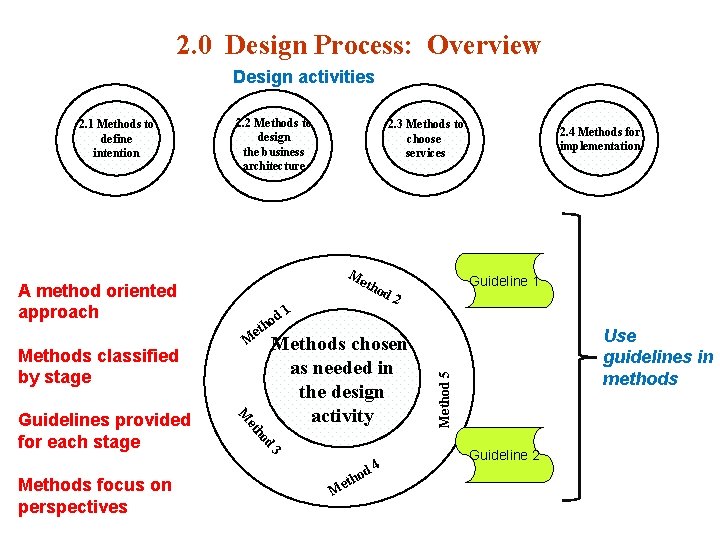
2. 0 Design Process: Overview Design activities 2. 2 Methods to design the business architecture Me d 2 1 Methods chosen as needed in the design activity d ho et 3 Methods focus on perspectives M M Guidelines provided for each stage et d ho th e M o d 4 2. 4 Methods for implementation Guideline 1 tho A method oriented approach Methods classified by stage 2. 3 Methods to choose services Use guidelines in methods Method 5 2. 1 Methods to define intention Guideline 2
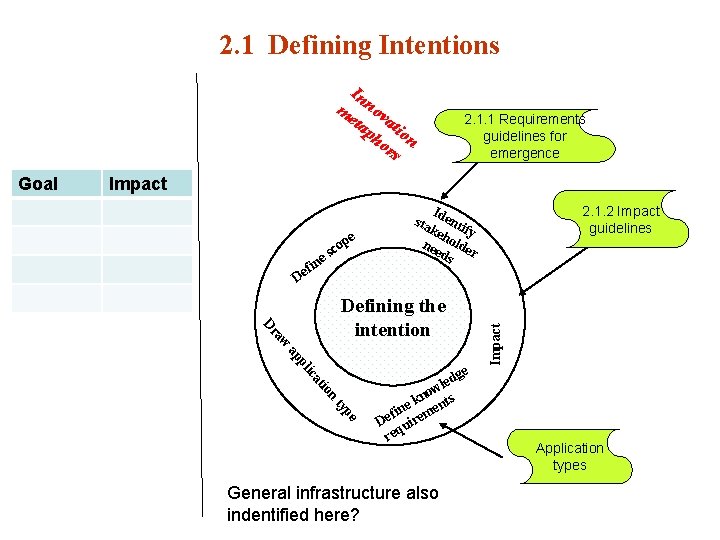
2. 1 Defining Intentions In me nov tap ati ho on rs Impact pe n efi e o sc I sta denti keh fy nee olde ds r 2. 1. 2 Impact guidelines D Dr Defining the intention aw ica pl ap tio n pe ty led w o kn nts e fin me De uire req General infrastructure also indentified here? ge Impact Goal 2. 1. 1 Requirements guidelines for emergence Application types
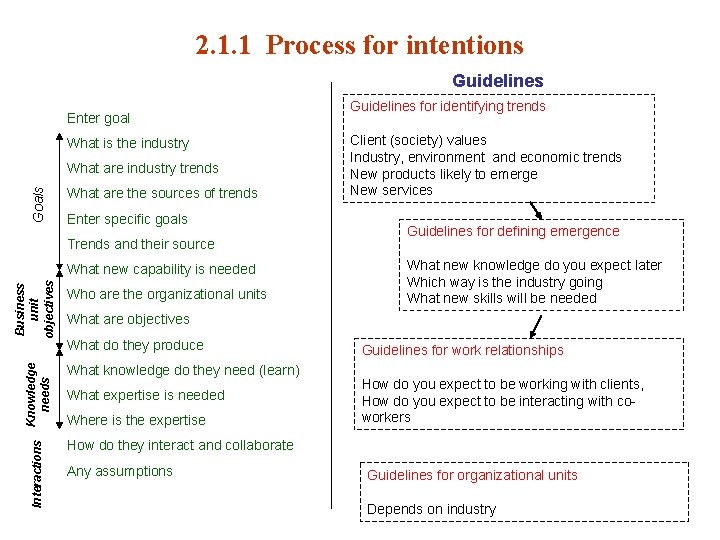
2. 1. 1 Process for intentions Guidelines Enter goal What is the industry Goals What are industry trends What are the sources of trends Enter specific goals Trends and their source Who are the organizational units Client (society) values Industry, environment and economic trends New products likely to emerge New services Guidelines for defining emergence What new knowledge do you expect later Which way is the industry going What new skills will be needed What are objectives What knowledge do they need (learn) Interactions What do they produce Knowledge needs Business unit objectives What new capability is needed Guidelines for identifying trends How do they interact and collaborate What expertise is needed Where is the expertise Any assumptions Guidelines for work relationships How do you expect to be working with clients, How do you expect to be interacting with coworkers Guidelines for organizational units Depends on industry
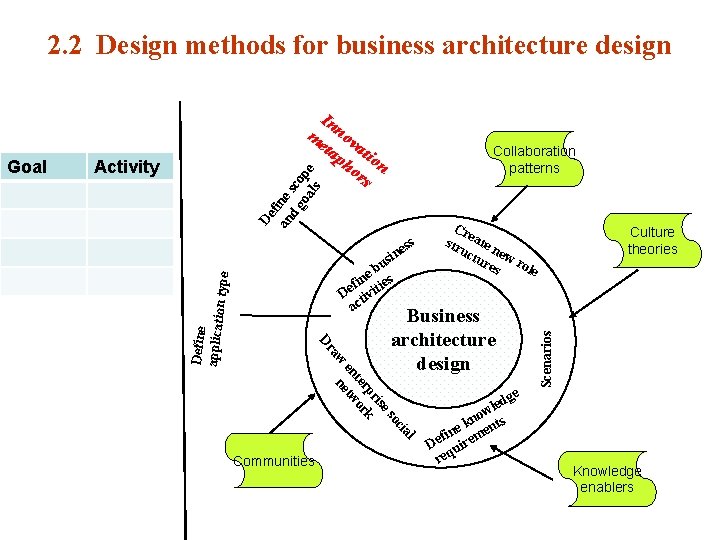
2. 2 Design methods for business architecture design Collaboration patterns ype sin u eb s n i f ie De tivit ac s es w a Dr Business architecture design oc es ris rp k te or en etw n l ia Communities Cr str eate n uct ure ew ro le s ge ed wl o kn nts e fin reme e D ui req Culture theories Scenarios De f an ine d sco go p als e Activity Define applicatio nt Goal In me nov tap ati ho on rs Knowledge enablers
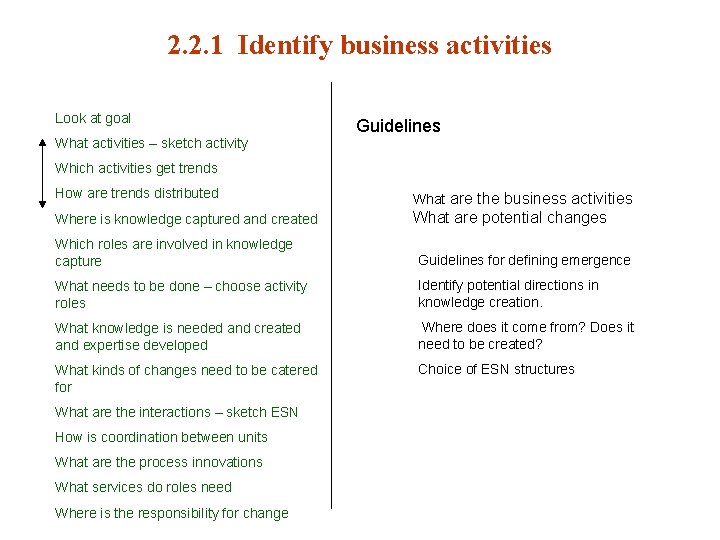
2. 2. 1 Identify business activities Look at goal What activities – sketch activity Guidelines Which activities get trends How are trends distributed What are the business activities Where is knowledge captured and created What are potential changes Which roles are involved in knowledge capture Guidelines for defining emergence What needs to be done – choose activity roles Identify potential directions in knowledge creation. What knowledge is needed and created and expertise developed Where does it come from? Does it need to be created? What kinds of changes need to be catered for Choice of ESN structures What are the interactions – sketch ESN How is coordination between units What are the process innovations What services do roles need Where is the responsibility for change
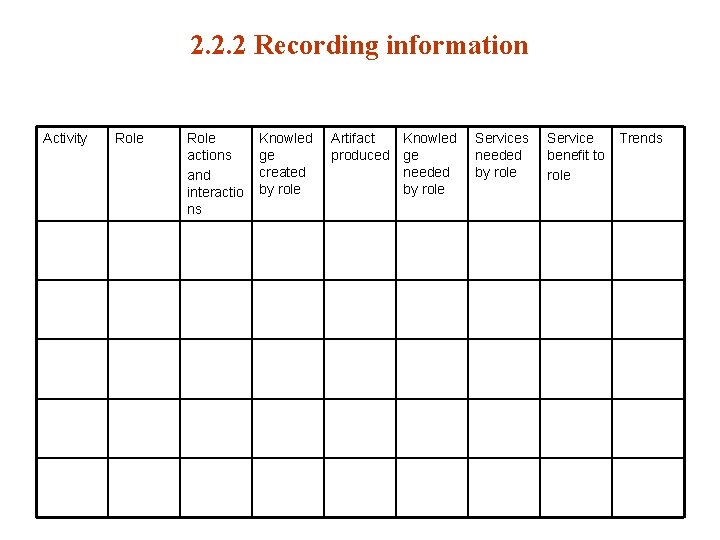
2. 2. 2 Recording information Activity Role actions and interactio ns Knowled ge created by role Artifact Knowled produced ge needed by role Services needed by role Service benefit to role Trends
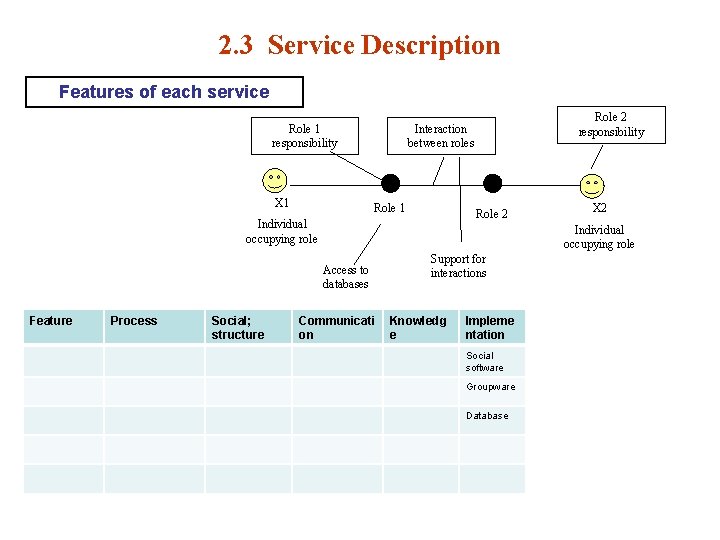
2. 3 Service Description Features of each service Role 1 responsibility X 1 Role 2 Individual occupying role Process Social; structure X 2 Individual occupying role Access to databases Feature Role 2 responsibility Interaction between roles Communicati on Support for interactions Knowledg e Impleme ntation Social software Groupware Database
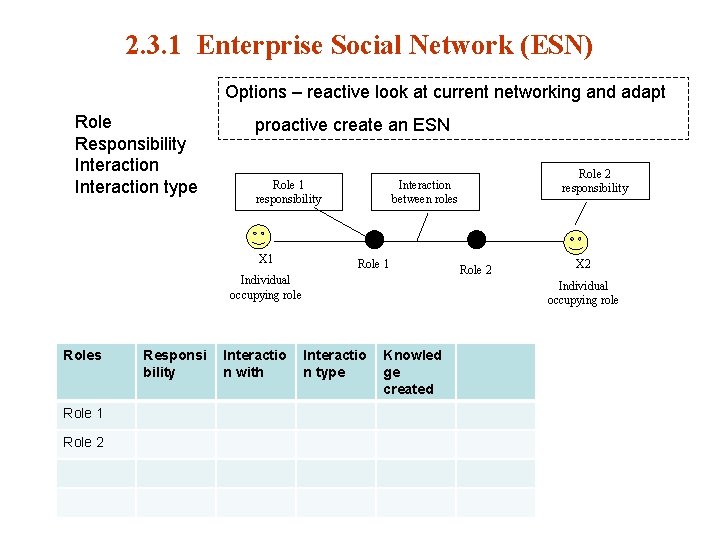
2. 3. 1 Enterprise Social Network (ESN) Options – reactive look at current networking and adapt Role Responsibility Interaction type proactive create an ESN Role 1 responsibility X 1 Role 1 Individual occupying role Roles Role 1 Role 2 Responsi bility Interactio n with Role 2 responsibility Interaction between roles Role 2 X 2 Individual occupying role Interactio n type Knowled ge created
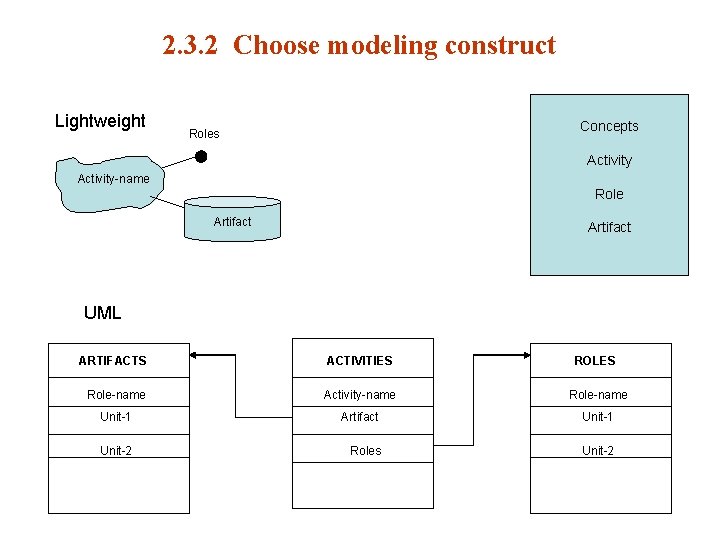
2. 3. 2 Choose modeling construct Lightweight Concepts Roles Activity-name Role Artifact UML ARTIFACTS ACTIVITIES ROLES Role-name Activity-name Role-name Unit-1 Artifact Unit-1 Unit-2 Roles Unit-2
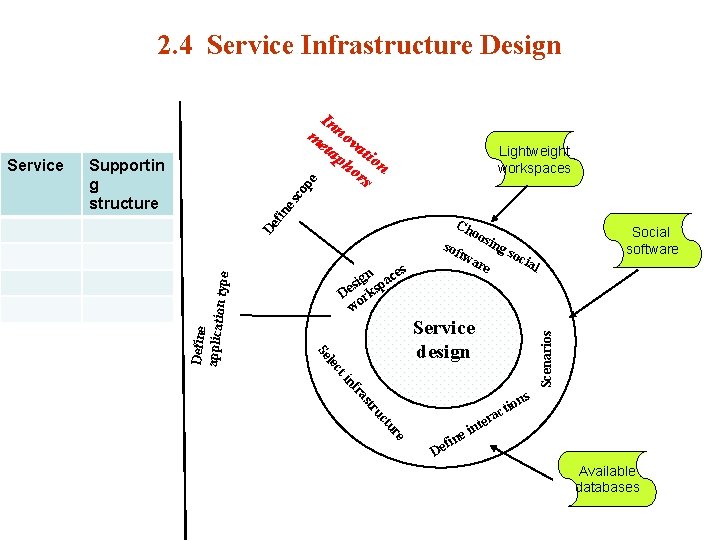
2. 4 Service Infrastructure Design Lightweight workspaces De fin es co pe Supportin g structure es Ch oos ing sof soc tw are ial Service design Social software ra nf ti lec Scenarios ype ign pac s De rks wo Se Define applicatio nt Service In me nov tap ati ho on rs str io act ns re tu uc r fin e D te e in Available databases
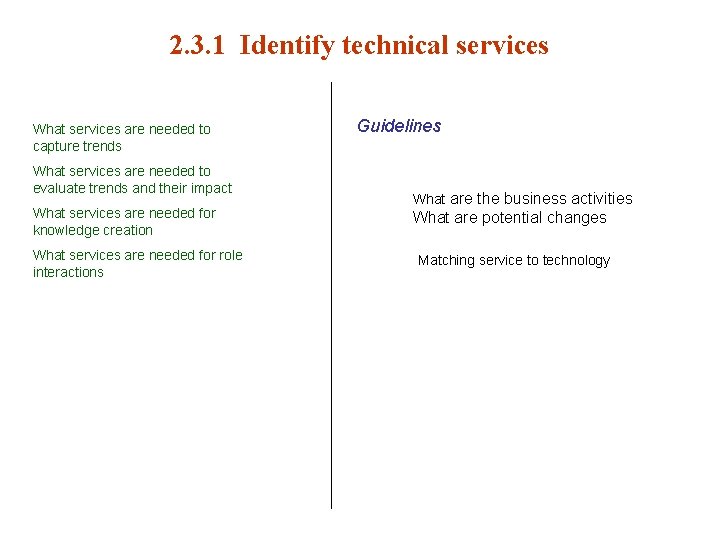
2. 3. 1 Identify technical services What services are needed to capture trends What services are needed to evaluate trends and their impact What services are needed for knowledge creation What services are needed for role interactions Guidelines What are the business activities What are potential changes Matching service to technology
- Slides: 26