
Building successful research partnerships How can you make
Building successful research partnerships
How can you make the most of partnerships? • Thinking about why partnerships are important • Identifying appropriate partners for your own work • How to build successful partnerships
Why are partnerships important? • Not a one-way process – mutual benefits for all involved • Research can be enriched – can help develop knowledge and uncover new areas to explore • Enhances innovation in research and connects academics to key issues beyond the university • Very hard to deliver impact without them
Why are partners important? Partners can: • Apply your research directly • Bring it to a wider audience • Exert greater influence
Identifying the right partners: Why do you want to partner? Research benefits: • External perspectives • New data, resources, audiences, equipment & expertise • Real world testing • Funding Personal benefits: • New, transferrable skills and experience • Networking and job opportunities • Satisfaction of making a genuine difference • Profile and reputation
Identifying the right partners • What are your goals? • Who to achieve it with/through? • Who to engage with? • How best to engage these partners? • Co-producing plans and futures?
Identifying the right partners The type of impact(s) you identify for your research will affect decisions you make when thinking about building partnerships. • Policy design and/or implementation • Public understanding/attitudes/ debate • Economic prosperity • Civil society • Cultural life • Health and wellbeing • Other…?
Identifying the right partners: Why would they want to partner? • Enhance their offering (products, services, information, policies…) • Help people • Become more efficient or effective • Stay relevant/cutting edge • Make/save money out of it
Making the initial contact Put yourself in their shoes: what do you think are the boxes you need to tick in that first contact?
Making the initial contact • Why is your research relevant to them? • How can you present it to clearly demonstrate this relevance? • When is the best time to approach them? • What are the best channels to approach them? • What are their specific constraints or characteristics? • What about the potential partners that you don’t know about?
Building successful partnerships • Listen to your partner’s needs • Articulate your own needs clearly • Find the common ground. • Create a win/win • Make sure you have a common understanding of aims, resources, roles, obligations, ………. • Take the time you need to build up trust • If it doesn’t feel right, walk away – nicely!
Planning for impact and building partnerships in your own work
Why think about impact and partnerships now? • It’s never too early to start thinking about this! – Shaping your research ideas – Improving your knowledge – Identifying what’s important to your beneficiaries/end users – Relevant policies/legislation/practice • Impact and relationships take time to build • Future career trajectories
How can you develop your own impact plan? • What will help you in your research? • How can you make an original contribution? • What ‘difference’ can you make (be realistic!)? – Impact costs money! – Time and other pressures
The Ph. D experience: what I did • Attend (and present!) at workshops and conferences • Present (and recruit participants) at practitioner-focused events/network • Subscribe to a learned society • Join a committee/volunteer/relevant work experience
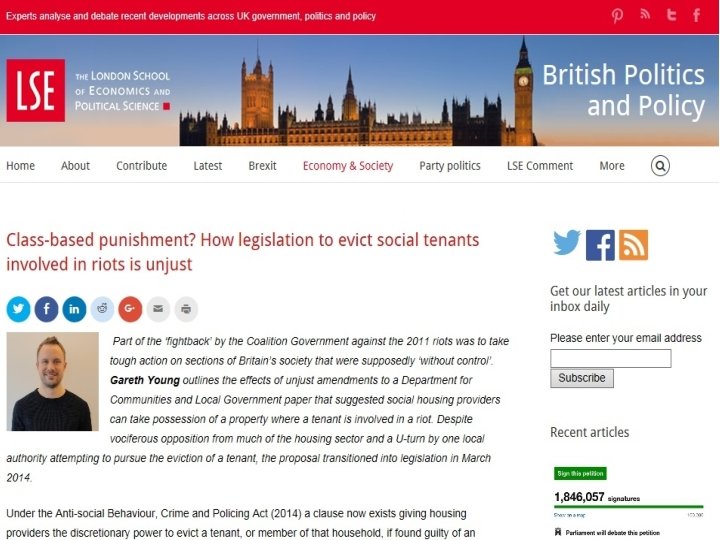

The Ph. D experience: what I would do next time! • Think about impact before setting research questions/focus • Think about potential beneficiaries/end-users (i. e. practitioners in my case) • Keep talking to your participants/partners! • Keep talking to colleagues, presenting, blogging. Have a plan!
Thinking about partnerships at this stage in your career • Speak to your supervisors/mentors – who do they know? What do you want/need from a partner? What would be the mutual benefits? Why should they engage? • Think about dealing with negative findings! How would you present/discuss this? What could this do to future relationships? • Where could this lead?
Some tips! • Think early about a) who would be interested and benefit from your work b) what you could do to offer them benefits (and make an impact!) c) what is achievable • Talk about your work…criticism/negative responses ≠ your work is wrong! (& can help to justify arguments and choices – good viva prep. !) • Use social media: it’s a fast, efficient and affordable way to get your message out, make contacts, learn/find papers, events, workshops and test ideas in a [relatively] safe environment • Get involved: sign up to mailing lists (for example https: //www. jiscmail. ac. uk/), attend events/workshops (in your department, institution and externally), organise events, reading groups…
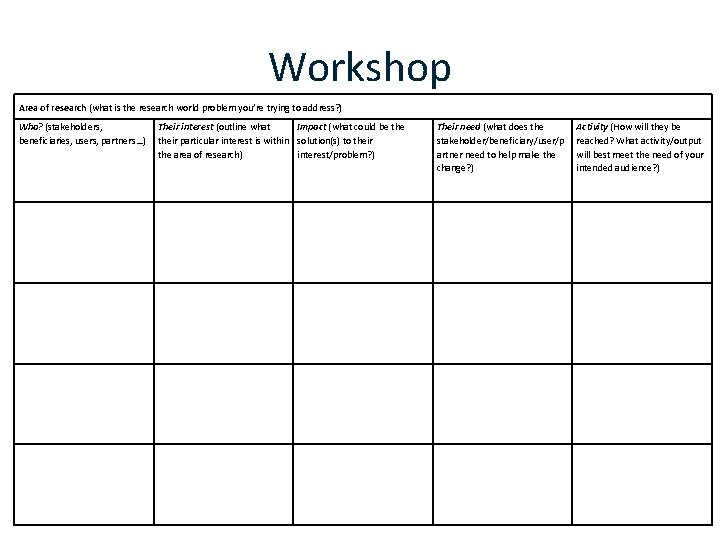
Workshop Area of research (what is the research world problem you’re trying to address? ) Who? (stakeholders, beneficiaries, users, partners…) Their interest (outline what Impact (what could be their particular interest is within solution(s) to their the area of research) interest/problem? ) Their need (what does the stakeholder/beneficiary/user/p artner need to help make the change? ) Activity (How will they be reached? What activity/output will best meet the need of your intended audience? )
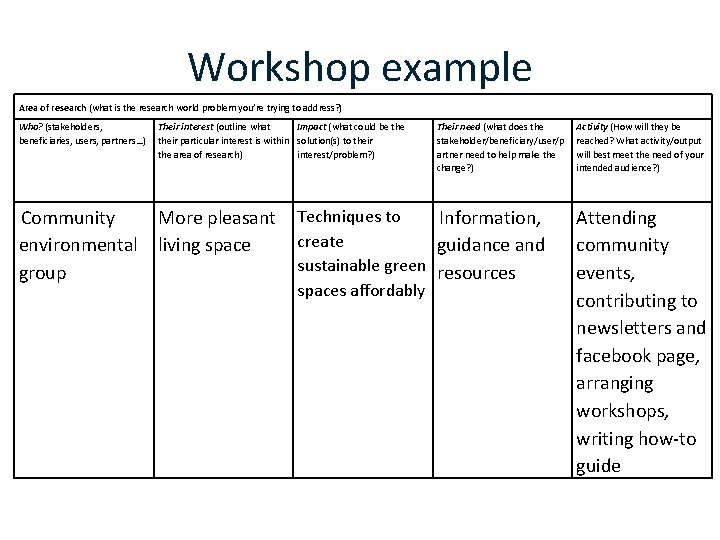
Workshop example Area of research (what is the research world problem you’re trying to address? ) Who? (stakeholders, beneficiaries, users, partners…) Their interest (outline what Impact (what could be their particular interest is within solution(s) to their the area of research) interest/problem? ) Their need (what does the stakeholder/beneficiary/user/p artner need to help make the change? ) Community More pleasant Techniques to Information, create environmental living space guidance and sustainable green resources group spaces affordably Activity (How will they be reached? What activity/output will best meet the need of your intended audience? ) Attending community events, contributing to newsletters and facebook page, arranging workshops, writing how-to guide
Q&A If you have any questions after the session, please do get in touch: Sarah Geere, Impact Consultant, Research & Innovation Services, s. geere@sheffield. ac. uk Gareth Young, Research Impact and Partnerships Officer, gareth. young@sheffield. ac. uk
- Slides: 24