
Building South Africas Future From the Bottom Up
Building South Africa’s Future From the Bottom Up Through Children, Communities, Youth and ICT The Role and Use of the Universal Service Fund
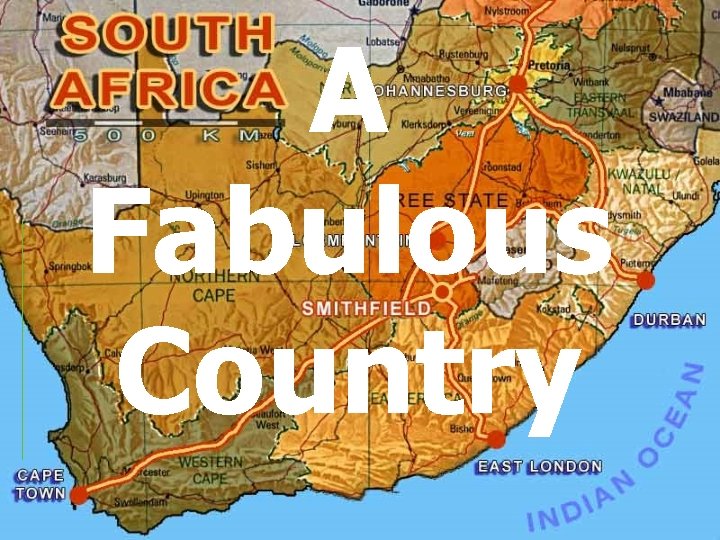
A Fabulous Country

Fabulous Places
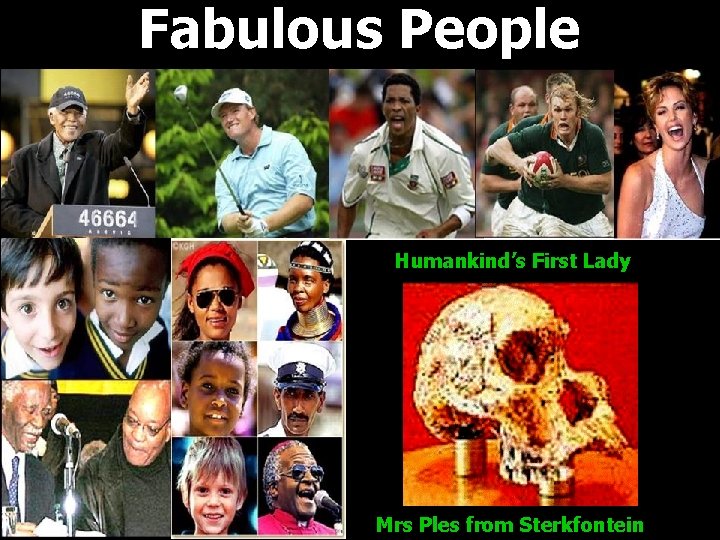
Fabulous People Humankind’s First Lady Mrs Ples from Sterkfontein

Hiding an Uncertain Future
Of Extreme Inequality ØHighest Urban Inequality in the World: Johannesburg GINI Coefficient – 0. 74 (Alarm level = 0. 4 – UN Habitat 2010) Ø 63% South African Children live below poverty line (even after social grants: South African Child Gauge 2016) § Poverty undermines people’s dignity, compromises children’s survival, growth, education and employment chances ØThreatens National Economic Growth and Socio-political Stability ØChildren and Youth are both VICTIMS, and the FUTURE South Africa’s Future is in the hands of Today’s Children and Youth: They are Tomorrow’s Leaders and Decision-makers
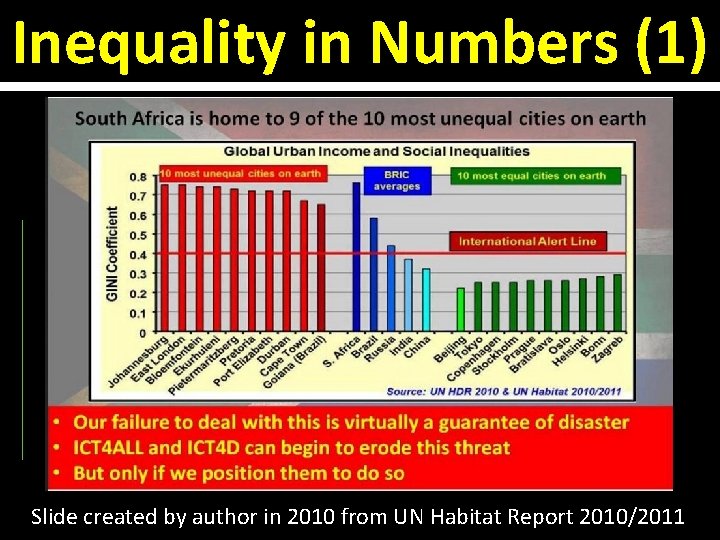
Inequality in Numbers (1) Slide created by author in 2010 from UN Habitat Report 2010/2011
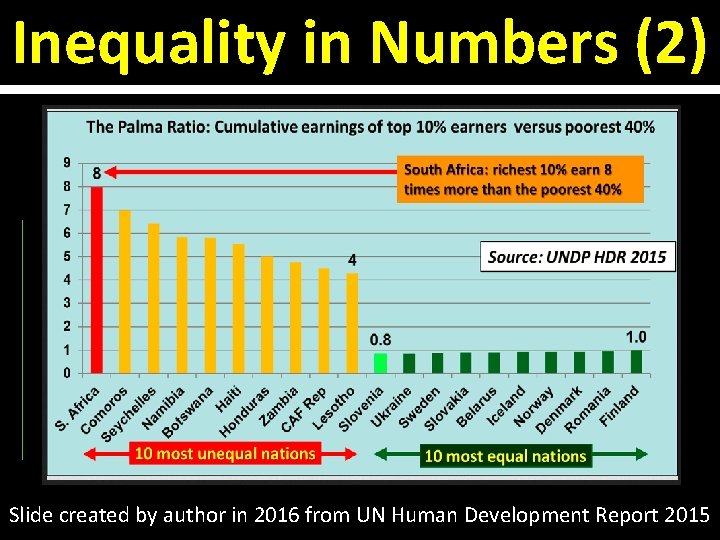
Inequality in Numbers (2) Slide created by author in 2016 from UN Human Development Report 2015
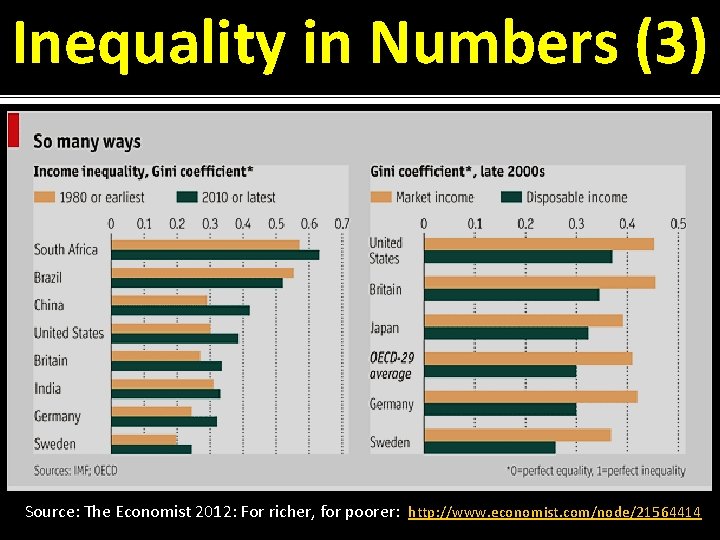
Inequality in Numbers (3) Source: The Economist 2012: For richer, for poorer: http: //www. economist. com/node/21564414
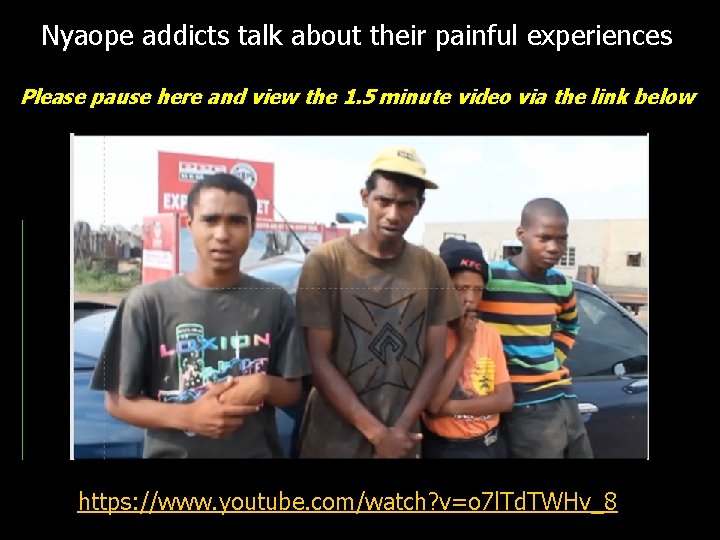
Nyaope addicts talk about their painful experiences Please pause here and view the 1. 5 minute video via the link below https: //www. youtube. com/watch? v=o 7 l. Td. TWHv_8
Providing Access to Information and Knowledge for Children, Youth and Communities to: • Create “safe Community Hangouts” for peer group inclusion • Develop alternative Lifestyle Choices – Drugs and Crime • Access Information and Knowledge for: • • Health and Safety Self and Peer-group Learning Entrepreneurship and Job Creation Crime Prevention and Citizen Development • Affordable Technological Assimilation and Use A vast Human Laboratory, challenging Inequality, Poverty and Exclusion from within, absorbing externalities at their own pace
HOW? • Mass rollout of LAN Houses – Internet Cafés with a Difference; • Owned and Operated by Local Youth as SMMEs • Providing safe venues for peer group inclusive learning • Providing a wide range of Services to local communities • Reverse anti-social lifestyles through peer-group choice • Simple, tried and tested technologies, very low comparative costs • Primary target Marginalized and Unemployed Youth
WHAT ARE LAN HOUSES? 1. Community-based “Infotainment” access points with focus on youth 2. Owned and Operated by Local Youth as SMMEs, access and user prices commensurate with affordability in the community – affordable private internet cafés… 3. Much more than “internet cafés” or technology access centres – they are “safe hangouts” where young and old gather to communicate, learn and play……. 4. They are highly scalable – safety and security by numbers 5. Prolific job creators as SMME information service providers and platforms for SMME businesses – productive revenuegenerating use of information and knowledge 6. Capital and operating costs kept very low for “massification” and sustainability
WHAT CAN THEY DO? 1. Provide the foundations for technological appropriation for socioeconomically marginalized youth and adult communities 2. Learn and Play through entertainment and learning-focussed online games – A distraction from drugs and crime…. 3. Community technological support services including access to affordable broadband for laptop, smartphones and tablets: Become community-based ICT maintenance and repair centres 4. Self-learning through peer group inclusive interactions 5. Complement basic, vocational and high-level public education systems – affordable access to high-volume learning content 6. Affordable individual and community access to all developmental information and knowledge sources: e-Governance; e-Commerce; e -Learning; e-Security; e-Safety; e-Health; e-Community 7. National-scale laboratories for Academic and Applied R&D: “Bottom-up” innovations to defeat inequality, poverty and socioeconomic exclusion
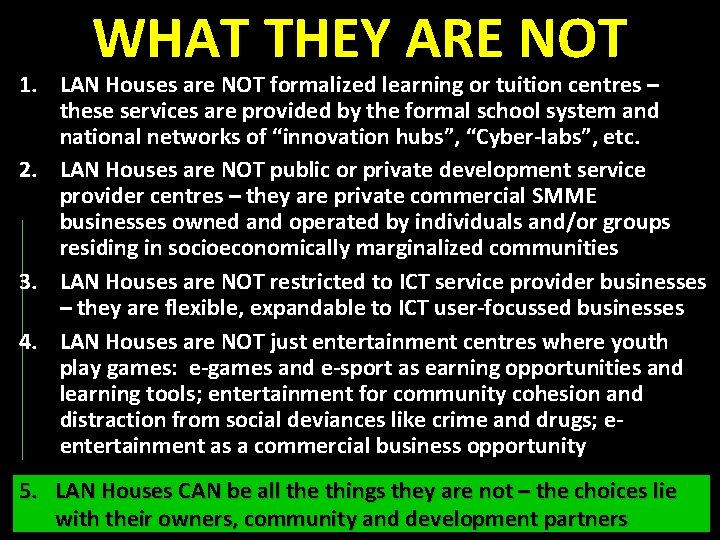
WHAT THEY ARE NOT 1. LAN Houses are NOT formalized learning or tuition centres – these services are provided by the formal school system and national networks of “innovation hubs”, “Cyber-labs”, etc. 2. LAN Houses are NOT public or private development service provider centres – they are private commercial SMME businesses owned and operated by individuals and/or groups residing in socioeconomically marginalized communities 3. LAN Houses are NOT restricted to ICT service provider businesses – they are flexible, expandable to ICT user-focussed businesses 4. LAN Houses are NOT just entertainment centres where youth play games: e-games and e-sport as earning opportunities and learning tools; entertainment for community cohesion and distraction from social deviances like crime and drugs; eentertainment as a commercial business opportunity 5. LAN Houses CAN be all the things they are not – the choices lie with their owners, community and development partners
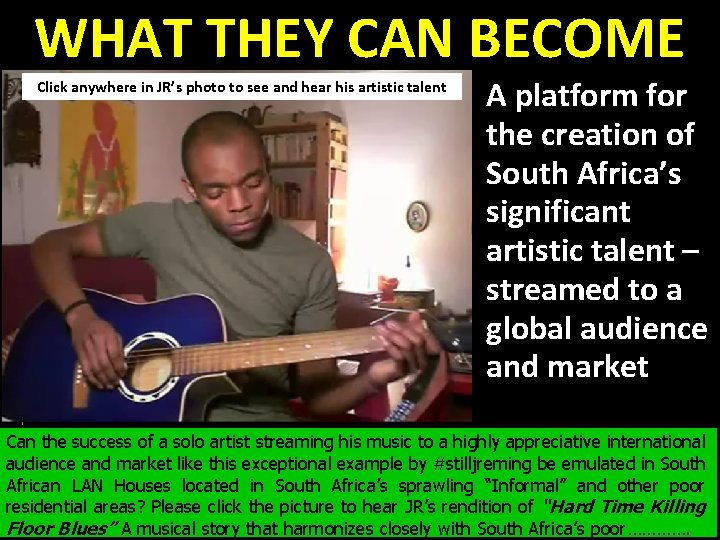
WHAT THEY CAN BECOME Click anywhere in JR’s photo to see and hear his artistic talent A platform for the creation of South Africa’s significant artistic talent – streamed to a global audience and market Can the success of a solo artist streaming his music to a highly appreciative international audience and market like this exceptional example by #stilljreming be emulated in South African LAN Houses located in South Africa’s sprawling “Informal” and other poor residential areas? Please click the picture to hear JR’s rendition of “Hard Time Killing Floor Blues” A musical story that harmonizes closely with South Africa’s poor………….
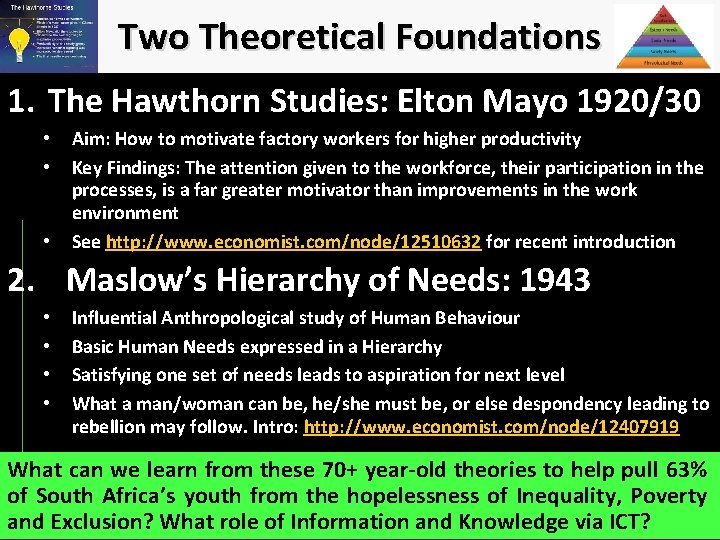
Two Theoretical Foundations 1. The Hawthorn Studies: Elton Mayo 1920/30 • • • Aim: How to motivate factory workers for higher productivity Key Findings: The attention given to the workforce, their participation in the processes, is a far greater motivator than improvements in the work environment See http: //www. economist. com/node/12510632 for recent introduction 2. Maslow’s Hierarchy of Needs: 1943 • • Influential Anthropological study of Human Behaviour Basic Human Needs expressed in a Hierarchy Satisfying one set of needs leads to aspiration for next level What a man/woman can be, he/she must be, or else despondency leading to rebellion may follow. Intro: http: //www. economist. com/node/12407919 What can we learn from these 70+ year-old theories to help pull 63% of South Africa’s youth from the hopelessness of Inequality, Poverty and Exclusion? What role of Information and Knowledge via ICT?
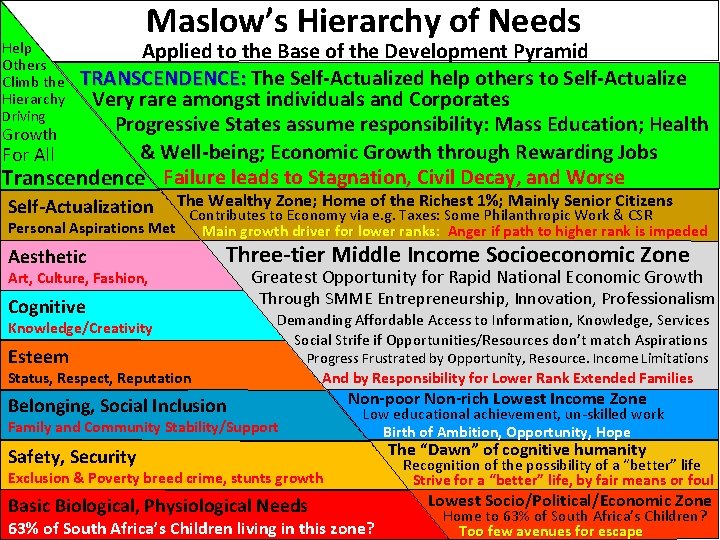
Maslow’s Hierarchy of Needs Applied to the Base of the Development Pyramid TRANSCENDENCE: The Self-Actualized help others to Self-Actualize Very rare amongst individuals and Corporates Driving Progressive States assume responsibility: Mass Education; Health Growth & Well-being; Economic Growth through Rewarding Jobs For All Transcendence Failure leads to Stagnation, Civil Decay, and Worse Help Others Climb the Hierarchy Self-Actualization Personal Aspirations Met The Wealthy Zone; Home of the Richest 1%; Mainly Senior Citizens Contributes to Economy via e. g. Taxes: Some Philanthropic Work & CSR Main growth driver for lower ranks: Anger if path to higher rank is impeded Aesthetic Art, Culture, Fashion, Three-tier Middle Income Socioeconomic Zone Cognitive Knowledge/Creativity Esteem Greatest Opportunity for Rapid National Economic Growth Through SMME Entrepreneurship, Innovation, Professionalism Demanding Affordable Access to Information, Knowledge, Services Social Strife if Opportunities/Resources don’t match Aspirations Progress Frustrated by Opportunity, Resource. Income Limitations Status, Respect, Reputation And by Responsibility for Lower Rank Extended Families Belonging, Social Inclusion Family and Community Stability/Support Non-poor Non-rich Lowest Income Zone Low educational achievement, un-skilled work Birth of Ambition, Opportunity, Hope Safety, Security Exclusion & Poverty breed crime, stunts growth Basic Biological, Physiological Needs 63% of South Africa’s Children living in this zone? The “Dawn” of cognitive humanity Recognition of the possibility of a “better” life Strive for a “better” life, by fair means or foul Lowest Socio/Political/Economic Zone Home to 63% of South Africa’s Children? Too few avenues for escape
A Short Survey of the World’s Internet Cafés BRICS community and others
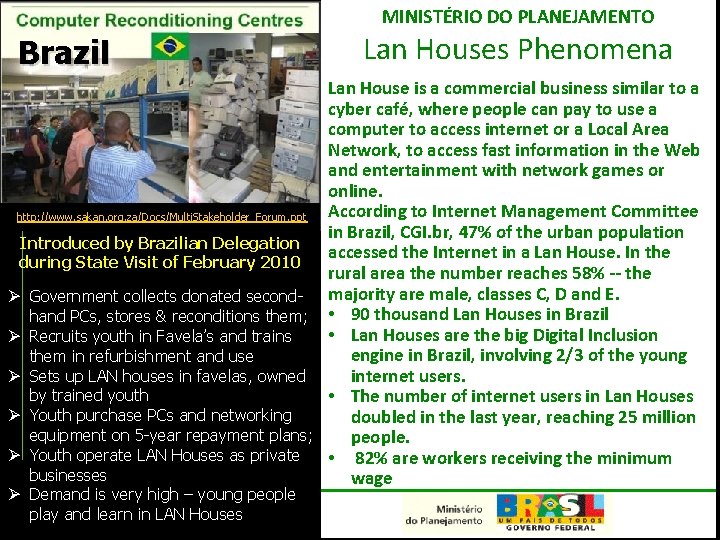
MINISTÉRIO DO PLANEJAMENTO Brazil Lan Houses Phenomena Lan House is a commercial business similar to a cyber café, where people can pay to use a computer to access internet or a Local Area Network, to access fast information in the Web and entertainment with network games or online. According to Internet Management Committee http: //www. sakan. org. za/Docs/Multi. Stakeholder_Forum. ppt in Brazil, CGI. br, 47% of the urban population Introduced by Brazilian Delegation accessed the Internet in a Lan House. In the during State Visit of February 2010 rural area the number reaches 58% -- the Ø Government collects donated second- majority are male, classes C, D and E. hand PCs, stores & reconditions them; • 90 thousand Lan Houses in Brazil • Lan Houses are the big Digital Inclusion Ø Recruits youth in Favela’s and trains engine in Brazil, involving 2/3 of the young them in refurbishment and use internet users. Ø Sets up LAN houses in favelas, owned by trained youth • The number of internet users in Lan Houses Ø Youth purchase PCs and networking doubled in the last year, reaching 25 million equipment on 5 -year repayment plans; people. Ø Youth operate LAN Houses as private • 82% are workers receiving the minimum businesses wage Ø Demand is very high – young people play and learn in LAN Houses
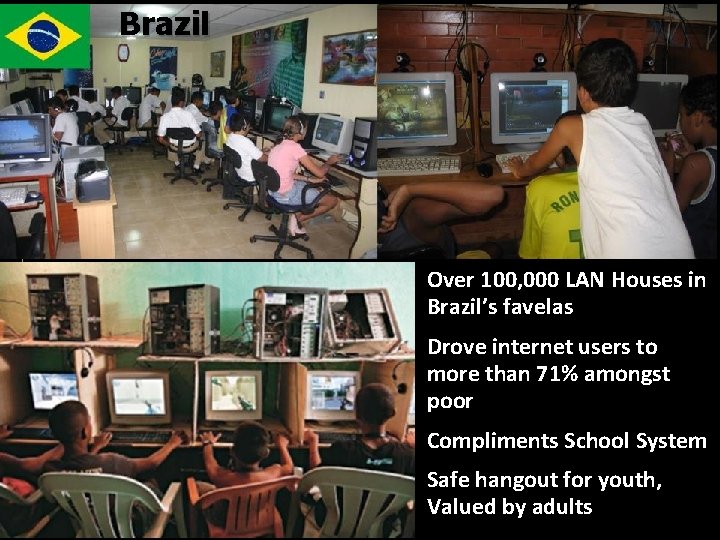
Brazil Over 100, 000 LAN Houses in Brazil’s favelas Drove internet users to more than 71% amongst poor Compliments School System Safe hangout for youth, Valued by adults
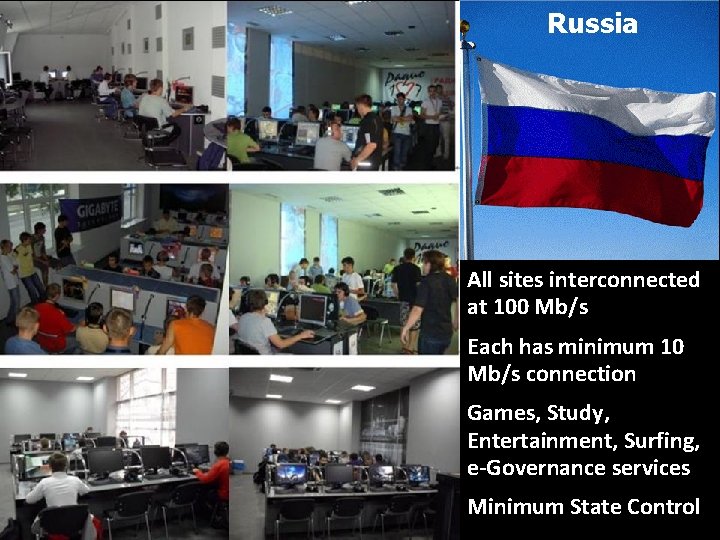
Russia All sites interconnected at 100 Mb/s Each has minimum 10 Mb/s connection Games, Study, Entertainment, Surfing, e-Governance services Minimum State Control
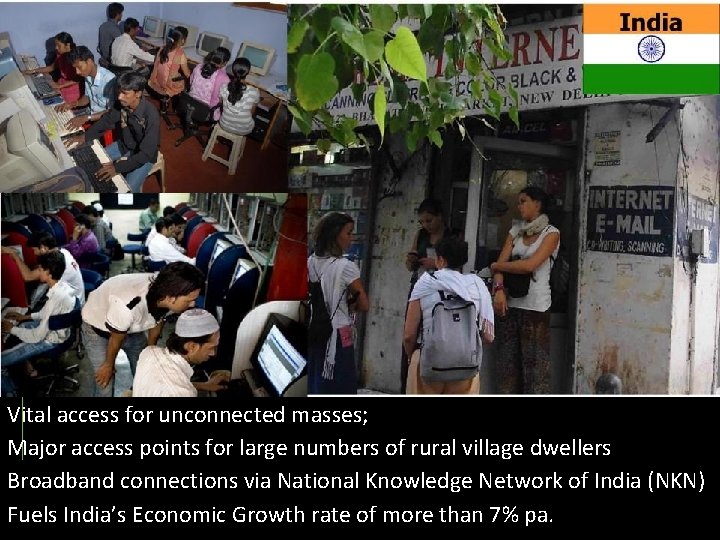
Vital access for unconnected masses; Major access points for large numbers of rural village dwellers Broadband connections via National Knowledge Network of India (NKN) Fuels India’s Economic Growth rate of more than 7% pa.
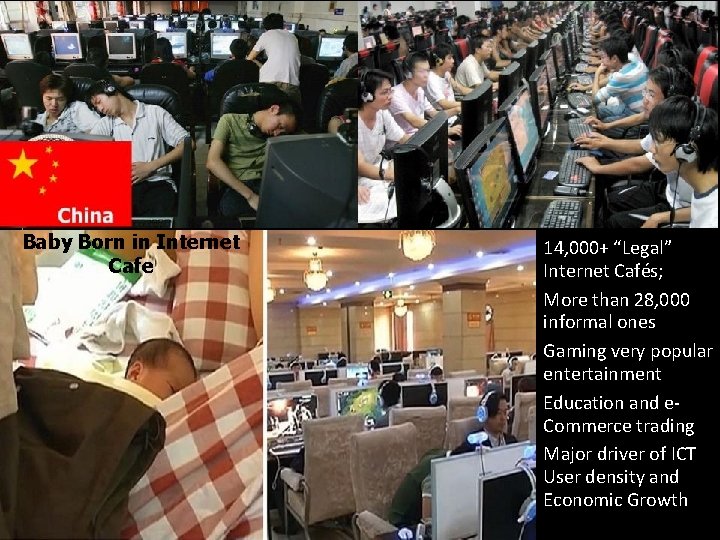
Baby Born in Internet Cafe 14, 000+ “Legal” Internet Cafés; More than 28, 000 informal ones Gaming very popular entertainment Education and e. Commerce trading Major driver of ICT User density and Economic Growth
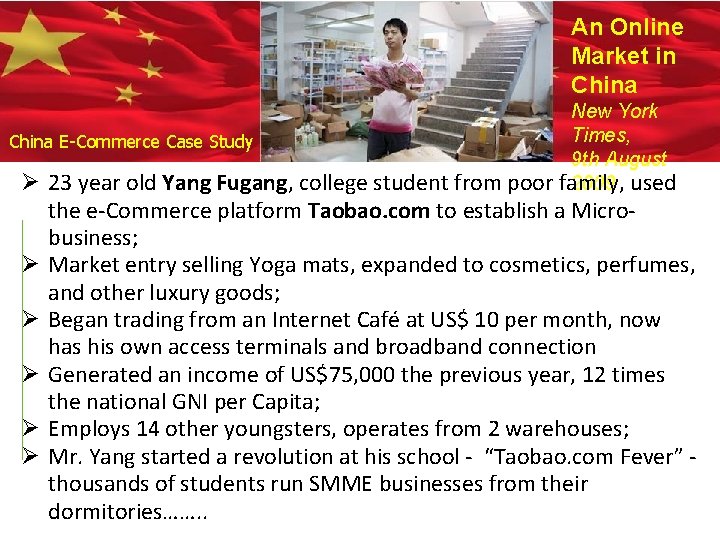
An Online Market in China New York Times, China E-Commerce Case Study 9 th August 2009 used Ø 23 year old Yang Fugang, college student from poor family, Ø Ø Ø the e-Commerce platform Taobao. com to establish a Microbusiness; Market entry selling Yoga mats, expanded to cosmetics, perfumes, and other luxury goods; Began trading from an Internet Café at US$ 10 per month, now has his own access terminals and broadband connection Generated an income of US$75, 000 the previous year, 12 times the national GNI per Capita; Employs 14 other youngsters, operates from 2 warehouses; Mr. Yang started a revolution at his school - “Taobao. com Fever” thousands of students run SMME businesses from their dormitories……. .
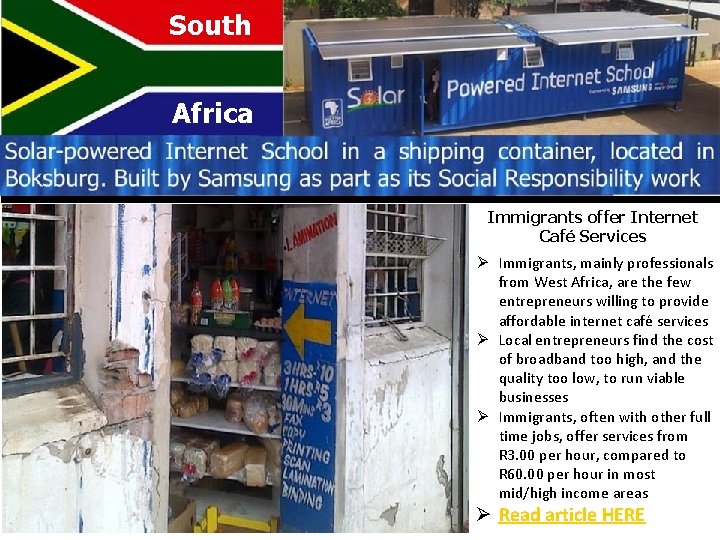
South Africa Immigrants offer Internet Café Services Ø Immigrants, mainly professionals from West Africa, are the few entrepreneurs willing to provide affordable internet café services Ø Local entrepreneurs find the cost of broadband too high, and the quality too low, to run viable businesses Ø Immigrants, often with other full time jobs, offer services from R 3. 00 per hour, compared to R 60. 00 per hour in most mid/high income areas Ø Read article HERE
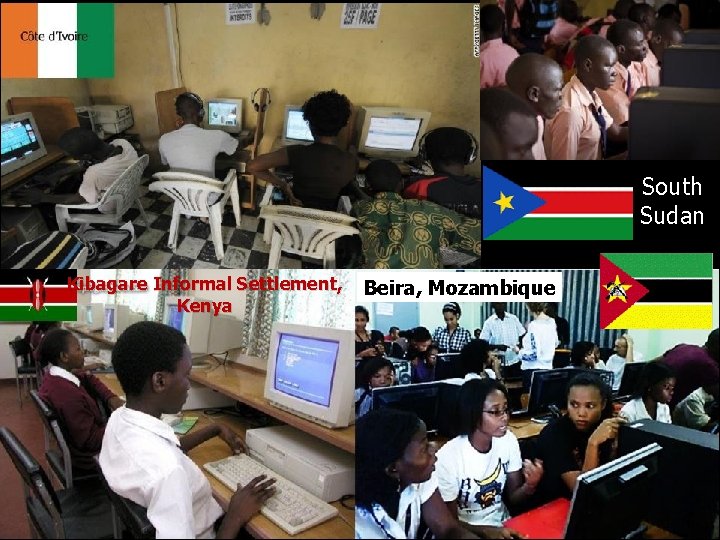
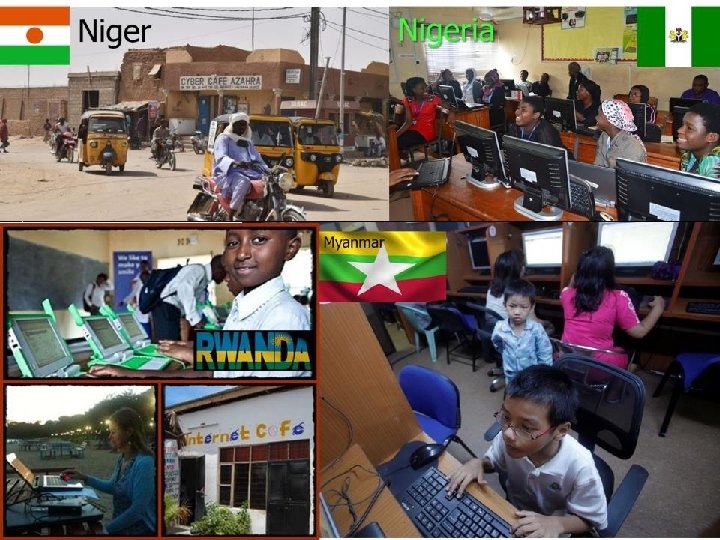
South Sudan Kibagare Informal Settlement, Kenya Beira, Mozambique
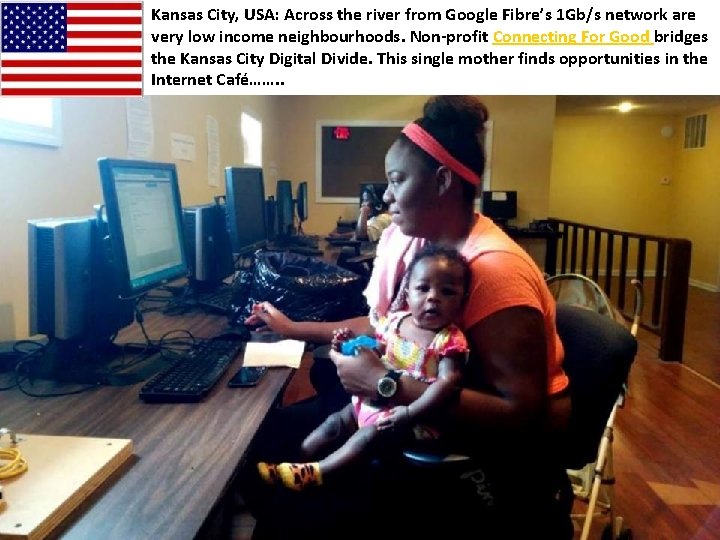
Kansas City, USA: Across the river from Google Fibre’s 1 Gb/s network are very low income neighbourhoods. Non-profit Connecting For Good bridges the Kansas City Digital Divide. This single mother finds opportunities in the Internet Café……. .
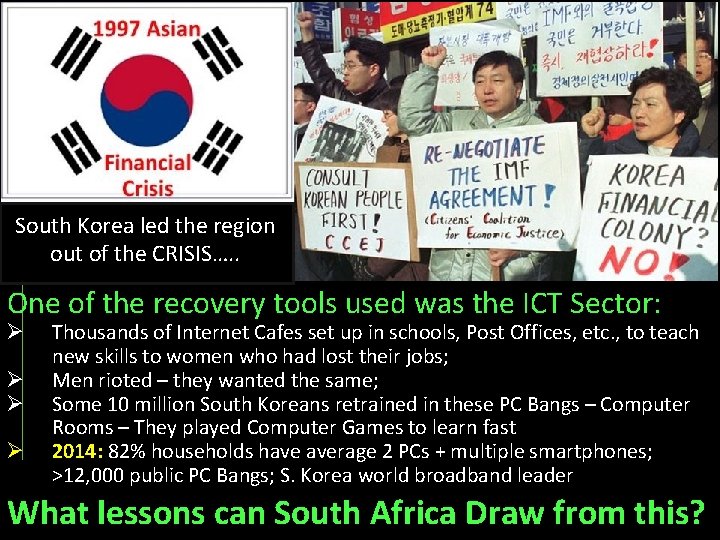
South Korea led the region out of the CRISIS…. . One of the recovery tools used was the ICT Sector: Ø Ø Thousands of Internet Cafes set up in schools, Post Offices, etc. , to teach new skills to women who had lost their jobs; Men rioted – they wanted the same; Some 10 million South Koreans retrained in these PC Bangs – Computer Rooms – They played Computer Games to learn fast 2014: 82% households have average 2 PCs + multiple smartphones; >12, 000 public PC Bangs; S. Korea world broadband leader What lessons can South Africa Draw from this?
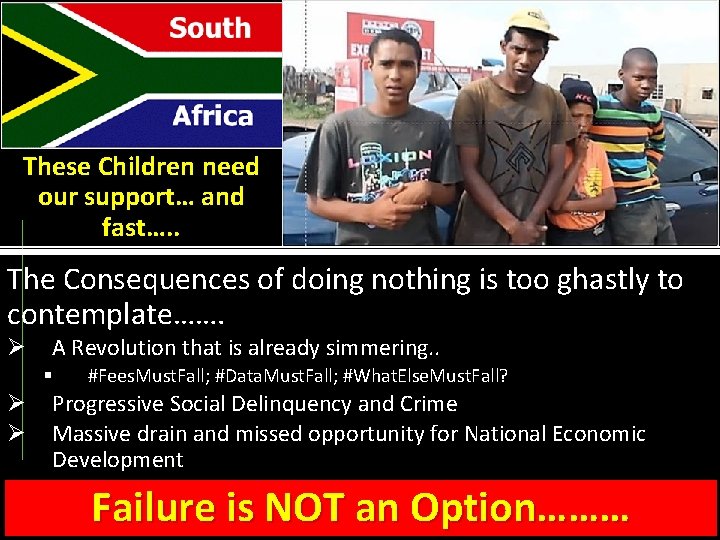
These Children need our support… and fast…. . The Consequences of doing nothing is too ghastly to contemplate……. Ø A Revolution that is already simmering. . § Ø Ø #Fees. Must. Fall; #Data. Must. Fall; #What. Else. Must. Fall? Progressive Social Delinquency and Crime Massive drain and missed opportunity for National Economic Development Failure is NOT an Option………
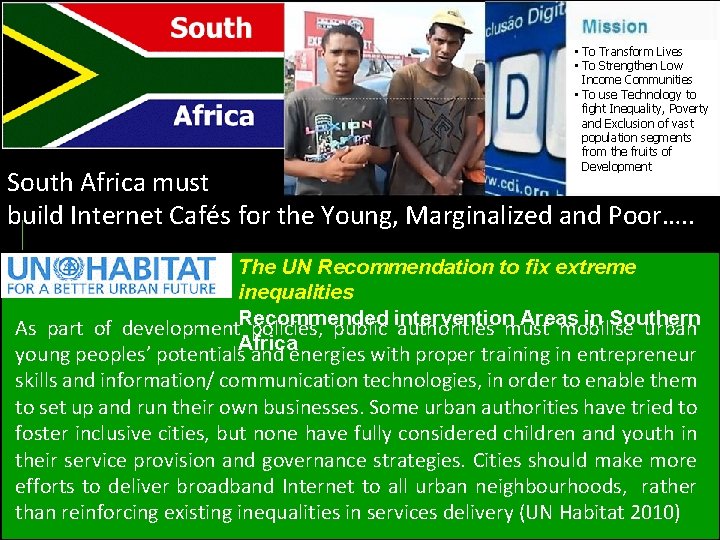
• To Transform Lives • To Strengthen Low Income Communities • To use Technology to fight Inequality, Poverty and Exclusion of vast population segments from the fruits of Development South Africa must build Internet Cafés for the Young, Marginalized and Poor…. . The UN Recommendation to fix extreme inequalities Areas in Southern As part of development. Recommended policies, public intervention authorities must mobilise urban Africa young peoples’ potentials and energies with proper training in entrepreneur skills and information/ communication technologies, in order to enable them to set up and run their own businesses. Some urban authorities have tried to foster inclusive cities, but none have fully considered children and youth in their service provision and governance strategies. Cities should make more efforts to deliver broadband Internet to all urban neighbourhoods, rather than reinforcing existing inequalities in services delivery (UN Habitat 2010)
Building South Africa’s Knowledge Access Networks What they are Ø Thousands of Internet Cafés, Cyber Cafés, LAN Houses, IPILANS, or anything their young users wish to call them; Ø Location: Every locality that accommodates the millions of young economically excluded South Africans where joblessness, hopelessness and poverty prevails Ø Owned, built and operated by the Residents of the settlements, as SMMEs with prices suitable for their community and users Ø Connected via public and private, if necessary subsidised, broadband networks; § Municipal Wi-Fi Networks as last mile § National public and private fibre or wireless backhaul Ø Used by the Youth, their parents and relatives, public administration, teachers and all service delivery specialists
Building South Africa’s Knowledge Access Networks Who Funds their Construction Ø State, Provincial and Local Government in Smart Partnership with Private Sector and Civil Society (Concept is “A-Political”); Ø Assisted by mandated State Agencies like USAASA and its successors, DTI and its SME Development Units, Churches etc. Ø Why State Funding? The Returns on Investments (ROI) are massive, very long term in nature, socio-economic-political in focus, not suitable for profit-driven commercial investors; Ø Role of Private Sector? Support in kind, through technological and R&D support, adoption of key installations as part of CSR budgets and commitments; Ø Role of Academia, R&D, and International Development Agencies: Natural and Social Scientific Research, International Collaboration/Cooperation, Learning Content Development
Building South Africa’s Knowledge Access Networks Level and Type of Funding Ø Budgets: These must depend on local capacity and needs – Each local authority has different quantitative and qualitative needs, to be developed case-by-case Ø Use of Funds: (1) distribution chains and networks in each locality to canvass donations of used hardware/software; (2) transport and local warehousing; (3) identification and recruitment of young SMME entrepreneurs; Business modelling; Ø Project Management: Avoid Turn-key execution of the tender variety – they are too risky. Use instead localized innovation hubs, national and local R&D facilities, and set up small specialized management teams within each municipality; Ø Participation? As a “Bottom-Up” intervention, local participation, especially by local youth, is mandatory…….
Building South Africa’s Knowledge Access Networks Technological/Operational Considerations Ø Innovation: Innovation required is Applied - NOT Technological – concept is technologically neutral – old/modern/future technologies used liberally on case by case and needs basis Ø Accommodation and Housing: Communities and local governments decide based on availability and needs: Overheads like rentals driven down drastically: Concept of IPLAN in Shack or Spaza Shop to be developed; Ø Other operating costs: Biggest challenge is connectivity – but new models, supported by National Policy and Regulatory Developments, are being introduced – e. g. Municipal Wi-Fi, Broadband Project Isizwe models; See Video here Ø Profitability? Business modelling must/will recognise local affordability – build sustainable but very low cost price models
Building South Africa’s Knowledge Access Networks Usage Considerations Ø Limitations: Drastically suppress any user determinisms – young users will develop their own relationship with the technology and the experience they derive from it – See www. sakan. org. za Ø Legal Issues: Prevailing laws, both criminal and civil, must be rigorously enforced, BUT with Great Sensitivity: Corrective and punitive responses to legal breaches in LAN Houses must be developmentally focussed - maximising local participation without the extremes of vigilantism; Ø Learning Opportunities: The traditional “Top-Down” imparting of information and knowledge must be avoided – the formal school system will provide these. Self and peer-driven highly participative learning must be encouraged/promoted through focussed learning content development
Building South Africa’s Knowledge Access Networks Institutional and Structural Considerations Ø At National Level: A multi-disciplinary multi-stakeholder approach is a critical success criterion: virtually all government institutions, and private sector and civil society organizations, have a role to play in the development and use of pro-poor LAN House communication centres; Ø Complexity: The ideal stated above is difficult to realize in the short term – small teams highly focussed on the immediate tasks, but with a keen interest on promoting broader long term multi-stakeholder participation is mandatory; Ø Political Level: The short and long term objectives are strictly apolitical, long term failure in defeating the triple scourges of inequality, poverty and youth exclusion will have disastrous outcomes for the nation and all/any political ideology or party
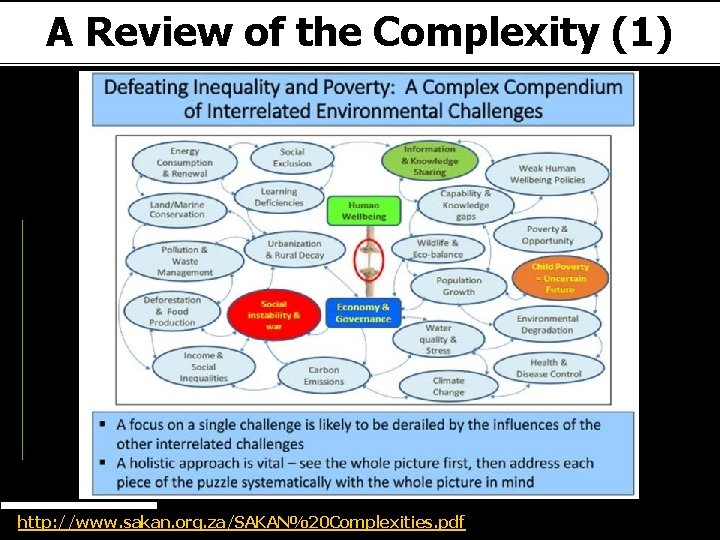
A Review of the Complexity (1) http: //www. sakan. org. za/SAKAN%20 Complexities. pdf
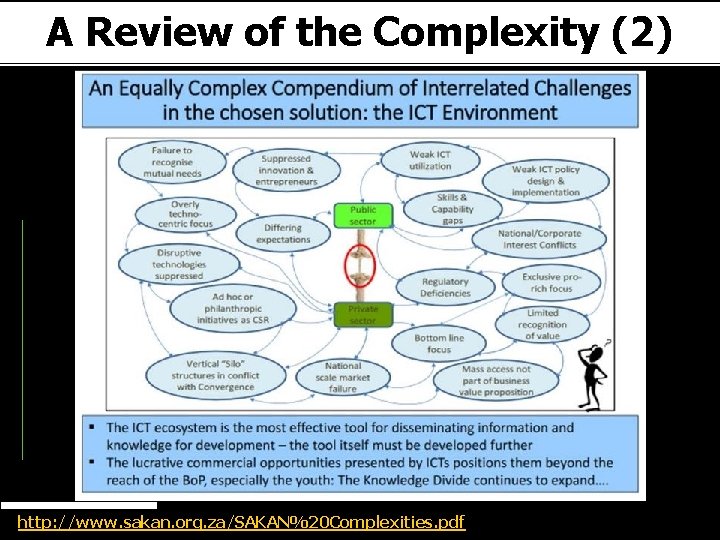
A Review of the Complexity (2) http: //www. sakan. org. za/SAKAN%20 Complexities. pdf
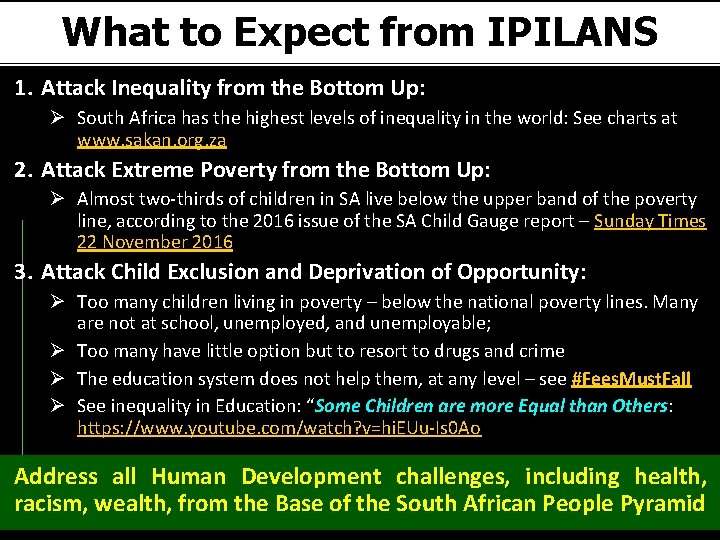
What to Expect from IPILANS 1. Attack Inequality from the Bottom Up: Ø South Africa has the highest levels of inequality in the world: See charts at www. sakan. org. za 2. Attack Extreme Poverty from the Bottom Up: Ø Almost two-thirds of children in SA live below the upper band of the poverty line‚ according to the 2016 issue of the SA Child Gauge report – Sunday Times 22 November 2016 3. Attack Child Exclusion and Deprivation of Opportunity: Ø Too many children living in poverty – below the national poverty lines. Many are not at school, unemployed, and unemployable; Ø Too many have little option but to resort to drugs and crime Ø The education system does not help them, at any level – see #Fees. Must. Fall Ø See inequality in Education: “Some Children are more Equal than Others: https: //www. youtube. com/watch? v=hi. EUu-Is 0 Ao Address all Human Development challenges, including health, racism, wealth, from the Base of the South African People Pyramid
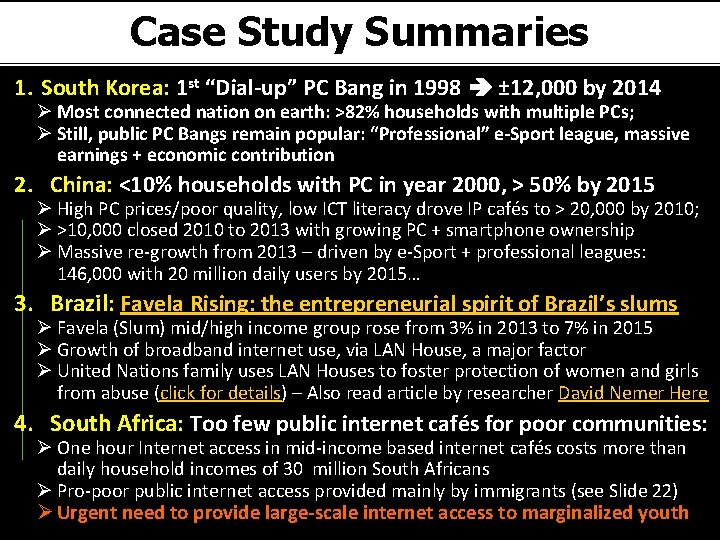
Case Study Summaries 1. South Korea: 1 st “Dial-up” PC Bang in 1998 ± 12, 000 by 2014 Ø Most connected nation on earth: >82% households with multiple PCs; Ø Still, public PC Bangs remain popular: “Professional” e-Sport league, massive earnings + economic contribution 2. China: <10% households with PC in year 2000, > 50% by 2015 Ø High PC prices/poor quality, low ICT literacy drove IP cafés to > 20, 000 by 2010; Ø >10, 000 closed 2010 to 2013 with growing PC + smartphone ownership Ø Massive re-growth from 2013 – driven by e-Sport + professional leagues: 146, 000 with 20 million daily users by 2015… 3. Brazil: Favela Rising: the entrepreneurial spirit of Brazil’s slums Ø Favela (Slum) mid/high income group rose from 3% in 2013 to 7% in 2015 Ø Growth of broadband internet use, via LAN House, a major factor Ø United Nations family uses LAN Houses to foster protection of women and girls from abuse (click for details) – Also read article by researcher David Nemer Here 4. South Africa: Too few public internet cafés for poor communities: Ø One hour Internet access in mid-income based internet cafés costs more than daily household incomes of 30 million South Africans Ø Pro-poor public internet access provided mainly by immigrants (see Slide 22) Ø Urgent need to provide large-scale internet access to marginalized youth

Concluding Thoughts of Two Eminent South Africans See Video about Tobias here (Adult – Nudity)

Concluding Thoughts of Two Eminent South Africans "I am an African"
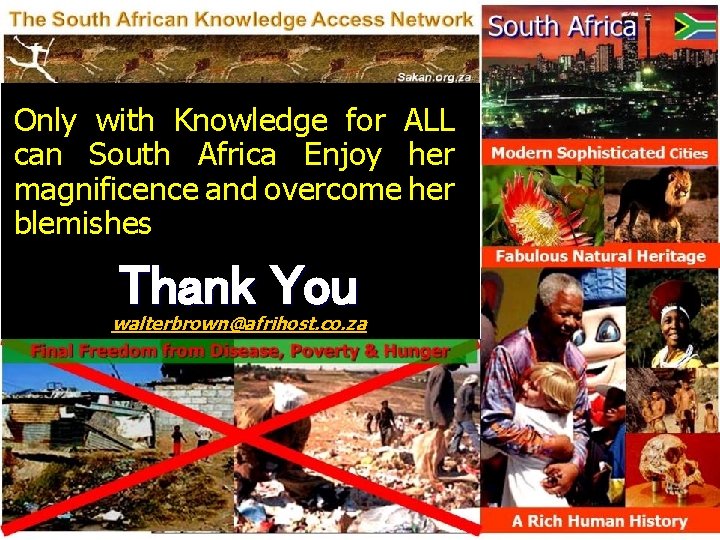
Only with Knowledge for ALL can South Africa Enjoy her magnificence and overcome her blemishes Thank You walterbrown@afrihost. co. za
- Slides: 45