
Building Resilience Wellbeing of Future Generations Act and
Building Resilience Well-being of Future Generations Act and the Environment (Wales) Bill Emily Finney – Resilience Policy, Welsh Government

The Act q The Well-being of Future Generations (Wales) Act 2015 is about improving the social, economic, environmental and cultural well-being of Wales. q It will make public bodies listed in the Act think more about the long term, work better together with people and communities and each other, look to prevent problems and take a more joined-up approach. q This will help us create a Wales that we all want to live in, now and in the future. q To make sure we are all working towards the same vision, the Act puts in place seven well-being goals.
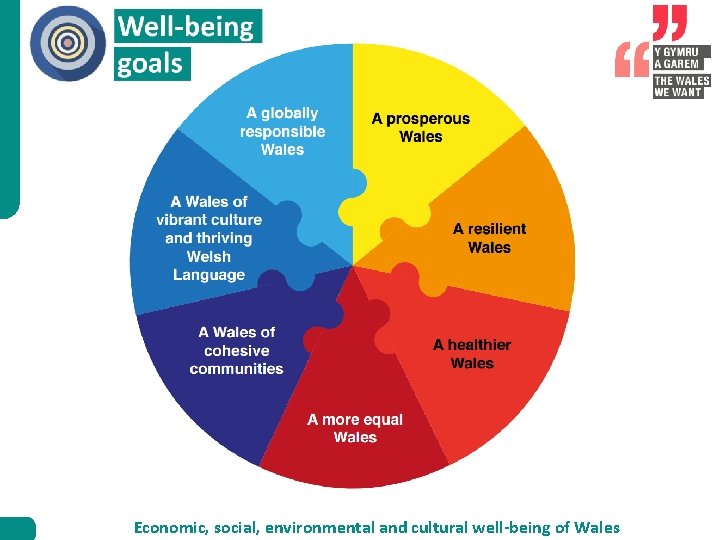
A wales of cohesive communities A more equal Wales Economic, social, environmental and cultural well-being of Wales
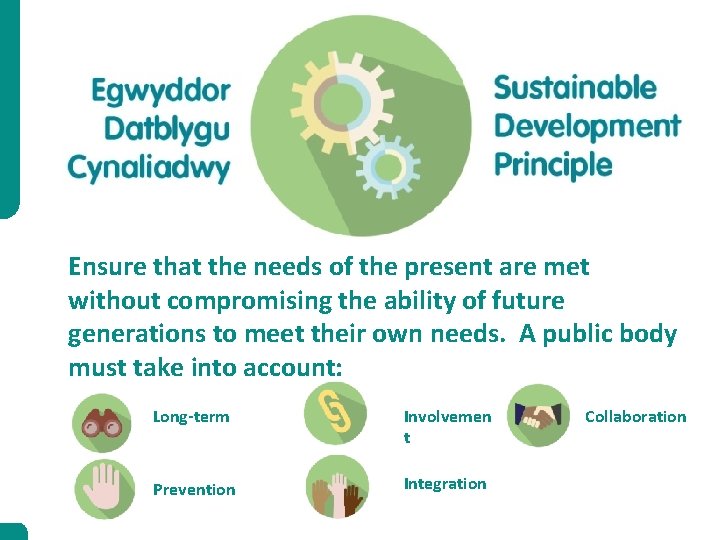
Ensure that the needs of the present are met without compromising the ability of future generations to meet their own needs. A public body must take into account: Long-term Involvemen t Prevention Integration Collaboration
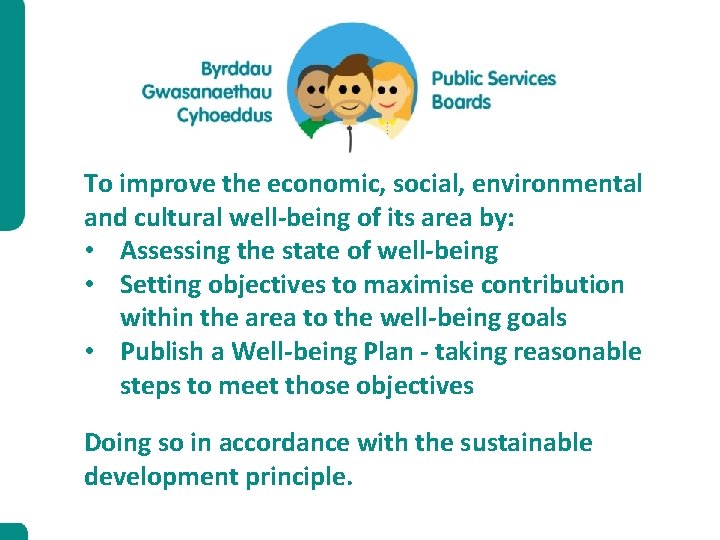
To improve the economic, social, environmental and cultural well-being of its area by: • Assessing the state of well-being • Setting objectives to maximise contribution within the area to the well-being goals • Publish a Well-being Plan - taking reasonable steps to meet those objectives Doing so in accordance with the sustainable development principle.

What led to the WFG Act and the Environment Bill? q Short term thinking, not thinking about the long term. q Working in policy and organisation silos. q Separate solutions to common problems. q Greater awareness of connections between issues (environment, economy, society). q q v. The evidence is clear from recent reports such as the UK National Ecosystem Assessment on the state of UK ecosystems showing declining ecosystem services as well as Needs of whole populations. continuing declines in biodiversity reported in the 2013 State of Nature Long term trends and challenges. Report
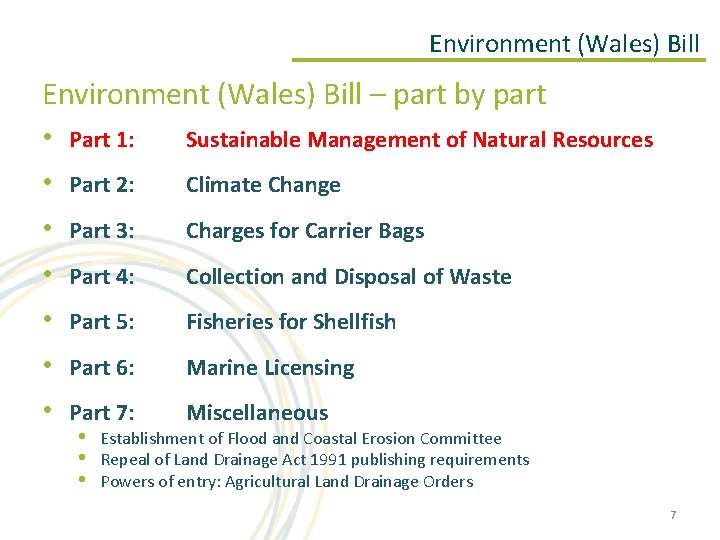
Environment (Wales) Bill – part by part • Part 1: Sustainable Management of Natural Resources • Part 2: Climate Change • Part 3: Charges for Carrier Bags • Part 4: Collection and Disposal of Waste • Part 5: Fisheries for Shellfish • Part 6: Marine Licensing • Part 7: Miscellaneous • • • Establishment of Flood and Coastal Erosion Committee Repeal of Land Drainage Act 1991 publishing requirements Powers of entry: Agricultural Land Drainage Orders 7
Environment (Wales) Bill Sustainable Management of Natural Resources (SMNR) The objective of Part 1 is to manage our natural resources in a way and at a rate that can maintain and enhance the resilience of our ecosystems whilst meeting the needs of present generations without compromising the ability of future generations to meet their needs. 8

Environment (Wales) Bill Adaptive management Collaboration and engagement Building resilience Principles of SMNR Multiple benefits Scale Evidence Long termism 9
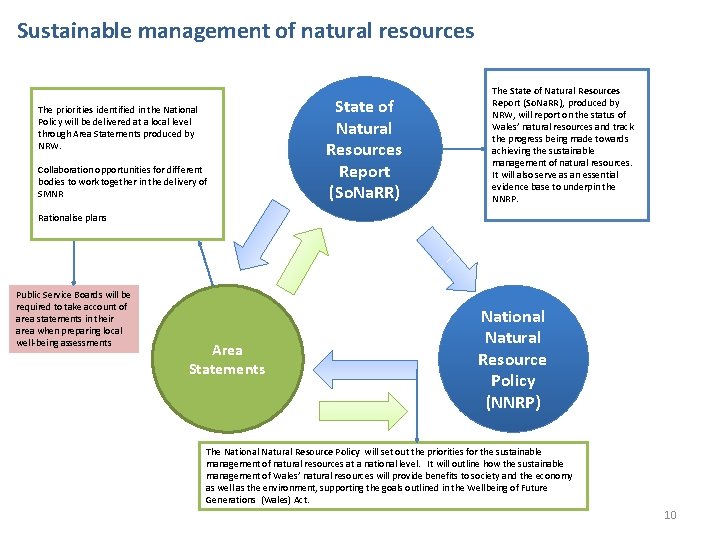
Sustainable management of natural resources The priorities identified in the National Policy will be delivered at a local level through Area Statements produced by NRW. Collaboration opportunities for different bodies to work together in the delivery of SMNR State of Natural Resources Report (So. Na. RR) The State of Natural Resources Report (So. Na. RR), produced by NRW, will report on the status of Wales’ natural resources and track the progress being made towards achieving the sustainable management of natural resources. It will also serve as an essential evidence base to underpin the NNRP. Rationalise plans Public Service Boards will be required to take account of area statements in their area when preparing local well-being assessments Area Statements National Natural Resource Policy (NNRP) The National Natural Resource Policy will set out the priorities for the sustainable management of natural resources at a national level. It will outline how the sustainable management of Wales’ natural resources will provide benefits to society and the economy as well as the environment, supporting the goals outlined in the Wellbeing of Future Generations (Wales) Act. 10
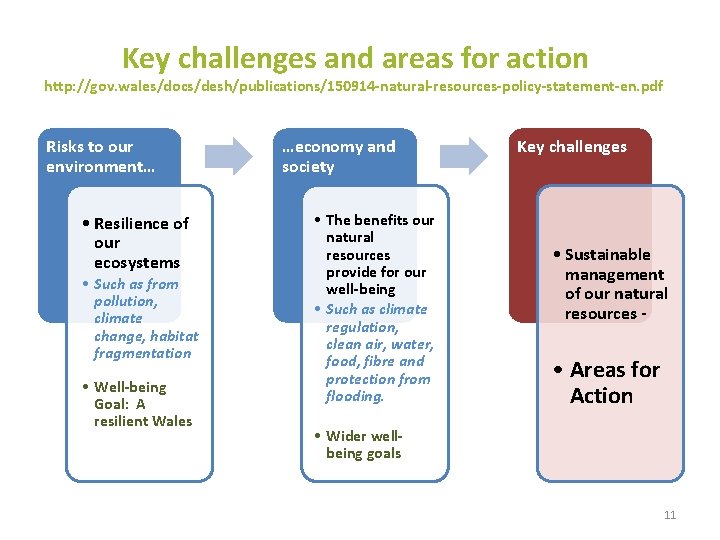
Key challenges and areas for action http: //gov. wales/docs/desh/publications/150914 -natural-resources-policy-statement-en. pdf Risks to our environment… • Resilience of our ecosystems • Such as from pollution, climate change, habitat fragmentation • Well-being Goal: A resilient Wales …economy and society • The benefits our natural resources provide for our well-being • Such as climate regulation, clean air, water, food, fibre and protection from flooding. Key challenges • Sustainable management of our natural resources - • Areas for Action • Wider wellbeing goals 11
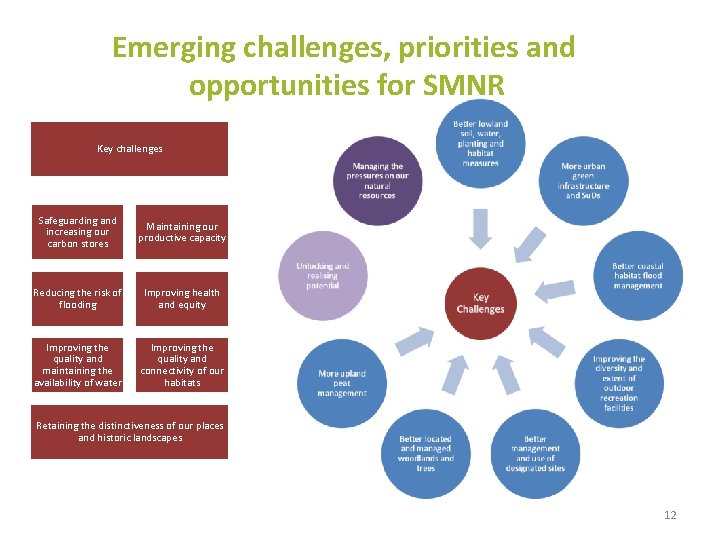
Emerging challenges, priorities and opportunities for SMNR Key challenges Safeguarding and increasing our carbon stores Maintaining our productive capacity Reducing the risk of flooding Improving health and equity Improving the quality and maintaining the availability of water Improving the quality and connectivity of our habitats Retaining the distinctiveness of our places and historic landscapes 12
Thank you! Multiple benefits
- Slides: 13