
Building Resilience Keep Connected People will forget what
Building Resilience Keep Connected “People will forget what you said, people will forget what you did, but people will never forget how you made them feel. ” (Maya Angelou)
Building Resilience Introduction to the resource
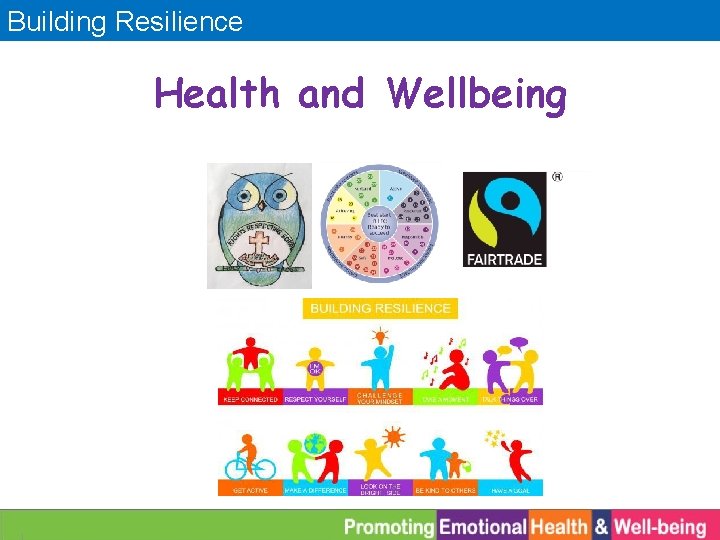
Building Resilience Health and Wellbeing
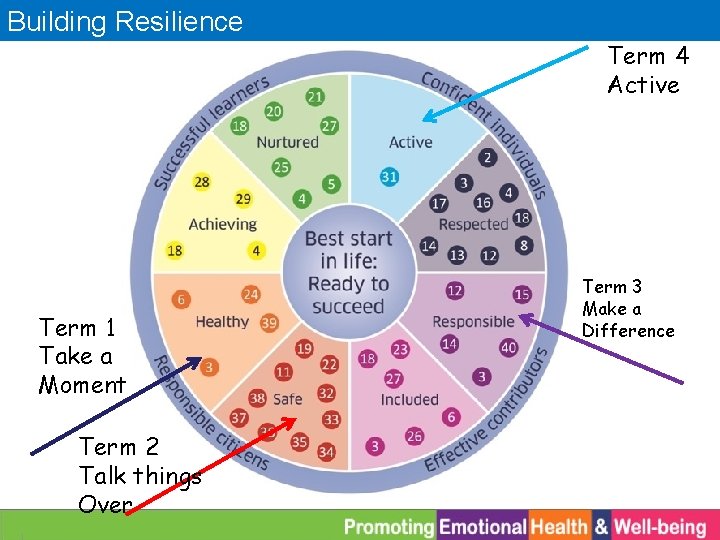
Building Resilience Term 4 Active Term 1 Take a Moment Term 2 Talk things Over Term 3 Make a Difference
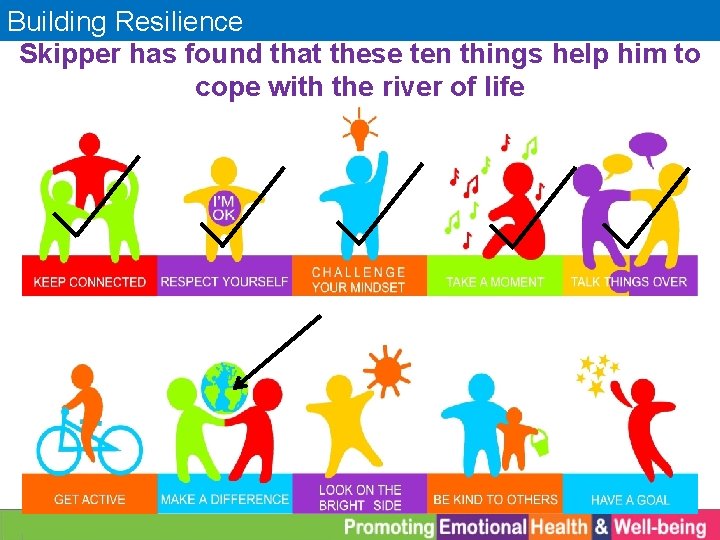
Building Resilience Skipper has found that these ten things help him to cope with the river of life
Building Resilience Holy Cross Values • • • Resilience Kindness (to yourself and others) Honesty Respect (yourself and others) Compassion Responsibility
Building Resilience BUILDING RESILIENCE: • Aims to take children on a personal journey to look at what influences their mental health and emotional wellbeing. • Has gathered together current best practice to bring a new set of materials which reflect the advances in research in this area.
Building Resilience BUILDING RESILIENCE • Aims to support the development of mental, emotional, social and physical wellbeing in partnership with staff, parents and pupils. • Provides practical strategies to help them cope with the ups and downs of their everyday lives and tools they can use when they experience difficulties. • Will provide children with skills for life.
Building Resilience Generic Definition of Resilience • ‘An ability to recover from or adjust easily to misfortune or change. ’ • Resilience does not appear to require extraordinary talents or resources but instead depends on ‘ordinary magic. ’ This is everyday interactions, relationships and resources.
Building Resilience and Nurture • 6 Principles of Nurture • One of these is ‘The importance of nurture for the development of wellbeing. ’ • Resilience fluctuates depending on your resilience levels. People can cause your self-esteem levels to change. We want to give children bounce-back-ability.
Building Resilience Nurture • 1 in 10 children and young people aged 5 -16 suffer from a diagnosable mental health disorder (around 3 in every class). • More than half of all adults with mental health problems were diagnosed in childhood. Less than half were treated appropriately at the time. • We are aiming for young people to understand themselves and to regulate their own feelings. Some need coregulation to help them with this.
Building Resilience Attachment Theory - Bowlby • Attachment is a hidden regulator. • An inability to self regulate leads to dangerous attempts to self regulate. (eating disorders, self harming, drugs etc) *Neuroplasticity – It is never too late to create new pathways in the brain.
Building Resilience • Research has found that the majority of children who grow up in socially toxic environments do NOT go on to repeat cycles of violence, crime and substance misuse in later adulthood. • These researches identified ‘protective factors. ’
Building Resilience Protective Factors • The 10 tools identified in BR are the protective factors which have been identified from research – things that help children during adversity and enable them to flourish. • We are aiming to provide children with knowledge of these tools so they can build resilience in themselves.
Building Resilience • The ability to deal with challenges that life throws at us is not something that we're either born with or we aren't. • One of the most exciting findings from recent research is that coping strategies, like many other life skills, can be learned, practiced and honed - often with wide reaching effects on the quality of our lives.
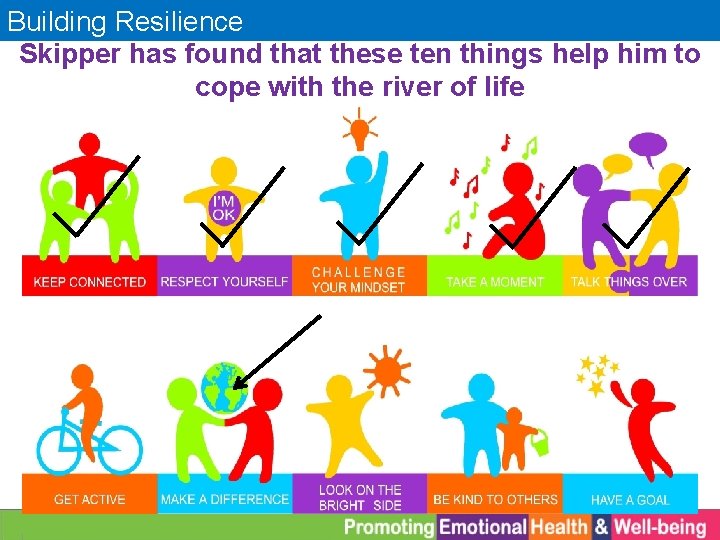
Building Resilience Skipper has found that these ten things help him to cope with the river of life
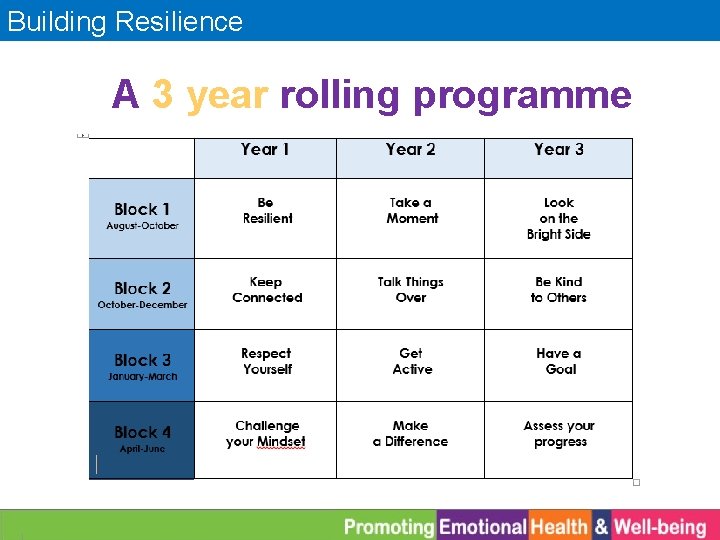
Building Resilience A 3 year rolling programme
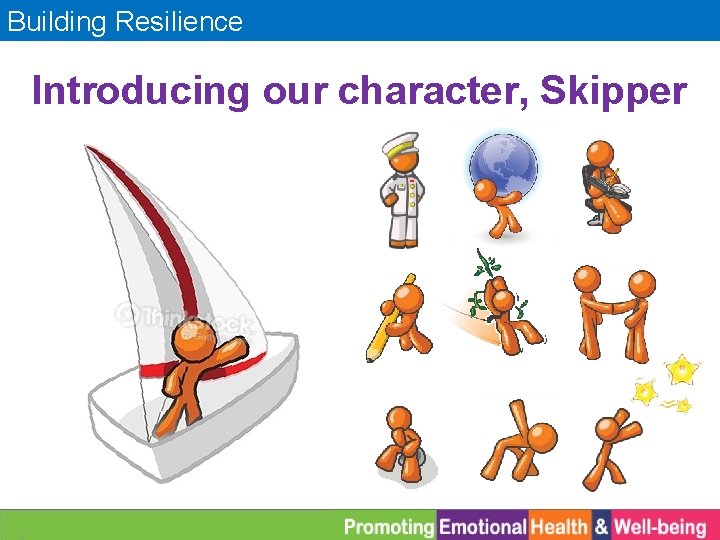
Building Resilience Introducing our character, Skipper
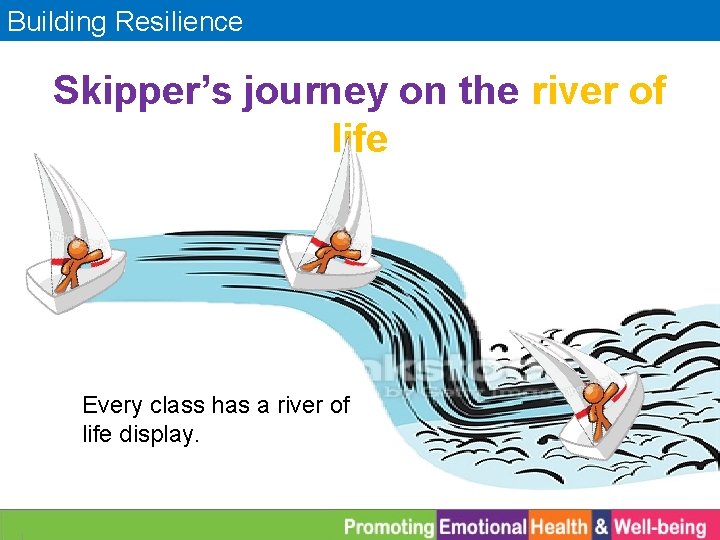
Building Resilience Skipper’s journey on the river of life Every class has a river of life display.
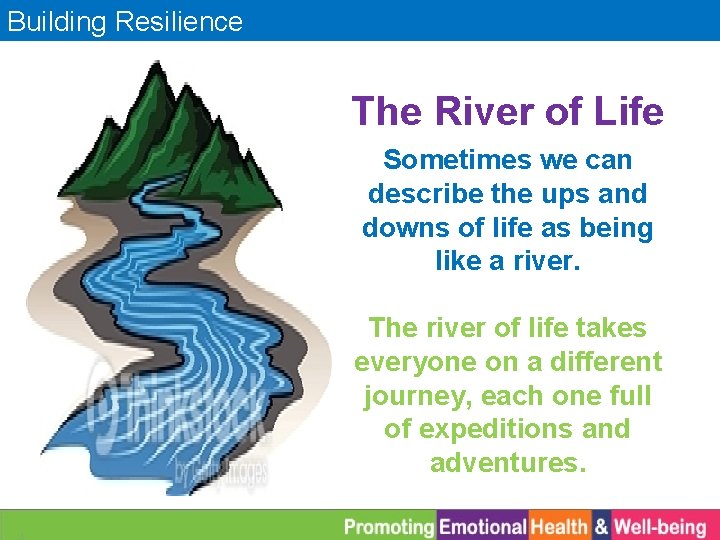
Building Resilience The River of Life Sometimes we can describe the ups and downs of life as being like a river. The river of life takes everyone on a different journey, each one full of expeditions and adventures.
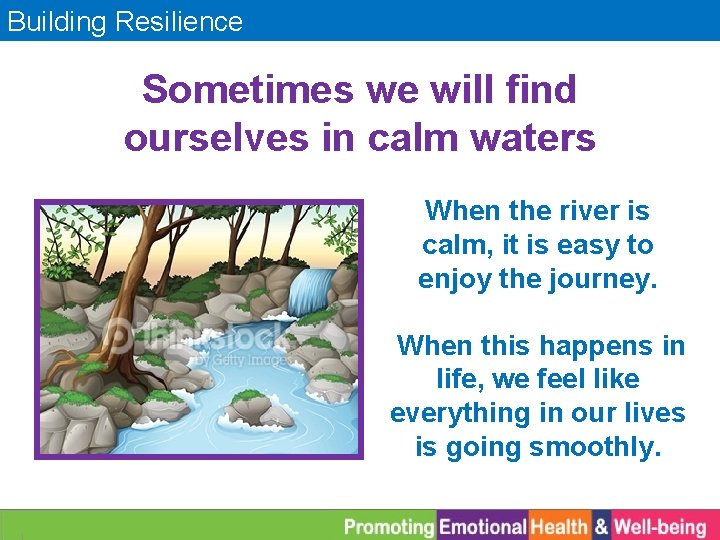
Building Resilience Sometimes we will find ourselves in calm waters When the river is calm, it is easy to enjoy the journey. When this happens in life, we feel like everything in our lives is going smoothly.
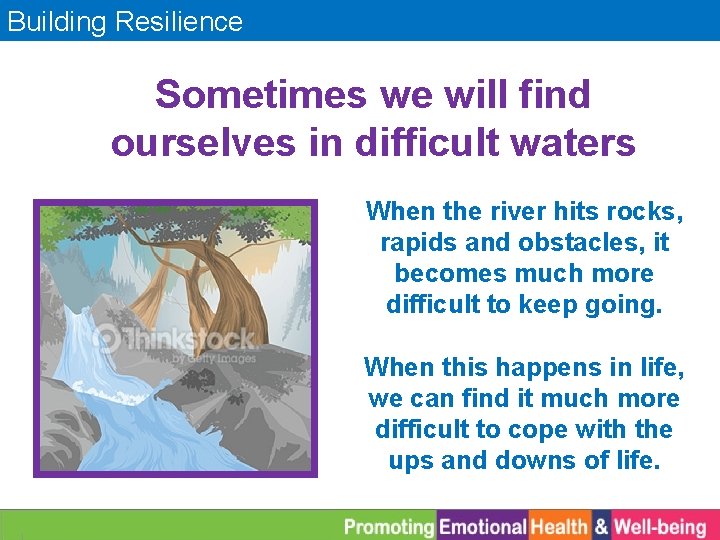
Building Resilience Sometimes we will find ourselves in difficult waters When the river hits rocks, rapids and obstacles, it becomes much more difficult to keep going. When this happens in life, we can find it much more difficult to cope with the ups and downs of life.
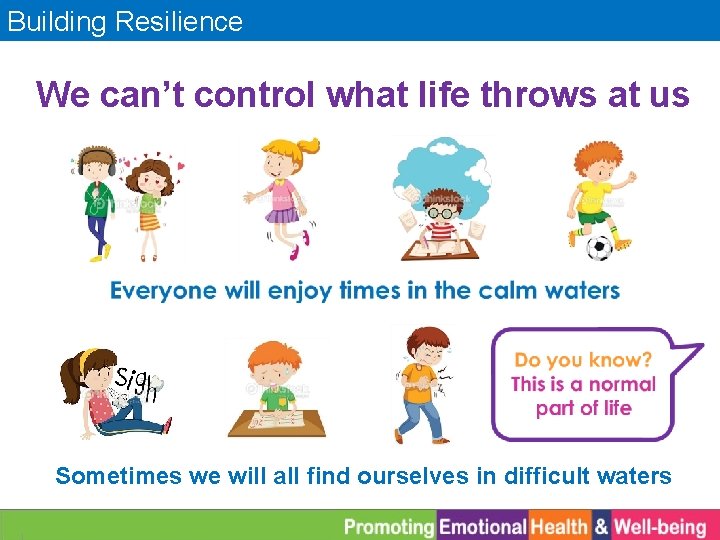
Building Resilience We can’t control what life throws at us Sometimes we will all find ourselves in difficult waters
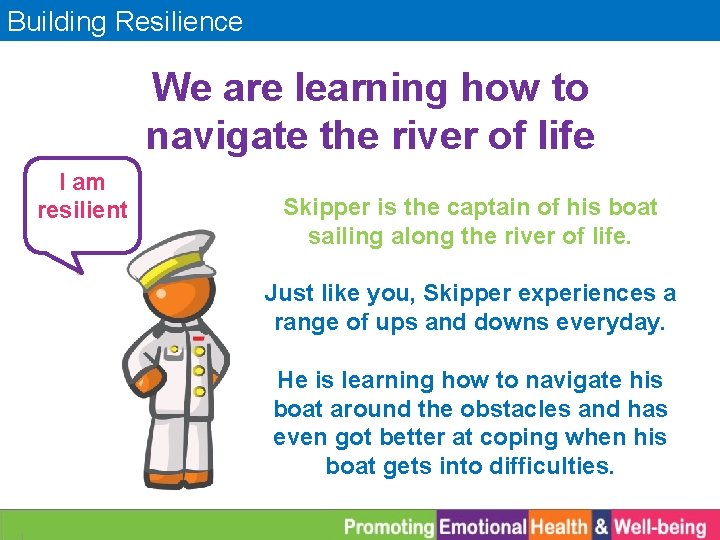
Building Resilience We are learning how to navigate the river of life Hi, my I am name is resilient Skipper is the captain of his boat sailing along the river of life. Just like you, Skipper experiences a range of ups and downs everyday. He is learning how to navigate his boat around the obstacles and has even got better at coping when his boat gets into difficulties.
Building Resilience We can learn to be more resilient
Building Resilience We can all learn ways to cope better with the river of life Together we are going to learn about the things that Skipper uses to help him to navigate the river of life
Building Resilience Resilient people cope better with difficulties
Building Resilience THE 12 UNITS • Each unit has 3 key learning points based on current research • Linked to GIRFEC, Wellbeing Indicators, UNCRC. • Comprehensive overage of H&WB experiences and outcomes - combine with current programmes for PE, Food & Nutrition, Keeping Myself Safe
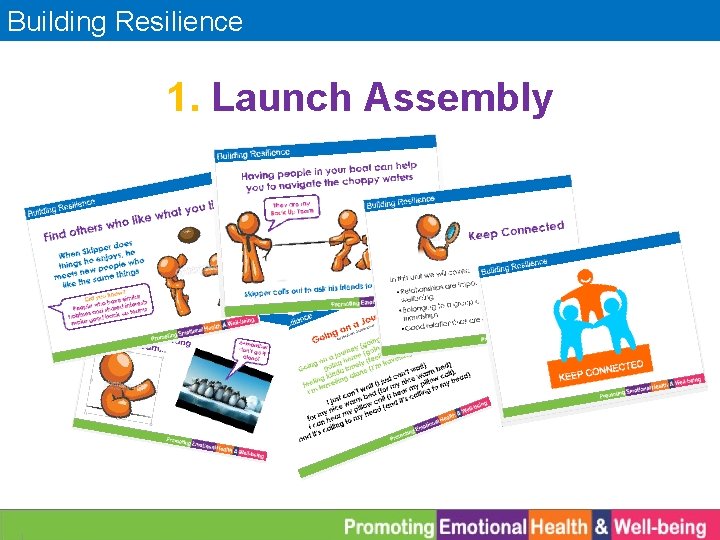
Building Resilience 1. Launch Assembly
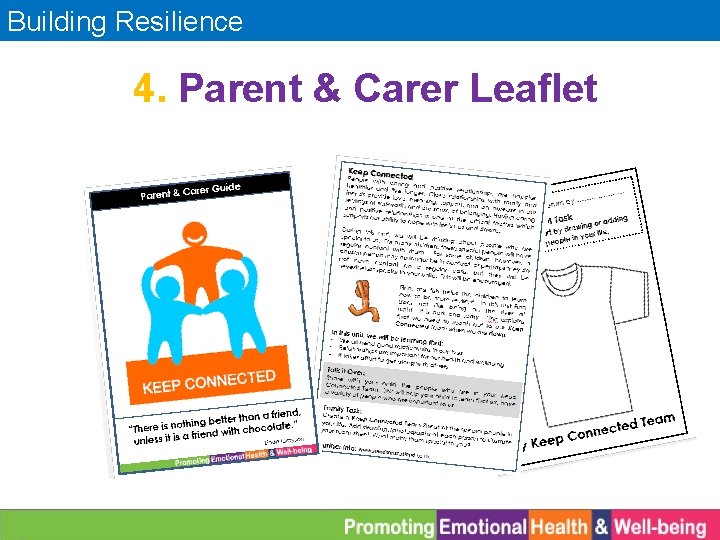
Building Resilience 4. Parent & Carer Leaflet
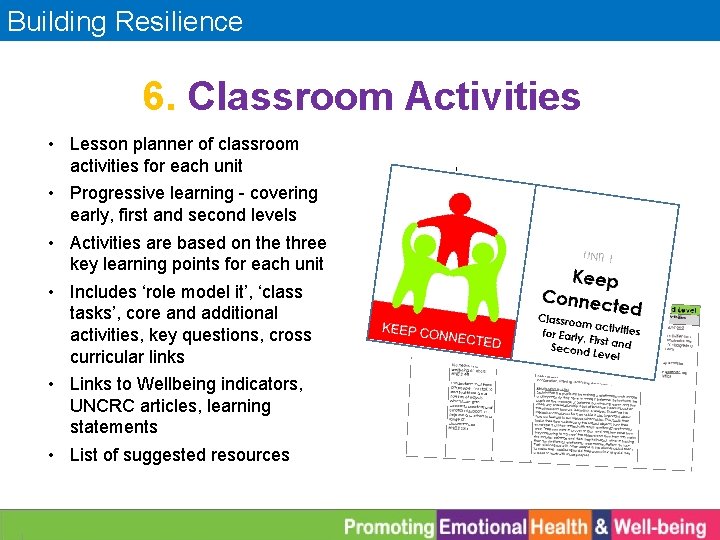
Building Resilience 6. Classroom Activities • Lesson planner of classroom activities for each unit • Progressive learning - covering early, first and second levels • Activities are based on the three key learning points for each unit • Includes ‘role model it’, ‘class tasks’, core and additional activities, key questions, cross curricular links • Links to Wellbeing indicators, UNCRC articles, learning statements • List of suggested resources
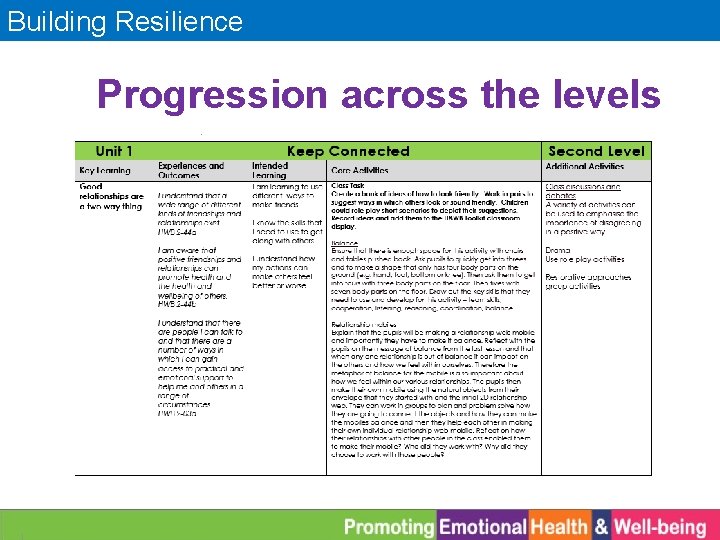
Building Resilience Progression across the levels
Building Resilience Intro: Be Resilient In this unit we will cover: • Everyone goes through ups and downs in their life • We can learn to be more resilient • Resilient people cope better with difficulties
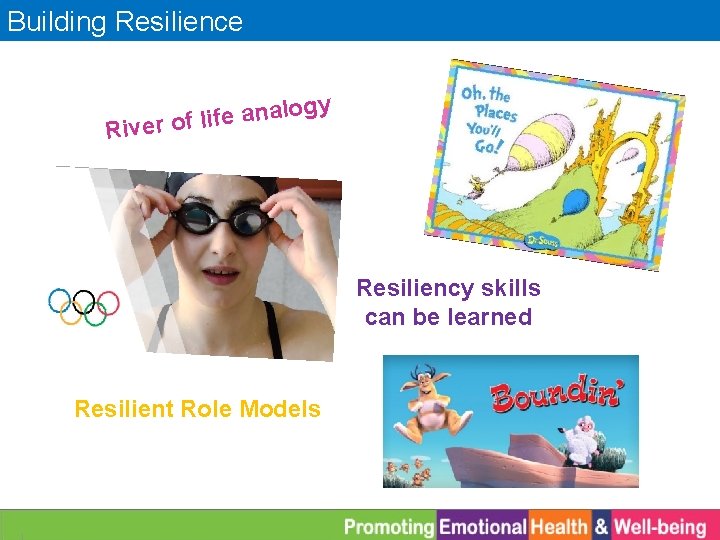
Building Resilience gy nalo a e f i l f o River Resiliency skills can be learned Resilient Role Models
Building Resilience What do our children think of it?
Building Resilience 1: Keep Connected • Relationships are important for our health and wellbeing • Belonging to a group can be a good way to build friendships • Good relationships are a two way thing
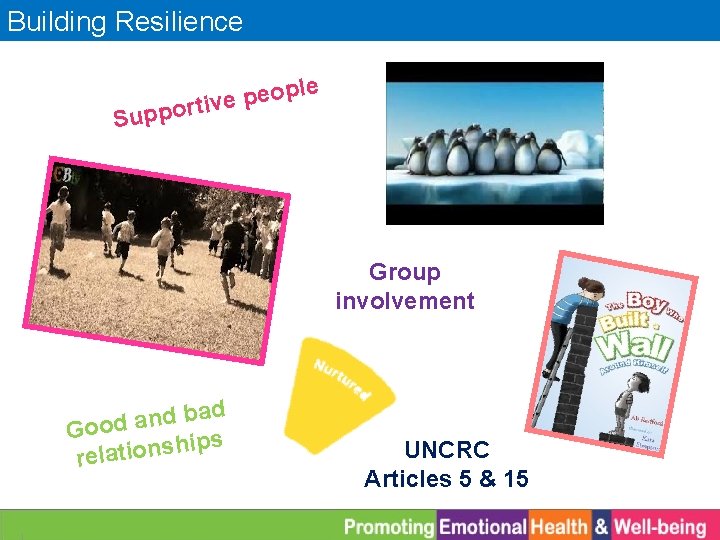
Building Resilience le p o e pportiv Su Group involvement d a b d n a Good s p i h s n o i relat UNCRC Articles 5 & 15
Building Resilience 2: Respect Yourself In this unit we will cover: • There is no one quite like me • Everyone has different strengths • I treat myself with respect
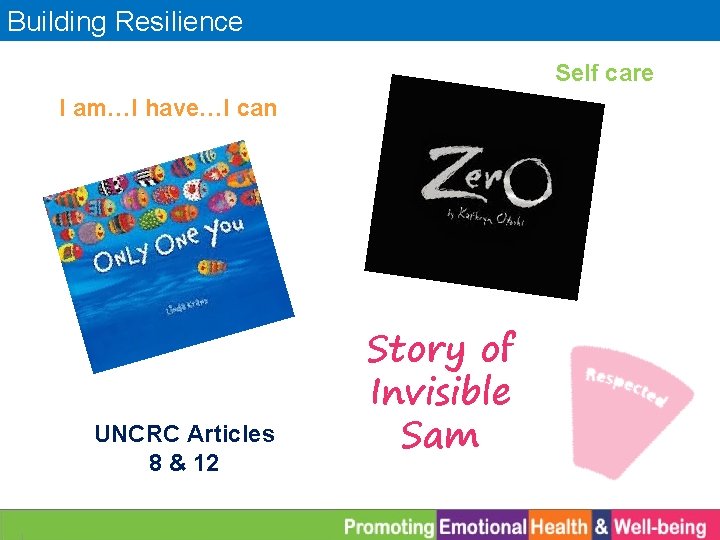
Building Resilience Self care I am…I have…I can UNCRC Articles 8 & 12 Story of Invisible Sam
Building Resilience 3: Challenge Your Mindset In this unit we will cover: • Who we are and what we are good at is not fixed • The way we think, feel or learn shapes our brain • I can change through the choices I make
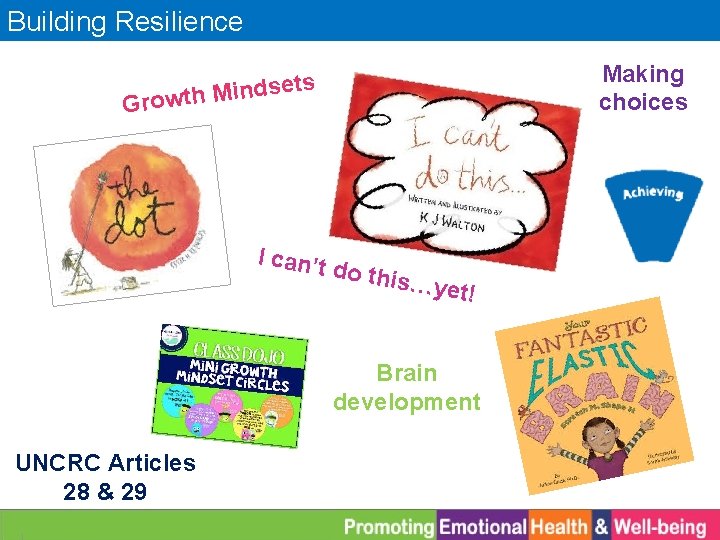
Building Resilience Making choices ts e s d n i M rowth G I can’t do this …yet! Brain development UNCRC Articles 28 & 29
Building Resilience 4: Take a Moment In this unit we will cover: • We all experience a range of emotions everyday • Sometimes we feel stressed • I have ways to help me cope
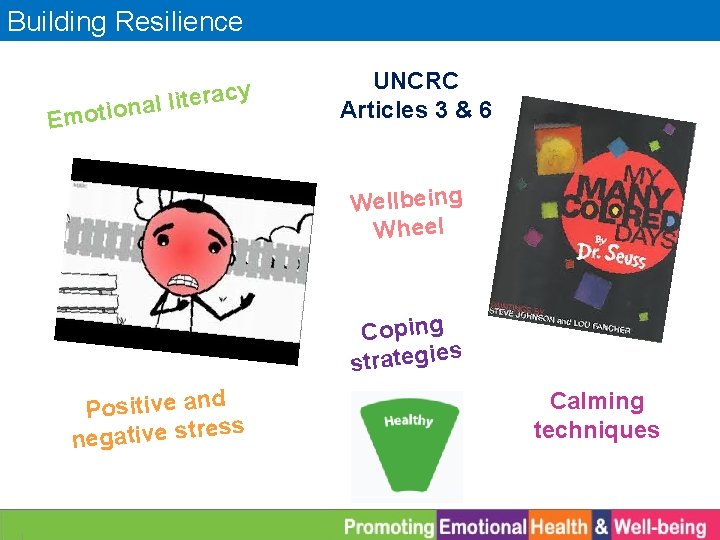
Building Resilience cy a r e t i l l a n Emotio UNCRC Articles 3 & 6 Wellbeing Wheel Coping s strategie Positive and ss e r t s e v i t a g e n Calming techniques
Building Resilience 5: Talk Things Over In this unit we will cover: • At times we all feel worried • If worries are not dealt with they get out of control • If you are struggling it is important to ask for help
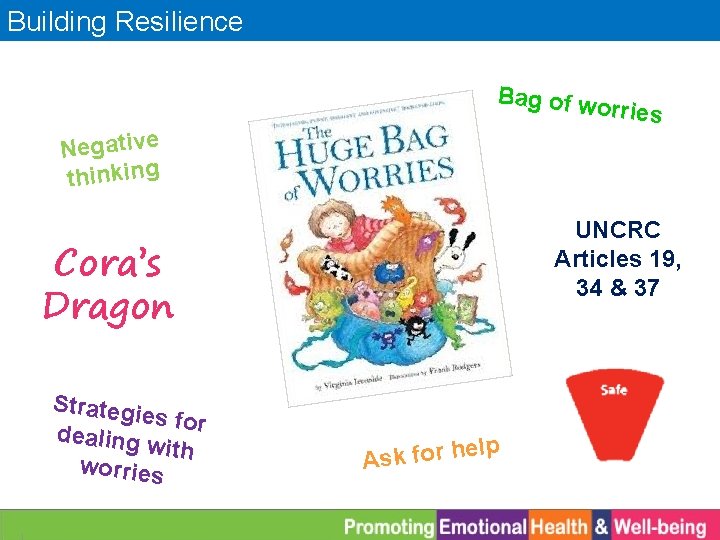
Building Resilience Bag of w orries Negative thinking UNCRC Articles 19, 34 & 37 Cora’s Dragon Strategi es for dealing with worries elp h r o f k s A
Building Resilience Be Resilient “Our greatest glory is not in ‘never falling’, but in rising every time we fall. ” (Confucius)
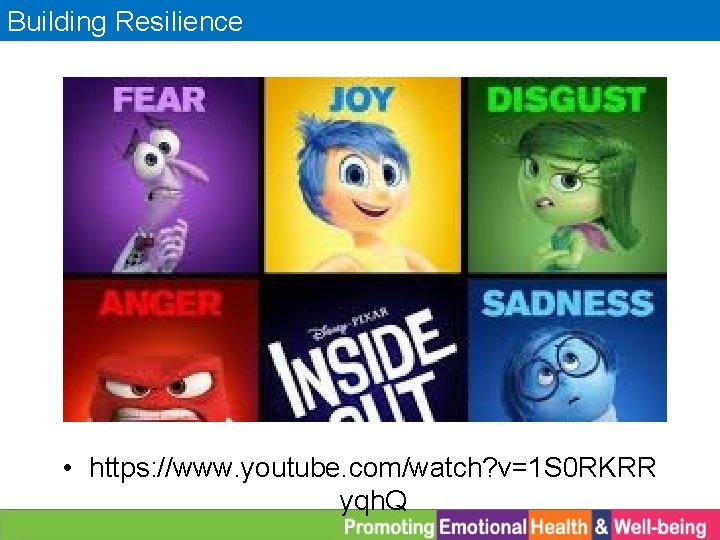
Building Resilience • https: //www. youtube. com/watch? v=1 S 0 RKRR yqh. Q
Building Resilience Keep Connected “A friend is someone who understands your past, believes in your future, and accepts you today just the way you are!” (Unknown)
Building Resilience Keep Connected “Walking with a friend in the dark is better than walking alone in the light. ” (Helen Keller)
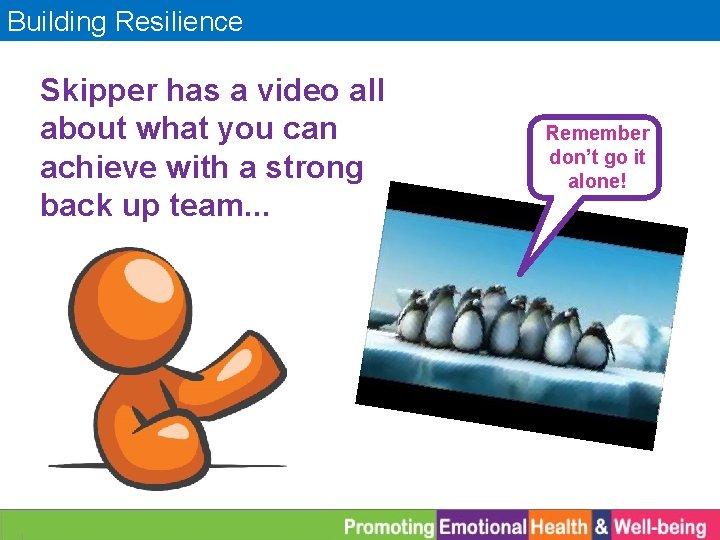
Building Resilience Skipper has a video all about what you can achieve with a strong back up team. . . Remember don’t go it alone!
Building Resilience Be Resilient “Our greatest glory is not in ‘never falling’, but in rising every time we fall. ” (Confucius)
Building Resilience Challenge Your Mindset “You will not learn if you think you have learned enough. And you will not grow if you are not willing to change yourself. ” (Unknown)
Building Resilience • Colour Your World With Kindness • https: //www. youtube. com/watch? v=rwel E 8 yy. Y 0 U
- Slides: 53