
Building Public Health Data Infrastructure for the Uninsured
Building Public Health Data Infrastructure for the Uninsured American Public Health Association 132 nd Annual Meeting Elaine Vowels, Ph. D Fern Johnson-Clarke, Ph. D Carl W. Wilson, MPH
Agenda § Overview § Selected Statistical Indicators § Examples of Data Comparisons § Components for Building and Data Infrastructure § District of Columbia Examples § Lessons Learned 2
Overview § Over 44 million people in the United States are uninsured § Comprehensive data collection systems are not in place to measure the health status and demographic characteristics of the uninsured. § Data systems need to be able to measure access to care and health care access disparities among special populations 3
Overview § A considerable amount of data on the uninsured exists within state agencies but is not fully integrated or shared. § Data sharing agreements and systems for sharing data must be developed to better serve the uninsured. 4
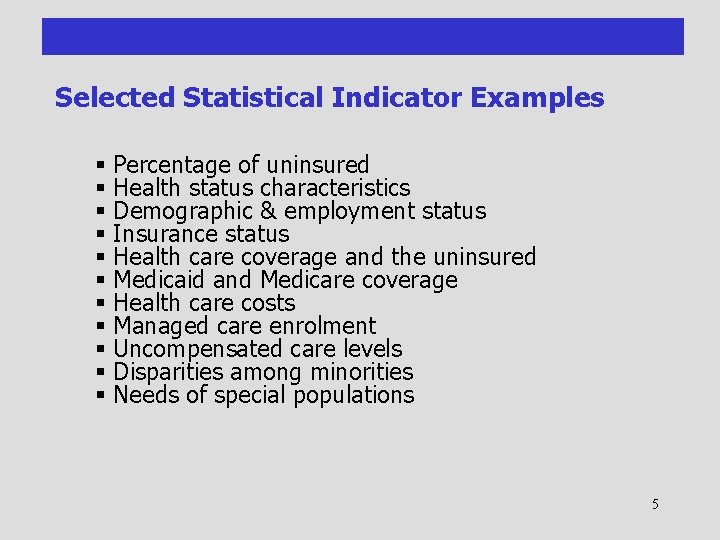
Selected Statistical Indicator Examples § Percentage of uninsured § Health status characteristics § Demographic & employment status § Insurance status § Health care coverage and the uninsured § Medicaid and Medicare coverage § Health care costs § Managed care enrolment § Uncompensated care levels § Disparities among minorities § Needs of special populations 5
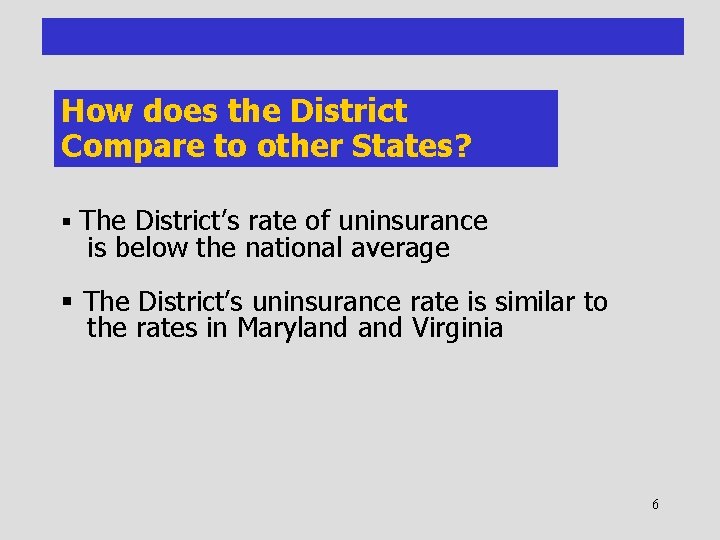
How does the District Compare to other States? § The District’s rate of uninsurance is below the national average § The District’s uninsurance rate is similar to the rates in Maryland Virginia 6
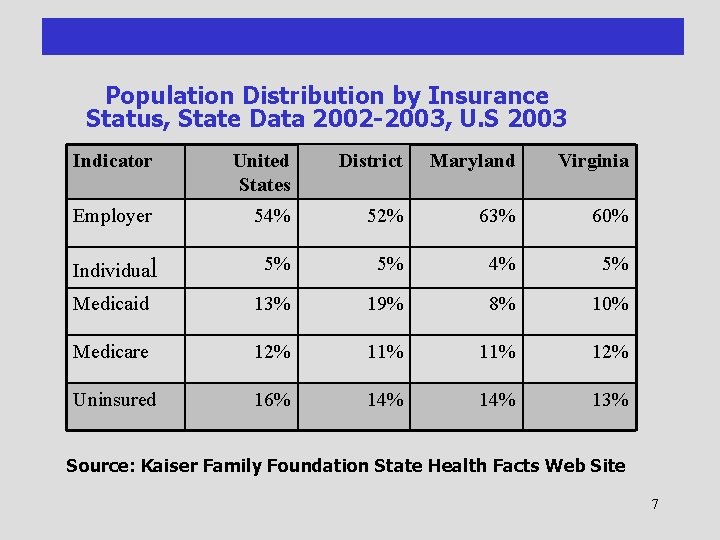
Population Distribution by Insurance Status, State Data 2002 -2003, U. S 2003 Indicator United States District Maryland Virginia Employer 54% 52% 63% 60% Individual 5% 5% 4% 5% Medicaid 13% 19% 8% 10% Medicare 12% 11% 12% Uninsured 16% 14% 13% Source: Kaiser Family Foundation State Health Facts Web Site 7
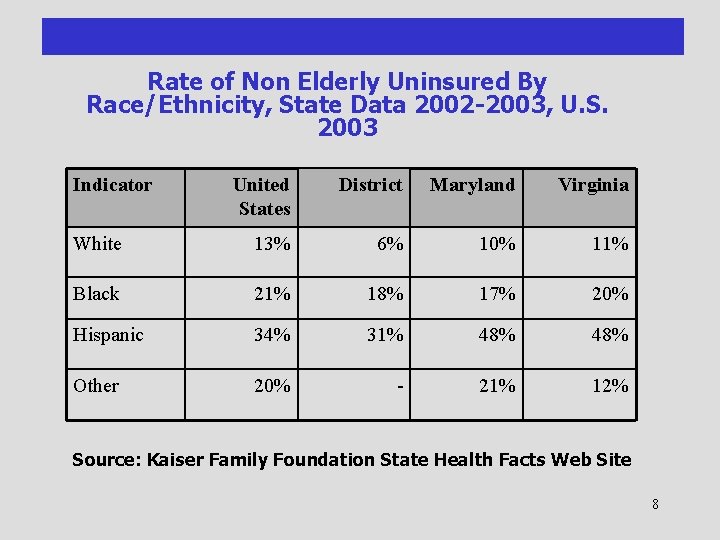
Rate of Non Elderly Uninsured By Race/Ethnicity, State Data 2002 -2003, U. S. 2003 Indicator United States District Maryland Virginia White 13% 6% 10% 11% Black 21% 18% 17% 20% Hispanic 34% 31% 48% Other 20% - 21% 12% Source: Kaiser Family Foundation State Health Facts Web Site 8
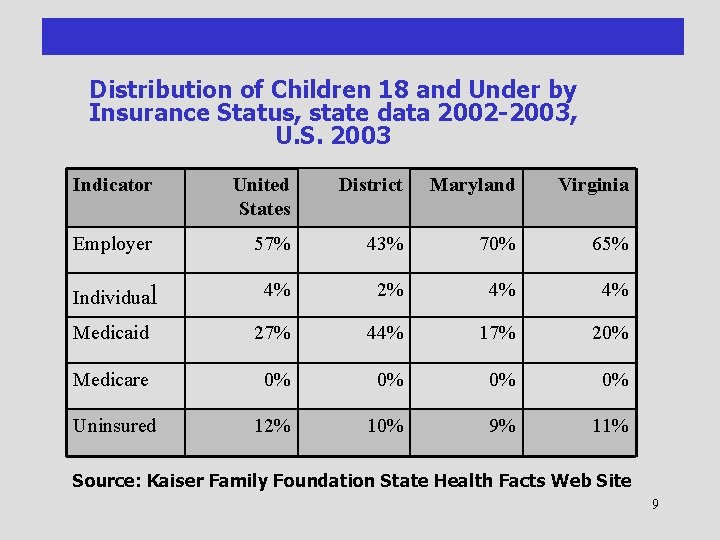
Distribution of Children 18 and Under by Insurance Status, state data 2002 -2003, U. S. 2003 Indicator United States District Maryland Virginia Employer 57% 43% 70% 65% Individual 4% 2% 4% 4% Medicaid 27% 44% 17% 20% Medicare 0% 0% Uninsured 12% 10% 9% 11% Source: Kaiser Family Foundation State Health Facts Web Site 9
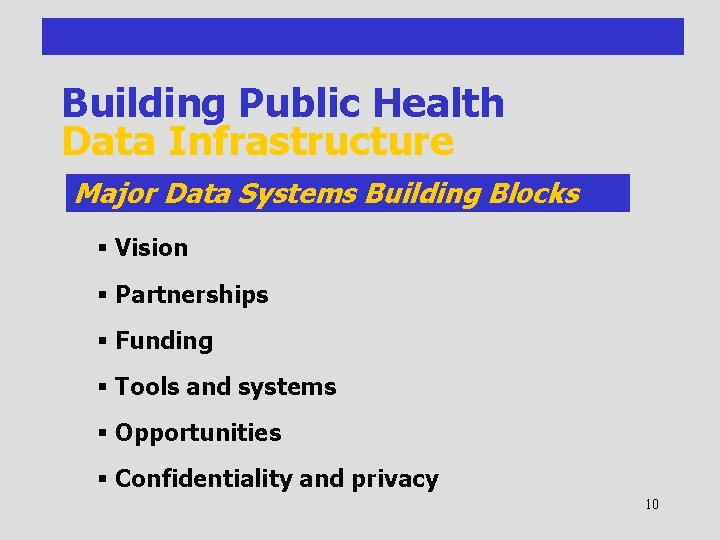
Building Public Health Data Infrastructure Major Data Systems Building Blocks § Vision § Partnerships § Funding § Tools and systems § Opportunities § Confidentiality and privacy 10
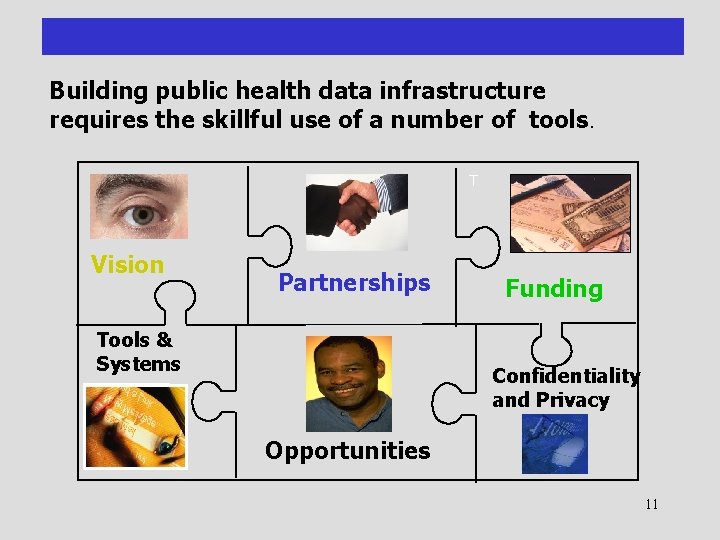
Building public health data infrastructure requires the skillful use of a number of tools. T Vision Partnerships Tools & Systems Funding Confidentiality and Privacy Opportunities 11
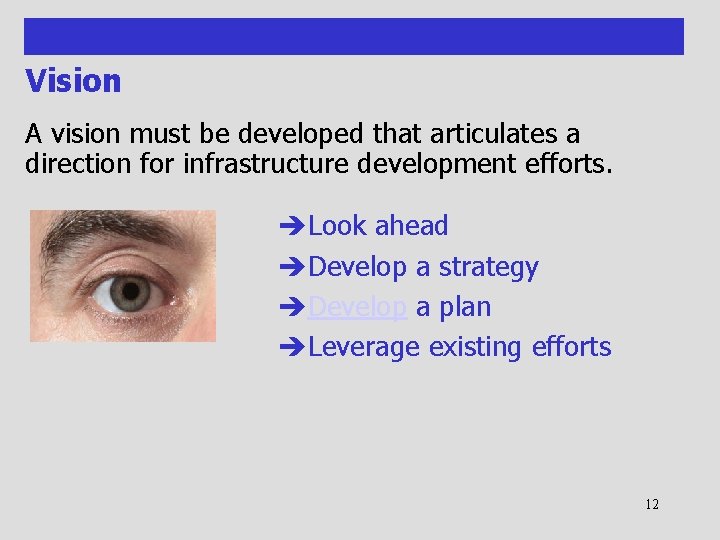
Vision A vision must be developed that articulates a direction for infrastructure development efforts. èLook ahead èDevelop a strategy èDevelop a plan èLeverage existing efforts 12
Building Partnerships Build partnerships with key agencies to increase data sharing opportunities. èDevelop partnerships to share data èBuild trust among partners èCollaborate on joint projects and grants 13
Funding for Sustainability Identify short term and long term funding opportunities that are attainable to build and sustain data systems. èLook for opportunities èSeek funding for building data systems infrastructure èObtain funding for data integration èLeverage existing funding 14
Tools and Systems Develop and enhance health information systems using best practice models from other government or private agencies. èLook for other working best practice models èTransfer the technology where possible èDevelop data sharing and linking capability èUse existing web based systems 15
Opportunities Identify short term and long term collaboration and funding opportunities. èLook for opportunities èIdentify collaborating partners èLeverage existing efforts èBe prepared to take advantage of opportunities 16
Confidentiality and Privacy Maintaining confidentiality and privacy of health data is an important aspect of maintaining a data reporting system. èFollow state, local and federal laws èAdhere to HIPAA requirements èFollow IRB requirements 17
District of Columbia Experience § Secured Federal grant funding § Obtained Local capital funding § Leveraged funding from other State Agencies 18
District of Columbia Experience Partnerships, Systems and Funding § Partnered with the District’s Medicaid Agency and the Safety-net Administration on developing data warehouses. § Designed a project to transfer the VA Medical Records System to the District § Developed the District’s Healthy People 2010 Plan 19
District of Columbia Experience § Worked with the State Health Planning and Development Agency to develop regulations to monitor uncompensated care. § Developed a State Planning Grant to study insurance coverage options for the uninsured, § Secured funding for tracking systems to track public health and environmental health indicators. 20
District of Columbia Experience • Developed a Vital Records Reengineering Project to allow for more strategic use of birth and death data to measure health status § Strengthened Health Department technology infrastructure to allow for better data sharing § Maintained system-wide HIPAA compliance 21
Lessons Learned § Develop strategic partnerships to collaborate and share data. • Transfer best practice projects from other government and private agencies. • Maintain systems to ensure confidentiality and privacy of data • Leverage funding to strengthen and maintain infrastructure gains. 22
Building Public Health Data Infrastructure for the Uninsured For more Information, please contact: Fern M. Johnson-Clarke, Ph. D, Acting Director State Center for Health Statistics Administration District of Columbia Department of Health Fclarke@dchealth. com Elaine Vowels, Ph. D Health Consultant Evowels 4985@aol. com Carl W. Wilson, MPH Health Consultant Cwilson 27@aol. com 23
- Slides: 23