
Building Project Plans Skills for NonProject Managers Presented
Building Project Plans: Skills for Non-Project Managers Presented By Kassidy Green 7/24/2017 South Central Regional User Group (SCHRUG) Alliance Conference 2017 Houston, Texas
Presenter Background Current Role: Senior Project Manager, Office of the Vice President of Student Affairs & Enrollment Management Education: B. A. Speech Communications & M. S. in Management & Marketing Professional Experience: 11+ years in higher education (Recruitment, Admissions, Enrollment Management, Student Affairs, Communications Management, CRM Functional Lead, System Implementations, Change Management, IT Project Management, Enterprise Systems Operations, and Student Affairs Project Management)
Workshop Objectives 1. Learn how to clarify the scope and deliverables of any project or initiative. 2. Find out the 5 critical questions and answers to help you execute your next project. 3. Gain skills in breaking your project down into manageable pieces (formally known as work breakdown structures). 4. Build your first project plan, on 1 page!
Project Management A Quick Overview
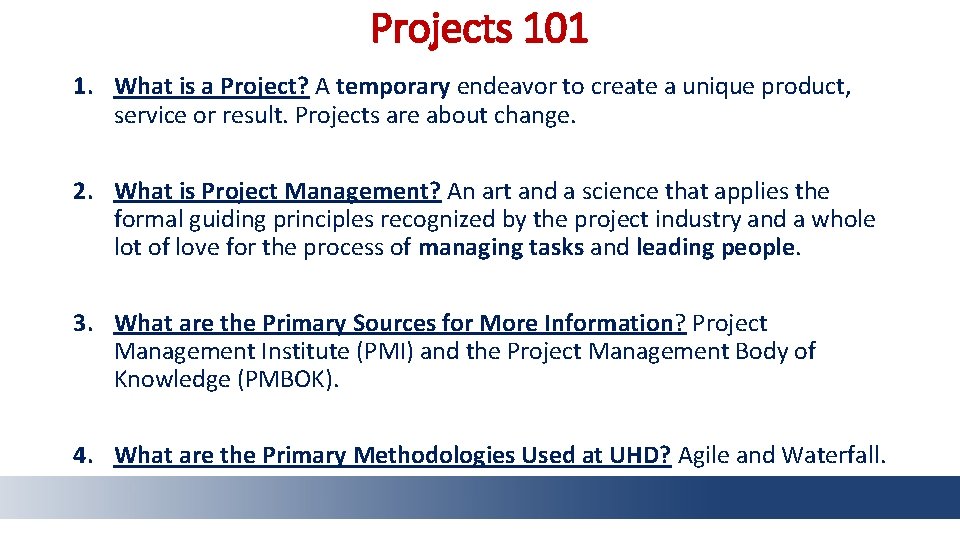
Projects 101 1. What is a Project? A temporary endeavor to create a unique product, service or result. Projects are about change. 2. What is Project Management? An art and a science that applies the formal guiding principles recognized by the project industry and a whole lot of love for the process of managing tasks and leading people. 3. What are the Primary Sources for More Information? Project Management Institute (PMI) and the Project Management Body of Knowledge (PMBOK). 4. What are the Primary Methodologies Used at UHD? Agile and Waterfall.
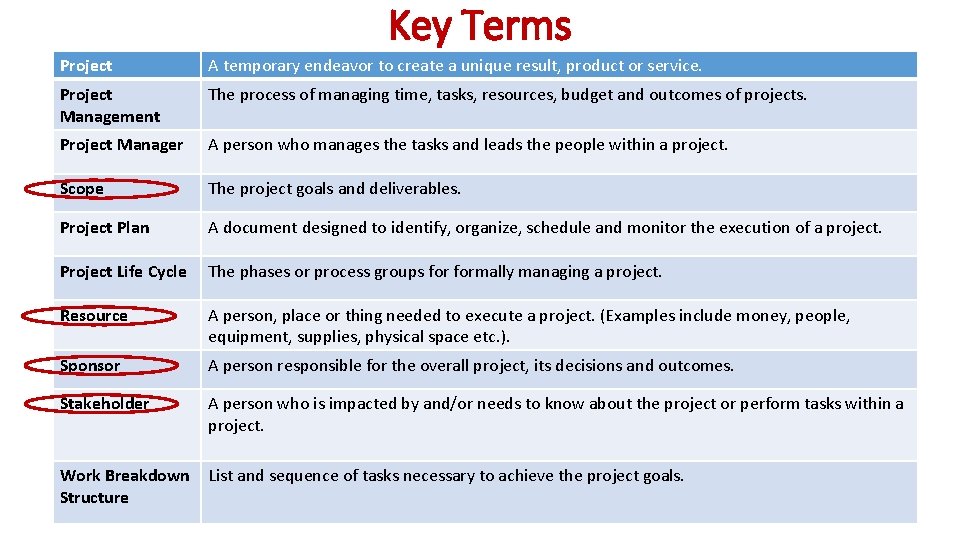
Key Terms Project A temporary endeavor to create a unique result, product or service. Project Management The process of managing time, tasks, resources, budget and outcomes of projects. Project Manager A person who manages the tasks and leads the people within a project. Scope The project goals and deliverables. Project Plan A document designed to identify, organize, schedule and monitor the execution of a project. Project Life Cycle The phases or process groups formally managing a project. Resource A person, place or thing needed to execute a project. (Examples include money, people, equipment, supplies, physical space etc. ). Sponsor A person responsible for the overall project, its decisions and outcomes. Stakeholder A person who is impacted by and/or needs to know about the project or perform tasks within a project. Work Breakdown Structure List and sequence of tasks necessary to achieve the project goals.
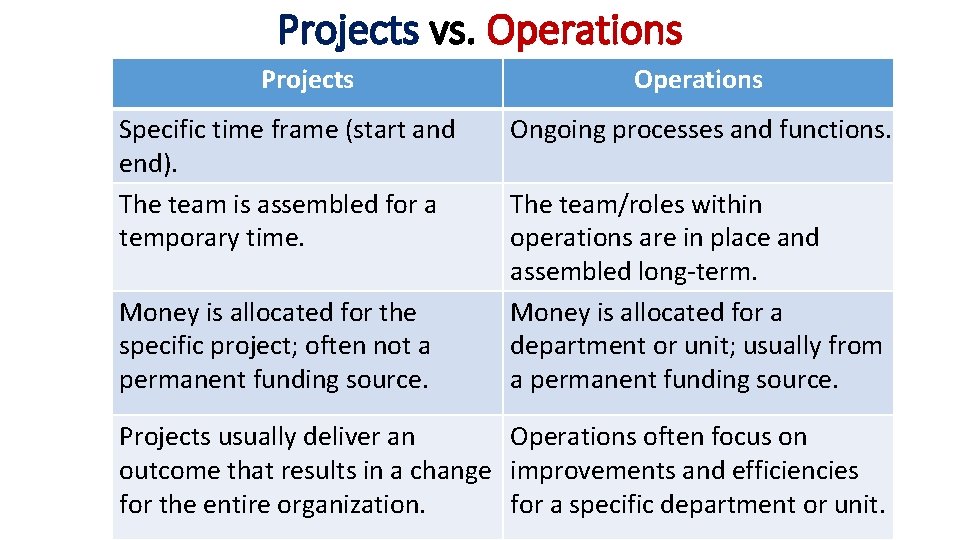
Projects vs. Operations Projects Specific time frame (start and end). The team is assembled for a temporary time. Money is allocated for the specific project; often not a permanent funding source. Operations Ongoing processes and functions. The team/roles within operations are in place and assembled long-term. Money is allocated for a department or unit; usually from a permanent funding source. Projects usually deliver an Operations often focus on outcome that results in a change improvements and efficiencies for the entire organization. for a specific department or unit.
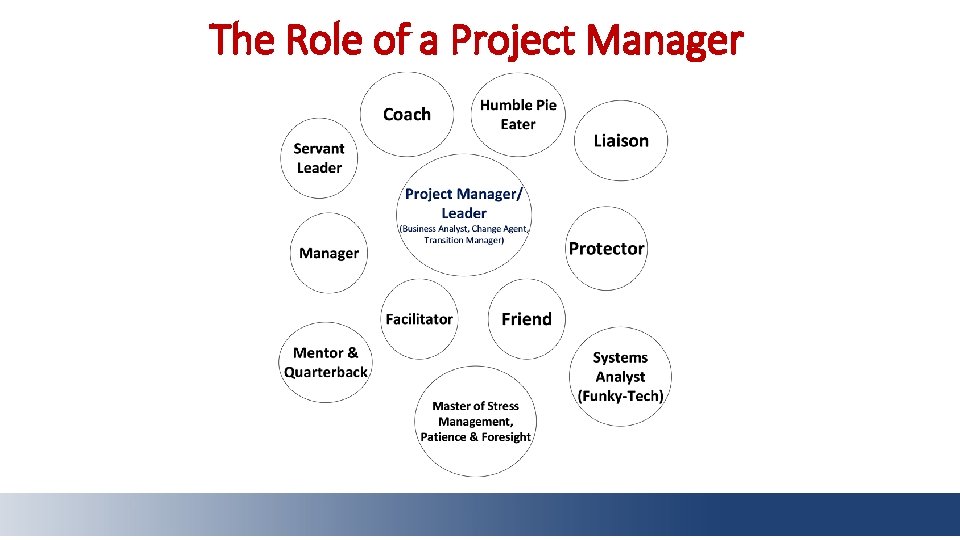
The Role of a Project Manager
Project Management: The Value Proposition • Organizations manage change and growth through projects. • Strategic macro and micro level focus on the project goals, the people, the money, the time and the result(s). • Shared Governance occurs intentionally and organically.
Project Management: The Value Add • Project managers create executive access to the life/pulse of the project. • Project teams connect with strategic needs/priorities of the organization and gain a communications channel to leadership. • Real meaning is created and shared; evidence becomes measurable.
The Dynamics of Projects – In Real Life • The People Have Lives and Day Jobs! • The Project Plan is a Guiding Roadmap and Detours are Inevitable. • The Best Schedule, The Most Talented People, The Maximum Budget don’t Guarantee a Project’s Success. • Negotiation and Change are the Only Constants.
The Balancing Act: Triple Constraints & Project Life Cycle
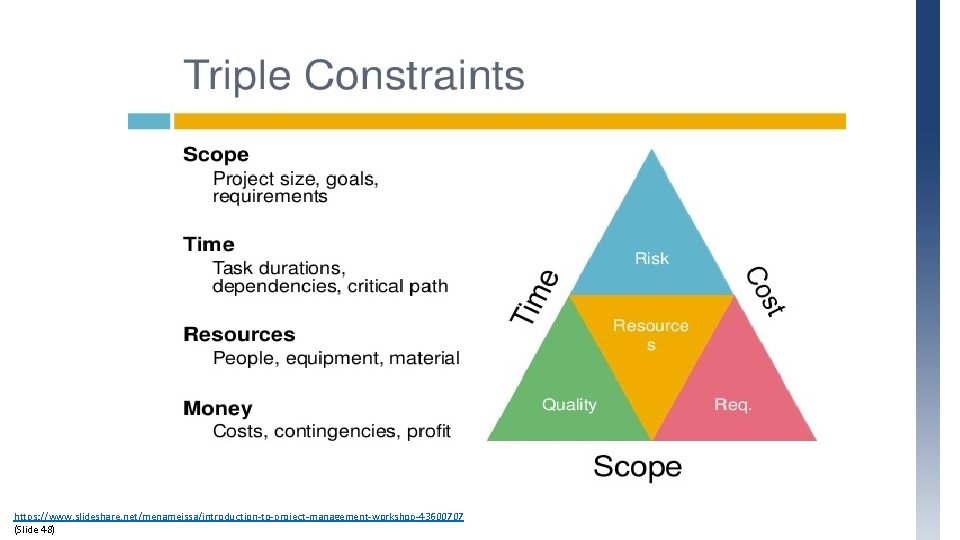
https: //www. slideshare. net/menameissa/introduction-to-project-management-workshop-43600707 (Slide 48)
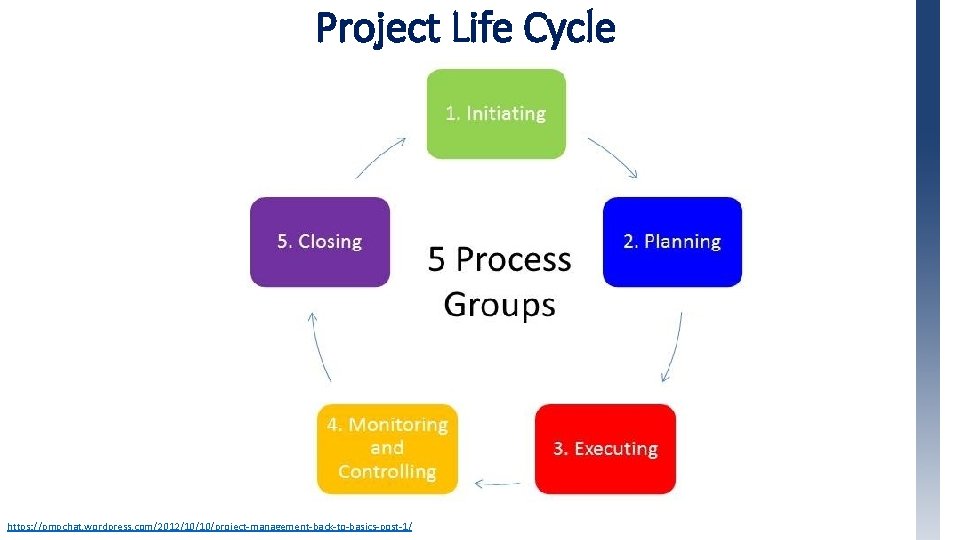
Project Life Cycle https: //pmpchat. wordpress. com/2012/10/10/project-management-back-to-basics-post-1/
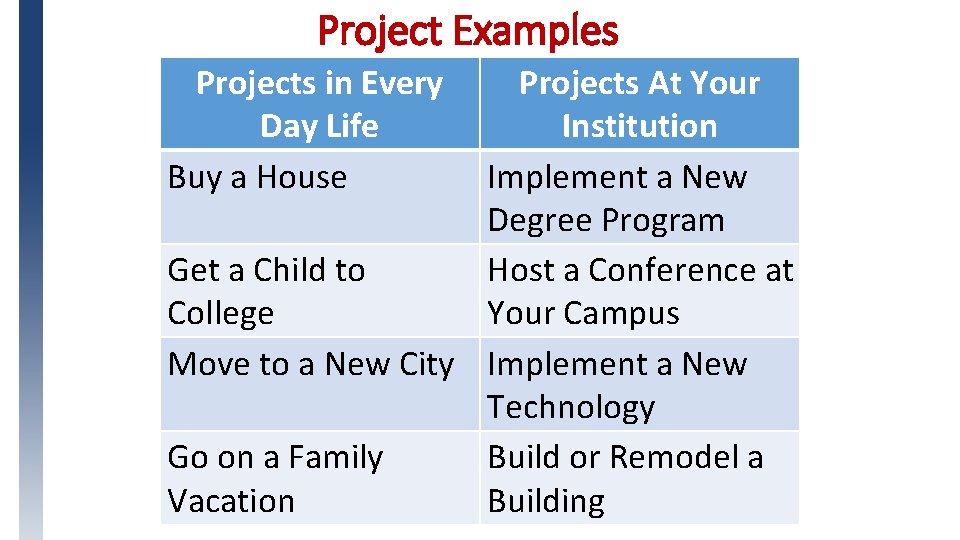
Project Examples Projects in Every Day Life Buy a House Projects At Your Institution Implement a New Degree Program Get a Child to Host a Conference at College Your Campus Move to a New City Implement a New Technology Go on a Family Build or Remodel a Vacation Building
The 4 -Step Planning Process Hint: It’s 90% Communication
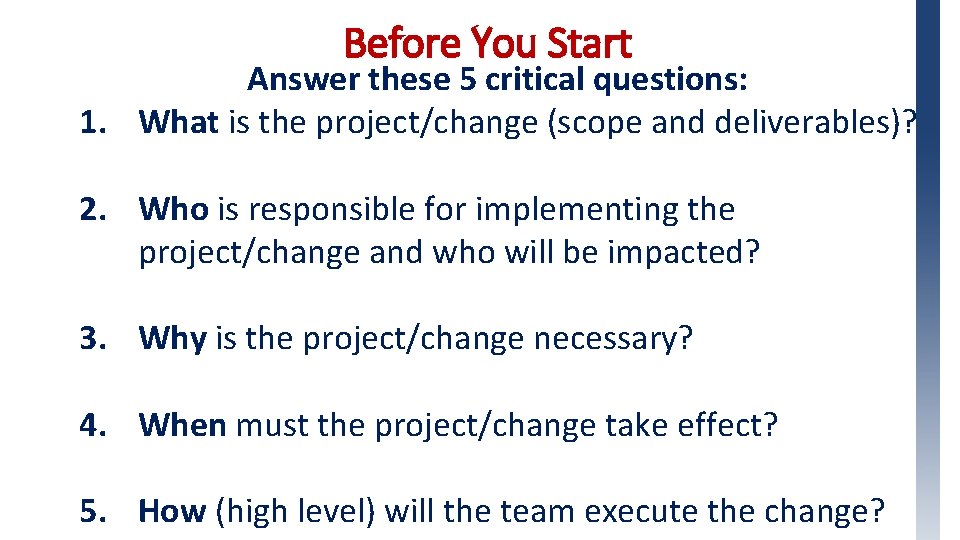
Before You Start Answer these 5 critical questions: 1. What is the project/change (scope and deliverables)? 2. Who is responsible for implementing the project/change and who will be impacted? 3. Why is the project/change necessary? 4. When must the project/change take effect? 5. How (high level) will the team execute the change?
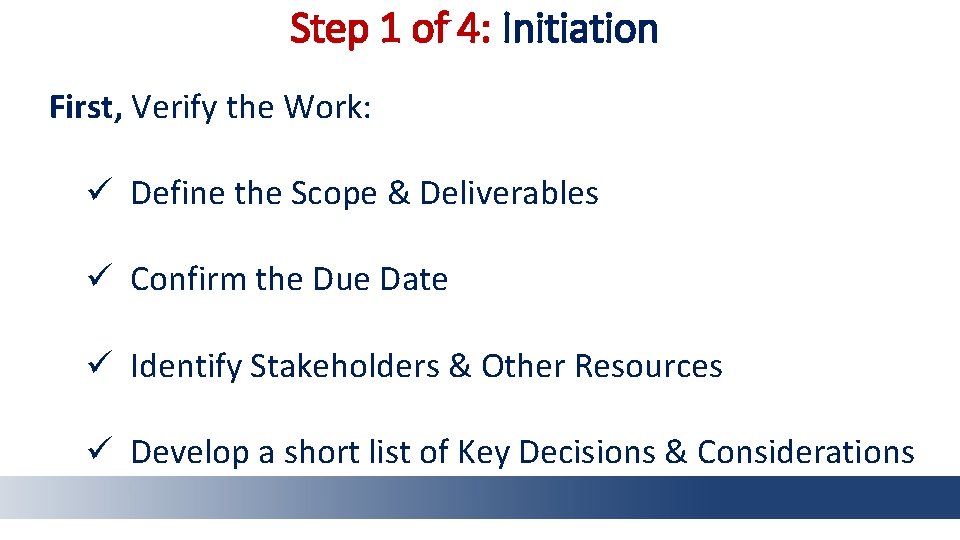
Step 1 of 4: Initiation First, Verify the Work: ü Define the Scope & Deliverables ü Confirm the Due Date ü Identify Stakeholders & Other Resources ü Develop a short list of Key Decisions & Considerations
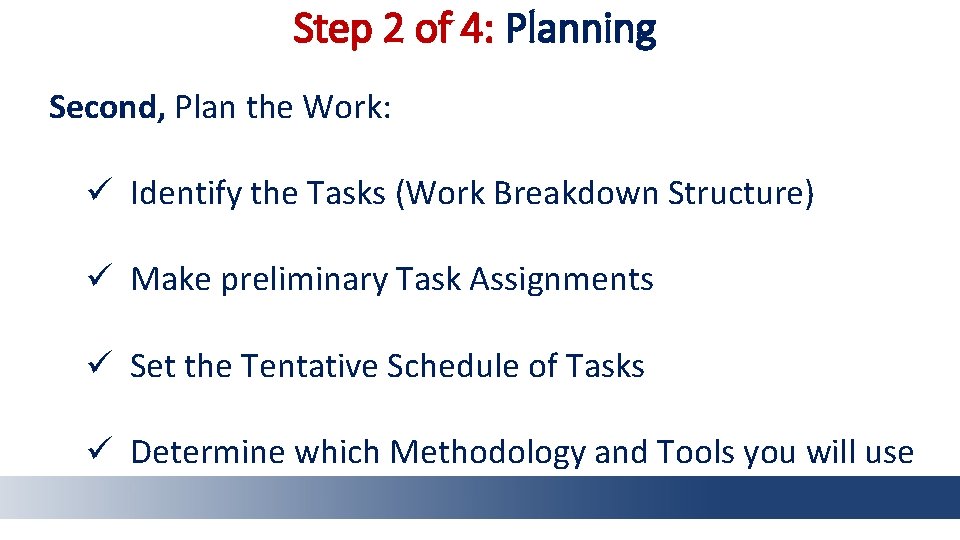
Step 2 of 4: Planning Second, Plan the Work: ü Identify the Tasks (Work Breakdown Structure) ü Make preliminary Task Assignments ü Set the Tentative Schedule of Tasks ü Determine which Methodology and Tools you will use
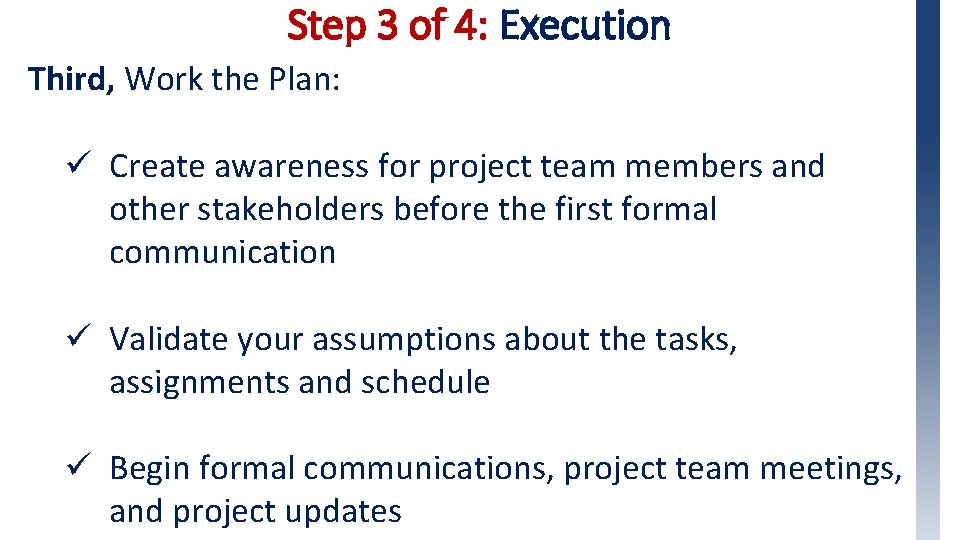
Step 3 of 4: Execution Third, Work the Plan: ü Create awareness for project team members and other stakeholders before the first formal communication ü Validate your assumptions about the tasks, assignments and schedule ü Begin formal communications, project team meetings, and project updates
Step 4 of 4: Monitoring & Controlling Finally, Plan, Re-Plan, Adjust, Re-Adjust & Press Forward: ü Maintain regular contact with project team members, sponsors and other stakeholders ü Negotiate adjustments and timelines (where possible); set the team up for success ü Communicate status (formally and informally) and proactively manage the tasks while leading the team
Planning Process Takeaways üCommunication is Key and Requires A LOT of time connecting the dots/connecting the people üThe People Must Be at the Heart of everything you do üA Proactive Approach is a Necessity üBegin with the End in Mind and Be Realistic about What Could go Wrong
The Project Plan: What Goes In, Must Come Out
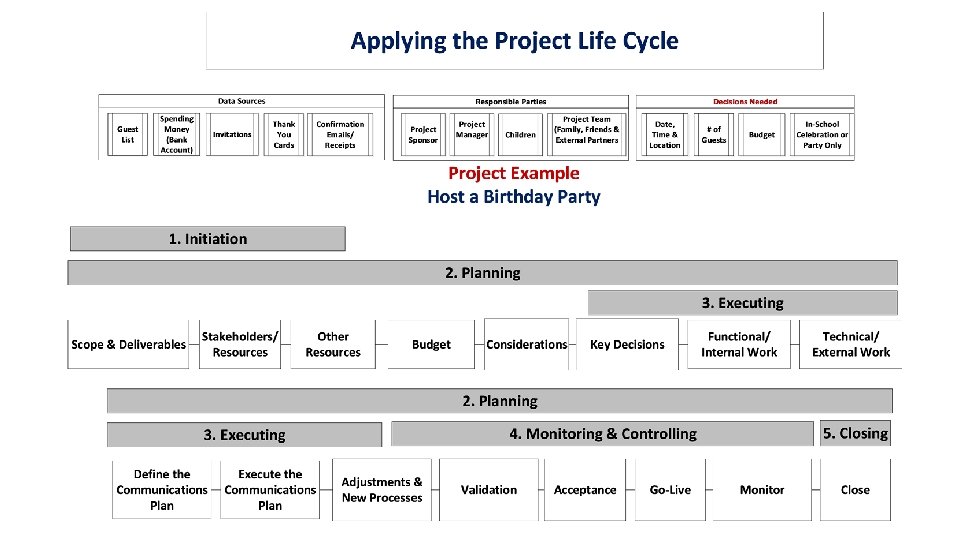
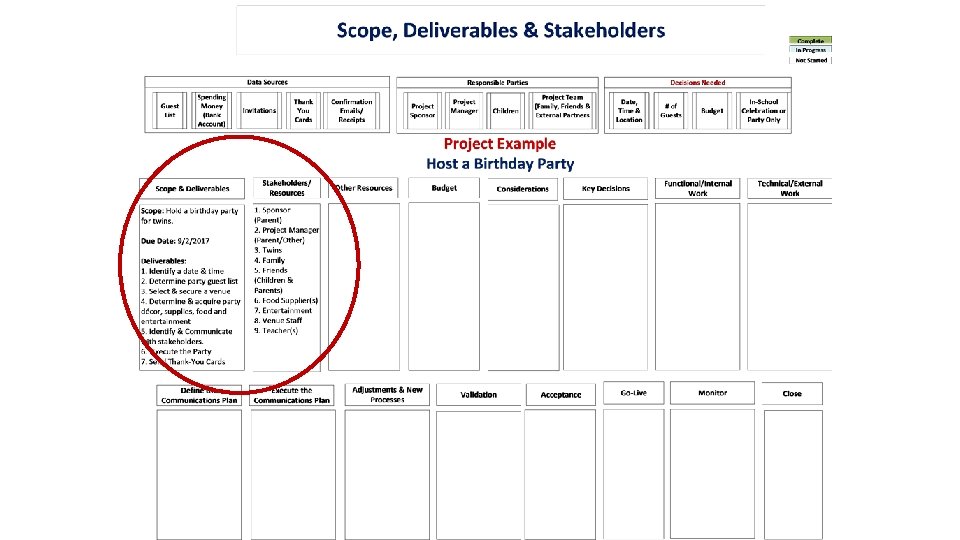
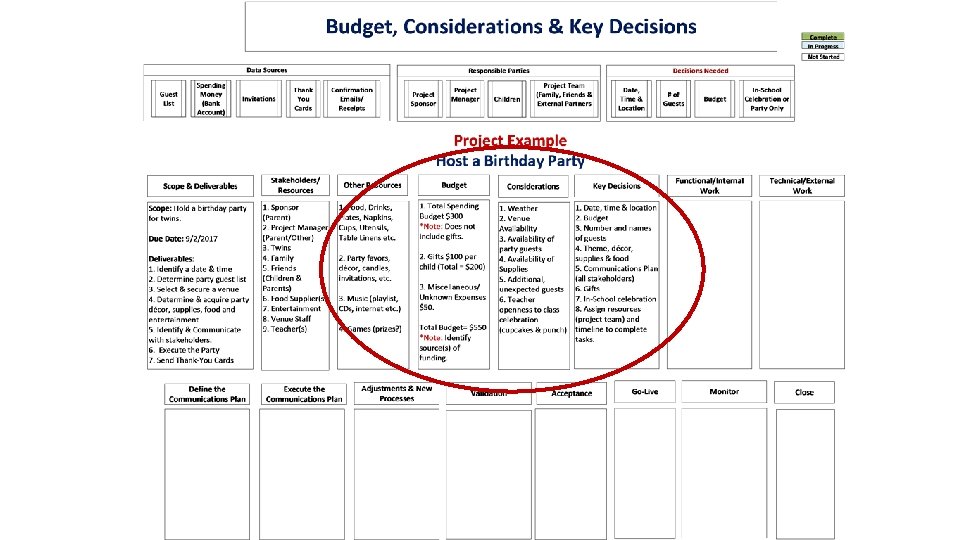
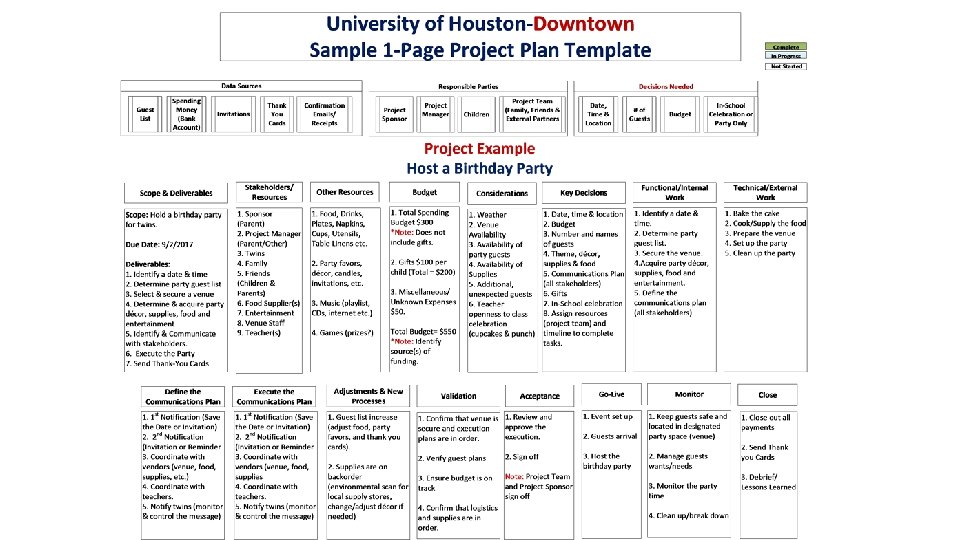
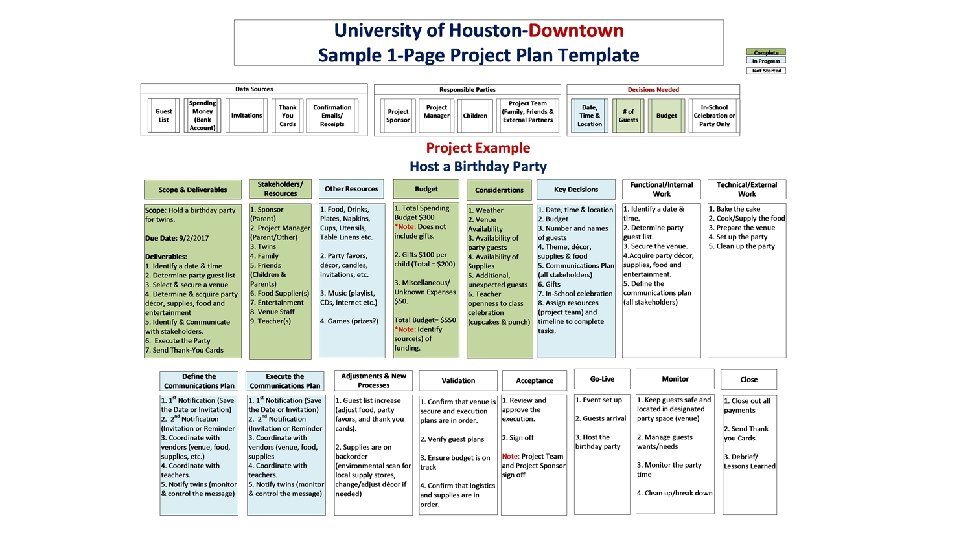
Key Elements of a Project Plan üScope & Deliverables üStakeholders/Resources & Other Resources üBudget & Considerations üKey Decisions üFunctional/Internal Work üTechnical/External Work üCommunications Plan, Adjustments & New Processes üValidation, Acceptance & Sign Off üGo-Live, Monitor & Close
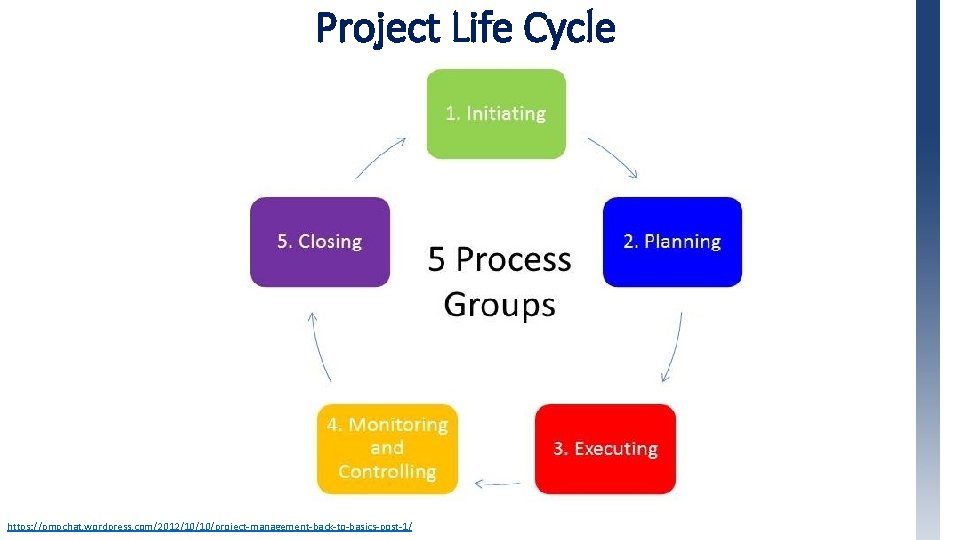
Project Life Cycle https: //pmpchat. wordpress. com/2012/10/10/project-management-back-to-basics-post-1/
Sample Project Plan Host a Birthday Party
Questions and/or Observations Before We Build our Project Plans?
Practice Makes Perfect You Experienced! Let’s Build a 1 -Page Project Plan
Show And Tell: Group Presentations
Final Thoughts: Questions & Answers
Thank You! Kassidy Green Senior Project Manager Office of the Vice President, Student Affairs & Enrollment Management greenk@uhd. edu 713 -221 -5030
- Slides: 36