
Building memory in the classroom Hollie Preston Head
Building memory in the classroom Hollie Preston | Head of MFL
Today… • Explore how to build memory in the classroom • Explore the power of retrieval and a well-planned curriculum • Look at four retrieval activities that can be used for any topic • Look at how the activities can be used to formatively assess
Building memory in the classroom ‘Building deep long term memory is a worthy investment. It helps our students to understand the world and solve the problems they encounter. And most importantly, it enables them to learn more. ’ Mccrea
Building memory in the classroom
Building memory in the classroom
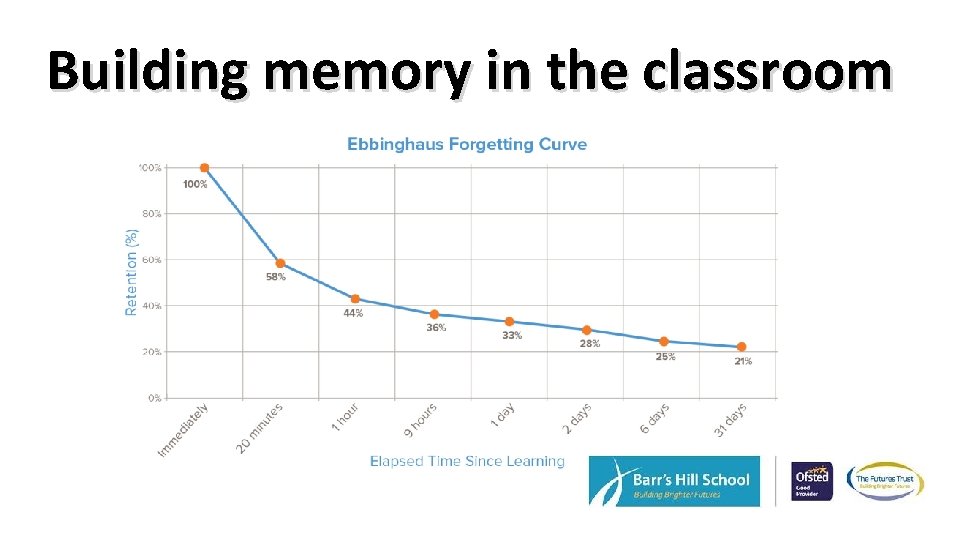
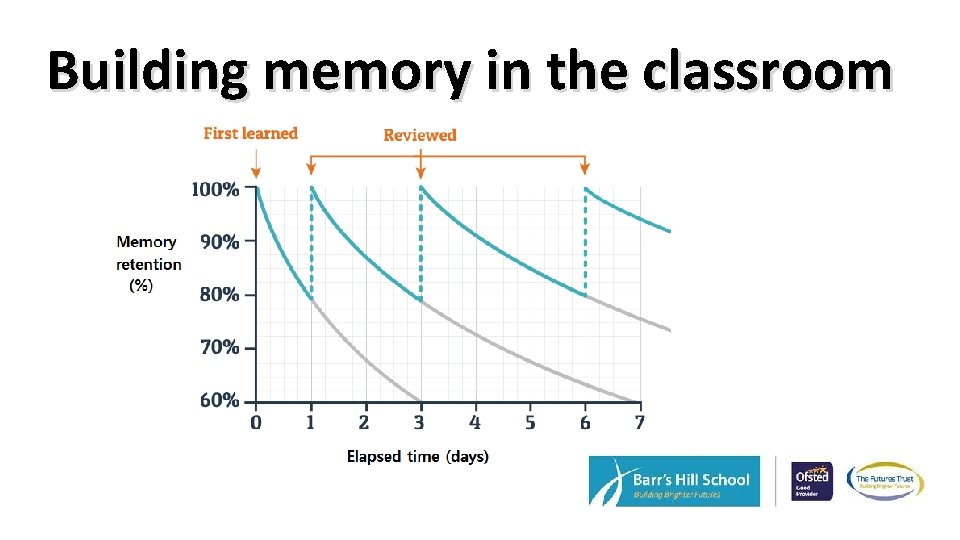
Building memory in the classroom - Every time we draw on a memory, we increase its strength and extend its longevity. This is called retrieval. - The less assistance we provide students during retrieval, the greater the strengthening effect.
Building memory in the classroom
Building memory – the power of retrieval
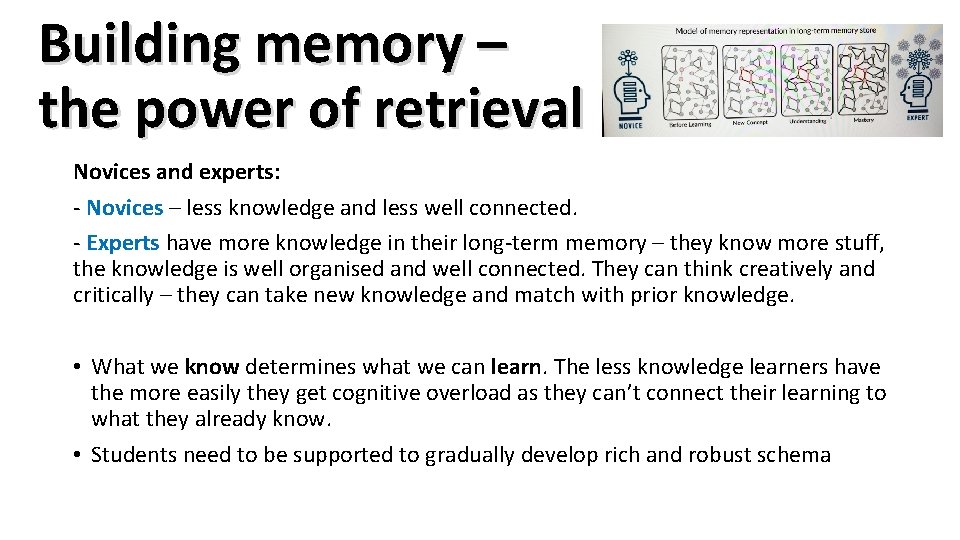
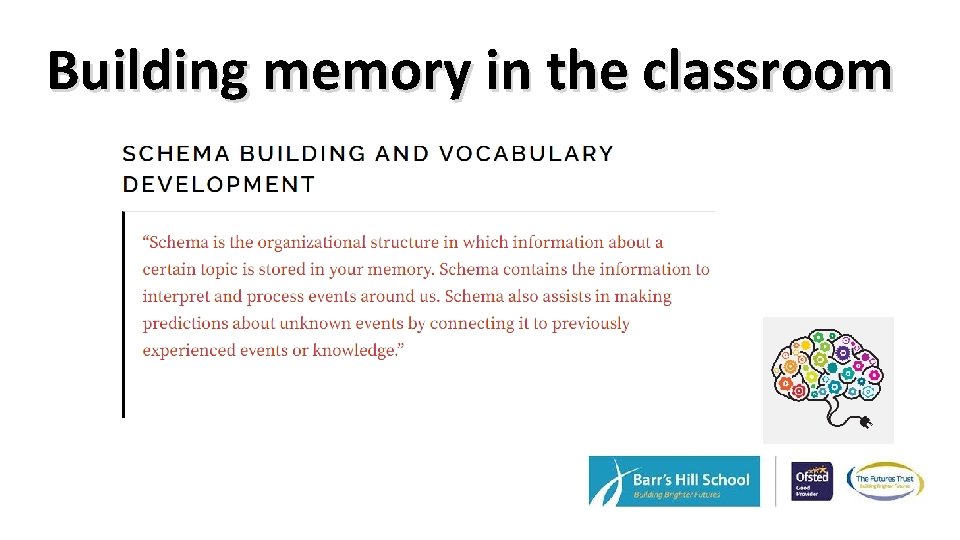
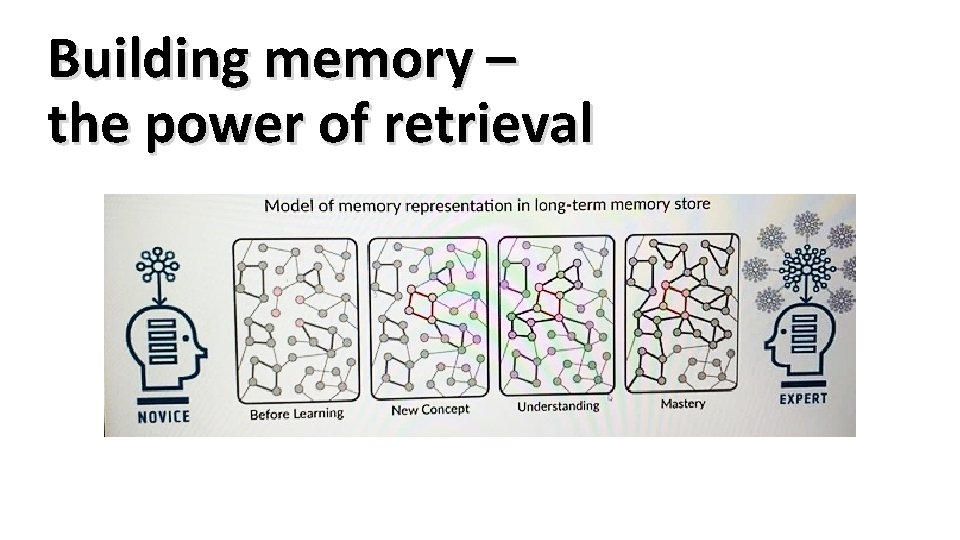
Building memory – the power of retrieval Novices and experts: - Novices – less knowledge and less well connected. - Experts have more knowledge in their long-term memory – they know more stuff, the knowledge is well organised and well connected. They can think creatively and critically – they can take new knowledge and match with prior knowledge. • What we know determines what we can learn. The less knowledge learners have the more easily they get cognitive overload as they can’t connect their learning to what they already know. • Students need to be supported to gradually develop rich and robust schema
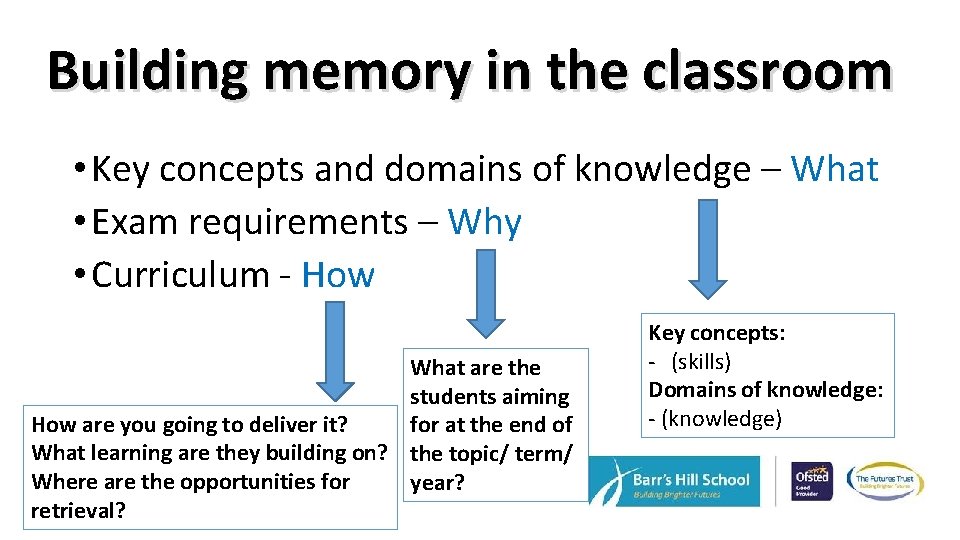
Building memory in the classroom • Key concepts and domains of knowledge – What • Exam requirements – Why • Curriculum - How What are the students aiming How are you going to deliver it? for at the end of What learning are they building on? the topic/ term/ Where are the opportunities for year? retrieval? Key concepts: - (skills) Domains of knowledge: - (knowledge)
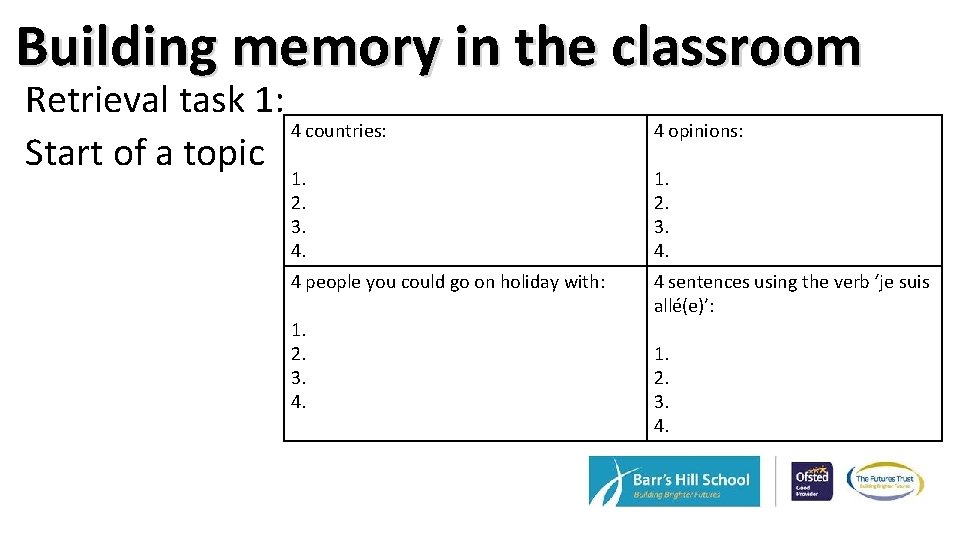
Building memory in the classroom Retrieval task 1: 4 countries: Start of a topic 1. 2. 3. 4. 4 people you could go on holiday with: 1. 2. 3. 4. 4 opinions: 1. 2. 3. 4. 4 sentences using the verb ‘je suis allé(e)’: 1. 2. 3. 4.
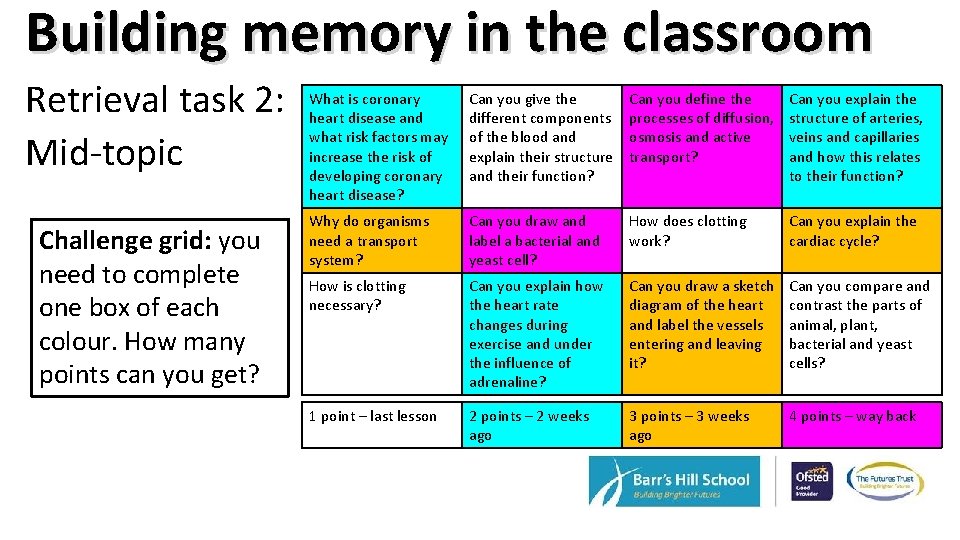
Building memory in the classroom Retrieval task 2: Mid-topic Challenge grid: you need to complete one box of each colour. How many points can you get? What is coronary heart disease and what risk factors may increase the risk of developing coronary heart disease? Can you give the different components of the blood and explain their structure and their function? Can you define the processes of diffusion, osmosis and active transport? Can you explain the structure of arteries, veins and capillaries and how this relates to their function? Why do organisms need a transport system? Can you draw and label a bacterial and yeast cell? How does clotting work? Can you explain the cardiac cycle? How is clotting necessary? Can you explain how the heart rate changes during exercise and under the influence of adrenaline? Can you draw a sketch diagram of the heart and label the vessels entering and leaving it? Can you compare and contrast the parts of animal, plant, bacterial and yeast cells? 1 point – last lesson 2 points – 2 weeks ago 3 points – 3 weeks ago 4 points – way back

Building memory in the classroom Retrieval task 3: In class revision A-Z In your pairs try to list A-Z of vocabulary related to the study of…
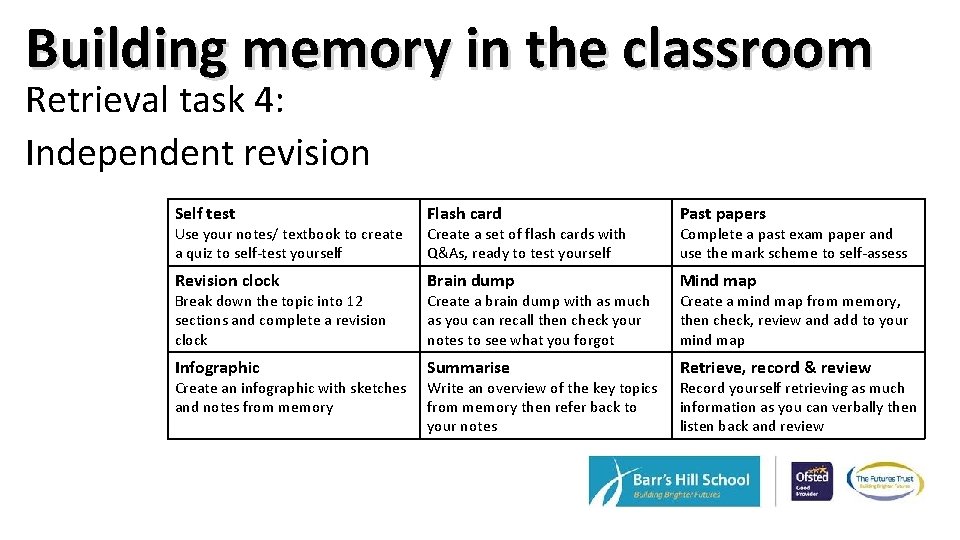
Building memory in the classroom Retrieval task 4: Independent revision Self test Flash card Past papers Revision clock Brain dump Mind map Infographic Summarise Retrieve, record & review Use your notes/ textbook to create a quiz to self-test yourself Break down the topic into 12 sections and complete a revision clock Create an infographic with sketches and notes from memory Create a set of flash cards with Q&As, ready to test yourself Create a brain dump with as much as you can recall then check your notes to see what you forgot Write an overview of the key topics from memory then refer back to your notes Complete a past exam paper and use the mark scheme to self-assess Create a mind map from memory, then check, review and add to your mind map Record yourself retrieving as much information as you can verbally then listen back and review
Q&A
- Slides: 15