
Building Knowledge Expanding the World Through Reading Module
Building Knowledge: Expanding the World Through Reading Module 3 b (3 rd- 8 th grade)- The “How”

Your Presenters David Liben Senior Fellow Carey Swanson Senior ELA/Literacy Content Specialist Tori Filler ELA/Literacy Content Specialist PAGE 2
• Identify indicators of knowledge building in high quality instructional materials. • Pinpoint adaptations they can make to existing materials to amplify knowledge building. • Identify knowledge building resources to supplement their existing materials. PAGE 3

Let’s Review
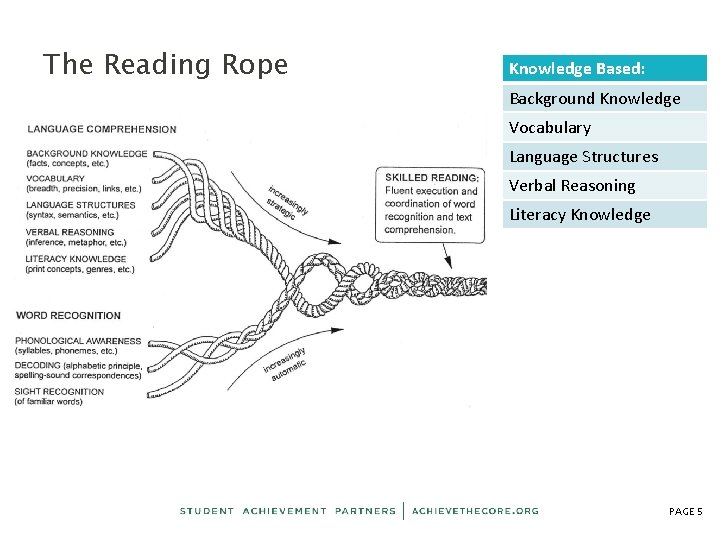
The Reading Rope Knowledge Based: Background Knowledge Vocabulary Language Structures Verbal Reasoning Literacy Knowledge PAGE 5
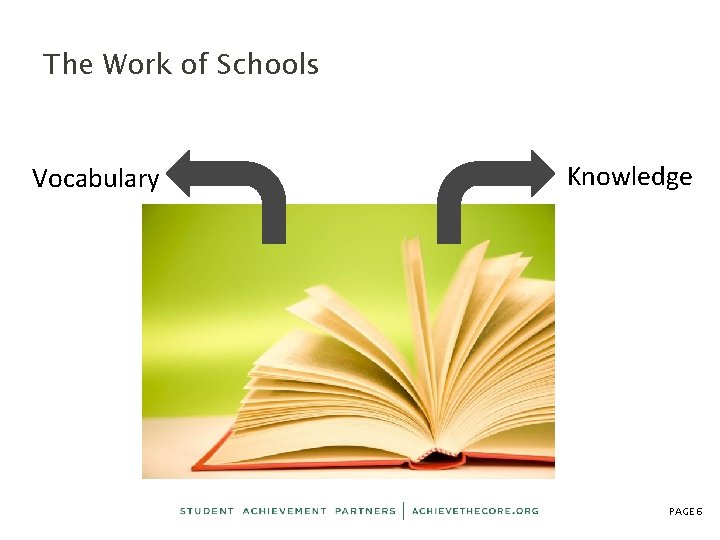
The Work of Schools Vocabulary Knowledge PAGE 6
3 rd-8 th Grade Classroom Structures to Support Building Knowledge
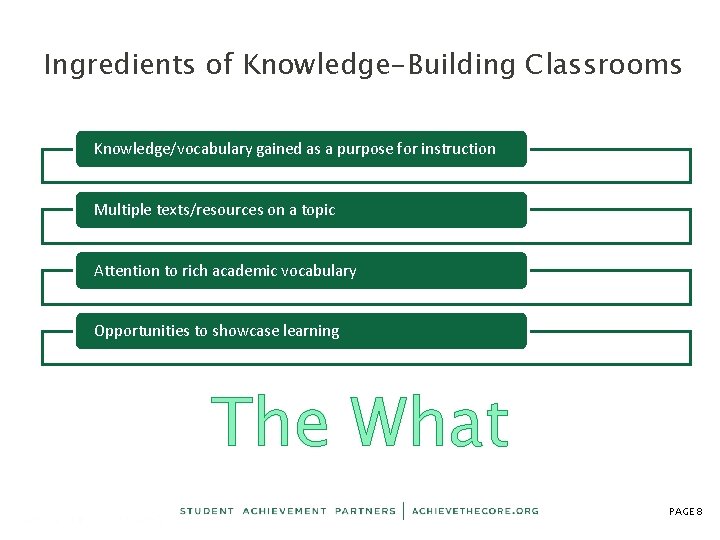
Ingredients of Knowledge-Building Classrooms Knowledge/vocabulary gained as a purpose for instruction Multiple texts/resources on a topic Attention to rich academic vocabulary Opportunities to showcase learning The What PAGE 8
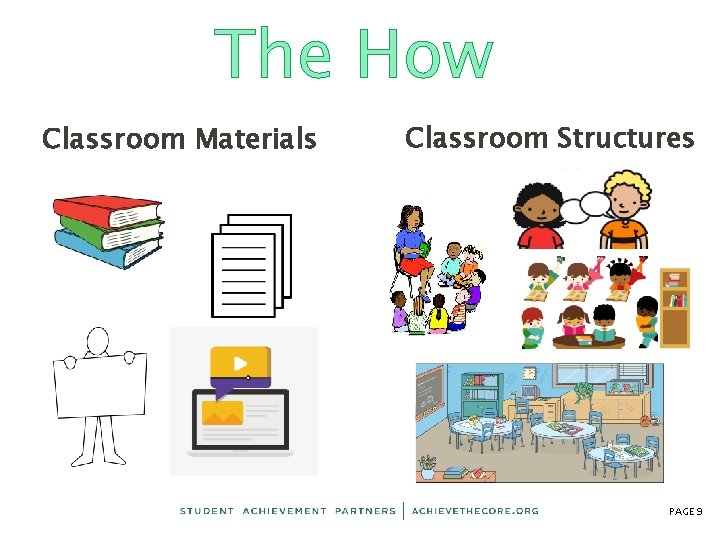
The How Classroom Materials Classroom Structures PAGE 9
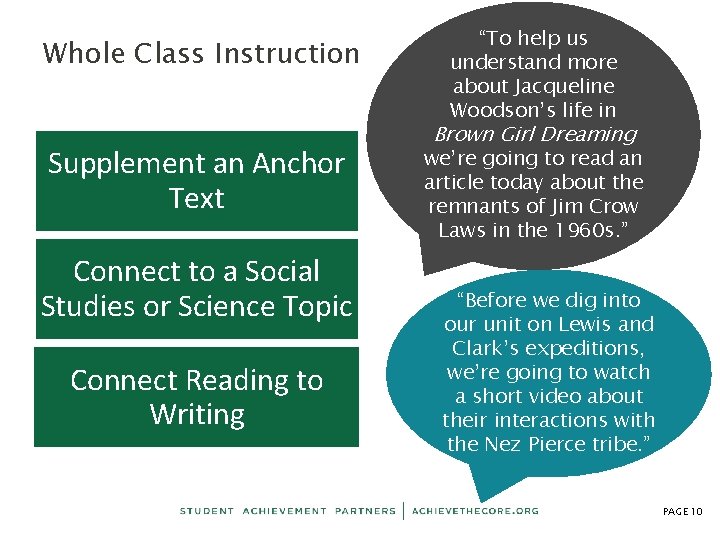
Whole Class Instruction Supplement an Anchor Text Connect to a Social Studies or Science Topic Connect Reading to Writing “To help us understand more about Jacqueline Woodson’s life in Brown Girl Dreaming we’re going to read an article today about the remnants of Jim Crow Laws in the 1960 s. ” “Before we dig into our unit on Lewis and Clark’s expeditions, we’re going to watch a short video about their interactions with the Nez Pierce tribe. ” PAGE 10
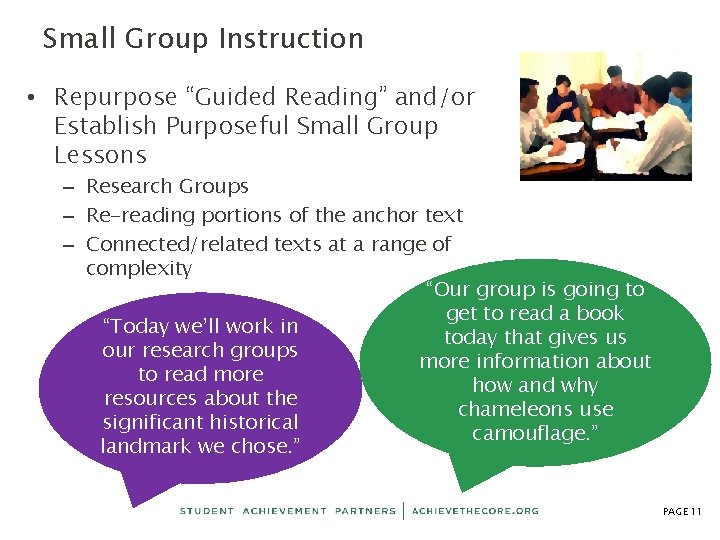
Small Group Instruction • Repurpose “Guided Reading” and/or Establish Purposeful Small Group Lessons – Research Groups – Re-reading portions of the anchor text – Connected/related texts at a range of complexity “Our group is going to get to read a book “Today we’ll work in today that gives us our research groups more information about to read more how and why resources about the chameleons use significant historical camouflage. ” landmark we chose. ” PAGE 11
Small Group Instruction Revisiting an Anchor Text: • • Stop and summarize Paraphrase challenging text Reviewing where students got lost/confused Re-reading to connect sections of the text to one another PAGE 12
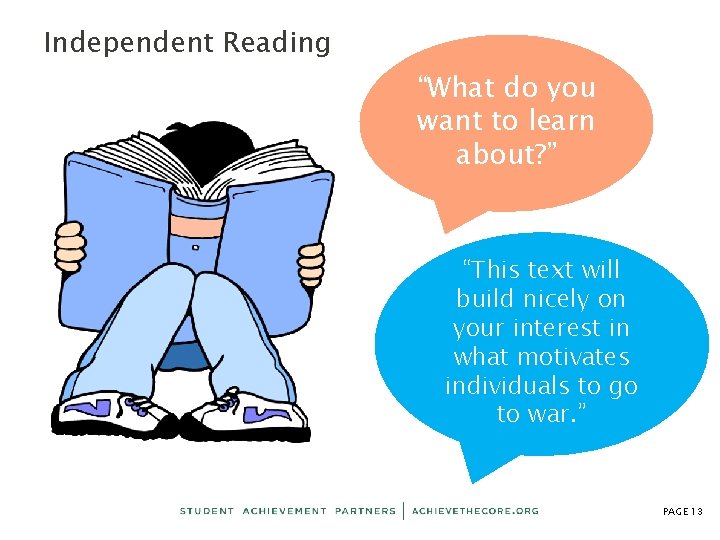
Independent Reading “What do you want to learn about? ” “This text will build nicely on your interest in what motivates individuals to go to war. ” PAGE 13
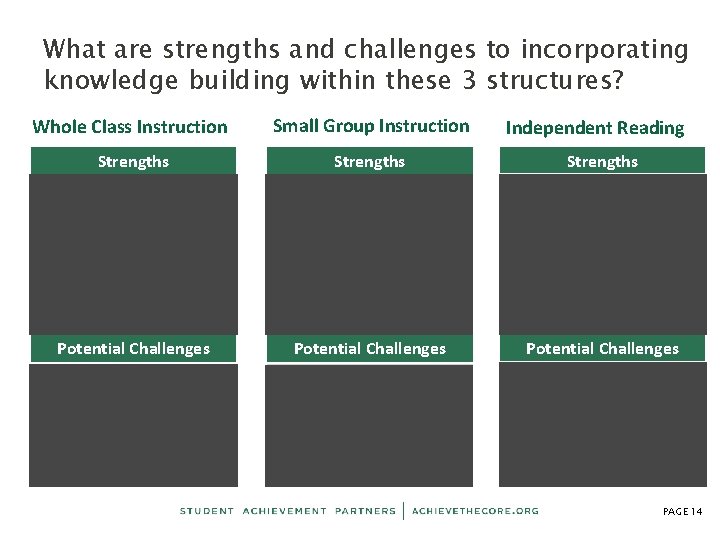
What are strengths and challenges to incorporating knowledge building within these 3 structures? Whole Class Instruction Small Group Instruction Strengths • Community built through studying the same topic • 1 set of materials Potential Challenges • Varying the scaffolding needed to support all readers • Varied opportunities to meet student needs. • Built in differentiation. Potential Challenges • Multiple sets of materials • Time! Independent Reading Strengths • Miles on the page! • Student voice and choice. Potential Challenges • Monitoring student reading. • Library organization by topic. • Time. PAGE 14
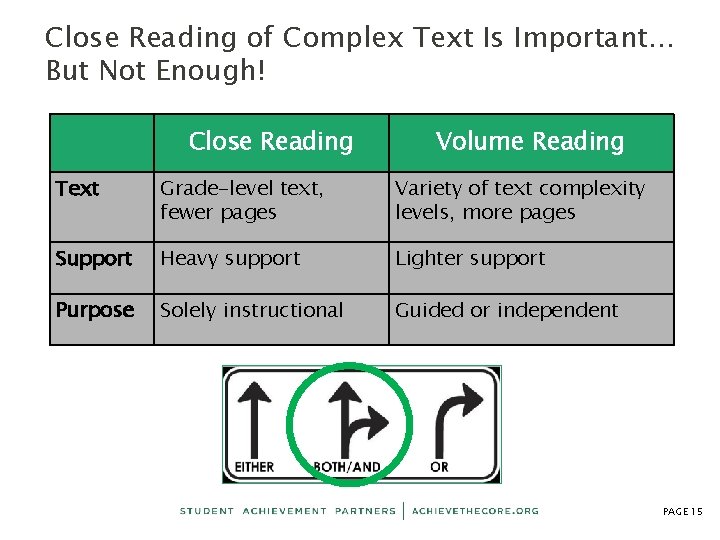
Close Reading of Complex Text Is Important… But Not Enough! Close Reading Volume Reading Text Grade-level text, fewer pages Variety of text complexity levels, more pages Support Heavy support Lighter support Purpose Solely instructional Guided or independent PAGE 15
What does knowledge building look like in high-quality instructional materials? (Gr 3 -8)
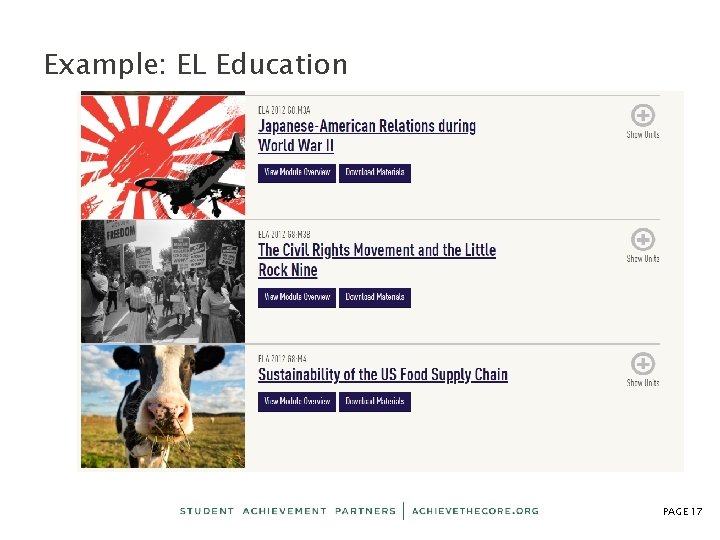
Example: EL Education PAGE 17
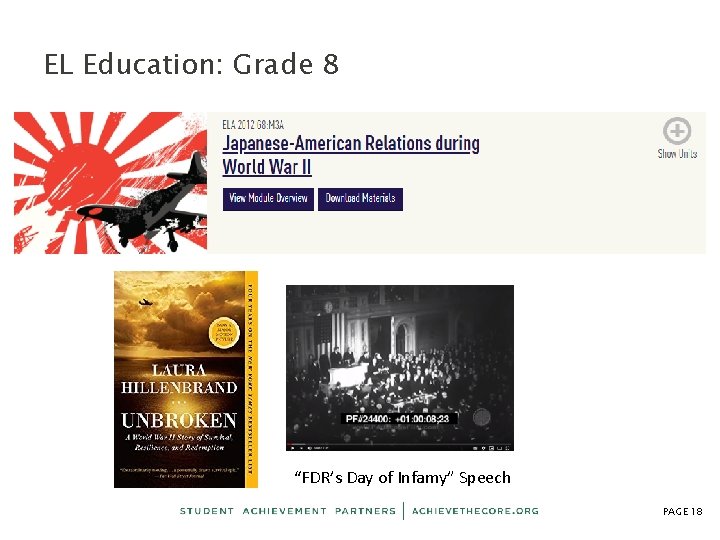
EL Education: Grade 8 “FDR’s Day of Infamy” Speech PAGE 18
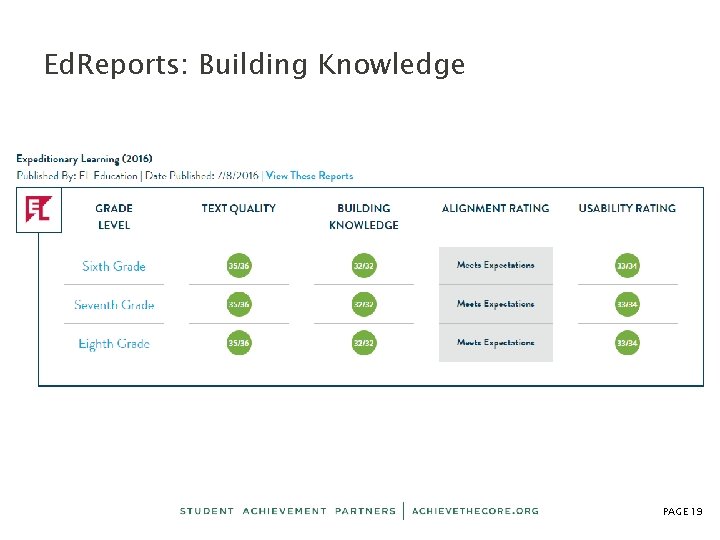
Ed. Reports: Building Knowledge PAGE 19
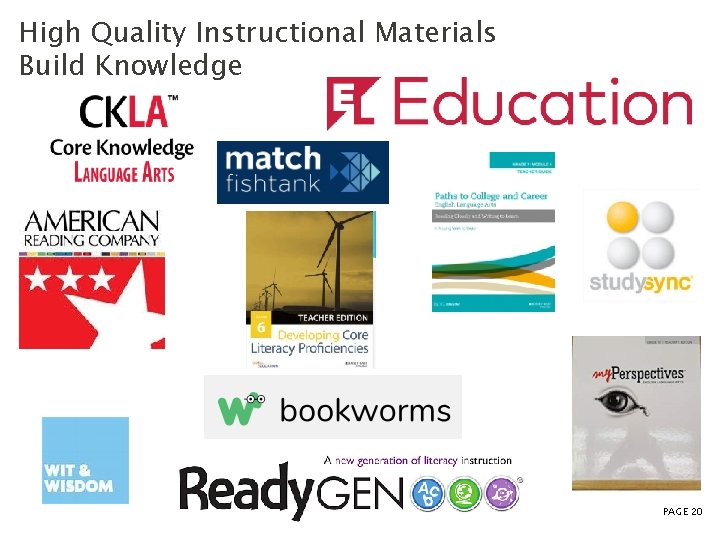
High Quality Instructional Materials Build Knowledge PAGE 20
Material Adaptations for Knowledge Building (3 rd-8 th)
General Guidance • Amplify connected texts • Cut disconnected/extraneous materials and tasks that do not build knowledge • Adjust tasks to enhance knowledge building opportunities • Identify knowledge demands to support PAGE 22
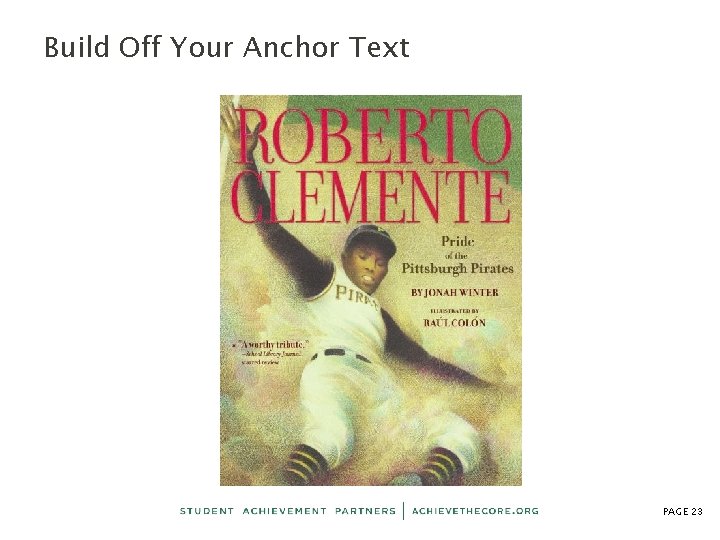
Build Off Your Anchor Text PAGE 23
Roberto Clemente: Amplify, Adjust, or Cut? • Read full anchor text in one day. • Read and re-read text over multiple lessons. PAGE 24
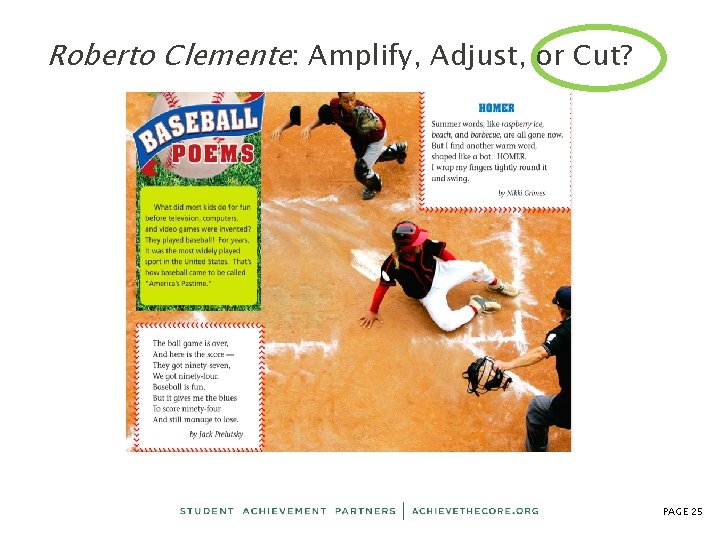
Roberto Clemente: Amplify, Adjust, or Cut? PAGE 25
Roberto Clemente: Amplify, Adjust, or Cut? • Essential Question What makes someone a hero? Why was Roberto Clemente a hero to so many? PAGE 26
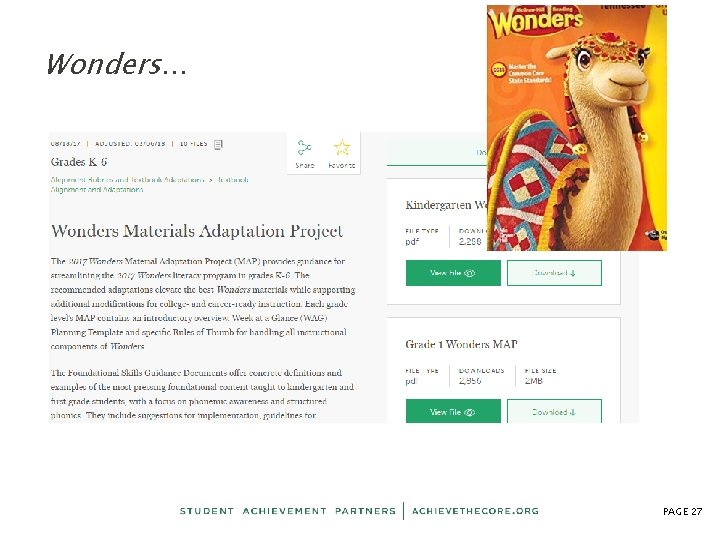
Wonders… PAGE 27
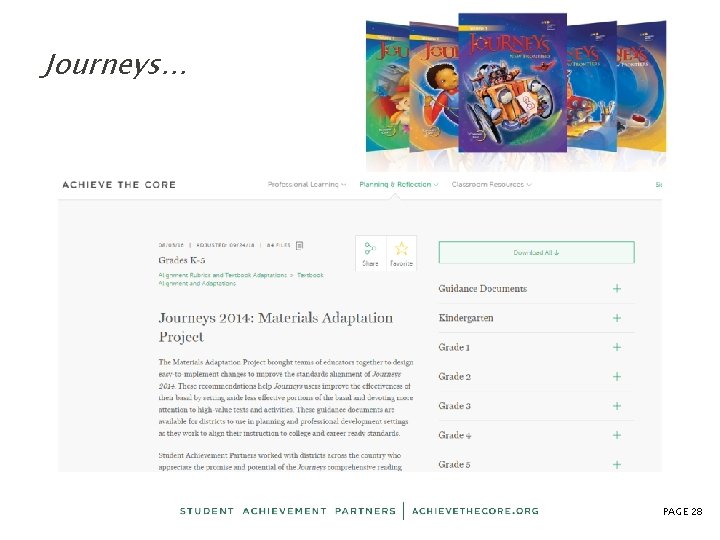
Journeys… PAGE 28
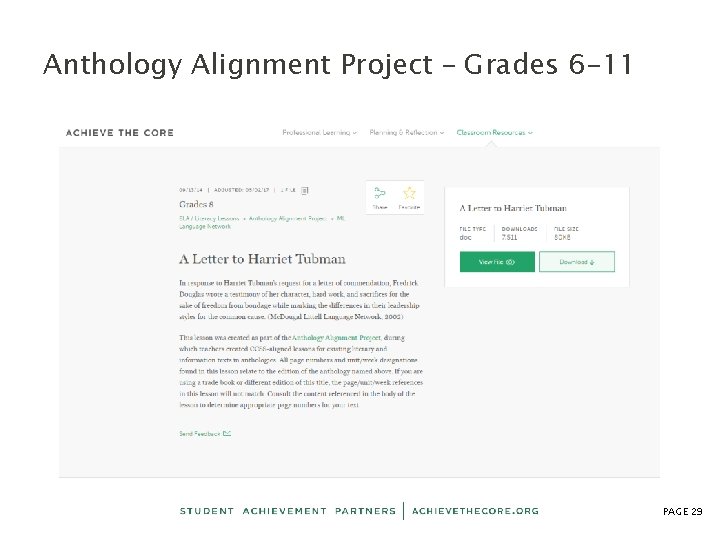
Anthology Alignment Project – Grades 6 -11 PAGE 29
![[Insert your program/text here] • Identify the knowledge found in the most complex or](http://slidetodoc.com/presentation_image_h/adb7773860e37bf92626e539c20d9388/image-30.jpg "[Insert your program/text here] • Identify the knowledge found in the most complex or")
[Insert your program/text here] • Identify the knowledge found in the most complex or anchor text! • Analyze what makes that text complex. • Determine where knowledge building can enhance the student experience! – Is the knowledge complexity high? Scaffold access! – Is the knowledge complexity low? Build on the foundation. PAGE 30
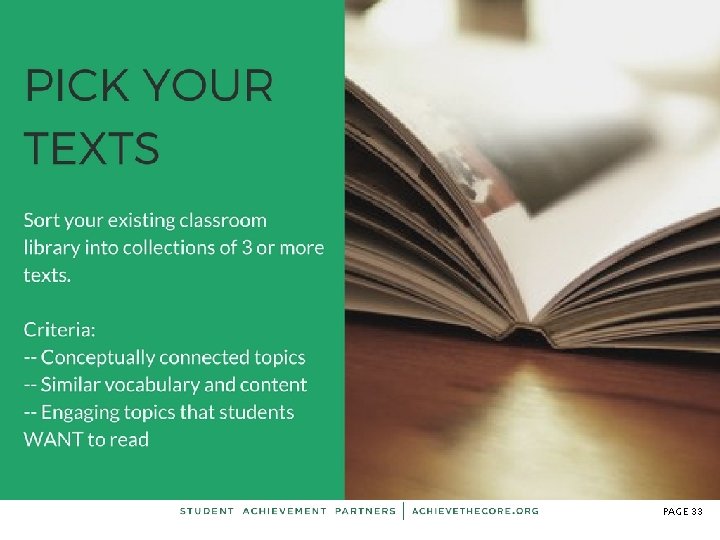
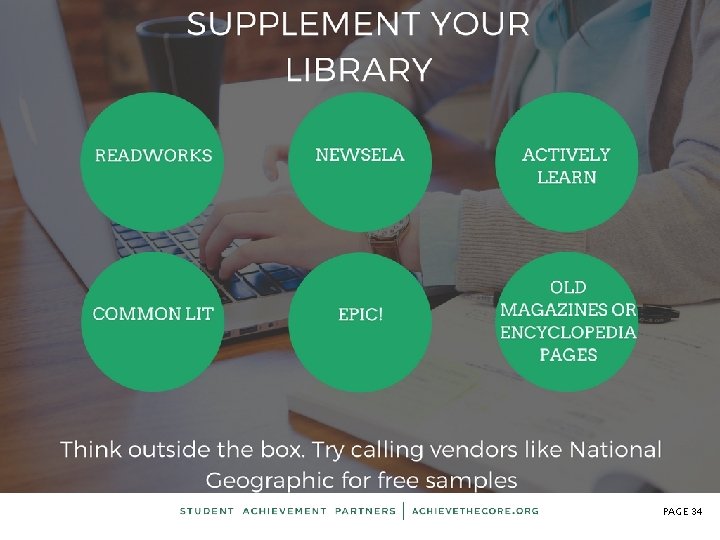
Independent Reading Adaptations
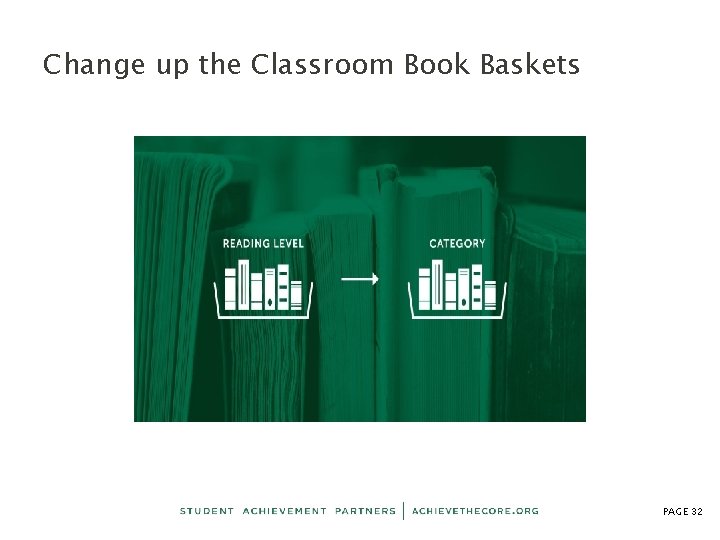
Change up the Classroom Book Baskets PAGE 32
PAGE 33
PAGE 34
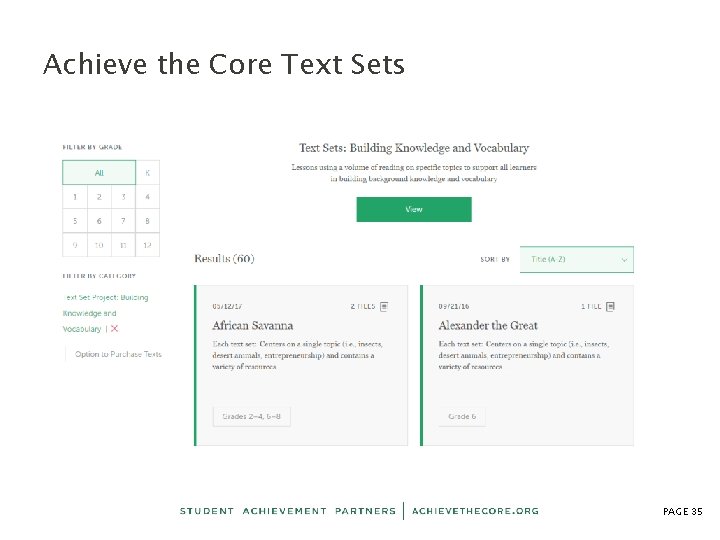
Achieve the Core Text Sets PAGE 35
Knowledge Building in Action (3 -8)
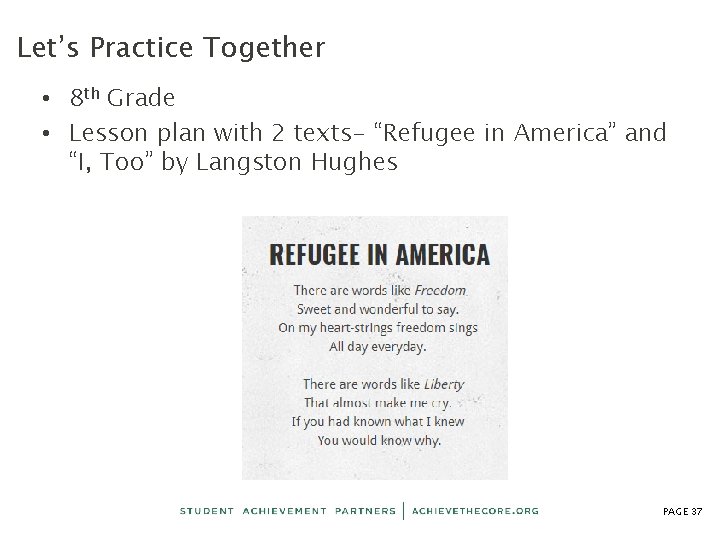
Let’s Practice Together • 8 th Grade • Lesson plan with 2 texts- “Refugee in America” and “I, Too” by Langston Hughes PAGE 37
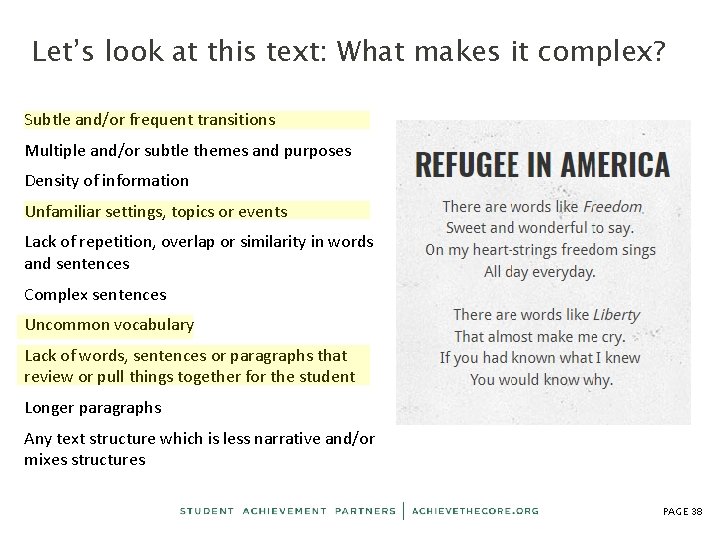
Let’s look at this text: What makes it complex? Subtle and/or frequent transitions Multiple and/or subtle themes and purposes Density of information Unfamiliar settings, topics or events Lack of repetition, overlap or similarity in words and sentences Complex sentences Uncommon vocabulary Lack of words, sentences or paragraphs that review or pull things together for the student Longer paragraphs Any text structure which is less narrative and/or mixes structures PAGE 38
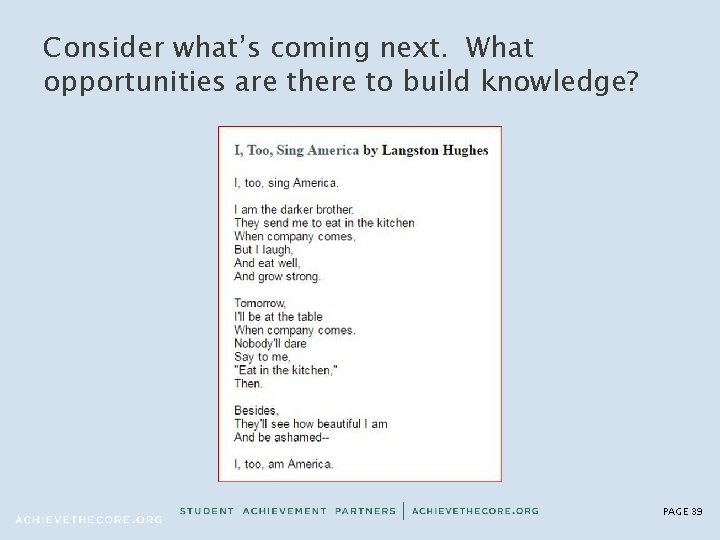
Consider what’s coming next. What opportunities are there to build knowledge? PAGE 39
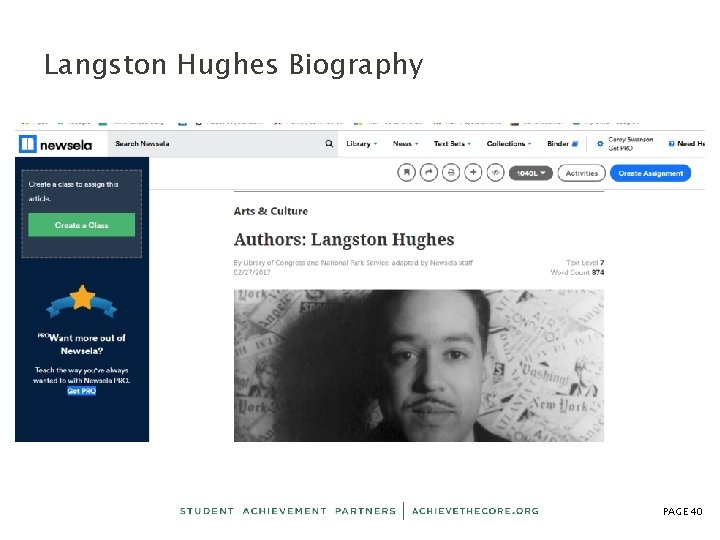
Langston Hughes Biography PAGE 40
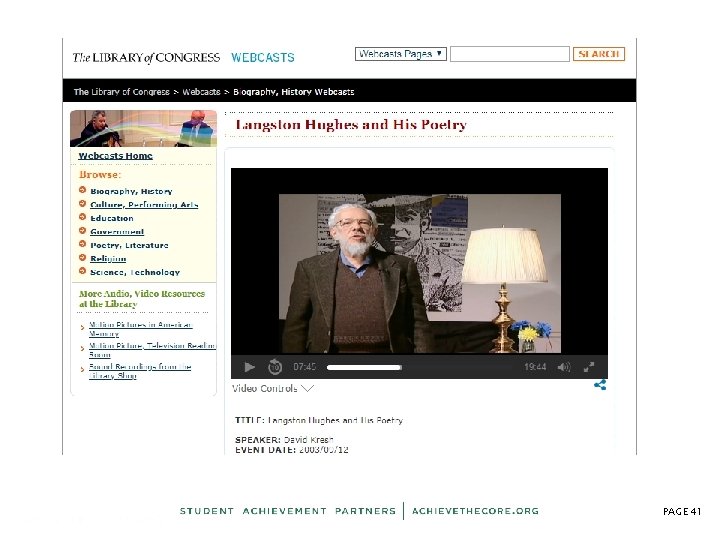
PAGE 41
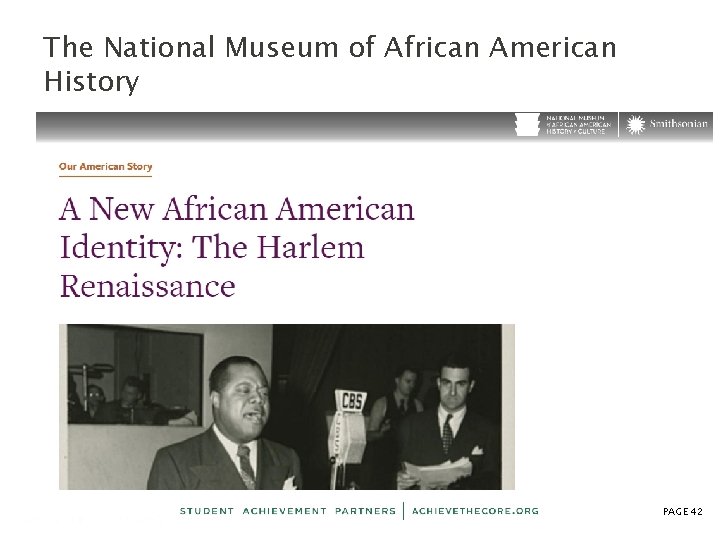
The National Museum of African American History PAGE 42
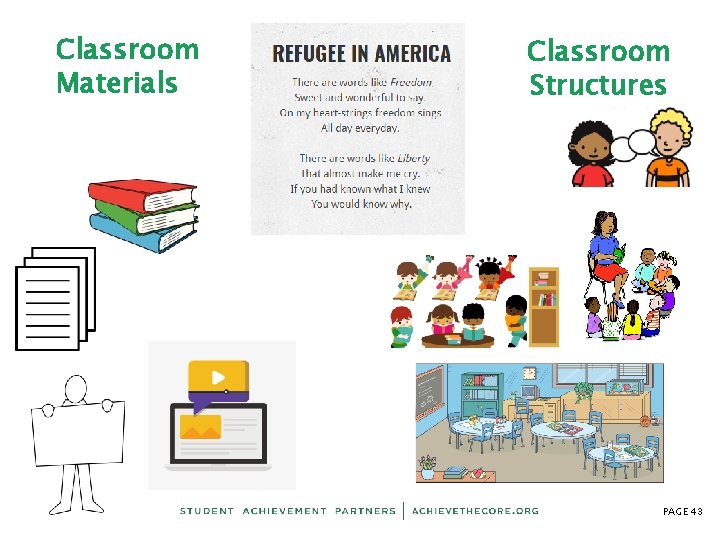
Classroom Materials Classroom Structures PAGE 43
Thank you/closing
- Slides: 44