
Building Intercultural Competence for Ministers Sample Presentation Committee
Building Intercultural Competence for Ministers Sample Presentation Committee On Cultural Diversity in the Church United States Conference of Catholic Bishops
Catholic Families in the United States According to Cultures/Ethnicities • • • African American Family Asian Pacific Islander Family European American Family Hispanic Latino Family Native American Family Migrants, Refugees, People on the Move, Caribbean (Haiti), African…
Underpinnings Theology for Intercultural Ministry • Christian Anthropology - (A Christian Understanding of the Human Person) • Ecclesiology: The Church as Communion • Catholicity: Universality, Unity in Diversity • The Church as missionary
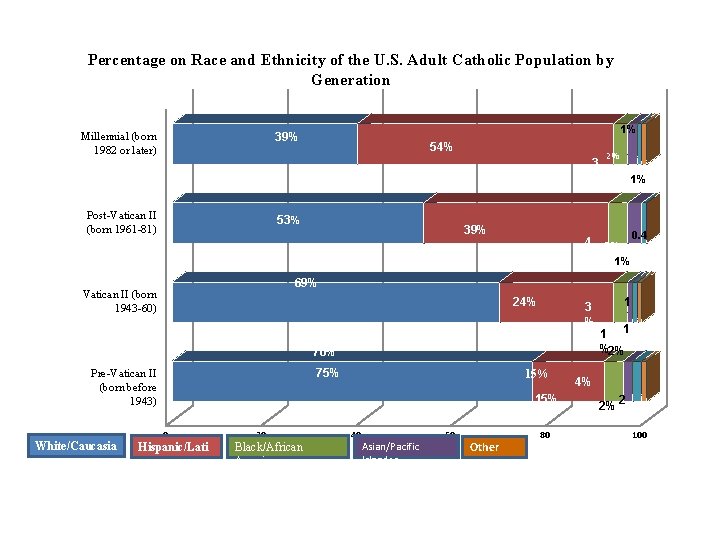
Percentage on Race and Ethnicity of the U. S. Adult Catholic Population by Generation Millennial (born 1982 or later) 1% 39% 54% 3 2% 1% Post-Vatican II (born 1961 -81) 53% 39% 4 0. 4 3% 1% 69% Vatican II (born 1943 -60) 24% 3 % 76% 75% Pre-Vatican II (born before 1943) White/Caucasia 15% 0 Hispanic/Lati 20 Black/African American 40 Asian/Pacific Islander 60 Other 80 1 1 1 %2% 4% 4 2% 2 2% 100
Intercultural Competence ØIntercultural Competence is the capacity to: • Communicate… • Work… • Relate… …across cultural boundaries.
Chapter Outline • Prejudice, Stereotyping, and Discrimination • In-Group and Out-Group Dynamics • Ways We Judge the “Other”
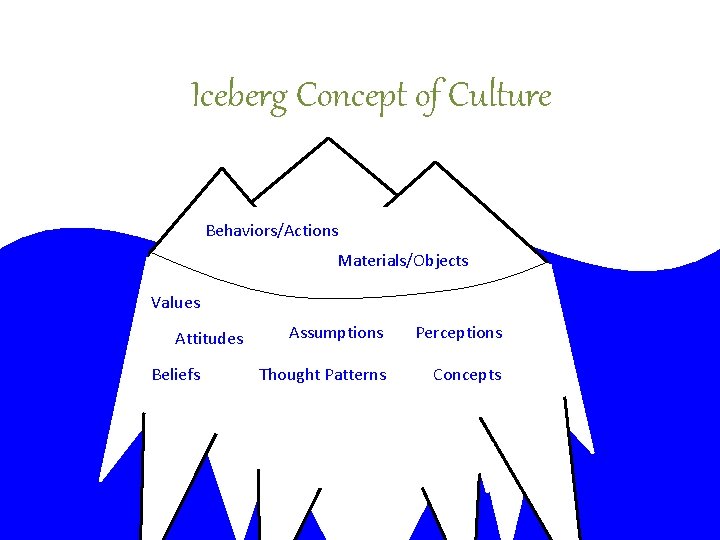
Iceberg Concept of Culture Behaviors/Actions Materials/Objects Values Attitudes Beliefs Assumptions Perceptions Thought Patterns Concepts
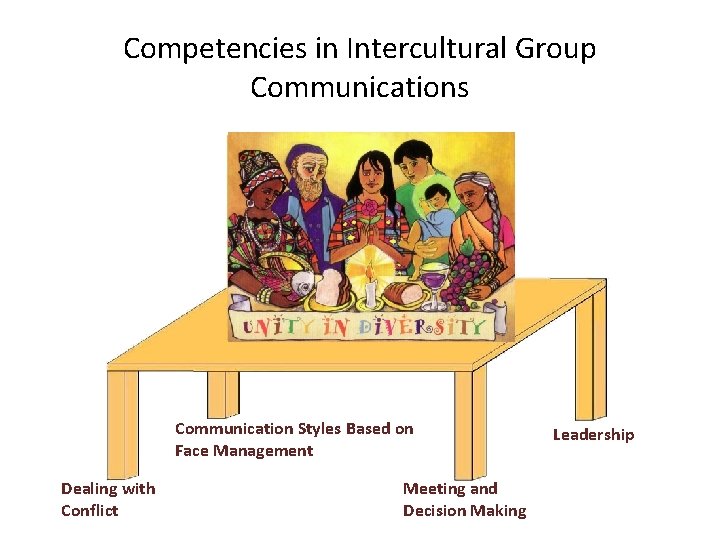
Competencies in Intercultural Group Communications Communication Styles Based on Face Management Dealing with Conflict Meeting and Decision Making Leadership
The Mutual Invitation Method (Eric Law) RESPECTFUL COMMUNICATION GUIDELINE R: take RESPONSIBILITY for what you say and feel, and speak with words others can hear and understand E: use EMPATHETIC listening, not just words but also feelings being expressed, non-verbal language including silence S: be SENSITIVE to differences in communication styles P: PONDER on what you hear and feel before you speak E: EXAMINE your own assumptions and perceptions C: keep CONFIDENTIALITY T: TRUST the process because we are NOT here to debate who is right or wrong but to experience true dialogue.
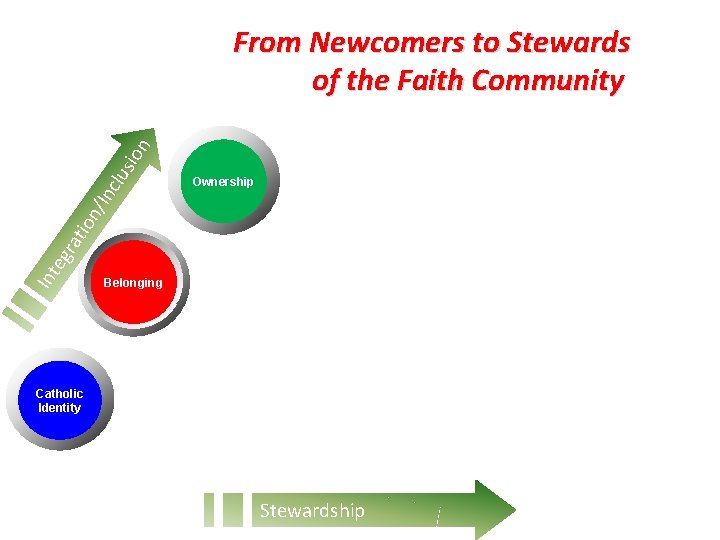
Ownership Int eg rat ion /In clu sio n From Newcomers to Stewards of the Faith Community Belonging Catholic Identity Stewardship
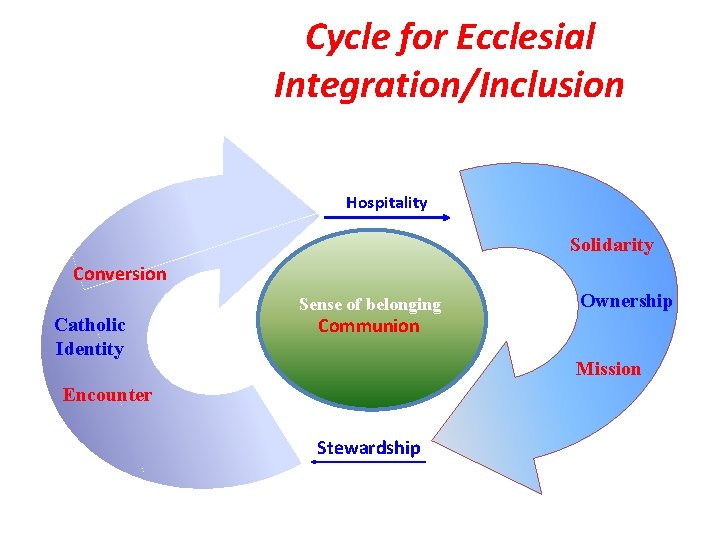
Cycle for Ecclesial Integration/Inclusion Hospitality Solidarity Conversion Catholic Identity Sense of belonging Ownership Communion Mission Encounter Stewardship
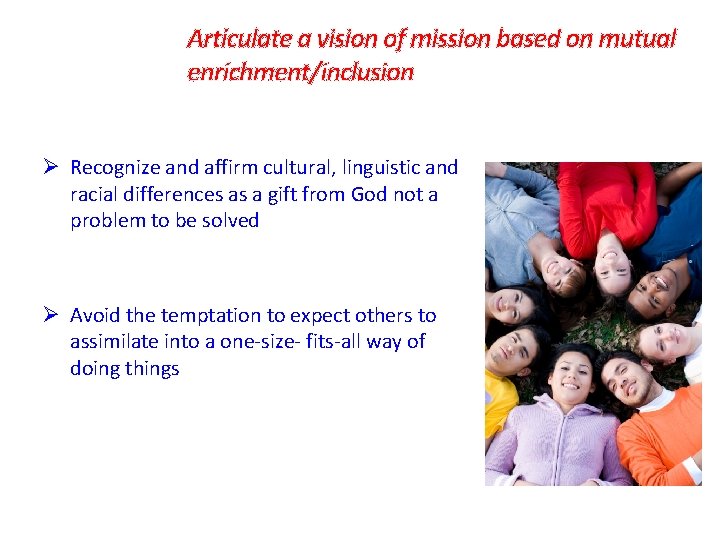
Articulate a vision of mission based on mutual enrichment/inclusion Ø Recognize and affirm cultural, linguistic and racial differences as a gift from God not a problem to be solved Ø Avoid the temptation to expect others to assimilate into a one-size- fits-all way of doing things
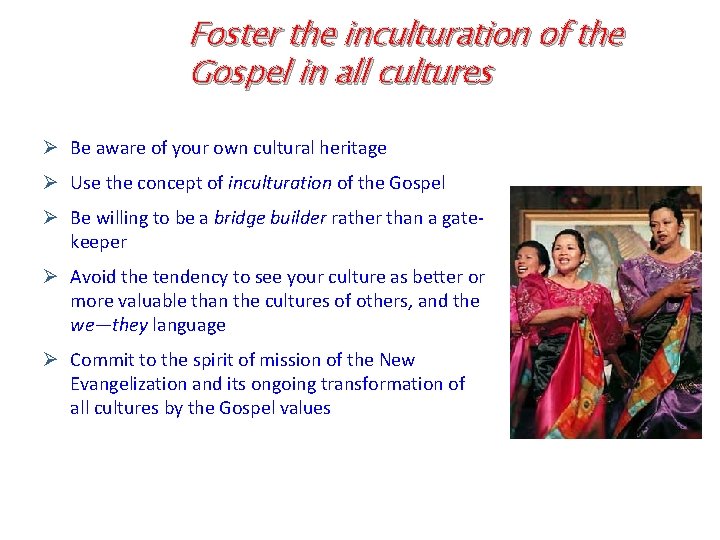
Foster the inculturation of the Gospel in all cultures Ø Be aware of your own cultural heritage Ø Use the concept of inculturation of the Gospel Ø Be willing to be a bridge builder rather than a gatekeeper Ø Avoid the tendency to see your culture as better or more valuable than the cultures of others, and the we—they language Ø Commit to the spirit of mission of the New Evangelization and its ongoing transformation of all cultures by the Gospel values
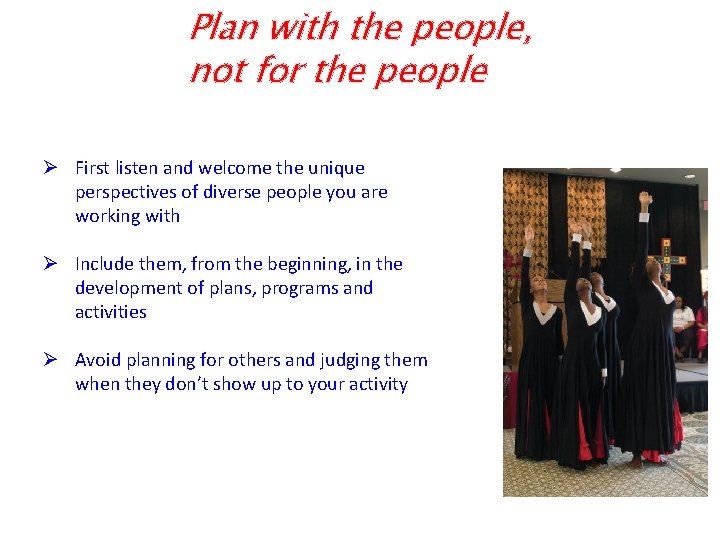
Plan with the people, not for the people Ø First listen and welcome the unique perspectives of diverse people you are working with Ø Include them, from the beginning, in the development of plans, programs and activities Ø Avoid planning for others and judging them when they don’t show up to your activity
Broaden your understanding of ministry groups, programs, and structures, and cast a bigger Ø Recognize the unique experiences, needs, and aspirations of each cultural/ethnic community Ø Understand that the existence of more than one cultural/racial group in your parish as a blessing Ø Promote the formation of culturally specific groups and apostolic movements Ø Avoid the perception that allowing the formation of culturally specific groups creates division or separation Ø Commit to creating welcoming spaces for all Catholic people living in your parish
Empower people from the different cultures/ethnicities into leadership positions Ø Understand the way in which people from different cultures view leadership, organize themselves and make decisions Ø Identify indigenous leaders and mentor them into leadership positions in ministry within their own cultural/ethnic community and beyond Ø Avoid a mentality of scarcity- ‘there is not enough for everyone’- and foster a vision of mission and growth that generates more resources
- Slides: 17