
Building Healthy Teams 2 9 16 Suzanne Keating
Building Healthy Teams 2 -9 -16 Suzanne Keating, LFI ‘ 98
Objectives Apply the principles from Leoncini’s Five Dysfunctions of a Team to a work team and to your ELI project Team Understand your team’s strengths and weaknesses Identify specific actions to overcome weaknesses and leverage your strengths Practice communication models that build healthy teams
The Five Dysfunctions of a Team Book Discussion What did you like best about the book? What questions or concerns were raised by the book? What did you find most surprising by Kathryn’s leadership of the Decision Tech team? Read through the Work Team Health Checklist. Put a check by the statements that best describe your work team. How many “healthy team” characteristics did you identify? How many “dysfunctional team” characteristics did you identify?
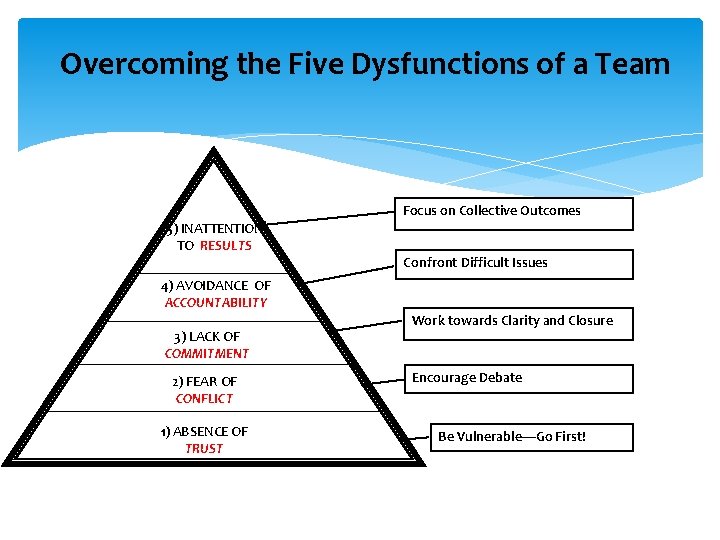
Overcoming the Five Dysfunctions of a Team Focus on Collective Outcomes 5) INATTENTION TO RESULTS Confront Difficult Issues 4) AVOIDANCE OF ACCOUNTABILITY 3) LACK OF COMMITMENT 2) FEAR OF CONFLICT 1) ABSENCE OF TRUST Work towards Clarity and Closure Encourage Debate Be Vulnerable—Go First!

SBI Model
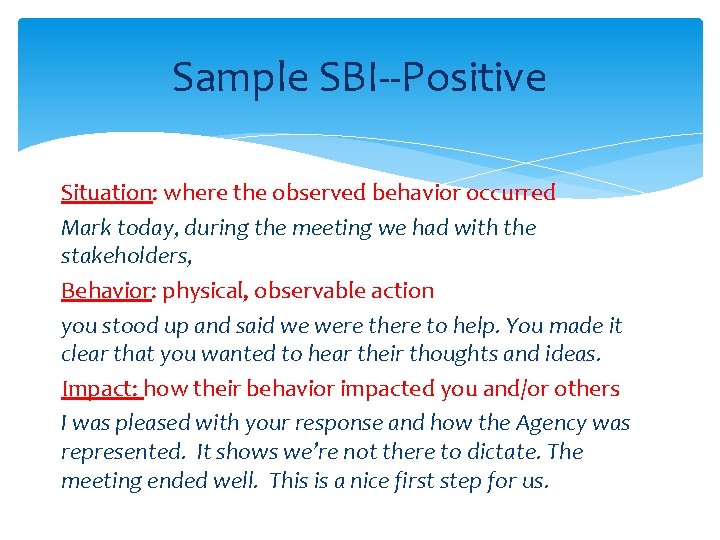
Sample SBI--Positive Situation: where the observed behavior occurred Mark today, during the meeting we had with the stakeholders, Behavior: physical, observable action you stood up and said we were there to help. You made it clear that you wanted to hear their thoughts and ideas. Impact: how their behavior impacted you and/or others I was pleased with your response and how the Agency was represented. It shows we’re not there to dictate. The meeting ended well. This is a nice first step for us.
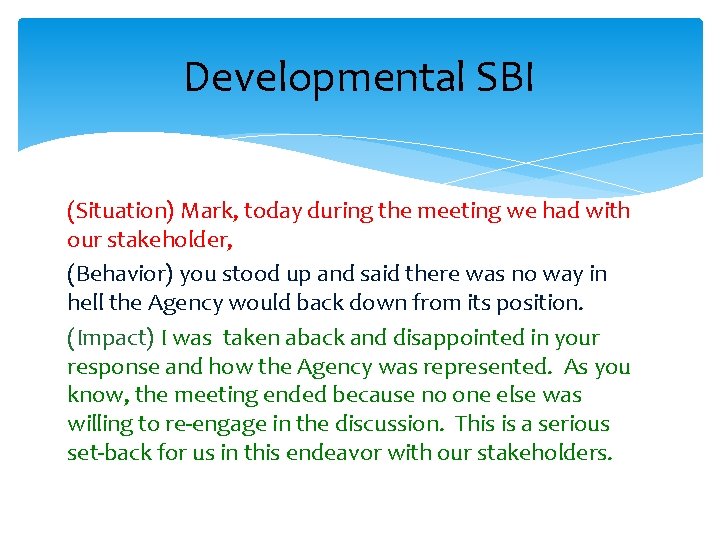
Developmental SBI (Situation) Mark, today during the meeting we had with our stakeholder, (Behavior) you stood up and said there was no way in hell the Agency would back down from its position. (Impact) I was taken aback and disappointed in your response and how the Agency was represented. As you know, the meeting ended because no one else was willing to re-engage in the discussion. This is a serious set-back for us in this endeavor with our stakeholders.
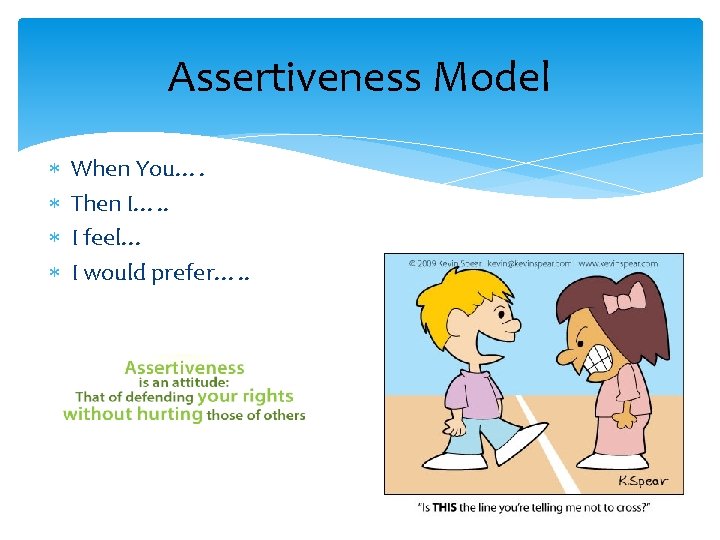
Assertiveness Model When You…. Then I…. . I feel… I would prefer…. .
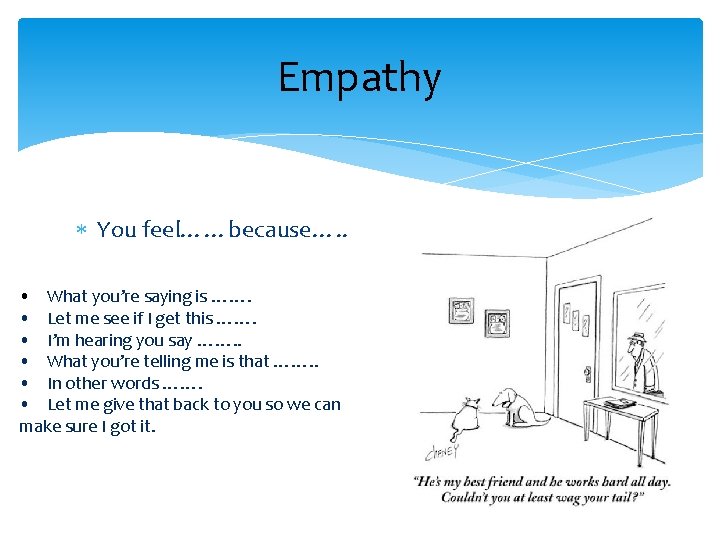
Empathy You feel……because…. . • What you’re saying is ……. • Let me see if I get this ……. • I’m hearing you say ……. . • What you’re telling me is that ……. . • In other words ……. • Let me give that back to you so we can make sure I got it.
How to Acknowledge Address the person, not the result Speak from your heart Start with “You are…” statements rather than making it about you “I feel that…” Encourage the person to receive the acknowledgement and not deflect it “You got that job because you believed in yourself and you never gave up. ” “You are an important member of this team because you care about our success, stay focused on the goal, and keep us on track. ”
Getting Feedback What’s one thing you see me doing (or failing to do) that gets in my way? Try Feedforward instead of feedback Pick one important behavior that you would like to change. “I want to be a better listener. ” Ask for feedforward—for two suggestions for the future that might help you achieve a positive change in their selected behavior. Listen attentively to the suggestions and take notes without comment. Thank the person for the suggestions.
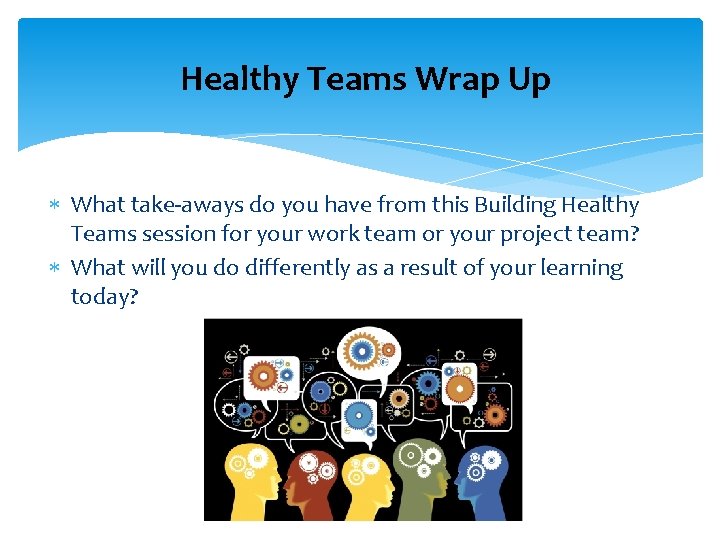
Healthy Teams Wrap Up What take-aways do you have from this Building Healthy Teams session for your work team or your project team? What will you do differently as a result of your learning today?
- Slides: 12