
BUILDING GENERATIONAL BRIDGES Florence Boulevard church of Christ
BUILDING GENERATIONAL BRIDGES Florence Boulevard church of Christ Aug. 28, 2016 Dr. Ralph Gilmore
BUILDING GENERATIONAL BRIDGES Session One: "Moderns and Millennials: Who are We? " Session Two: "The Church in Transition" Session Three: Part 1: "How Did We Get Here and What Do We Do? " Part 2: "Building Generational Bridges — Strategies" 2

SESSION 1 3
BUILDING GENERATIONAL BRIDGES Session One: "Moderns and Millennials: Who are We? " 4
IS THE CHURCH THE ONLY GROUP OF PEOPLE STRUGGLING TO REACH MILLENNIALS? 5

Mc. Donald's Has a Millennial Problem Country's Biggest Fast Feeder Doesn't Rank in Top 10 Fave Restaurants Among This Huge and Influential Demo By Maureen Morrison. Published on March 25, 2013; adage. com. 6
Mc. Donald's isn't the only major marketer trying to reach millennials. Everyone from Coke and Gatorade to brewers and media companies are struggling to understand this group. There's even confusion about just who millennials are in terms of age range (restaurant consultant Technomic counts them as 19 -to-34 -year-olds; Mc. Donald's, in an internal memo obtained by Advertising Age, classifies them as ages 18 to 32). Size estimates for this demographic group range anywhere from 59 million to 80 million. 7
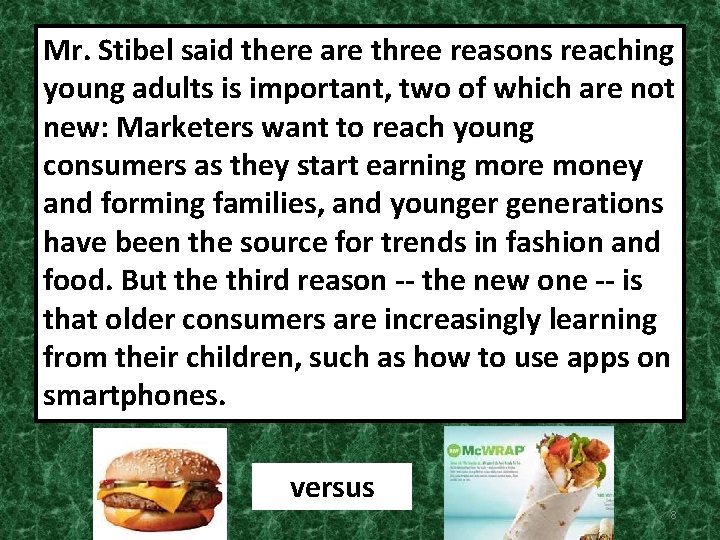
Mr. Stibel said there are three reasons reaching young adults is important, two of which are not new: Marketers want to reach young consumers as they start earning more money and forming families, and younger generations have been the source for trends in fashion and food. But the third reason -- the new one -- is that older consumers are increasingly learning from their children, such as how to use apps on smartphones. versus 8
What about the relationship between the Millennials and Organized Religion as a whole? 9
Young 'Nones' Set To Transform The Political Landscape by SCOTT NEUMAN October 09, 2012 Culture warriors on the left and right would be wise to carefully examine a new survey from the Pew Research Center showing that a growing number of Americans are moving away from religious labels. 10
The study, titled "'Nones' on the Rise" indicates that 1 in 5 Americans now identifies as "religiously unaffiliated, " a group that includes those who say they have no particular religion, as well as atheists and agnostics. Perhaps more instructive is a close look at the age breakdown: If you're under 30, there's a 1 -in-3 chance that religion plays little or no role in your life, according to the survey. 11
COMMENTARY: If millennials leave religion, then what? By Peter Levine, Religious News Service, The Washington Post, April 21, 2014 Barely half of millennials say they look to religion for guidance, but a higher percentage "talk to God, " suggesting that the 18 -to-34 demographic is more spiritual than sectarian, according to a new survey by the Integrated Innovation Institute at Carnegie Mellon University. 12
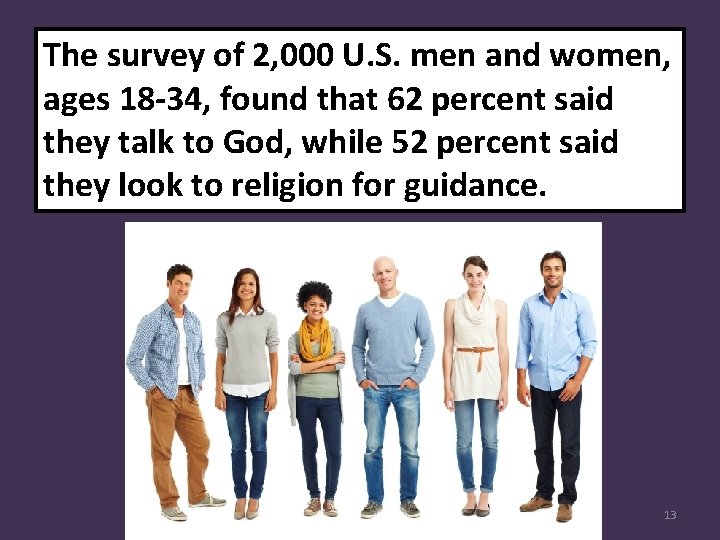
The survey of 2, 000 U. S. men and women, ages 18 -34, found that 62 percent said they talk to God, while 52 percent said they look to religion for guidance. 13
AN INTRODUCTION AND DEFINITIONS 14
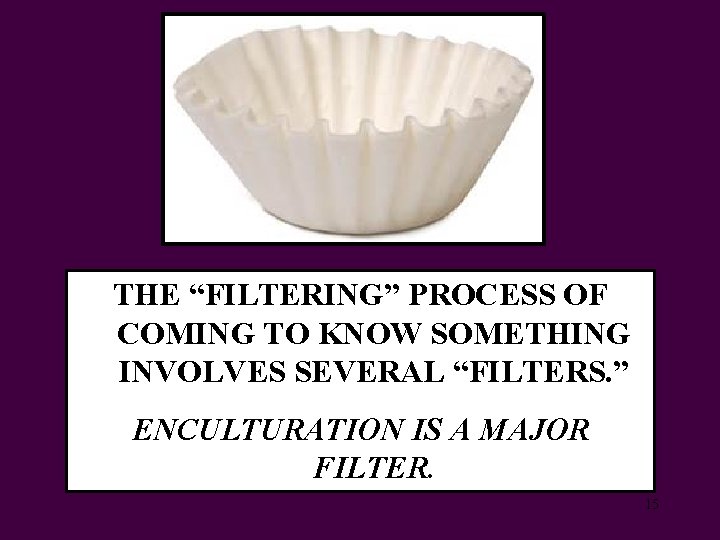
THE “FILTERING” PROCESS OF COMING TO KNOW SOMETHING INVOLVES SEVERAL “FILTERS. ” ENCULTURATION IS A MAJOR FILTER. 15
Postmodernists Whether one calls it postmodernism, post. Christian, or post-denominational, almost everyone knows that there has been a radical culture shift since about 1973. 16
"'Postmodernism' is difficult to define, not only because it means different things to different people, but because it is a label used to identify an emerging mood. Added to these complications is the fact that postmodernism, as most ascribe it, is an anti-philosophy— radically relativistic—holding no creed and espousing no particular methodology. Today, the postmodern impulse is emerging among all disciplines and in various cultural forms. Millard J. Erickson, Evangelical Interpretation (Grand Rapids: Baker 1993) 17
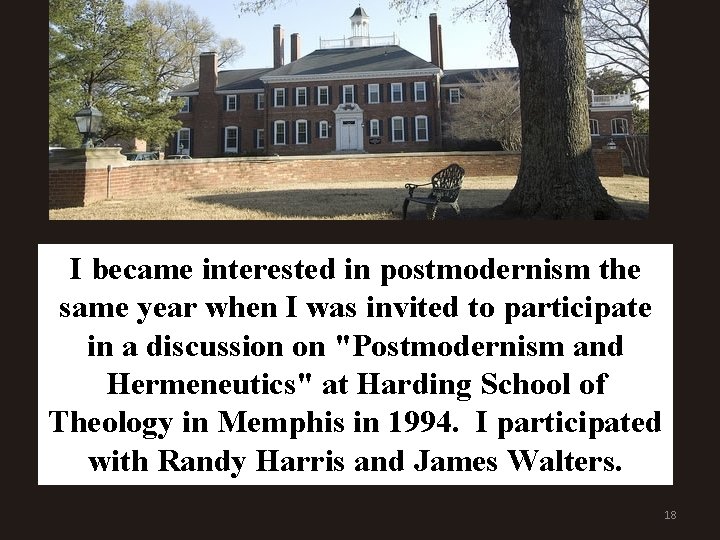
I became interested in postmodernism the same year when I was invited to participate in a discussion on "Postmodernism and Hermeneutics" at Harding School of Theology in Memphis in 1994. I participated with Randy Harris and James Walters. 18
1 Chronicles 12: 32 Of the sons of Issachar, men who understood the times, with knowledge of what Israel should do, their chiefs were two hundred; and all their kinsmen were at their command. NASU In our time, we need people who: 1. Understand our times, and 2. Know what God’s people should do. 19
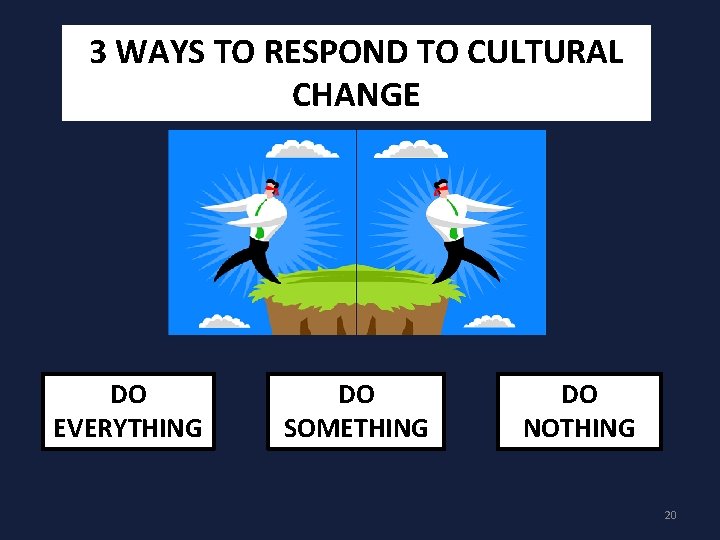
3 WAYS TO RESPOND TO CULTURAL CHANGE DO EVERYTHING DO SOMETHING DO NOTHING 20
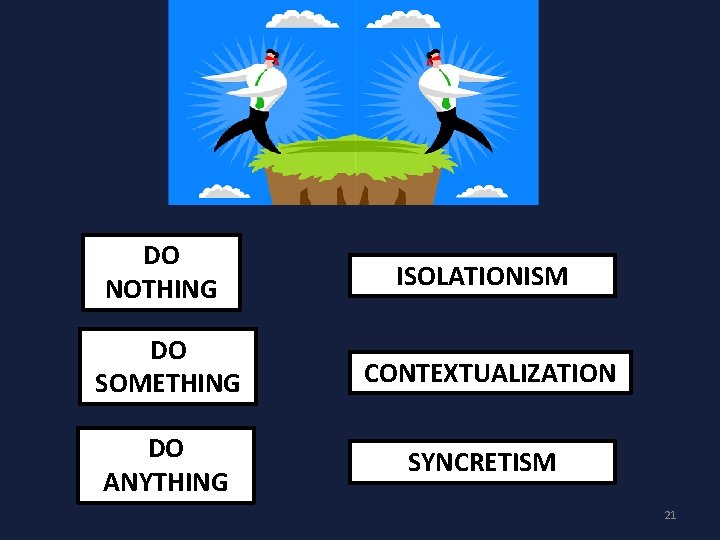
DO NOTHING ISOLATIONISM DO SOMETHING CONTEXTUALIZATION DO ANYTHING SYNCRETISM 21

THE FIRST POSSIBILITY IS CALLED BY WORDS I INVENTED: ISOLATIONISM 22
IT IS THE FIRST EXTREME: We could do like many congregations of the churches of Christ— we could hold to our traditional way of doing things and do nothing hoping that it will pass. 23
THE SECOND POSSIBILITY HAS A STANDARD NAME: SYNCRETISM 24
THIS OPPOSITE EXTREME: We could over-react by forcing the church into the mold of postmodernism. In my judgment, this is exactly what the Emerging Church Movement has done. 25
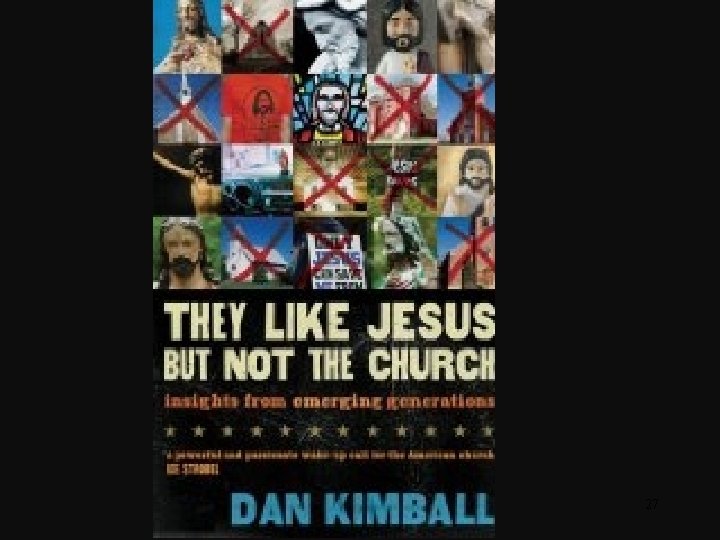
However, The missional thinking of Dan Kimball is not as radical as the missional advocates just noted. Let us hear from Kimball’s own book They Like Jesus But Not the Church: 26
27
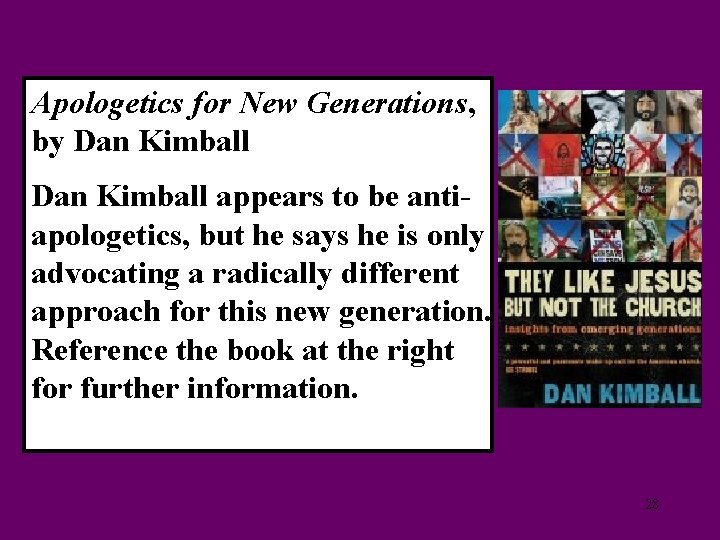
Apologetics for New Generations, by Dan Kimball appears to be antiapologetics, but he says he is only advocating a radically different approach for this new generation. Reference the book at the right for further information. 28
What is Missional to Kimball? Being mission means that the church sees itself as being missionaries, rather than having a missions department, and that we see ourselves as missionaries right where we live. Being missional means that we see ourselves as representatives of Jesus “sent” into our communities, and that the church aligns everything it does with the missio dei (mission of God). Being missional means we see the church not as a place we go only on Sunday, but as something we are throughout the week. 29
From Kimball’s extensive interviews, he believes that there are six common misperceptions about the church from those on the outside: 30
1. The church is an organized religion with a political agenda. 31
2. The church is judgmental and negative. 32
3. The church is dominated by males and oppresses females. 33
4. The church is homophobic. 34
5. The church arrogantly claims all other religions are wrong. 35
6. The church is full of fundamentalists who take the whole Bible literally (Kimball 69). 36
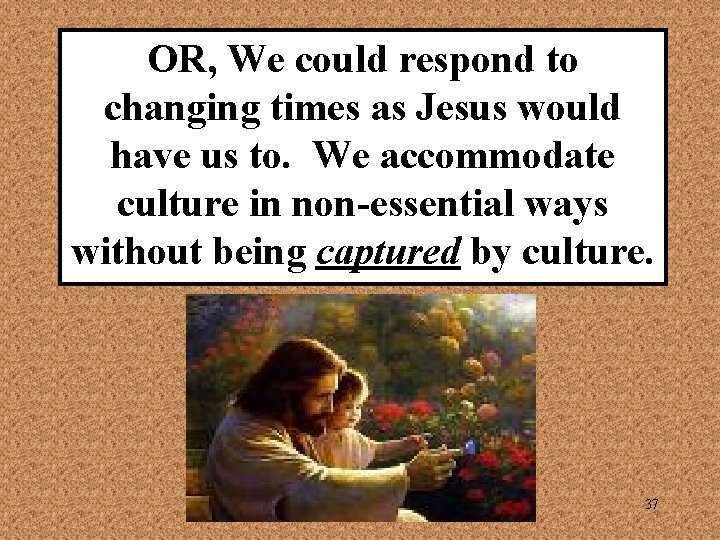
OR, We could respond to changing times as Jesus would have us to. We accommodate culture in non-essential ways without being captured by culture. 37
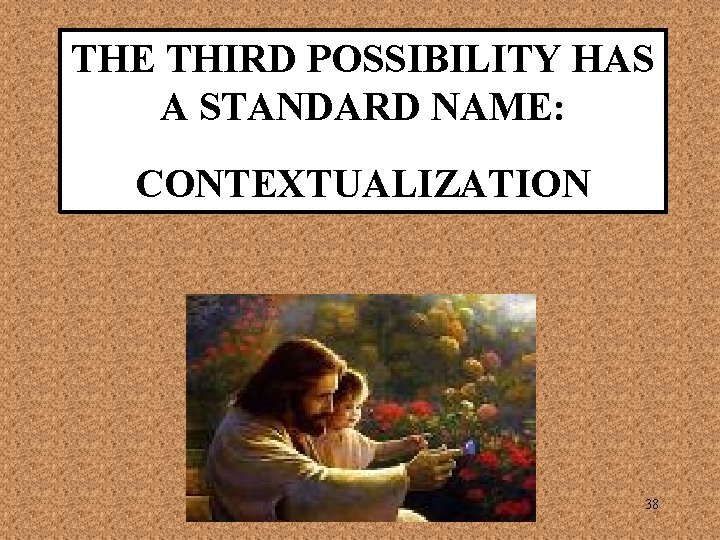
THE THIRD POSSIBILITY HAS A STANDARD NAME: CONTEXTUALIZATION 38

RALPH’S REVIEW 39
1. First of all, contextualization is biblical (1 Cor. 9: 19; Rom. 14 and 15). 2. Second, since it is true that many Christians have no contact with the non-Christian world in a positive way. how can Bible studies be set up? 3. Third, my own experience with those outside the church parallels some of the six conclusions to which Kimball draws attention. 40
CONTEXTUALIZATION (OK) Versus SYNCRETISM (NOT OK) 41
A MORE CONTEMPORARY LOOK AT THE MILLENNIAL GENERATION 42
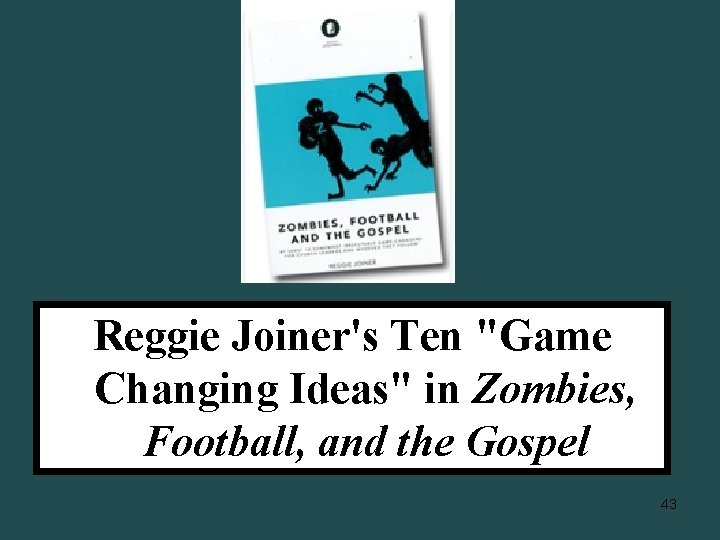
Reggie Joiner's Ten "Game Changing Ideas" in Zombies, Football, and the Gospel 43
1. The Gospel is Messy. Never settle for a version of faith that doesn't take risks. The point is "there is a growing frustration with churches who do not respond passionately to a broken world. " 44
2. 98118 The most diverse zip code in the US. 6 square miles, home to 40, 000 people speaking 59 different languages. "People are embracing diversity and rejecting those who show signs of intolerance. " 45
3. Sundays are for Football. Re imagine ways the church can influence active communities. how do we take the gospel to the people instead of waiting for them to come to the gospel. Statistically 25% of Americans treat Sunday like a Holy Day, the other 75% treat it like a holiday. 46
4. They Blew up Walnut Grove. We must wake up to the reality of today's complicated family (and stop trying to make everyone fit the mold of 'Little House on the Prairie' type families. ) Every family is broken. Those who go to church and those who don't. All families need Hope! That's why the church is so important, why the gospel is so powerful. 47
5. Zombies are Easy to Lead. Too many Christian leaders treat people like they should mindlessly follow us (like zombies), instead of treating the people that we lead like they are made in the image of God. Leaders are being called to model a new standard of authenticity and empathy. 48
6. Improv or Die. Collaborate to discover the best solutions. Improv acting groups have 2 basic principles: 1. 'no' is an automatic dead end. 'yes' always leads to possibilities. 2. Make your partner look good. Scripture makes it clear that the Body needs every part, every gift, to function properly. We have to lead the way we want to operate, using a variety of gifts and experiences. 49
7. Wine will be Cheaper than Gas. The economy is a game changer for churches, not just families. As budgets tighten we may have to stop throwing money at problems or ministries, and learn to rely on other things God has given us, like time and talents. Being short on finances forces us to innovate. 50
8. The Cloud is Here. Social media has given us an ability to communicate anytime anywhere. More people own phones than own toothbrushes. If we are not making time to connect with people where people are connecting, then we will loose the chance to connect with people anywhere. 51
9. Third Place Still Wins. Make it easy for someone to experience community. Starbucks has thrived during this economic downturn, not because they are selling a luxury item in a recession, but because they offer a place for face-to-face connections in a world of social media. The church can and should become a place that people turn for genuine community. Christian community doesn't exist simply for the sake of community; it exists as a means for building authentic faith. 52
10. Everybody knows Harry (Potter that is). Everyone connects with compelling stories be it Harry, Frodo, or Luke Skywalker. It wasn't the quantity of truth they were giving us that made the difference; it was the way they engaged our imagination. By focusing on how we communicate truth, we can provide them with a context, that will make them See, make them Care, and make them Hope. As leaders we are called to unveil the greatest story ever told in a way that invites a generation to the wonder, discovery and passion of the very character of God. 53

54
SESSION 2 55
BUILDING GENERATIONAL BRIDGES Session One: "Moderns and Millennials: Who are We? " Session Two: "The Church in Transition" Session Three: Part 1: "How Did We Get Here and What Do We Do? " Part 2: "Building Generational Bridges — Strategies" 56
BUILDING GENERATIONAL BRIDGES Session Two: "The Church in Transition" 57
“All the churches of Christ greet you. ” 58
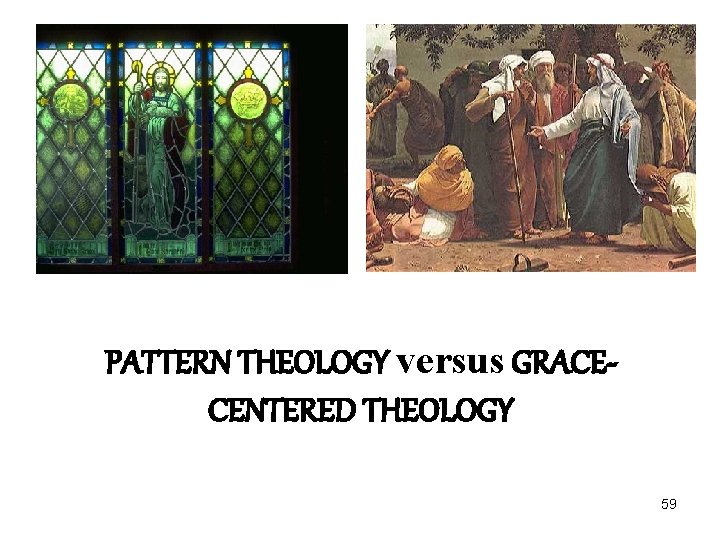
PATTERN THEOLOGY versus GRACECENTERED THEOLOGY 59
Currently, TWO PARADIGMS of the Church are Struggling for Dominance. 60
THESE TWO PARADIGMS ARE VERY EVIDENT WHEN THEY FOCUS ON THE SAME THING—IN THIS CASE, THE CHURCH. 61
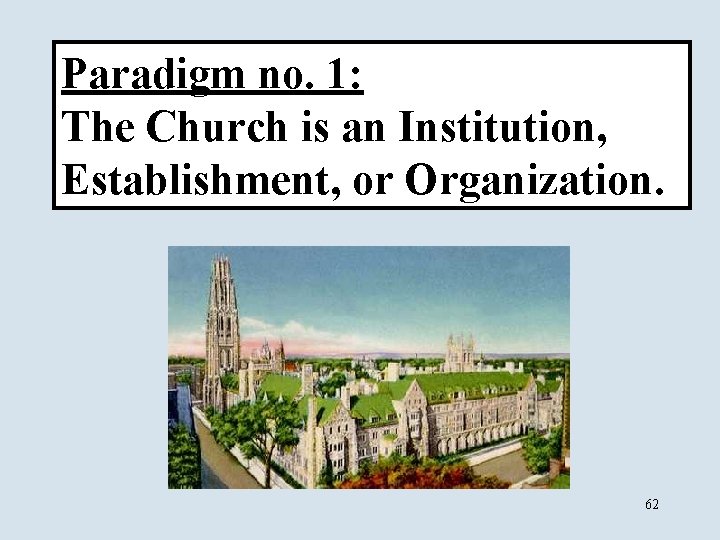
Paradigm no. 1: The Church is an Institution, Establishment, or Organization. 62
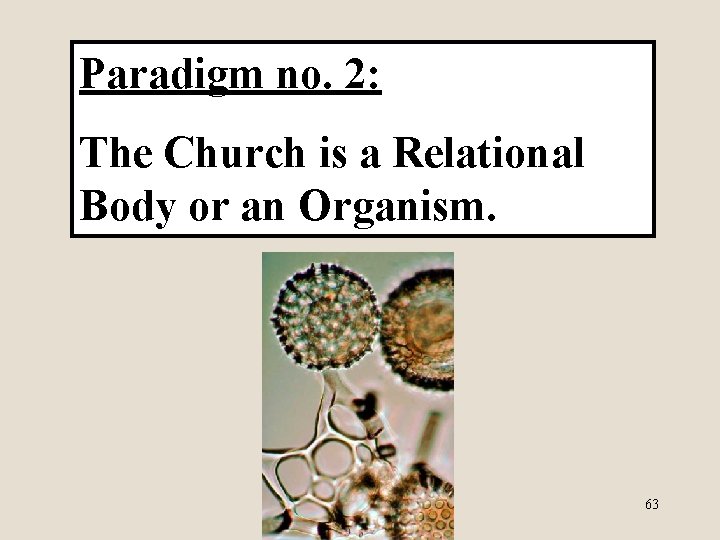
Paradigm no. 2: The Church is a Relational Body or an Organism. 63
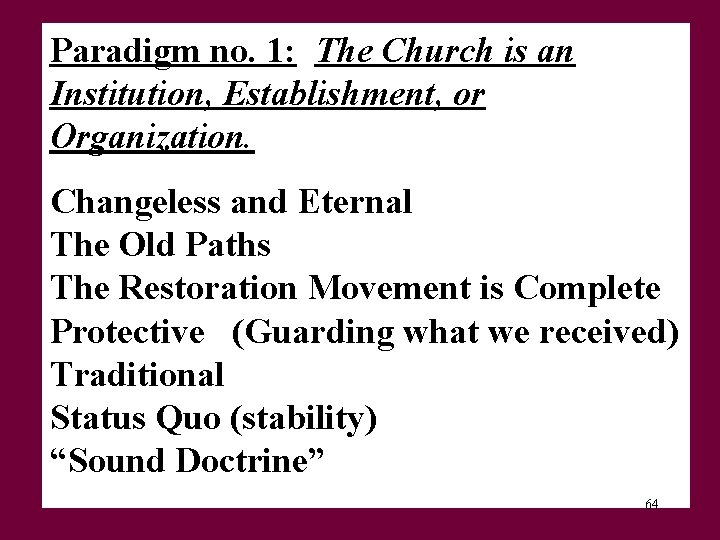
Paradigm no. 1: The Church is an Institution, Establishment, or Organization. Changeless and Eternal The Old Paths The Restoration Movement is Complete Protective (Guarding what we received) Traditional Status Quo (stability) “Sound Doctrine” 64
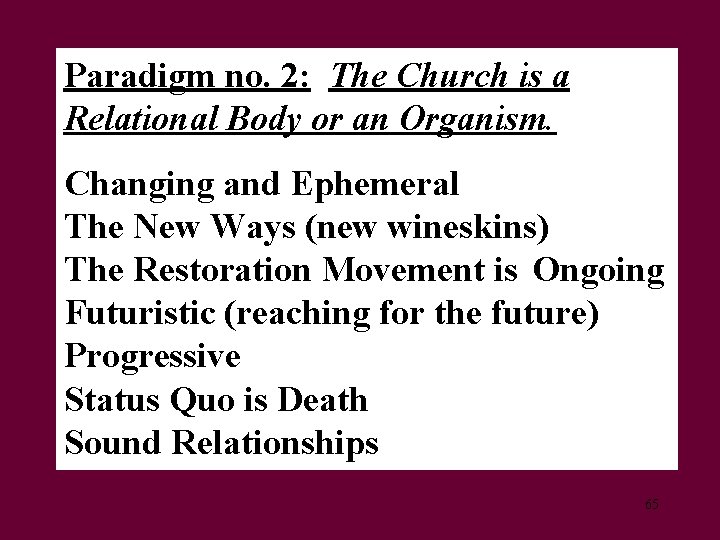
Paradigm no. 2: The Church is a Relational Body or an Organism. Changing and Ephemeral The New Ways (new wineskins) The Restoration Movement is Ongoing Futuristic (reaching for the future) Progressive Status Quo is Death Sound Relationships 65
AREAS AFFECTED BY THIS PARADIGM CLASH: THE IDENTITY and ORIGIN OF THE CHURCH 66
Is the church an institution, establishment, or organization? 67
Paradigm no. 1: The Church is an Institution, Establishment, or Organization. “ESTABLISHMENT; ESTABLISH”—since the word does not occur in Scripture, we will use a dictionary definition: “an establishing; . . . to set up permanently; to settle in a place or position” World Book Dictionary 68
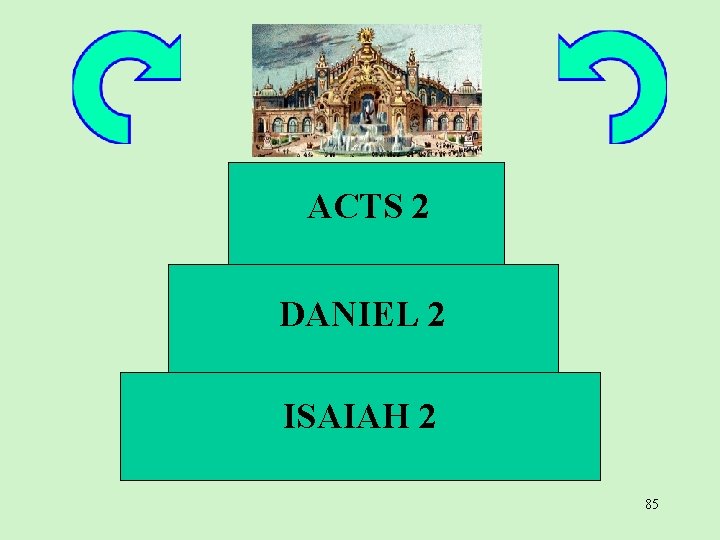
So, Is the Church an Institution, Organization, or Organization? The Answer—in the truest sense, Yes! [DANIEL 2, ISAIAH 2, and ACTS 2]. “The Church” or “The House of God” or “The Kingdom of God” cannot simply means “the assembly” of the people of God. Jesus did not say, “Upon this rock I will build my assembly. ” Mt. 16. 18 69
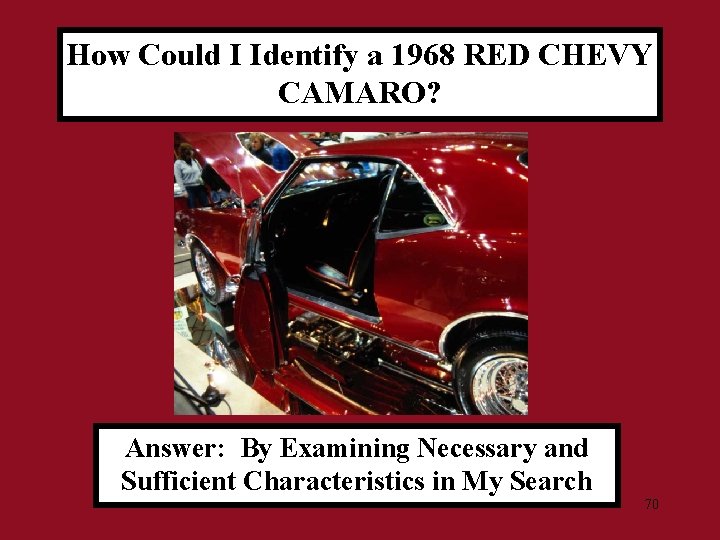
How Could I Identify a 1968 RED CHEVY CAMARO? Answer: By Examining Necessary and Sufficient Characteristics in My Search 70
The concept of Identifying Marks of the New Testament Church is Relevant. 71

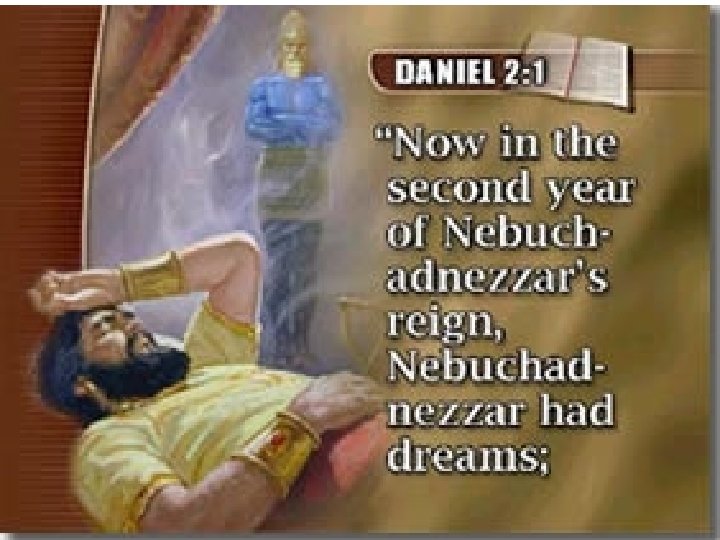
DANIEL 2 72
73
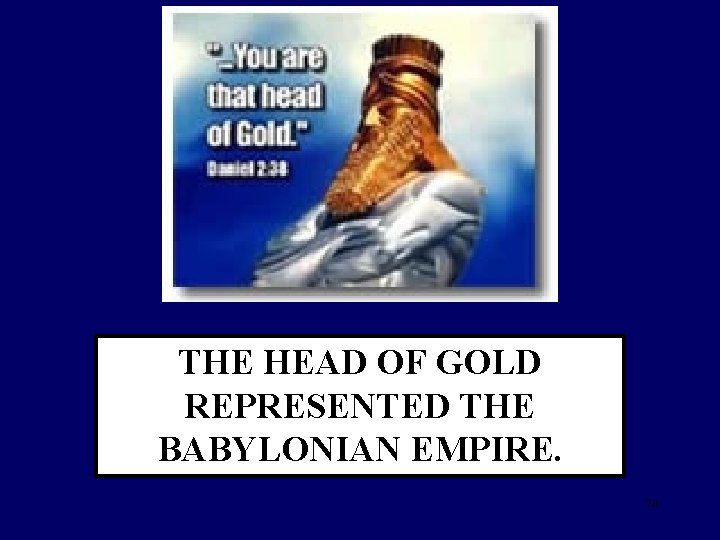
THE HEAD OF GOLD REPRESENTED THE BABYLONIAN EMPIRE. 74
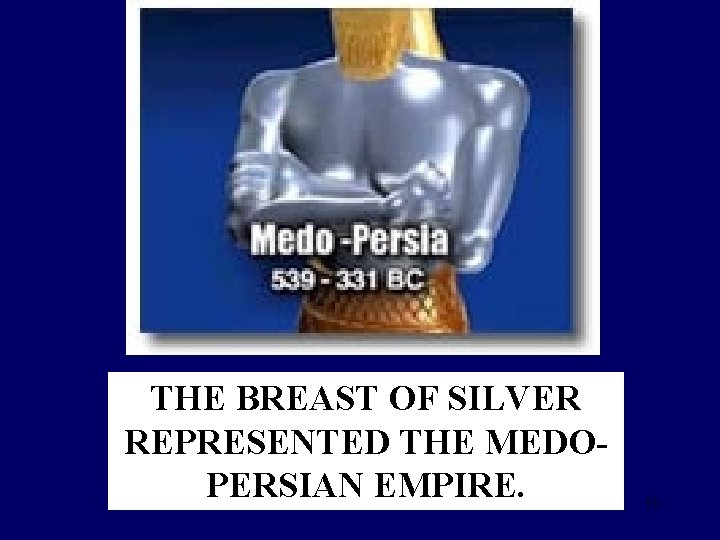
THE BREAST OF SILVER REPRESENTED THE MEDOPERSIAN EMPIRE. 75
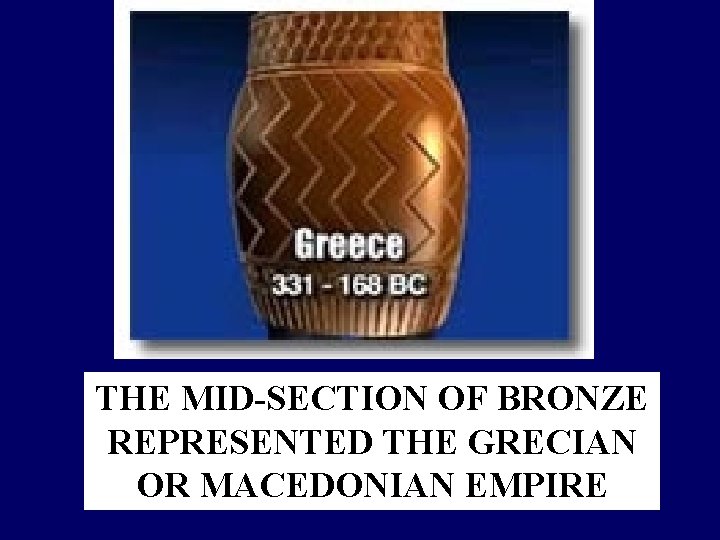
THE MID-SECTION OF BRONZE REPRESENTED THE GRECIAN OR MACEDONIAN EMPIRE 76
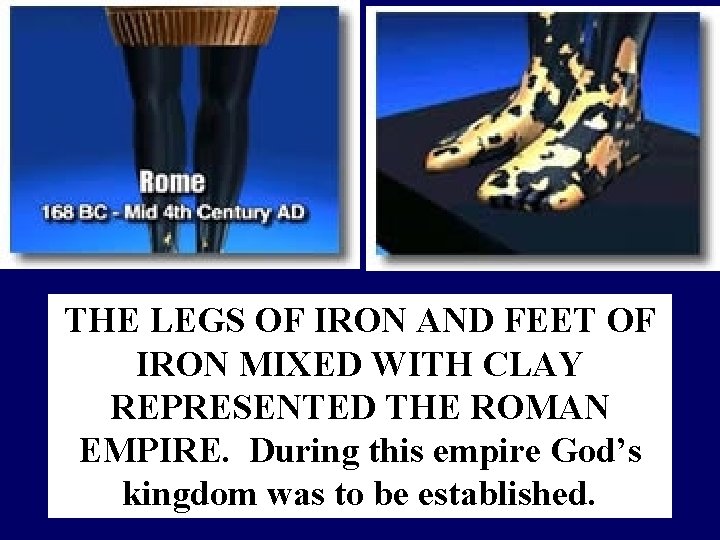
THE LEGS OF IRON AND FEET OF IRON MIXED WITH CLAY REPRESENTED THE ROMAN EMPIRE. During this empire God’s kingdom was to be established. 77
Dan 2: 45 a stone was cut of the mountain without hands and that it crushed the iron, the bronze, the clay, the silver and the gold, the great God has made known to the king what will take place in the future; so the dream is true and its interpretation is trustworthy. " NASU 78

ISAIAH 2 79
“The mountain of the Lord’s temple will be established as chief among the mountains” (Isaiah 2. 1). 80
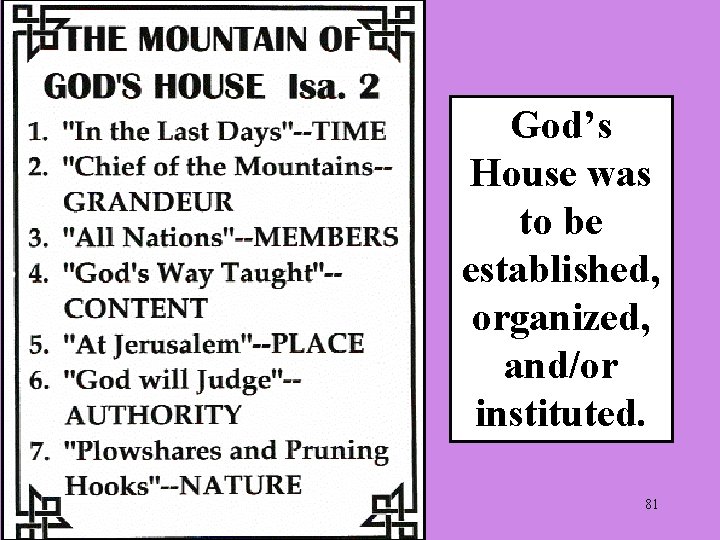
God’s House was to be established, organized, and/or instituted. 81
ACTS 2 82
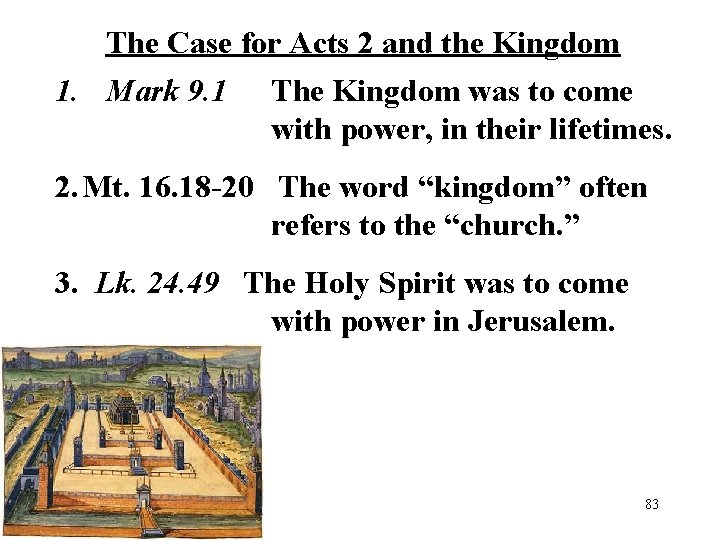
The Case for Acts 2 and the Kingdom 1. Mark 9. 1 The Kingdom was to come with power, in their lifetimes. 2. Mt. 16. 18 -20 The word “kingdom” often refers to the “church. ” 3. Lk. 24. 49 The Holy Spirit was to come with power in Jerusalem. 83
The Case for Acts 2 and the Kingdom 4. Acts 1. 6 -8 Jesus associates the coming of the true kingdom with the power of the Spirit. 5. Acts 2. 1 -4 The power of the Holy Spirit came. 6. Acts 2. 47; 5. 11 The church is present tense. 84
ACTS 2 DANIEL 2 ISAIAH 2 85
Is the church a relational body or an organism? 86
Paradigm no. 2: The Church is a Relational Body or Organism: The concept of "body" is definitely biblical (Eph. 1: 22 -23; 4: 4; 1 Cor. 12: 12; Col. 3: 15), although not the only biblical concept of the body of Christ. 87
So, Is the Church an Institution, Organization, or Organization? The Answer—in the truest sense, Yes! Remember DANIEL 2, ISAIAH 2, and ACTS 2. “The Church” or “The House of God” or “The Kingdom of God” cannot simply means “the assembly” of the people of God. Jesus did not say, “Upon this rock I will build my assembly. ” Mt. 16. 18 88
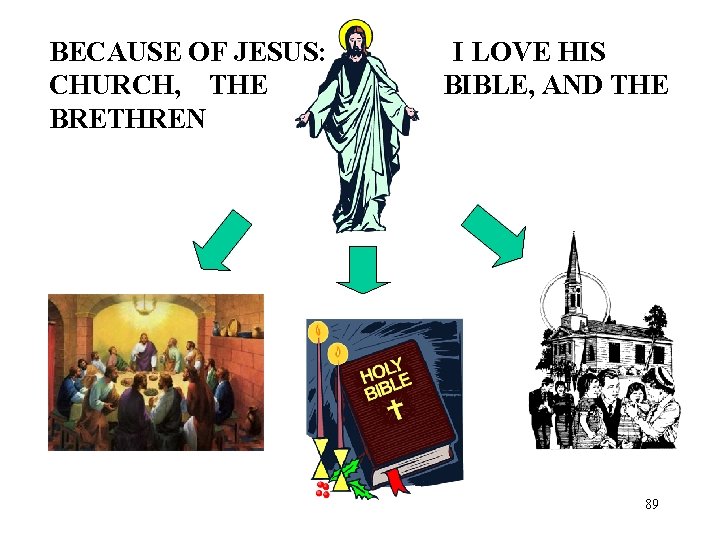
BECAUSE OF JESUS: I LOVE HIS CHURCH, THE BIBLE, AND THE BRETHREN 89
The fact that the church has been instituted, however, does not mean that I should: 1. Think of the church in an institutionalized way; 2. Think of the Bible in a patternistic way; 3. Think of salvation as obedience to a system or catechism or creed; 4. Use language that is indicative of sectarian thinking; or 5. Be content with denominational thinking wherever it occurs. The Church is the Lord’s Body of the Called Out. 90

91

SESSION 3 92
BUILDING GENERATIONAL BRIDGES Session One: "Moderns and Millennials: Who are We? " Session Two: "The Church in Transition" Session Three: Part 1: "How Did We Get Here and What Do We Do? " Part 2: "Building Generational Bridges — Strategies" 93
BUILDING GENERATIONAL BRIDGES Session Three: Part 1: "How Did We Get Here and What Do We Do? " 94
95
FROM “FIDDLER ON THE ROOF” Tevya, the father, is making milk deliveries. Perchek (a young rebel)- “You can't close your eyes to what's happening in the world. ” Tevya- “You're right!” Mordecai (an older man)- “The old ways must remain the same!” Tevya- “That's right, too. ” Perchek- “We can't both be right. ” Tevya- “You know, you're also right!” 96
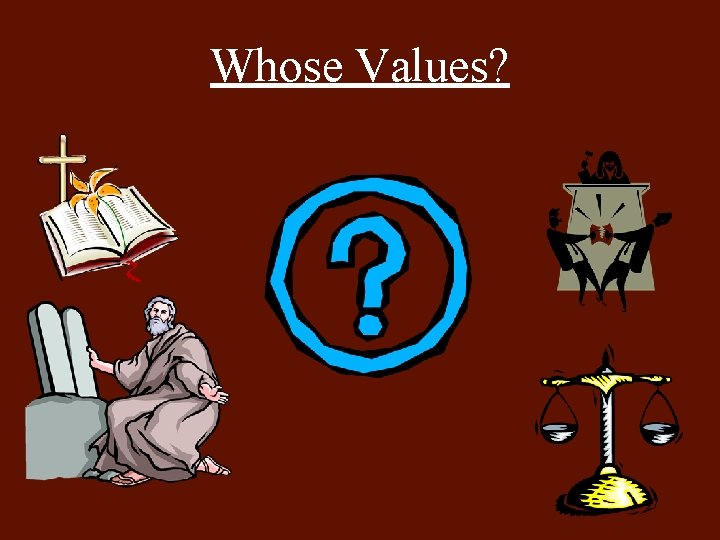
Whose Values? 97
Ode to Post-modernism It all depends on where you are, It all depends on what you feel, It all depends on how you’re raised, It all depends on what is praised What’s right today is wrong tomorrow, Joy in France, in England sorrow. 98
Ode to Post-modernism It all depends on the point of view. Australia or Timbuctoo, In Rome do as the Romans do, If tastes just happen to agree, Then you have morality. But where there are conflicting trends. It all depends, it all depends…. 99
HISTORICAL AND HERMENEUTICAL BACKGROUND FOR POSTMODERNISM 100
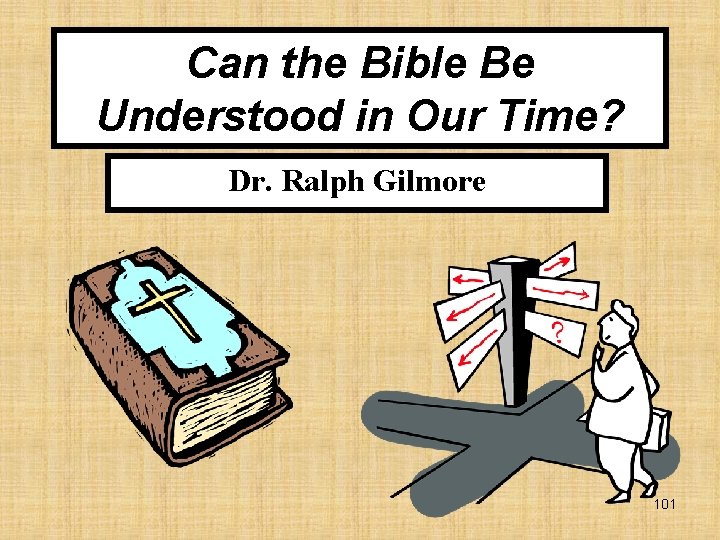
Can the Bible Be Understood in Our Time? Dr. Ralph Gilmore 101

I. PHILOSOPHICAL BACKGROUND 102

LUDWIG WITTGENSTEIN 103

WILLARD QUINE 104
The Result of Quine’s thought? PERSPECTIVISM 105

II. HERMENEUTIC BACKGROUND 106
JACQUE DERRIDA: “THE FATHER OF POSTMODERNISM" 107

DISMISSAL OF ABSOLUTE TRUTH 108
A LOSS OF MEANING, SIGNIFICANCE, AND GOD Lawrence Grossberg, We Gotta Get Out of this Place, 1992 “Postmodernism points to a crisis in our inability to locate any meaning upon which empassioned commitment is based. There is no way of choosing or finding something to warrant investment. ” 109
Truth is Absolute and Attainable • The truth, the Gospel, can be transferred to others. 1 Cor. 15: 1 -4 • The church supports the truth. 1 Tim. 3: 15 • We must not preach what is not the gospel. Gal. 1. 6 -9 • The gospel may not be heeded. Rom. 10. 14 -17 • Some not believing the truth will be deluded. 2 Th. 2. 11, 12 • The truth frees us from sin. Jn. 8. 32 110
UNITY OR TRUTH? A False Dilemma UNITY or TRUTH ? There can be no unity without truth. 111
THE NATURE OF TRUTH IS TRUTH RELATIONAL OR PROPOSITIONAL? OR 112
RELATIONSHIPS IN THE GOSPEL 113
THE GOSPEL OF RELATIONSHIPS 114
Relationships Lie at the Heart of the Gospel Matthew 22. 37 -39 The Vertical Relationship The Horizontal Relationship 115
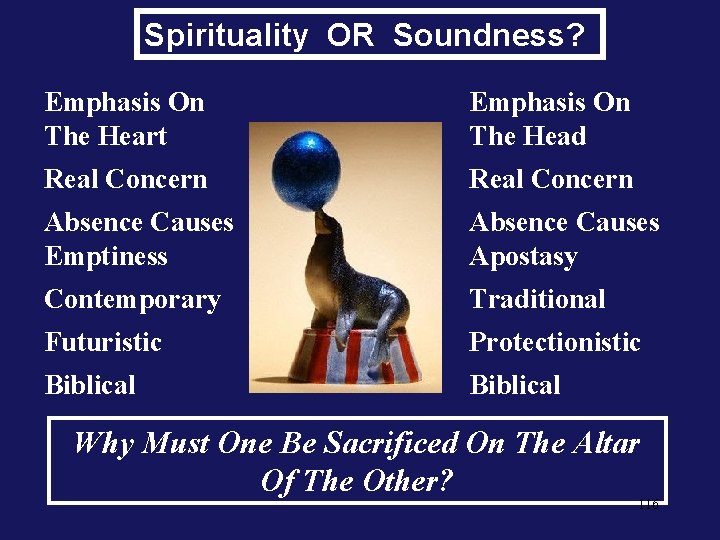
Spirituality OR Soundness? Emphasis On The Heart Emphasis On The Head Real Concern Absence Causes Emptiness Absence Causes Apostasy Contemporary Traditional Futuristic Protectionistic Biblical Why Must One Be Sacrificed On The Altar Of The Other? 116
BUILDING GENERATIONAL BRIDGES Session Three: Part 2: "Building Generational Bridges —Strategies" 117
The Times They Are A-Changin’ By Bob Dylan copyright 1963 Come gather 'round people Wherever you roam And admit that the waters Around you have grown And accept it that soon You'll be drenched to the bone. If your time to you Is worth savin' Then you better start swimmin' Or you'll sink like a stone For the times they are a-changin'. 118
PRACTICAL APPLICATION: HOW SHOULD WE RESPOND? 119
HOW SHOULD WE RESPOND? 1. 1 Chronicles 12. 32– Try to understand what is going on. Unity begins with the HEAD —not the HEART. 120
HOW SHOULD WE RESPOND? 2. Determine to meet the problem intentionally (i. e. , staff meetings: elders/leaders meetings; et al. ) 121
HOW SHOULD WE RESPOND? 3. Benevolence softens the way for evangelism (illus. "Tom's" shoes, " and "peanut butter"). 122
HOW SHOULD WE RESPOND? 4. Share Jesus—Not Just Facts (curricula, sermons, singing, worship as a whole). Aim for Christo-centricity. 123
HOW SHOULD WE RESPOND? 5. Consider a casual dress code for worship services. 124
HOW SHOULD WE RESPOND? 6. Integrate some newer songs with the older songs we use in worship. 125
HOW SHOULD WE RESPOND? 7. Be willing to change the order of worship. But remember: never surprise the elders– they are our overseers. Meaningful change should be intentional, informed, deliberate, and assessed. 126
HOW SHOULD WE RESPOND? 8. The preacher/s should be willing to preach sometimes using the inductive method, i. e. "story-telling. " 127
HOW SHOULD WE RESPOND? 9. Small groups are a must. But small groups must be super- vised and there should be a period of Bible study involved in addition to our just enjoying each other's company. 128
HOW SHOULD WE RESPOND? 10. Consider "congregation meetings" in order for all to have input to the elders. 129
HOW SHOULD WE RESPOND? 11. Study Paul's four principles in Romans 14 and 15. a. A Sense of Acceptance (Rm. 14: 1) b. A Sense of Justice (14: 11 -12) c. A Sense of "Kingdom" (14: 17) d. A Sense of Mutual Support (15: 1) 130

131
- Slides: 131