
Building Dreams CommunityBased Transition for 18 21 Year
Building Dreams Community-Based Transition for 18 -21 Year Old Students. Cheryl E. Le. Fon South Central RPDC lefonc@mst. edu
Connections
q. Who we are q. Why we are here q. Session at-a-glance….
Session At-A-Glance • Introductions and meeting norms • Session outcomes and essential questions • The purpose and the research • Unpacking the process to implement Community Based Transition for 18 – 21 year old students • Seeing Community Based Transition in Practice • Action planning to implement Community Based Transition services.
Learning “THE ROPES” Respect (promote respect for differences) Open (be an active listener and open to new ideas) Participate (be engaged and present) Educate (learn from the experiences) Sensitive (be sensitive to others: -begin and end on time -use electronics respectfully -use notes for side bar conversations)
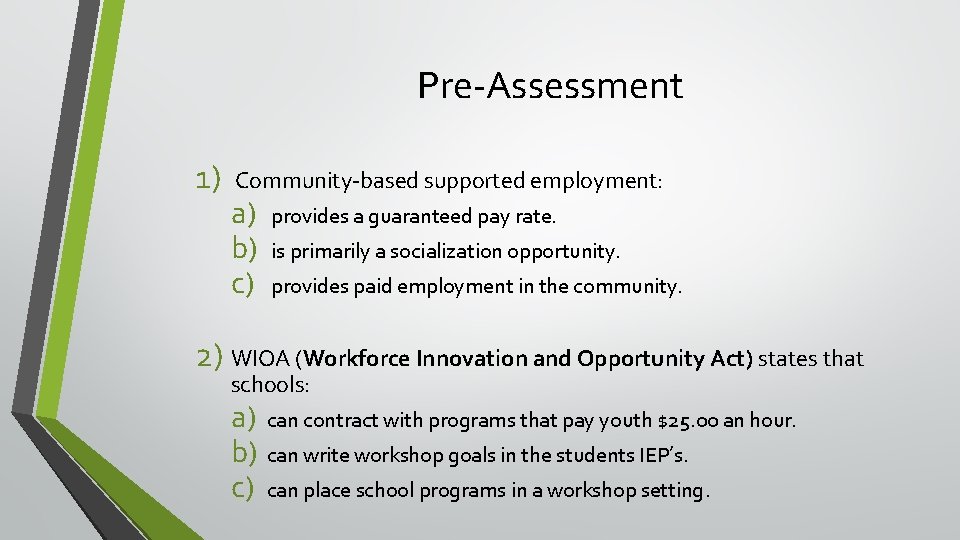
Pre-Assessment 1) Community-based supported employment: a) b) c) provides a guaranteed pay rate. is primarily a socialization opportunity. provides paid employment in the community. 2) WIOA (Workforce Innovation and Opportunity Act) states that schools: a) can contract with programs that pay youth $25. 00 an hour. b) can write workshop goals in the students IEP’s. c) can place school programs in a workshop setting.
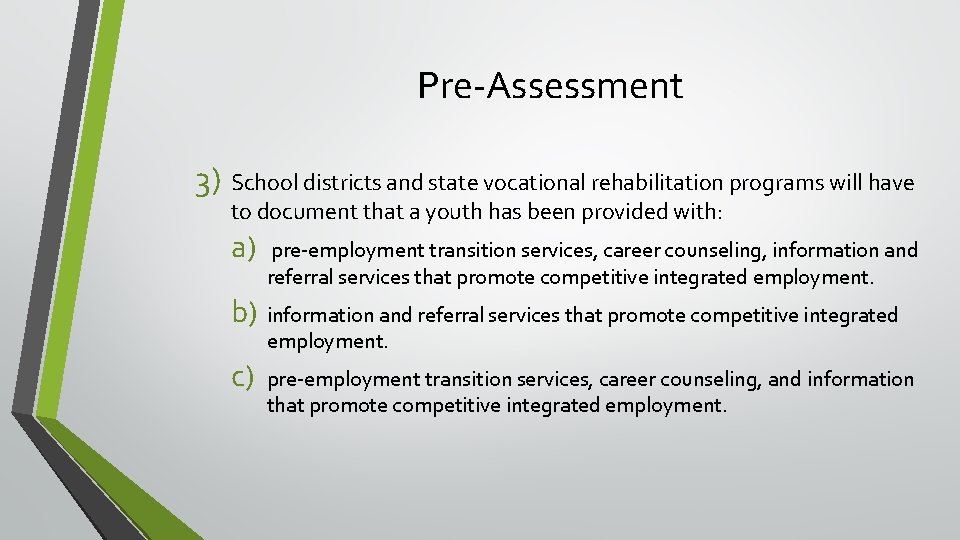
Pre-Assessment 3) School districts and state vocational rehabilitation programs will have to document that a youth has been provided with: a) pre-employment transition services, career counseling, information and referral services that promote competitive integrated employment. b) information and referral services that promote competitive integrated employment. c) pre-employment transition services, career counseling, and information that promote competitive integrated employment.
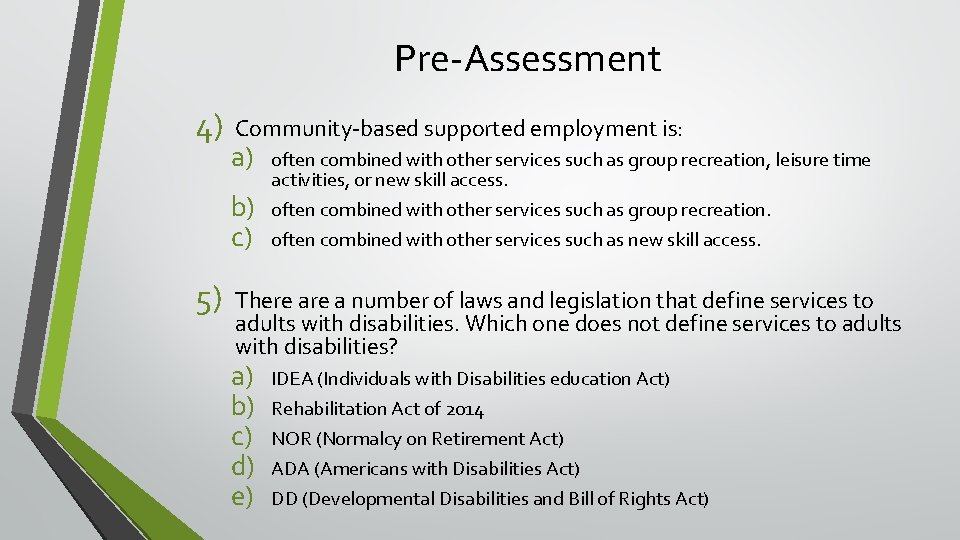
Pre-Assessment 4) Community-based supported employment is: a) b) c) 5) often combined with other services such as group recreation, leisure time activities, or new skill access. often combined with other services such as group recreation. often combined with other services such as new skill access. There a number of laws and legislation that define services to adults with disabilities. Which one does not define services to adults with disabilities? a) b) c) d) e) IDEA (Individuals with Disabilities education Act) Rehabilitation Act of 2014 NOR (Normalcy on Retirement Act) ADA (Americans with Disabilities Act) DD (Developmental Disabilities and Bill of Rights Act)
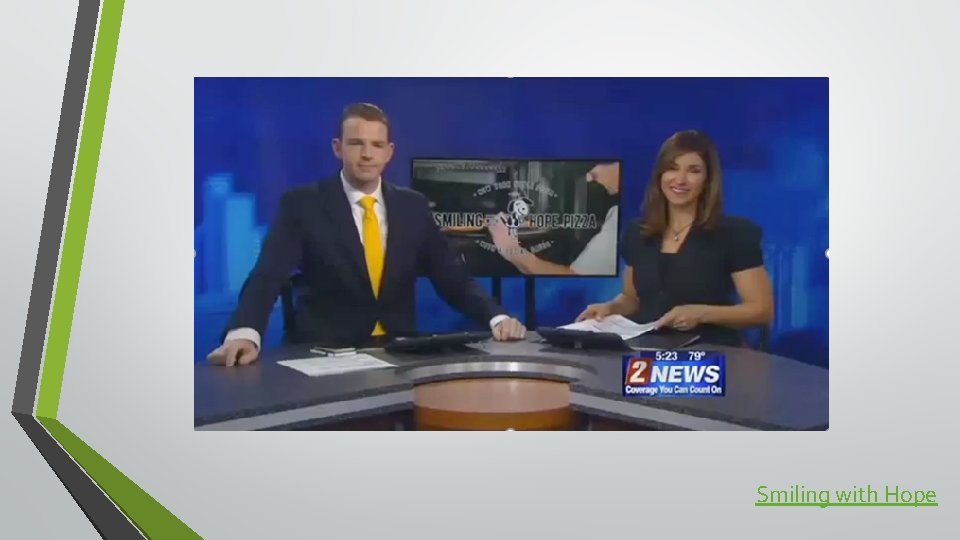
Smiling with Hope
Importance
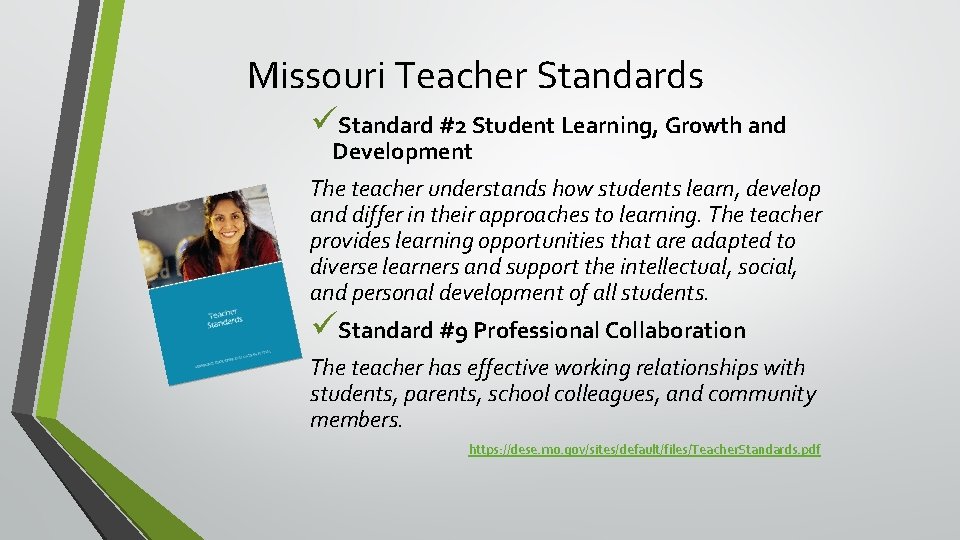
Missouri Teacher Standards üStandard #2 Student Learning, Growth and Development The teacher understands how students learn, develop and differ in their approaches to learning. The teacher provides learning opportunities that are adapted to diverse learners and support the intellectual, social, and personal development of all students. üStandard #9 Professional Collaboration The teacher has effective working relationships with students, parents, school colleagues, and community members. https: //dese. mo. gov/sites/default/files/Teacher. Standards. pdf
Objectives
Learning Objectives • Define 18 to 21 year old transition services. • Assess in school transition services. • Identify community-based program goals and objectives. • Identify program need for students with varying disabilities. • Develop an action plan for implementation. • Identify effective practice and solutions to remove barriers. • Establish evaluative practices and reviews.

Outcomes for the Training Ø Understand the purpose for Community-Based Transition services: • The ability to implement Community-Based Transition services after graduation requirements are met. • • • The essential elements of Community-Based Transition services. The role and responsibilities of the student, family and community. The role of the teacher. Ø Reflect on current implementation of Community-Based Transition services. Ø Consider the challenges and potential barriers to implementing Community-Based Transition services.
Essential Questions • What are Community-Based Transition services? • What responsibilities does my school have in providing services? My responsibilities? • What responsibilities does the student and family have in transition services? Community responsibilities? • What services are available currently? • What are program needs for implementation of a successful transition program serving 18– 21 year old students? • What are effective practices for implementation? • Is support available to diminish barriers of program implementation?
Unpacking the Content
18 – 21 Year Old Community-Based Transition Programs • IDEA (reauthorized 2004) • Mandates School Districts to provide Transition Services • To Meet Requirements • School Districts have developed community-based transition options • Designed to support students in meeting their transition goals • Students have completed their academic requirements.
WIOA Workforce Innovation and Opportunity Act • WIOA makes an attempt to limit the pipeline of people with disabilities moving into non-integrated, subminimum wage jobs. Now, before an individual with a disability can be placed in such a situation, he/she must have received “pre-transition services” while in high school to ensure that the proper support and preparation occurs before the student enters the workforce. The student must also have applied for services through the local VR program. Under WIOA, the goal of the VR program in each state is to help individuals with disabilities to “prepare for, secure, retain or regain employment. ”
Office of Disability Employment Policy • ODEP contributes to the achievement of: • DOL's Strategic Goal 3: Promote fair and high quality work-life environments and • Strategic Objective 3. 1: Breakdown barriers to fair and diverse workplaces and narrow income inequality.
Community-Based Transition Program Definition • 18 -21 year old transition services are developed by local school districts. They provide opportunities for students to gain independent living skills, social skills, employment and self-advocacy in real-life settings and to participate in ageappropriate activities in their communities. These services ideally are located outside of the high school setting, in community settings such as vocational-technical schools, houses, offices, and businesses.
Community-Based Transition Program Rationale • Some students with disabilities remain in school until they are 21. • They, many times, attend high school classes with younger students, retaking courses they have had in the past. • They have fewer opportunities to associate with peers of the same age who do not have disabilities. SO…
Community-Based Transition Program Rationale • These services are designed to increase the opportunity of students with disabilities to interact with same-age peers in age-appropriate settings and to receive further transition skills and employment opportunities in the community. • A connection to the student’s home community should be provided.
Re-made for a Purpose
Community-Based Transition Goal • The goal is to provide students with disabilities, ages 1821, transition-focused services within a community environment based on each student’s Individualized Educational Program (IEP).
Community-Based Transition Objectives • Give students the opportunity to increase their level of independence. • Provide opportunities for paid or volunteer (unpaid) work experience in integrated community settings. • Develop natural supports within community environments. • Increase mobility in the community. • Improve social and communication skills across environments.
Community-Based Transition Objectives • Increase daily living/life skills. • Improve and practice self-advocacy/self-determination skills. • Develop age-appropriate, integrated leisure and recreation skills. • Develop friendships with same-age peers. • Communicate and establish a relationship with adult services agencies before leaving high school.
Community-Based Transition Objectives • Identify and provide transition services and supports needed to transition into community life. • Provide opportunities for parent engagement. • Facilitate connections to postsecondary education and/or training • Increase awareness of and develop connections to community service organizations, such as Lion’s Club, Kiwanis, Rotary and Knights of Columbus
Community-Based Transition Program Elements • Community-Based Transition program elements • Check the NEW column if your program just started • Check the DEVELOPING column if this is the first year • Check the IN PLACE column if your program has been in existence for more than one year
Seeing the Content in Practice
Community-Based Transition Program Start - Up • Step One: • Create a Needs Assessment • To determine if a need exists • If changes are needed in existing programs • Address Student needs in the program
Community-Based Transition Program Start - Up • Step Two: • Assemble a Planning Team • Administrator(s) • Adult service agency representatives • Teachers • Transition specialist • Family member/natural supports • Students or others who are • Job coaches familiar with the service activities • Paraprofessionals of the student population
Community-Based Transition Program Start - Up • Step Three: • Review and Develop the Questions • Overarching Questions • Which of the changes identified should be given the highest priority? • What other, added question(s) should be used or developed based on assessment data findings related to student, district, and community needs? • Identify Key Questions
Community-Based Transition Program Start - Up • Step Four: • Conduct the Needs Assessment • Include all Stake Holders • Students / Families • District • Community • Technology • Google Forms, Survey Monkey
Community-Based Transition Program Start - Up • Step Five: • Compile and Review Results • Analyze your information and data • Include Student Service needs • Include School and Community Service needs • Identify resources outside the school
Community-Based Transition Program Start - Up • Step Six: • Action Planning • Identify SMART Goals for the CBT program • Student Goals • District Goals • Community Goals
Community-Based Transition Program Start - Up • Step Six: Continued • Action Planning • Tasks, Timelines and Responsibilities • Communication
Community-Based Transition Program Start - Up • Step Seven: • Develop an Action Plan • Define Need • Create a reasonable timeline • Determine Funding
Barriers • Crossword Puzzle Activity
Barriers • What Barriers do you anticipate encountering? • What are some strategies to overcome them?
Putting the Content in Practice
A Fair Chance
One Year After Program Implementation Evaluation of Community-Based Transition Services and/or Programs • Evaluate components and modify elements that are not working. • Look at the goals created • How will you evaluate whether or not they have been met?
Implementation Evaluation • Step One – Evaluate and Collect Data • Analyze data collected related to the needs assessment • Evaluate the school committee – Is it effective? • Define the current population – Should changes be made? • List students for participation • Assess students of need • Identify needed changes in the high school and the community
Implementation Evaluation • Step Two- Evaluate the Goals Set for Student Learning • Identify clear, measurable goals for the CBT program • Are they attainable? • Do they express the current needs of the program?
Implementation Evaluation • Step Three- Evaluate Program Content • Program Elements • • • Independent living Employment within the community Transportation/mobility within the community • Social/communication skills across environments • • • Daily living skills/life skills Self-determination/self-advocacy skills Community recreation and leisure Transition Relationships with same-age peers Adult service agency involvement
Implementation Evaluation • Step Four- Designing Action Plans • Action planning for the CBT program? • Create plan for changes in high school to move toward community participation • Create plan for changes to occur outside of high school for successful community participation • Identify strategies to remove barriers
Implementation Evaluation • Step Five- Collaboration and Implementation • Evaluate WHO is not at the Table? • Identify all Collaborative Partners • Use Advisory Committee • Logistics and Topical Workgroups • Share Back
Implementation Evaluation • Step Six- Develop Ongoing Data Collection and Data Analysis (Formative Assessment) • Data monitoring • Is the program operating as planned? • CBT Program Impact • How does the program impact student outcomes? • Develop a system to monitor satisfaction with the program
Implementation Evaluation • Step Seven- Program/Service, Evaluation • Does the program work? • Plan next steps
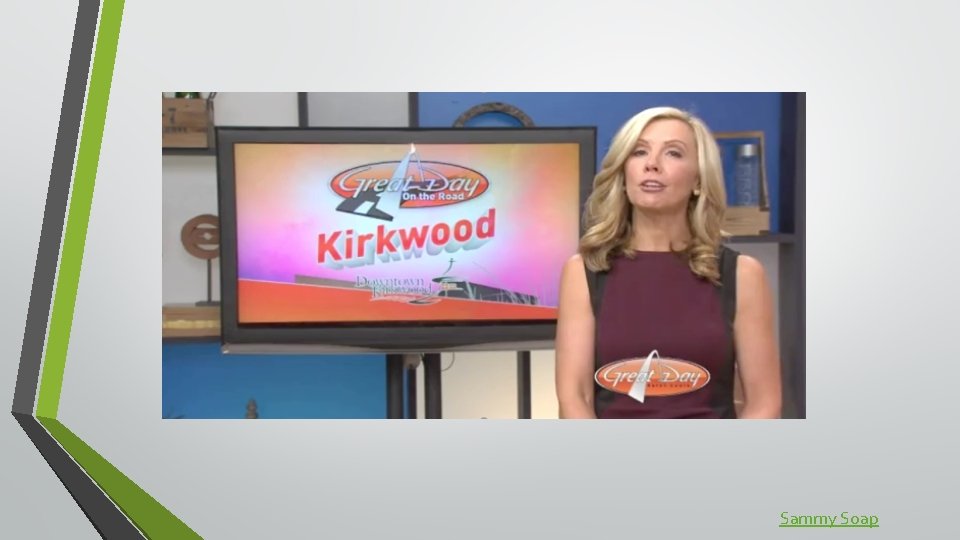
Sammy Soap
Assessment and Reflection
Post-Assessment 1) Community-based supported employment: a) b) c) provides a guaranteed pay rate. is primarily a socialization opportunity. provides paid employment in the community. 2) WIOA (Workforce Innovation and Opportunity Act) states that schools: a) can contract with programs that pay youth $25. 00 an hour. b) can write workshop goals in the students IEP’s. c) can place school programs in a workshop setting.
Post-Assessment 3) School districts and state vocational rehabilitation programs will have to document that a youth has been provided with: a) pre-employment transition services, career counseling, information and referral services that promote competitive integrated employment. b) information and referral services that promote competitive integrated employment. c) pre-employment transition services, career counseling, and information that promote competitive integrated employment.
Post-Assessment 4) Community-based supported employment is: a) b) c) 5) often combined with other services such as group recreation, leisure time activities, or new skill access. often combined with other services such as group recreation. often combined with other services such as new skill access. There a number of laws and legislation that define services to adults with disabilities. Which one does not define services to adults with disabilities? a) b) c) d) e) IDEA (Individuals with Disabilities education Act) Rehabilitation Act of 2014 NOR (Normalcy on Retirement Act) ADA (Americans with Disabilities Act) DD (Developmental Disabilities and Bill of Rights Act)
Closing and Follow-Up
Presentation Resources • Division for Learning Support/Special Education Wisconsin Department of Public Instruction (2013), Community-Based Transition Options (CBTO) for 18 -21 year old Students with Disabilities, A Framework for Discovery. http: //sped. dpi. wi. gov https: //dpi. wi. gov/sites/default/files/imce/sped/pdf/tran-cbto. pdf • Baska, L. , Kaufman, A. , Gaumer, A. , Morningstar, M. , Lattin, D. , Peterson, T. (2003). The Community Transition Program: Experiences starting a community-based program for students ages 18 -21 [Online]. Lawrence, KS: University of Kansas, Department of Special Education. Retrieved February 20, 2017 from www. transitioncoalition. org. http: //www. transitioncoalition. org/wpcontent/uploads/2015/01/TC_Comm_ Trans_Prog_Full_Doc. pdf
Additional Resources • National Technical Assistance Center on Transition (2015). A Guide to Developing Collaborative School-Community-Business Partnerships. Richard Luecking, Ann Deschamps, Ruth Allison, Jacque Hyatt, and Christy Stuart. • National Secondary Transition Technical Assistance Center (2009). Transition Institute Toolkit. Western Michigan University, Paula D. Kohler and Jennifer L. Coyle.
Additional Resources • National Secondary Transition Technical Assistance Center (2011). Transition Team Leader Sustainability Toolkit. Western Michigan University, June E. Gothberg, Jennifer L. Coyle, and Paula D. Kohler. • Solberg, V. S. , Wills, J. , & Osman, D. (2012). Promoting Quality Individualized Plans: A “How to Guide” Focused on the High School Years. Washington, DC: National Collaborative on Workforce and Disability for Youth, Institute for Educational Leadership.
- Slides: 59