
Building Construction for the Fire Service 1 Objectives
Building Construction for the Fire Service 1

Objectives • Understand why codes and inspections are important during the construction process • To be able to identify different types of residential construction • Become more familiar with construction terminology and types • To be able to understand styles of building systems • Evaluate risk versus safety with each construction type • Determine when to consider defensive attack 2
History of Residential Framing • Framing, in construction, is the fitting together of pieces to give a structure support and shape. Framing materials are usually wood, engineered wood, or structural steel. Building framing is divided into two broad categories, heavy-frame construction (heavy framing) if the vertical supports are few and heavy such as in timber framing, pole building framing, or steel framing or many and smaller called light-frame construction (light framing) including balloon, platform and light-steel framing. Lightframe construction using standardized dimensional lumber has become the dominant construction method in North America. 3
Building Codes Code of Maryland Regulations (COMAR) has adopted several codes that pertain to residential building construction. • Maryland Building Performance Standard is the name given to the culmination of codes adopted. • • International Building Code (IBC) International Residential Code (IRC) International Energy Conservation Code (IECC) Other codes that have been adopted • National Electrical Code (NFPA 70) • National Fire Sprinkler Code (NPFA 13 D) 4

Building Codes Building codes dictate acceptable building practices to be used in a specific geographic area. They are quite broad and general but specify criteria such as design strength for roof snowloading, or hurricane wind resistance. Most building codes are enforced by the separate counties, or county designee. The code process ensures all structures are built to resist weather-related threats specific to that area, and gives contractors “instructions” to follow. 5

Building Codes International Building Code has 35 chapters specifying how structures should be constructed. From height vs. size requirements to elevators, and materials allowed to be used for construction. 6

Building Codes Each county in Maryland will have an inspection process in place and will require plan submittal, followed up by routine inspections to ensure compliance with the code. • Building plan submittal • Footing inspection • Construction inspection (structural framing) • Mechanical inspection (Electrical, Plumbing, & Mechanical) before walls are closed-up • Sprinkler inspection • May be more – depending on jurisdiction • Final inspection prior to occupancy 7
Building Codes Code enforcement ensures that the structure is structurally sound appropriate construction materials and methods are used throughout the process. This will protect the tenant and fire service personnel from unnecessary harm. Codes change routinely and as new materials and methods are proven, they are considered acceptable practice and added to the code. 8
Framing Terms Roofing: 1. Rafter 2. Sheathing 3. Dormer Ridge 4. Dormer Rafter 5. Hip Rafter 6. Header 7. Fascia 8. Double Header 9. Tail Rafter 10. Hip Jack Rafter 11. Joist Walls/Flooring: 1. Stud 2. Cap Plate 3. Bracing 4. Sole Plate 5. Plywood Subflooring 6. Firestop 7. Floor Joist 8. Sill 9. Ledger 10. Carriage 11. Plywood Sheathing Foundation: 1. Wall (concrete or masonry) 2. Anchor Bolts 3. Footer 9
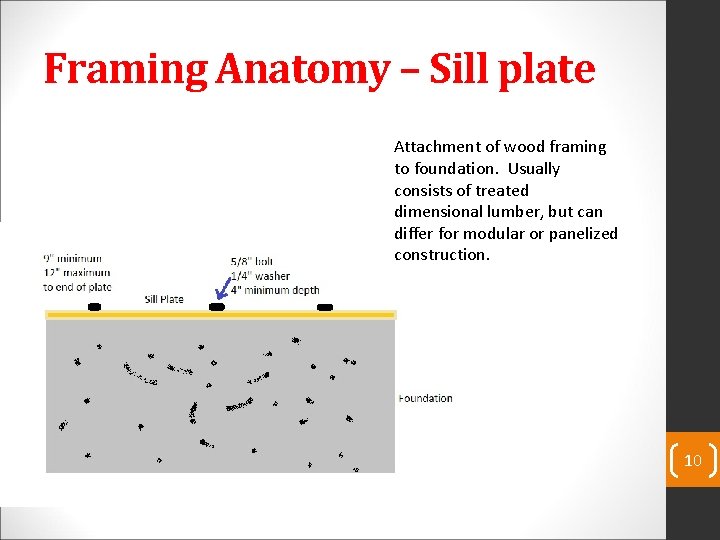
Framing Anatomy – Sill plate Attachment of wood framing to foundation. Usually consists of treated dimensional lumber, but can differ for modular or panelized construction. 10
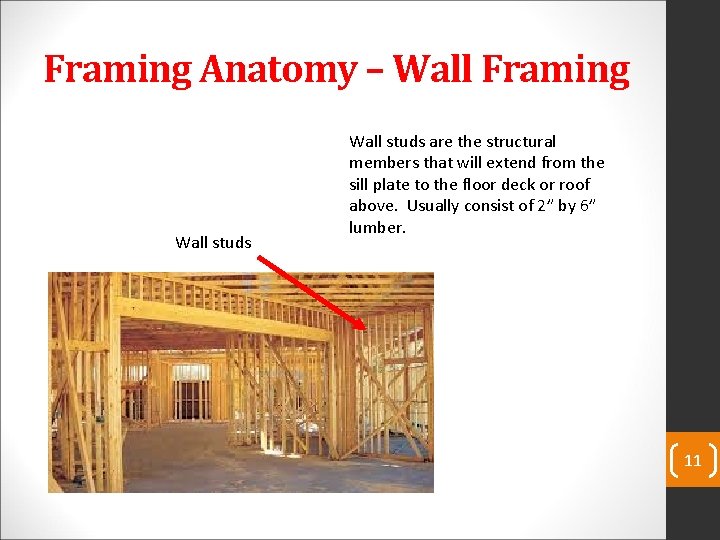
Framing Anatomy – Wall Framing Wall studs are the structural members that will extend from the sill plate to the floor deck or roof above. Usually consist of 2” by 6” lumber. 11
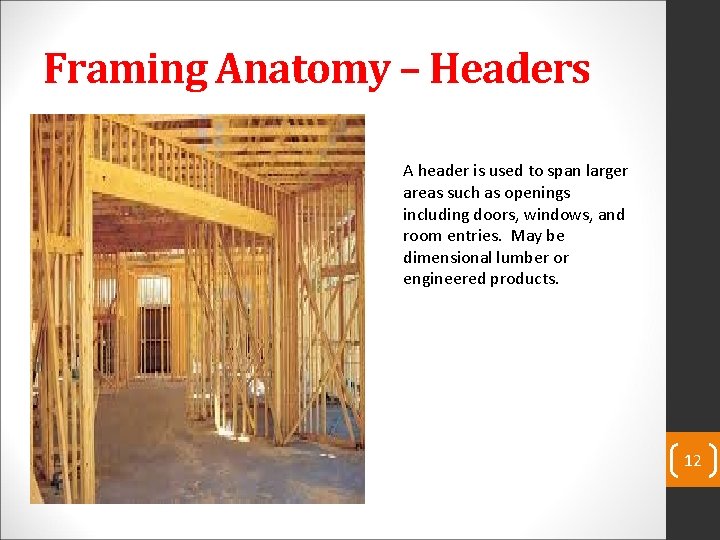
Framing Anatomy – Headers A header is used to span larger areas such as openings including doors, windows, and room entries. May be dimensional lumber or engineered products. 12
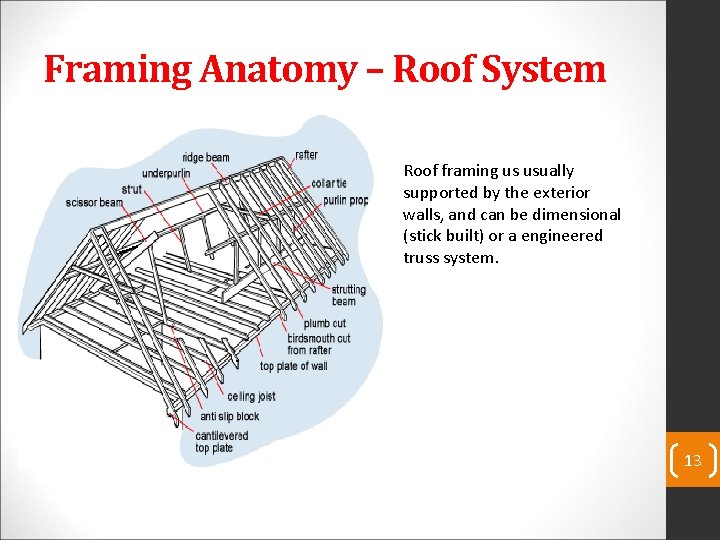
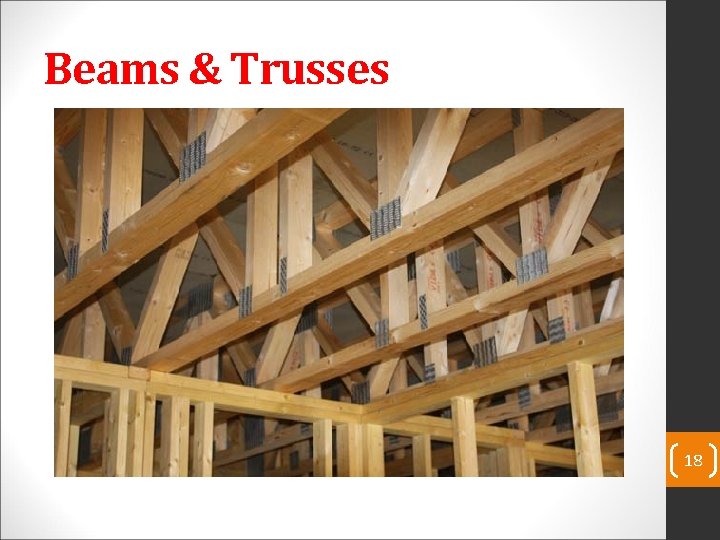
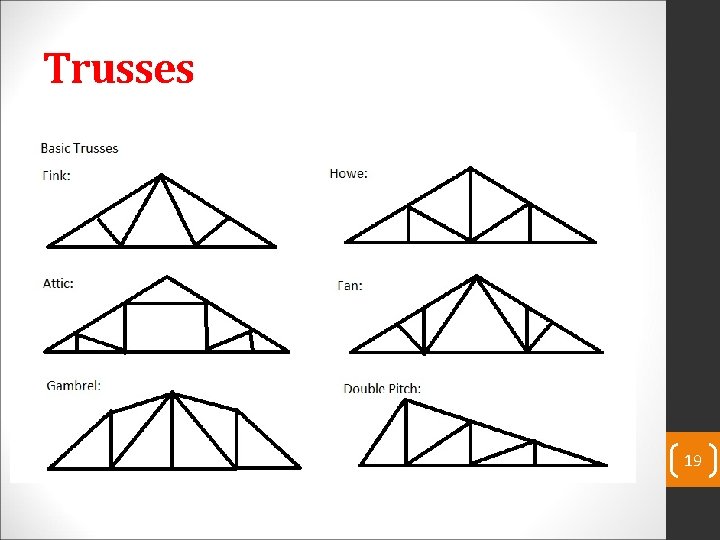
Framing Anatomy – Roof System Roof framing us usually supported by the exterior walls, and can be dimensional (stick built) or a engineered truss system. 13
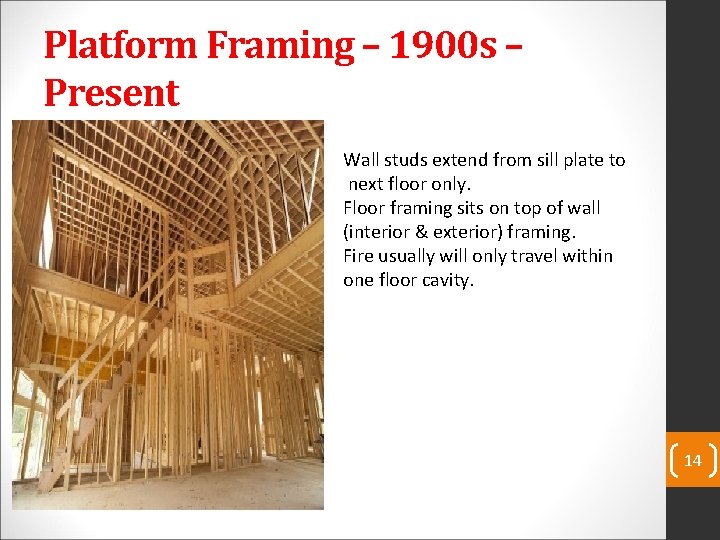
Platform Framing – 1900 s – Present Wall studs extend from sill plate to next floor only. Floor framing sits on top of wall (interior & exterior) framing. Fire usually will only travel within one floor cavity. 14

Panelized Construction – 1990 s – Present Wall, floor, and roof sections are built in a factory off-site and delivered to job. Even more lightweight than conventional construction. 15
Structural beams used for residential construction Common lightweight wooden beams widely used: 1. Laminated Beams – common in floor systems but can be used as headers or main support beams 2. TGI’s – common in floor systems 16
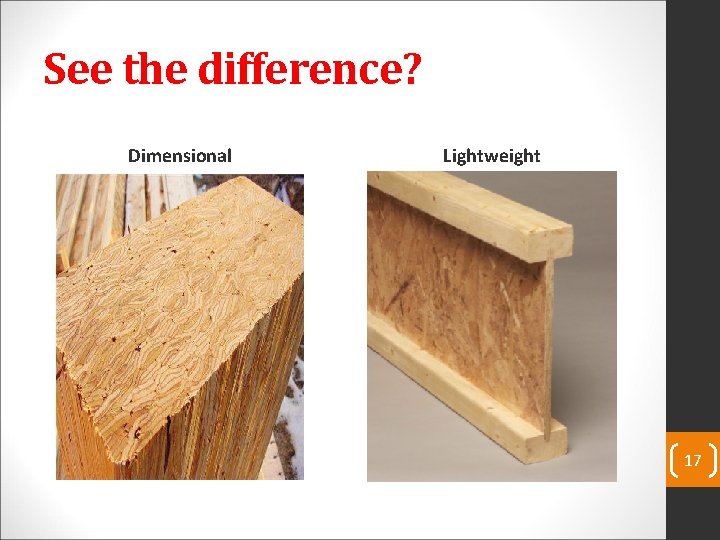
See the difference? Dimensional Lightweight 17
Beams & Trusses 18
Trusses 19
Gusset Plate 20
Truss Problems 21
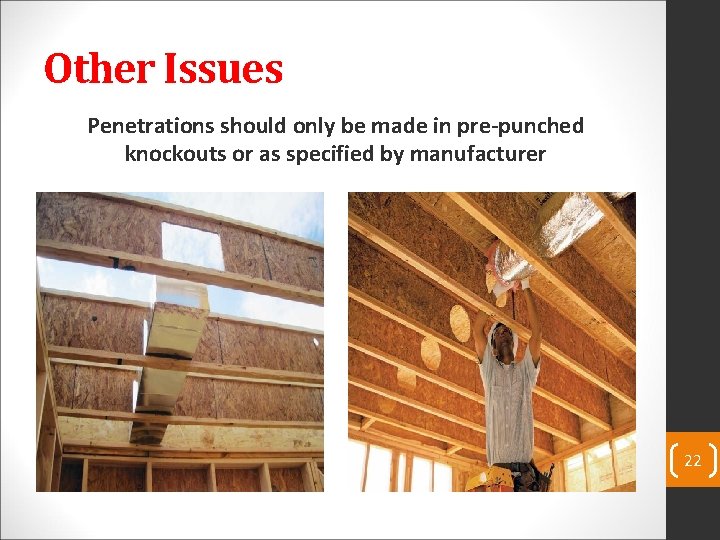
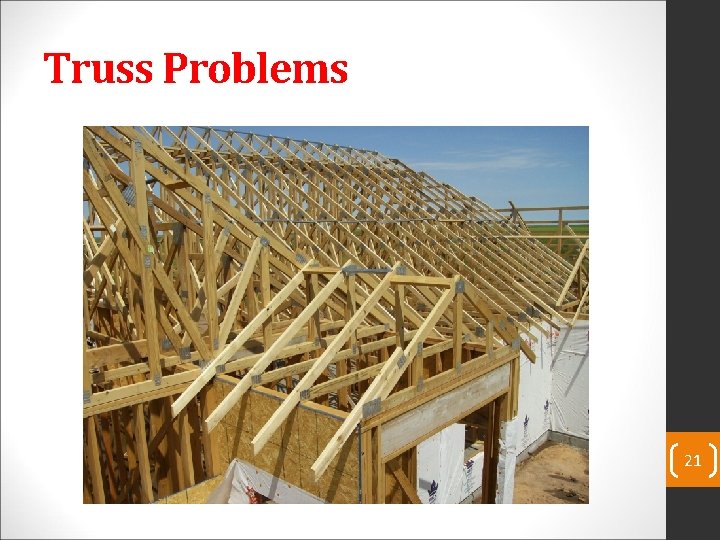
Other Issues Penetrations should only be made in pre-punched knockouts or as specified by manufacturer 22
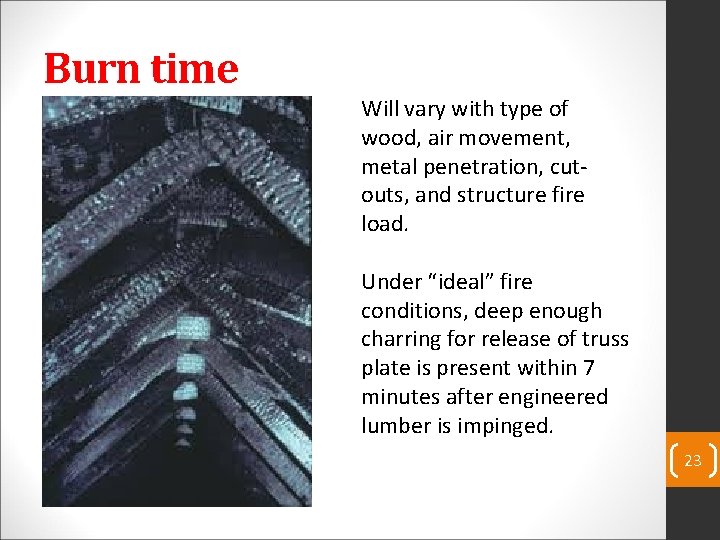
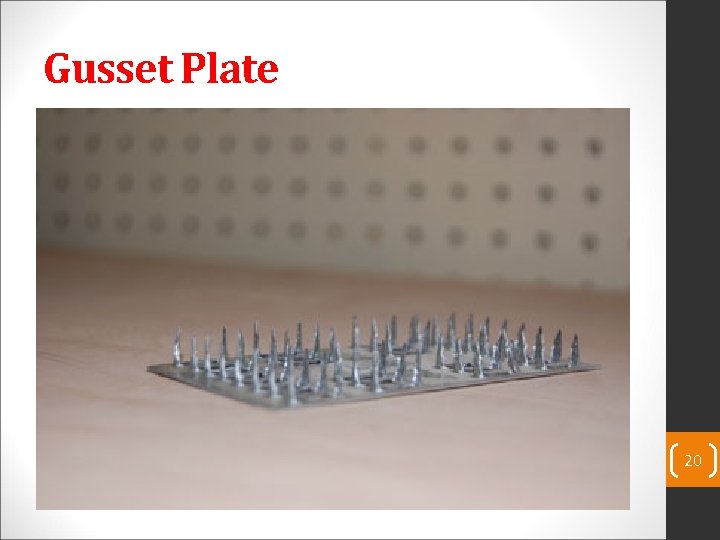
Burn time Will vary with type of wood, air movement, metal penetration, cutouts, and structure fire load. Under “ideal” fire conditions, deep enough charring for release of truss plate is present within 7 minutes after engineered lumber is impinged. 23
Hazard Identification • Assume all newer (1990 s through today) construction contains lightweight engineered components until proven otherwise • Only true way to tell is to expose floor/roof assemblies. • Upon observing truss member failure, consider total failure of system (either floor or roof). • Do not rely on adjoining trusses, it is a “system. ” 24
Review • Identify different types of residential construction • Become more familiar with construction terminology and types • To be able to understand types of building systems • Evaluate risk versus safety with each construction type • Determine when to consider defensive attack 25

QUESTIONS? Ryan Chapman (301) 748 -8198 aclrntk 9@gmail. com 26
- Slides: 26