
Building Bonds Pathways to Better BoardCEO Relationships Knowledge
Building Bonds: Pathways to Better Board/CEO Relationships
Knowledge Points • Success factors in fostering a dynamic board/CEO relationship • Building mutual trust • CEO compensation and evaluation • Discussion points
Fostering a Dynamic Board/CEO Relationship: What Creates Success?
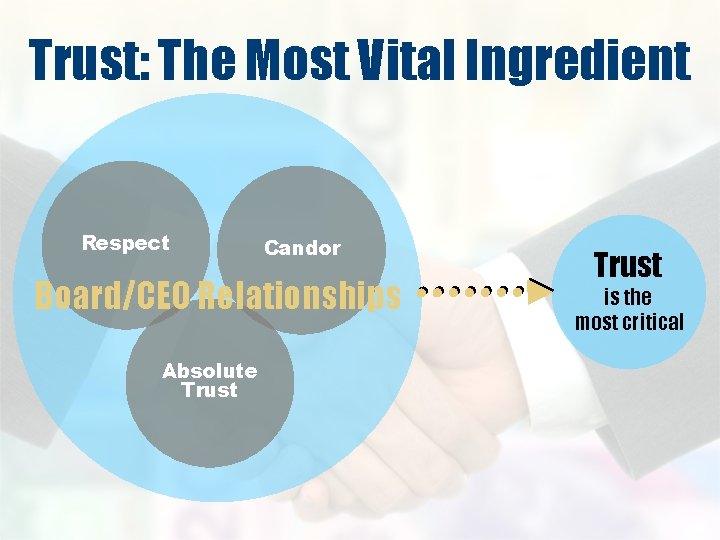
Trust: The Most Vital Ingredient Respect Candor Board/CEO Relationships Absolute Trust is the most critical
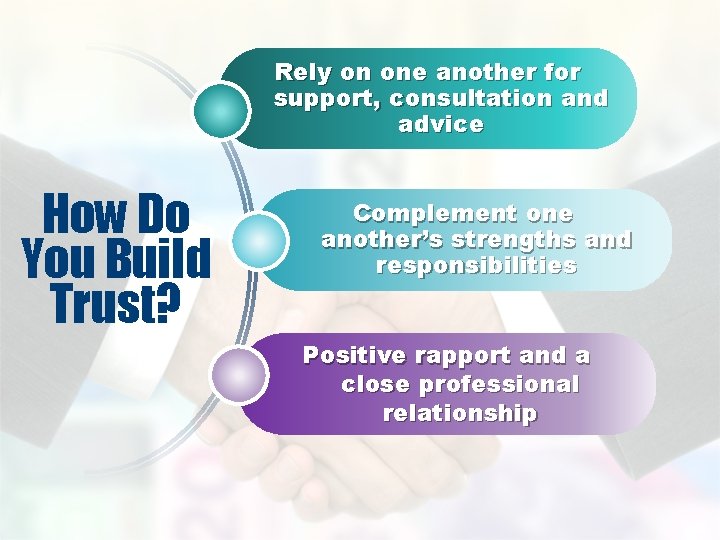
Rely on one another for support, consultation and advice How Do You Build Trust? Complement one another’s strengths and responsibilities Positive rapport and a close professional relationship
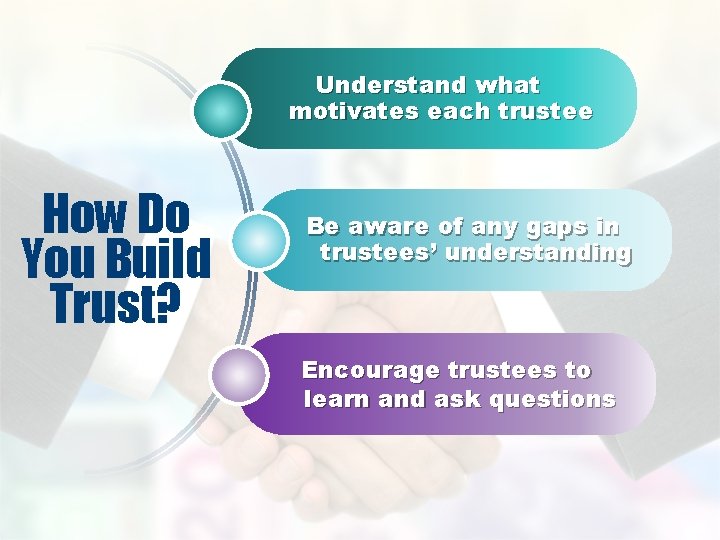
Understand what motivates each trustee How Do You Build Trust? Be aware of any gaps in trustees’ understanding Encourage trustees to learn and ask questions
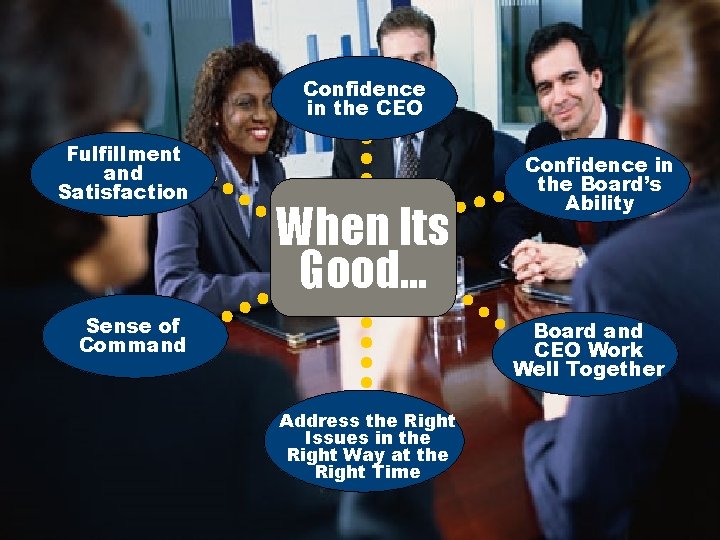
Confidence in the CEO Fulfillment and Satisfaction When Its Good… Sense of Command Confidence in the Board’s Ability Board and CEO Work Well Together Address the Right Issues in the Right Way at the Right Time
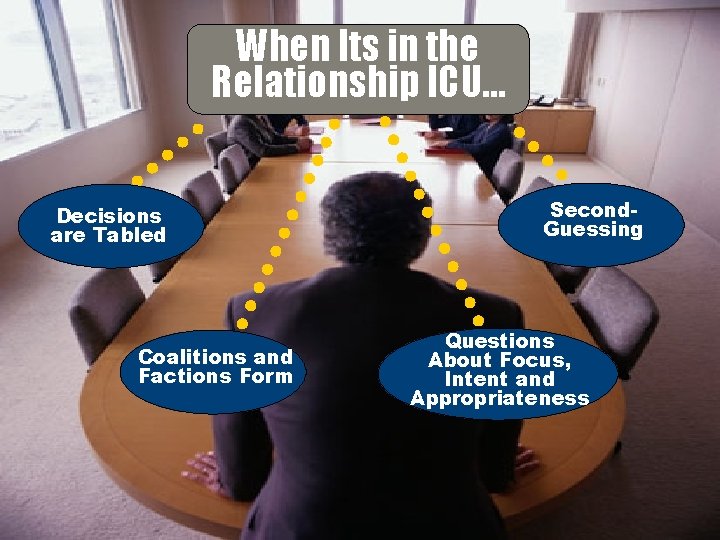
When Its in the Relationship ICU… Decisions are Tabled Coalitions and Factions Form Second. Guessing Questions About Focus, Intent and Appropriateness
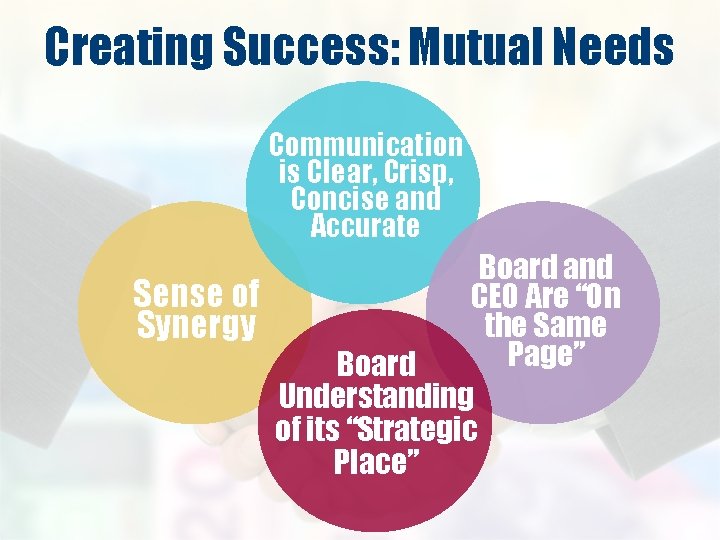
Creating Success: Mutual Needs Communication is Clear, Crisp, Concise and Accurate Board and Sense of CEO Are “On the Same Synergy Page” Board Understanding of its “Strategic Place”
What the Board Needs… Understanding of emerging issues Understanding of barriers to success Crisp, clear and concise overviews Avoid tendency to “wander”
What the CEO Needs… • Information and perspectives the board requires to lead with purpose and vision • A curious board • Energetic participation, creative thinking, willingness to challenge the status quo
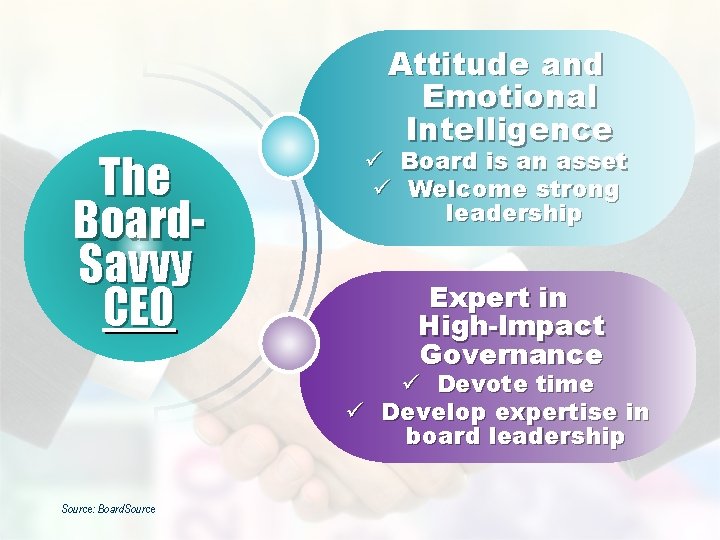
The Board. Savvy CEO Attitude and Emotional Intelligence ü Board is an asset ü Welcome strong leadership Expert in High-Impact Governance ü Devote time ü Develop expertise in board leadership Source: Board. Source
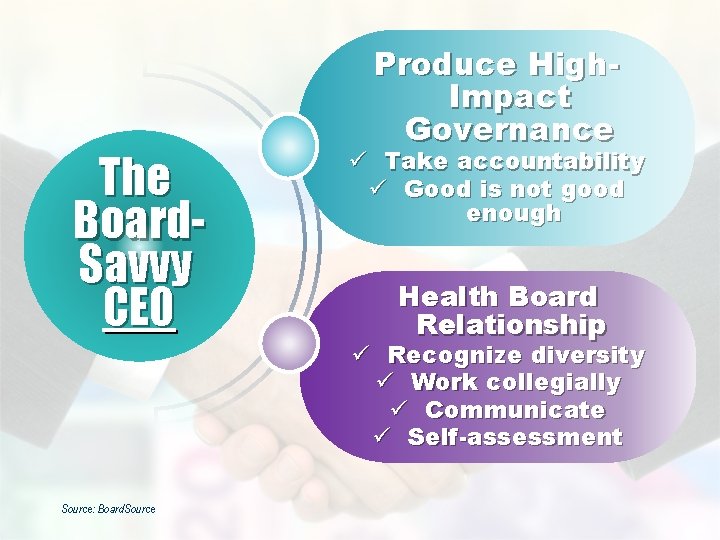
The Board. Savvy CEO Source: Board. Source Produce High. Impact Governance ü Take accountability ü Good is not good enough Health Board Relationship ü Recognize diversity ü Work collegially ü Communicate ü Self-assessment
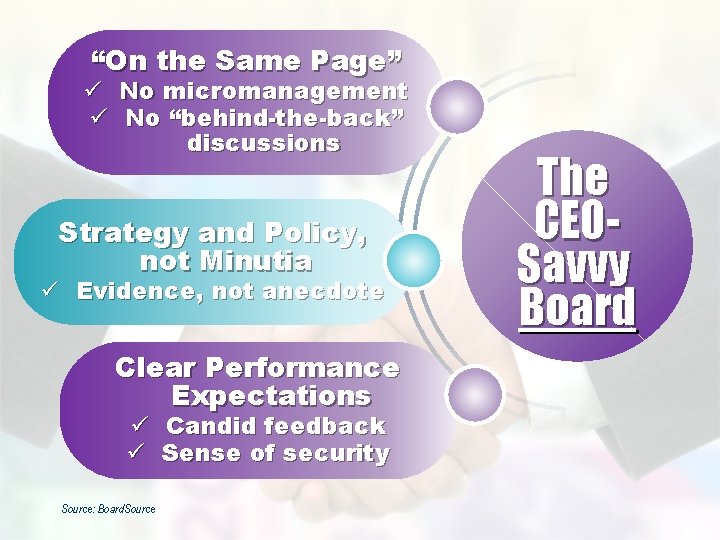
“On the Same Page” ü No micromanagement ü No “behind-the-back” discussions Strategy and Policy, not Minutia ü Evidence, not anecdote Clear Performance Expectations ü Candid feedback ü Sense of security Source: Board. Source The CEOSavvy Board
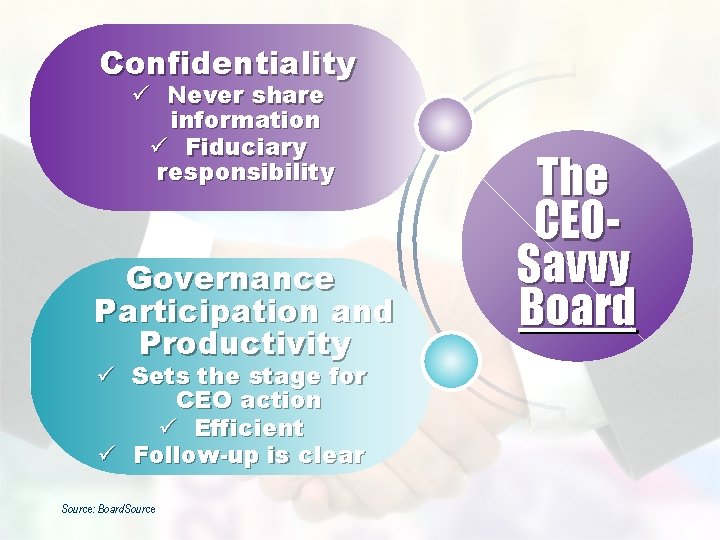
Confidentiality ü Never share information ü Fiduciary responsibility Governance Participation and Productivity ü Sets the stage for CEO action ü Efficient ü Follow-up is clear Source: Board. Source The CEOSavvy Board
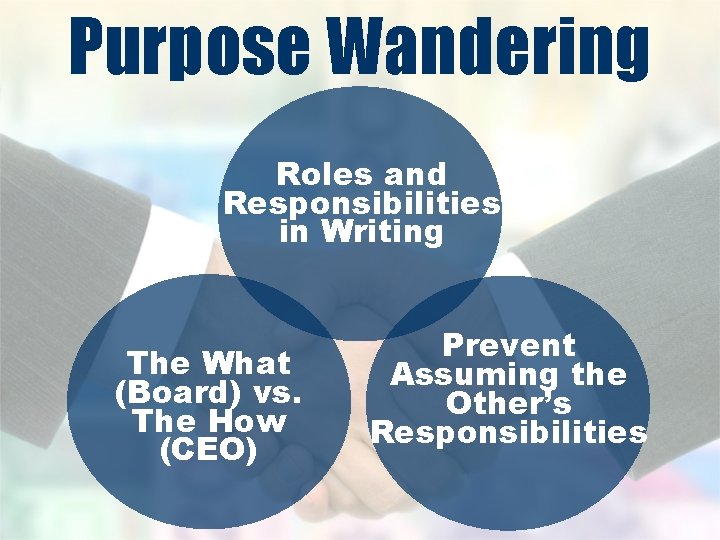
Purpose Wandering Roles and Responsibilities in Writing The What (Board) vs. The How (CEO) Prevent Assuming the Other’s Responsibilities
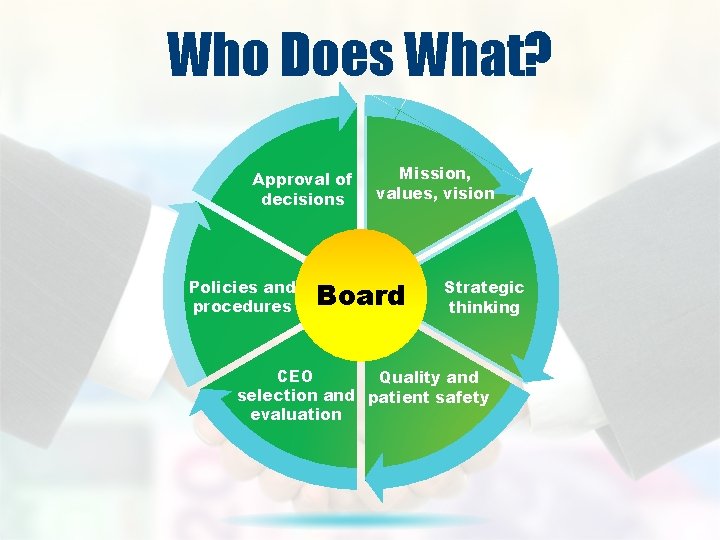
Who Does What? Approval of decisions Policies and procedures Mission, values, vision Board Strategic thinking CEO Quality and selection and patient safety evaluation
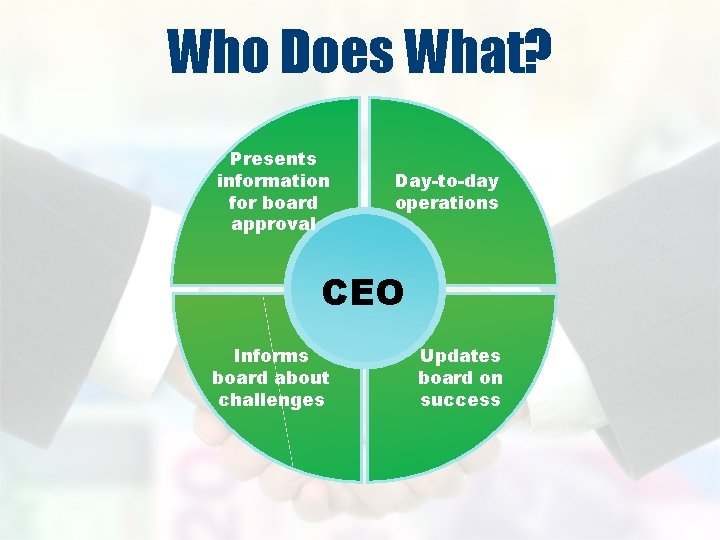
Who Does What? Presents information for board approval Day-to-day operations CEO Informs board about challenges Updates board on success
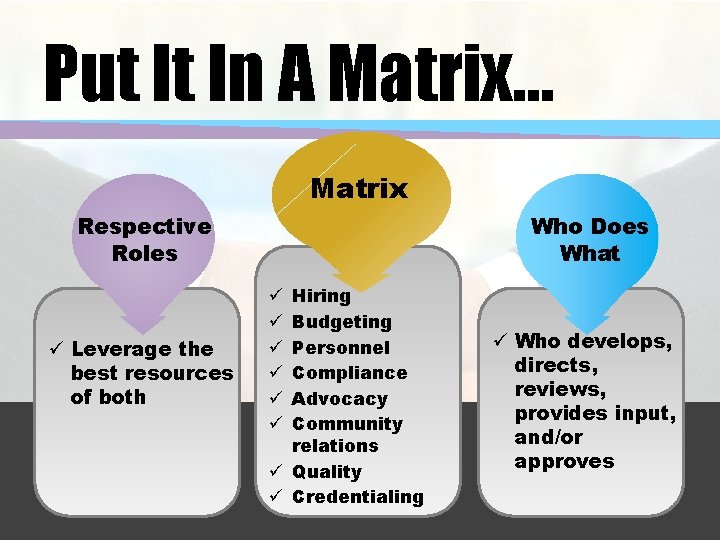
Put It In A Matrix… Matrix Respective Roles ü Leverage the best resources of both Who Does What Hiring Budgeting Personnel Compliance Advocacy Community relations ü Quality ü Credentialing ü ü ü ü Who develops, directs, reviews, provides input, and/or approves
Ineffective board meetings: • • • Poorly planned agendas Wasted time on routine reports Emphasis on operational details Mundane details have little strategic impact Focus on vision, values, policies, and strategic leadership The Board Meeting: The Center of Relationship Success or Failure
Be fully-informed Agendas geared toward the strategic future Engage in rich discussion and dialogue, assess outcomes, and participate in ongoing education The Board Meeting: The Center of Relationship Success or Failure
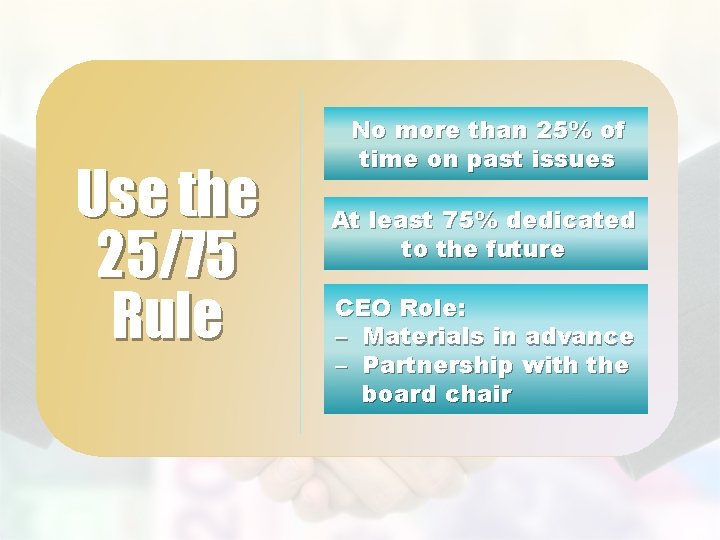
Use the 25/75 Rule No more than 25% of time on past issues At least 75% dedicated to the future CEO Role: – Materials in advance – Partnership with the board chair
The First Five Minutes After Count, Too Completed in five minutes or less Fine-Tune Work Through Meeting Evaluations Include yes/no answers with room for suggestions
How Did We Do? Did we focus on the right issues? Did all members participate in an active way? Did we develop our “knowledge capital”? Seek additional comments
Executive Sessions Are an Opportunity to Strengthen Communication and Relationships… • Confidential matters behind closed doors • Typically following adjournment • Personnel Investigations • CEO performance • Legal and finance • Highly confidential topics • Dependent on laws • Opportunity to openly and confidentially share opinions among board members
…But Should Not Be Misused • Address only predetermined issues • Avoid discussions that could occur in a regular board meeting • Not an excuse to avoid difficult topics and conversations • Not to hide board deliberations behind closed doors
Rules of Engagement Short and highly focused Not “under the radar” Not an anecdotal free-for -all Summary of the session to the CEO
CEO Compensation and Evaluation: A Critical Component
It’s An Opportunity to Build Trust and Focus on Organization-Wide Goals Maintain clear expectations and ensure regular review CEO’s performance tied to hospital goals Maintain an organization-wide focus, link compensation to goals No conflict of interest
What’s Important In the Compensation Assessment? Organizational performance Challenges and risks addressed by the CEO compensation compared to peers
What’s Important In the Compensation Assessment? Position volatility CEO’s tenure Implications of the loss of the CEO
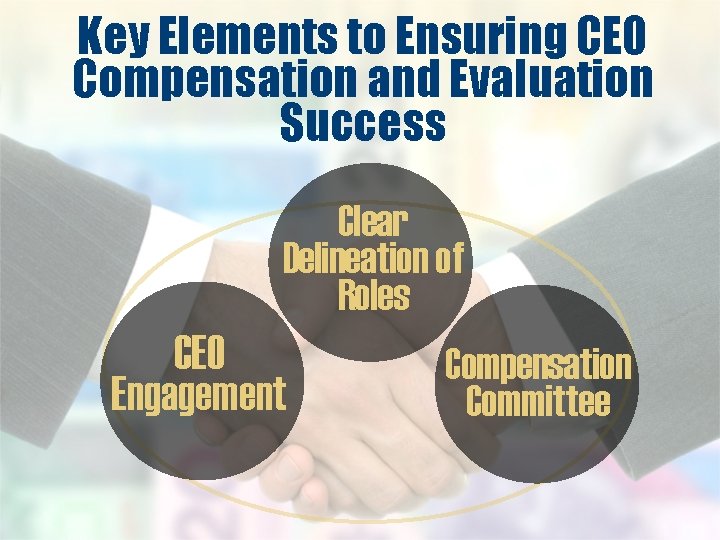
Key Elements to Ensuring CEO Compensation and Evaluation Success Clear Delineation of Roles CEO Engagement Compensation Committee
How “trustful” is your board/CEO relationship? Discussion Points • • Ways to improve? Barriers? Major responsibilities? • • Clear delineation of authority and responsibility? Gray areas?
How “board savvy” is the CEO? How “CEO savvy” is the board? Discussion Points Do board meetings strengthen relationship? Do process and policies encourage what is most important, and meet IRS requirements?
Building Bonds: Pathways to Better Board/CEO Relationships
- Slides: 35